Blaye River Cruise Port: Gironde Pontoon, Citadel and Ferry
Blaye gives river cruise passengers a rare combination: a working Gironde landing, a compact old town, and a UNESCO listed citadel rising almost directly above the waterfront. The destination looks simple from the ship, but tides, the assigned mooring, and the daily program still shape what is realistic.
The happiest plan begins with one practical question: is your vessel actually alongside in Blaye for the full advertised call? Once that is confirmed, the citadel is the obvious priority, with local wine, the riverside, and the public ferry as optional layers rather than promises.
My quick take
Spend most short calls on the citadel and its river views. It is close enough to reach on foot from the usual passenger landing, while a wine excursion or ferry crossing needs more time and a stronger return margin.
Blaye is easy to enjoy without racing. Give the fortifications room to breathe, leave the underground tour for a time slot that truly fits, and treat any switch to Bourg or Cussac-Fort-Médoc as a different port day.
Quick Facts
- Country: France.
- Waterway: Gironde estuary, downstream from Bordeaux.
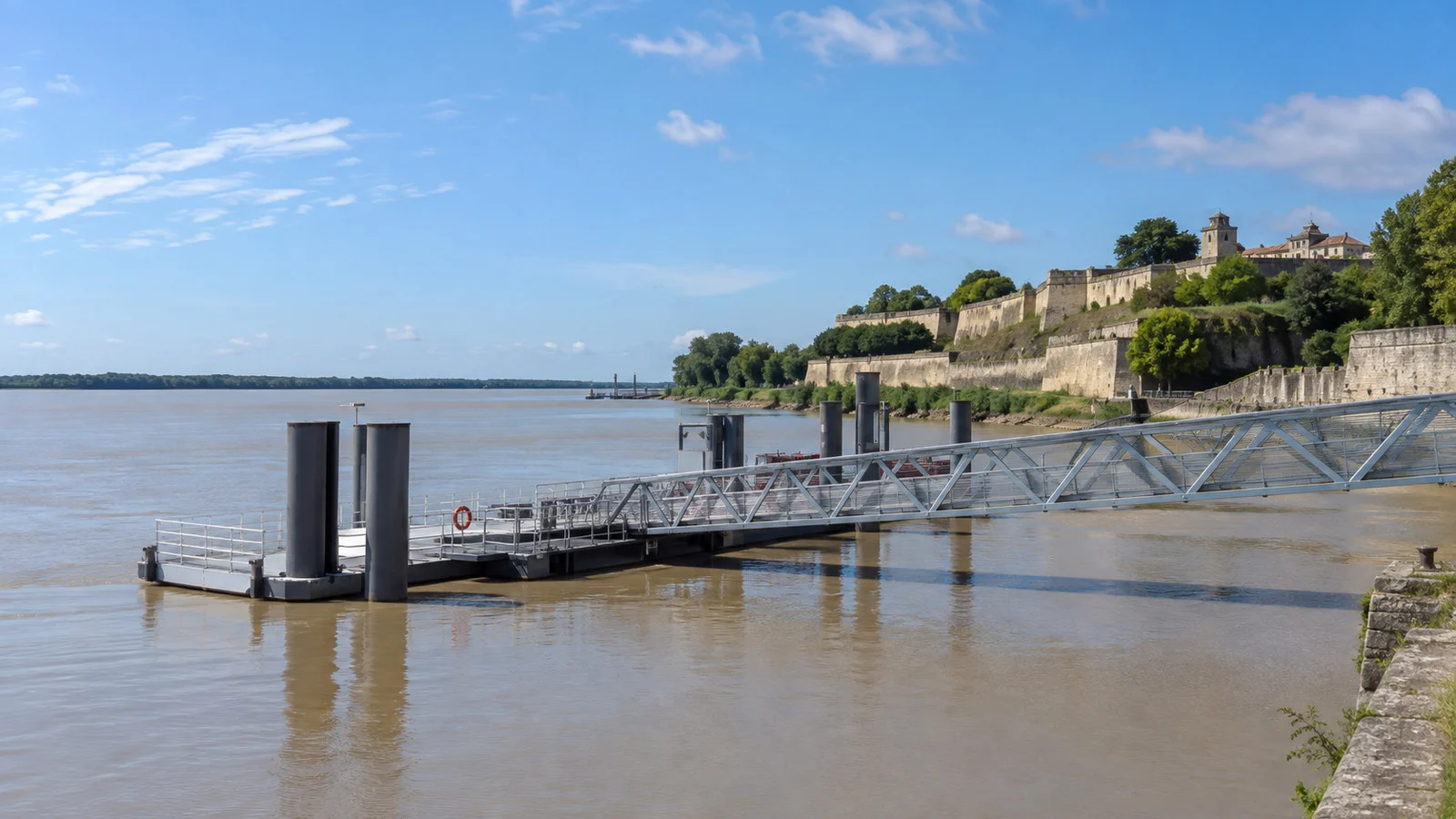
- Usual river landing: Blaye nautical stop, about 300 meters from the town center and below the citadel.
- Official pontoon limit: Vessels up to 135 meters, with a published maximum stay of 24 hours.
- Main attraction: The Citadel of Blaye, part of the UNESCO listed Fortifications of Vauban.
- Public ferry: Blaye to Lamarque, with the crossing usually taking about 20 minutes and varying with the tide.
- Currency: Euro.
- Best first check: Confirm the actual landing, all aboard time, and any ship movement in the daily program.
Where river ships berth in Blaye
The official Cruise Bordeaux pontoon page identifies the Blaye nautical stop as a river facility at the foot of the citadel. It places the town center about 300 meters away and lists a coach park, shops, restaurants, a pharmacy, a bank, and other services within two kilometers.
The same source gives a maximum vessel length of 135 meters, a maximum stay of 24 hours, and upstream double mooring as the technical arrangement. Double mooring can mean walking through or past another vessel, so passengers should follow crew directions instead of assuming a direct gangway.
The pontoon has drinking water, power, and a coded security gate for vessel operations. Those facilities do not guarantee step free passenger access, because river level, gangway angle, and rafting arrangements can change during the call.
Do not confuse the three waterfront functions
Blaye has a river cruise pontoon, a public ferry terminal, and broader working waterfront activity. They are close on a map but serve different purposes, and the correct return point is the gangway or meeting place named by your cruise director.
A public ferry may be visible from the ship, but it is not a tender for river cruise passengers. Likewise, an excursion coach can meet near the landing without making that coach park the final reboarding point.
Take a photo of the vessel, the access gate, and any nearby sign before walking away. That small habit is especially useful if several river ships are moored together or if the ship plans to reposition.
Walking from the pontoon to the citadel
The citadel dominates the Blaye riverfront, so navigation is more intuitive than at many river ports. The route still rises from the water and includes historic surfaces that can be slick after rain.
Allow more time than the straight line distance suggests if you use a cane, need frequent rests, or prefer even paving. The fortress is a large historic site, not a single building with one entrance and a short indoor circuit.
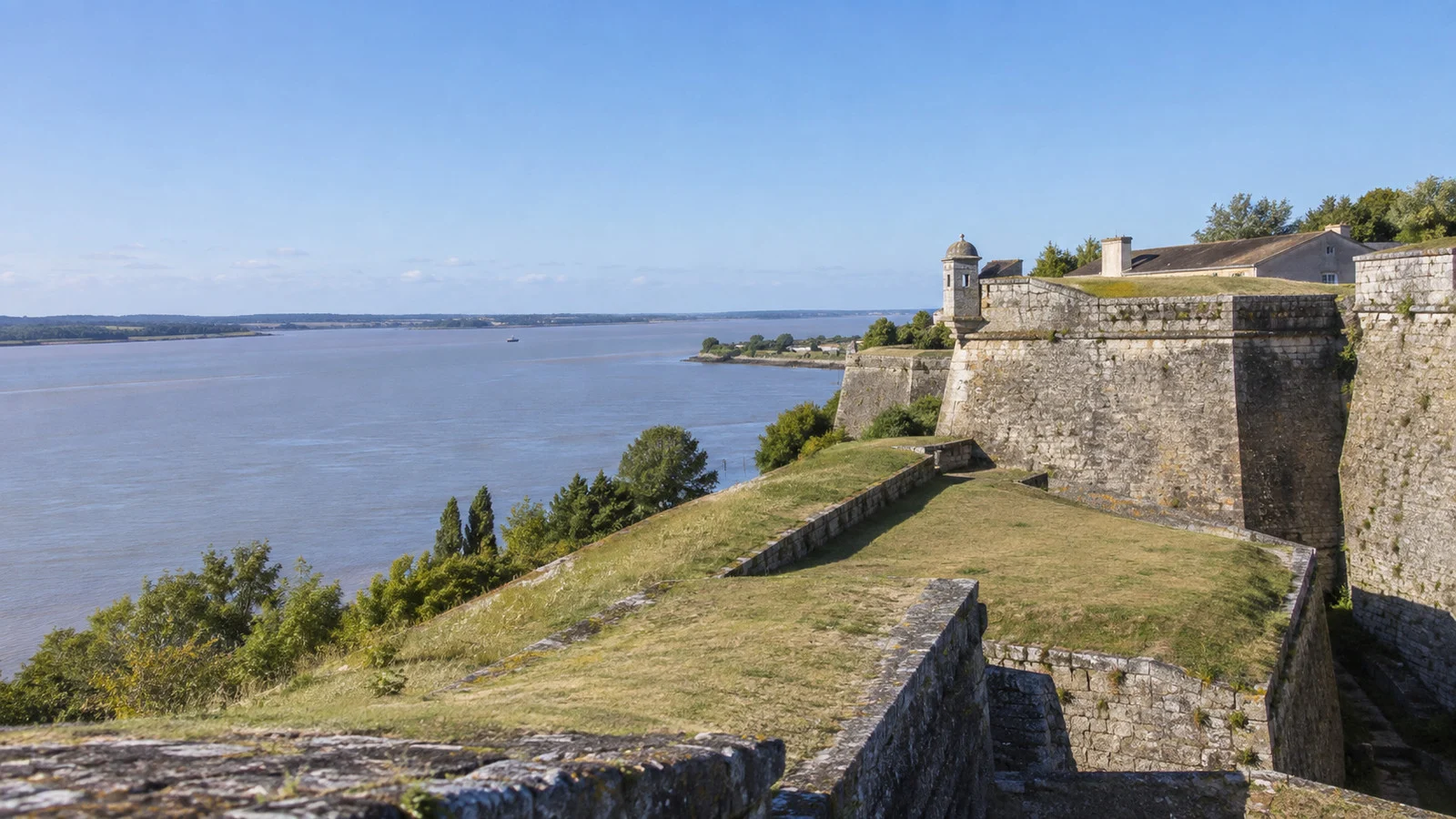
For a relaxed independent visit, enter the citadel, explore the main public spaces, and choose one or two viewpoints over the Gironde. Keep enough time to descend carefully and pass through any security gate at the landing.
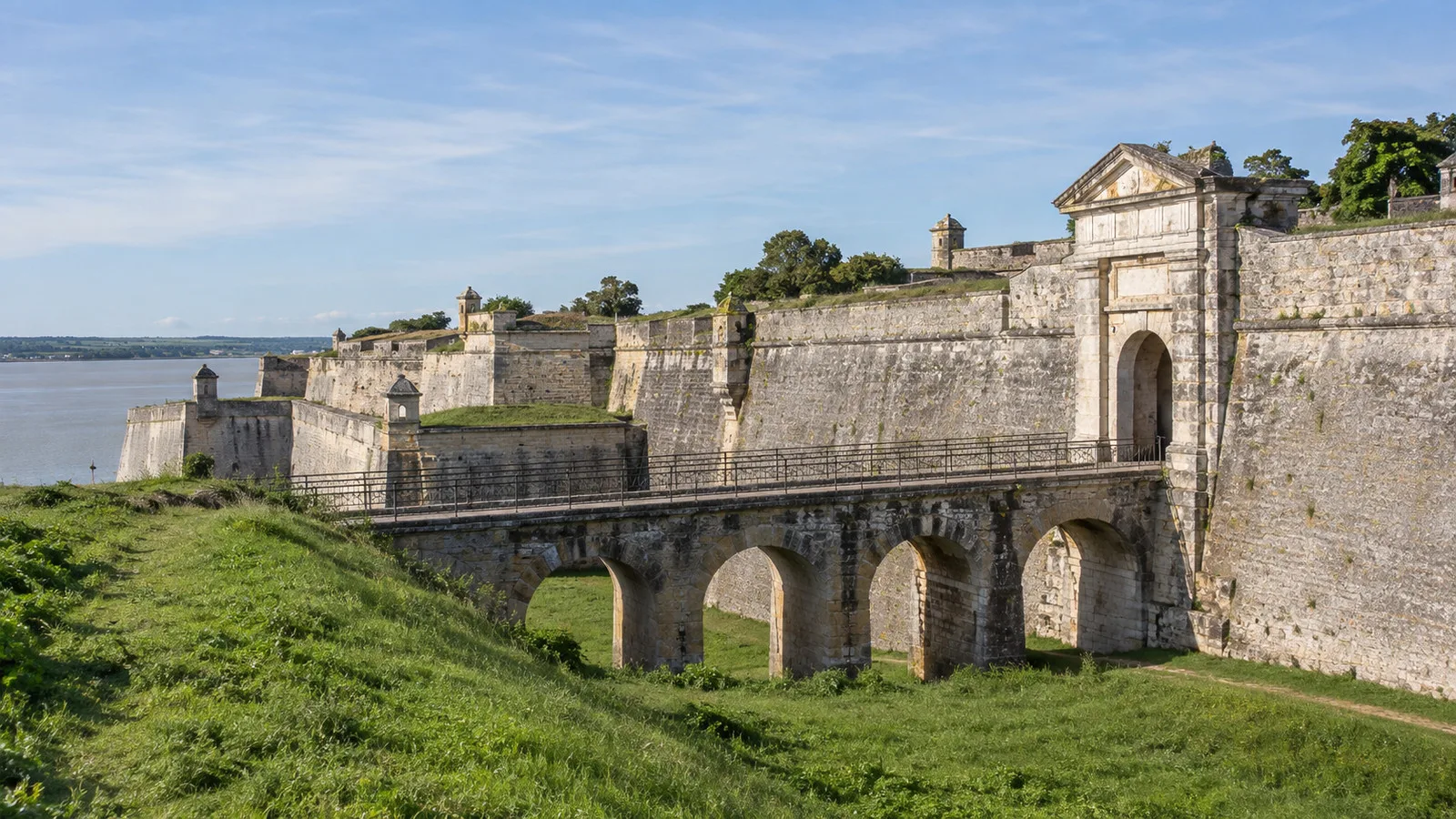
Why the Citadel of Blaye matters
Blaye belongs to the serial UNESCO World Heritage property called the Fortifications of Vauban. UNESCO describes Vauban’s work as a major contribution to military architecture and a rational fortification system shaped by its relationship to the surrounding territory.
The Blaye defenses make particular sense when viewed as part of a system controlling passage along the Gironde. Fort Pâté stands on an island in the estuary, while Fort Médoc occupies the opposite bank, creating a strategic group rather than an isolated hilltop monument.
You do not need a specialist tour to appreciate the geometry. Bastions, walls, gates, sightlines, and the river panorama explain how the position worked, while signs and guided options can add historical detail.
Independent visit or guided tour
An independent walk is the most flexible choice for a short or uncertain call. It can be shortened immediately if the ship changes its schedule, and it avoids tying the day to a tour departure that may not match all aboard.
A guided citadel tour is worthwhile when the timing is guaranteed and the subject genuinely interests you. Check the language, meeting point, duration, and walking demands before booking, because some experiences include areas that are not part of a casual surface visit.
Ship excursions are useful when they combine transport, a reserved visit, or a winery that is difficult to reach independently. Their value is logistical rather than automatic, so read the itinerary for actual time in Blaye instead of relying on a broad Bordeaux region label.
The underground tour is a serious walking choice
The Blaye tourist office sells a guided visit through the citadel’s underground passages. Its official booking page describes a route of about 1.2 kilometers with roughly one hundred steps, uneven sections, and portions both outdoors and indoors.
The tourist office states that wheelchair users cannot participate in this particular tour and that strollers are not allowed. It also recommends comfortable waterproof shoes and advance booking because group capacity is limited.
The scheduled tour lasts about one hour, but cruise passengers need additional time to reach the meeting point, check in, and return to the vessel. Only book it when the daily program leaves a generous buffer on both sides.
Accessibility at the landing and citadel
Ask the cruise line about the gangway before deciding what is possible. A river pontoon can have a steep or changing ramp, and double mooring may add thresholds, narrow passages, or another vessel’s stairs.
Inside the citadel, historic paving, slopes, gateways, and weather exposed paths can be more demanding than the short distance from the ship suggests. A surface route with viewpoints may work for some travelers who should skip the underground circuit.
Wheelchair and scooter users should request a ship specific access description, not a general claim that Blaye is walkable. Confirm whether crew assistance is available and whether the vessel expects to move during the visit.
Can you take the Blaye to Lamarque ferry?
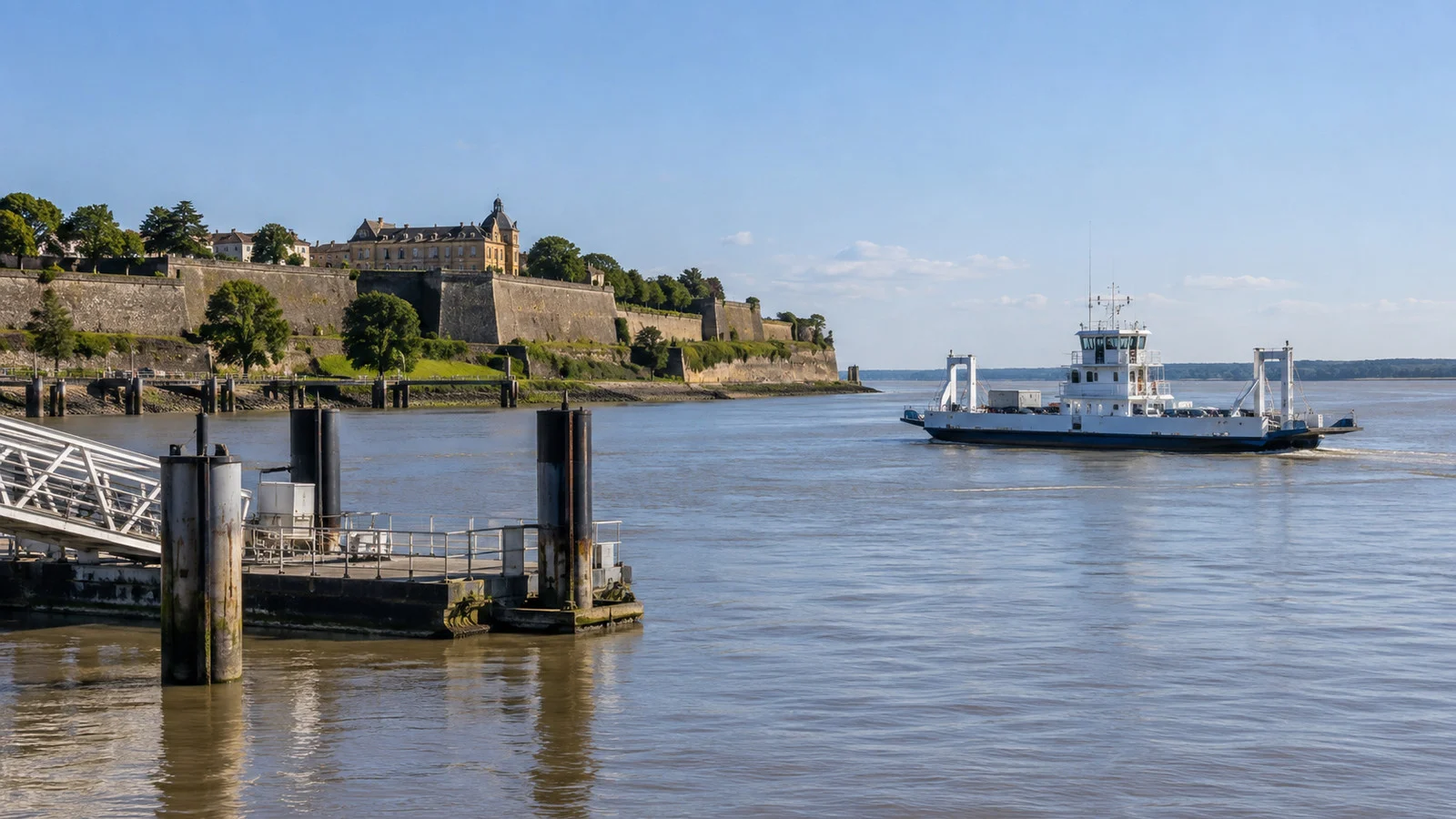
The public Blaye to Lamarque ferry crosses 4.5 kilometers of the Gironde. The Gironde department says the trip usually takes about 20 minutes, with a range of roughly 15 to 35 minutes depending on the tide.
The ferry is a useful regional link, but a crossing is not automatically a good cruise excursion. You need an outbound sailing, a workable return, time on the far bank, and a margin for changed or canceled service.
Check the live departmental page on the day because timetables vary by season and conditions. Never use the last theoretical return that reaches Blaye only minutes before all aboard.
What waits on the Lamarque side
Lamarque is a gateway to the Médoc side of the estuary, not an attraction that completes itself when you step off the ferry. Reaching wineries or other destinations may require a reserved driver, excursion coach, bicycle, or a carefully timed local plan.
A round trip purely for the view can still consume much of a short call once boarding, crossing, and waiting are included. The citadel usually gives a better balance of history and scenery when time is limited.
If your cruise includes an organized Médoc excursion using the ferry, follow the operator’s transport plan. Independent passengers should not assume taxis will be waiting or that a winery can accept a walk in visit.
Wine country without wishful planning
Blaye stands within a wine producing area, and tastings are a natural part of many itineraries. The important distinction is between wine available in town and an estate visit that requires transport, an appointment, and time at the property.
A local shop or tasting room can fit around an independent citadel walk when opening hours align. A winery excursion is better treated as the main event, especially if it includes a drive along the Gironde or into the surrounding hills.
Do not rely on a remembered opening hour or assume harvest season makes access easier. Confirm reservations, language, mobility requirements, and the exact meeting point before leaving the ship.
The Route de la Corniche and nearby villages
The estuary roads between Blaye and Bourg are known for river views, limestone cliffs, fishing huts, and villages. They are well suited to a coach or private vehicle outing, but they are not a practical walking extension from the cruise pontoon.
A scenic drive can pair naturally with a tasting or a stop in Bourg when the ship provides several hours. On a shorter call, road travel reduces the time available at the citadel and adds uncertainty to the return.
Choose the route for scenery and local context rather than a checklist of famous monuments. The landscape is the point, and weather can change how long photo stops remain comfortable.
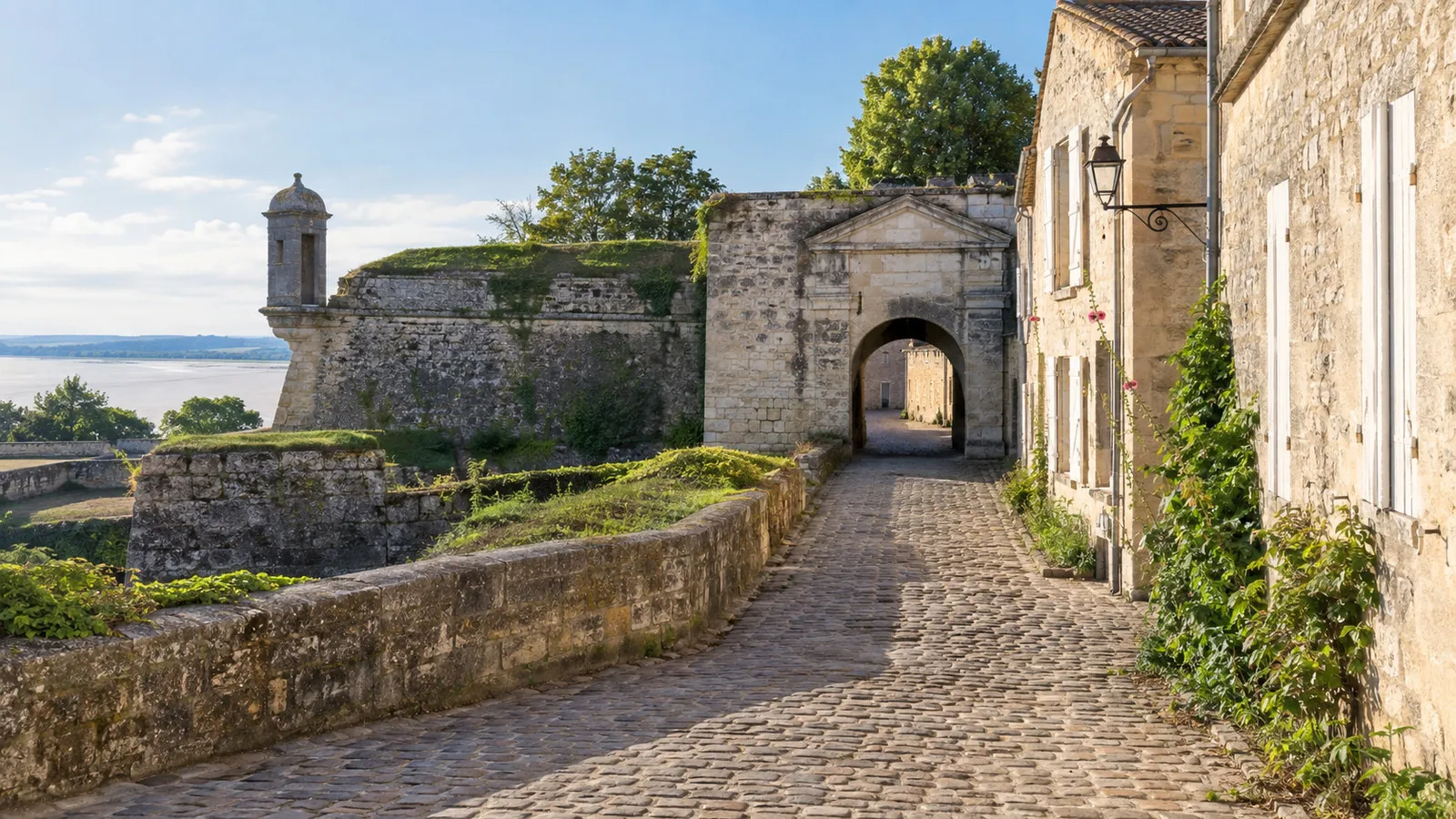
Blaye, Bourg, and Cussac-Fort-Médoc are different calls
Cruise programs in the Bordeaux river region sometimes mention Blaye, Bourg, or Cussac Fort Médoc within the same itinerary. They are distinct landings on different parts or sides of the river system, not alternate names for one pier.
Tides, navigation limits, vessel operations, and excursion logistics can change where passengers begin or end a day. Read the daily program even if the printed itinerary named Blaye months earlier.
If the vessel lands elsewhere, do not use Blaye walking times or return directions. Follow the new berth instructions, because a coach transfer may replace what was originally presented as an independent stroll.
How tides affect the day
The Gironde is tidal, and river cruise operations are built around conditions that passengers may barely notice. A schedule change can protect safe navigation or a workable gangway rather than signal poor planning.
Ships may adjust arrival, departure, rafting, or excursion order. The useful response is to separate fixed priorities from optional ones: keep the citadel if time allows, drop the ferry first, and avoid independent transport with a narrow return.
Announcements made onboard outrank a downloaded itinerary. Recheck all aboard after breakfast and again before leaving, particularly when crew mention water levels or ship movement.
A realistic short-call plan
With about two hours ashore, walk directly to the citadel, explore the accessible public areas, and return by the same general route. Skip the ferry and avoid committing to an underground tour unless the cruise line has coordinated it.
Use the first half of the visit for the higher ground and river views. The second half should bring you steadily back toward the waterfront, leaving time for a brief drink or local purchase only if the clock remains comfortable.
A realistic half-day plan
With four or more dependable hours, combine the citadel with one carefully chosen extra. That might be a guided underground visit, a reserved wine experience, a scenic coach loop, or a ferry ride with a clear same-day return.
Do not stack all four. One substantial addition creates a satisfying day, while several transport dependent ideas turn a compact port into a sequence of deadlines.
Food, money, and practical comforts
France uses the euro, and cards are widely useful, but carrying a small amount of cash can help with modest purchases. Never count on every stall, temporary venue, or small merchant accepting the same payment method.
The town center has restaurants, shops, a pharmacy, and other practical services close to the landing according to the official pontoon listing. Opening hours can include midday breaks, seasonal changes, and quieter service outside peak months.
Try regional wine only within a plan that keeps the return simple. If you have dietary restrictions, ask specific questions rather than assuming a familiar dish has the same ingredients everywhere.
Weather and what to wear
The open estuary can feel windier than sheltered streets, while the citadel adds exposed viewpoints and uneven ground. A light waterproof layer and shoes with reliable grip are sensible even when the forecast looks mild.
Hot weather can make the climb feel more demanding, so carry water and take shade when available. In rain, allow extra descent time and avoid treating slick stone as a reason to hurry.
Safety and return timing
Save the ship’s contact number and photograph the daily program before leaving. Keep the gangway location distinct from the ferry terminal, particularly if you plan to spend time along the waterfront.
Build the return backward from all aboard, not from departure. Include walking time, security access, possible waits at a coded gate, and extra margin for anyone moving slowly.
For independent trips by ferry or road, return to the Blaye side well before the final margin begins. A delayed public service is not required to wait for your river ship.
Quick answers
Is the Citadel of Blaye close to the ship?
Yes, when the vessel uses the usual Blaye nautical stop. The official pontoon page places the town center about 300 meters away and the landing at the foot of the citadel.
Can I explore Blaye without an excursion?
Usually yes for a surface visit to the citadel and town, provided your vessel is actually moored in Blaye and the call is long enough. Reconfirm the gangway and all aboard time first.
Is the underground citadel tour accessible?
The official tour information says the route has about one hundred steps and uneven terrain, and wheelchair users cannot participate. Travelers with limited mobility should ask about a suitable surface alternative.
Is the Lamarque ferry worth doing?
It can be enjoyable on a long call with a dependable round trip, but it is not the first choice for a short visit. The citadel offers more value with less transport risk.
What if the ship changes to Bourg or Cussac-Fort-Médoc?
Treat the revised location as a different port plan. Use the cruise line’s updated transport, walking guidance, and meeting instructions rather than the Blaye details in this guide.
The last word
Blaye works best when you trust its strongest advantage: an important fortress very close to the river landing. Start with the citadel, add only one time dependent extra, and let the Gironde view carry the rest of the call.
How this guide was researched: Unless a first-hand visit is explicitly identified above, this guide is based on independent research using official pontoon, UNESCO, ferry, tourism, and attraction sources where available. Logistics and time-sensitive details were reviewed on September 12, 2026, under our Editorial Policy.