Vilshofen River Cruise Port: Docks, Old Town and Transfer Guide
Vilshofen is both a small Danube call and an embarkation gateway used by selected river itineraries. The practical details are the exact promenade landing, cruise-company transfer, railway access, luggage handoff, water-level changes, accessibility, and enough recovery around an airport or Passau connection.
Vilshofen river cruise port quick facts
- Into Town: Ships dock at Donaupromenade, a 5- to 10-minute walk from Stadtplatz; the exact gangway position can change.
- Currency and Language: Euro. German is official; English is common with cruise staff, while smaller local businesses may use less.
- Time Zone: Central European Time, UTC+1; Central European Summer Time, UTC+2, from late March through late October.
- Call reliability: Danube levels, lock disruptions, berth capacity, or operational issues can occasionally alter the call; no verified missed-call percentage is published.
Where River Ships Dock in Vilshofen
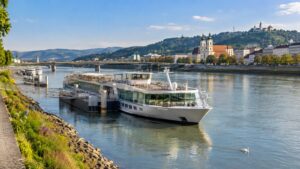
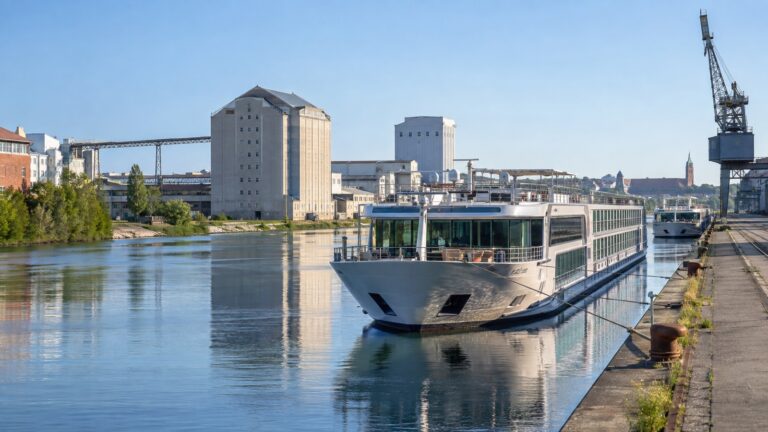
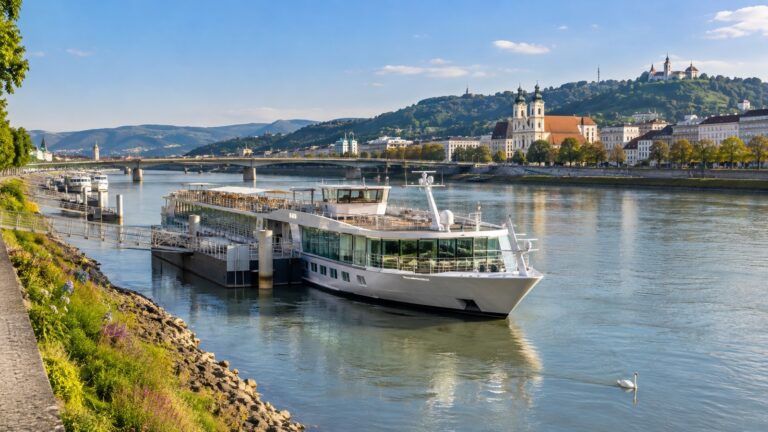
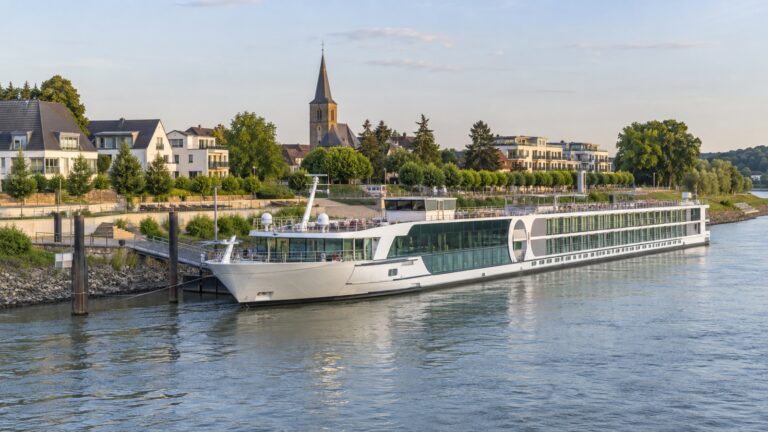
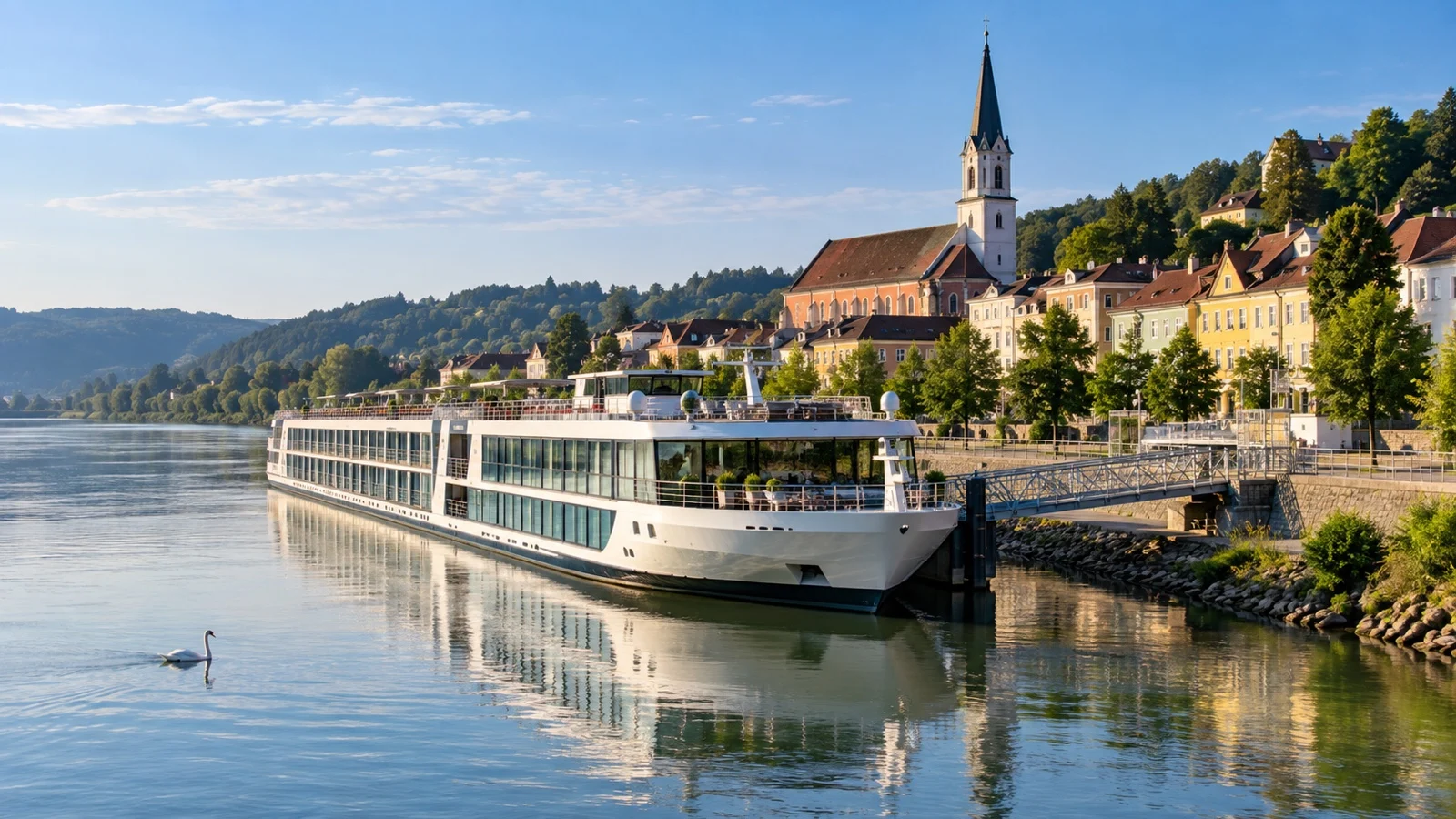
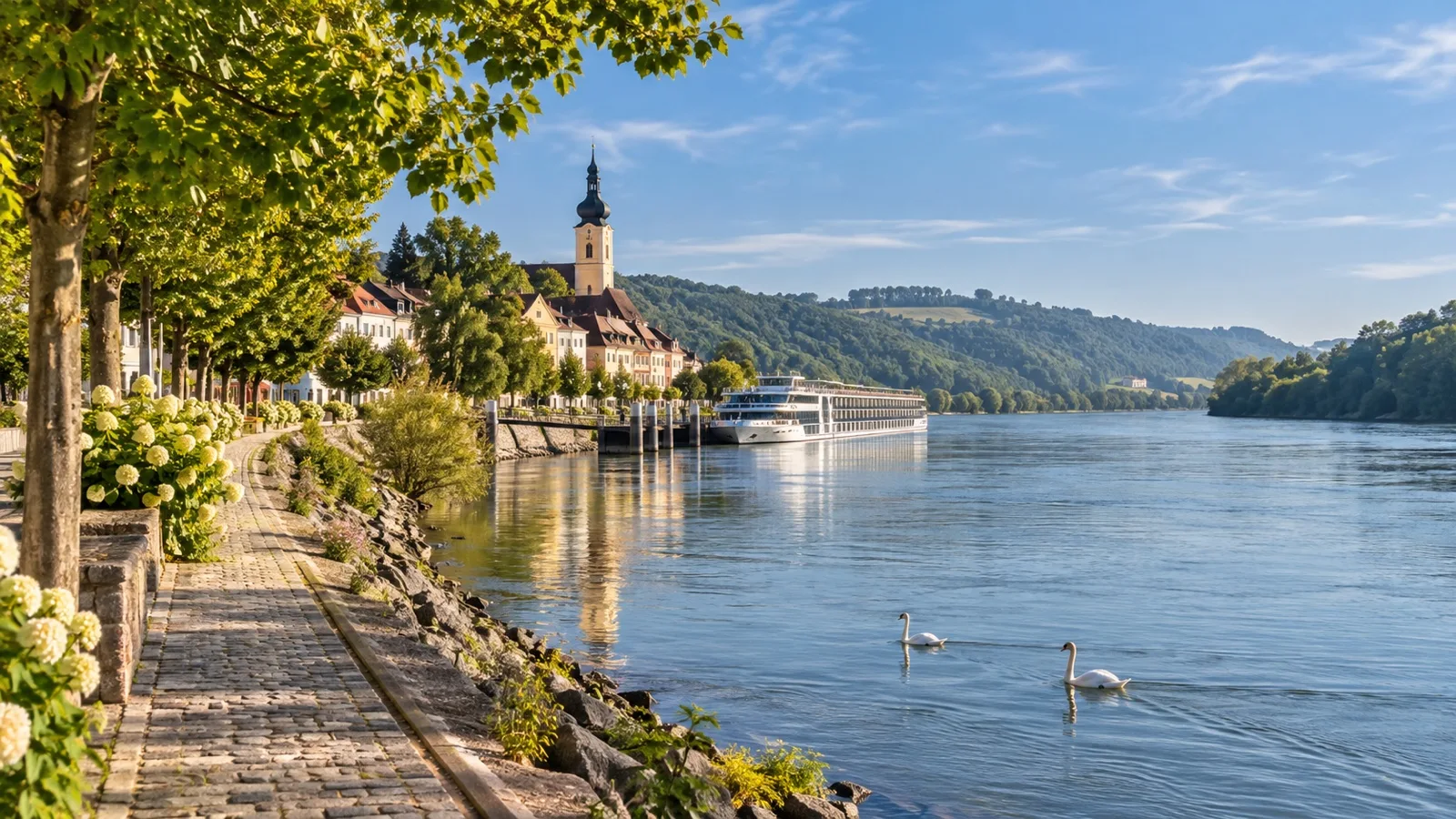
River vessels use the passenger landings along Donaupromenade, directly below the historic center. Vilshofen’s official berth rules identify two passenger-ship landings and say they serve both excursion vessels and passenger-cabin ships, subject to available capacity.
The same rules make one detail especially clear: the city assigns berths, and no vessel has a right to a particular spot. Treat any pier number or pin in an old document as provisional, then use the location announced by your cruise director on the day.
At the water’s edge, ships may sit side by side when traffic is busy. That can mean crossing another vessel and negotiating more than one gangway, so travelers with mobility concerns should ask the cruise line about the actual arrangement rather than relying on a generic port description.
From most gangway positions, Stadtplatz is roughly a 5- to 10-minute walk by our map-based estimate. The promenade is broad and relatively level, while the short lanes climbing into town introduce some slope and occasional uneven paving.
The city’s excellent history of Donaugasse and Donaupromenade explains why this location feels so naturally connected to shipping. Donaugasse once served boatmen and innkeepers near Vilshofen’s customs post, and today it is pedestrianized.
Vilshofen Is Often a Beginning, Not Just a Port Call
Some Danube programs embark in Vilshofen before sailing toward Austria, Slovakia, and Hungary. For example, the official AmaWaterways Romantic Danube itinerary lists Vilshofen as the starting point and follows it with Passau on day two.
Read your final documents rather than copying another traveler’s schedule from social media. Cruise itineraries, ships, welcome events, transfer meeting points, and embarkation windows can change, even when the brochure still looks familiar.
The Best Things to Do Near the Dock
Walk Donaupromenade and Donaugasse
Start where the river story is strongest. The promenade is a pleasant, low-effort walk, and flood markers on the former customs-house wall show how forcefully the Danube shaped life here before protective works changed the waterfront.
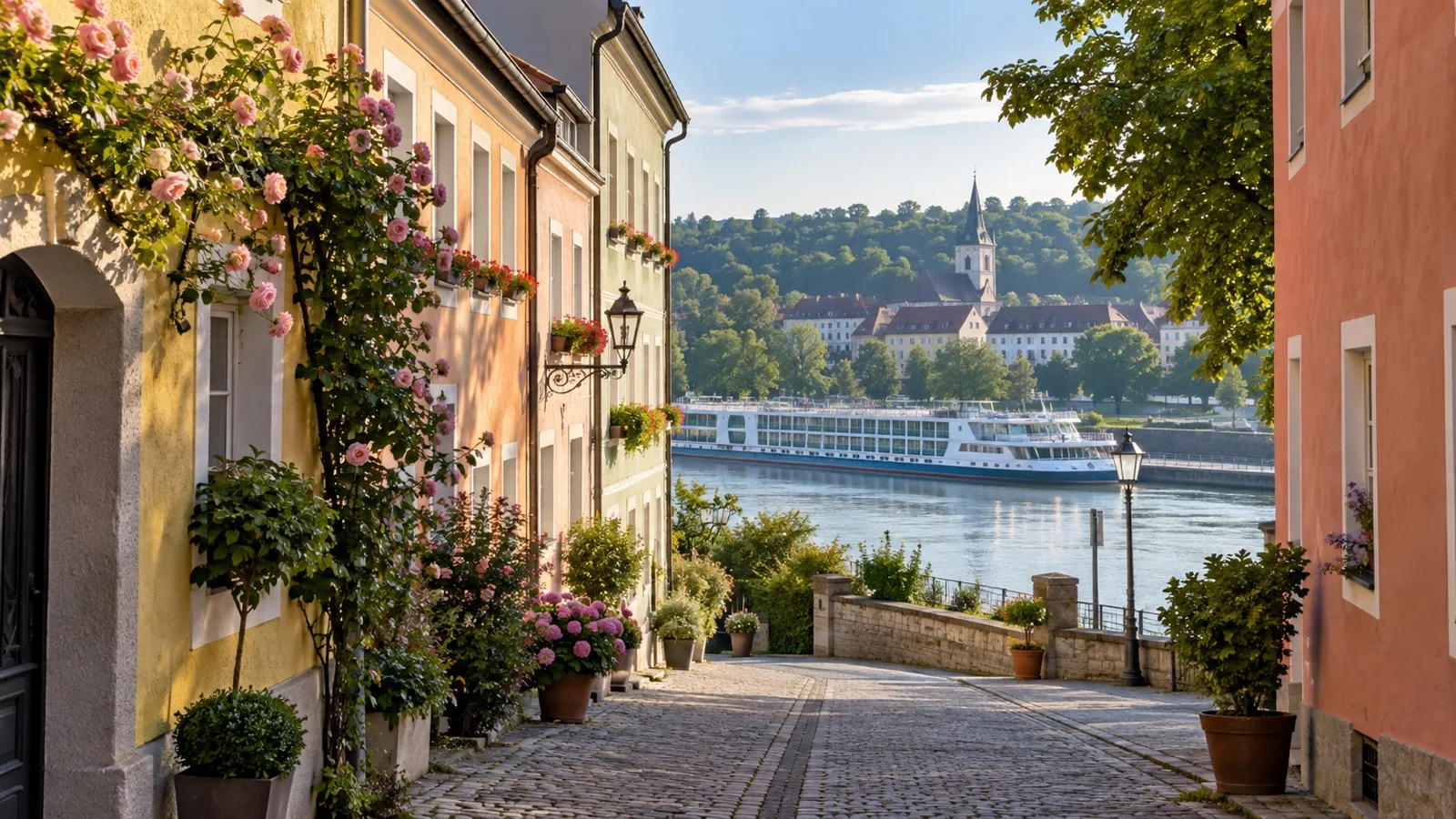
Then slip through Donaugasse toward the center. It is a short transition from working riverfront to tidy Bavarian town, with none of the shuttle-bus choreography that larger ports demand.
Take a Slow Lap Around Stadtplatz
Stadtplatz is Vilshofen’s historic heart, framed by façades rebuilt in the regional Inn-Salzach style after the devastating 1794 fire. This is the place for a coffee, a bakery stop, and the radical vacation act of sitting down without a reservation.
The baroque Stadtturm anchors the square. The city records an earlier gate here in 1319 and dates the present tower to 1643-1647, when it also served the very practical business of fire watching and signaling ships.
Step Into St. John the Baptist Parish Church
The parish church combines several chapters of local history in one building. According to the city’s official church history, its tower base is Romanesque, parts survived the 1794 fire, and later interiors include work associated with prominent baroque artists.
Enter quietly, avoid services, and remember that an open church is a place of worship rather than a guaranteed attraction. Hours can change for liturgy, funerals, concerts, or maintenance.
Consider Schweiklberg Abbey Only With Enough Time
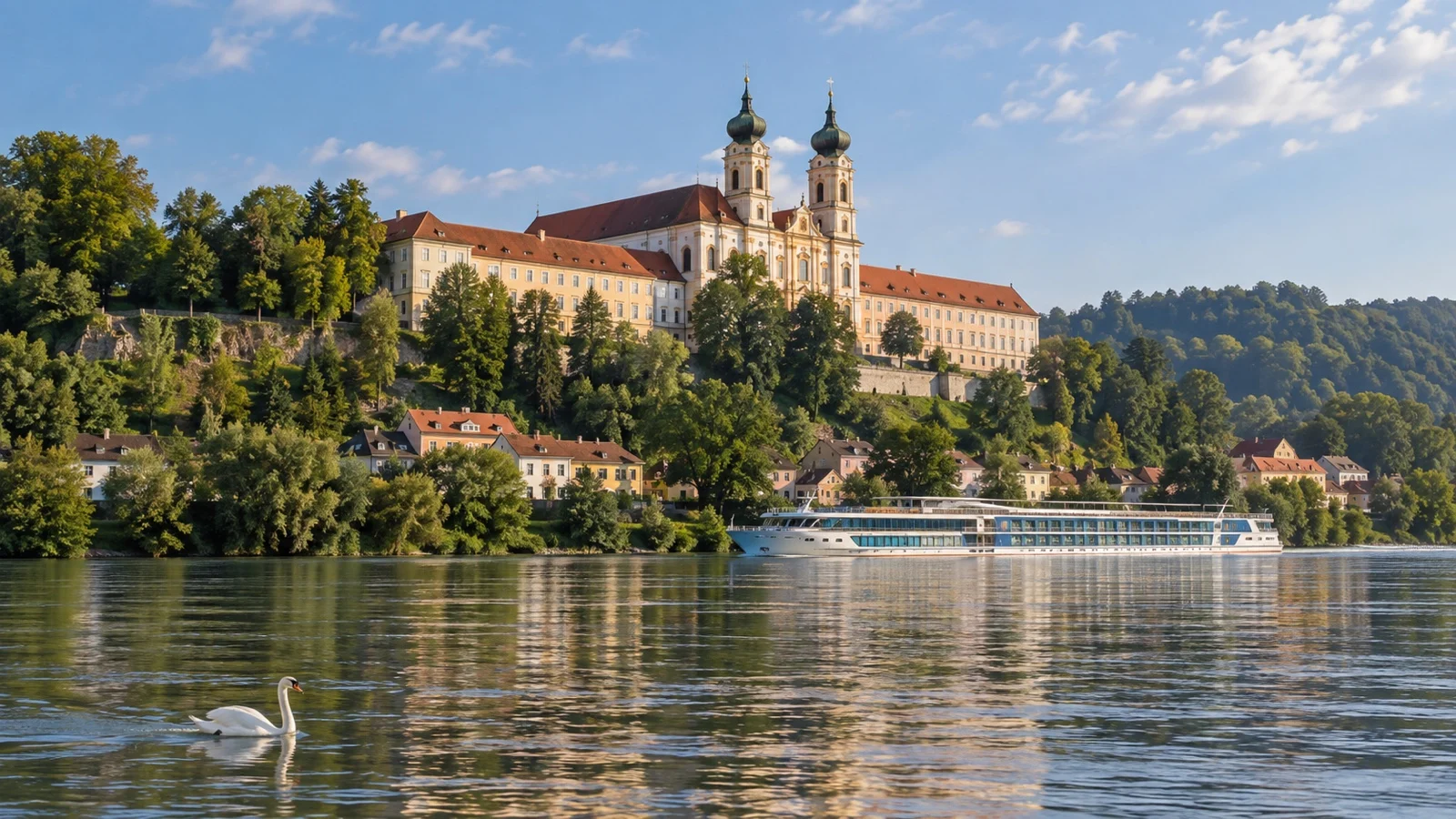
Benedictine Schweiklberg Abbey rises above town and is visually hard to miss. The abbey church, twin towers, and large complex make a rewarding contrast to compact Stadtplatz, but the climb and distance put it beyond a casual twenty-minute stroll.
Allow roughly 30-40 minutes each way on foot from the river, an editorial map estimate that varies by route and pace. A taxi is the smarter choice for limited time or mobility, and access to monastic areas should never be assumed.
Should You Go to Passau?
Passau is about 12.5 miles from Vilshofen and has the headline sights many travelers recognize, including St. Stephen’s Cathedral and the meeting of three rivers.
It is a good excursion when it appears in the official program, especially if transport and return timing are handled by the cruise line.
Independent rail travel is possible because Vilshofen sits on the Regensburg-Passau line, as the city’s arrival page confirms. Exact journey times and service patterns vary, so check the live Deutsche Bahn itinerary for your date.
Vilshofen station is roughly 15-20 minutes walking from the river by our map estimate. The official DB station page lists restrooms, taxi access, and accessibility information, but also says the station is unstaffed.
Do not freelance a Passau trip during embarkation unless your luggage is accepted, your ship’s departure is confirmed, and the schedule leaves a serious buffer. A river ship is charming, but it will not circle back like a city bus because your regional train had an awkward afternoon.
Getting to Vilshofen for Embarkation
Munich Airport is a common international gateway, but Vilshofen is not an airport suburb. The simplest option is usually the cruise line’s transfer when offered, because it coordinates luggage and ship timing in one move.
Independent public transportation normally involves several stages and can take roughly three hours or more, an editorial planning estimate rather than a guaranteed schedule. Munich Airport says S1 and S8 trains link the airport with central Munich in about 40 minutes, after which DB connections continue toward Vilshofen.
Check the entire trip in the DB planner on the day, including construction notices. In 2026, major rail work has affected portions of the Regensburg-Passau corridor, a useful reminder that a route shown on a map is not the same thing as a stress-free embarkation plan.
If arriving one day early, an overnight in Munich, Passau, or Vilshofen can turn a fragile same-day chain into a civilized trip. For more groundwork, browse our Germany cruise port guides and first-time cruise port advice.
Accessibility and Getting Around
Vilshofen’s compact center is one of its great advantages. The promenade offers the easiest rolling surface, and many central sights fit into a modest loop without vehicles.
The less predictable part is ship access. Danube level, gangway angle, rafting beside another vessel, steps, and the assigned landing can all affect the route from cabin to shore.
Wheelchair users should ask the cruise operator four precise questions: Will ships be rafted, are there stairs inside any vessel crossed, what is the expected gangway gradient, and is step-free assistance available? City rules govern safe use of the landing, but they do not guarantee an identical passenger path for every call.
DB publishes platform-specific accessibility details for Vilshofen station, yet the station is unstaffed. Arrange assistance in advance through Deutsche Bahn’s mobility service if rail is part of the plan, and do not count on finding spontaneous staff at the platform.
Food, Money, Restrooms, and Small Practical Details
Vilshofen is ideal for a Bavarian snack rather than a complicated dining campaign. Look for pretzels, sausage, cakes, regional beer, and whatever seasonal dish the restaurant is actually serving instead of demanding a greatest-hits menu at 10 a.m.
Cards are increasingly accepted, but carrying a modest amount of euros remains useful for small purchases, market stalls, and backup. Ask before ordering if payment matters, because “cash only” is much less amusing after the last bite.
Seasonal Timing and Weather
Spring and fall can be crisp, rainy, and changeable, while summer brings warmer days and busy river traffic. Bring layers and a compact rain shell, because cobbles become less adorable when wet.
Late November and December bring the Floating Christmas Market on selected weekends. The city’s published 2026 schedule begins November 27 and uses the Donaupromenade plus a ship, making the port part of the attraction rather than merely its parking place.
If this is your season, see our Christmas market cruise port guide. Event hours, road access, and individual vendors can change, so confirm the current city program shortly before arrival.
Danube water levels can disrupt any itinerary through high water, low water, lock issues, or operational restrictions. Your contract and cruise line updates are more authoritative than a long-range forecast or a traveler confidently predicting the river from a webcam.
Safety and a Sensible Port-Day Plan
For a short call, walk the promenade, climb through Donaugasse, circle Stadtplatz, visit the parish church if open, and stop for coffee. That comfortable loop takes about 60-90 minutes at an unhurried pace, an editorial estimate that includes pauses.
With two to three hours, add a longer meal or a taxi outing to Schweiklberg Abbey after verifying access. Choose Passau only when transport and return timing are genuinely comfortable.
Embarking travelers should reverse the priorities: check in, establish the all-aboard time, settle luggage, and then explore nearby. The center is close enough that you do not need to manufacture drama to have a good first afternoon on the Danube.
How I would handle a Vilshofen embarkation
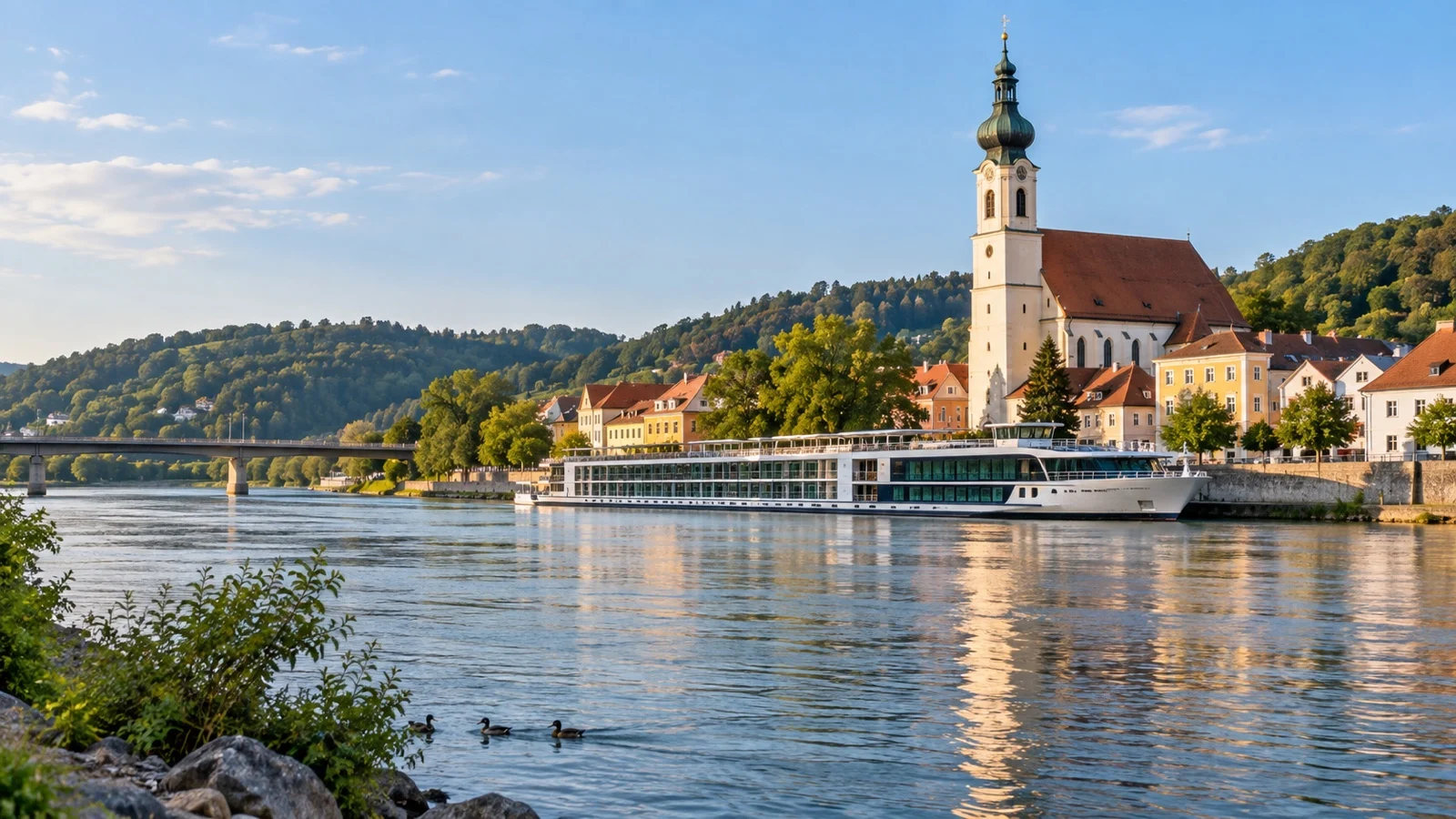
Use the cruise company’s final documents for the exact Donaupromenade position because gangways and rafting can shift. If boarding here, confirm whether the included transfer begins at Munich Airport, a hotel, Passau, or Vilshofen station, and do not substitute a similarly named meeting point.
Arrive in the region at least one night early, keep essential medication and documents with you, and get the luggage handoff in writing. Regional trains can be useful, but stairs, short platforms, schedule changes, and the final taxi still need a backup.
For a port call, old Vilshofen is an easy local plan and Passau is reasonable only with a long call and an early return. Aim for the ship 45 minutes early locally and 90 minutes early from Passau, then verify Schengen documents, rafting access, and gangway assistance.
How this guide was researched: Unless a first-hand visit is explicitly identified above, this guide is based on independent research using official port, tourism, transit, government, and attraction sources where available. Details were checked against AmaWaterways, Vilshofen city information, and Deutsche Bahn’s station page.
Logistics and time-sensitive details were reviewed on September 12, 2026. See our Editorial Policy.