Devil’s Island Cruise Port: Tenders, Ruins and Tides
Devil’s Island is one of the most evocative names on any cruise itinerary, but it is not quite where your feet will land. Ships anchor off the Îles du Salut, and their tenders normally bring passengers to Île Royale, the largest and most visitable island in the group.
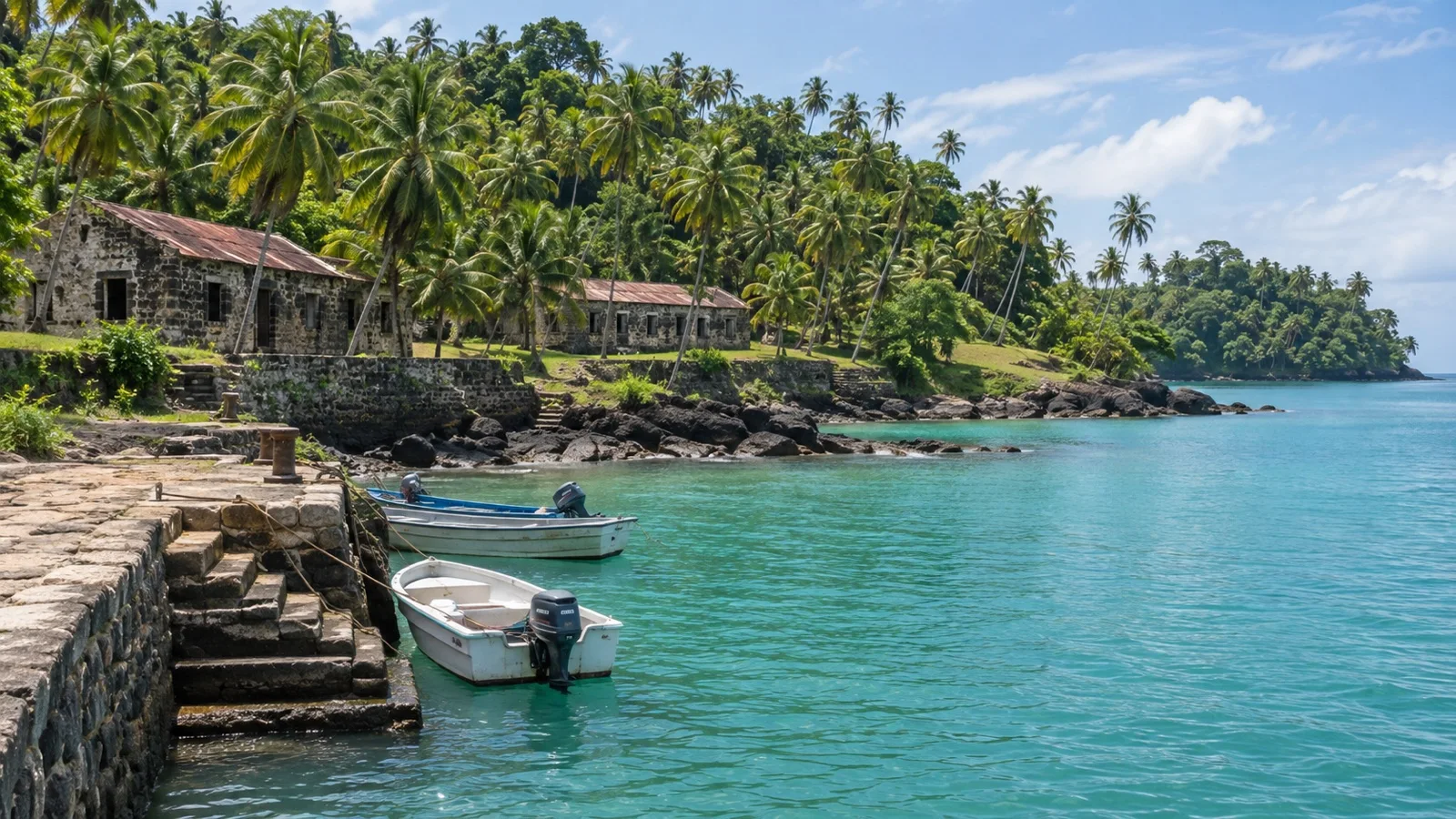
There is no conventional cruise terminal, no town, and no guaranteed landing. What you get instead is a humid, green, deeply atmospheric walk through the remains of a French penal colony, with the Atlantic always close and the forest steadily reclaiming the stone.
My quick take
This is a rare port where inconvenience protects the experience. The tender, limited facilities, rough paths, heat, and uncertain sea conditions keep Île Royale from feeling like a packaged attraction.
Take an early tender if operations begin, carry more water than you think you need, and wear shoes made for roots and broken stone. I would treat the ruins with patience and respect rather than race the island looking for a checklist photograph.
Quick Facts
- Actual landing: Île Royale in the Îles du Salut
- Devil’s Island itself: Normally viewed across the water rather than visited
- Port type: Ship at anchor with tender service
- Terminal: No conventional cruise terminal
- Currency: Euro
- Language: French
- Main activity: Walking the historic ruins and island paths
- Essential gear: Closed shoes, water, rain protection, sun protection, and insect repellent
- Main risk: Tender operations can be shortened or canceled by sea conditions
Why the name causes confusion
The Îles du Salut consist of Île Royale, Île Saint-Joseph, and Île du Diable, known in English as Devil’s Island. Cruise itineraries often use the famous name for the whole call, even though ordinary tender landings are made at Île Royale.
Île Royale held the penal administration and many of the colony’s principal buildings, which is why it contains the broadest visitor circuit. Île Saint-Joseph is associated with punishment and solitary confinement, while Île du Diable became the place of detention for political prisoners, including Alfred Dreyfus.
Do not assume your cruise includes all three islands. Access depends on authorization, sea state, tender planning, and the exact excursion sold by the ship or a licensed local operator.
How the tender operation works
Your ship anchors offshore and uses small boats to transfer passengers to the landing on Île Royale. The crossing may be brief, but open-water swell can make both the ride and the step ashore more demanding than a sheltered harbor tender.
Crew members decide whether each passenger can transfer safely under the conditions of the day. Their decision is based on the moving boat, landing, tide, and available assistance, not on how important the port is to your vacation.
Tender tickets or group assignments may be used when many people want to go ashore at once. Read the ship’s instructions the night before, arrive where and when directed, and do not join a priority line unless your ticket allows it.
The last tender is an operational deadline rather than a suggestion. There is no taxi, public ferry, or road bridge waiting to rescue a passenger who ignores the ship’s recall.
Why calls can be canceled
An anchorage with a small island landing has little tolerance for heavy swell or strong wind. A captain may reach the islands and still cancel the call if the ship can anchor safely but passengers cannot transfer safely.
The Grand Port Maritime de la Guyane recorded 15 cruise calls to the Îles du Salut in 2024 and 11 in 2025. Those modest totals underline how unusual the destination is, but they do not provide a personal probability that your scheduled call will operate.
Book the wider itinerary because you want to explore the Guianas or the route around northeastern South America. If Île Royale is your sole reason for choosing the cruise, its weather vulnerability creates a real chance of disappointment.
When the landing is canceled, the ship controls the alternative program. A scenic pass is sometimes possible, but visibility, timing, and navigational needs may give the captain very few choices.
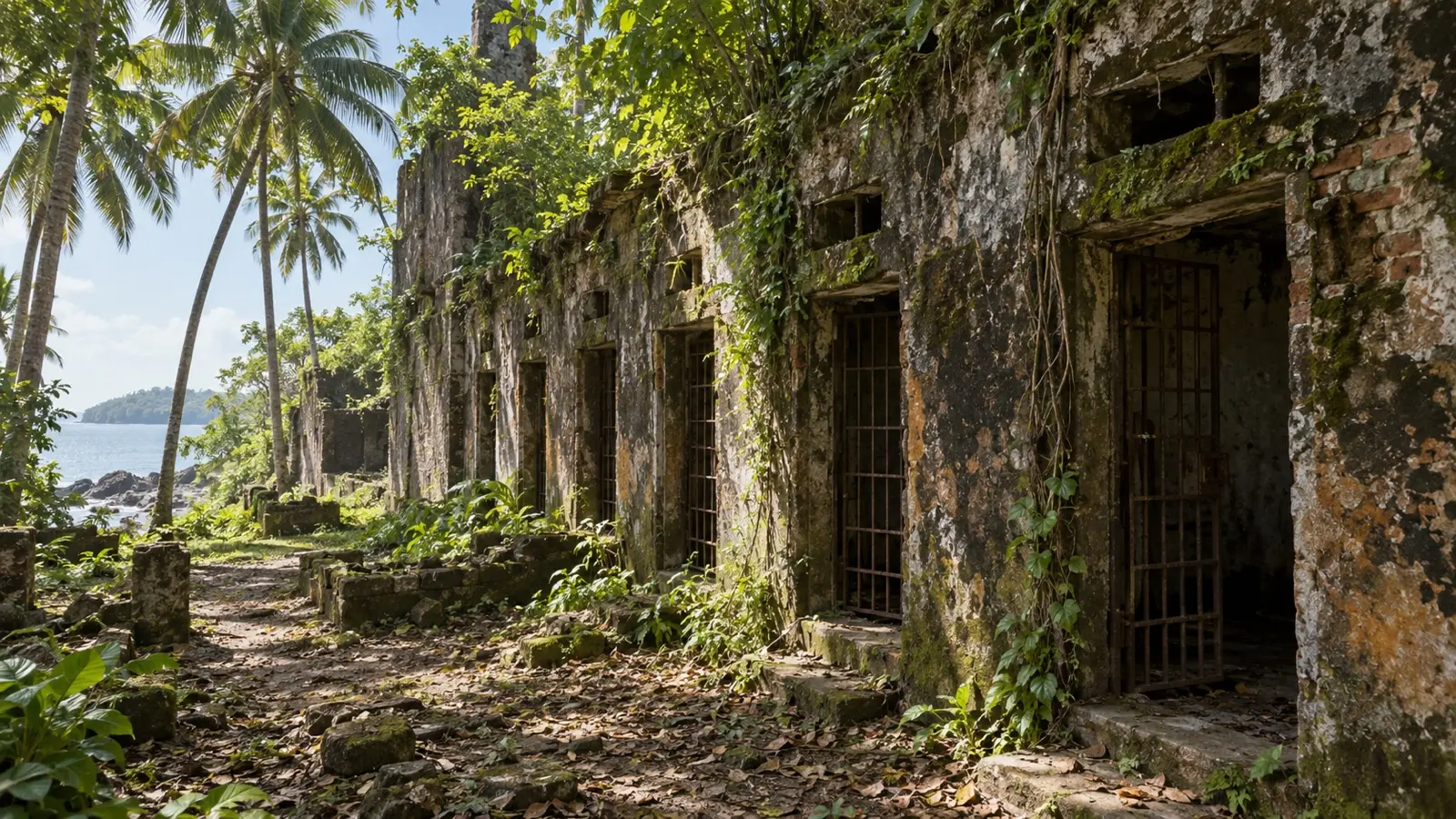
Île Royale is the real visitor experience
Île Royale combines forest, rocky shoreline, colonial-era structures, and ruins from the penal colony. The atmosphere comes from the relationship between them, so the best approach is a slow circuit rather than a sprint between named buildings.
Paths can be uneven, slippery, and steep in places, with roots and loose surfaces underfoot. Heat and humidity turn a distance that looks small on a map into a much more serious walk.
Use marked paths and obey every barrier. A roofless ruin is still an unstable historic structure, and vegetation can conceal weak edges, insects, and holes in the ground.
Give yourself enough time to return without rushing downhill toward the tender. The landing may develop a line near the end of the call, and loading pauses are possible when the swell changes.
The prison story deserves care
The penal colony was a system of imprisonment, forced labor, isolation, illness, and death, not an adventure backdrop. Surviving walls and cells can be visually dramatic, but the people confined here should not disappear behind the romance of a tropical ruin.
Some accounts of Devil’s Island blend documented history with novels, films, and disputed personal stories. Treat signage and responsible historical interpretation as more reliable than a guide repeating a famous scene from memory.
The islands also have histories that begin long before the prison system. If your visit includes interpretation of Indigenous archaeology or earlier maritime use, listen for that longer story rather than letting the penal era occupy every century.
What to see on Île Royale
The cell blocks and administrative ruins
The surviving penal buildings make the scale of the institution tangible. Doorways, barred openings, courtyards, and heavy masonry create a physical record that no museum case could reproduce.
Enter only spaces clearly open to visitors and watch for abrupt changes in light. A phone flashlight helps with footing, but it is not permission to cross a closure or explore an unsafe interior.
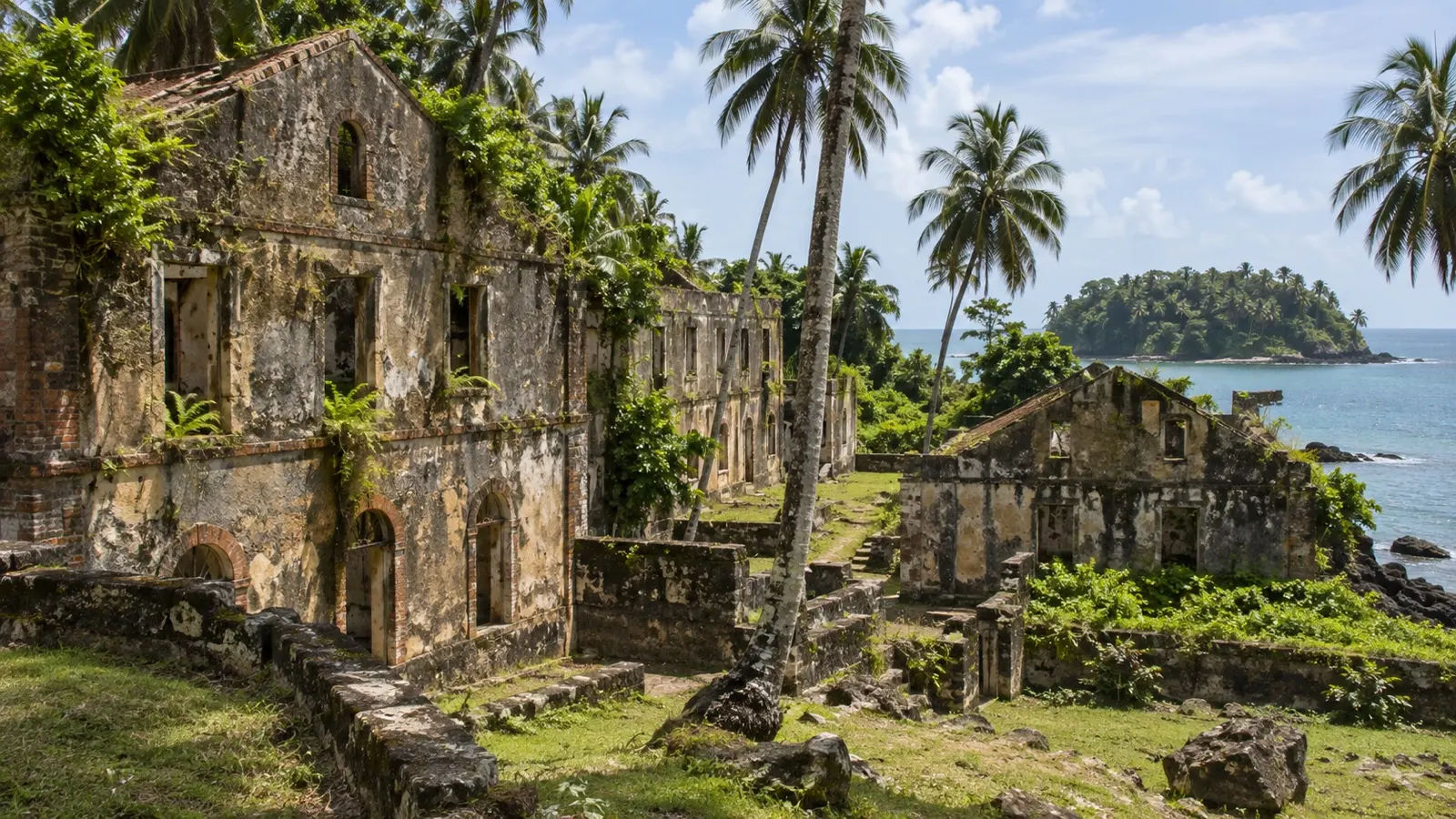
The former hospital
The old hospital is one of the island’s most imposing remnants, its masonry and arcades standing against thick vegetation. It communicates the size and permanence once intended for the penal settlement.
Floors, steps, and edges can be worn or damp, so take photographs from stable ground. Ruins change as conservation work proceeds, and a room accessible on one visit may be closed on the next.
The chapel
Île Royale’s chapel adds another layer to the penal complex, and its interior decoration is linked to convict artist Francis Lagrange. Opening access cannot be assumed, so appreciate the building’s setting even if the doors are closed.
Keep voices low if a guide or another group is interpreting the site. Flash photography, touching painted surfaces, and leaning equipment against old walls can damage what has survived.
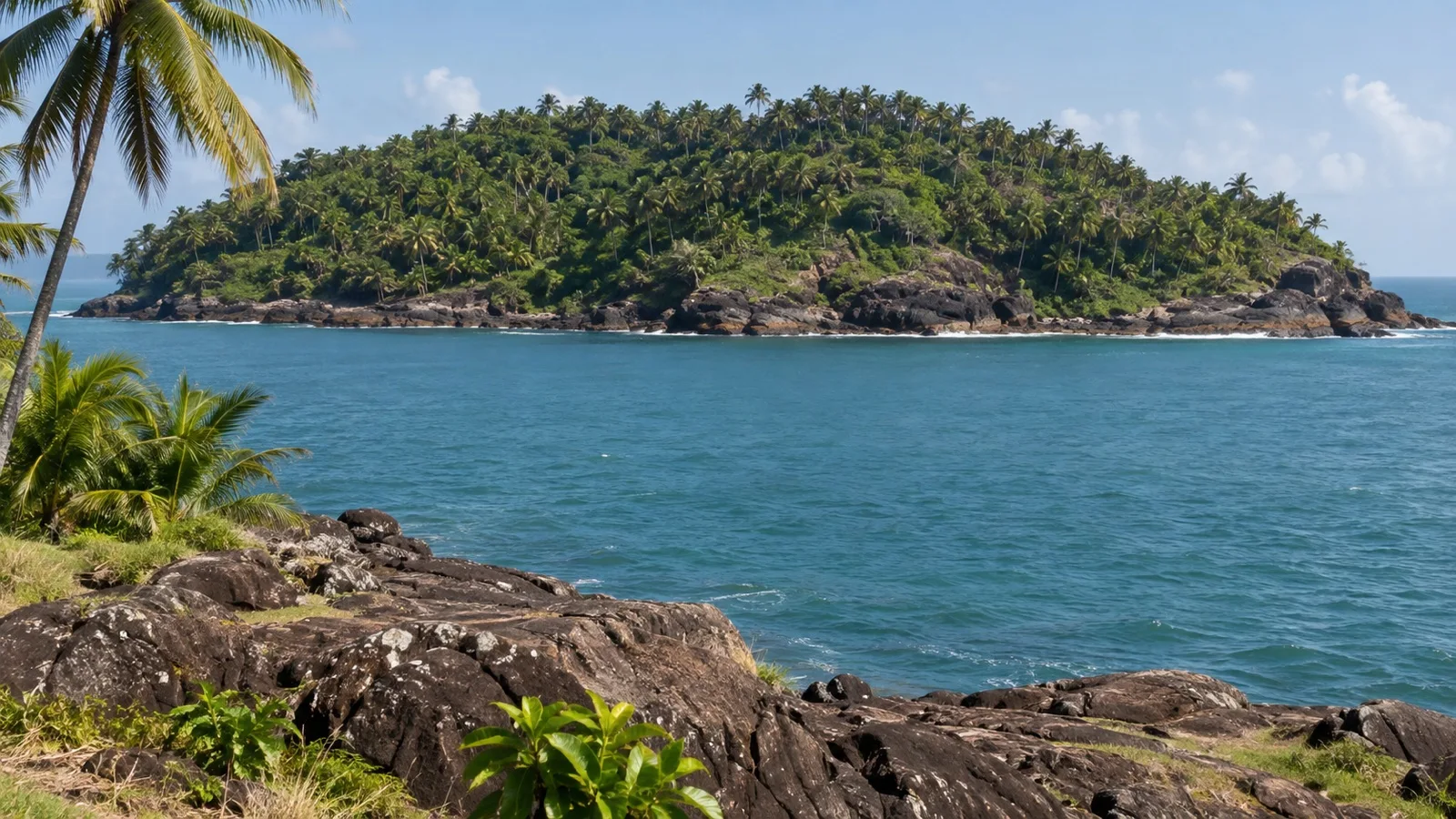
Views toward Devil’s Island
The famous island lies across a narrow but dangerous channel, close enough to look reachable and separated enough to explain its role. This is the point where many passengers finally understand that the name on the itinerary and the place under their shoes are different.
Photograph from the established viewing areas and stay well back from slippery coastal rock. Strong currents are part of the landscape, not an invitation to swim or improvise a boat trip.
Wildlife and the returning forest
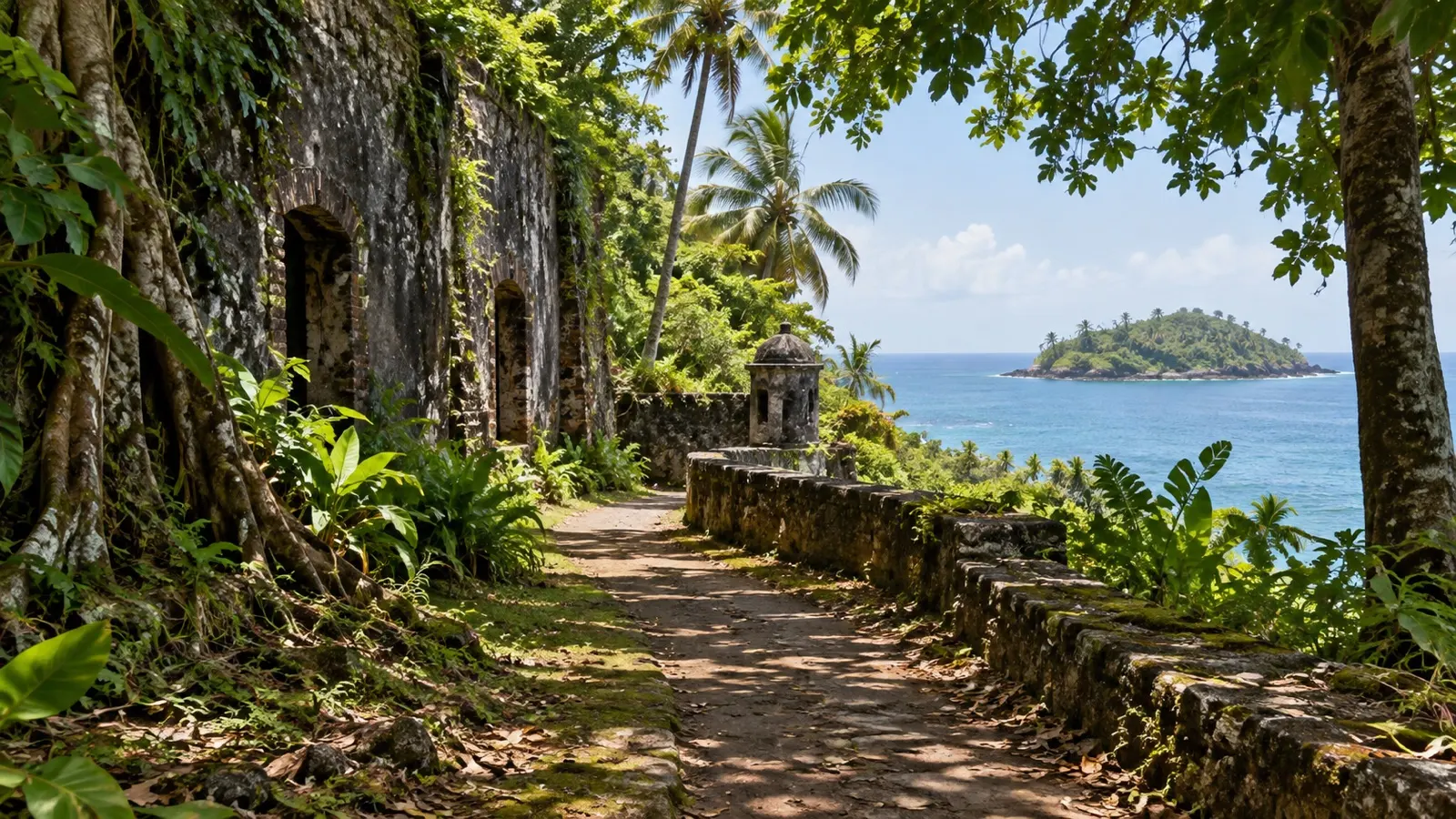
Birds and other animals move through the grounds, and the vegetation is as much a part of the modern island as the ruins. Observe without feeding, cornering, or touching wildlife, even when an animal appears accustomed to people.
Secure food and small bags when you stop for pictures. Habituated animals are fast, and feeding changes behavior in ways that are harmful long after your tender leaves.
Can you visit Île Saint-Joseph?
Some local boat excursions land on Île Saint-Joseph, but a standard cruise call to Île Royale does not automatically include it. The channel crossing, landing conditions, time, and permissions all need to align.
If the ship offers a specific Saint-Joseph excursion, read exactly how the transfer works and how much walking it involves. Never leave Île Royale with an unverified operator or assume the ship will wait because the other island looks close.
The remains on Saint-Joseph are historically significant and emotionally difficult, especially the solitary-confinement areas. A visit deserves time, yet a compressed port call may make Royale the more responsible choice.
Can you stand on Devil’s Island itself?
For ordinary cruise visitors, the realistic answer is no. Devil’s Island is generally seen from Île Royale or from an authorized boat that passes around it, not reached through the cruise tender landing.
Be skeptical of casual promises that ignore local restrictions, currents, and landing safety. If a cruise line advertises an unusual authorized visit, rely on its written description and current local approval rather than the destination nickname.
Facilities, food, and money
Île Royale has limited visitor services associated with its lodging and restaurant facilities, but it is not equipped like a Caribbean cruise center. Hours, capacity, payment acceptance, and access can vary with operations on the island.
Bring euros in small denominations and a card, but never make food service or an electronic payment your survival plan. Carry water from the ship unless the cruise line specifically prohibits taking it ashore or gives different guidance.
A proper lunch can consume a meaningful share of a short landing, and one venue cannot absorb a ship at once. If the ruins are your priority, walk first and eat after returning onboard.
Public restrooms may be limited, closed, or distant from the part of the loop you are walking. Use ship facilities before boarding the tender and ask crew where the available island facilities are located.
Entry documents are not simply Schengen rules
French Guiana is part of France, but it is outside the European Schengen Area. France-Visas explicitly warns that a Schengen visa is not automatically valid for France’s non-European territories.
Your requirement depends on nationality, passport type, itinerary, and the territory covered by any visa you hold. Use the official France-Visas checker and the cruise line’s route-specific instructions well before departure rather than relying on rules for metropolitan France.
Carry the passport and any document the ship instructs you to take ashore. If the cruise line retains passports for clearance, follow its directions and keep a copy of the identification page stored securely.
Health preparation matters in French Guiana
French Guiana has tropical mosquito-borne disease risks, and official health notices can change rapidly. As of September 4, 2026, the regional health agency reported active chikungunya circulation, particularly on the western coast and in the Savanes, and said it was continuing to spread.
Use an effective insect repellent, wear light long sleeves and long pants when tolerable, and follow current medical advice. Check official yellow-fever documentation rules and other health requirements for your full itinerary early enough to act on them.
Medical suitability, vaccines, and medicines are personal health decisions. Consult a qualified travel-health professional and use the latest guidance from the French Guiana regional health agency and the authorities relevant to your nationality.
There is no cruise-terminal clinic waiting beside the landing. Bring essential medication in its original packaging, protect it from heat and water, and tell a companion where it is.
Weather and what to pack
French Guiana has an equatorial climate, so warmth and humidity are normal throughout the year. Rain can be intense, shade can disappear along exposed sections, and clothing may stay damp long after a shower passes.
Wear closed walking shoes with a dependable sole, breathable clothing, and a brimmed hat. Add a compact rain layer and a waterproof pouch for your phone, passport, tender ticket, and any medication.
A refillable bottle, sunscreen, and insect repellent belong in the same small day bag. Keep your hands free for the tender transfer rather than carrying loose shopping bags or a large umbrella.
Storms and swell are related operational problems, but bright weather does not guarantee a smooth landing. Trust the bridge and tender crew’s direct observations over what a weather app predicted for Kourou.
Accessibility and mobility
This is a difficult call for many travelers with limited mobility. The moving tender, open-water transfer, historic landing, uneven slopes, roots, heat, and limited facilities combine into a much higher barrier than the island’s small size suggests.
Cruise lines may require passengers to take steps, transfer without a mobility device, or meet other safety criteria before boarding a tender. Ask for your ship’s exact policy in advance, then understand that the captain or crew can still stop transfers on the day.
A collapsible aid does not guarantee that it can be carried, and powered mobility devices may be excluded from tenders. Do not pressure crew members to make an exception that puts you, them, or other passengers at risk.
If you can land but cannot complete the circuit, choose a short route near the landing and turn back before fatigue begins. Staying aboard can also be the safest choice, with island views from deck and none of the pressure to keep pace on rough ground.
A realistic two-hour island plan
Board an early tender, confirm the final return time as you step ashore, and begin the main Île Royale circuit before the heat builds. Pause at the principal ruins, hospital, and chapel, then take the established viewpoint toward Devil’s Island.
Turn toward the landing while you still feel comfortable rather than after your water is gone. Leave food, shopping, and one last distant photograph for whatever time remains near the tender point.
A realistic shorter plan
If the landing begins late or your mobility is limited, stay close to the developed area and visit only clearly accessible ruins and viewpoints. The goal is to understand the setting, not prove that you completed a perimeter route.
Set a turnaround alarm well before the published final tender. Loading pauses can turn an apparently short line into a nervous wait, and the crew should never have to search the island for you.
Tender safety
Keep both hands free, wait for crew commands, and step only when told. The sailor holding your arm is matching your movement to two moving platforms, so sudden lunges are more dangerous than a moment’s delay.
Sit where directed, keep fingers away from the boat’s edge, and do not stand for photographs during the crossing. Secure hats and cameras before the tender leaves the ship.
If you become seasick, tell the crew and sit where they recommend. If conditions worsen ashore, return when the ship calls rather than finishing the loop.
Quick answers
Where do cruise passengers actually land?
They normally land by tender on Île Royale, the largest of the Îles du Salut. Devil’s Island is generally viewed across the water rather than visited.
Is there a pier for the cruise ship?
No conventional cruise berth serves the island call, so the ship remains at anchor. Every landing depends on tender operations.
Can the port be canceled?
Yes, because wind, swell, tide, and landing conditions can make passenger transfer unsafe. A cancellation may happen even after the islands are visible from the ship.
Is the island a beach destination?
No, the main experience is the historic landscape and ruins. Dangerous currents, rocky shores, and operational restrictions make swimming an inappropriate plan.
Do I need a visa?
That depends on your nationality, passport, and itinerary, and French Guiana is not covered automatically by every Schengen visa. Check France-Visas and the cruise line’s written instructions.
What should I bring ashore?
Bring water, sun and rain protection, insect repellent, essential medication, and closed walking shoes. Keep the load compact so both hands are free during the tender transfer.
My last word
Devil’s Island is a famous name attached to a quiet, difficult, and profoundly uncommercial port day on Île Royale. Accept the geographical correction, respect the human history, and let the forest and ruins speak without trying to turn them into a theme park.
The tender may never launch, and that uncertainty is part of booking this coast. If it does, go early, walk carefully, and return before the final boat becomes the only thing you can think about.
How this guide was researched: No firsthand Île Royale visit is claimed. This guide was checked September 12, 2026 against the Grand Port Maritime de la Guyane, the French Guiana Tourism Committee, France-Visas, and the French Guiana Regional Health Agency; confirm changing landing, entry, and health details before sailing.