Hotel Barge Cruise Guide: Canal du Midi, Burgundy and the Caledonian Canal
A hotel barge is not a miniature river ship. It generally carries roughly six to twenty-two guests, moves at walking pace, and uses towpath moorings instead of cruise terminals.
The appeal is an intimate week built around meals, bikes, and guided drives into the countryside. This guide explains how the main regions differ and what the small hull means for comfort and accessibility.
Quick take
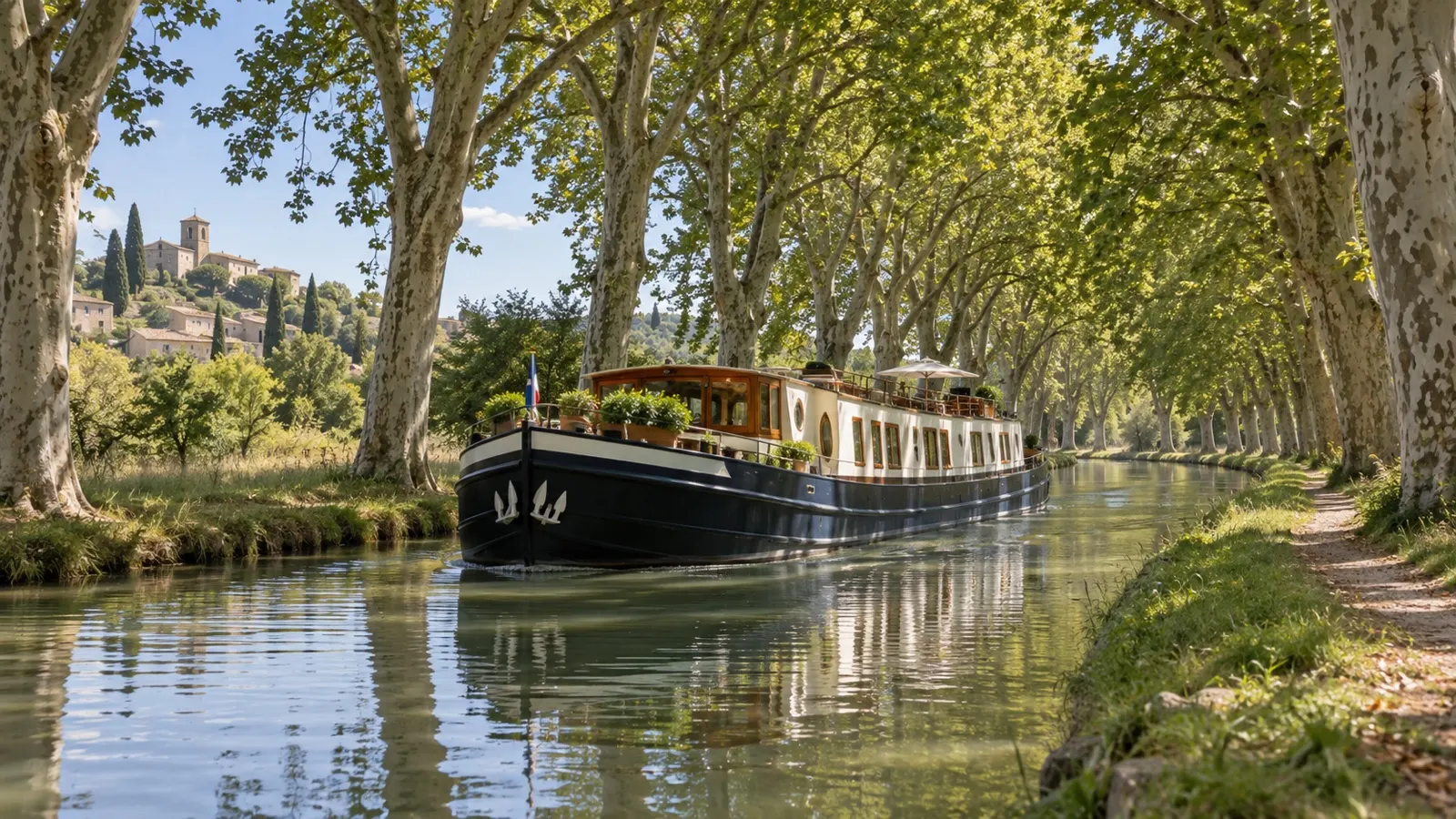
A hotel barge works best for travelers who enjoy a very small social group and a slow daily rhythm. If you need a gym, a show lounge, or plenty of private space beyond your cabin, this is probably the wrong product.
The appeal is the scale. Guest and crew numbers vary by vessel, but meals, guided outings, and flexible moorings are central to many hotel-barge programs.
A whole-boat charter gives a family or group control over the guest mix, while cabin bookings place travelers with a small group of strangers. Think carefully about that social format before booking a four-cabin vessel.
The main drawback is the price per night, which can be much higher than a mainstream river cruise. Compare what is included and whether a cabin booking or whole-boat charter fits your group.
The quick facts
- Size and crew: European Waterways lists a fleet carrying 6 to 20 passengers, with a stated passenger-to-crew ratio of two to one or better. Its Scottish Highlander takes 8 guests with 4 or 5 crew; the Burgundy barge L’Impressionniste takes 12 with 6.
- Length of cruise: the standard is six nights and seven-days, Sunday afternoon to Saturday morning. Three and four night versions exist but are usually sold as charters rather than cabin-by-cabin.
- How you book: individual cabins are sold on scheduled departures, and whole-boat charters are common for families or groups. Ask whether a quoted departure is guaranteed, because a very small cabin sailing may depend on minimum demand.
- What is included: European Waterways currently lists accommodation, meals, wines and an open bar, escorted excursions, local transfers, and bicycles among its inclusions. Tipping is discretionary, and any suggested range should be checked against the current operator guidance.
- Where you tie up: at towpath moorings, lock landings, and village quays rather than cruise terminals. The overnight place can change with water levels, lock operations, and local restrictions.
- The gauge: most French barges are built to the Freycinet gauge, which is why so many are almost exactly 126 feet long and about 17 feet wide.
- Season: most scheduled departures run from spring into fall, but dates vary by operator and waterway. Some 2026 Canal du Midi departures begin in March or run into early November, while canals may have winter closures or restricted operations.
- Steps, not elevators: European Waterways states that all passengers should be able to manage approximately 15 steps and that wheelchairs cannot be used on board. That single sentence rules the format out for a lot of people.
The Freycinet gauge decides everything
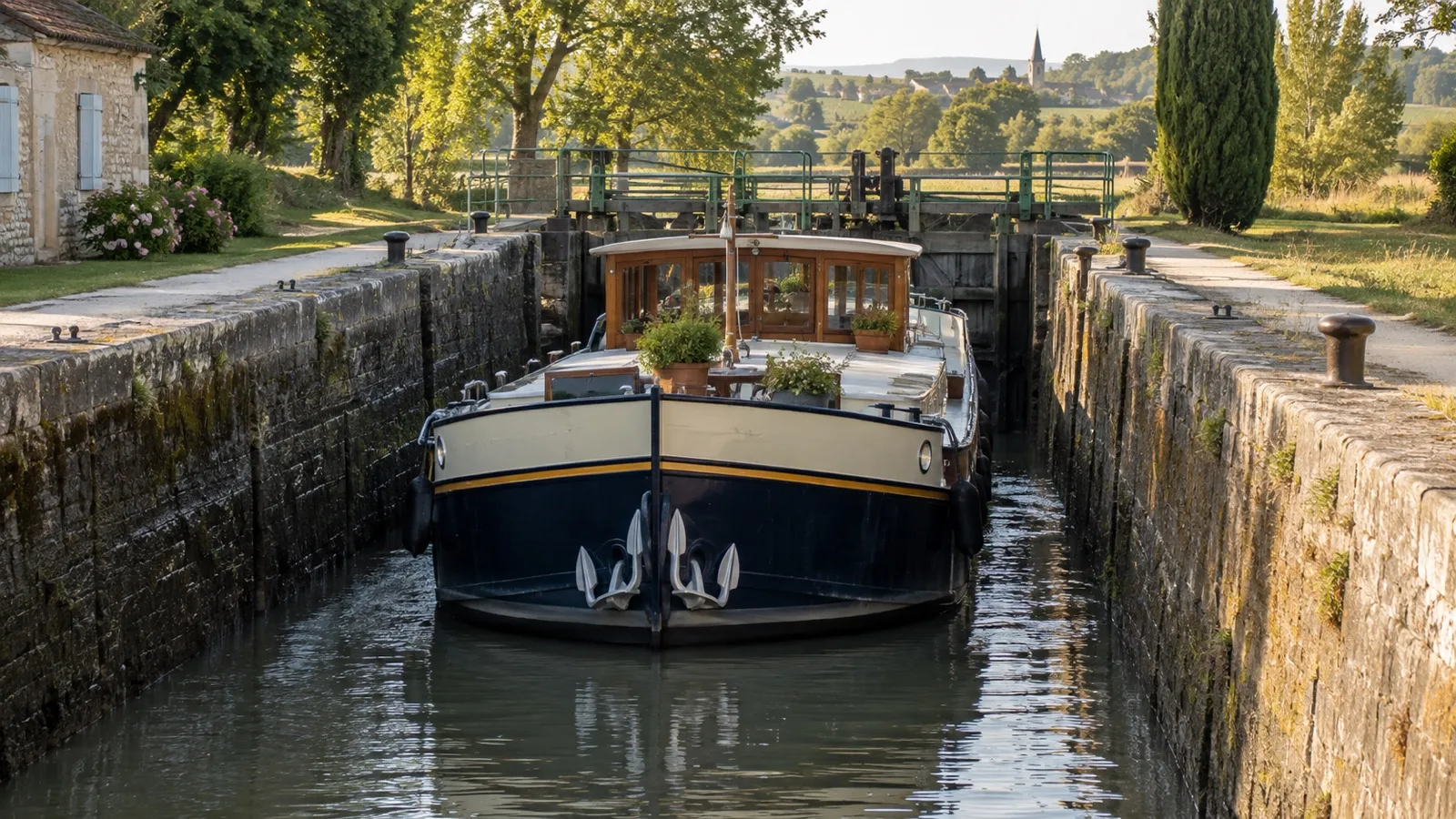
Every odd thing about a French hotel barge traces back to a lock size fixed in the nineteenth century. The small-gauge canal network was standardized around a chamber that fits a barge of roughly 126 by 17 feet, and nothing wider has ever been able to get through.
You can see the constraint in the specifications.
CroisiEurope describes its canal vessels as Freycinet-gauge barges and currently lists Déborah at 38.5 meters long and about 5 meters wide, or roughly 126 by 16.6 feet. It carries 22 passengers in 11 cabins.
The network those boats use is substantial and operational details can change. Check Voies navigables de France for current network information, closures, and notices before relying on a route.
Britain and Ireland use different lock dimensions, operating calendars, and navigation rules. Confirm the vessel and route with the operator rather than assuming a French canal barge can move to another network.
The practical instruction is to check the barge’s actual length before you fall in love with a route. A barge that fits one region may still be too long, wide, or tall for another network, so treat route changes as an operator question rather than an easy swap.
There are no ports, only bollards
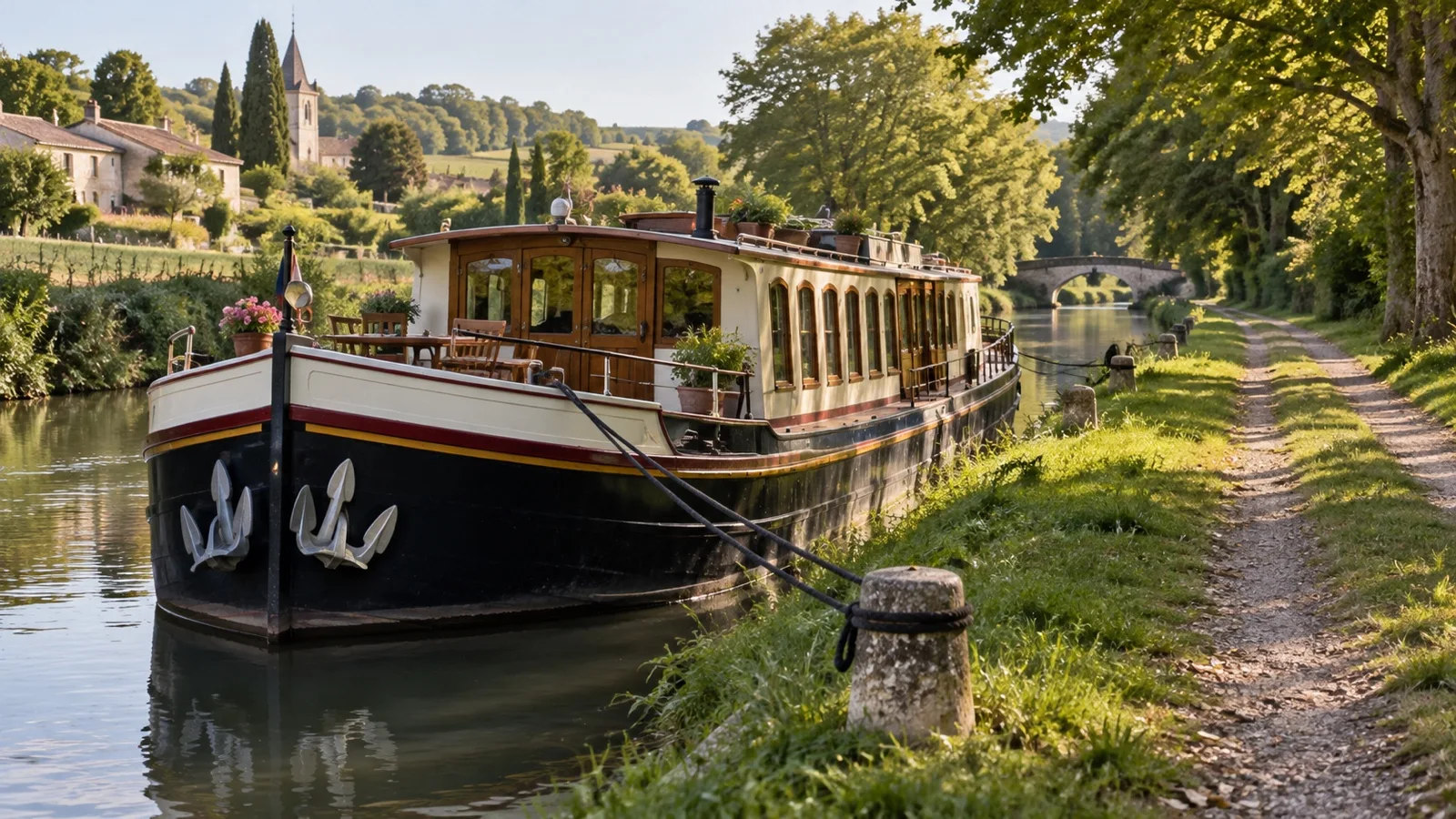
This is the part that confuses people coming from ocean or river cruising. A barge does not dock, it moors, usually against a grass bank with mooring pins or a short stretch of quay wall in a village.
Because many moorings are simple banks, landings, or quay walls, the overnight stop can change. Water levels, lock operations, local restrictions, and safe access can all affect the plan.
Locks are the real timekeeper. Operating hours and planned closures vary by waterway, so the crew must fit each day’s progress around the current navigation schedule.
On suitable routes, passengers may be able to leave the boat, walk or cycle along the towpath, and rejoin at a later lock. Ask the crew before leaving because access and timing vary.
The flip side is that a barge vacation is genuinely slow. If you need to feel that you are getting somewhere, book something else.
The bikes and the minibus
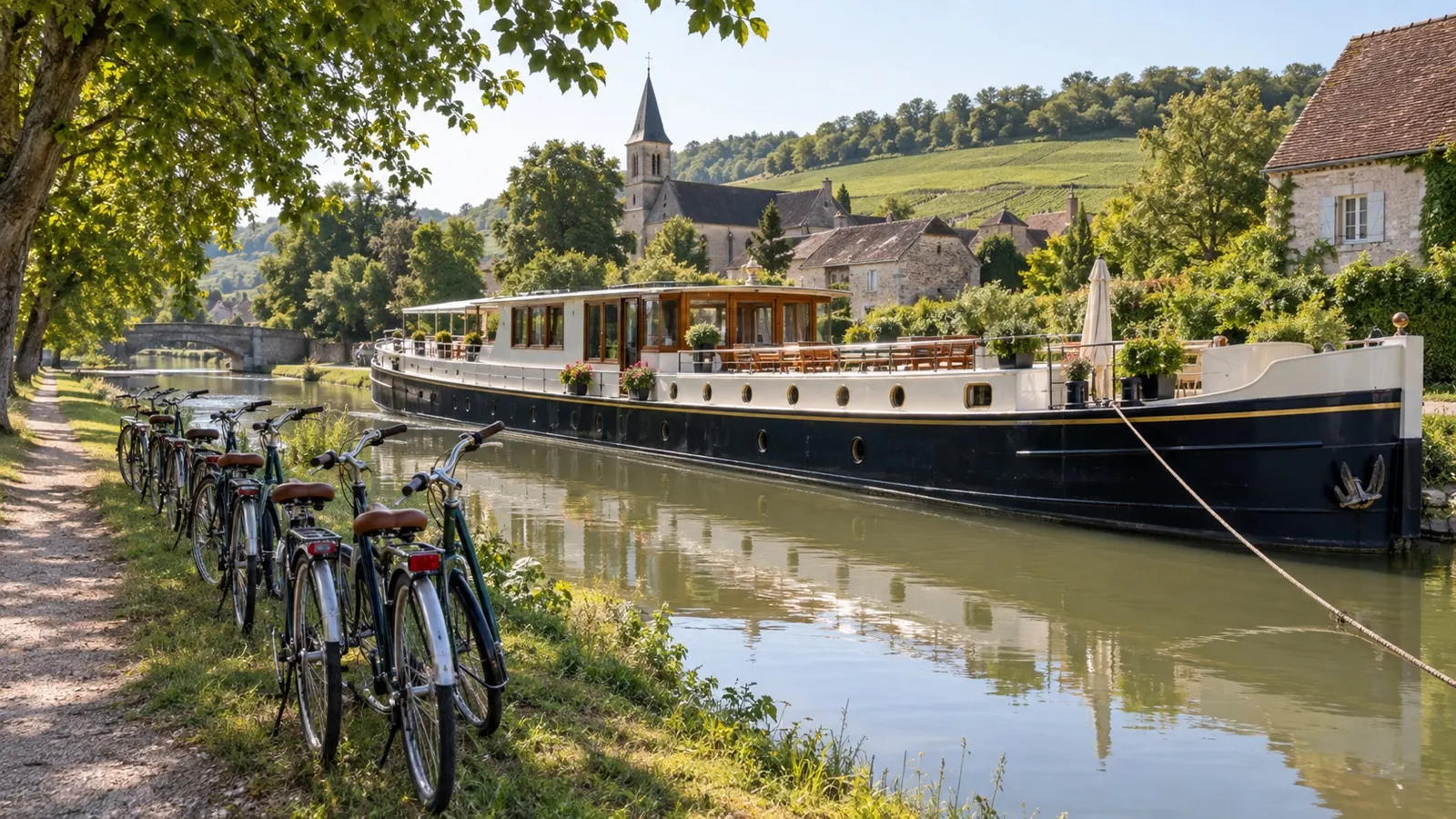
Two practical details often shape the daily rhythm. European Waterways says its barges carry bicycles, but confirm bike availability, sizing, helmets, and route conditions with your operator.
Some canal towpaths offer easy walking or cycling, while surfaces and traffic exposure vary. Ask which sections are suitable and whether the crew can suggest a safe place to rejoin the barge.
Many packaged hotel-barge programs also use a minibus for guided sightseeing away from the canal. European Waterways includes escorted excursions and local transfers, but the pickup points and daily plan depend on the itinerary.
Road transfers make it possible to visit attractions beyond walking distance of the canal. Check the amount of driving and how much time each excursion leaves for independent exploring.
It can be worth skipping an included excursion if the operator allows independent time. Agree on a safe rejoining point and timing before walking or cycling away from the barge.
How the main regions differ
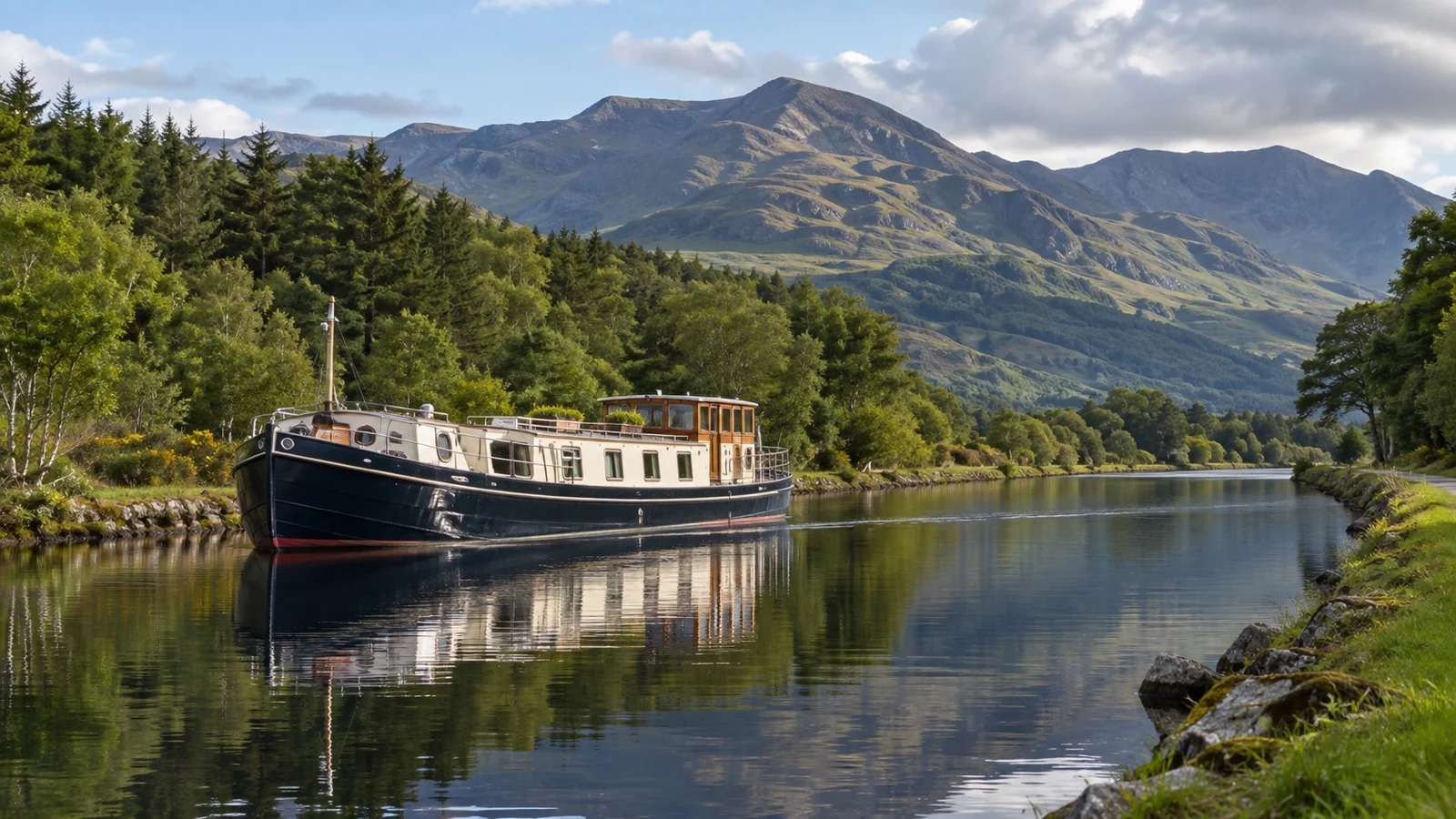
Barge regions differ in scenery, lock density, excursions, and how much open water they include. These are practical starting points rather than a ranking.
- Canal du Midi, Languedoc: the postcard route, listed by UNESCO since 1996 as a roughly 224-mile network of 328 structures built between 1667 and 1694. Barges here include Anjodi and Athos with 8 and 10 guests, working between Marseillan, Le Somail and the Carcassonne end.
- Burgundy: the deepest bench of boats, spread across the Canal de Bourgogne, the Canal du Centre, the Canal du Nivernais and the River Yonne. This is the wine week, with Beaune and Dijon reachable by minibus from the towpath.
- The Caledonian Canal, Scotland: the outlier, because you are on open water for most of it rather than a ditch. Scottish Highlander carries 8 guests through the Great Glen, including the full length of Loch Ness.
- The Shannon, Ireland: big lakes rather than narrow canal, with Lough Derg and Lough Ree doing most of the work. Shannon Princess takes 10 guests, with Clonmacnoise, Athlone and Killaloe on the run.
- The Thames, England: the English exception. Magna Carta runs 8 guests between Hampton Court Palace and Henley-on-Thames, because the historic narrow canals inland are far too tight for a hotel barge.
- Alsace and Lorraine: the Canal de la Marne au Rhin out of Strasbourg, where CroisiEurope bases Jeanine and Madeleine. Good for anyone who wants a city at one end of the week.
Fun fact: the Caledonian Canal is 60 miles long, but only 22 miles of it was actually dug, according to the skipper’s guide published by Scottish Canals. The other 38 miles are natural lochs, which is why a barge week there feels more like a Highland lake cruise than a canal trip.
How to decide
Start with the group, not the region. A barge only works if the people on board would happily eat dinner together six nights running, which is a real question and not a rhetorical one.
If you can fill the boat, compare a whole-boat charter with the total cost of separate cabins. Published rates can run into tens of thousands per week and vary by barge and date, so use the operator’s current rate sheet.
If you cannot fill a boat, compare cabin departures on several vessel sizes. A larger guest group offers more social variety, while a smaller barge can feel more intimate.
Ask two specific questions before you pay. What is the barge’s overall length, and how many locks does the week actually include, because a low lock count means more road time and less canal.
A realistic word on accessibility
This is the format’s hardest limitation and operators are unusually blunt about it. European Waterways states plainly that passengers should be able to manage around 15 steps and that wheelchairs cannot be used on board.
The limitation is often structural. A Freycinet-gauge hull is about 17 feet wide, and operators may use steps, narrow passages, gangplanks, and decks without elevator access.
Getting on and off can also be difficult because moorings vary. Ask for exact gangway, step, handrail, surface, and lighting details for the specific barge and itinerary.
If mobility is a factor, tell the operator before booking and ask for the vessel-specific access sheet. Some river ships may offer elevators and more formal gangways, and this guide to wheelchair-friendly cruise ports is another useful starting point.
When to go, and the weather
Hotel-barge seasons vary by route and operator, with many departures running from spring into fall. Current 2026 schedules include some late-March and early-November dates, while Scottish Canals lists a Caledonian Canal sea-to-sea winter closure from November 1, 2026, to March 24, 2027.
Southern France can be hot in midsummer, and shade and ventilation vary by vessel. Check official forecasts and the barge’s air-conditioning details, then compare spring and fall dates if you prefer milder weather.
Burgundy conditions vary across the season, and harvest timing changes by year. Check current forecasts and ask whether local harvest activity affects planned winery visits.
Scotland and Ireland can be cool and wet even during the main cruising season. Pack waterproof layers and check the current forecast before departure.
Quick answers
How many people are on a hotel barge cruise?
Typically about 6 to 22 passengers, depending on the operator and vessel.
Crew size varies by vessel. Check the published guest and crew capacities if service ratios matter to you.
Do I have to charter the whole boat?
No, individual cabins are sold on most barges.
Whole-boat charter is a common option and gives you control over the group dynamic, but many scheduled departures also sell individual cabins.
What is the Freycinet gauge?
It is the nineteenth-century French standard lock size that caps barges at roughly 126 by 17 feet.
It is the reason almost every French hotel barge is the same size.
Which ports does a barge visit?
None, in the cruise sense.
Barges moor at bollards, lock landings and village quays, and excursions run from wherever the boat happens to be tied up.
Can you get off and walk or cycle?
Yes, and it is one of the best things about it.
European Waterways says its barges carry bicycles, and some routes allow passengers to walk or cycle along the towpath. Confirm route conditions and the rejoining point with the crew.
The last word
A hotel barge is one of the least ship-like products sold as a cruise. The focus is a small guest group, slow progress, informal moorings, meals, and guided visits rather than terminals and large onboard venues.
If you are weighing it against a conventional sailing, this comparison of river cruising against ocean cruising sets out the trade-offs. A barge is smaller and slower than the river-cruise end of that spectrum.
For a longer trip, this overview of French cruise ports can help connect a barge week with a coastal sailing. The Irish cruise ports guide can serve the same purpose around a Shannon itinerary.
Book it for the pace, not the distance covered. A hotel barge is designed for slow travel and frequent stops.
How this guide was researched: Unless a first-hand visit is explicitly identified above, this guide is based on independent research using official sources, with fleet sizes, inclusions, schedules, and accessibility limits checked against European Waterways and CroisiEurope material. Waterway information was checked against Voies navigables de France and Scottish Canals, and Canal du Midi heritage details against UNESCO.
Logistics and time-sensitive details were reviewed September 12, 2026. See our Editorial Policy.