Avignon River Cruise Port and Arles: Provence on Foot
Avignon and Arles are two of the Rhône’s most rewarding river cruise calls because the historic centers begin close to the water. In both cities, you can step ashore and reach major monuments on foot, although the exact berth, river conditions, walking surface, and time in port still shape what is realistic.
The two stops are close on a map but very different in character. Avignon is a walled medieval city dominated by the immense Palace of the Popes, while Arles reveals Roman arenas, underground galleries, a Romanesque cathedral, and the landscapes associated with Vincent van Gogh.
Quick Facts
- River: Both cities stand on the Rhône in southern France, with Avignon upstream from Arles.
- Typical access: River ships normally use a gangway to a quay, but the assigned berth can change and ships may tie alongside one another.
- Best independent sights in Avignon: Palace of the Popes, Pont Saint-Bénézet, Place de l’Horloge, and the lanes inside the ramparts.
- Best independent sights in Arles: The amphitheater, Roman theater, Saint-Trophime, and the historic center’s Roman remains.
- Best excursion candidates: Pont du Gard from Avignon, and the Camargue or Les Baux from Arles.
- Currency and language: Euro and French, with English commonly used at major visitor sites.
- Main physical challenges: Cobbles, slopes, steps, summer heat, strong wind, and variable gangway angles.
Where River Ships Moor in Avignon
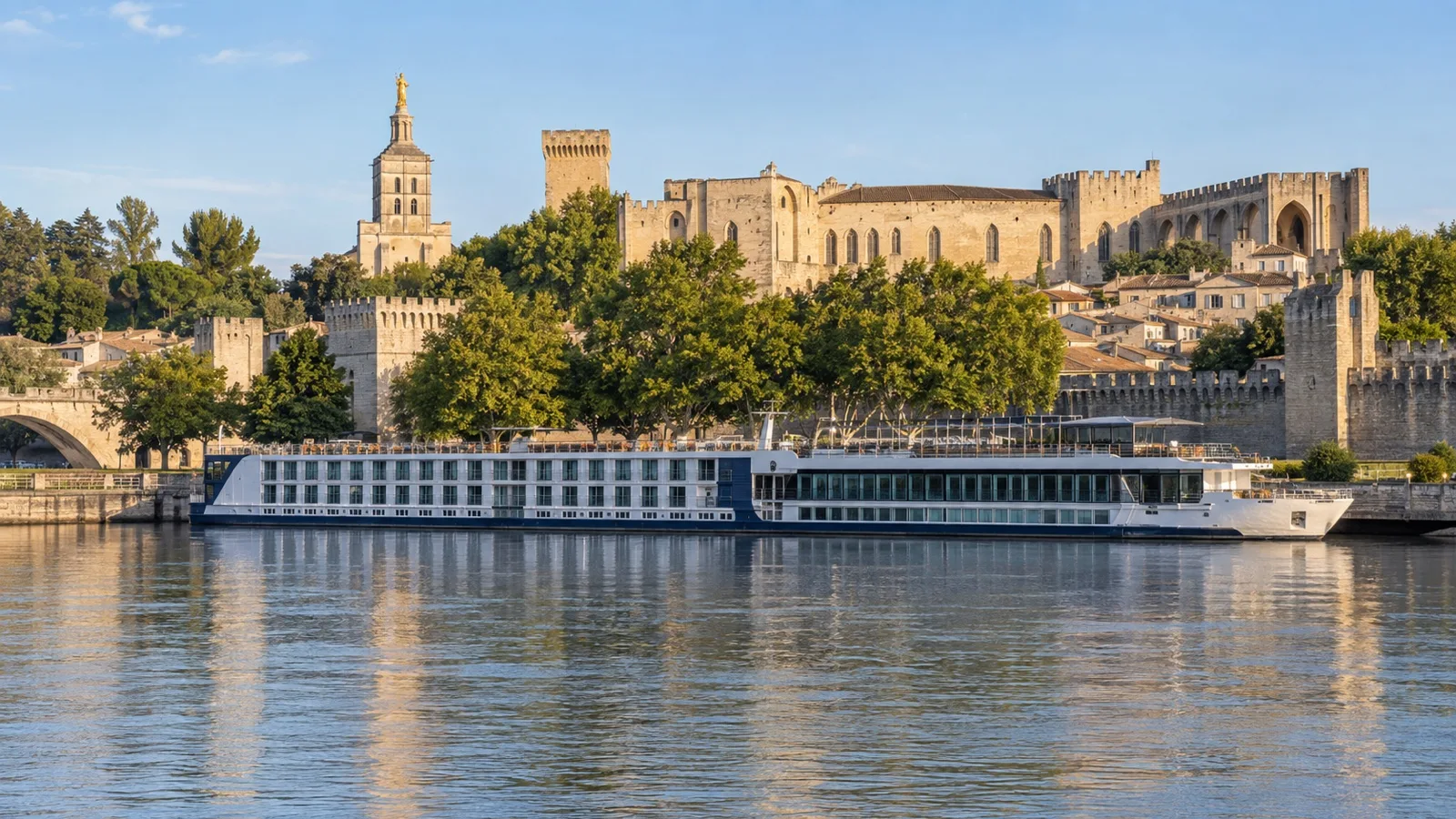
Many river ships berth along the Rhône near Avignon’s ramparts, putting the old city within a practical walk. That convenient arrangement is common, but it is not a guaranteed address printed permanently on the itinerary.
Local traffic, water level, operational restrictions, and the number of ships in town can affect the assigned quay. Your cruise director is the best source for the final gangway location and all-aboard time on the day.
When several vessels share a quay, guests may cross through another ship to reach land. This can add thresholds, gangways, and short stair sections that matter more to limited-mobility travelers than the distance into town.
From a central berth, the route inside the walls is straightforward, but the Palace of the Popes stands above the river. The walk becomes progressively uphill and may cross polished stone or cobbles, so comfortable shoes are essential.
Avignon’s Historic Center
Avignon became the seat of the papacy in the 14th century, and the fortified palace still defines the city skyline. The old town surrounds it with squares, churches, museums, shops, and lanes that reward an unhurried walk.
UNESCO’s Historic Centre of Avignon listing brings together the Palace of the Popes, the episcopal buildings, Notre-Dame-des-Doms Cathedral, the ramparts, and Pont Saint-Bénézet. That grouping is also a useful sightseeing priority list when a call is short.
Palace of the Popes
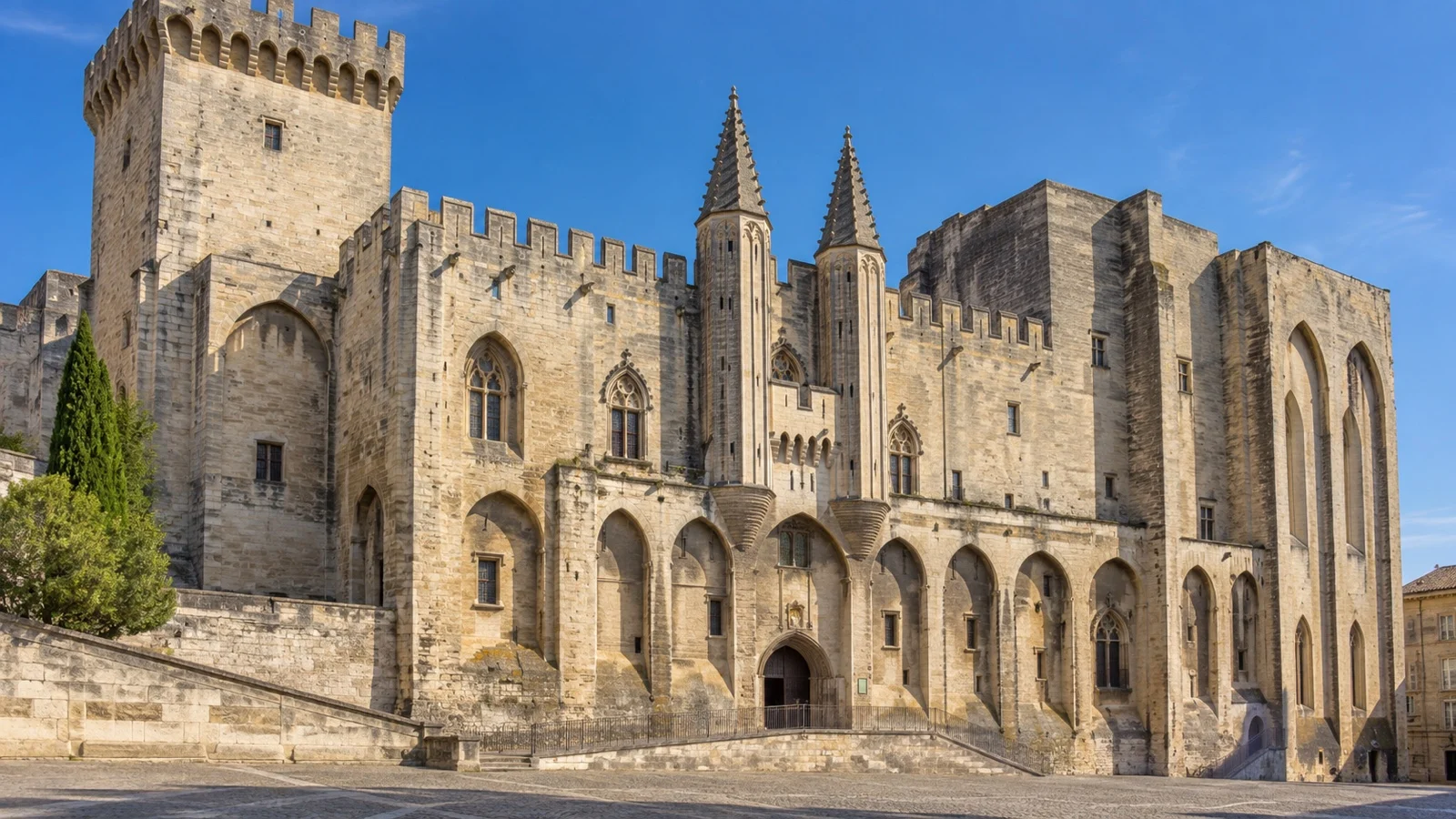
The Palace of the Popes is vast, austere, and far more complex than its fortresslike exterior suggests. Ceremonial halls, chapels, courtyards, towers, and surviving painted decoration tell the story of both spiritual authority and court life.
Allow more time than a quick exterior photograph if interiors matter to you. The official Palace of the Popes website is the right place to confirm opening hours, temporary closures, ticket combinations, and current visitor tools.
Expect stairs and long interior routes, although accessibility provisions exist for parts of the complex. Travelers who cannot manage the full visit can still appreciate Place du Palais, nearby viewpoints, and the old city’s atmosphere without committing to every room.
Pont Saint-Bénézet
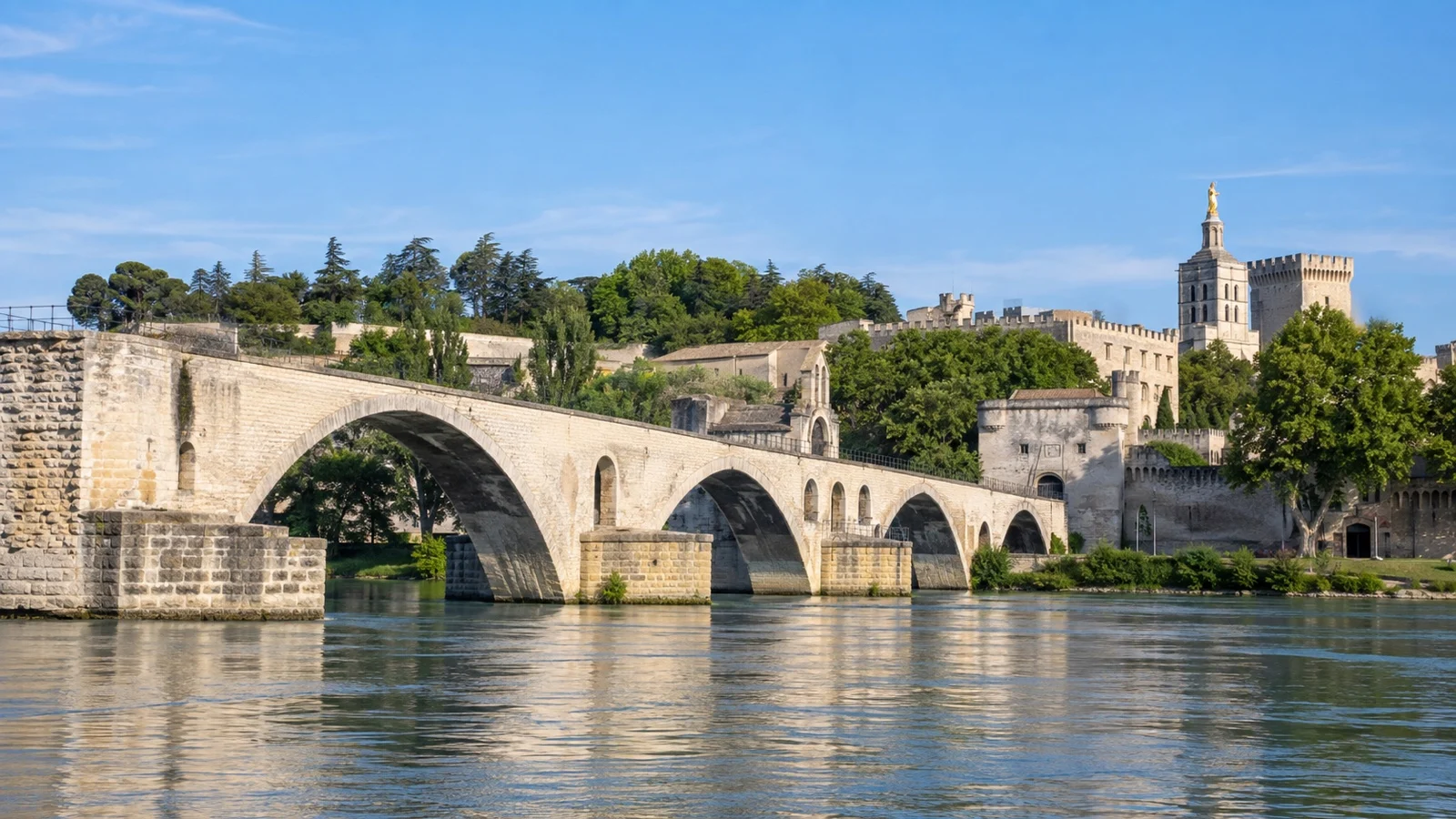
The Pont Saint-Bénézet is the famous broken bridge often called the Pont d’Avignon. Only four of its original arches survive, extending partway into the Rhône rather than crossing the river.
The bridge is smaller than many visitors expect, but its setting explains the relationship between river, walls, and medieval city. A combined ticket may be available with the palace, though prices and inclusions should be verified on the official site.
A Gentle Avignon Walk
A relaxed route can link Place de l’Horloge, Place du Palais, the cathedral area, and the lanes around Rue des Teinturiers. The last of these follows a small canal once associated with textile workshops and feels removed from the monumental scale of the palace.
Les Halles market is useful for a look at local produce, cheese, bread, olives, and prepared food, but market activity varies by day and hour. Check the city’s current information before planning a visit around a specific stall or meal.
Where River Ships Moor in Arles
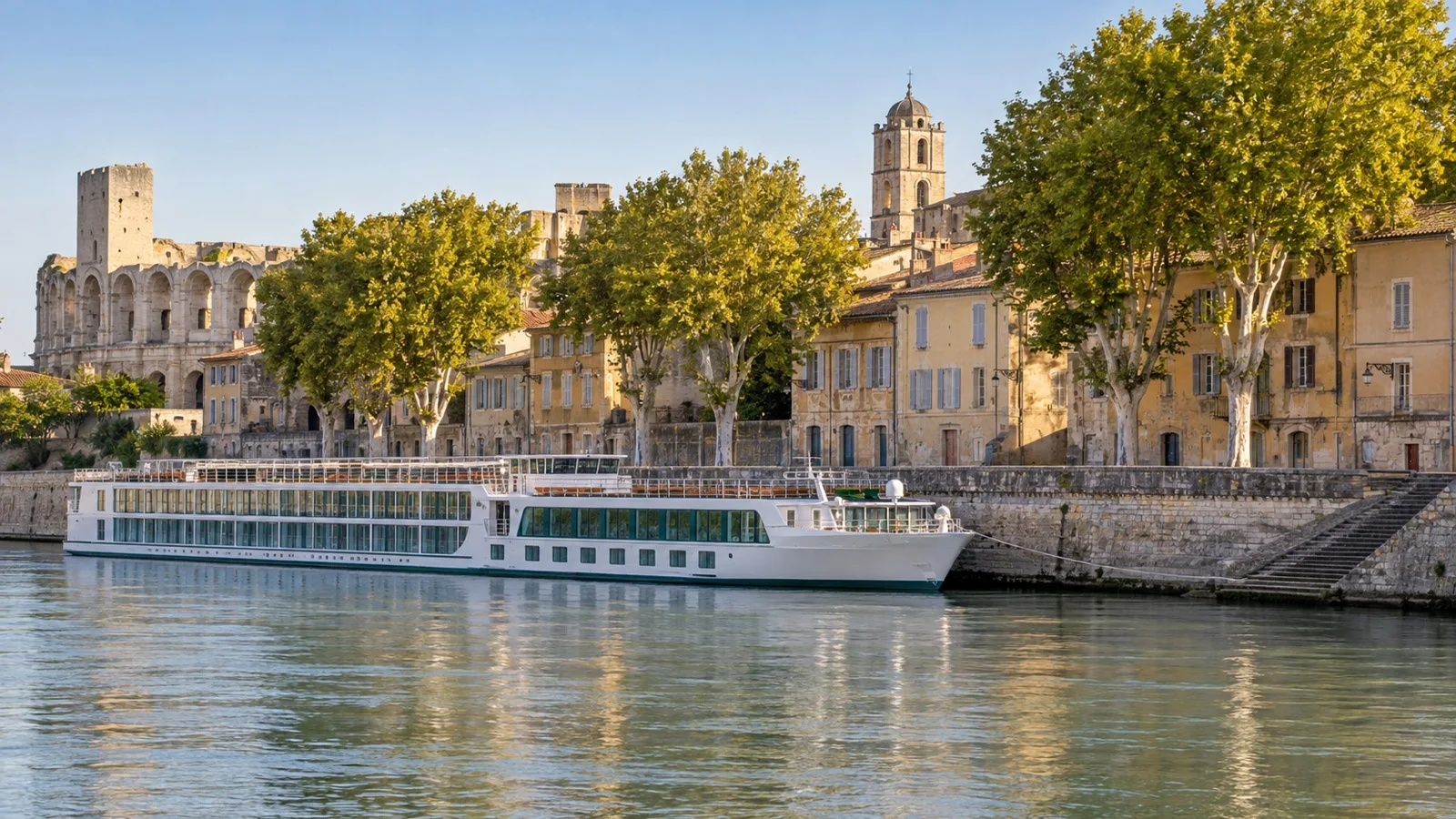
Arles river berths are generally close enough to make the historic center walkable, but the gangway location is assigned operationally. A change of quay can add distance, and some itineraries may use an alternate nearby port when navigation or local events require it.
The first part of the route can feel ordinary, then Roman stone suddenly appears within the living city. Streets are compact, but cobbles, curb cuts, slopes, and summer crowds make a short distance more demanding than a map suggests.
Arles and Its Roman Core
Arles was an important Roman city and later adapted its ancient fabric to medieval life. Instead of one isolated archaeological park, it offers monuments woven through streets, homes, cafes, and public squares.
UNESCO’s Roman and Romanesque Monuments of Arles listing includes the amphitheater, Roman theater, cryptoporticus, Baths of Constantine, Alyscamps necropolis, and Saint-Trophime. A half-day call requires choices, because seeing every component properly is unrealistic.
The Amphitheater and Roman Theater
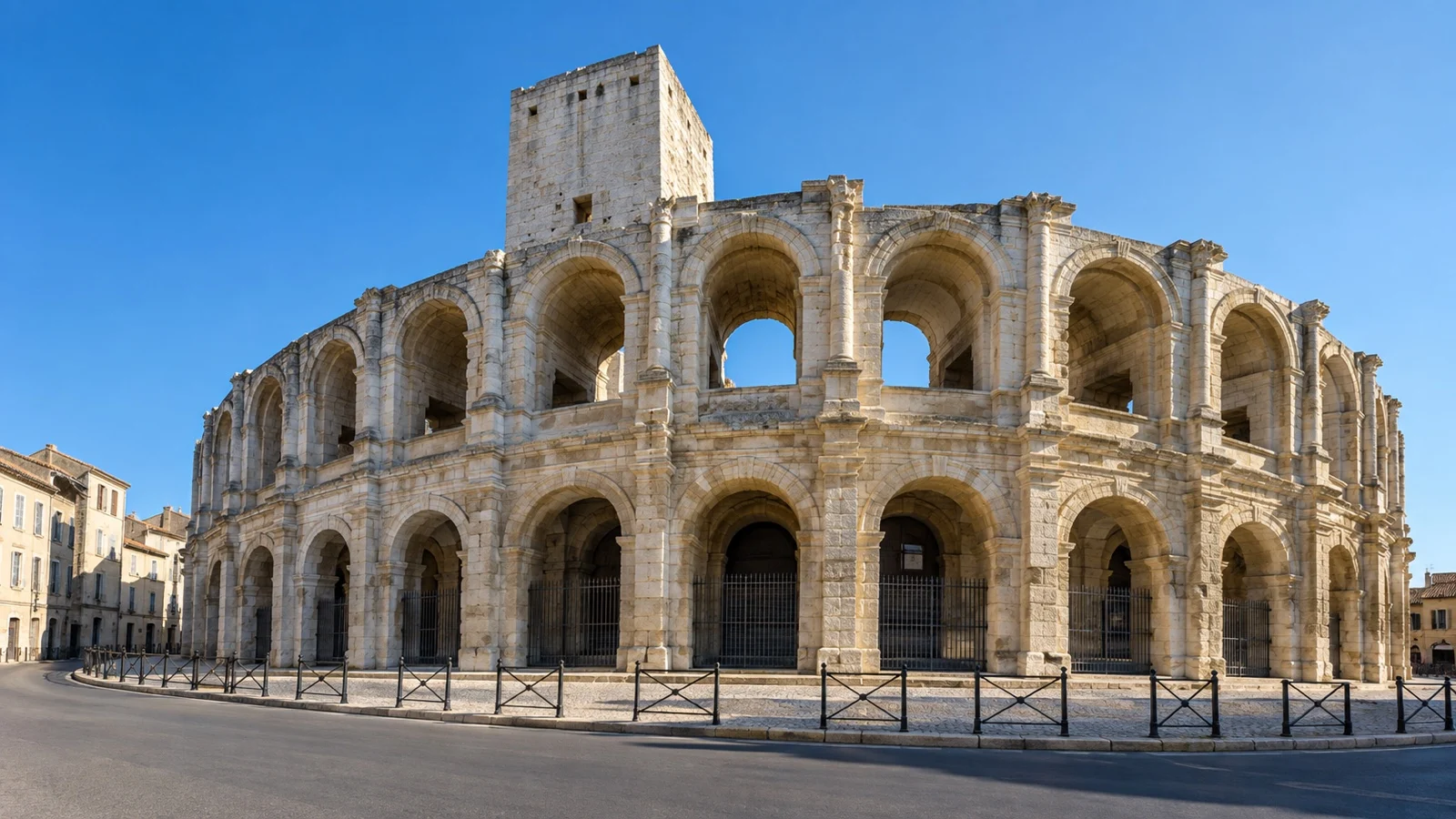
The amphitheater, usually called Les Arènes, is the city’s most recognizable Roman monument. Its upper levels can provide excellent views, but the stairs are steep and the ancient stone can be slick or uneven.
The Roman theater nearby is more fragmentary, which makes a guide or a little background reading especially useful. Seeing the two together shows both public spectacle and performance within the Roman city.
Cryptoporticus and Saint-Trophime
The cryptoporticus consists of subterranean galleries beneath the ancient forum area. It is atmospheric and pleasantly cool in hot weather, but stairs, low light, and enclosed spaces will not suit every visitor.
Saint-Trophime adds the medieval chapter, with a sculpted Romanesque portal and cloister. Check access and service times before entering, and remember that an active religious site deserves a quieter visit than the arena.
Van Gogh’s Arles
Vincent van Gogh lived in Arles in 1888 and 1889, creating works inspired by the city’s streets, cafes, river, and surrounding countryside. Walking routes identify several viewpoints, but the experience is about places connected to the paintings rather than a guaranteed collection of his original canvases.
The Fondation Vincent van Gogh Arles presents changing exhibitions and explores his continuing influence. Check its current program before making it the center of your port day, since exhibitions and opening schedules vary.
Avignon or Arles for Independent Exploring
Both cities work well independently if the ship uses a central berth and you are comfortable walking. Avignon’s palace benefits from an audio or digital visitor tool, while Arles becomes richer when someone explains how scattered Roman fragments fit together.
Choose a guided tour if you want historical context, priority logistics, or support managing the ship’s schedule. Explore alone if you value photography, cafes, markets, and the freedom to spend an extra half hour at one monument.
Whatever you choose, photograph the ship’s location and carry the daily program with an emergency number. Similar-looking quays and multiple vessels can be confusing when several ships are docked together.
Pont du Gard from Avignon
Pont du Gard is the strongest reason to leave Avignon on an organized excursion. The monumental Roman aqueduct bridge stands outside the city, so reaching it independently requires more planning than walking to the papal monuments.
The site combines the aqueduct, museum interpretation, outdoor trails, and views over the Gardon. Visit the official Pont du Gard website for current hours, ticket rules, access conditions, and temporary restrictions.
An excursion makes sense when Roman engineering is a priority or when transport connections would consume too much of a short call. It makes less sense if this is your only chance to see the Palace of the Popes and you have no extra time in Avignon.
The Camargue from Arles
South of Arles, the Rhône delta opens into the Camargue’s wetlands, salt marshes, lagoons, farms, and grazing land. The region is associated with white horses, black bulls, waterbirds, and a cultural landscape shaped by people as well as nature.
A short cruise excursion can offer an introduction, but wildlife sightings are never guaranteed and distances are larger than they appear. The Camargue Regional Natural Park is the official source for the landscape, protected areas, visitor information, and responsible behavior.
Choose the Camargue if wetlands, birdlife, horses, or regional traditions matter more to you than another urban monument. Bring sun protection and insect repellent, and do not expect the relaxed pace of a full-day nature visit from a compressed coach tour.
Other Excursions from Arles
Les Baux-de-Provence and Saint-Rémy-de-Provence are common inland excursion targets. Les Baux offers a dramatic hilltop setting, while Saint-Rémy connects Roman remains and Provençal town life with places associated with Van Gogh.
These outings involve road time and can replace most of an independent walk in Arles. Compare the hours ashore, the monument you most want to see, and the amount of free time promised before booking.
River Conditions and the Mistral
The Rhône is a working, engineered waterway with locks, currents, commercial traffic, and changing conditions. High water, strong current, lock operations, or restrictions can alter arrival times and berth assignments even when the weather in town looks pleasant.
The Mistral can bring powerful northerly winds and clear skies to Provence. Wind may affect gangway safety, outdoor comfort, cycling, and the captain’s operational decisions, but there is no useful consumer rule that turns a forecast speed into an automatic missed call.
Treat the printed itinerary as a plan rather than a minute-by-minute guarantee. Keep independent reservations flexible, especially when they require a long walk or transport away from the ship.
Accessibility in Avignon and Arles
The proximity of both centers is helpful, but neither port is effortless for every traveler. Ancient paving, curbs, steep gangways, rafting through adjacent ships, monument stairs, and limited seating can combine into a demanding day.
Ask the cruise line for the exact walking distance and step count on included tours, not just whether a call is described as easy. Also ask whether coaches have steps, whether mobility devices can be carried, and which monument areas remain inaccessible.
A gentler Avignon day can focus on lower old-town streets, cafe stops, and exterior views of the palace. In Arles, a shorter loop around Place de la République and exterior monument views may be preferable to climbing the arena.
Food, Money, and Everyday Practicalities
Both cities use the euro, and cards are widely accepted at established attractions and restaurants. A small amount of cash remains useful for markets, small purchases, or a cafe whose minimum card amount is inconvenient.
Avignon supports a broader selection of restaurants and shopping inside the walls, while Arles offers compact squares and easy cafe stops near the monuments. Allow enough time for French meal service rather than ordering a full lunch shortly before all aboard.
Tap water and public fountains should be assessed according to local signage. In hot weather, carry water and refill only where the source is clearly marked as potable.
When to Visit
Spring and fall often bring comfortable walking weather, while summer delivers long daylight, festivals, heat, and heavier crowds. Winter calls are quieter, but daylight is shorter and some attractions may reduce hours.
Major cultural events can transform both cities and change traffic, hotel demand, street access, and monument schedules. Check official city and venue calendars if your sailing falls during festival season rather than assuming the usual port routine.
There is no month that eliminates river disruption or strong wind. Choose dates for the weather and atmosphere you prefer, then keep plans flexible enough to absorb a changed berth or shortened call.
A Sensible Plan for a Short Call
In Avignon, make the Palace of the Popes your anchor if interiors and medieval history matter. Add the bridge and a short old-town loop only after allowing for walking time, security lines, and the climb back from the river.
In Arles, pair the amphitheater with one contrasting site such as the theater, cryptoporticus, or Saint-Trophime. A focused route leaves time for a square, a cafe, and the walk back without turning every monument into a race.
If you choose an out-of-town excursion, accept that the tradeoff is less time in the port city. Pont du Gard, the Camargue, and Les Baux are worthwhile for the right traveler, but none is a mandatory box to check.
The Bottom Line
Avignon and Arles earn their place on a Rhône itinerary because history begins close to the gangway. Avignon offers medieval scale and papal power, while Arles compresses Roman, Romanesque, and artistic history into a center that still feels lived in.
Use official sites for current tickets and hours, confirm the day’s berth aboard, and choose one or two priorities rather than trying to collect every monument. The best port day here leaves enough space to notice the river, stone, markets, and Provençal light between the headline sights.
How this guide was researched: This guide was desk-researched on September 12, 2026 using current UNESCO, official monument, regional tourism, and navigation sources. It does not claim a personal ship call, berth inspection, excursion, or attraction visit.
Berths, opening hours, ticket terms, excursion routes, and navigation conditions can change, so confirm current details with your cruise line and official local sources. See our Editorial Policy for how we research and update guides.