The Iron Gates Danube Gorge: The Best Scenic Cruising Day on the River
The Iron Gates turn a Lower Danube sailing into a full scenic cruising day. The river narrows between Serbia and Romania, passes fortress walls and archaeological landmarks, and then enters two enormous lock complexes built for commercial navigation.
Timing is never as fixed as the itinerary suggests. Lock traffic, river conditions, bridge clearances, and operational instructions can move the best viewing window by hours, so the cruise director’s update matters more than a brochure clock.
Iron Gates quick facts
- River: Danube
- Countries: Serbia on the right bank and Romania on the left bank when sailing downstream
- Protected landscape: Djerdap National Park follows about 100 kilometers of the Serbian bank
- Main navigation structures: Iron Gate I and Iron Gate II lock and dam complexes
- Going ashore: Scenic cruising unless the itinerary separately schedules Golubac, Donji Milanovac, or another landing
- Best preparation: Confirm the next day’s gorge and lock timing onboard
- Currencies: Serbian dinar and Romanian leu
- Time zones: Romania is normally one hour ahead of Serbia
Where the gorge begins and ends
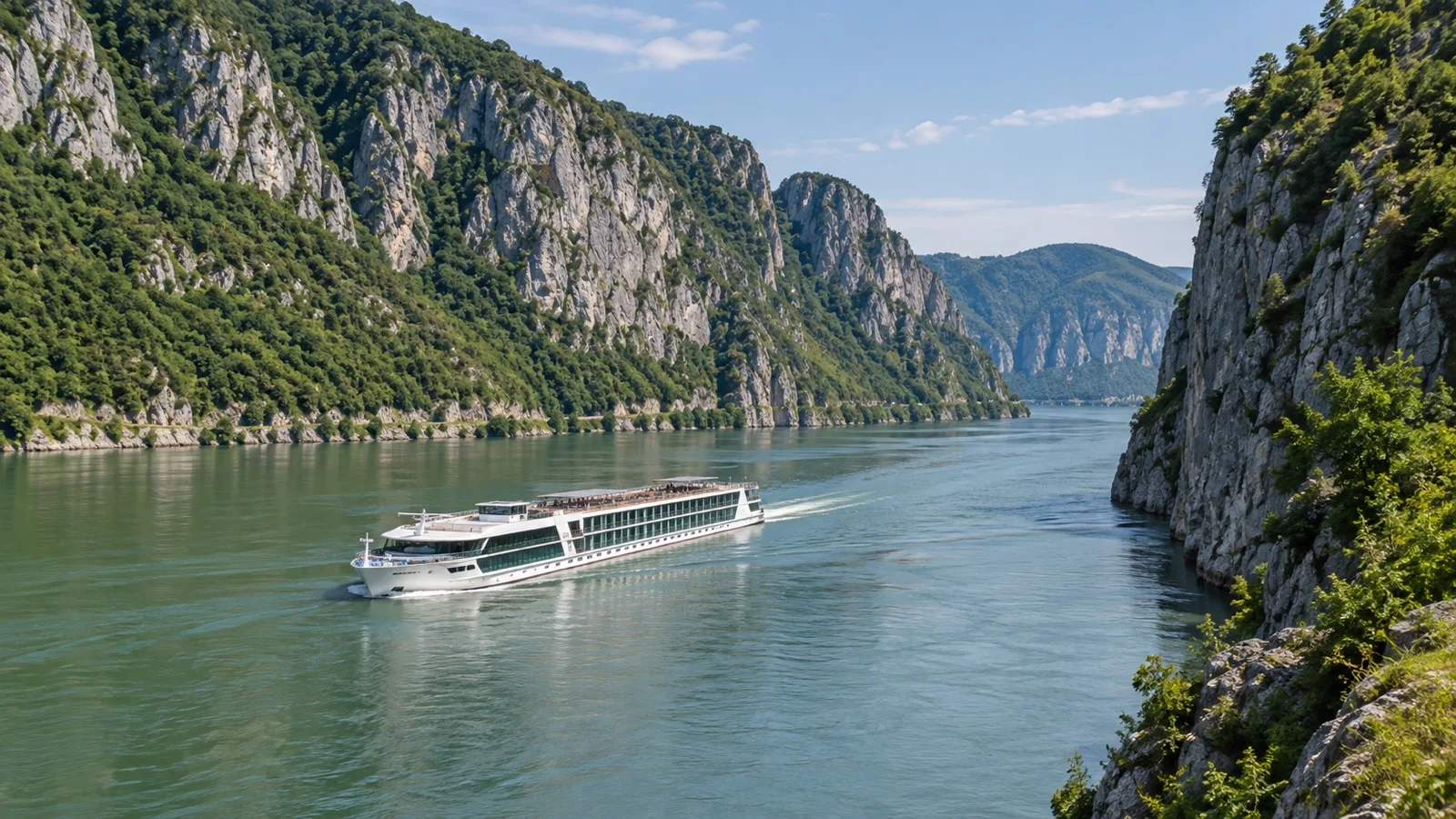
The International Commission for the Protection of the Danube River describes Đerdap National Park as covering 63,608 hectares along a 100-kilometer stretch. The landscape is not one continuous narrow canyon but a series of gorges, basins, and wider river reaches.
Before the modern dams, this section was known for difficult currents and navigation hazards. Reservoirs and locks changed the passage, but the cliffs and historic landmarks still show why the gorge mattered.
Reservoirs behind the hydroelectric complexes transformed those historic rapids into deeper, slower water. The modern view can therefore appear calm even though the surrounding cliffs and old navigation stories reveal the river’s former power.
The Iron Gate locks
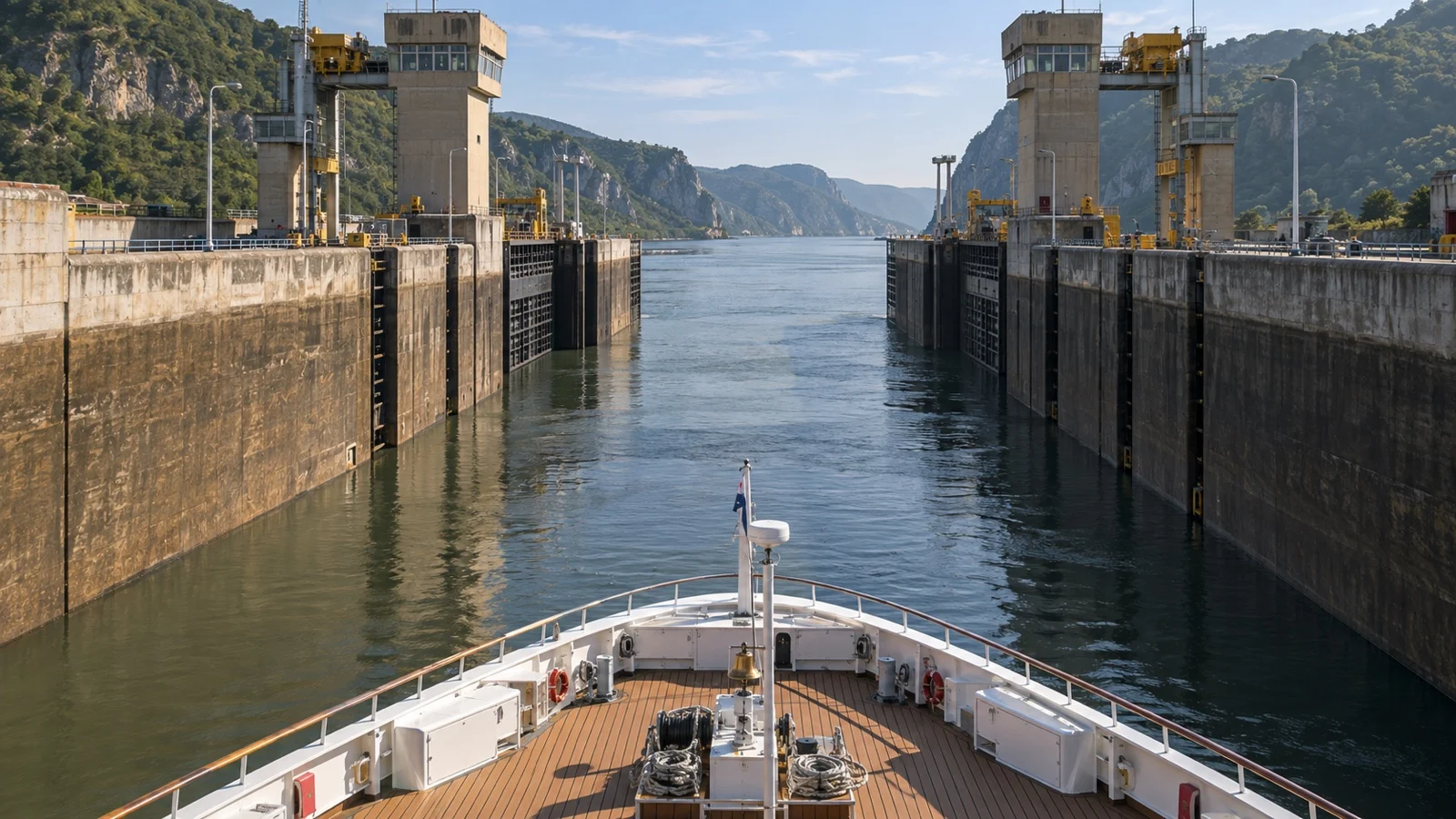
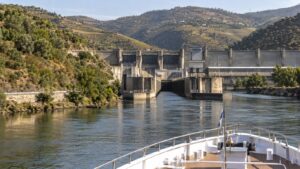
Iron Gate I and Iron Gate II are much larger than the compact locks encountered on many European river routes. Their navigation locks serve commercial traffic as well as passenger vessels, so waiting time is operational rather than scheduled for sightseeing.
Iron Gate I requires a two-stage lockage through consecutive chambers. A river ship may wait behind barges or commercial convoys, then spend considerable time moving through the complete sequence.
A high open deck gives a broad view of the dam and chamber, while a low window or balcony makes the concrete walls feel more immediate. Crew instructions determine which decks remain open, and passengers must stay behind barriers during maneuvering.
Golubac Fortress
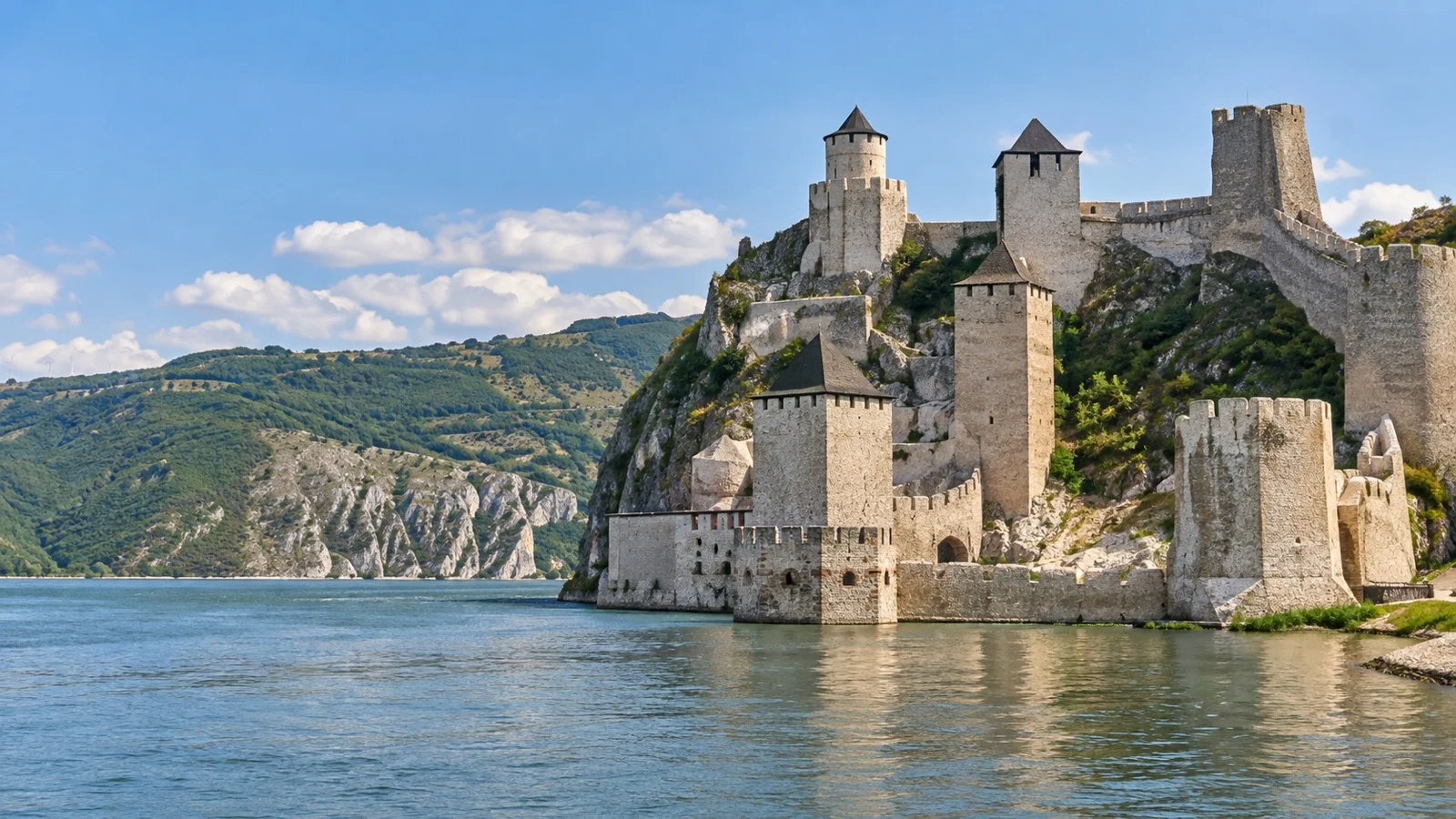
Golubac Fortress stands at the upstream entrance to the gorge on the Serbian bank. Its towers and walls occupy a strategic point where rulers could monitor and control river movement.
Most ships pass the fortress unless a landing or excursion is explicitly listed. The official Golubac Fortress site uses color-coded visitor zones, with more demanding routes subject to age, weather, guide, equipment, and safety rules.
The basic green zone includes the palace and selected towers, while higher routes involve steep, exposed climbs. The official site currently lists Monday as the regular closing day, but check live hours and route availability before a visit.
Lepenski Vir
Lepenski Vir preserves evidence of prehistoric settlement beside the Danube. Its distinctive stone sculptures and arranged dwellings connect human life with a river landscape occupied thousands of years before Roman engineering arrived.
An onboard view cannot replace the visitor site because the archaeological remains are not presented from the sailing channel. A visit requires a scheduled landing and organized road transfer, commonly from Donji Milanovac.
Veliki Kazan and the narrow gorge
Veliki Kazan, or the Great Cauldron, is one of the narrowest and most dramatic sections. The river tightens between steep walls, and the scale changes constantly as the ship follows each bend.
The dramatic scenery lies on both banks, so no cabin side has every view. An open observation deck is ideal when available, but a forward lounge or French balcony offers a valuable fallback in wind, heat, cold, or a temporary deck closure.
Tabula Traiana
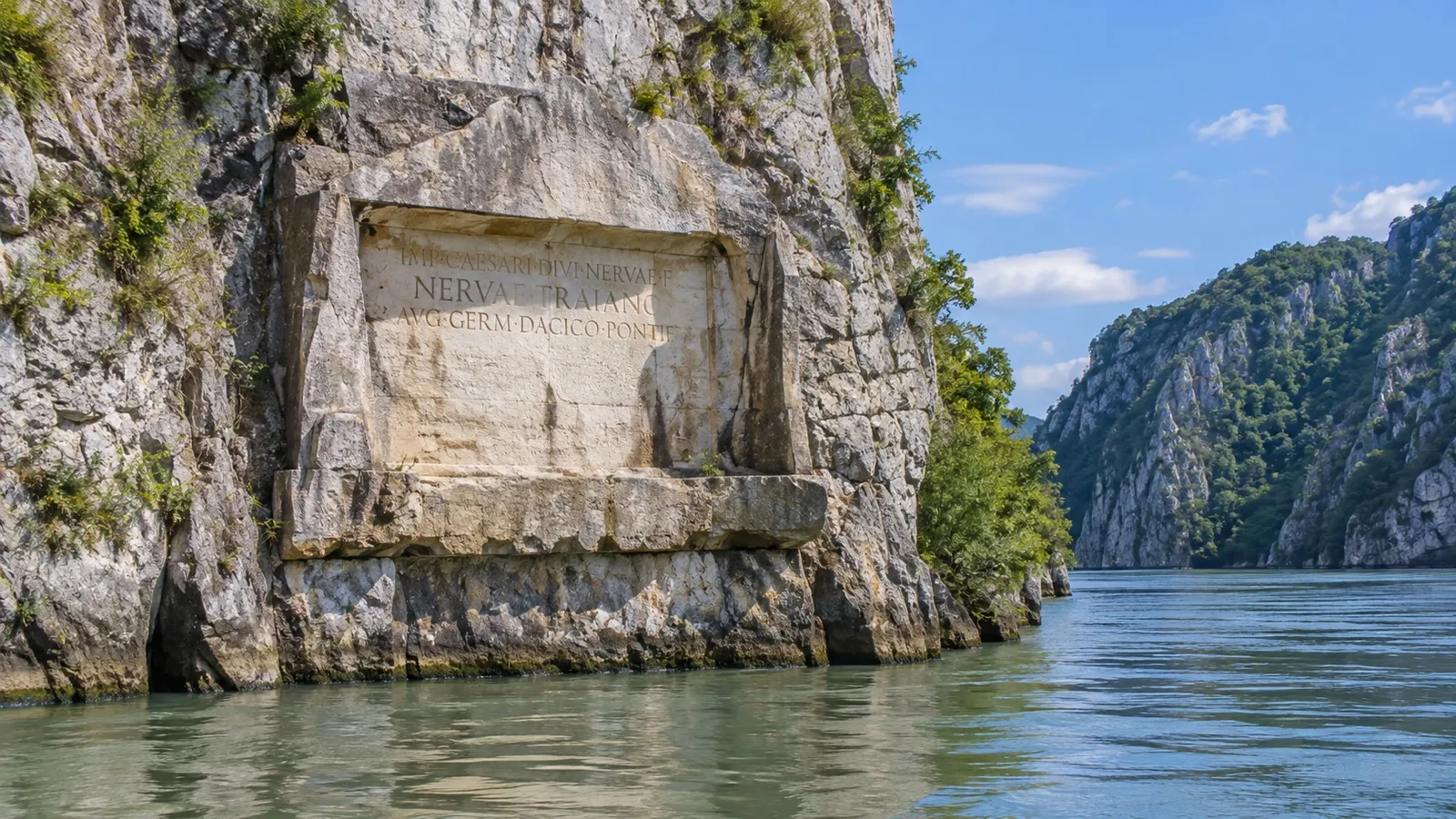
The Tabula Traiana is a Roman inscription cut into the Serbian cliff beside the ancient road associated with Emperor Trajan’s Danube works. It was moved higher when the reservoir raised the water level.
The plaque is easier to spot when the ship’s commentary gives advance warning. Binoculars help, especially from the opposite side of the vessel or when glare reduces contrast against the rock.
Decebalus carving and Mraconia Monastery
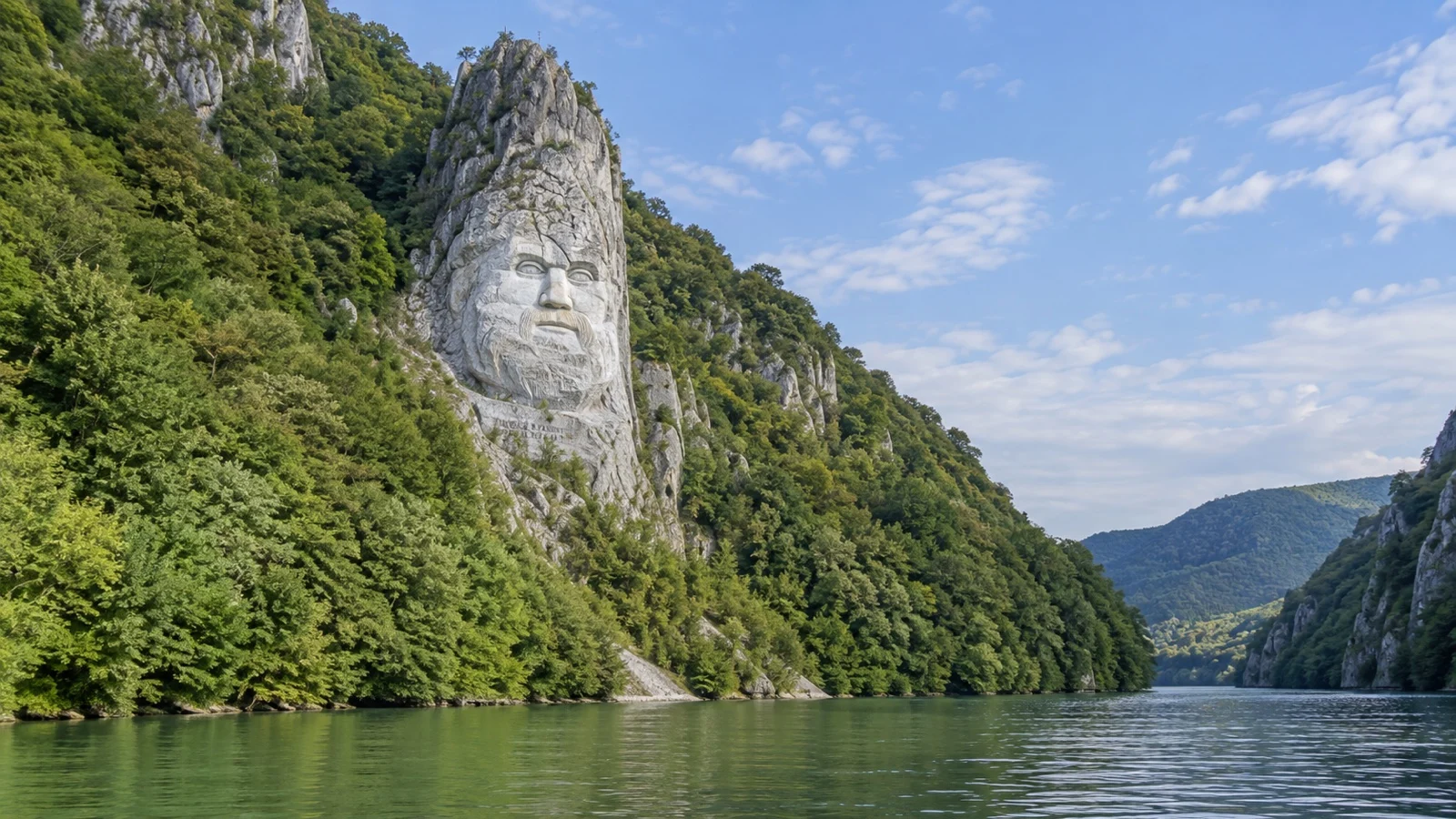
A monumental modern carving of Dacian king Decebalus looks over the river from the Romanian bank. It is not an ancient work, but its huge face has become one of the route’s most recognizable landmarks.
Mraconia Monastery sits close to the water below the surrounding cliffs. Passengers focused only on the carving can miss the small white church, so keep watching the shoreline as the ship moves through the Romanian side of the gorge.
Which side of the ship is best
When sailing downstream, Serbia is generally on the right and Romania on the left. Golubac and the Tabula Traiana are on the Serbian side, while the Decebalus carving and Mraconia Monastery are on the Romanian side.
Because important sights alternate, choosing one side for the entire day is a poor compromise. Move between observation areas when safe, or use the onboard map and commentary to decide when your cabin view is enough.
Planning the scenic day
Ask reception the evening before for the expected times at Golubac, Veliki Kazan, and Iron Gate I. The schedule may change overnight, and the ship can reach a landmark earlier than the printed program after a favorable lock passage.
Charge a phone or camera, keep binoculars handy, and carry a windproof layer. A compact seat pad or use of the lounge helps when observation areas are crowded and the scenic section lasts for hours.
Meals and lectures may be adjusted around the gorge, but not every operator does so. Decide which landmarks matter most and choose those moments over trying to remain outside from sunrise to the second lock.
Border and time zone details
The Danube forms the international border through much of the Iron Gates. Romania belongs to the Schengen Area while Serbia does not, so passport and entry processing depends on the complete itinerary and cruise line arrangements.
Romania normally runs one hour ahead of Serbia. Ships often keep one onboard time through the scenic transit, which makes the ship’s clock and announcements more useful than the time shown by a phone connected to the opposite bank.
Accessibility
The scenery comes to the ship, making this one of the more accessible highlights on a Lower Danube itinerary. The difficult part is reaching the best observation space, since many river ship elevators do not serve the sun deck.
Ask the hotel manager about an unobstructed lounge seat, accessible outdoor deck, and lock safety closures early in the cruise. A cabin with a full height window can provide a strong alternative when stairs prevent access to the top deck.
Golubac Fortress is much more demanding than the scenic sailing. The official visitor zones include steep and exposed routes, so confirm exactly which zone an excursion enters and whether a level alternative is available.
Weather and what to wear
The main season runs through spring, summer, and fall, with large temperature swings. Summer can be very hot on an exposed deck, while spring and autumn mornings can feel cold once the ship is moving.
Wind funnels through narrow sections and may make the deck feel cooler than the forecast. Dress in layers, protect against sun, and keep a light waterproof shell available for fast changes.
Common questions
Do passengers go ashore in the Iron Gates?
Usually the gorge is a scenic cruising section rather than a port call. Any visit to Golubac, Donji Milanovac, or Lepenski Vir must appear separately in the itinerary.
How long does the scenic transit take?
The protected gorge alone runs about 100 kilometers, and lock waits can add substantial time. Expect the experience to occupy much of a day, with exact hours confirmed onboard.
Will the sun deck stay open?
Not necessarily, because bridge clearance, lock operations, weather, and crew safety procedures can close it. Identify a lounge or cabin backup before the main gorge section.
Which bank has the best sights?
Both do, with major landmarks alternating between Serbia and Romania. A shared observation area makes it easier to change sides than a fixed cabin balcony.
Final thoughts
The Iron Gates reward flexible travelers who treat the ship as a moving viewpoint rather than a timetable. Follow the live announcements, choose two observation positions, and let the gorge and locks set the rhythm of the day.
Lock timing, deck access, border procedures, excursions, and monument hours can change, so verify essential details with the cruise line and official local sources before traveling. This guide is for independent planning and is not affiliated with the waterway authorities, parks, attractions, or cruise operators.
How this guide was researched: Route geography and park scale were checked against the International Commission for the Protection of the Danube River, fortress access against the official Golubac Fortress site, and Lepenski Vir details against the National Museum of Serbia. Logistics and time-sensitive details were reviewed on September 12, 2026.
More on this topic: browse every guide on river cruise planning.