River Cruise vs Ocean Cruise: The Differences That Actually Matter
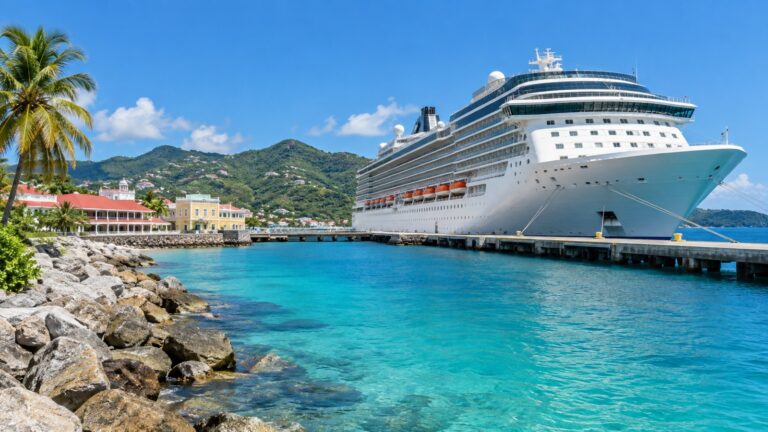
River and ocean cruises share the convenience of unpacking once, but the experience differs sharply. Ocean ships emphasize onboard choice, while river ships put more focus on frequent ports and passing scenery.
For an ocean cruiser, the biggest adjustments are usually ship size, dining schedules, entertainment, berth access, and itinerary flexibility. Compare the exact ship and fare rather than relying on the category label.
A practical way to choose
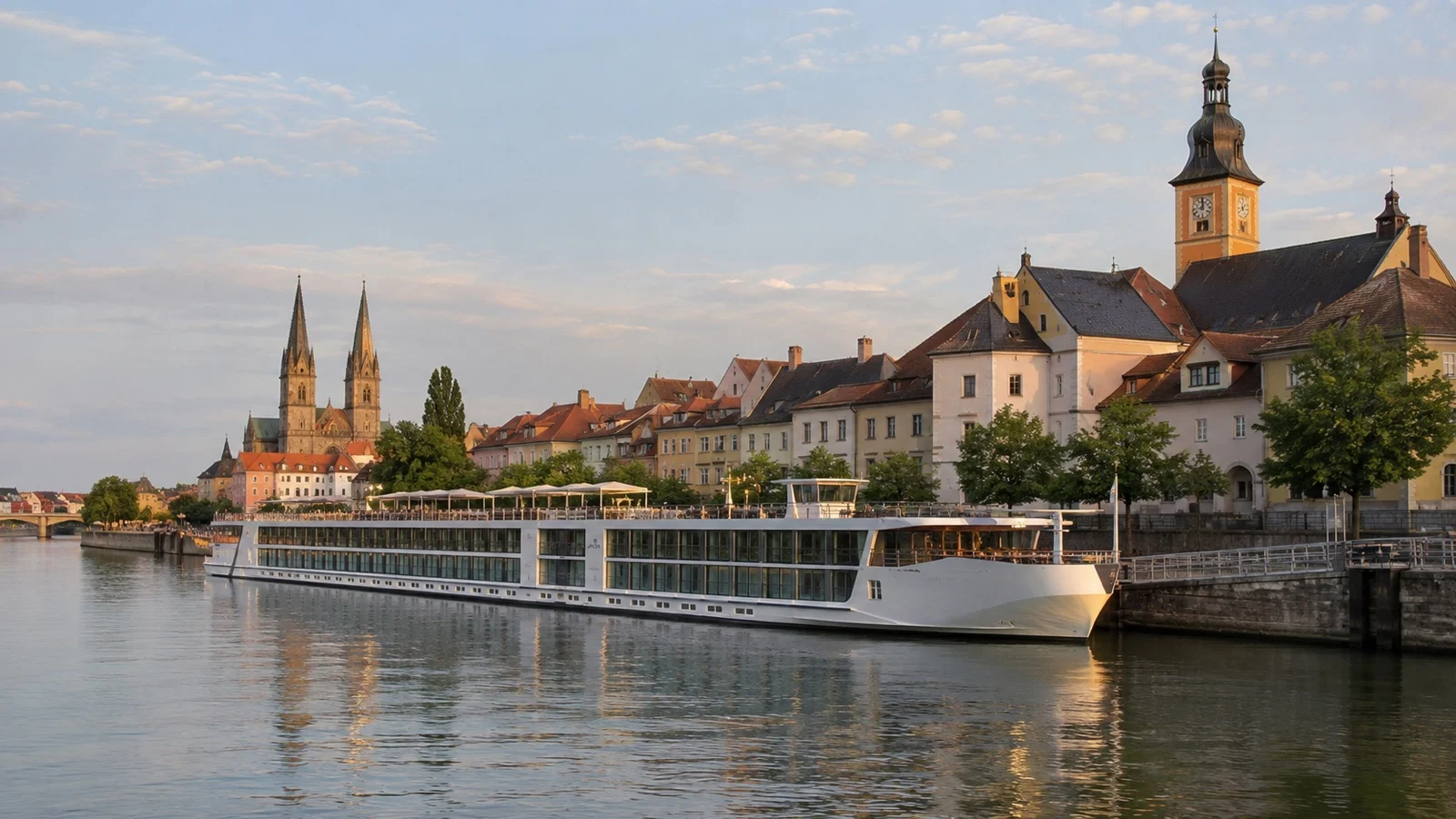
Think of a river vessel as a different kind of ship, not a scaled-down ocean liner. Casinos, production theaters, multiple pools, and extensive dining districts are uncommon, though amenities vary by vessel.
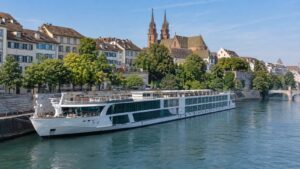
River ships often berth close to historic centers and offer frequent shore time. Some berths are farther out or require crossing another rafted vessel, so check each itinerary rather than assuming every stop is a direct walk-off.
A seven-night itinerary is a manageable first river cruise for many travelers. Choose the route and pace that fit you, and read the daily schedule before committing to a longer sailing.
River itineraries can change when water levels, locks, or port operations limit navigation. Read the operator’s change and cancellation terms before paying the deposit.
The quick facts
- Ship size: Viking’s explainer says river vessels commonly carry 100 to 250 guests, and its standard Longships carry 190. Other river ships can be smaller or larger.
- How you get ashore: usually by gangway onto a quay or pontoon. Rafting may require guests to cross another vessel, while the crew’s daily instructions cover any operational exception.
- Dining: Viking offers open seating, but restaurant choice and meal times vary by line and ship. Check whether reservations or fixed dining hours apply.
- Excursions: many European river fares include at least one guided option at selected ports, but inclusions vary. Premium, active, and specialist tours may cost extra.
- What is in the fare: compare the final price and inclusion list for both cruise types. Drinks, Wi-Fi, gratuities, excursions, taxes, and port charges are packaged differently by line and market.
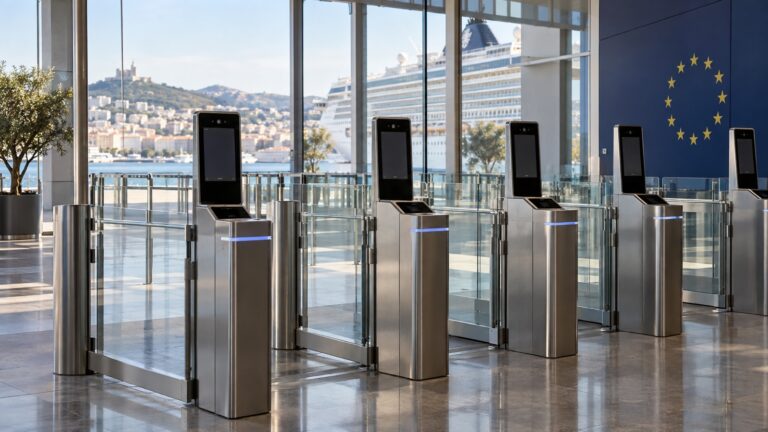
- Embarkation: river cruises often use a quayside reception process instead of a large terminal. Security, document checks, and luggage handling still vary by port and operator.
- Bicycles: some lines carry a limited fleet or arrange local rentals. Reserve early and confirm whether helmets, guides, or fees are included.
- What rewrites the plan: river level, weather, locks, and local navigation restrictions can all matter. High or low water may change sailing, docking, or transfers.
Why many European river ships share similar dimensions
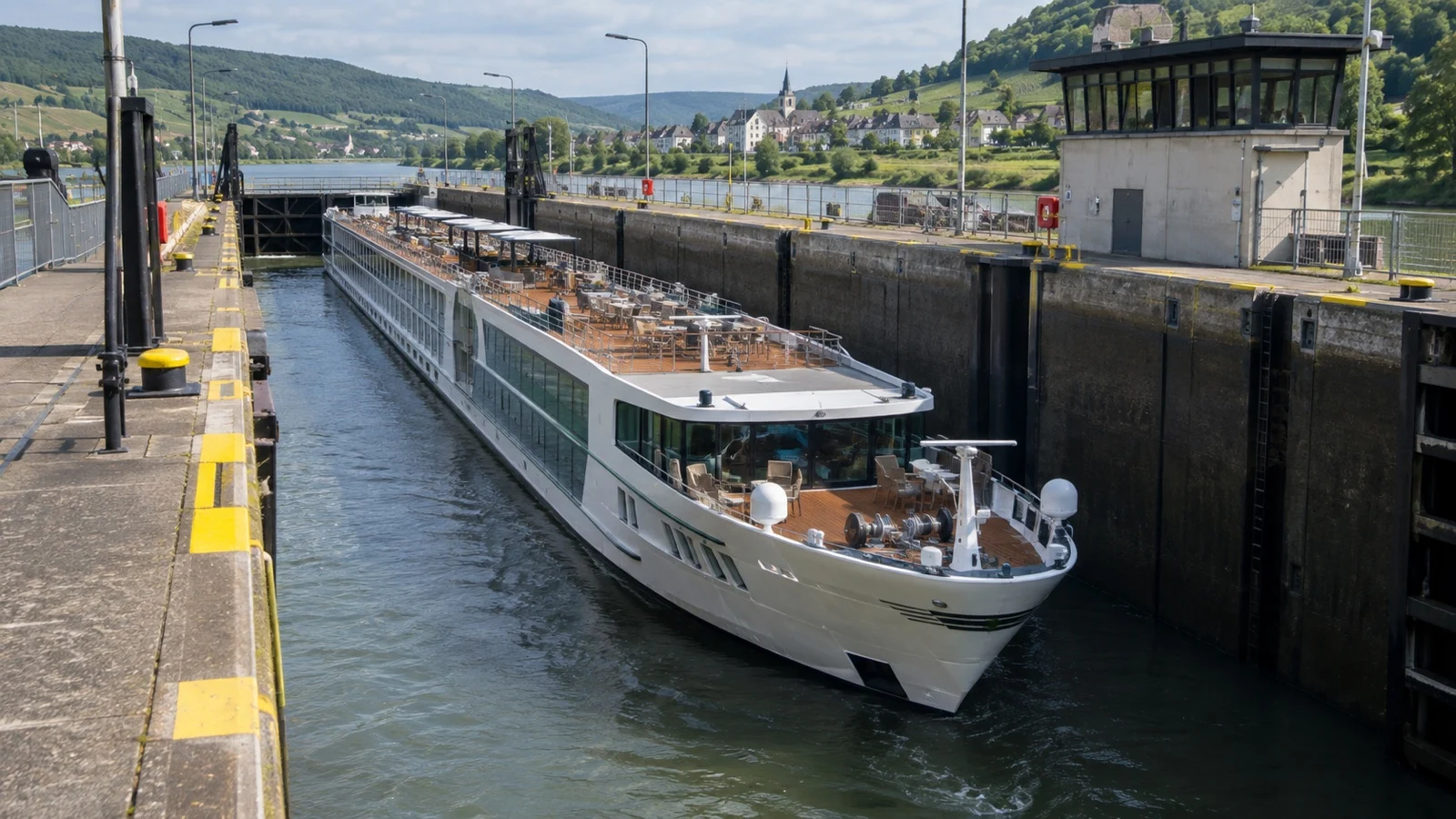
Many Rhine, Main, and Danube ships have similar dimensions because they must fit the route’s locks and bridges. Other rivers use different vessel designs and sizes.
Germany’s waterways administration lists the Hilpoltstein lock chamber on the Main-Danube Canal at about 656 feet long and 39 feet wide. A standard Viking Longship is about 443 feet long and 37.6 feet wide.
Those published widths leave roughly 17 inches of total lateral clearance before operating margins are considered. The example helps explain the narrow beam common on this route.
Many European river ships use retractable wheelhouses and movable sun-deck furniture for low bridges. Top-deck access can close temporarily during some bridge and lock passages.
Boarding, lifesaving equipment, and cabin tradeoffs
River ships normally berth at a quay and use a gangway, sometimes through one or more rafted vessels, instead of running ocean-style tender operations. Operational exceptions can occur, so follow the daily program and crew directions.
European inland passenger vessels follow applicable flag, waterway, and CESNI technical requirements. Lifesaving equipment is vessel-specific, so use the muster briefing and posted safety plan for your ship.
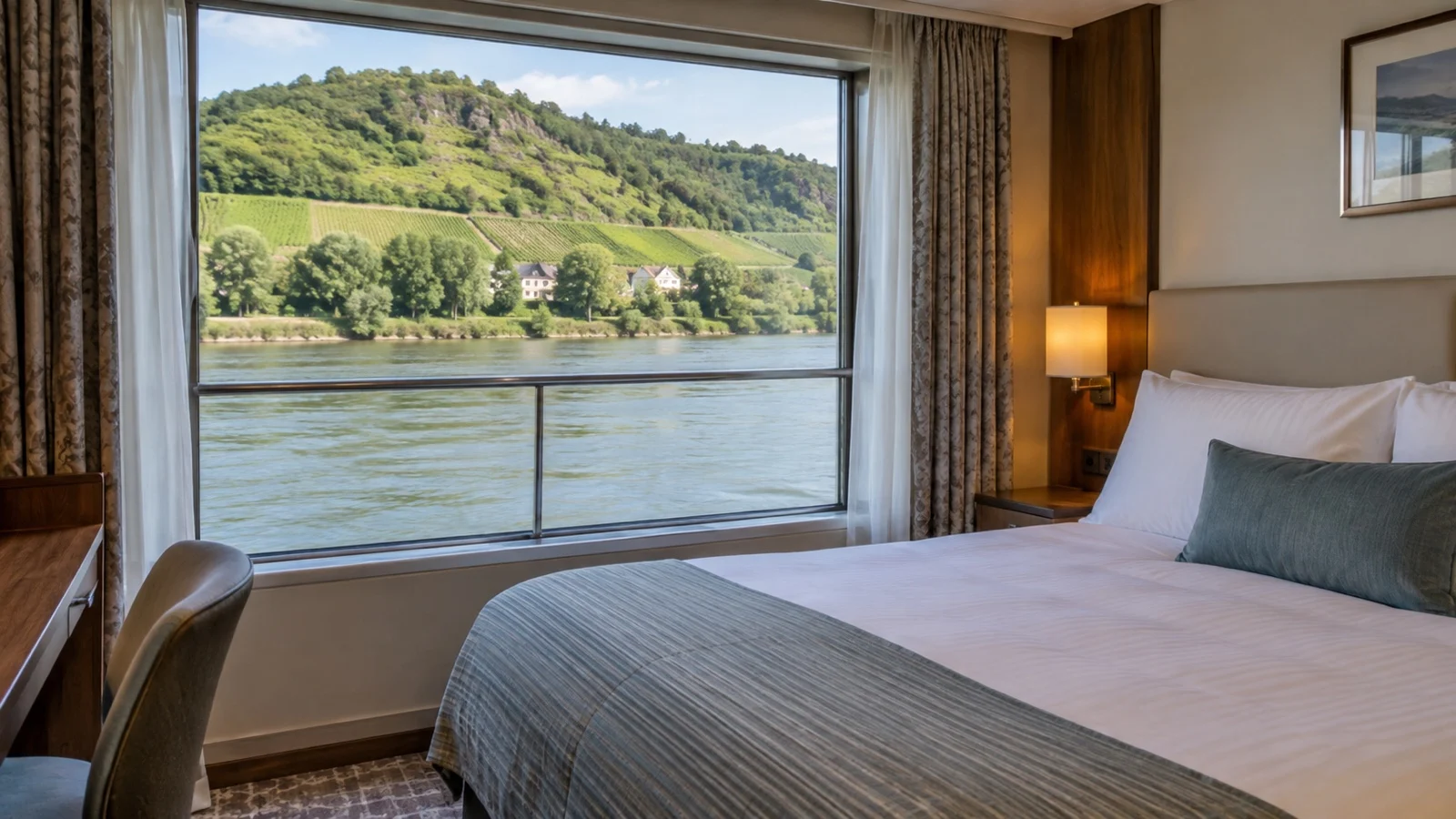
River cabins are not automatically larger than ocean cabins because hull width and bridge clearances sharply limit the ship. Compare the actual square footage, window type, deck access, and accessibility plan rather than choosing by category name.
Motion, noise, and the thing nobody warns you about
River cruises usually involve less rolling than open-ocean voyages, but wake, wind, and exposed reaches can still cause movement. Travelers prone to motion sickness should plan for the possibility rather than assume zero motion.
Lock transits can happen during the day or overnight, depending on the route and traffic. Pumps, thrusters, lines, and contact with lock walls may create short periods of noise.
Hilpoltstein lock raises or lowers vessels by almost 80 feet, so the transit takes time. Cabin location changes the mix of engine, gangway, lock, and sun-deck noise, so ask the line before choosing.
Rafting can place another vessel close outside your window and route foot traffic through shared access points. The rafting and double-docking guide explains what to expect.
Water levels are an itinerary risk, not a forecastable season
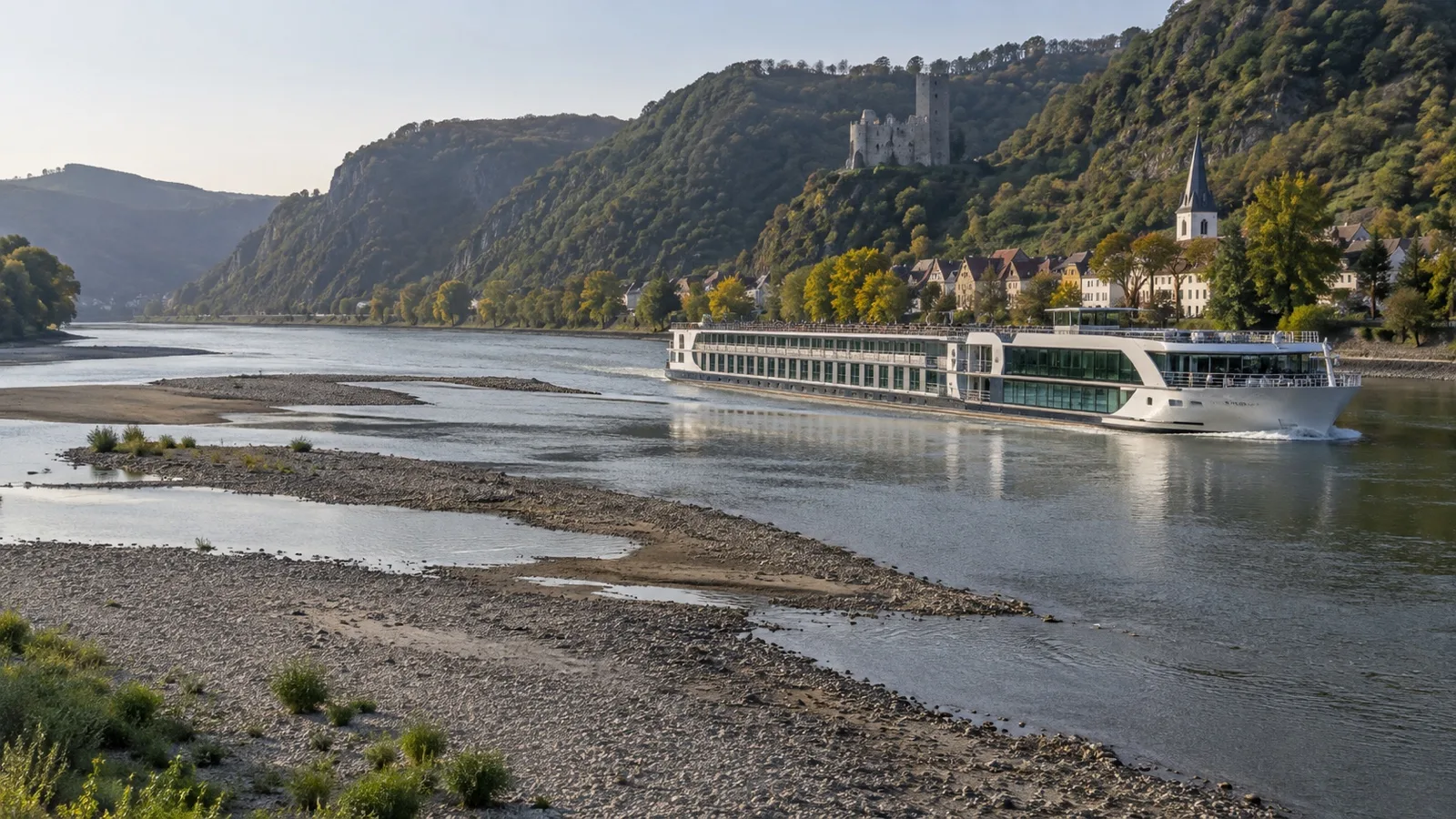
Low water can reduce draft clearance, while high water can prevent a ship from passing under a bridge or through a reach safely. The relevant gauge, ship design, loading, and route all matter, so one public number cannot tell a passenger whether a sailing will operate normally.
Lines may alter calls, use coaches, transfer guests between sister ships, or provide hotels when a segment is not navigable. Read the contract and current line notices before buying insurance because coverage for delay, itinerary change, missed connections, and cancellation is not the same thing.
Historical seasonality can guide expectations but cannot guarantee river depth for a particular week. Build flexible rail or air tickets around the cruise, arrive early, and avoid a tightly timed independent connection at the end.
The differences to plan around
- Dining schedules: many river ships use open seating within set meal periods, while some offer specialty venues or flexible options. Check the exact ship if late dining matters.
- Daily pace: river itineraries often include frequent ports and daytime scenic sailing. Leave room for independent time or a quiet period onboard if the excursion schedule feels too full.
- Included excursions: guided tours and listening devices are common, but the number and type included vary by fare. Read each day’s inclusion list.
- Bicycles: several lines carry them free, and a towpath ride between two locks is the best hour of many itineraries. Ask reception the night before, because the good bikes go early.
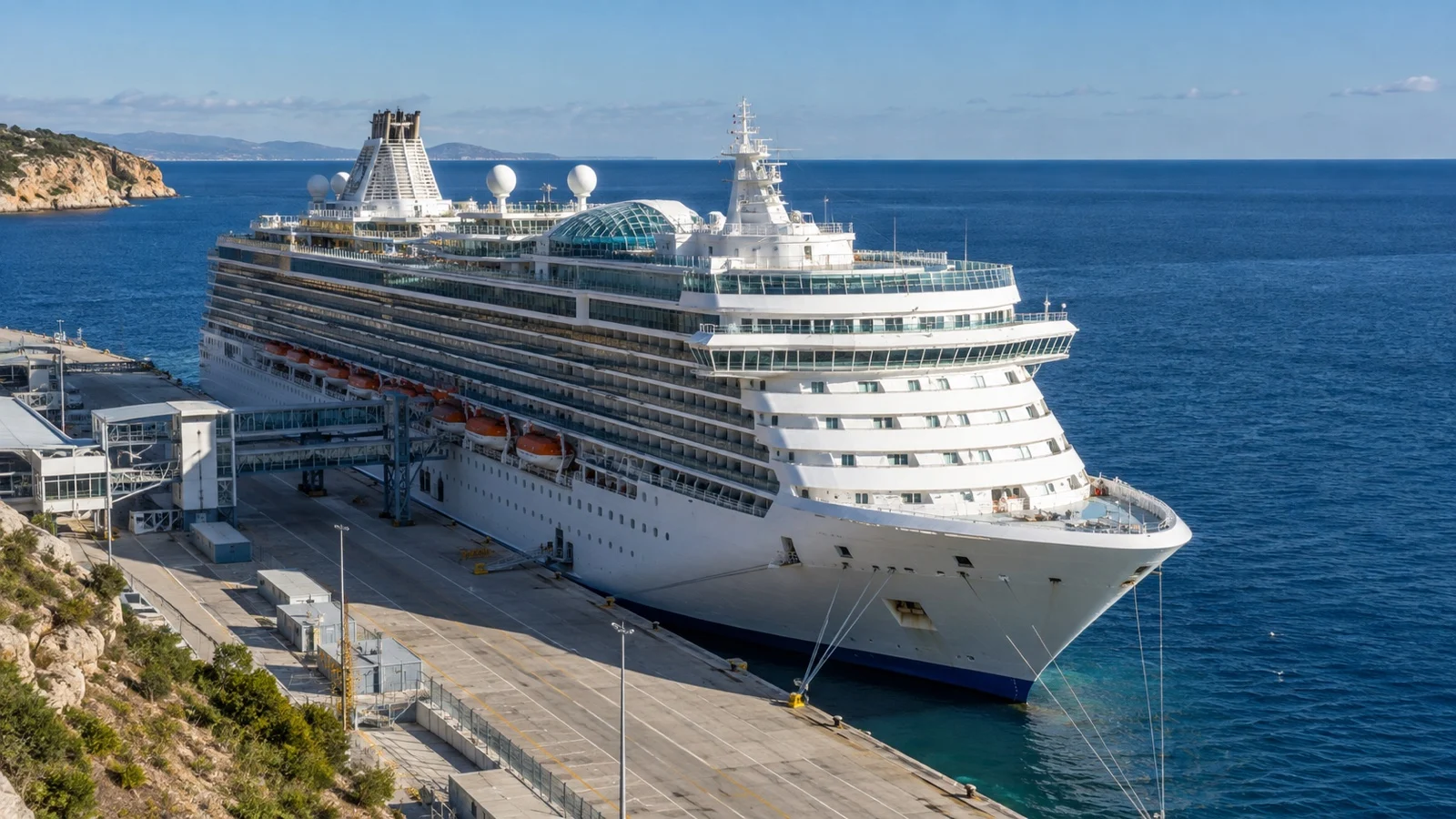
- Onboard entertainment: river ships generally offer fewer venues and smaller-scale programs than large ocean ships. Travelers who prioritize production shows, casinos, or nightlife may prefer an ocean cruise.
Fun fact: viadonau lists the Iron Gate I and II lock chambers at about 1,017 feet long and 112 feet wide. That scale accommodates much larger commercial traffic than a typical European river cruise ship, but safe lock capacity depends on required clearances and lock authority instructions.
How to decide
Start with what you liked most about your last cruise. Travelers who prioritize shows, dining variety, and shipboard attractions often prefer ocean ships, while those focused on frequent ports may prefer river cruising.
River itineraries often provide frequent port time and central berths, but not every berth is downtown and schedules can change. Check the actual port list and time ashore.
Compare the total trip price, not only the headline fare. Add drinks, Wi-Fi, gratuities, excursions, transfers, taxes, and port charges according to each line’s current inclusion list.
Consider the interests and mobility of everyone traveling. River ships usually have fewer youth attractions, while ocean fleets range from adult-focused vessels to ships built around family entertainment.
A realistic word on accessibility
River ships generally offer fewer accessibility features than large modern ocean ships, but designs vary. Confirm elevator coverage, accessible cabins, gangway limits, and tender or rafting arrangements on the exact vessel.
Gangway slope changes with the berth and water level, and rafting can add transitions through another ship. Ask how the crew handles wheelchairs, scooters, and changing quay conditions.
Policies for wheelchairs, scooters, and companions differ by line and ship. Get written approval for the specific mobility device before booking.
Historic centers may include cobbles, slopes, and steps. The wheelchair-friendly cruise ports guide outlines the questions to ask.
When to go, and what the calendar cannot promise
European river programs commonly run from spring through the Christmas-market season, but route and operator calendars differ. Summer can be hot and busy, shoulder months can be cooler, and late fall brings short days plus colder gangways and quays.
No month guarantees ideal water levels because drought, snowmelt, and heavy rain vary by basin and year. Choose dates for daylight, temperature, crowds, and the itinerary theme, then keep a flexible attitude toward navigation changes.
For mobility or heat sensitivity, ask about shaded deck space, climate control, walking-tour pace, coach access, and whether the elevator reaches every passenger deck. These details matter more than a broad “best month” label.
Quick answers
Do river cruise ships have lifeboats?
Lifesaving arrangements vary with the vessel and applicable inland-waterway rules. Check the posted safety plan and muster briefing rather than assuming a particular set of equipment.
Will you get seasick on a river cruise?
River ships usually move less than ocean ships in open water, but wake, wind, and exposed reaches can still cause motion. Pack your usual remedy if you are sensitive.
Is a river cruise more expensive than an ocean cruise?
The answer depends on ship, cabin, season, and inclusions. Compare the final price after adding drinks, Wi-Fi, gratuities, excursions, taxes, and fees.
Are shore excursions included?
Many river itineraries include guided tours, but the number and type vary by line and fare. Premium or specialist tours can cost extra.
What happens if the river is too low?
The line may change calls, use coaches or hotels, or transfer guests between ships. Refunds and insurance coverage depend on the contract and reason for the change.
The last word
River cruising is not simply a smaller version of ocean cruising. The better choice depends on whether you value frequent ports and a compact ship or extensive onboard amenities and entertainment.
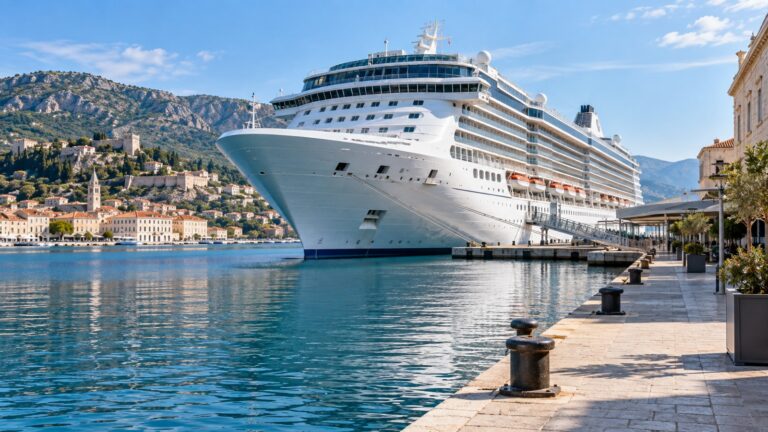
Tender operations are less common on river itineraries, but berth access still varies. The tender-port guide explains how ocean tendering differs.
River travelers should instead understand water-level and lock constraints. Check current operator notices, but remember that a public gauge reading does not guarantee a sailing decision.
How this guide was researched: This guide was checked against Viking’s current river-cruise explainer, German and Austrian lock information, CESNI’s inland-vessel standards, and Royal Caribbean’s current pricing guidance. Ship facilities, fares, safety equipment, accessibility, and excursion inclusions vary, so verify the exact vessel and booking terms.
Logistics and time-sensitive details were reviewed in September 2026. See our Editorial Policy.
More on this topic: browse every guide on choosing a cruise.