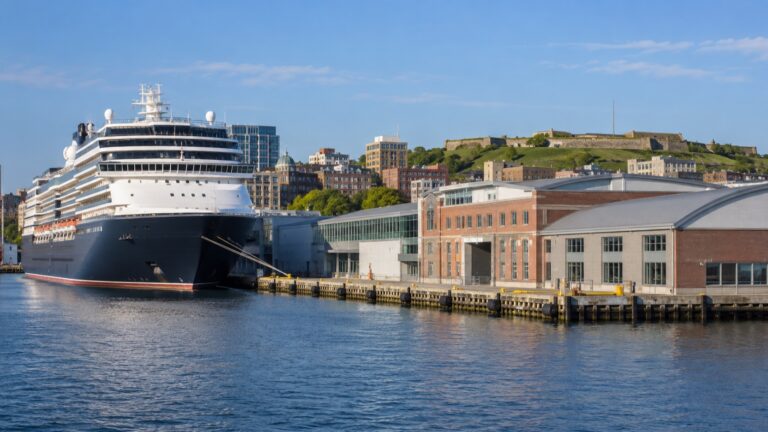
New Orleans Cruise Port: Erato Street and Julia Street Terminals
New Orleans gives you something most embarkation ports cannot: a real city day within a short ride of the ship. Here is how I would choose between Erato Street and Julia Street, handle bags and parking, and use the time before boarding without turning it into a sprint.
My quick take
Few home ports let you walk from the ship into a living historic city. If you are still comparing departure cities, my first-timer cruise port guide and my roundup of walkable cruise ports put New Orleans near the top.
The terminals are minutes from the French Quarter, so even a short pre-cruise window is worth using well.
The quick facts
Here is what I would confirm before I arrived, all drawn from the Port of New Orleans and the city’s official tourism office.
If you would rather arrive a day early, our New Orleans cruise port hotels guide has the shortlist.
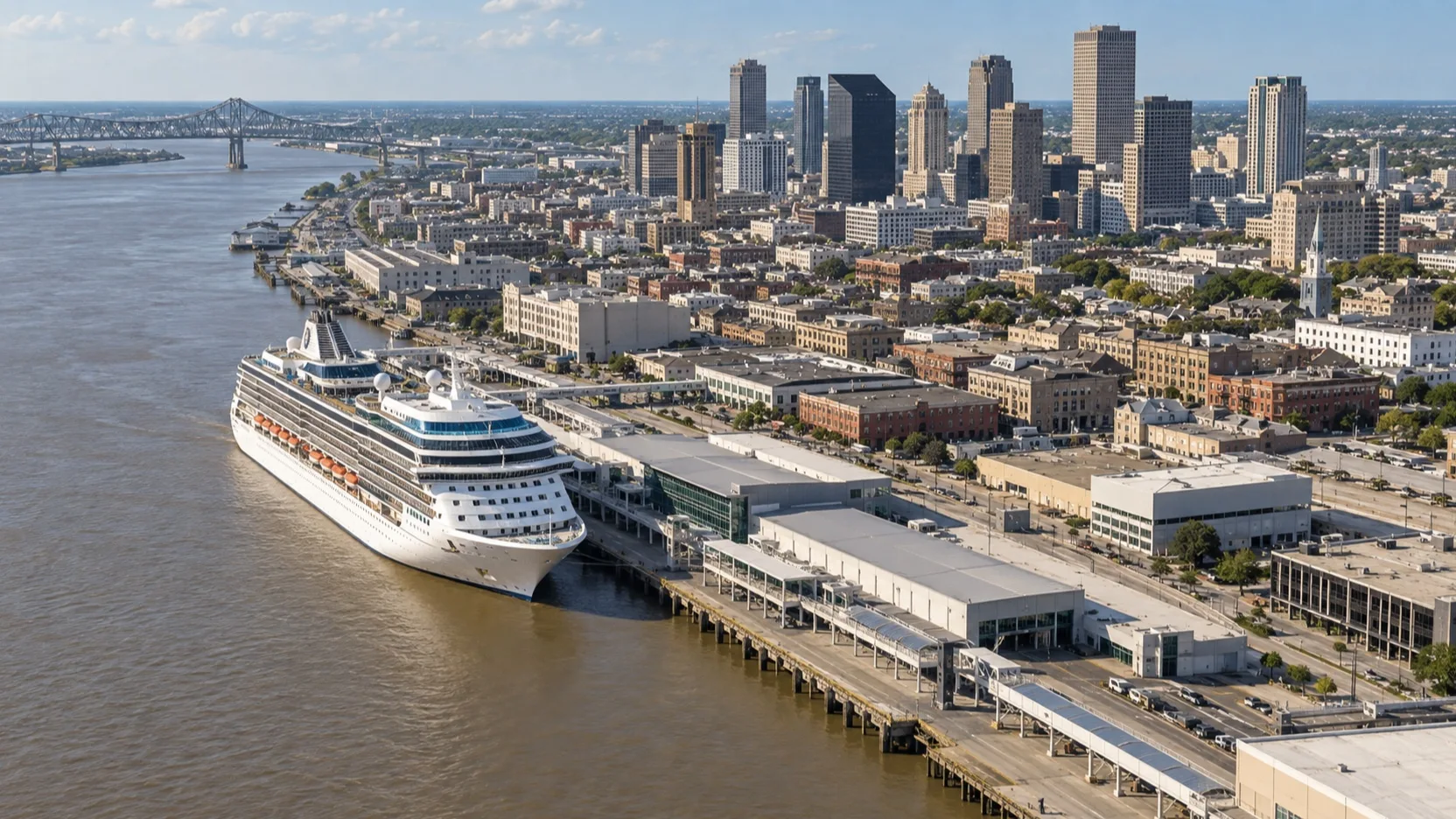
- Where you land: one of two Port of New Orleans riverfront terminals. Erato Street is at 1100 Port of New Orleans Place, while Julia Street is at 920 Port of New Orleans Place next to the Riverwalk and a few blocks downriver.
- Dock or tender: Ships moor alongside the wharf facing upriver against the Mississippi current, so you walk straight off.
- Into town: You can walk into the Warehouse District and Riverwalk area, but the French Quarter is better treated as a longer walk or a short ride, especially with luggage, heat, rain or limited mobility.
- Currency and language: US dollars and English.
- Time zone: Central Daylight Time (CDT, UTC−5) from mid-March to early November, Central Standard Time (CST, UTC−6) in winter.
- How often the call is missed: Low (roughly 1 to 2%): extreme river levels can prevent safe docking.
How I would confirm my own terminal
Two terminals sit a few blocks apart, so never assume which one your ship uses. Check your cruise line’s boarding documents, then match them to the Port NOLA terminal address.
Carnival passengers use the on-site Erato Street garage, where the posted 2026 rate runs from $120 for four days to $200 for eight days before any online convenience charge. Norwegian and Royal Caribbean passengers use the 100 Poydras garage, then take the port shuttle with their luggage to Julia Street.
Both garages open at 9:00 a.m., accept credit or debit cards and require boarding information at entry. Reserve the correct facility for your line, because the 100 Poydras garage has a 6-foot-6-inch height limit and the port tells drivers not to approach the terminals from the Julia Street or Poydras Street entrances.
If you are driving an RV, a vehicle over 22 feet long or a tall van, contact the parking operator before sailing instead of hoping the garage can improvise. The port’s free-parking program is limited to qualifying Louisiana disabled veterans who meet its current documentation rules, so an ordinary disability placard is not enough.
Getting around from the port
From Louis Armstrong New Orleans International Airport, the published taxi fare to the Central Business District or French Quarter is $36 for one or two passengers and $15 per person for three or more. Because the cruise terminals sit along the edge of the Central Business District, confirm the fare to your exact terminal with the dispatcher before loading your bags.
Once downtown, the streetcar is useful for sightseeing, but it is not a substitute for a door-to-door luggage transfer. The Riverfront line serves the river corridor near the terminals, while St. Charles is the scenic choice for the Garden District and Canal helps you cross the downtown grid.
The RTA currently lists an adult single ride at $1.25 and a one-day Jazzy Pass at $3, but I would still check the Le Pass app for the day’s service alerts before committing to a tight loop. A rideshare or taxi is the calmer choice when you have bags, a boarding appointment or a group large enough to split the fare.
Walking works best after your luggage is safely at the hotel or accepted by the ship. Sidewalks can be uneven, rail crossings interrupt the riverfront approach and summer humidity makes a map’s short distance feel much longer.
The stops I’d actually spend time on
I would choose one neighborhood loop or one major museum, not collect attractions just because they look close on a map. The terminal, luggage plan and boarding deadline should decide how ambitious the day becomes.
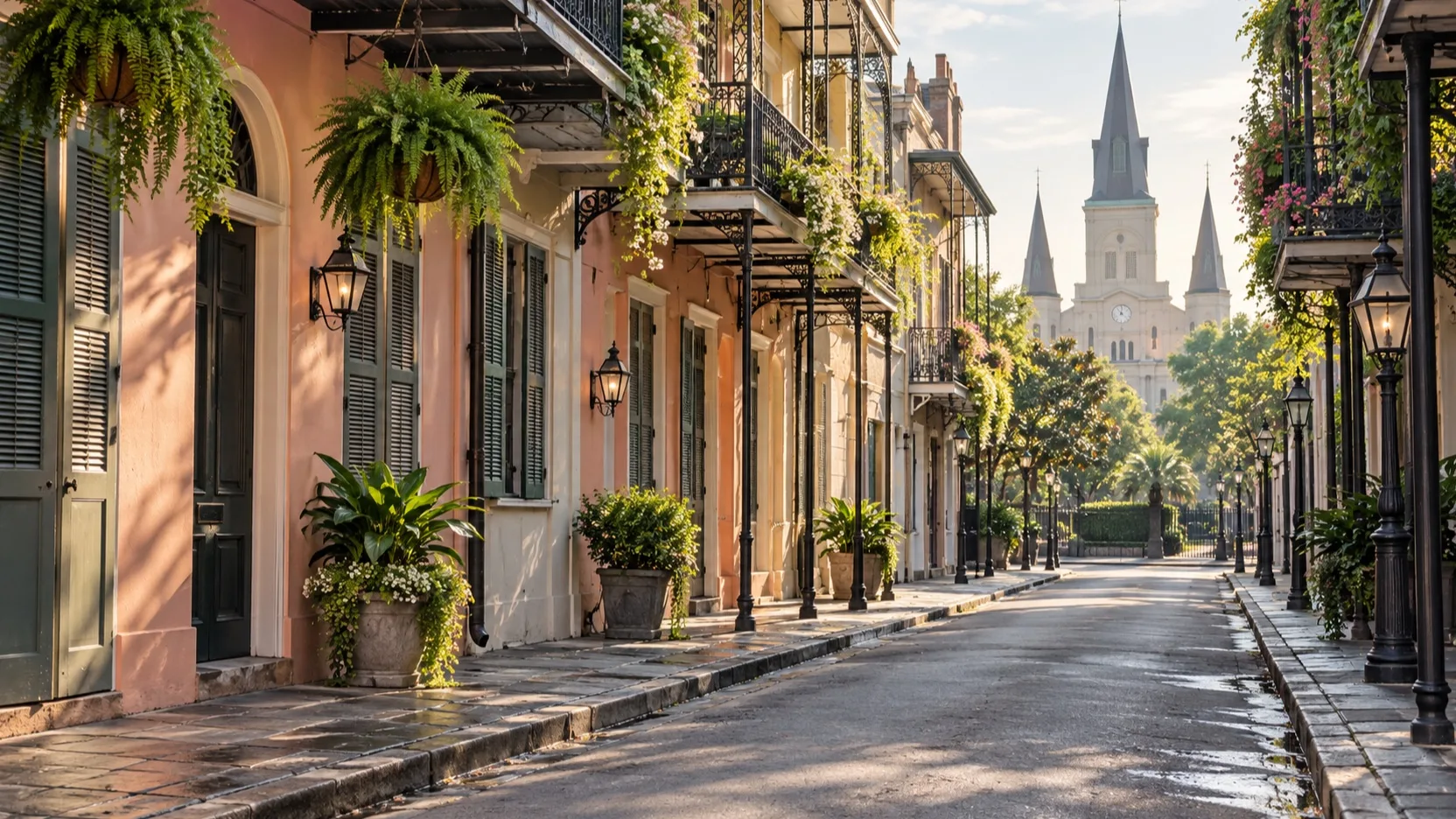
- The French Quarter: the oldest neighborhood in the city, and the closest classic New Orleans experience to the ship. I would just walk in and wander.
- Jackson Square: the historic heart of the Quarter, ringed by street artists, mule carriages, and cafe tables. It is a natural first stop.
- St. Louis Cathedral: the landmark spires over Jackson Square belong to one of the oldest cathedrals in the country. Step inside if a service is not in progress.
- Cafe du Monde: the original French Market stand for beignets and cafe au lait. Expect a line, and go anyway.
- Royal Street: the Quarter’s gallery-and-antiques strip, quieter and prettier than Bourbon Street by day.
- Frenchmen Street: the Marigny’s evening music strip is better for a pre-cruise night than embarkation morning. Check the venue calendar first, because the experience depends on who is playing and when doors open.
- The National WWII Museum: the official calendar lists the exhibits from 9:00 a.m. to 5:00 p.m., with a two-hour route available but a half day far more satisfying. Choose this instead of the French Quarter if exhibits matter more to you than wandering, and buy ahead when your available window is firm.
- The Garden District: grand antebellum mansions and oak-lined streets, best reached on the St. Charles streetcar.
- The St. Charles Avenue streetcar: the historic green line is a sightseeing ride in its own right, rolling past mansions and universities.
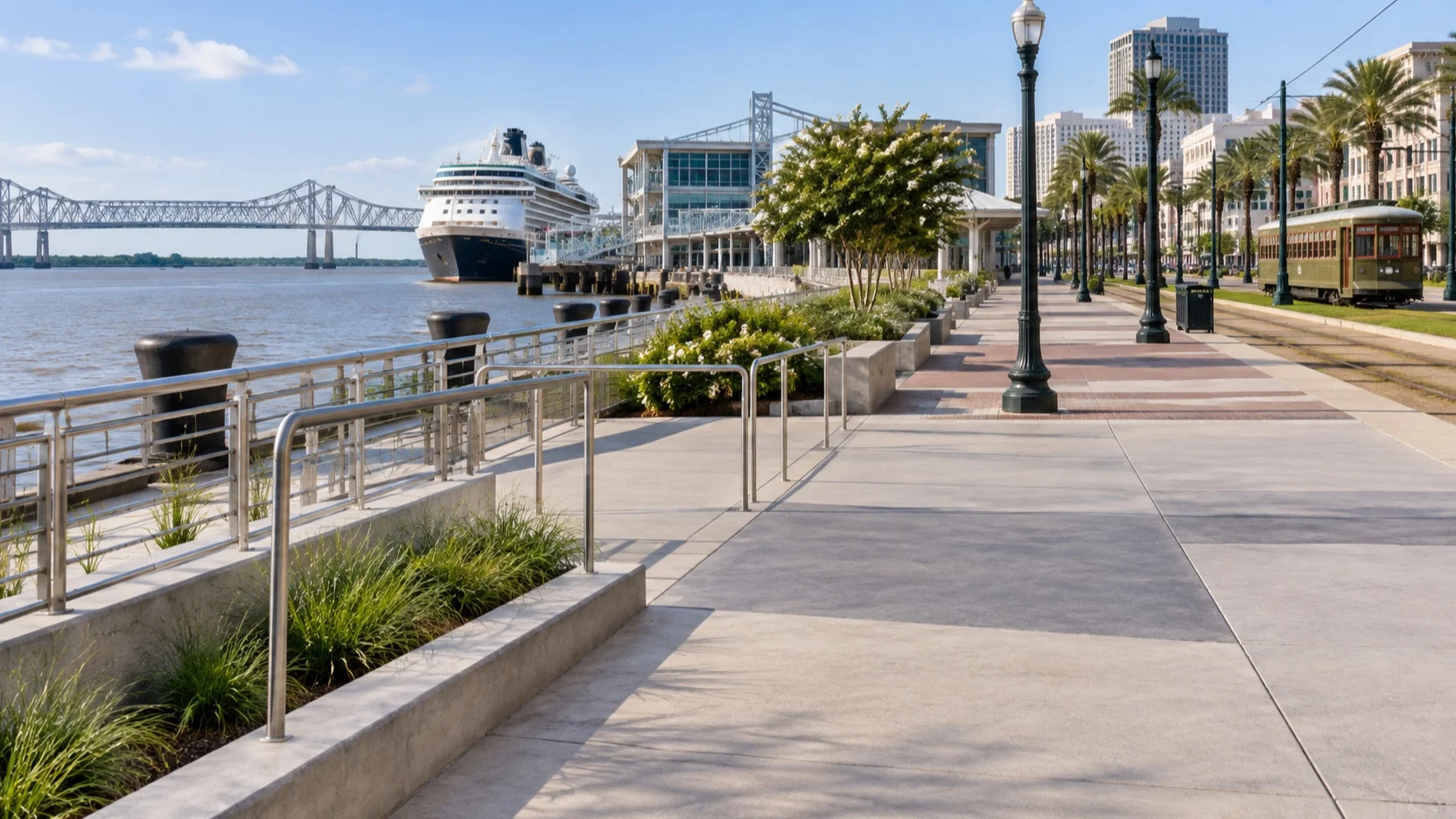
- The Mississippi Riverfront: a flat, breezy walk right outside the terminals, with the Riverfront streetcar shadowing the water.
- Magazine Street: independent shops and restaurants stretch far beyond the terminal area, so pick a specific block or destination instead of treating the whole street as one walkable stop.
Heads up: some links below are affiliate links. If you book through one, I may earn a commission at no extra cost to you. It never changes which hotels or tours I recommend. Full disclosure.
How I’d plan the day
Three genuinely free hours: take a short ride to the French Quarter, loop through Jackson Square and Royal Street, then return directly. Add Cafe du Monde only when the line is moving and keep at least 45 minutes for the ride, terminal entry and security.
Five genuinely free hours: choose either the French Quarter plus a short St. Charles streetcar ride or a focused visit to the National WWII Museum. Trying to do the Quarter, Garden District and museum in one block creates more transit than fun.
The day before sailing: spend the morning at the National WWII Museum, take the St. Charles streetcar in the afternoon and save Frenchmen Street for evening music. This is the only version where I would combine all three without watching the clock.
Embarkation morning: follow the arrival appointment and final check-in time in your cruise documents rather than assuming the garage opening time is permission to board. If you have less than three usable hours after dealing with luggage, have breakfast near your hotel and go to the terminal.
For a visiting port call, start the clock only after the ship clears and you can leave the terminal. Set a personal return time earlier than all aboard, then work backward through streetcar waits, rideshare pickup and terminal security.
A realistic word on accessibility
Port NOLA describes both terminals as ADA compliant and lists climate-controlled accessible passenger gangways. Arrange boarding assistance with the cruise line, because terminal access does not tell you whether the ship’s gangway, cabin or shore excursion fits your device.
The vintage St. Charles streetcars are not the option I would assume for a wheelchair or scooter user, so check the RTA’s current accessible route and vehicle information before planning around them. For more ideas on easier port days, see my guide to wheelchair-friendly cruise ports.
At 100 Poydras, confirm that the shuttle can carry your exact mobility device before reserving. If it cannot, ask the port and cruise line for the accessible drop-off route to Julia Street instead of discovering the problem with your luggage already unloaded.
When to go, and the weather
Fall and spring are the most comfortable times to walk the city. Summers are hot and very humid, so pace yourself and duck indoors midday.
The Atlantic hurricane season runs June through November, which can affect Gulf itineraries. Keep an eye on your cruise line’s updates if you sail in that window.
If you are weighing New Orleans against a Florida departure, my Fort Lauderdale cruise port guide makes a useful comparison.

Quick answers
Can I walk from the cruise terminal to the French Quarter? You can, but “five minutes from the French Quarter” is better understood as a short ride, not a five-minute luggage walk, so I would walk only with comfortable shoes, light bags and enough time for the Warehouse District streets between the river and the Quarter.
How much is a taxi from the airport? The official MSY flat rate is $36.00 to the Central Business District or French Quarter for up to two passengers, or $15.00 per person for three or more.
Is there parking at the port? Yes, but it is line specific, so Carnival should reserve Erato Street while Norwegian and Royal Caribbean guests should reserve 100 Poydras plus its shuttle to Julia Street, check the garage height limit and avoid prepaying if they need the qualifying Louisiana disabled-veteran benefit.
Sources
- Port of New Orleans: cruise parking and directions
- New Orleans & Company: cruise terminals and parking
- New Orleans RTA (Norta): streetcar and bus fares
- Louis Armstrong New Orleans International Airport: taxi flat rates
- The National WWII Museum: visitor information


How this guide was researched: This guide uses current information from Port NOLA, Louis Armstrong New Orleans International Airport, the New Orleans RTA and attraction operators. Terminal, parking, fare and visitor details were reviewed in September 2026; see our Editorial Policy.