French Polynesia Cruise Ports: Compare Every Island
French Polynesia is the South Pacific at its most cinematic: jagged green peaks, neon lagoons, and a cruise scene built around the Society Islands. Here is how each port actually works, and which ones I would prioritize.
Think of Papeete on Tahiti as the hub, with a ring of smaller islands radiating out from it. Most of them are tender ports, so the rhythm of your day changes island to island.
How I would choose
- First visit: prioritize Moorea for scenery, Raiatea for history, and one lagoon icon such as Bora Bora.
- Strong swimmers and divers: choose the Tuamotus, but book around certification, pass currents, and boat-return time.
- Culture and archaeology: choose Raiatea, Huahine, Nuku Hiva, or Hiva Oa rather than stacking beach days.
- Limited mobility: favor an alongside day in Papeete or Uturoa and confirm vehicle steps, boat ladders, and tender rules in writing.
For a tender island, I would target the landing 45 to 60 minutes before the published last tender. Remote island roads and lagoon boats justify an even wider buffer unless the excursion is operated by the ship.
The Tuamotus: Rangiroa, Fakarava, and smaller atolls
Rangiroa and Fakarava are reef-first calls where passes, currents, and boat schedules control the day. Choose a ship or local lagoon excursion if diving, drift snorkeling, or the Blue Lagoon is your priority, because the best sites are not reached by simply walking from the tender.
Fakarava’s biosphere-reserve setting rewards careful operators and small groups, while Rangiroa offers more visitor infrastructure. Tikehau and other occasional atolls are even quieter, so expect a tender, basic facilities, and few same-day transport options.
The Marquesas, Australs, and Gambier Islands
Nuku Hiva and Hiva Oa are the main Marquesas calls, with dramatic valleys, archaeology, and art rather than the protected lagoons of the Society Islands. Ua Pou and Ua Huka are smaller expedition calls where a guided vehicle or community program is usually the practical plan.
Rurutu and Tubuai in the Austral Islands, or Mangareva in the Gambier group, appear mainly on expedition itineraries. Treat each as a distinct remote call and use the ship’s landing plan, because transport, weather exposure, and community access vary more than they do around Tahiti.
Dock, tender, and what the name on the itinerary means
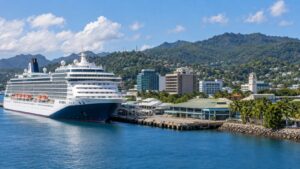
Papeete is the dependable alongside hub, and many ships can berth at Uturoa on Raiatea. Moorea, Bora Bora, Huahine, Taha’a, the Tuamotus, and the Marquesas are commonly tender or ship-launch calls, although the exact anchorage and landing can vary by vessel.
A tender label matters because the scheduled arrival is not the moment you reach land. Check tender priority, the last boat back, and whether an excursion leaves from the ship, the public quay, or a separate marina.
My quick take on French Polynesia’s cruise ports
Papeete is your turnaround base and one of the only true dock ports. Bora Bora and Moorea are the scenery headliners, Raiatea and Taha’a are the culture and vanilla pair, and Huahine is the quiet one.
For the full regional picture, I would read this alongside my South Pacific cruise ports hub and the detailed Papeete cruise port guide.
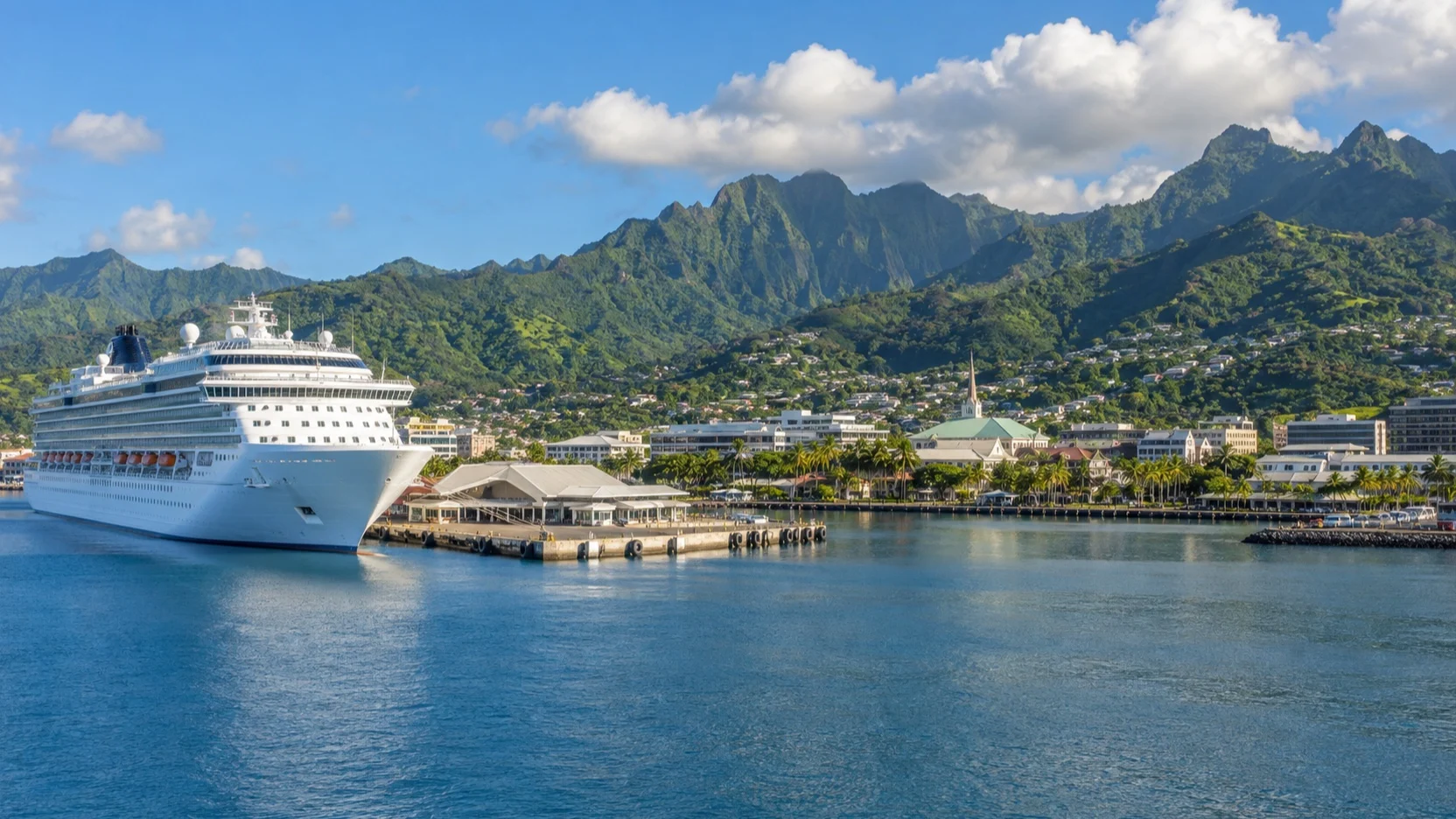
How cruising French Polynesia actually works
Almost every itinerary begins and ends in Papeete, the capital on Tahiti. It is the main turnaround port and the archipelago’s transport hub.
Papeete is a genuine dock. The Port Autonome de Papeete can berth up to four large cruise ships at once and has opened a dedicated terminal, Te Anuanua.
Beyond Tahiti and Raiatea, most Society Islands are tender ports. Ships anchor in the lagoon and ferry you ashore by small boat, so allow extra time at each end of your day.
A handful of small ships are based here year round, including the Paul Gauguin, Windstar’s Star Breeze, and the cargo-passenger Aranui 5. The official Tahiti Tourisme cruising page is a good overview.
Papeete and Tahiti: the hub
Tahiti is the biggest island and where nearly everyone starts. Papeete’s waterfront puts you within a short walk of the city.
The Marche de Papeete, the covered municipal market, is the classic first stop for pareos, vanilla, and Tahitian black pearls. The Museum of Tahiti and Her Islands in Punaauia is the best primer on Polynesian culture.
My read: use Papeete for provisioning, a museum, and the market, then save your beach energy for the outer islands. Full details are in my Papeete cruise port guide.
Moorea: the scenery next door
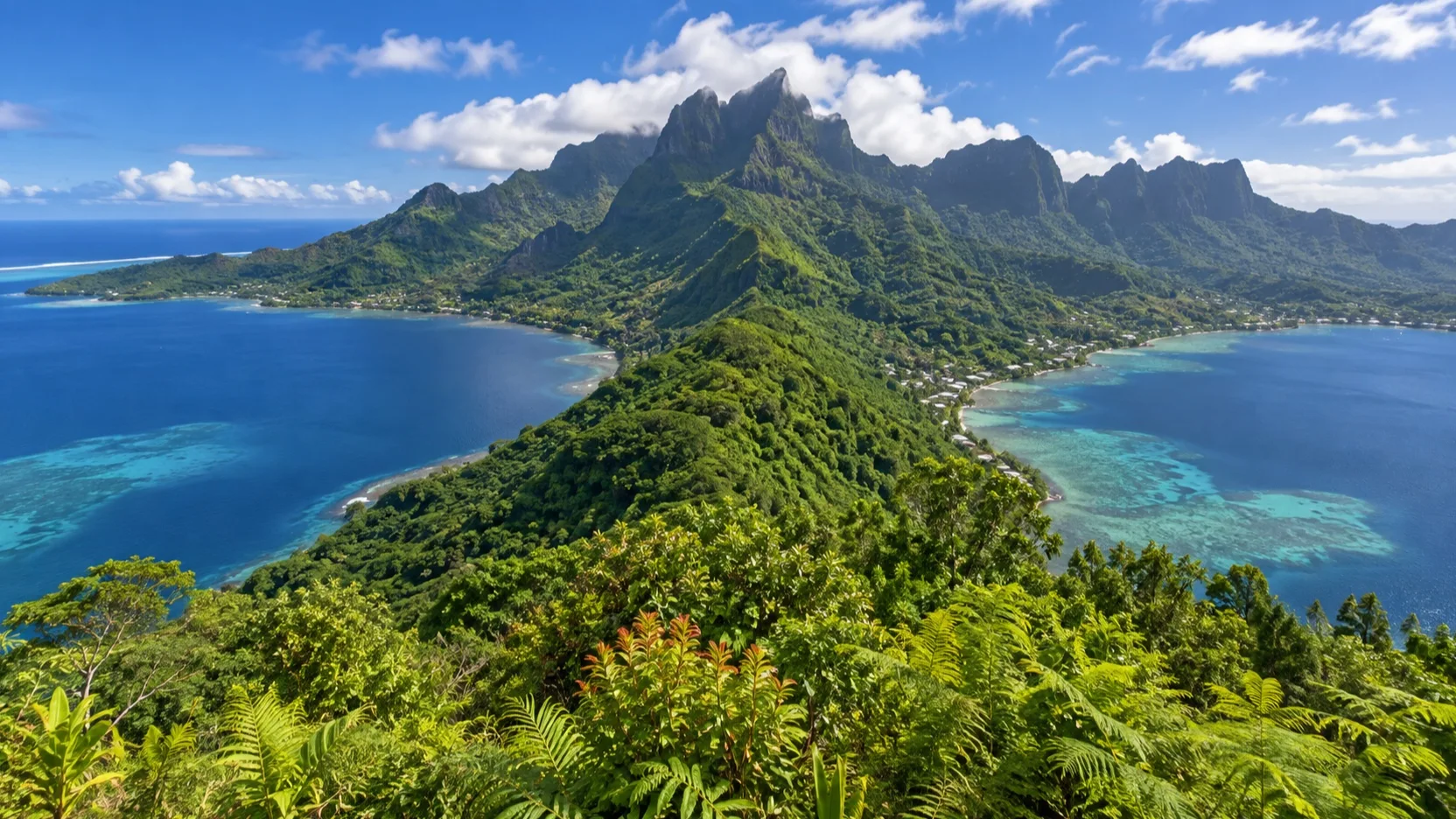
Moorea sits just across the channel from Tahiti, a heart-shaped island of dramatic peaks and two deep bays. It is a tender port, so you come ashore by boat.
The Belvedere Lookout is the signature view, taking in both Opunohu Bay and Cook’s Bay. Snorkeling with rays and small reef sharks in the lagoon is the other big draw.
My read: Moorea is the easiest big-scenery day of the trip. See how I would plan it in the Moorea cruise port guide.
Bora Bora: the iconic lagoon
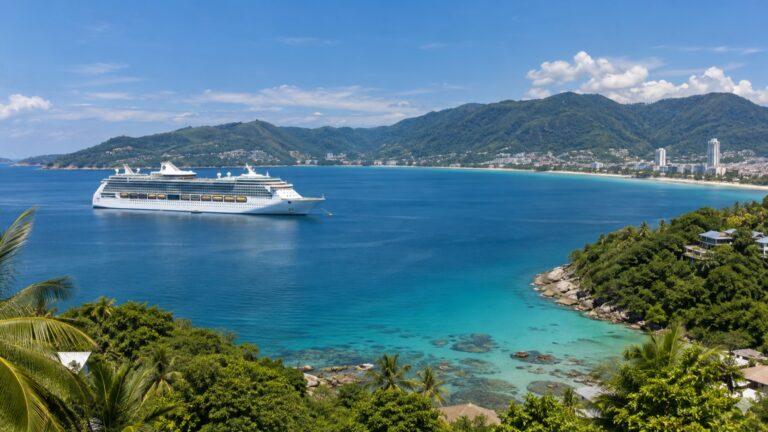
Bora Bora is the postcard: Mount Otemanu rising over a ring of turquoise lagoon and motu islets. Ships anchor and tender you into the village of Vaitape.
The lagoon is the whole point here, from snorkel and ray or shark encounters to Matira Beach, the island’s public swimming beach. A 4×4 tour up the interior passes World War II gun emplacements.
My read: book a lagoon excursion early and treat this as your splurge day. My Bora Bora cruise port guide covers the tender logistics.
Raiatea: the sacred island
Raiatea is the cultural heart of the Society Islands and, alongside Papeete, one of the few ports where ships can dock at the quay in Uturoa.
Taputapuatea marae, a monumental temple complex, is a UNESCO World Heritage Site and the spiritual center of the eastern Pacific. The Faaroa is the only navigable river in French Polynesia, ideal for a kayak.
My read: this is the port for history over beaches. Details are in the Raiatea cruise port guide.
Taha’a: the vanilla island
Taha’a shares a lagoon with Raiatea and is often paired with it on itineraries. It is a tender call, and famously fragrant thanks to its vanilla plantations.
Tour a vanilla plantation to see how Tahitian vanilla is grown and cured. The Coral Garden between Taha’a and its motu is one of the best drift snorkels in the country.
My read: pure slow-paced charm. See the Taha’a cruise port guide for how to plan a half day.
Huahine: the garden island
Huahine is the quiet, less commercialized Society Island, all lush hills and sleepy villages. It is a tender port, with the main village of Fare a short walk from the landing.
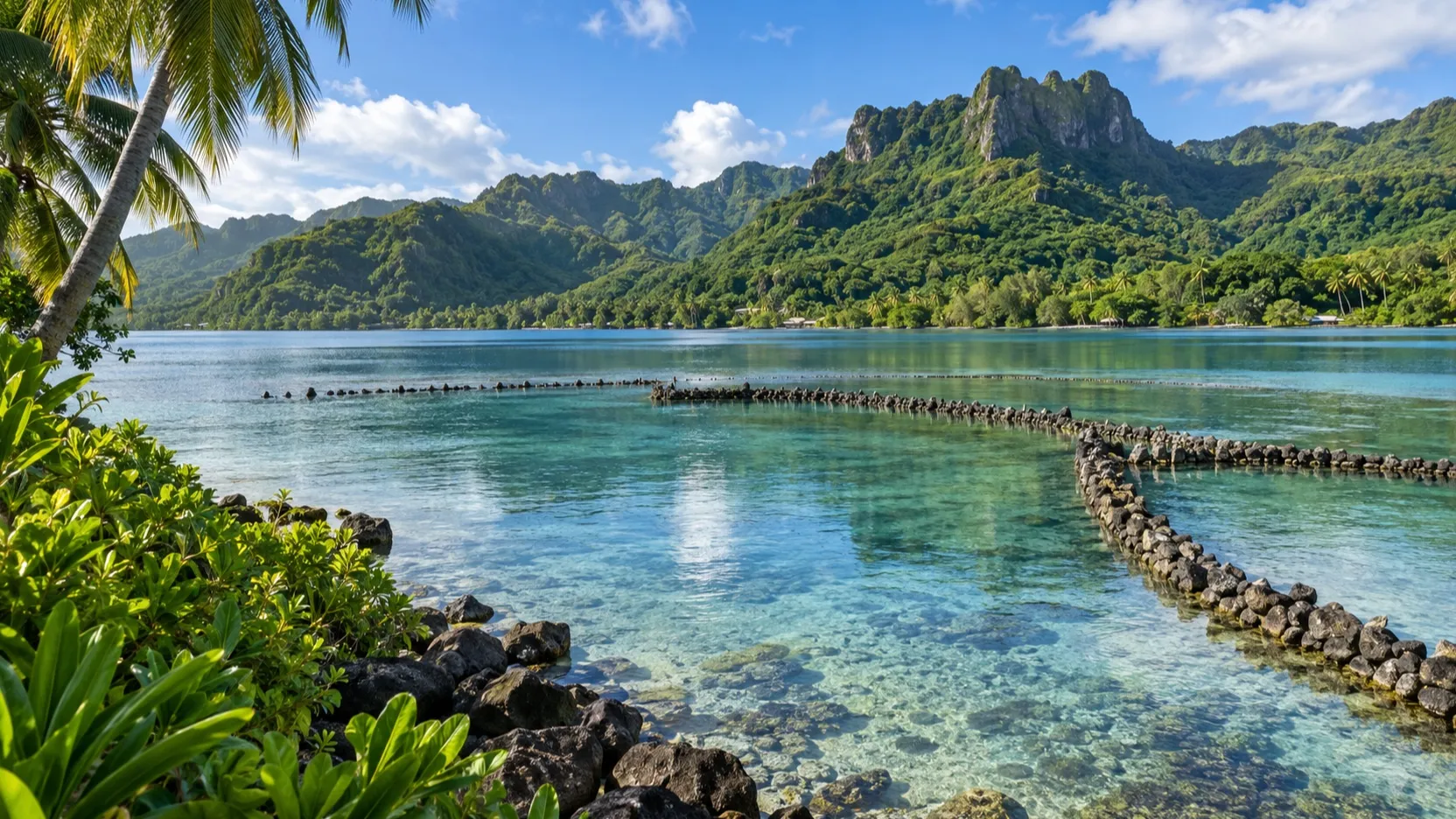
Around Maeva village you can see restored marae and ancient stone fish traps still in use in the lagoon. Lagoon tours and vanilla farms round out an easy day.
My read: the pick for travelers who want fewer crowds. More in the Huahine cruise port guide.
The Tuamotus and the remote Marquesas
Some itineraries push beyond the Society Islands. The Tuamotu atolls, especially Rangiroa and Fakarava, are flat coral rings famous for world-class drift diving through their passes.
Far to the northeast lie the Marquesas, rugged volcanic islands with towering tiki statues and deep valleys. Nuku Hiva is the main gateway, reached most often aboard the cargo-passenger Aranui 5.
The Marquesas are remote and lightly developed, so excursions here lean toward hikes, archaeology, and waterfalls like Vaipo. My Nuku Hiva cruise port guide has the specifics.
When to go, and the weather
French Polynesia is tropical, with a drier, cooler season from roughly May to October. This is the peak cruise window, with the most comfortable conditions.
November to April is warmer and wetter, with brief showers and lusher landscapes. Prices soften and crowds thin, and the Heiva festival lights up July.
Money, language, and staying safe
The currency is the CFP franc (XPF), and French is the main language, though English is widely understood in tourism. A friendly “Ia Orana” (hello) goes a long way.
The U.S. State Department rates French Polynesia at Level 1, exercise normal precautions, its lowest tier. Standard common sense is all that is required.
Quick answers
Which French Polynesia ports are dock versus tender?
Papeete (Tahiti) and Raiatea (Uturoa) generally let ships dock at a quay. Bora Bora, Moorea, Taha’a, and Huahine are tender ports where you come ashore by small boat.
What currency do I need?
The CFP franc (XPF). Cards are common in Papeete, but carry some cash for smaller islands and market stalls.
Which islands should first-timers prioritize?
For a first cruise, Bora Bora and Moorea deliver the classic scenery, with Papeete for culture. Add Raiatea or Huahine if you want history and a slower pace.


How this guide was researched: Unless a first-hand visit is explicitly identified above, this guide is based on independent research using official port, tourism, transit, government, and attraction sources where available. Logistics and time-sensitive details were reviewed in September 2026; see our Editorial Policy.