Savannah Cruise Port Guide: River Street, Squares, and Small Ships
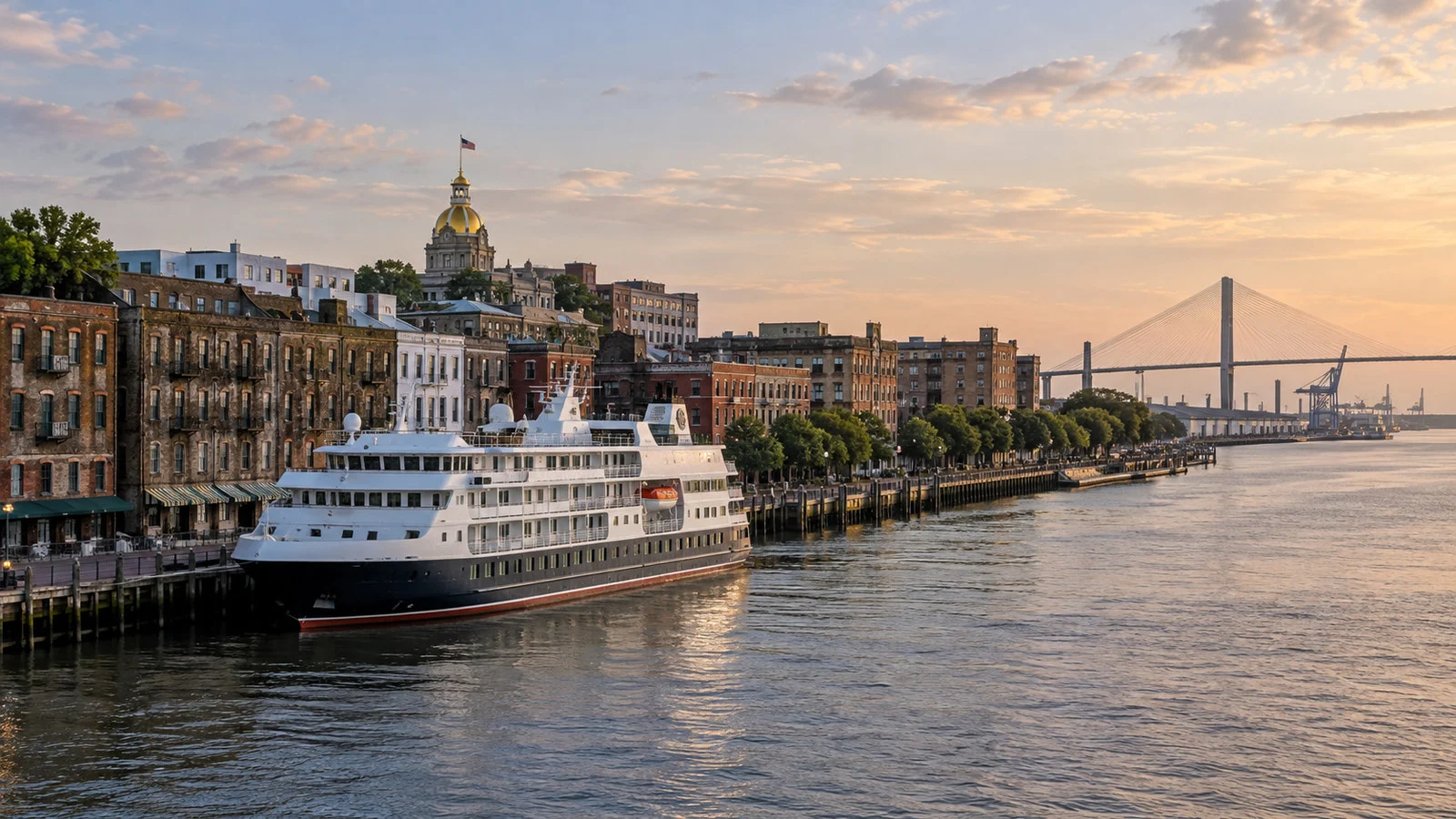
Savannah is a small-ship cruise stop where the riverfront sits directly below one of America’s most distinctive historic districts. A good port day can combine River Street, several shaded squares, one meaningful museum or church, and an unrushed meal.
The main complication is vertical rather than geographic. River Street lies below the city on a bluff, so stairs, cobbled ramps, elevators, heat, and mobility needs shape the route.
My quick take
Explore independently if your ship uses a downtown riverfront landing and your group handles the bluff comfortably. The Historic District is easy to personalize, and a delayed start does not ruin the day.
Book a guided tour if you want deeper historical context, an accessible vehicle, Bonaventure Cemetery, or another sight outside the compact center. Savannah’s beauty is inseparable from difficult histories of colonization, slavery, cotton wealth, war, and preservation.
Do not try to collect every square and outlying attraction in one call. Four or five squares seen well will stay with you longer than a rushed checklist.
Savannah cruise port quick facts
- Port style: Savannah appears mainly on small coastal cruise itineraries, not as a routine mainstream megaship port.
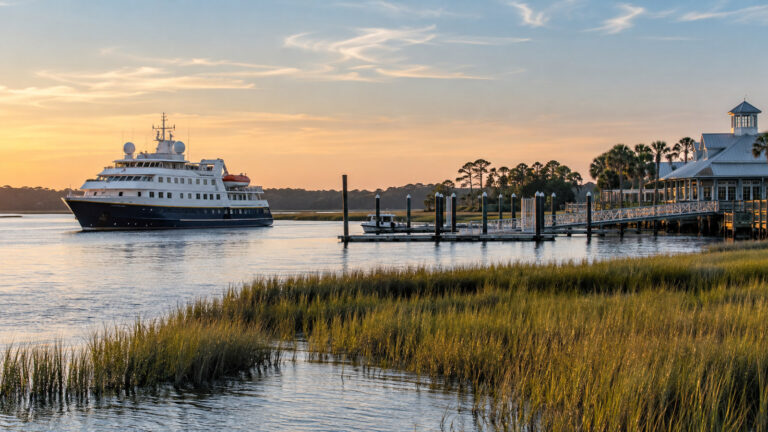
- Landing: A small vessel may use a downtown riverfront landing, but the exact berth and gangway belong to the current ship program.
- Into town: River Street is below the Historic District, with stairs, cobbled ramps, and limited elevator routes connecting the levels.
- Best easy day: Walk a short riverfront section, climb to several squares, choose one anchor sight, and return with time to spare.
- Transportation: Chatham Area Transit runs fixed routes, free downtown dot loops, and the free Savannah Belles Ferry across the river.
- Currency: US dollars. Cards are common, but small cash is useful as a backup and for tips.
- Time: Eastern Time, with daylight saving time observed. Always use the clock stated by the ship.
Where small cruise ships land
Savannah does not have a conventional downtown passenger terminal for large ocean cruise ships. Current leisure calls are associated mainly with small coastal vessels, and landing arrangements can differ by sailing.
A riverfront berth can place passengers close to River Street, but confirm the landing name before arranging any tour or ride. Do not send a driver to a generic “Port of Savannah” pin.
The Georgia Ports Authority operates major commercial cargo facilities, including Garden City Terminal and Ocean Terminal. Those secured terminals are not interchangeable with a downtown small-ship landing.
Ask the cruise director for the berth name, all-aboard time, ship or port-agent contact, and step-free route off the waterfront. Photograph the daily program so those details remain available if cell service or memory fails.
The Savannah River remains an active commercial channel. Ship movement, river traffic, weather, and port operations can adjust a schedule, so follow crew instructions throughout the call.
Getting from River Street to the upper city
River Street sits below Bay Street and the main grid of squares. Historic stairways and cobbled ramps connect the levels, and some routes are steep or uneven.
Travelers who need a gentler route should ask about a functioning elevator or the safest available ramp before leaving the landing. Elevator status can change, so do not rely only on an old map or review.
The lower waterfront is attractive but can be one of the most difficult surfaces in the district. Cobbles, old stone, traffic, delivery activity, and crowds reward closed-toe shoes with good grip.
Once above the bluff, the city grid becomes easier to follow. Shade from trees helps, but summer heat and humidity can make even a flat section tiring.
Free downtown transportation
Chatham Area Transit operates the free dot system with Downtown and Forsyth loops connecting visitor centers, parking, attractions, shops, restaurants, and hotels. Check current routes and rider alerts on the day because stops and service patterns can change.
The Savannah Belles Ferry also provides free passage between River Street and Hutchinson Island. It is useful for river views but does not replace the climb from River Street into the Historic District.
Fixed-route buses connect downtown with greater Savannah, while paratransit has eligibility and reservation requirements. A visiting cruise passenger should not assume same-day paratransit access without confirming it in advance.
Use transit to reduce walking, not to cram distant sights into an already tight schedule. Save the live tracker and return-stop details before leaving Wi-Fi aboard.
A practical first-time walking route
Start with a short section of River Street, then move uphill before the day becomes hotter. Continue through a small sequence of central squares rather than zigzagging across the entire district.
Johnson Square, Wright Square, Chippewa Square, Madison Square, and Lafayette Square create a useful north-to-south spine. You can shorten the route at any point and turn back toward the landing.
Savannah preserves 22 public squares, but seeing all of them is not a meaningful cruise-day goal. Pause for the markers, architecture, memorials, and human stories that distinguish one square from another.
The Savannah Historic District is a National Historic Landmark District. A thoughtful guide, museum, or interpretive marker helps connect its admired streetscape with the labor and inequality that financed much of the city’s growth.
River Street and Factors Walk
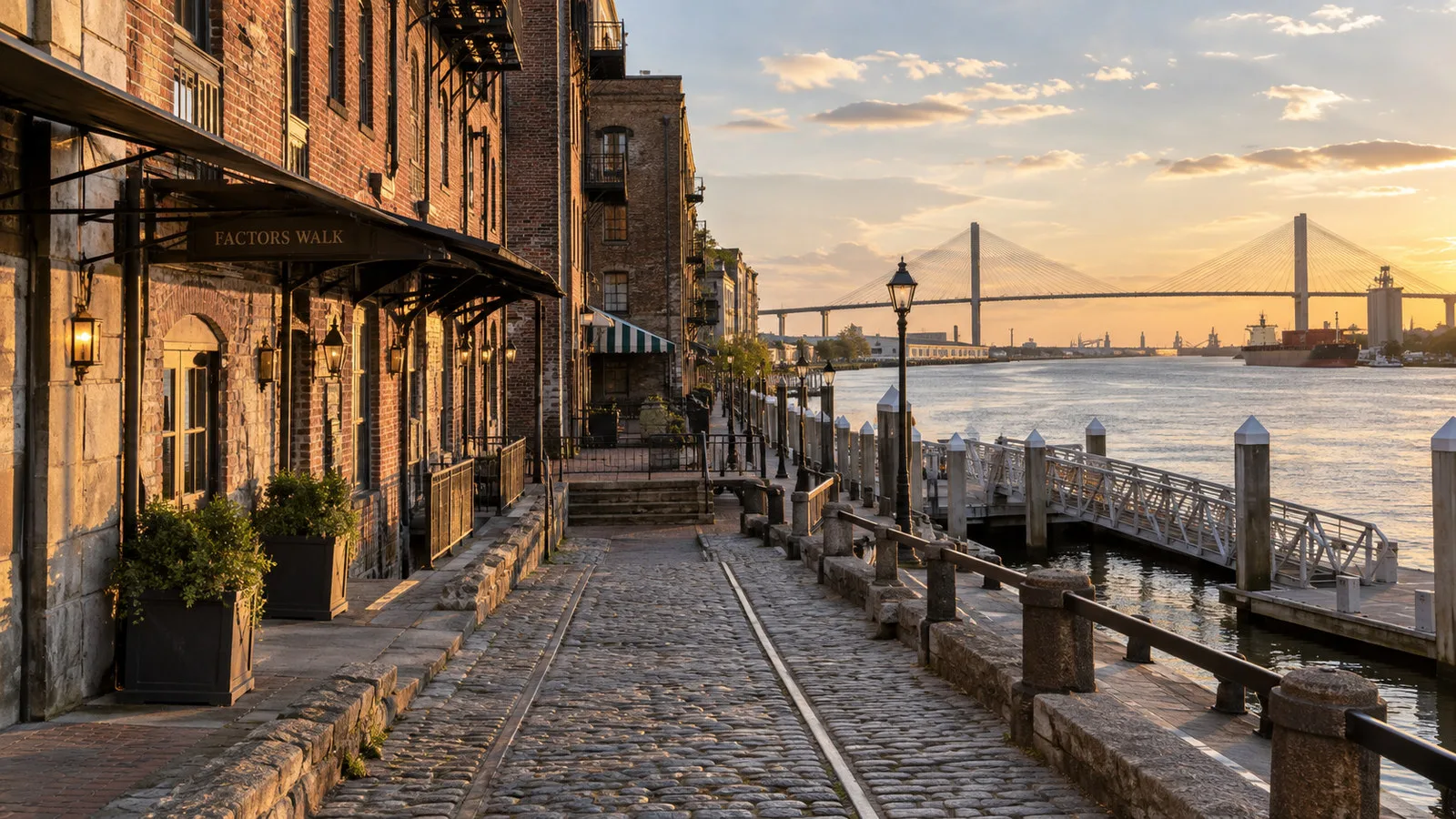
River Street occupies former warehouse buildings along the water, while Factors Walk uses bridges, ramps, and upper levels behind them. The architecture reflects Savannah’s long commercial role on the river.
That history includes the cotton economy and enslaved labor, so the district deserves more than a simple “Southern charm” label. Read historical interpretation and choose tours that address who worked here and under what conditions.
Today the riverfront contains restaurants, shops, bars, and candy stores. It is lively and convenient, but a short visit is enough if your main interest lies in the squares above.
Watch for vehicles in shared or crossing areas and stay out of secured dock space. The river is also a working channel, so never climb barriers for a ship photograph.
Cathedral Basilica and nearby squares
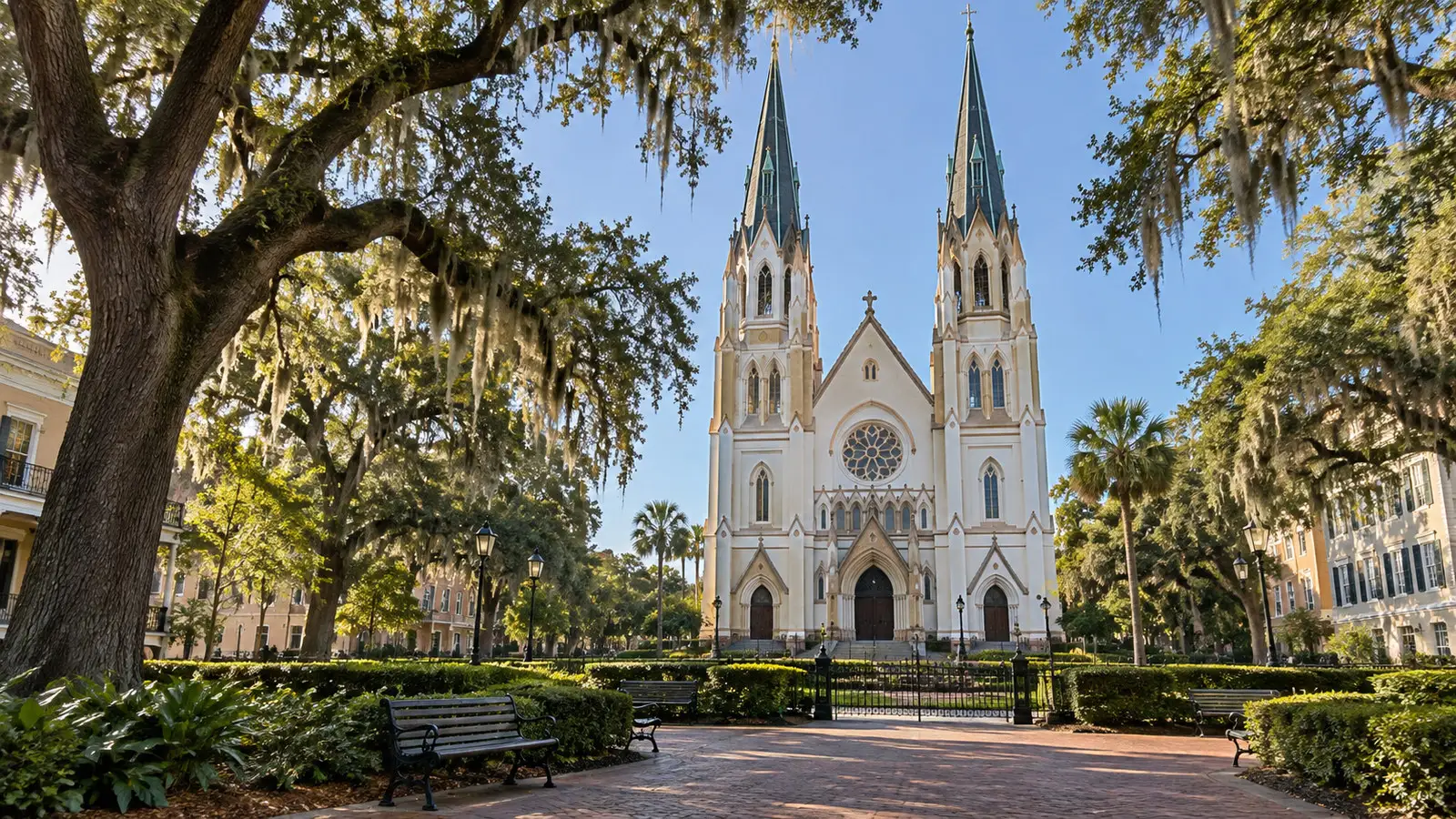
The Cathedral Basilica of Saint John the Baptist stands close to Lafayette Square and makes a natural anchor for a central walking route. It is an active place of worship, so check visitor access around services and events.
Dress respectfully, keep voices low, and follow photography rules. If the building is closed, the surrounding square and exterior still fit easily into the walk.
Nearby Madison and Chippewa squares add varied monuments, buildings, and shaded places to rest. Do not treat every square as a movie location because their histories are broader and more important.
Colonial Park Cemetery and Forsyth Park
Colonial Park Cemetery is a compact historic stop within the downtown grid. Enter respectfully, remain on allowed paths, and remember that it is a burial ground rather than a ghost-story stage.
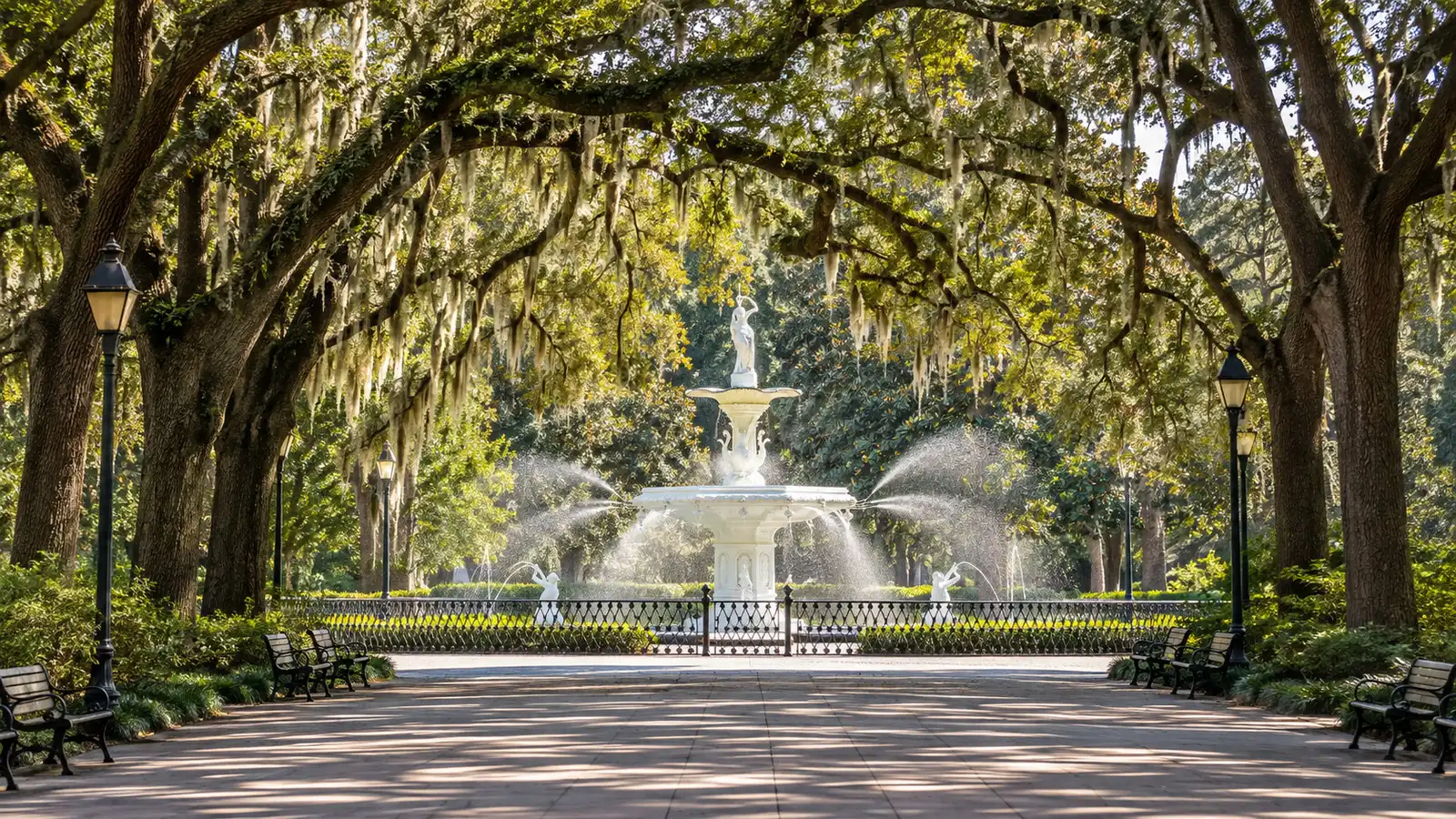
Forsyth Park is the classic southern turnaround point for a longer walk. Its fountain, trees, lawns, and surrounding neighborhood are appealing, but the round trip from the riverfront takes time.
Allow more than a map’s pure walking estimate because the initial bluff climb, street crossings, heat, photographs, and square stops all add minutes. Turn back earlier if the group is tiring.
The free dot loop can reduce some walking when its current route fits your plan. Confirm the return stop and do not wait for the final possible vehicle before all-aboard.
Bonaventure Cemetery
Bonaventure Cemetery lies outside the compact Historic District and requires transportation. The City of Savannah operates the cemetery and publishes current visitor hours, rules, and tour information.
Choose Bonaventure when its landscape, monuments, or history is a genuine priority. A booked tour is more dependable than reaching the cemetery by rideshare and hoping for an immediate return pickup.
Treat the grounds as an active cemetery. Follow posted rules, avoid private services, keep voices low, and never touch or climb monuments.
Do not combine Bonaventure, Tybee Island, Forsyth Park, and a full downtown walk during a normal call. Savannah rewards focus, and outlying travel consumes the buffer quickly.
Museums and specialist history tours
A museum or guided walk can provide the context that an architecture-only route misses. Choose a subject that matters to you, such as African American history, military history, religion, prohibition, art, or historic preservation.
Current American Cruise Lines material lists multiple Savannah excursions, including walking, trolley, cemetery, Civil War, and museum options. The cruise line also warns that exact excursions vary by date.
Check opening hours and timed-entry rules directly with the venue. Small ships may arrive on days when a favored museum has reduced access or a private event.
A responsible history tour should discuss Savannah’s beauty without romanticizing slavery or the Confederacy. Read recent descriptions and ask what period and perspective the guide covers.
Ship excursion or independent day?
Go independently when the landing is downtown, everyone handles the bluff, and your plan stays within the Historic District. This gives you freedom to change the route for heat, rain, or a late arrival.
Book a ship or line-vetted excursion for an outlying sight, specialist interpretation, or accessible vehicle. The coordination is especially valuable when the port call is short.
Before paying an independent operator, provide the ship name, berth information, and call times. Confirm the meeting point, cancellation terms, vehicle access, restroom stops, and planned return in writing.
Compare included ship activities before buying a duplicate trolley circuit. The useful question is whether the guide or vehicle improves your particular day, not whether the route is technically possible alone.
Accessibility and mobility
The first access question is the ship’s gangway, which may be sloped and can change angle with the river. Ask for width, steps, handrails, and mobility-device procedures for your specific vessel.
The second challenge is the bluff between River Street and the city above. Request current information about elevators, gentler ramps, accessible vehicles, and exact drop-off points.
Historic paving, curb transitions, narrow paths, and tree roots can make a short route more tiring than expected. A vehicle loop with one or two confirmed accessible stops may provide a better day.
Do not assume every historic building has an accessible entrance, elevator, seating, or restroom. Contact must-see venues directly and keep a nearby backup.
Chatham Area Transit publishes services for passengers with disabilities, but eligibility rules differ between fixed routes and paratransit. Review the exact service rather than relying on a general accessibility label.
Heat, thunderstorms, and hurricane season
Savannah summers are hot and humid, with thunderstorms capable of changing an outdoor plan quickly. Start early, carry water, use sunscreen, and schedule an indoor cooling break.
When thunder is audible, move inside a substantial building rather than sheltering under a live oak. Low waterfront areas can collect water, so follow local warnings and avoid flooded routes.
The Atlantic hurricane season runs from June through November, and tropical systems can disrupt the river and cruise schedule. Use the National Hurricane Center for official storm information, then follow the cruise line for itinerary decisions.
Spring and fall can be comfortable for walking, but warm days and strong sun still occur. Winter is milder than many US ports, though cold fronts and rain remain possible.
Pack a compact rain layer rather than relying only on an umbrella. Wind near the river and lightning during storms can make an umbrella impractical.
Food, money, and practical details
Savannah offers plenty of downtown dining, but popular restaurants may develop long waits. Eat earlier than the busiest lunch period or choose a place that does not threaten the return buffer.
Cards are widely accepted, though small cash is useful for tips and a backup purchase. Keep payment cards secure in crowded visitor areas.
Public restrooms are not available on every block. Use confirmed facilities before beginning a long walking loop or boarding an extended tour.
Open-container rules are more specific than souvenir-cup marketing can suggest. Follow current signs, venue instructions, and ship security rules rather than assuming a drink may go anywhere.
For an emergency, call 911 and notify the ship. Use the port-agent or cruise-line contact for a vessel-specific problem or delayed return.
Protecting your return to the ship
Use the all-aboard time in the daily program, not the ship’s published departure time on a third-party website. Confirm whether the ship is using local Eastern Time.
Set a personal return time earlier than the official deadline. The bluff climb, heat, an elevator outage, traffic, or a store queue can consume more time than expected.
A walking day should end close to the riverfront, while an independent vehicle outing needs a larger margin. Do not schedule the final rideshare pickup at the latest mathematically possible minute.
Carry the exact landing name and local contact details. If the vessel or gangway location changes, the port agent is more useful than a generic map pin.
How Savannah fits a Southeast cruise
American Cruise Lines currently includes Savannah on its Southeast Sea Islands route between Charleston and Amelia Island. The same itinerary visits Beaufort, Hilton Head, Jekyll Island, and Saint Simons Island, though exact plans vary by date.
Savannah and Charleston both offer preserved streets and complicated port histories, but their landing logistics differ. Amelia Island provides another compact historic stop on the same regional style of voyage.
Use our East Coast cruise ports guide and United States cruise ports guide for the broader route picture. Savannah usually functions as a small-ship call rather than a major ocean-cruise homeport.
That role suits the city. A smaller passenger group can step into the downtown landscape without the scale of a megaship terminal or a fleet of buses.
Quick answers
Do large cruise ships stop in Savannah?
Savannah is not a routine mainstream megaship port. Current leisure itineraries are mainly associated with smaller coastal vessels.
Is there a downtown cruise terminal?
There is no large passenger terminal comparable with a major homeport. Small ships may use riverfront landings, and passengers should confirm the exact berth aboard.
Can I walk into the Historic District?
Usually yes from a downtown landing, but River Street lies below the upper city. Choose stairs, a ramp, or an operating elevator that fits your mobility.
What is the best short-call plan?
Combine a small section of River Street with three or four squares and one anchor sight. Turn back before Forsyth Park if the heat, pace, or clock makes the longer loop unwise.
Is Savannah wheelchair accessible?
Parts of downtown and transit can work well, but the gangway, bluff, paving, and individual buildings need separate checks. Request route-specific information.
Is Tybee Island realistic during a call?
Only with a long call, dependable transportation, and a large return buffer. First-time visitors usually gain more by staying in the Historic District.
The bottom line
Savannah works beautifully when the plan remains compact. Confirm the landing, use the safest route above the bluff, explore a thoughtful handful of squares, and return early.
The city provides atmosphere without demanding an excursion. Your job is to leave enough space for history, shade, lunch, and the river rather than turning the day into an endurance test.
How this guide was researched: This guide uses current information from the Georgia Ports Authority, Chatham Area Transit, the City of Savannah, federal weather authorities, and current small-ship itinerary material. Details were reviewed in September 2026; always reconfirm the landing and schedule for your sailing, and see our Editorial Policy.