Hellesylt Cruise Port: Waterfall, Ferry and Fjord Logistics
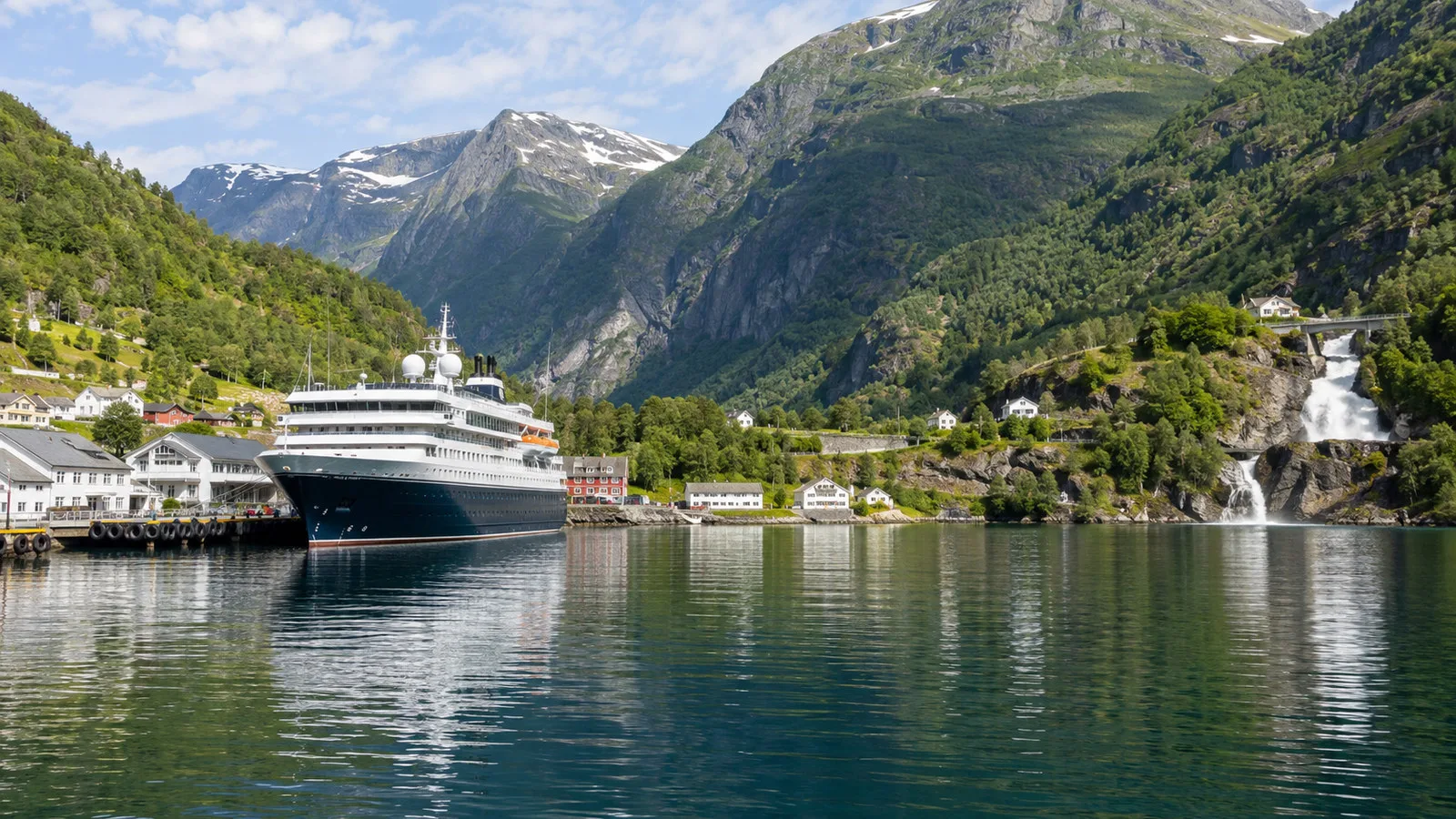
Hellesylt is a compact fjord village at the head of Sunnylvsfjorden, with a powerful waterfall, a small center, and summer boat connections toward Geiranger. A cruise call can be a simple village walk or the starting point for a much longer excursion.
The day’s exact plan depends on whether your ship docks, tenders, or uses Hellesylt mainly as an excursion embarkation point. Read the ship’s instructions carefully because some passengers may leave in one place and rejoin the vessel elsewhere.
My quick take
Stay in Hellesylt for a low-stress walk to Hellesyltfossen, the church area, and the waterfront. Choose a ship excursion when you want mountain viewpoints, a road journey, or a one-way program that reconnects with the vessel.
Do not assume the public Geiranger ferry will fit a cruise call just because it runs between the two villages. Schedule, capacity, seasonal operation, and the ship’s own movement must all work together.
Hellesylt quick facts
- Country: Norway
- County: Møre og Romsdal
- Municipality: Stranda
- Fjord: Sunnylvsfjorden, linked with Geirangerfjorden
- Typical cruise access: Direct berth, tender, or excursion transfer depending on the ship
- Main village sight: Hellesyltfossen waterfall
- Currency: Norwegian krone
- Payments: Cards are widely used, but carry a backup method
- Independent transport: Walking in the village, prebooked tour or seasonal ferry farther afield
- Best first check: All-aboard location, ship movement, and excursion return plan
Docking, tendering, and transit calls
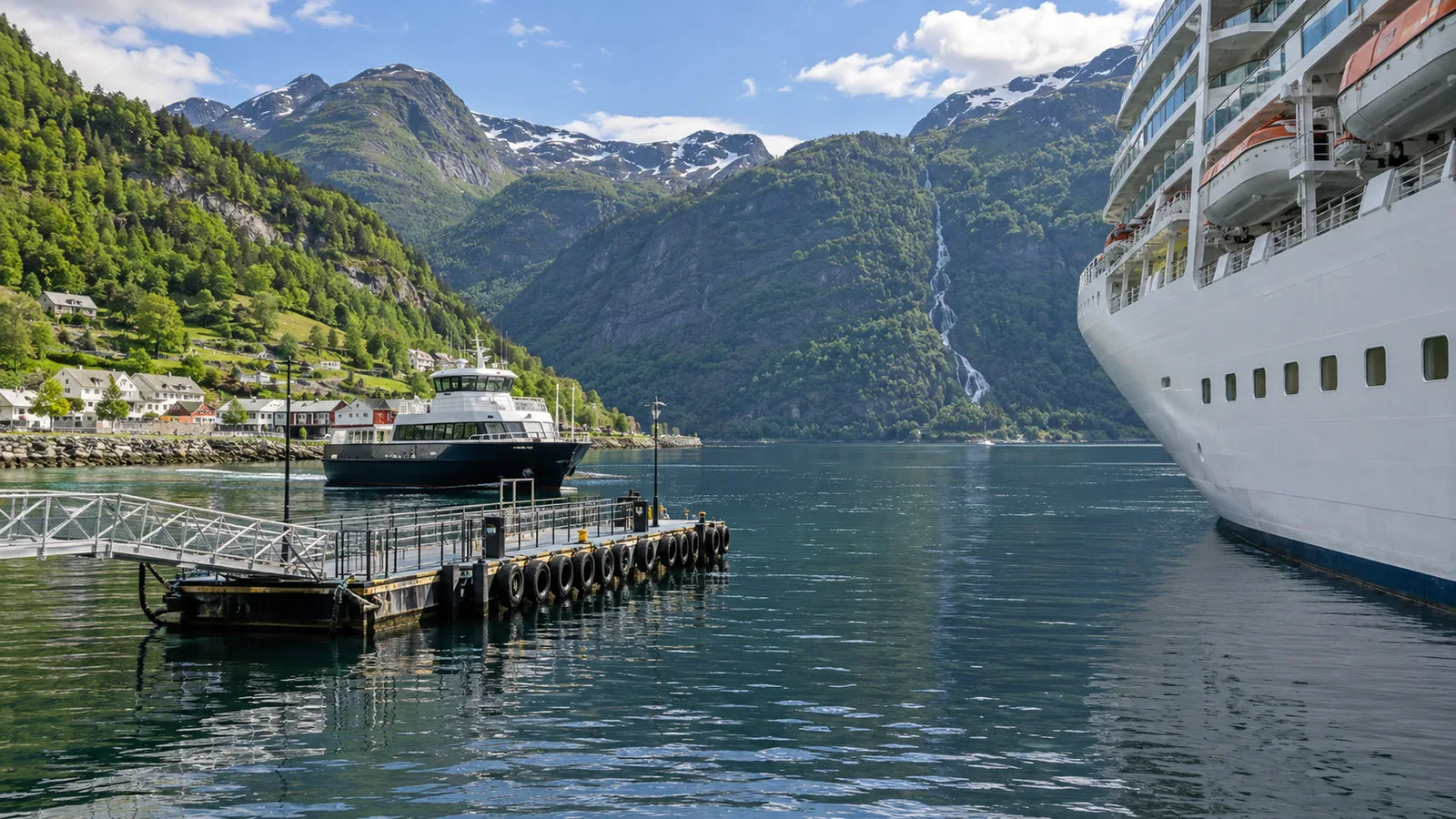
Many cruise calls use the quay, while vessel size, traffic, and operational needs can produce a tender or different landing arrangement. Follow the plan for your ship rather than a generic port description.
Hellesylt can also function as a transit point for overland excursions. Passengers may leave the ship here and meet it later in Geiranger, or follow another route specified by the cruise line.
That possibility makes the all-aboard location especially important. Confirm whether you return to Hellesylt, rejoin elsewhere, or remain with an escorted group.
If ships are alongside or facilities are busy, the gangway route may include slopes, steps, or a walk through controlled port space. Crew instructions take priority around vehicles, ropes, and working areas.
Photograph the landing point and any written return notice. A village this small still becomes confusing when different ferries, tenders, and tour groups use nearby waterfront areas.
Walking through Hellesylt
The village center is close to the water and manageable on foot for most passengers. A basic loop can include the waterfall viewpoints, church surroundings, a café or shop, and the shoreline.
Traffic uses the same central roads as visitors, so do not stop in the roadway for a photograph. Cross carefully near the waterfall and bridges, where views naturally pull attention away from vehicles.
There are fewer visitor services than in Geiranger, and opening hours can be seasonal. Use the ship’s restroom before going ashore and do not count on a particular café being open.
Norwegian cards and contactless payments are common, but a second card or small cash reserve is sensible. Network interruptions can happen even in a well-connected country.
Hellesyltfossen waterfall
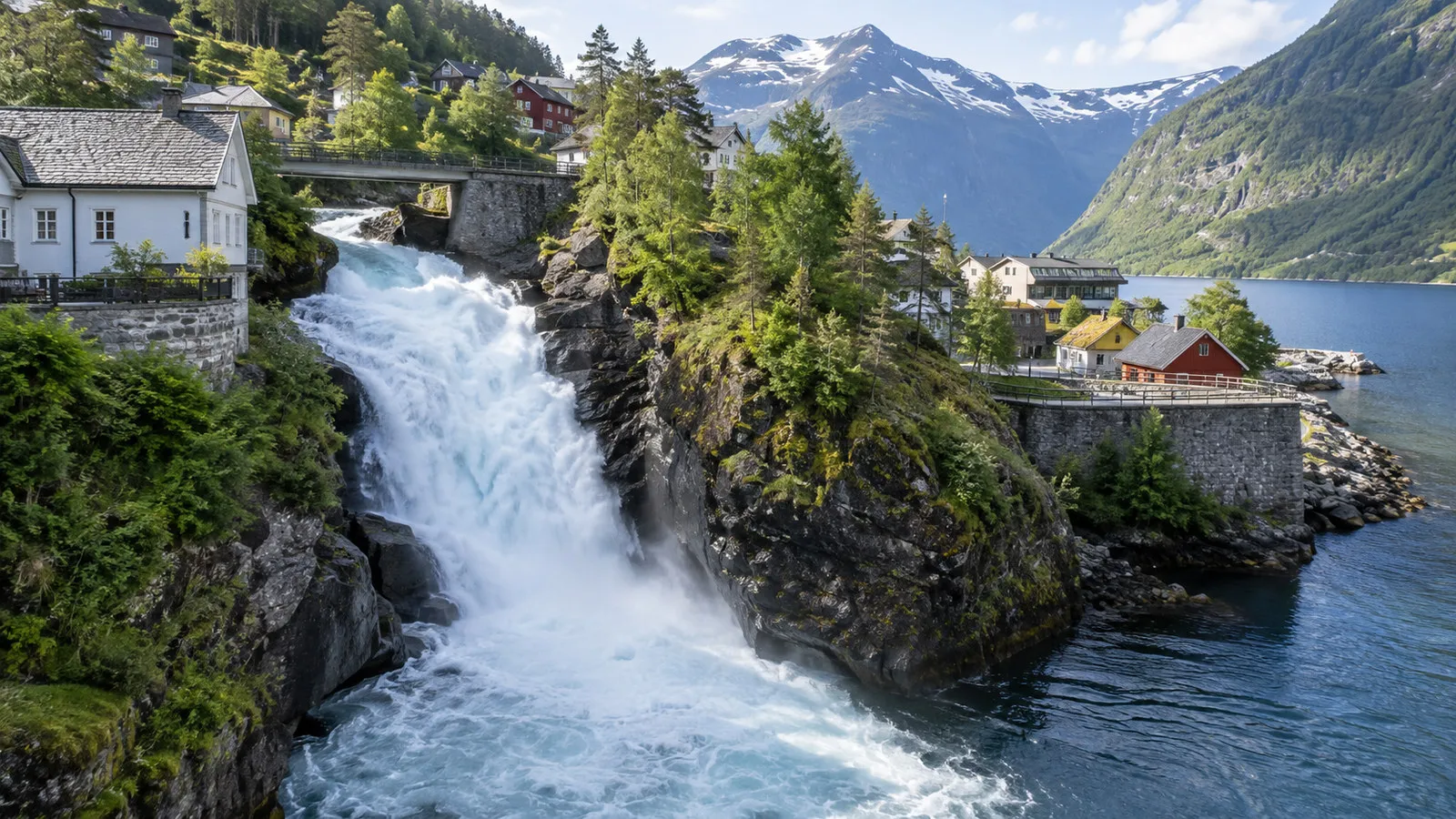
Hellesyltfossen drops through the middle of the settlement before reaching the fjord. Its volume and appearance change with rain and snowmelt, so every call looks a little different.
The bridges and nearby viewpoints offer easy perspectives without a wilderness hike. Wet spray, polished surfaces, and traffic are more practical concerns than distance.
Stay behind barriers and avoid climbing for a cleaner camera angle. Fast water and slippery rock make the falls more dangerous than their central location suggests.
The waterfall is impressive enough to anchor a short call, but it does not require hours. Pair it with the church area and a slow waterfront walk.
Sunnylven Church and village context
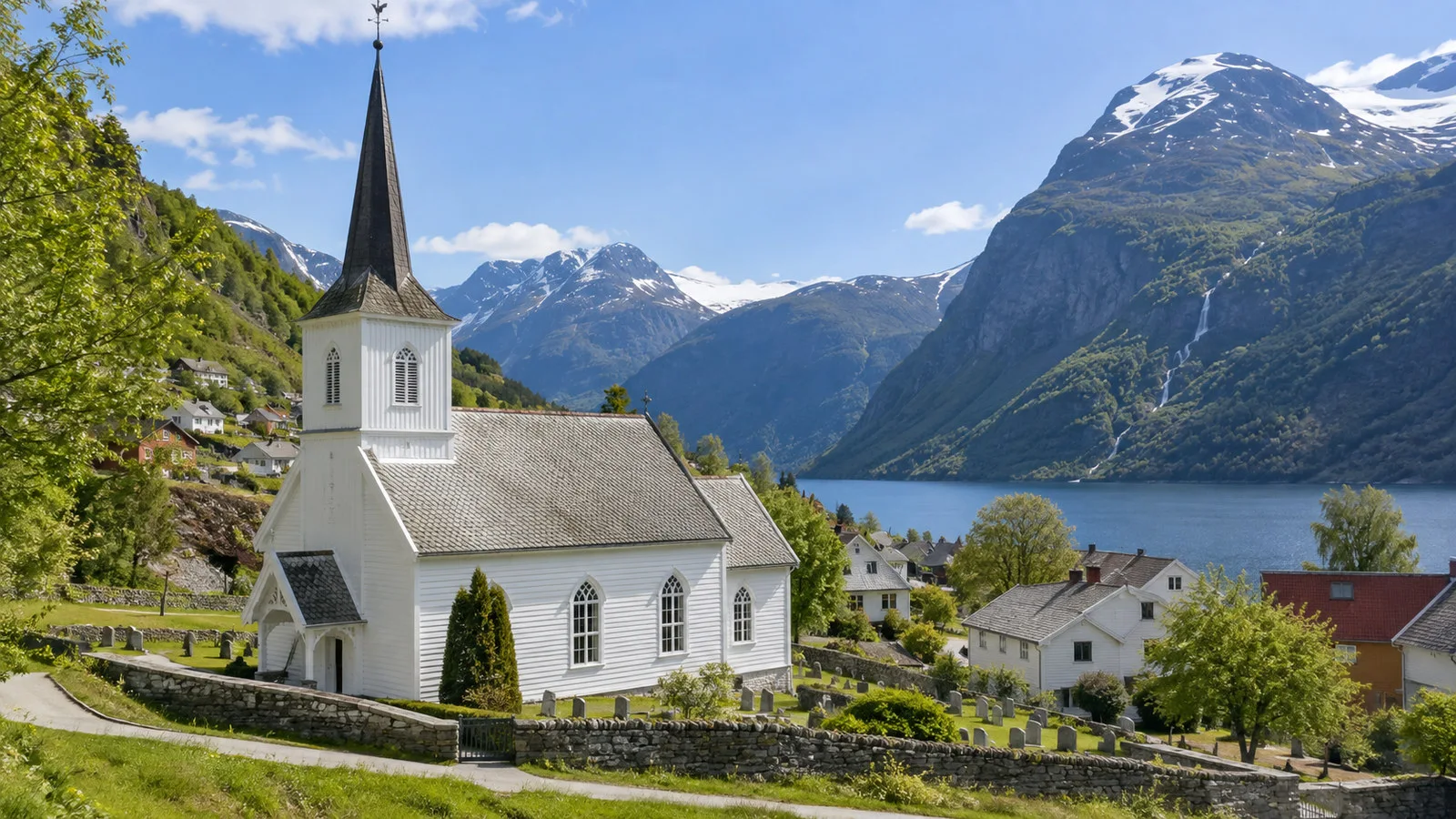
Sunnylven Church stands above the central area and forms part of the familiar Hellesylt view. It is an active church, so opening and tourist access depend on services and local arrangements.
Visit quietly and dress appropriately if the doors are open. Do not interrupt a service or private event for interior photographs.
The village is a year-round community rather than a purpose-built cruise attraction. Give residents room on sidewalks, respect private property, and avoid treating homes as viewpoints.
The Geiranger to Hellesylt ferry
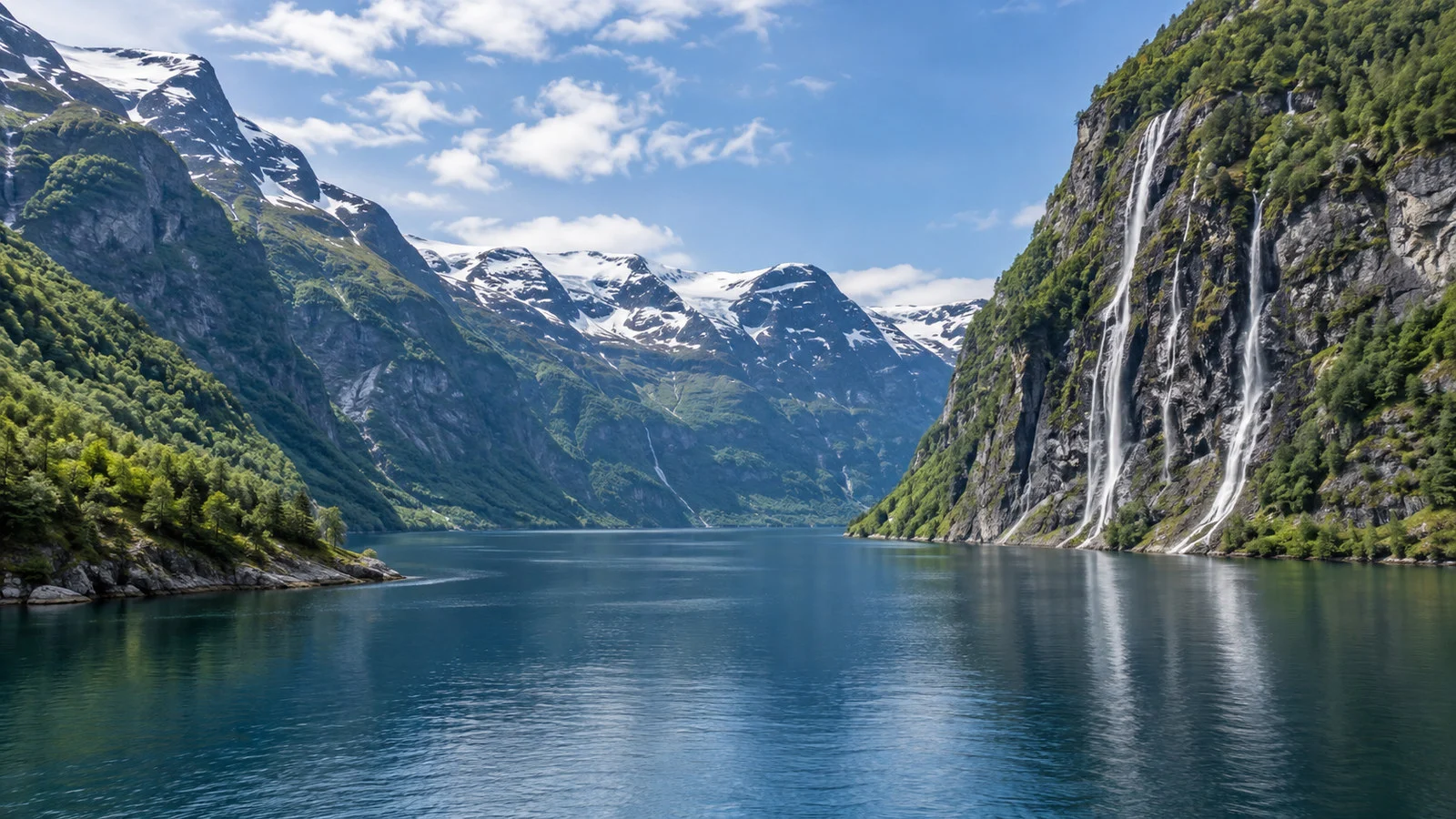
The seasonal ferry between Hellesylt and Geiranger doubles as transportation and a scenic fjord journey. It passes waterfalls, steep walls, and historic farm landscapes associated with the UNESCO-listed West Norwegian Fjords.
A normal crossing takes valuable cruise-day time in each direction, and boarding queues add more. Never calculate the plan from sailing duration alone.
Check the current operator, timetable, ticket terms, vehicle priorities, and passenger availability for your date. A previous season’s schedule is not reliable evidence for a future call.
Walk-up space should not be assumed on a busy summer sailing. Even a valid outward ticket is not useful without a return that reaches the correct ship location comfortably before cutoff.
Some cruise itineraries sail the fjord themselves or reposition while guests travel overland. In those cases, an independent round trip may be unnecessary or impossible.
UNESCO fjord scenery
Geirangerfjorden and Nærøyfjorden form the UNESCO World Heritage property known as the West Norwegian Fjords. Hellesylt lies beside the wider approach to Geirangerfjorden and is a practical gateway to that landscape.
The value of the scenery comes from the full system of steep rock walls, waterfalls, forests, farms, and water, not one named photo stop. Cloud and rain can hide high features while leaving the lower fjord dramatic.
Stay alert on open decks because wind and spray can arrive quickly. Secure phones and use railings only as intended.
Wildlife may appear, but sightings are never guaranteed. Keep distance and follow crew directions around birds or marine mammals.
Overland excursions
Cruise excursions may combine Hellesylt with lakes, valleys, mountain roads, farms, or viewpoints before rejoining the ship. The route and endpoint vary by sailing.
A ship-operated one-way tour can be the best use of time when the vessel itself relocates. It avoids the mistake of trying to force a public round trip into a moving itinerary.
Read the physical activity details because scenic coach tours still involve steps, uneven viewpoints, and periods away from restrooms. Ask where the group rejoins the ship.
Weather can close mountain roads or erase a planned view. A good excursion should have a safe alternate rather than pressuring drivers to keep an impossible schedule.
Hiking from Hellesylt
The surrounding terrain offers hiking, but a port call is not the time for an improvised mountain route. Elevation, wet ground, navigation, and fast weather changes create risks beyond the village loop.
Use a current local route, tell someone where you are going, and turn back early. Mobile coverage should not be treated as a substitute for preparation.
Wear proper footwear and carry insulation and rain protection even on a short walk. A sunny quay does not predict conditions higher above the fjord.
Travelers seeking a gentle outing should stay near the village and approved lower paths. The waterfall and waterfront provide scenery without committing to remote terrain.
Ship excursion or explore independently?
Explore independently for the waterfall, church exterior, central village, and waterfront. The distances are short and the route is easy to understand once ashore.
Choose the ship excursion for a one-way transfer, mountain road, viewpoint circuit, or complex Geiranger connection. It provides clearer coordination when the ship changes location.
The public ferry can work only when the current schedule leaves a large return margin to the correct port. Verify both directions before purchasing a nonrefundable ticket.
If the call is short, do not leave Hellesylt simply because Geiranger is more famous. A calm local walk is better than watching the clock through an uncertain connection.
Accessibility and mobility
The village core is relatively compact, but slopes, curbs, wet paving, and traffic still matter. Choose the closest waterfall viewpoints rather than trying to reach every angle.
Gangway conditions vary with ship position and water level. Ask the cruise line about wheelchair and scooter handling before assuming the quay is step-free.
Ferry boarding may use a vehicle deck or ramp with changing slopes. Contact the current operator for exact accessibility and restroom information.
Coach excursions can reduce walking but may require high steps and transfers. Request the bus configuration and the walking surface at each stop.
Norwegian terrain can make a tour labeled easy feel more demanding than its distance. The most useful detail is the exact sequence of ramps, steps, and standing.
Weather and clothing
Hellesylt can be cool, damp, and windy even in summer. Bring a waterproof shell, warm layer, and shoes with dependable grip.
Dress in layers because conditions differ between a sheltered village street, an open ferry deck, and a mountain viewpoint. A warm hat is useful on scenic boat rides.
Protect phones and cameras from spray and sudden rain. Keep medication and travel documents in a waterproof pouch.
Sun protection still matters when cloud breaks over the water. Reflected light and long summer daylight can produce more exposure than the air temperature suggests.
Rockslide monitoring and local safety
The Åkerneset mountainside above Sunnylvsfjorden is actively monitored because a major rockslide could generate dangerous waves. Norwegian authorities maintain warning and emergency systems for the fjord communities.
Visitors should follow official instructions if alarms, road controls, or crew announcements occur. Do not enter restricted monitoring or evacuation areas.
This monitored hazard is not a reason to avoid an ordinary port call, but it is a reason to take local directions seriously. Avoid sensational claims drawn from disaster films.
For routine visits, wet surfaces, traffic, cold exposure, and missed transport are more immediate risks. Keep the day’s plan conservative.
Norway’s World Heritage fjord rules
Norway has introduced stricter emissions requirements for passenger vessels in the World Heritage fjords. The details differ by vessel size and implementation date, so do not repeat the old claim that every cruise ship faces the same 2026 deadline.
These rules may influence which vessels operate, how itineraries are designed, and what technology is used. They do not change the passenger’s need to follow the booked ship’s schedule.
Return timing
Write down both the all-aboard time and the place where you must rejoin. Hellesylt itineraries can involve a different endpoint from the original landing.
For a village walk, return at least 30 minutes early unless the ship specifies more. Allow additional time for a tender queue or security process.
For an independent ferry, use a much larger buffer and verify the return sailing on the day. Mechanical issues, traffic, and weather can disrupt even a published timetable.
Do not expect the cruise ship to wait for an independent passenger. A missed departure in fjord country can create a difficult and expensive recovery.
How Hellesylt fits a Norway cruise
Hellesylt commonly appears with Geiranger, Ålesund, Flåm, or other Norwegian cruise ports. Its role may be a full call, a short landing, or an excursion gateway.
Compared with Geiranger, Hellesylt offers fewer tourism facilities and a quieter village experience. That simplicity is a strength when the schedule leaves time for an unhurried walk.
The best plan depends less on a universal must-see list than on the vessel’s movement. Read the itinerary notes before booking anything separate.
Quick answers
Will my ship dock in Hellesylt?
Many ships use a direct quay, but tendering or a special transit arrangement is possible. Check the final plan for your vessel.
Can I walk to the waterfall?
Yes. Hellesyltfossen is in the village and can be viewed from central routes without a long hike.
Can I take the ferry to Geiranger independently?
Possibly, if the seasonal schedule, capacity, and ship timing align. Confirm both directions and the correct return port before buying.
Is Hellesylt accessible?
The compact village helps, but gangways, wet paving, curbs, and ferry ramps can create barriers. Ask for the exact route.
Do I need Norwegian cash?
Cards are widely accepted, though a backup payment method is sensible. Do not depend on one card or a phone wallet.
What is the best short plan?
See the waterfall, walk around the church area, and enjoy the waterfront. Stay close to the ship when the call is brief or operationally complex.
The last word
Hellesylt rewards travelers who understand the day’s logistics before chasing the biggest excursion. The village itself is compact, scenic, and worthwhile.
Follow current instructions from the ship, port, ferry operator, and Norwegian authorities. If access changes after your visit, our editorial policy explains how to send a correction.