Guayaquil Cruise Port: Puerto Marítimo and City Transfer Guide
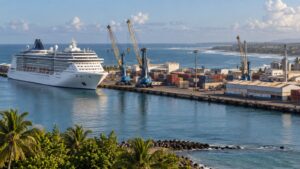
Guayaquil is Ecuador’s great Pacific business city, but its cruise day begins in a place most skyline photographs never show. Ocean ships use a controlled commercial port south of downtown, while the famous Malecón 2000 sits on the Guayas River and is an attraction rather than a cruise terminal.
That geography matters because the transfer crosses areas covered by serious current security advice. I would treat the ship’s organized transportation as part of the port call, not as an optional extra between the gangway and the fun.
Quick Facts
- Port: The assigned berth is within Guayaquil’s secure maritime port system, not at Malecón 2000.
- Arrival type: Ocean cruise ships normally berth alongside in a working cargo environment.
- City access: Use the cruise line’s authorized shuttle, excursion, or transfer and follow the exact gate instructions.
- Best compact route: A controlled city circuit can combine Malecón 2000, Parque Seminario, and selected heritage stops.
- Currency: Ecuador uses the US dollar.
- Language: Spanish is the everyday language.
- Time: Mainland Ecuador uses UTC minus 5 without seasonal clock changes.
- Main planning issue: Current security advice, port authorization, traffic, and gate screening all affect the day.
Your ship does not dock at Malecón 2000
The city’s maritime facilities sit on the Estero Salado side of Guayaquil in a commercial port district. The exact quay can change with the ship and operating plan, so the terminal notice in your cruise documents outranks a pin copied from an old map.
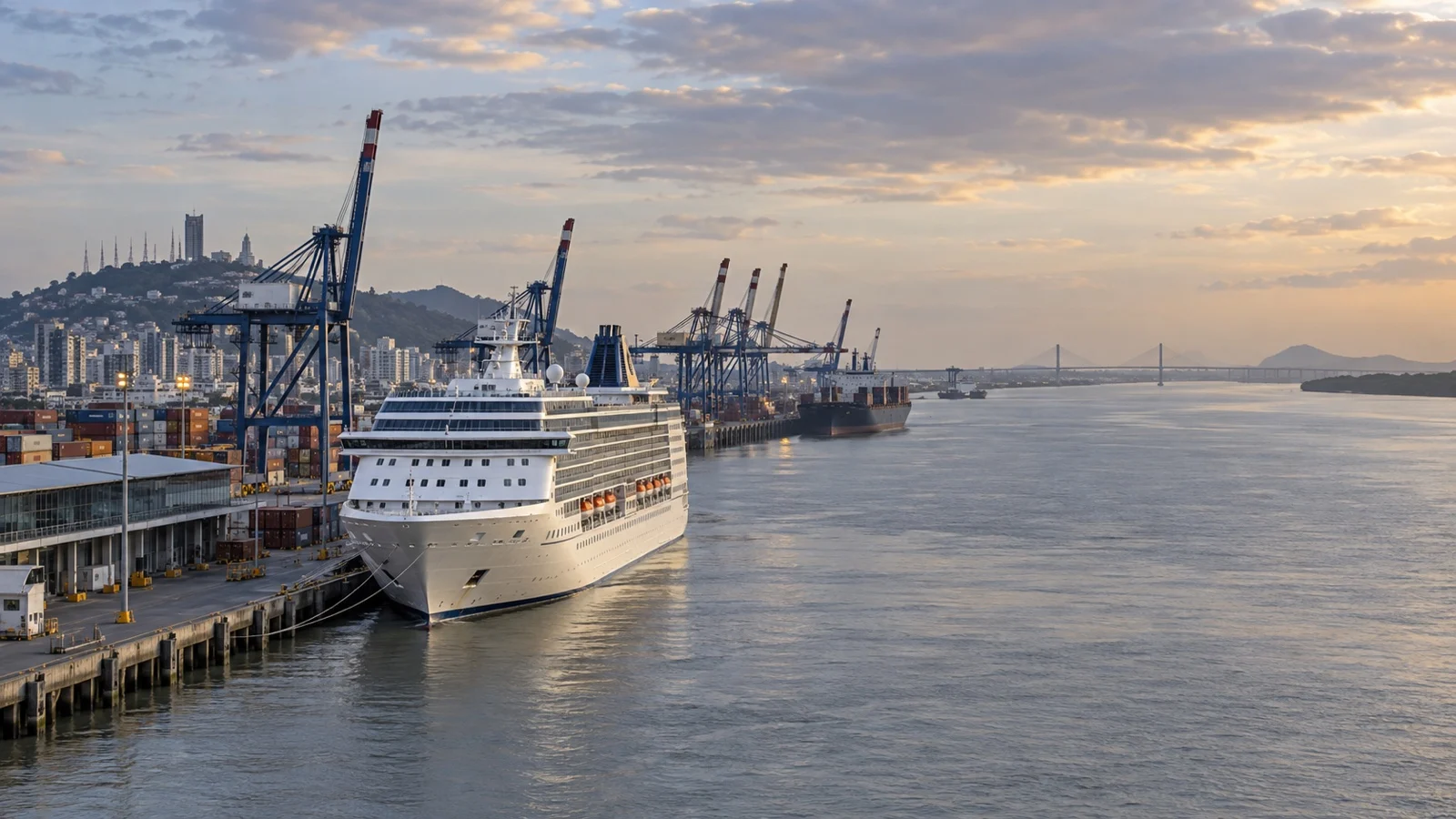
The Guayaquil Port Authority is the official public authority for the port system, while individual facilities operate through terminal arrangements and concessions. A passenger should not try to decode those industrial boundaries independently on arrival.
The ship may spend considerable time navigating the channel from the Gulf of Guayaquil before reaching its berth. That inland approach does not turn the Guayas River promenade into a cruise dock, even when downtown looks temptingly close on a small screen.
A working port changes the first and last mile
The berth is inside an active cargo environment with restricted pedestrian movement, security checks, heavy vehicles, and controlled gates. Walking from the gangway toward the city is neither a sightseeing route nor a sensible way to find a taxi.
Your line may use a pier shuttle before passengers board a city motorcoach, and those can be two different vehicles. Listen for the final meeting point, carry the ship contact card, and photograph any written transfer instructions before leaving the cabin.
An authorized private operator must know the precise ship, date, gate, vehicle plate, driver identity, and port access procedure. If an operator offers to meet you somewhere vague outside the port, I would cancel rather than improvise across a secure perimeter.
The current advisory changes the honest recommendation
The United States Department of State advisory for Ecuador, issued August 18, 2026, places all Guayaquil areas south of Portete de Tarqui Avenue at its highest restriction level because of crime and terrorism. It also advises reconsidering travel in the city’s areas north of that avenue.
The maritime port is in the southern part of Guayaquil, so an ordinary independent taxi plan is not an acceptable workaround for travelers following that advice. Government guidance differs by nationality, but every passenger should check the advice tied to their passport and insurance before sailing.
A cruise call can still operate with a controlled security plan, just as the city reported when Azamara Onward visited in January 2026. The municipal account of that call describes eight organized buses, coordinated visitor support, and a planned route through city attractions.
That official report confirms a managed pattern, not a promise that conditions will be identical for your ship. Follow the captain’s decision, remain with the approved vehicle and guide, and accept a shortened or canceled program if the security plan changes.
Choose controlled transportation before choosing sights
For a port call, my first choice is a ship excursion or an official cruise shuttle with a defined route and monitored return. For embarkation or disembarkation, use the cruise line’s airport or hotel transfer unless the line specifically approves another secured arrangement.
Ask where identification is checked, whether your vehicle enters the port, and what happens if the approved route closes. A good operator will answer those questions directly and will not suggest that you walk outside to find a cheaper ride.
Traffic can turn a modest map distance into a slow trip, especially during rain, road controls, or an incident. The final return target should be the designated gate screening time, not the moment your vehicle reaches the general port neighborhood.
Malecón 2000 works best as a supervised city stop
Malecón 2000 is the landscaped river promenade that appears in most visitor photographs, with gardens, monuments, public spaces, food venues, and broad Guayas River views. It is a useful anchor for a compact tour because several central sights can be grouped around it.
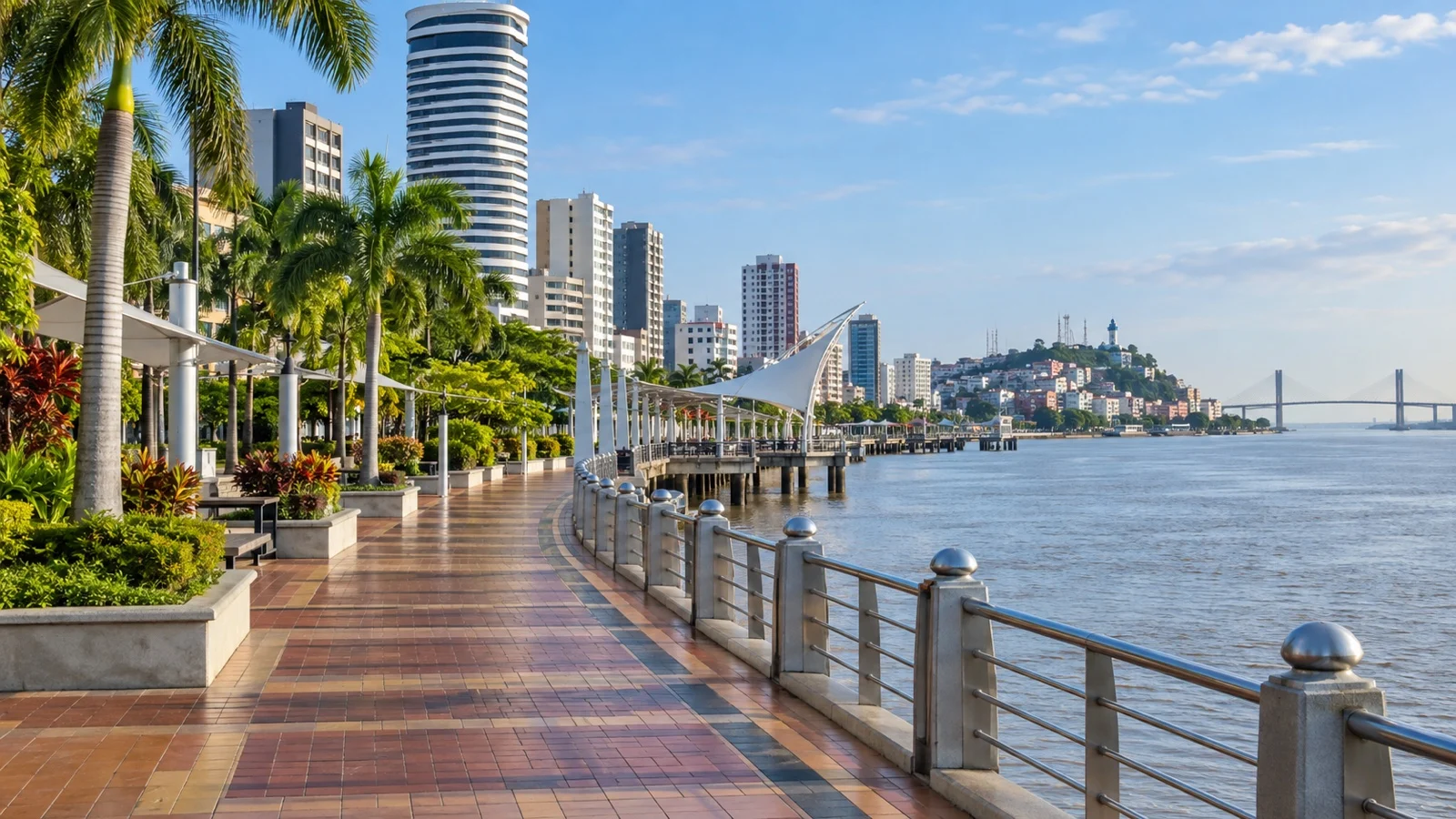
The Guayaquil municipality’s tourism overview includes the Malecón among the city’s leading short-stay attractions. Enjoy the section chosen by your guide and return to the motorcoach at the exact meeting time.
I would not use the promenade as permission to detach from an organized group or arrange a separate ride. A polished public space can feel relaxed while the surrounding transport decision still requires caution.
Las Peñas and Cerro Santa Ana require a realistic mobility plan
Las Peñas is the colorful heritage neighborhood at the foot of Cerro Santa Ana, with galleries, painted facades, and strong visual character. The climb toward the lighthouse and chapel involves 444 steps according to the municipality.
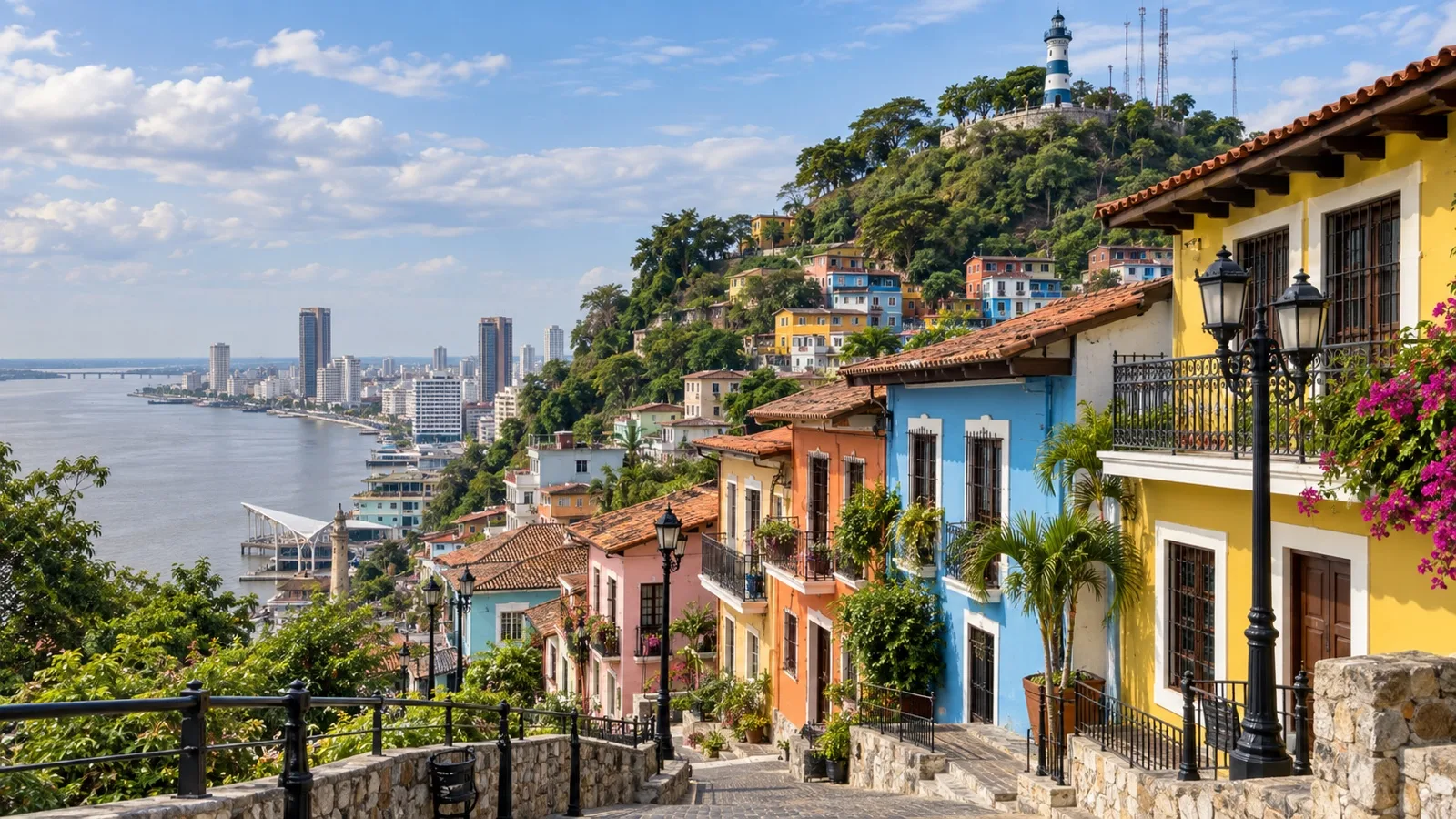
That staircase is not a small add-on in tropical heat, and it can consume more of a short call than expected. Travelers with knee, balance, cardiac, or heat concerns can enjoy a lower-level view rather than turning every numbered step into a personal referendum.
The route should remain part of the authorized city program because security conditions can change by block and time of day. Stay close to the guide, keep jewelry and phones discreet, and do not wander into side streets for a cleaner photograph.
Parque Seminario is small, central, and delightfully strange
Parque Seminario is widely known as Iguana Park because land iguanas live among its paths and trees near the cathedral. It gives a guided city circuit an easy wildlife moment without the Santa Ana climb.
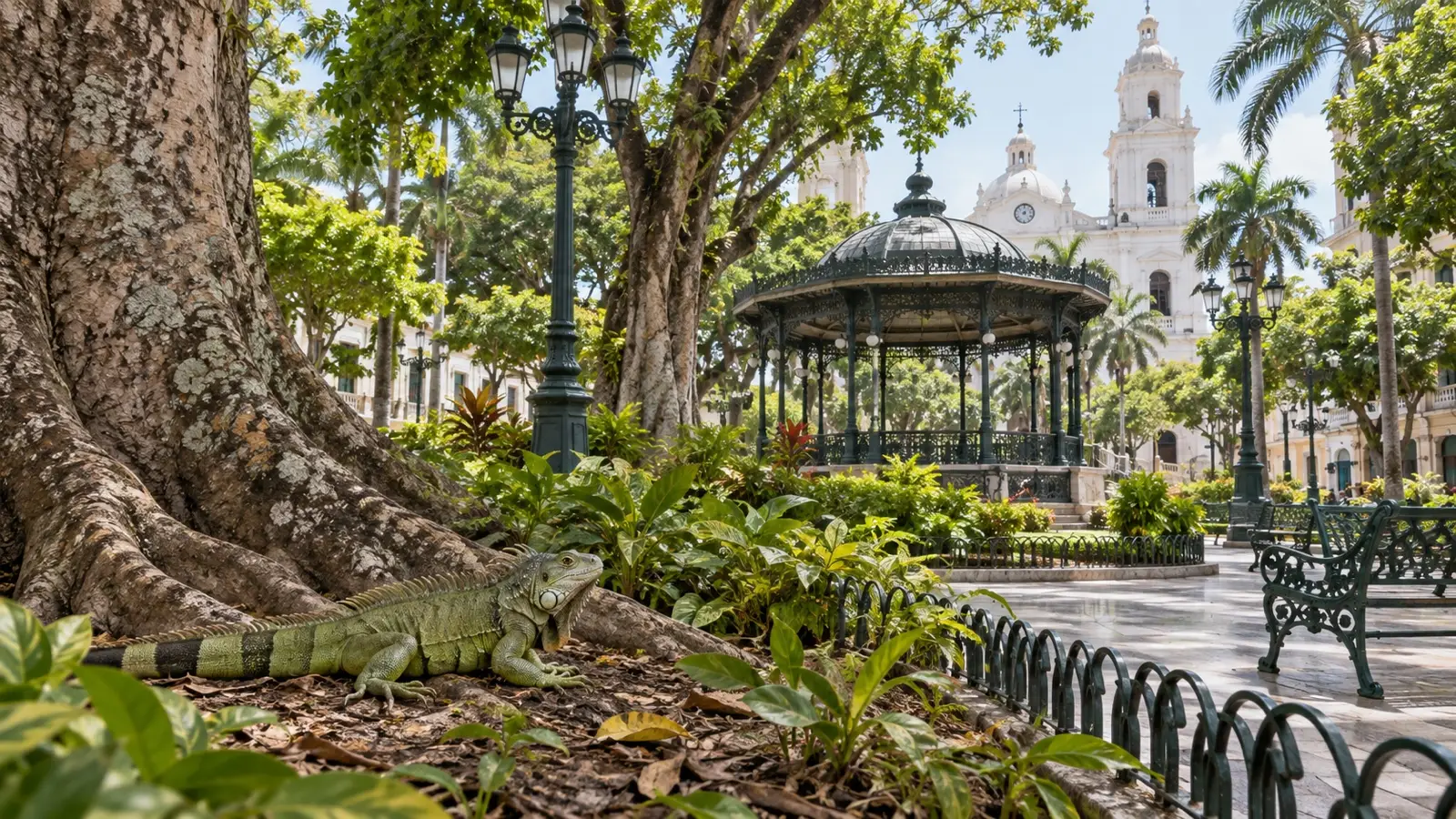
Watch the animals without touching, feeding, crowding, or placing children beside them for a pose. The iguanas are residents, not unpaid members of the tourism department.
The January 2026 cruise visit reported by the municipality included a cultural welcome at Parque Seminario. That makes it a credible cruise stop, though access on your day still depends on the live route and security plan.
Cacao adds the city’s trading story
Guayaquil’s identity is tied to commerce, agriculture, and the movement of cacao through a major port. A guided stop at the Museo del Cacao or a reputable tasting can connect the chocolate in your hand with the region’s deeper economic and cultural history.
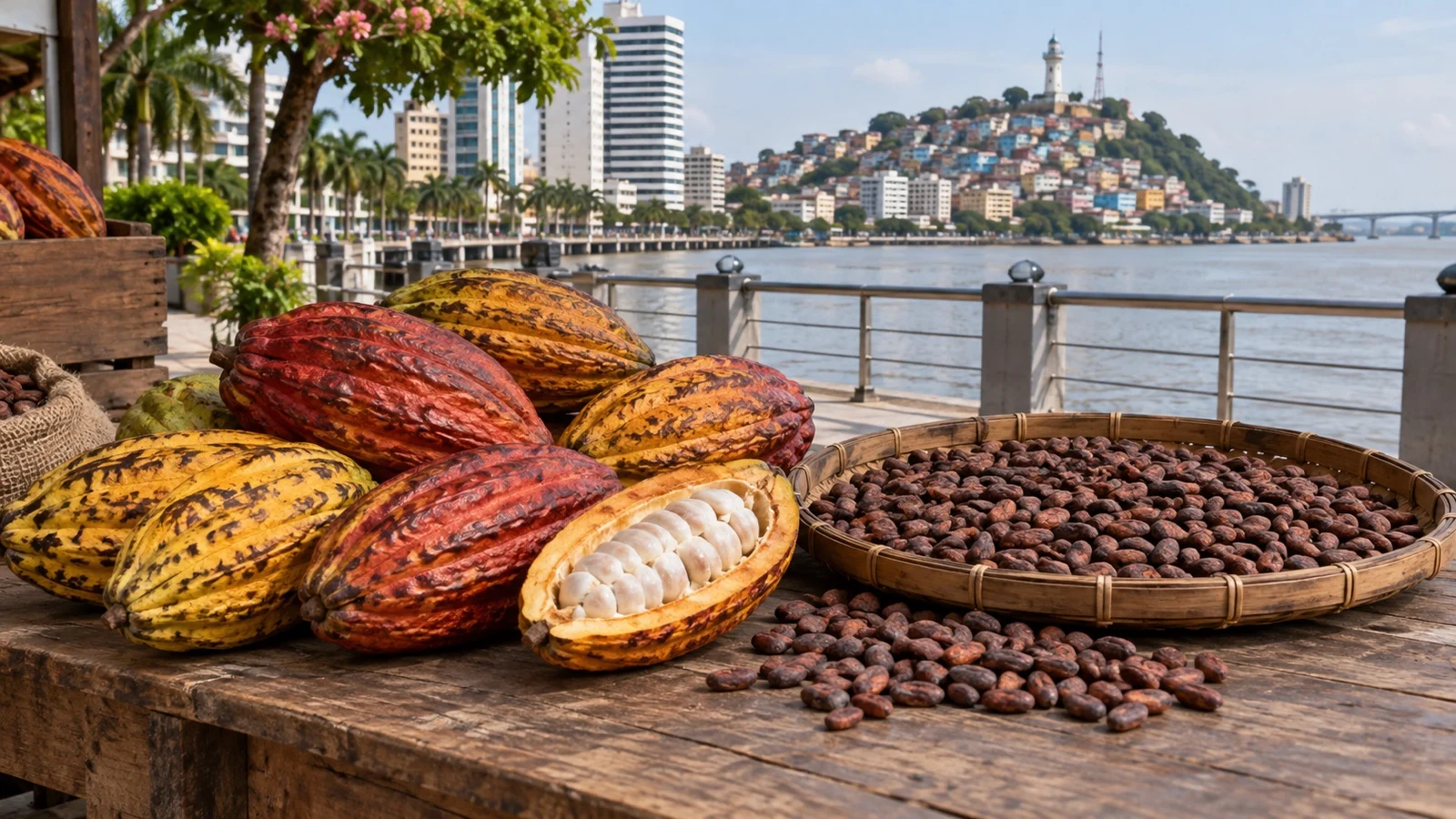
Ask about cacao percentage, milk, nuts, and other allergens before sampling. Keep food purchases sealed and check the agricultural declaration rules for the next country on your itinerary.
The municipal report on the 2026 Azamara visit included the Museo del Cacao alongside the cathedral, Malecón 2000, and Las Peñas. That is a sensible compact sequence when the cruise operator controls the transportation between stops.
Turnaround days need a sealed transportation chain
Guayaquil is also a major air gateway, including for travelers continuing to the Galápagos. A hotel stay, mainland ocean cruise, and flight to an island expedition vessel are separate operations even when a brochure bundles them under one vacation.
José Joaquín de Olmedo International Airport is north of the maritime port and close to the urban core, but the road journey still crosses a large city. The official airport operator posts live passenger information, accessibility services, and operational notices that should be checked before travel.
Embarking passengers should keep the cruise line’s terminal instructions visible and use the named transfer desk or driver. Do not ask an airport taxi to infer a secure cargo-port gate from the ship name alone.
Disembarking passengers should remain with tagged luggage until it is loaded into the official vehicle, then verify the bags again at the airport or hotel. Allow time for pier movement, port screening, city traffic, and airline procedures instead of calculating from the skyline.
Accessibility depends on every vehicle, not just the berth
An alongside berth avoids tender steps, but it does not guarantee a step-free journey through a commercial terminal. Gangway slope, pier distance, shuttle lifts, motorcoach stairs, curb heights, and accessible restrooms all need separate confirmation.
The airport operator participates in the Sunflower program for nonvisible disabilities and publishes accessibility information on its official site. That can help on a turnaround day, but the maritime port transfer still requires its own arrangements through the cruise line.
Malecón 2000 may provide the flattest useful walking segment, while Las Peñas and Cerro Santa Ana are steep. A panoramic vehicle tour with one confirmed accessible stop can be more satisfying than a route that promises several exits from an unsuitable coach.
Heat and rain should change your pace
Guayaquil is hot and humid through the year, with a wetter period that can produce intense showers and local flooding. Choose breathable clothing, water, sun protection, and a compact rain layer while keeping valuables concealed.
Rain affects more than comfort because it can slow traffic between downtown and the southern port. Let the guide drop a final stop when necessary rather than borrowing time from the secure return margin.
Carry essential medication in its original packaging and use safe bottled water supplied by the ship or operator. Anyone with health conditions should identify the ship’s medical contact and travel insurance assistance number before leaving the vessel.
Money, language, and phones
Ecuador uses the US dollar, which removes a currency exchange chore for many travelers. Carry small notes in a concealed place and avoid displaying a wallet, spare cards, or a large amount of cash.
Spanish is the everyday language, and a few courteous phrases help during a supervised stop. Save the ship agent, excursion desk, and transfer operator numbers offline because a data connection is not a security plan.
Use an ATM only inside a trusted venue when the guide confirms it is appropriate. A declined card is not a reason to leave the group and search the next block for another machine.
Your return plan starts at the first gate
Write down the all-aboard time, the excursion meeting time, and the gate screening time as three separate points. Your personal deadline should be earlier than all three, with extra allowance for rain, congestion, route controls, and vehicle inspection.
A ship-run excursion provides the strongest operational protection if the route is delayed, but it does not eliminate the need to follow instructions. Return to the coach early, remain with the group, and keep your identification ready before reaching the port.
If you use an independently arranged operator approved for the terminal, require a conservative turnaround point and live contact with the driver. I would rather leave one downtown stop unseen than watch Guayaquil’s traffic consume the final buffer.
Three sensible ways to plan the day
The first-time city overview
Choose the line’s controlled city circuit with Malecón 2000, Parque Seminario, and one heritage or cacao stop. This gives the clearest sense of Guayaquil without asking the day to survive several independent transfers.
The low-mobility option
Book an accessible panoramic vehicle and confirm one level stop on the Malecón or at another approved venue. Skip the Cerro Santa Ana staircase and verify lifts, storage, restrooms, and curb access in writing.
The turnaround connection
Use the cruise line’s airport or hotel transfer and keep the luggage chain intact from terminal to destination. Treat sightseeing as a separate escorted program only when the schedule and security plan genuinely allow it.
Frequently asked questions
Does the ship dock beside Malecón 2000?
No. Large ocean ships use secure maritime facilities, while Malecón 2000 is a downtown riverfront attraction reached by road.
Can I walk from the port into Guayaquil?
No. The commercial port is controlled, pedestrian access is unsuitable, downtown is distant, and current official security advice makes independent movement especially unwise.
Should I use a ride app from the port?
I would not. Use the cruise line’s authorized transportation or a specifically approved operator with verified gate access and a named driver.
Is Guayaquil only a gateway to the Galápagos?
No. Guayaquil has its own riverfront, heritage neighborhoods, urban wildlife, cacao culture, and major commercial history, but Galápagos travelers often use its airport as a connection point.
What if the ship cancels the city program?
Follow the ship’s instructions and remain inside the controlled port process. Do not try to rebuild the excursion independently at the gate when the line has withdrawn its transport for operational or security reasons.
My final advice
Guayaquil deserves better than being reduced to a riverfront photograph or an airport code. Its port story, cacao history, hillside neighborhoods, and busy public spaces become much more interesting when the logistics are described honestly.
For this call, honesty means controlled transportation, a compact route, and a generous return margin. Let the cruise line handle the difficult first mile, then enjoy the city without pretending the security boundary is optional.
How this guide was researched: This guide was independently checked on September 11, 2026, against the Guayaquil Port Authority, Guayaquil municipality, the official airport operator, current government travel advice, and cruise operating information.
Reconfirm the assigned berth, authorized transfer, government advice, insurance coverage, attraction access, weather, accessibility, traffic plan, and final return time before sailing because conditions can change.