Alert Bay Cruise Port: Tender, U’mista and Island Guide
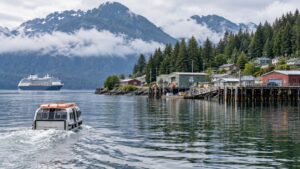
Alert Bay is small enough to feel personal and culturally significant enough to deserve your full attention. Your ship anchors off Cormorant Island, a tender carries you to the village waterfront, and the best day unfolds mostly on foot rather than through a frantic search for distant excursions.
I would build the call around U’mista Cultural Centre, the waterfront, and one additional experience chosen for the actual weather. Leave space for local guidance, respectful pauses, and a return to the landing well before the last tender.
Quick Facts
- Port: Alert Bay on Cormorant Island, British Columbia, Canada
- Arrival: Anchorage call with ship tender or expedition landing craft to the village waterfront
- Terminal: No conventional cruise terminal
- Best anchor: U’mista Cultural Centre and its Kwakwa̱ka̱ʼwakw Potlatch Collection
- Easy additions: Waterfront boardwalk, Visitor Centre, memorial poles, Big House exterior, and village shops
- Longer addition: Alert Bay Ecological Park and island trails if time, surfaces, and weather suit
- Currency: Canadian dollar
- Languages: English and Kwak̓wala, with the community rooted in ʼNa̱mg̱is and wider Kwakwa̱ka̱ʼwakw culture
- Time: Pacific Time at UTC-7 year-round in this part of British Columbia from March 2026
- Main risks: Tender conditions, rain, hills, limited transport, seasonal hours, and disrespectful photography
Alert Bay is an active cruise call in 2026
The Village of Alert Bay publishes an official small-ship cruise schedule for 2026, which confirms that this is an operating port rather than a speculative itinerary label. Call lengths vary, so plan from the times on your own ship’s daily program instead of copying another vessel’s schedule.
A short expedition visit and a longer conventional cruise call create very different possibilities. The village itself is compact, but hills, museum time, tender queues, and conversations with local hosts can make a few hours disappear quickly.
The community is not a purpose-built cruise stop. It is home to residents, the ʼNa̱mg̱is First Nation, other Kwakwa̱ka̱ʼwakw people, working waterfront activity, schools, services, and cultural places that deserve ordinary neighborhood respect.
How the tender arrival works
Cruise-size vessels generally anchor offshore and transfer passengers by tender, while expedition ships may use their own landing craft. The assigned float can vary, so follow onboard instructions for the exact landing and return point.
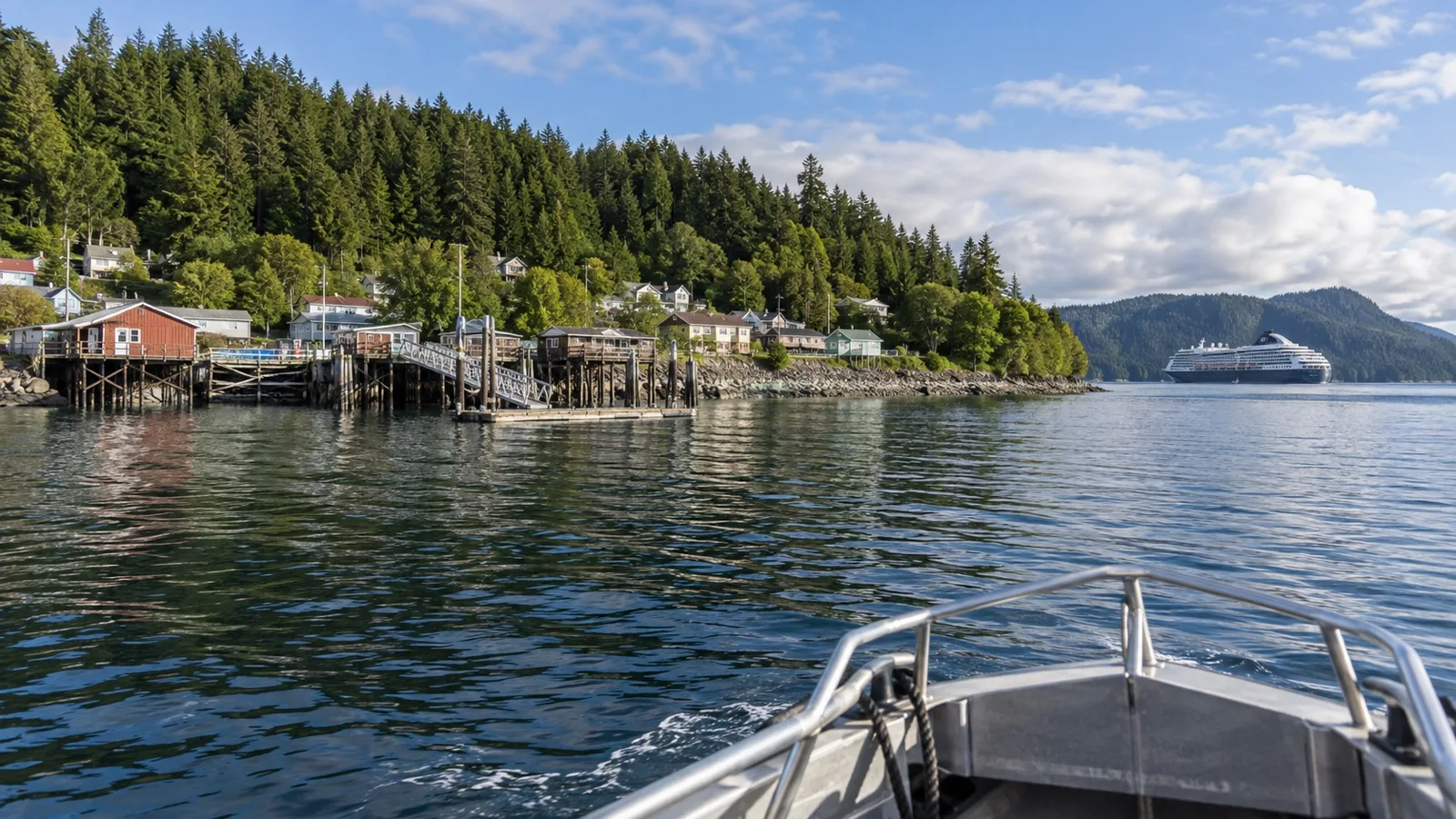
There is no enclosed cruise terminal with a long chain of visitor services. The waterfront village begins close to the landing, which is precisely why walking works so well once you are safely ashore.
Tender steps, moving water, wet surfaces, and the gap between vessel and boat can challenge balance. Crew members make the final decision about whether a passenger or mobility device can transfer safely in the day’s conditions.
Carry only what you can manage while keeping both hands available. A compact waterproof layer and a secure bag are more useful than an umbrella on a moving tender or in a coastal gust.
Why the call can be shortened or canceled
Wind, swell, visibility, and currents can interrupt small-boat operations even when the village itself looks calm. The captain may delay the first landing, pause tender service, or cancel the call if safe transfer cannot be maintained.
Treat the published arrival as a plan until the ship announces that tendering has begun. If the usable day becomes shorter, keep U’mista and the waterfront while dropping the most distant trail or marine activity.
The last tender is not a target arrival time. Return early enough to absorb a slow walk, a shop transaction, a tender queue, and any change in the loading point.
Start with the cultural context
Alert Bay is within the traditional territory of the Kwakwa̱ka̱ʼwakw, and the ʼNa̱mg̱is community is central to life on Cormorant Island. Spellings include characters that carry meaning and identity, so use the names presented by local organizations rather than replacing them with an outdated catchall.
Kwak̓wala is a living language, not a decorative museum label. U’mista supports cultural heritage and language revitalization, while local artists and community programs continue traditions in the present tense.
Approach cultural places as a guest who is there to listen. Read local signs, follow photography rules, keep voices low where requested, and never treat a memorial or ceremonial space as a prop.
U’mista Cultural Centre is the essential visit
U’mista Cultural Society states that its mandate is the survival of all aspects of Kwakwa̱ka̱ʼwakw cultural heritage. The centre is at 1 Front Street and is close enough to connect naturally with a waterfront walk from the landing area.
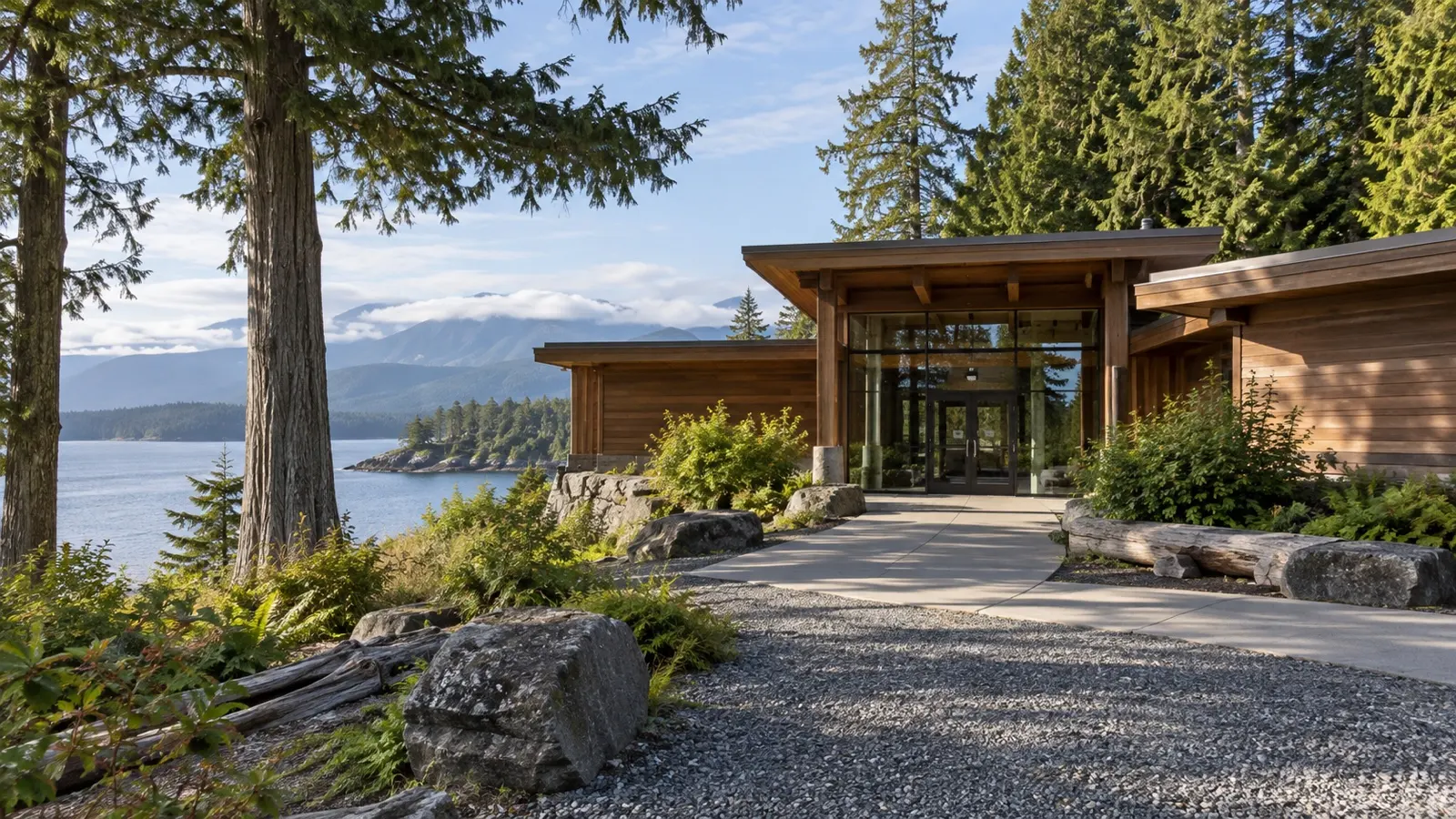
The Potlatch Collection holds ceremonial belongings that were confiscated during Canada’s potlatch ban and later returned to the community. The story is one of cultural suppression, resistance, repatriation, and living responsibility rather than simply an attractive room of historic objects.
Give the collection time and begin with the interpretation rather than rushing toward the most visually striking pieces. The meaning of return is the heart of U’mista, and understanding that context changes the visit completely.
The centre’s official site listed daily summer hours from 9 in the morning to 5 in the afternoon when this guide was reviewed. Seasonal schedules change, so confirm the opening for your exact date and note that a ship call can fall outside regular public hours.
Admission details, programs, guided interpretation, and shop availability can also change. Check the official U’mista website close to sailing and ask whether your cruise line has arranged special access.
Photography and conduct inside U’mista
Do not assume photography is allowed because another visitor has posted images online. Follow the current policy for each gallery, ceremony, performance, and cultural belonging, and put the camera away immediately when asked.
Avoid narrating Indigenous history over local interpreters or reducing the collection to a checklist. This is one of those places where slower reading and fewer photographs create a far better encounter.
The waterfront route
The village waterfront gives you harbor views, working-boat details, public art, shops, and an easy way to understand how closely life here is tied to the sea. The official village guide notes a boardwalk connection between downtown Alert Bay and U’mista.
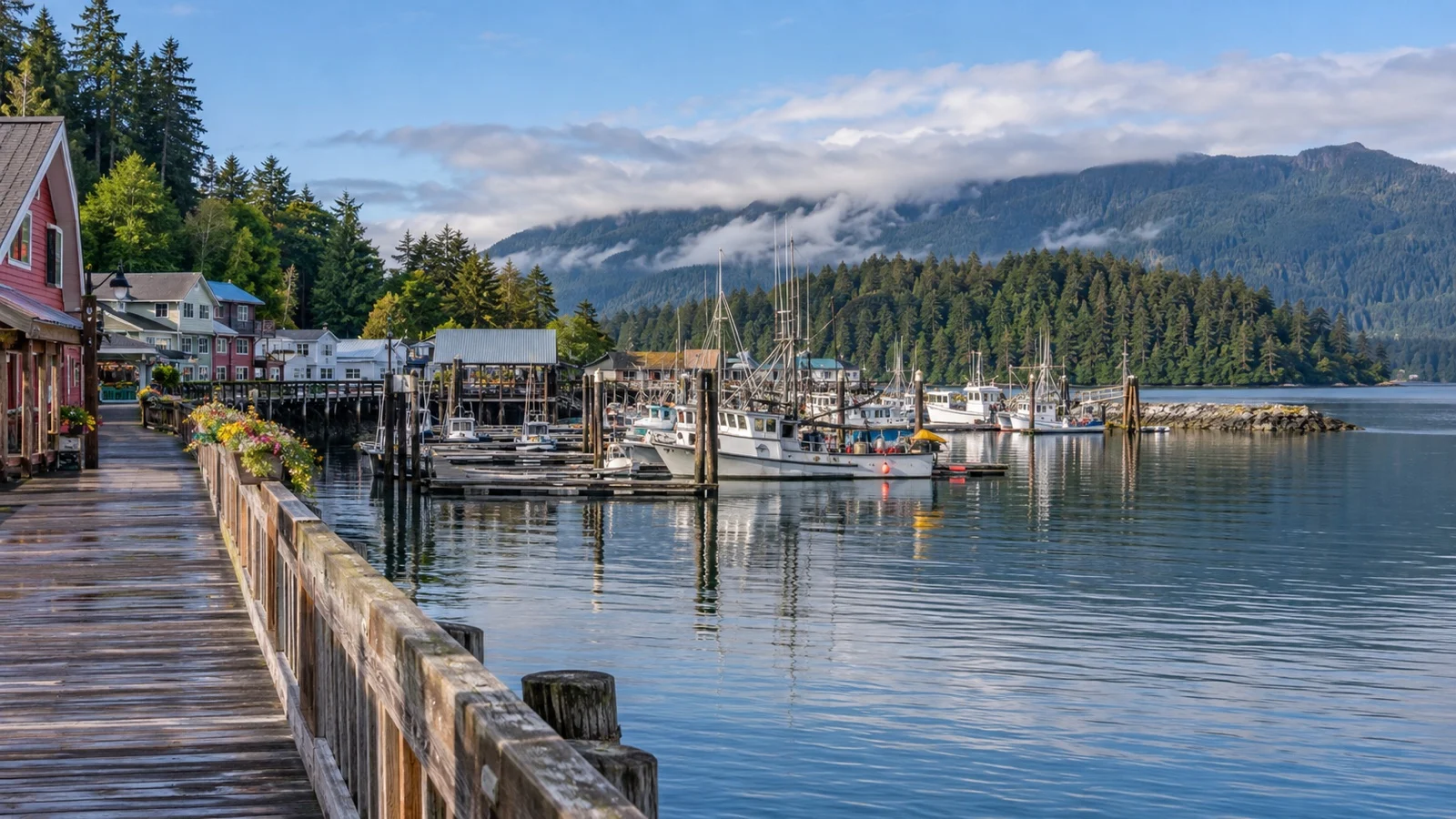
Boardwalk conditions can change with weather and maintenance, so treat it as a route to confirm rather than an accessibility guarantee. Wet timber may be slippery, and connections back to street level can include slopes or uneven transitions.
The Visitor Centre at 118 Fir Street is a smart early stop when open. Staff can provide the current island map, local operating information, trail advice, and guidance about events that may not appear in a cruise line’s printed program.
The nearby Alert Bay Library-Museum focuses on local settler-era history and has limited public hours. It can complement U’mista, but it should never be treated as a substitute for the community-led interpretation at U’mista.
Memorial poles and the Big House
Alert Bay is known for carved poles across the community, including memorial poles near burial grounds and the prominent pole beside the ʼNa̱mg̱is Big House. Pick up the local pole brochure or use current Visitor Centre guidance so you understand what you are seeing.
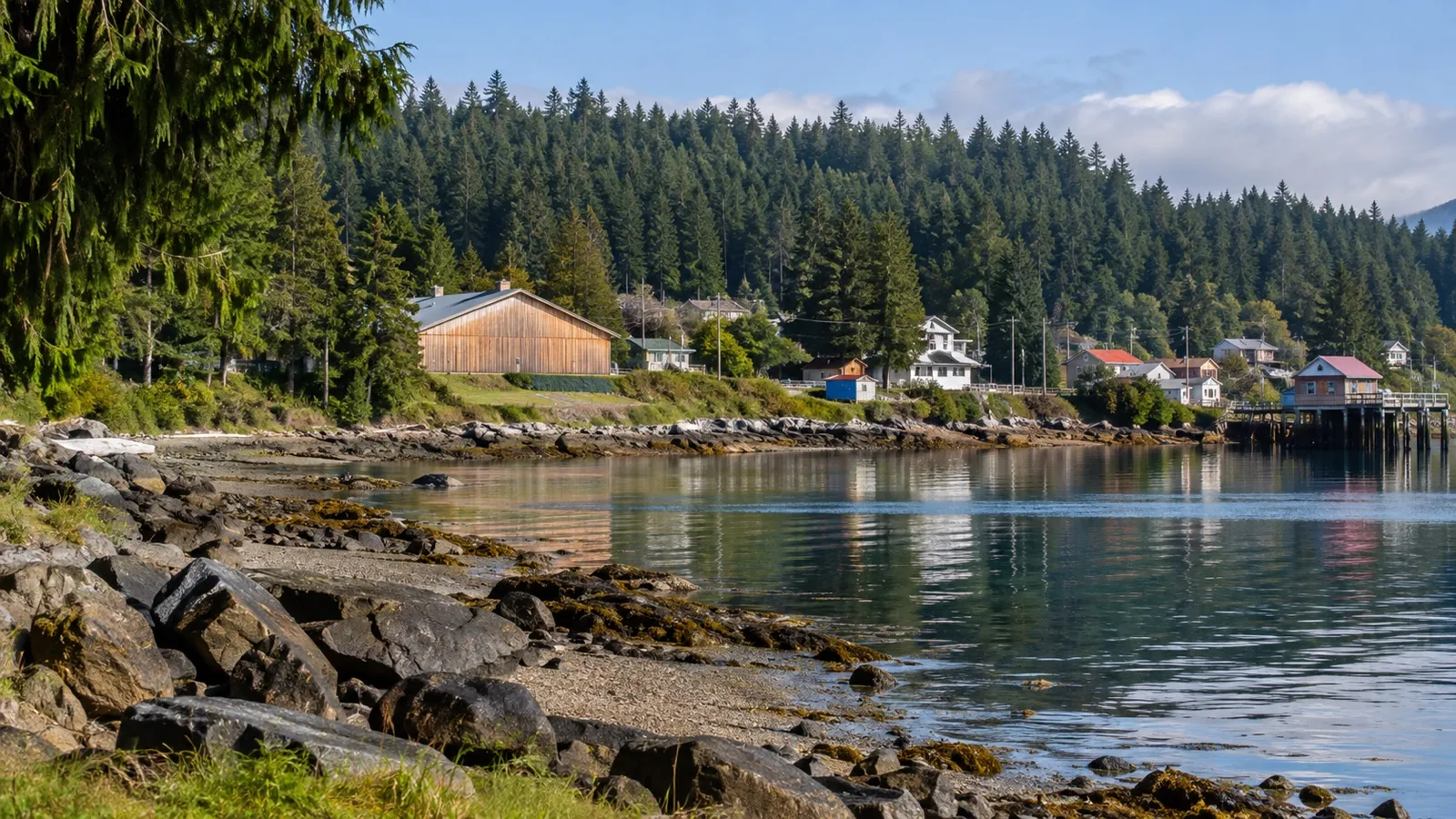
Burial grounds require particular care. Remain on public routes, do not cross boundaries or touch memorials, keep a respectful distance, and follow every posted restriction.
The Big House is a cultural and community space, not a building that visitors may enter whenever they wish. Exterior viewing is different from admission, and access should only occur through a public program, invited event, or ship-arranged experience.
Seasonal T’sasala Cultural Group performances have traditionally taken place on selected summer dates. Confirm the current event calendar and ticket process because dates, capacity, and access can change.
During a performance, follow the host’s instructions about photography, recording, seating, and participation. If the community says a moment is not for cameras, the respectful response is immediate and uncomplicated.
Alert Bay Ecological Park
The Ecological Park offers a boardwalk through a bog-like wetland with standing cedar snags, forest, birds, and a quieter side of the island. The landscape developed around water changes associated with an early cannery supply system, and the surviving snags give the wetland its distinctive appearance.
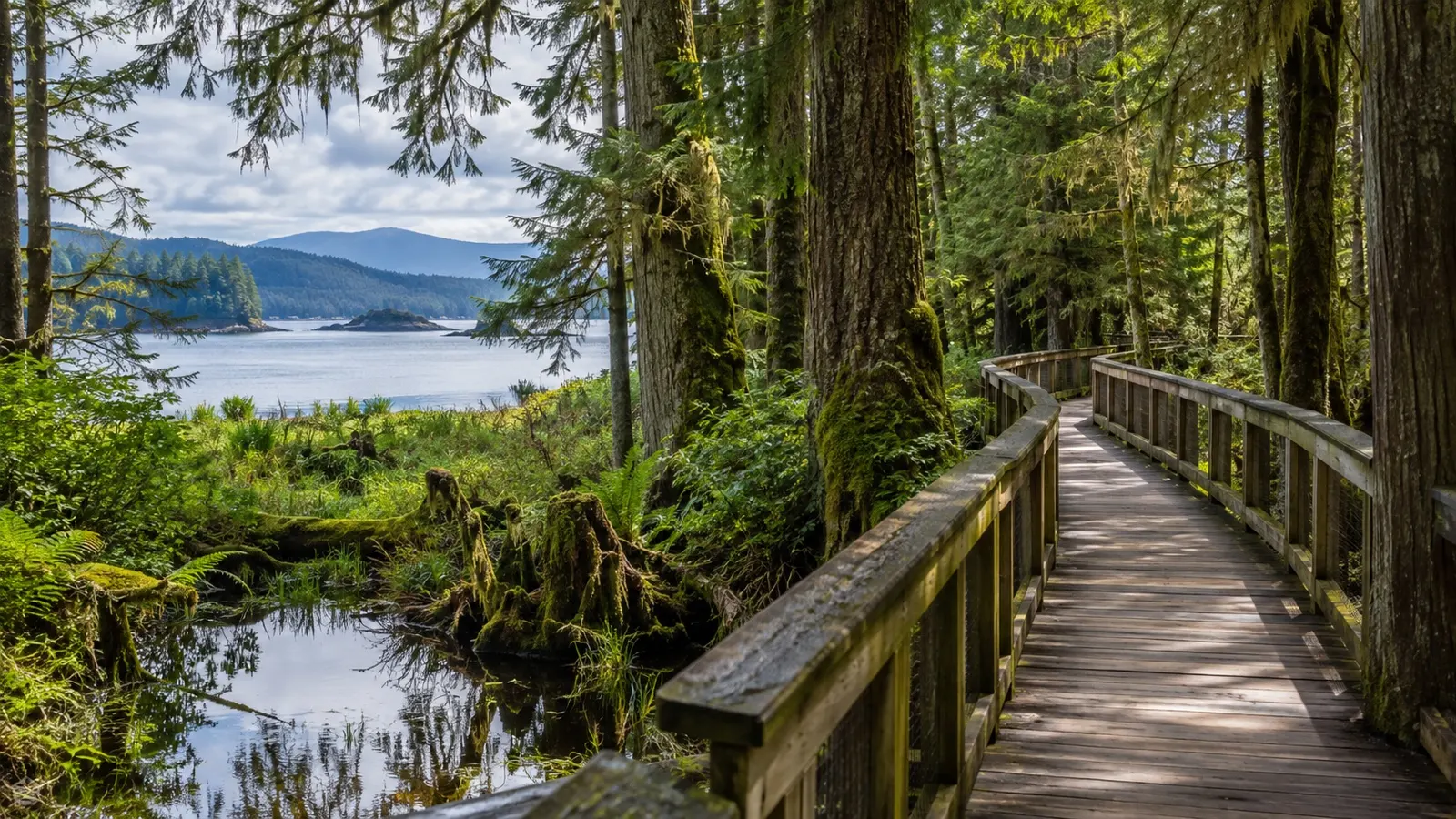
This is a lovely addition when the call is long enough and the boardwalk is open and safe. It is not a reason to skip U’mista or gamble on a late return from the far side of a hilly island.
Wear shoes with grip because rain, moss, roots, and timber can make surfaces slick. Stay on the boardwalk and marked trails to protect wetland habitat and avoid unstable ground.
The village reports a broader network of walking and cycling trails around Cormorant Island. Ask for a current map and choose only a route that fits your fitness, daylight, trail condition, and tender deadline.
Walking distances feel different on a hilly island
Cormorant Island is compact, roughly 4.9 kilometers long according to the Village of Alert Bay, but compact does not mean flat. The main village streets climb away from the water, and repeated slopes can turn an easy map route into a tiring loop.
Build the day as a sequence rather than a mileage challenge. U’mista, the waterfront, and central village sights combine naturally, while the Ecological Park deserves a separate time decision once you know the weather and your energy.
Traffic is modest compared with a city, yet sidewalks and shoulders are not uniform everywhere. Face traffic where required, use marked crossings, and avoid walking several abreast on narrow roads.
Taxis, tours, bicycles, and the ferry
The village’s current visitor listings include taxi and charter service, but a listing does not guarantee a vehicle will be waiting for your tender. Reserve ahead if mobility, the Ecological Park, or a timed return depends on a ride.
Confirm the fare, pickup point, waiting arrangement, and return time directly with the operator. Save the phone number offline because coverage and roaming do not always cooperate at the exact moment you need them.
A locally guided cultural or island tour can add context that no independent route can reproduce. Choose community-authorized experiences and listen carefully to the guide’s boundaries around places, stories, and photography.
Cycling is possible, but the island’s hills, wet pavement, and limited road width can surprise casual riders. Rent appropriate equipment, wear a helmet, use lights in poor visibility, and keep the route short enough to return without racing.
BC Ferries connects Alert Bay with Port McNeill and Sointula, and the village states that several sailings operate each day. That service is essential regional transport, but it is a poor independent cruise excursion because one delay or missed sailing can separate you from the ship.
Do not take the ferry off Cormorant Island unless the cruise line has built it into a protected excursion. Alert Bay itself contains more than enough for a meaningful port day.
Whale watching and marine excursions
The waters around the region support orcas, humpback whales, dolphins, seals, sea lions, and many seabirds, but wildlife never follows a cruise timetable. A sighting from the waterfront is a gift, not a promise.
A dedicated whale-watching trip adds boarding time, sea conditions, wildlife-search time, and another return deadline. Only book an operator whose schedule fits comfortably inside the ship’s call, and understand the cancellation and return policies before paying.
Choose a responsible operator that follows current Canadian approach-distance and wildlife-viewing rules. Never pressure a captain to chase, crowd, feed, or disturb animals for a photograph.
If the tender ride already tests your comfort, a second small-boat outing may not be the best use of the day. U’mista and the village offer a strong experience without adding more exposure to swell or spray.
Weather and what to wear
Alert Bay has a maritime climate where rain, low cloud, cool wind, and bright intervals can share the same call. Dress in light layers with a waterproof outer shell and keep a warm layer available even when the morning begins gently.
Shoes with a stable sole matter more than formal cruise style. Tender steps, wet docks, boardwalks, hills, and forest paths all become easier with reliable grip.
An umbrella can be awkward on the tender and exposed waterfront. A hood, cap, and water-resistant bag keep your hands free and reduce the chance of losing equipment to a gust.
Check the Village of Alert Bay current-conditions page and the ship’s announcements, but let the marine team decide whether operations are safe. Shore weather alone cannot tell you what the tender route is doing.
Accessibility and mobility planning
The tender transfer is the first and most important accessibility question. Ask the cruise line before sailing about steps, crew assistance, mobility-device limits, and the conditions under which a passenger may be unable to go ashore.
A manual wheelchair, power chair, scooter, walker, or cane may face different transfer rules. The final go or no-go decision can be made on the day after the crew evaluates the sea state and landing.
Once ashore, the village’s hills and variable pedestrian surfaces require an honest route. Reserve an accessible vehicle if available, confirm its dimensions and securement, and do not assume that a generic taxi can carry your device.
U’mista should be contacted directly for current entrance, restroom, seating, and gallery-access details. The Ecological Park’s boardwalk may still present wet surfaces, transitions, narrow sections, or maintenance closures even when the broad route is described as a boardwalk.
A strong lower-mobility plan can focus on U’mista, a short waterfront section, the Visitor Centre, and a prearranged scenic ride. The goal is a calm cultural day, not proving that every island path can be reached.
Food, shopping, and practical services
Alert Bay has restaurants, a grocery store, a pharmacy, galleries, and other small-community services, but hours can be seasonal and cruise-day demand can concentrate quickly. Verify the current village listings and keep a second lunch option in mind.
Local food may include seafood, bannock, baked goods, and simple harbor-town meals depending on the day. Order with enough time for preparation and avoid starting a sit-down lunch just before your return window.
Buying directly from Indigenous artists or community-linked cultural organizations can keep more value local. Ask whether a piece is made locally, respect the stated price, and learn the artist’s name when information is provided.
Cards may work at many businesses, while a modest amount of Canadian cash can help when a small vendor or connection is offline. Never depend on an automated teller as your only source of money during a short call.
Public restrooms and seating are easiest to plan around established visitor facilities and businesses. Ask at the Visitor Centre before heading uphill or onto a longer trail.
Canadian entry and customs basics
Documentation for Canada depends on nationality, immigration status, and the complete travel itinerary. Use the official Immigration, Refugees and Citizenship Canada checker and follow the cruise line’s instructions rather than assuming every sea passenger needs the same visa or electronic authorization.
An electronic travel authorization is mainly tied to visa-exempt air travel and is not a universal requirement for a cruise arrival by sea. Flights before or after the sailing may create a separate requirement, so evaluate the entire trip.
Keep the documents specified by the cruise line available when going ashore. A phone image is helpful backup, but it does not replace an original when Canadian authorities or the ship require one.
Canada regulates food, plant, animal, and agricultural items. Follow border and ship instructions, declare goods when required, and do not carry food ashore simply because it was available onboard.
Time zone and ship time
Most of British Columbia moved to year-round UTC-7 Pacific Time in March 2026, including Alert Bay. That change can put the local clock out of step with neighboring jurisdictions at certain times of year.
Your ship may keep a different operational time, particularly on a route that crosses time zones. Set your phone manually if instructed, carry a second clock, and use the ship’s stated time for all aboard and the last tender.
Never let an automatically updated phone settle the question by itself. Confirm the time with ship staff before leaving the landing area.
Respectful travel in a living community
Ask before photographing people, artists at work, homes, children, ceremonies, or community gatherings. A public street does not turn every person or doorway into cruise content.
Do not touch poles, carvings, regalia, memorials, or cultural belongings. Follow marked routes around burial grounds and accept without argument that some spaces or knowledge are not open to visitors.
Keep noise low near homes and community facilities, and move aside for residents using the waterfront. Ships visit for a few hours, while island life continues before and after the tender schedule.
Use local waste and recycling facilities correctly, stay on established paths, and give wildlife room. Pack out anything you carry onto a trail and never leave food for birds or marine animals.
Three realistic day plans
A short call
Walk from the landing to U’mista, spend most of the available time with the collection, then return along the waterfront with one local shop or food stop. Keep the final hour near the tender point.
A medium call
Begin at U’mista, continue through the waterfront and central village, then visit the memorial poles and Big House exterior from public routes. Add the Visitor Centre or Library-Museum only if current hours fit without rushing.
A long call
Start with U’mista, take a relaxed village lunch, and use a reserved taxi or current trail map for the Ecological Park. Return to the waterfront early, leaving wildlife watching to chance unless a marine excursion is specifically coordinated with the ship.
Common mistakes to avoid
The first mistake is assuming the tender will run continuously regardless of weather. Build a compact route and listen for changes because a paused service can shrink the day without warning.
The second is treating U’mista as a quick photo stop. Its collection and repatriation story deserve time, attention, and respect for the centre’s rules.
The third is planning the Port McNeill ferry as if it were urban transit. The sailing schedule and ship deadline create too much risk for an independent side trip.
The fourth is underestimating hills because Cormorant Island looks tiny on a map. Choose a route that matches your mobility and keep the return section easier than the outbound section.
The fifth is photographing a memorial, ceremony, or person without permission. When in doubt, ask first and accept the answer gracefully.
Your final checks before the tender
Confirm the landing point, last tender, all aboard, local time, weather, and any ship-arranged meeting instructions. Recheck U’mista hours and every reserved taxi, tour, performance, or marine trip.
Carry a waterproof layer, secure bag, offline map, ship contact details, and any required documents. Set a return alarm early enough to walk back slowly and wait for the tender without anxiety.
A small port with a much larger story
Alert Bay does not need a long attraction list to become one of the voyage’s most memorable calls. Give U’mista the time it deserves, move through the community with humility, and let the waterfront and weather set a human pace.
Our Editorial Policy explains how operating claims are checked and corrected. Reconfirm tender operations, landing, local openings, transport, weather, and all aboard on your sailing.
How this guide was researched: This guide was checked against official Village of Alert Bay, U’mista Cultural Society, British Columbia transport and timekeeping, and Canadian immigration and border sources. Logistics and time-sensitive details were reviewed September 11, 2026; see our Editorial Policy.