Qingdao Cruise Port: Terminal, Metro, Old Town and Laoshan
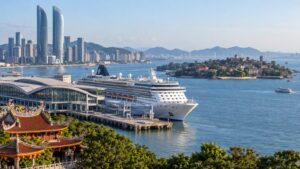
Qingdao gives cruise passengers something unusually useful in a large Chinese port: an alongside terminal with its own metro station and a historic center that rewards a focused day. Red-roofed streets, waterfront landmarks, Tsingtao beer history, and Laoshan’s mountain scenery pull in different directions, so the best itinerary begins by choosing one.
I would use the metro advantage for a city day and reserve a protected excursion for Laoshan. Immigration status, terminal formalities, digital payments, and the final walk back to the gangway deserve as much attention as the attraction list.
Quick Facts
- Port: Ships use Qingdao International Cruise Home Port in the old port area of Shibei District.
- Arrival: Cruise ships normally berth alongside rather than tendering.
- Metro: Qingdao International Cruise Terminal station on Line 2 serves the port redevelopment area.
- Best first visit: Combine Zhanqiao, selected old-town streets, one viewpoint, and the Tsingtao Beer Museum.
- Best regional trip: Make one clearly defined Laoshan visitor zone the main excursion.
- Currency: Chinese yuan renminbi.
- Language: Mandarin Chinese, with English varying by venue and staff member.
- Time: China Standard Time, UTC plus 8, used nationwide.
Start at Qingdao International Cruise Home Port
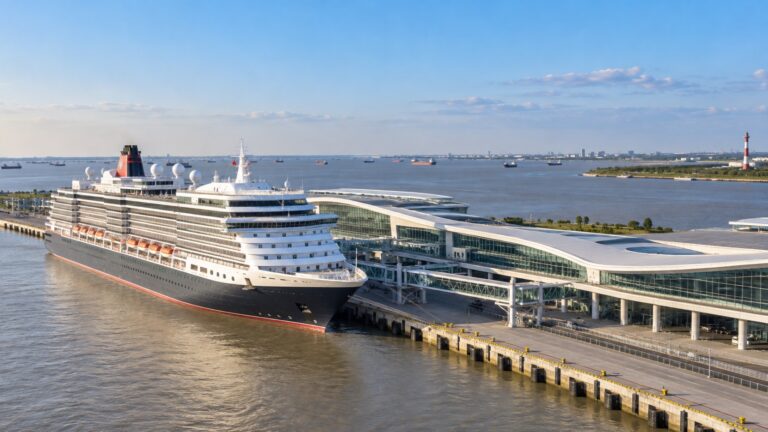
The cruise home port sits in the old harbor area of Shibei District and handles international passenger processing. It is also described in English as the Qingdao International Cruise Passenger Transport Center or Qingdao International Cruise Terminal.
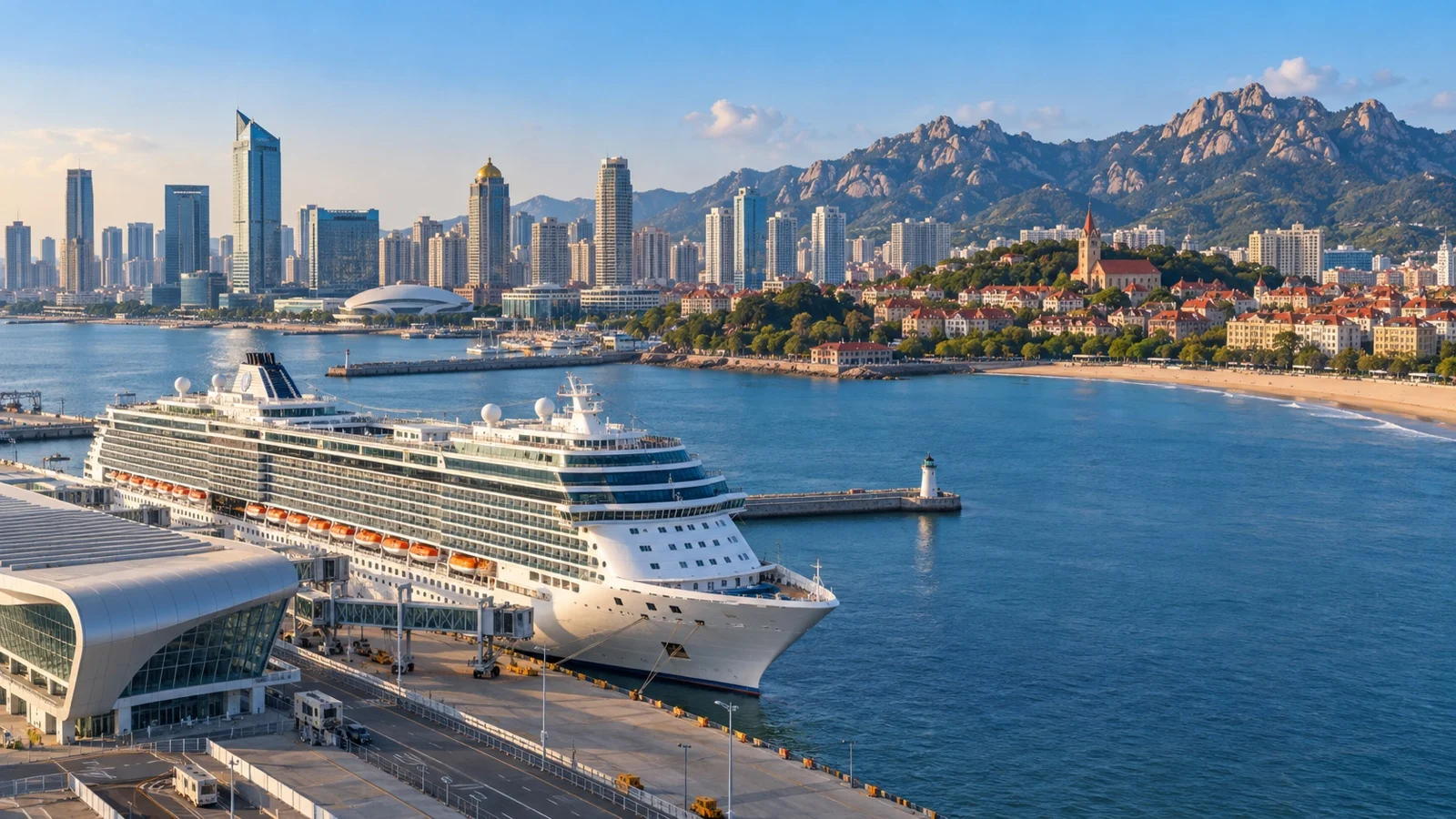
Large ships normally berth alongside at dedicated cruise facilities, which removes a tender transfer. The path from cabin to city still includes gangway distance, terminal corridors, immigration, customs, security, and the designated passenger exit.
Your ship and the port assign the precise berth and route on the day. Save the terminal name and passenger gate in Simplified Chinese because a driver who hears only Qingdao port may reasonably picture a much larger industrial area.
Follow every marked corridor and do not attempt to shortcut through the redevelopment zone or working harbor. A metro station near the terminal does not turn operational land into a public footpath.
Immigration decides what kind of day you may have
China entry eligibility depends on passport, nationality, itinerary, previous and next ports, current exemptions, and the arrangement made by the cruise line. Never assume that another passenger’s visa-free status automatically applies to you.
The National Immigration Administration guidance, updated August 20, 2026, includes Qingdao among 13 cities covered by the cruise tourist-group visa-free policy. It applies to groups of at least two organized and received by a travel agency registered in China.
Under that policy, eligible travelers continue through scheduled ports and depart China on the same cruise ship, with a maximum permitted stay of 15 days in designated coastal regions. The requirements are specific enough that a headline saying visa-free is not a complete answer.
Passport-based exemptions or another transit policy may create a different route to entry. Obtain sailing-specific confirmation from the cruise line and an official Chinese government, embassy, or visa source shortly before departure.
Follow instructions about passports, arrival documents, group identifiers, meeting times, and whether you may separate from an organized program. If the registered tour arrangement supports your admission, do not improvise independent travel without explicit authorization.
Line 2 changed the port equation
Qingdao International Cruise Terminal station opened with the western extension of Metro Line 2 in December 2024. This connection makes the historic center and broader city far easier to reach than older port guides suggest.
The city government’s opening information confirmed a three-station western extension linked directly into the existing Line 2 network. Use the current metro map and the station name 国际邮轮港 because English naming can vary across apps and signs.
Follow the terminal’s approved pedestrian route to the correct station entrance after clearance. If the day’s passenger exit feeds a shuttle-only path, obey that instruction rather than crossing construction or port roads to find a preferred entrance.
Payment acceptance can vary by machine, gate, and foreign card, so carry yuan and ask staff for help when necessary. Repeatedly presenting the same declined card to a ticket machine is not a cultural exchange program.
Keep a taxi fallback
Metro is the best independent default for many city routes, but a licensed taxi or ship shuttle remains a useful backup. Save the port passenger entrance, ship name, and destination in Chinese before leaving.
A taxi becomes especially valuable after an eastern waterfront or Laoshan trip when time has more value than a perfect transit connection. Confirm the driver is returning to the cruise passenger terminal rather than a freight gate or ferry pier.
Traffic, events, weather, and security controls can change the final approach. The return plan should end inside the terminal with time for formalities, not at the curb when boarding closes.
Build the old town around geography
Qingdao’s historic core spreads across coastal hills, so a good route follows the terrain instead of zigzagging between popular pins. Start near the old waterfront, climb for one architecture or viewpoint segment, then use metro or taxi for the brewery museum.
The red roofs and European-influenced buildings reflect the city’s complicated modern history rather than a theme district created for visitors. A guide can add political and social context that the attractive facades do not provide by themselves.
Zhanqiao Pier
Zhanqiao extends into Qingdao Bay toward Huilan Pavilion and remains one of the city’s most recognizable waterfront landmarks. It provides an immediate connection between the historic center, sea, and skyline.
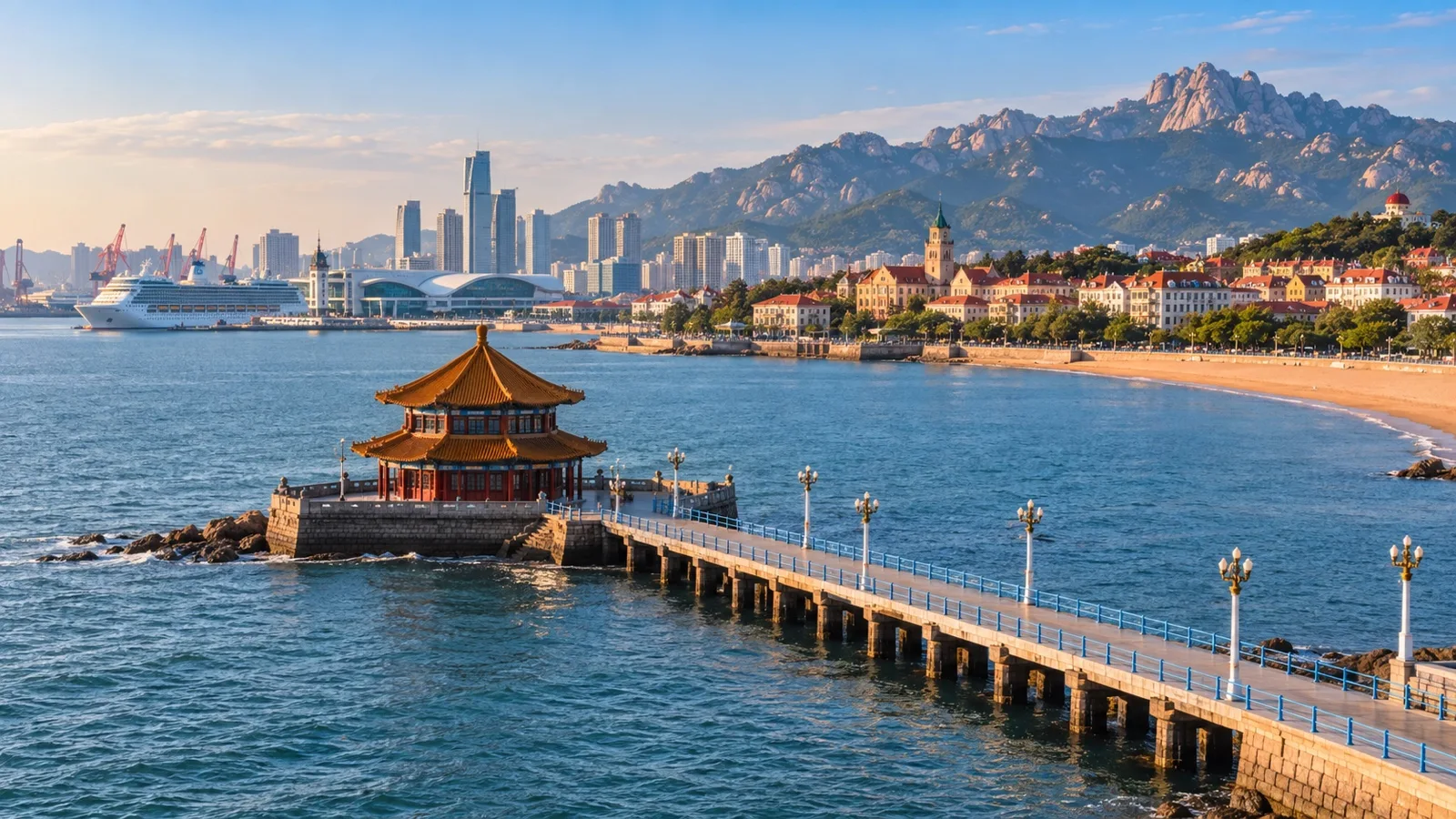
The pier can be crowded, windy, and slick, especially in rain or spray. Use the official route, obey closures, and avoid exposed edges when rough conditions make the photographs dramatic.
Saint Michael’s Cathedral and surrounding lanes
The cathedral and nearby streets show the German colonial layer within Qingdao’s broader history. Hills, steps, traffic, and busy crossings make the walk more demanding than the map distance implies.
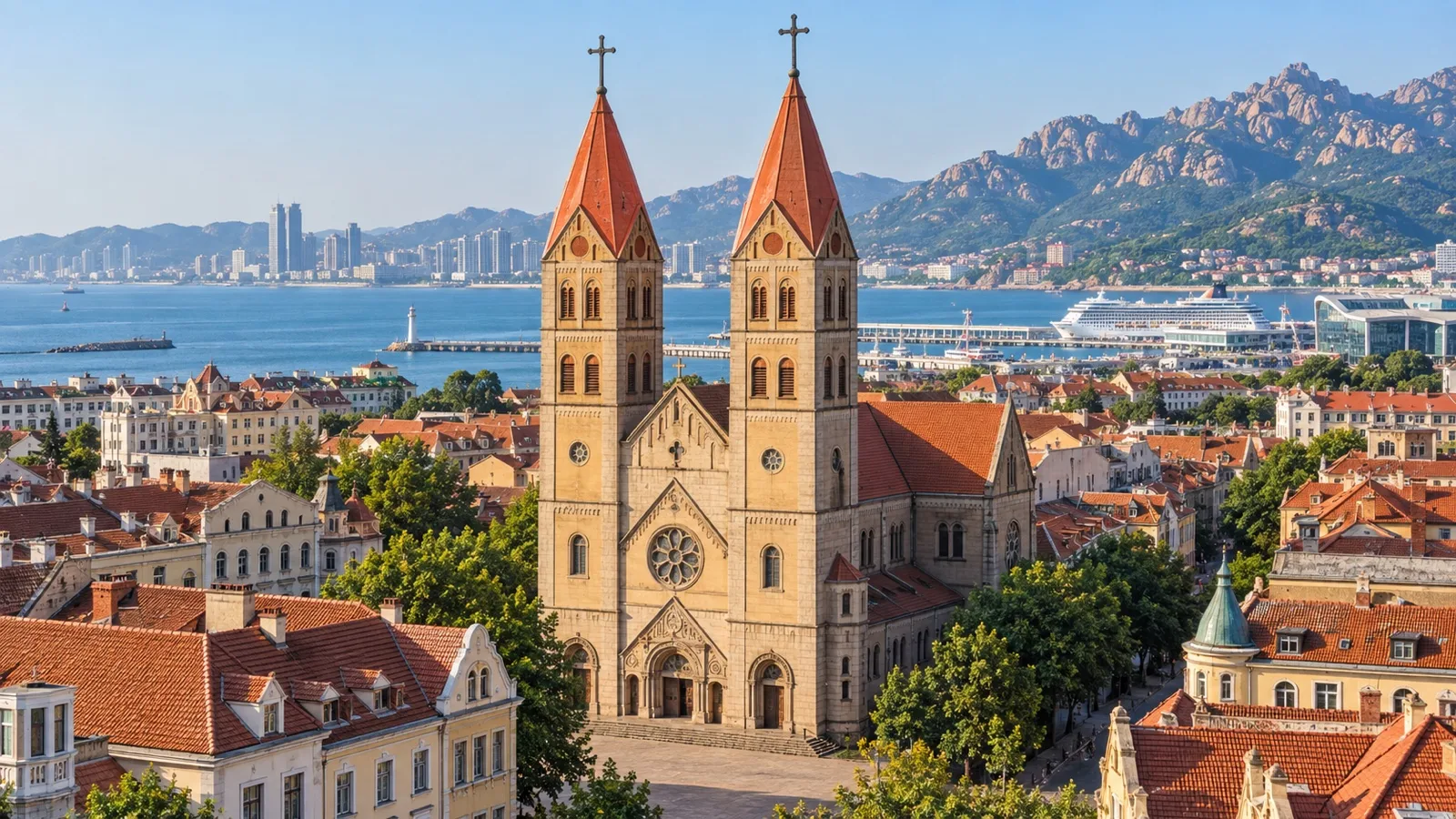
Interior access depends on services, opening, and current visitor rules. Dress respectfully, keep voices low, and leave the entrance clear for worshippers rather than staging a full group portrait in the doorway.
Choose one hill viewpoint
Signal Hill and Xiaoyushan both offer elevated views across red roofs toward the sea. Pick one because approach slopes, steps, lines, humidity, and the descent all consume time and energy.
Coastal haze or low cloud may soften the view. When visibility is poor, the waterfront and historic lanes provide a better return on effort than climbing for a gray panorama.
The Tsingtao Beer Museum is more than a tasting
The official Tsingtao Brewery page places the museum at 56 Dengzhou Road, the birthplace of the company. It combines company history, brewing technology, historic equipment, modern production, and visitor experiences.
Check the current ticket, identification, and reservation process before arrival because digital procedures can change. Bring the identification requested by the cruise line and attraction rather than assuming an overseas reseller has solved every entry step.
Tastings are optional, and nondrinkers can still enjoy the industrial and local history. Anyone sampling beer should eat, hydrate, and preserve enough attention for the metro and terminal formalities.
The museum fits naturally after the old town because it adds a distinct story without requiring a cross-city scenic detour. I would skip it only when architecture, waterfront, or Laoshan is clearly the stronger personal priority.
Badaguan and the eastern waterfront make a separate city day
Badaguan is a leafy district known for villas in varied architectural styles and access toward the coast. It rewards a slower walk, but sits in a different part of Qingdao from the cruise terminal and oldest streets.
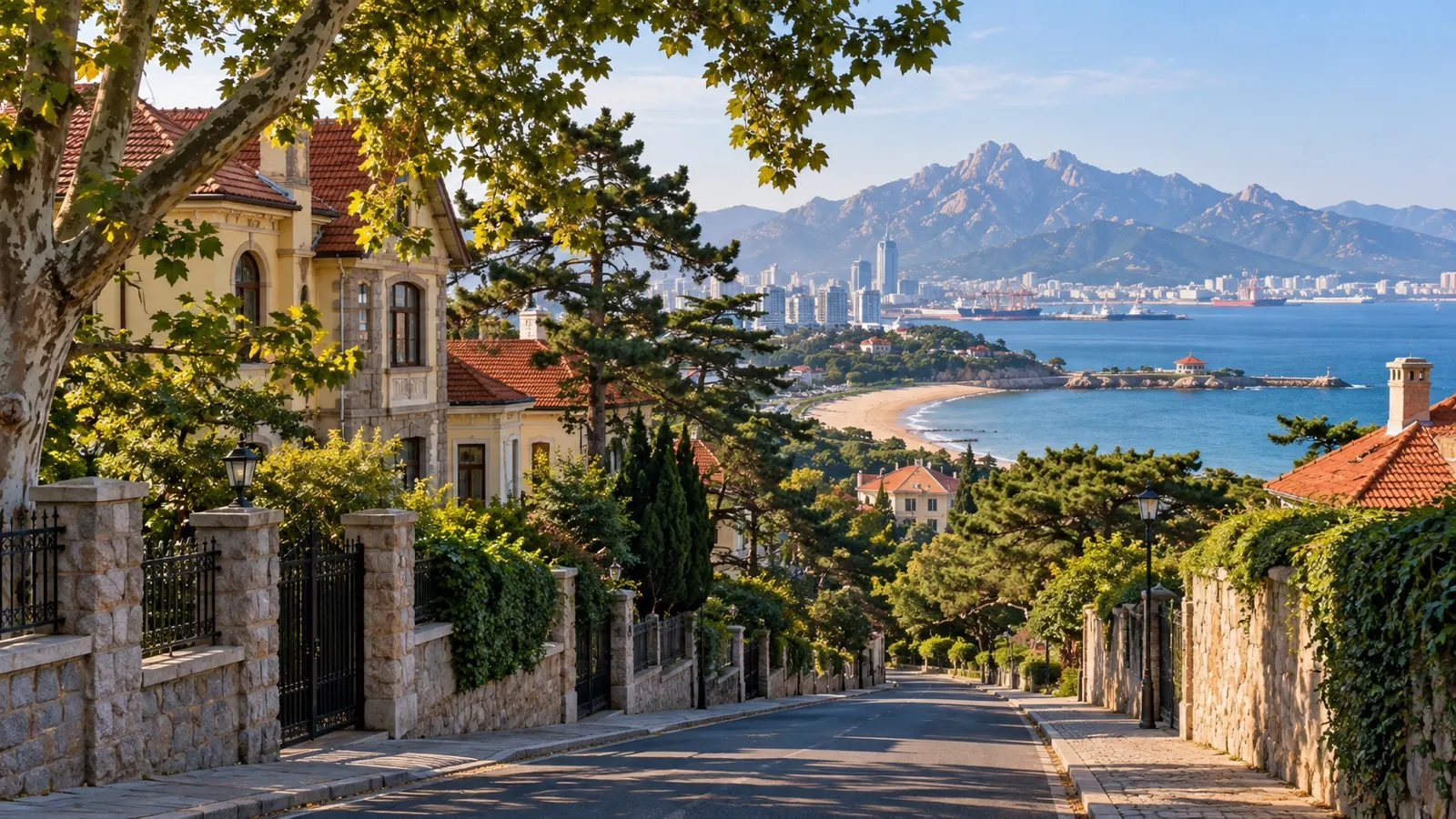
Combine it with one beach, a coastal stop, or May Fourth Square rather than repeatedly crossing town. Private homes and gardens remain private even when wedding photographers are working nearby.
May Fourth Square and the modern eastern waterfront reveal a broader, newer Qingdao through open public spaces and contemporary skyline views. This route suits travelers who prefer promenades and city scale to steep historic lanes.
Crowds and distance can turn a city-combination plan into hours of transportation. Pick either historic Qingdao or the eastern waterfront as the main theme, then add only what lies naturally on the return route.
Laoshan is not one attraction
Laoshan rises beside the Yellow Sea east of central Qingdao and spreads across a large scenic area. The official Laoshan site describes six principal visitor areas and identifies Jufeng as the highest peak at 1,132.7 meters.

Taiqing, Jufeng, Yangkou, Huayan, Jiushui, and other routes involve different gates, internal buses, walking, religious sites, and cableway arrangements. A tour labeled only Laoshan has not yet told you enough to book.
Ask for the exact visitor zone, entrance, expected walking, steps, cableway status, meal plan, and turnaround time. The drive from the cruise port crosses a major city before the scenic-area transportation even begins.
Use a ship excursion or a cruise-aware local operator with the all-aboard time in writing. Laoshan should be the day’s center rather than a morning add-on before a complete old-town tour.
Weather can edit the mountain plan
Sea fog, coastal haze, rain, wind, heat, and seasonal storm systems can reduce views or affect paths and cableways. Check the scenic area’s announcements, local forecast, and ship messages before departing.
Bring water, sun protection, a compact rain layer, and shoes suitable for stone and steps. Temperatures and exposure can differ between the harbor, coast, and higher mountain routes.
When cloud removes the main view or access closes, move to a city alternative without trying to reconstruct the mountain day at another gate. Qingdao has enough urban character to rescue the itinerary gracefully.
Accessibility needs an entrance-by-entrance check
The cruise terminal and metro are modern, but the combined distance through gangway, processing, station entrance, concourse, and platform can be substantial. Request ship assistance and identify the accessible metro entrance before following the nearest stairs.
Historic Qingdao is hilly, with curb changes, steps, traffic, and uneven surfaces. Zhanqiao, selected waterfront sections, a vehicle overview, and museum routes may work better than stacking several hill parks.
Laoshan access varies widely by visitor zone, internal bus, cableway, trail, and viewpoint. Ask for exact transfers, gradients, steps, restroom access, and whether a mobility device can be carried or stored.
A broad accessible label is not enough when the route contains a terminal, train, taxi, scenic shuttle, and cableway. Confirm every link before payment and retain a city fallback.
Payments, maps, and internet planning
China uses the yuan, while domestic mobile-payment platforms dominate many everyday transactions. International visitors should complete any supported wallet setup before travel and keep cash plus a physical card as backup.
Download an offline map, current metro diagram, translation tool, attraction confirmation, and destination names in Simplified Chinese. Some familiar international internet services may be restricted, so the only copy of a ticket should not live behind a blocked login.
Hotel or ship Wi-Fi can help with setup before departure, but a cellular connection is not guaranteed in every terminal corner or mountain route. Screenshot addresses, booking codes, and return instructions.
Food, beer, and everyday etiquette
Qingdao’s food culture makes seafood and Shandong flavors an important part of the visit. Ask about prices, portion size, and allergens before ordering, especially where seafood is sold by weight.
Tap water practices differ from those aboard, so use safe bottled or properly treated drinking water. Carry any essential medication in original packaging and understand the declaration rules before arrival.
Queueing, photography, and religious-site expectations may differ by location. Follow staff instructions, ask before photographing individuals, and keep a passport secure rather than repeatedly placing it on counters.
Return through immigration, not just to the station
A train arriving at Qingdao International Cruise Terminal station has not yet returned you to the vessel. You still need the correct exit, walk to the passenger entrance, screening, possible immigration checks, terminal corridors, and gangway.
Laoshan and eastern-city travelers need additional traffic margin, while festivals and public holidays can require more. Choose an earlier departure than the final one that fits a map estimate.
Save the exact Chinese port entrance and show it to the driver before moving. If the ship changes the gate or boarding time, follow the live message immediately rather than finishing one last stop.
Four realistic Qingdao plans
The short old-town route
Use metro or taxi to Zhanqiao, walk selected historic streets, choose the cathedral area or one hill, eat, and return. This plan absorbs delayed clearance better than any distant excursion.
The classic city day
Combine the old waterfront and historic lanes with the Tsingtao Beer Museum. Use the metro between areas and keep one hill optional when weather or energy changes.
The modern coastal day
Focus on Badaguan, one coastal stop, and May Fourth Square with planned transportation. This offers wider public spaces and less emphasis on steep old-town lanes.
The Laoshan day
Book one named scenic zone with protected transportation and a clear activity level. Accept little or no central sightseeing because the mountain and its internal transfers deserve the available hours.
Frequently asked questions
Where do cruise ships dock in Qingdao?
Ships normally berth alongside at Qingdao International Cruise Home Port in Shibei District. The port assigns the precise berth and passenger route.
Is there a metro at the cruise port?
Yes. Qingdao International Cruise Terminal station is on Line 2, but passengers must follow the designated path from the cleared terminal exit.
Can I explore independently?
Yes only when your immigration status permits independent touring. The metro makes a focused city day practical with offline maps, Chinese names, and payment backups.
Do I need a Chinese visa?
It depends on passport, itinerary, current exemptions, and the cruise arrangement. Obtain confirmation from the line and official Chinese sources for your specific sailing.
Can I visit Laoshan?
Yes on a long call with a defined visitor zone and cruise-timed transportation. Make it the primary excursion rather than adding it to a full old-town itinerary.
My final advice
Qingdao rewards a clean route because the terminal, metro, old town, brewery story, coast, and mountain each work when given enough space. Choose historic city, modern waterfront, or Laoshan, then let the other two remain reasons to return.
I would preserve more time for immigration and the final port walk than a phone map suggests. A calm return through the correct gate is a much better ending than watching the ship from the wrong side of a secure harbor.
How this guide was researched: This guide was independently checked on September 11, 2026, against China’s National Immigration Administration, Qingdao government and metro information, the official Laoshan scenic-area site, Tsingtao Brewery, and current cruise operating instructions.
Reconfirm the berth, immigration status, permitted touring arrangement, terminal route, metro service, attraction access, weather, accessibility, payment setup, and final return time before sailing because live conditions can change.