Toulon Cruise Port: City Berths and La Seyne Transfers
Toulon can hand you the old town almost at the gangway, or place your ship across the bay at La Seyne-sur-Mer. Both are legitimate Toulon calls, but only one lets you begin a market stroll before your coffee has cooled.
Your first job is not choosing between Mont Faron and the beach. It is reading the ship’s daily program carefully enough to know which terminal you actually have, because that single detail controls every transfer and return calculation.
Toulon cruise port quick facts
- Two terminals: Ships use either Toulon Côte d’Azur Passenger Terminal in the city or La Seyne-sur-Mer Cruise Terminal across the bay.
- Best from Toulon: Walk the old town, Cours Lafayette, harbor, cathedral, shops, and museums.
- Best from La Seyne: Explore La Seyne itself, use the ship transfer, or connect through local bus and water-bus services.
- Signature view: Mont Faron overlooks Toulon, but its cable car is weather dependent and seasonal.
- Beach choices: Mourillon suits a Toulon start, while Les Sablettes is more logical from La Seyne.
- Currency: France uses the euro, and cards are widely accepted.
- Main caution: The return route can include a walk, local boat, shuttle, or road transfer before port security.
Two terminals, two different starts
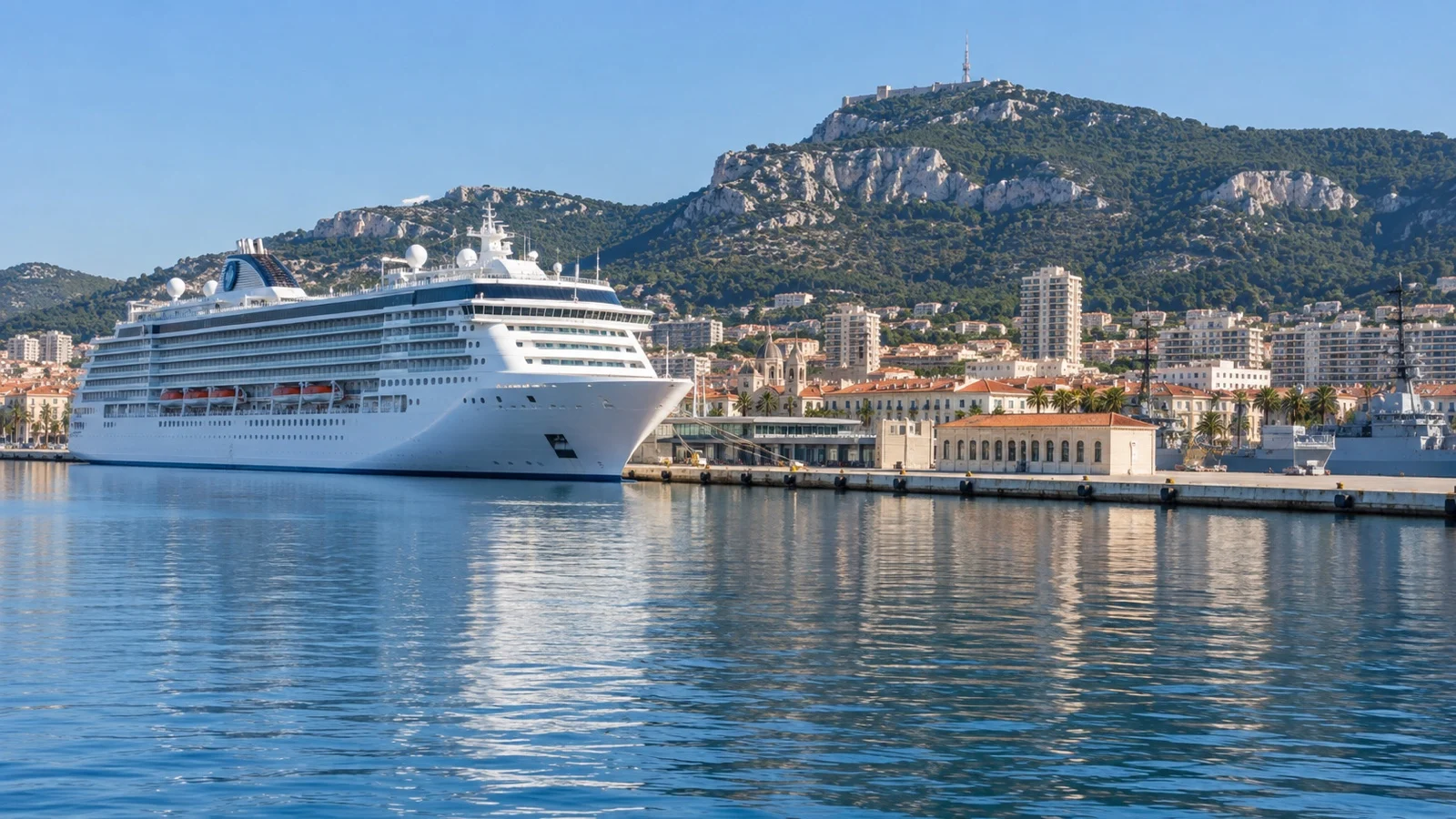
The official Ports of Toulon Bay passenger guide tells cruise travelers to confirm whether the ship is calling at Toulon Côte d’Azur or La Seyne-sur-Mer. Do not rely on a generic map pin labeled Port of Toulon, because the two terminals sit on opposite sides of the roadstead.
Occasional operational arrangements can change the exact quay or transfer pattern. The cruise line’s daily notice remains the final authority for the terminal name, shuttle, gangway, security point, and all-aboard time.
If you berth at Toulon city
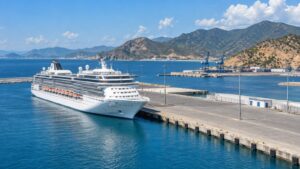
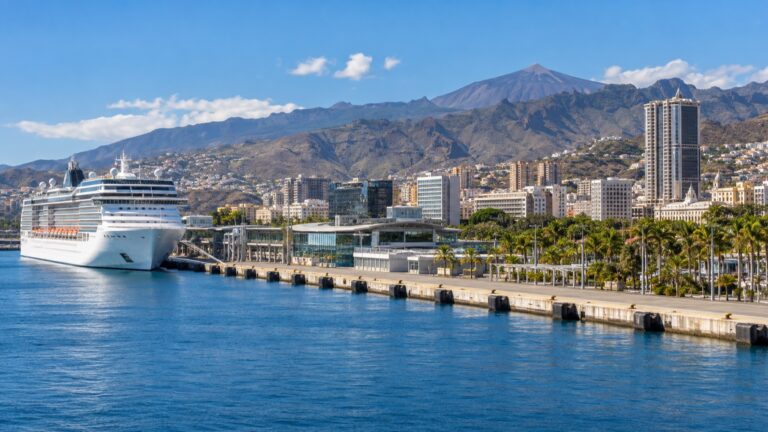
Toulon Côte d’Azur Passenger Terminal is on the city waterfront beside the ferry port and a short walk from the historic center. Cours Lafayette, the harbor promenade, restaurants, shops, Stade Mayol, and several bus stops are within easy reach.
The official port describes almost the entire old center as pedestrianized and accessible for discovery on foot. Surfaces can still become uneven in older lanes, and a flat harbor start can lead into gentle slopes farther inland.
Use the harbor and Mayol area as anchors when orienting yourself. Save the terminal location offline because several ferry and military facilities around the bay can confuse a rushed return.
If you berth at La Seyne-sur-Mer
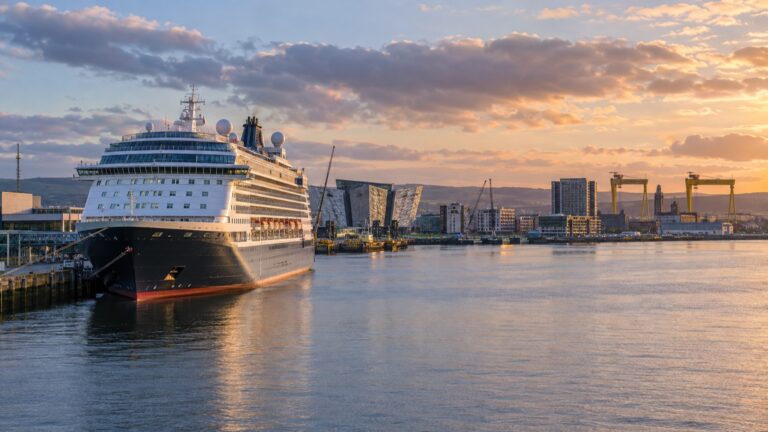
La Seyne-sur-Mer Cruise Terminal handles large ships on the western side of Toulon Bay. Central Toulon is not waiting beyond the security gate, and La Seyne’s own town center also requires a walk, bus, shuttle, or vehicle.
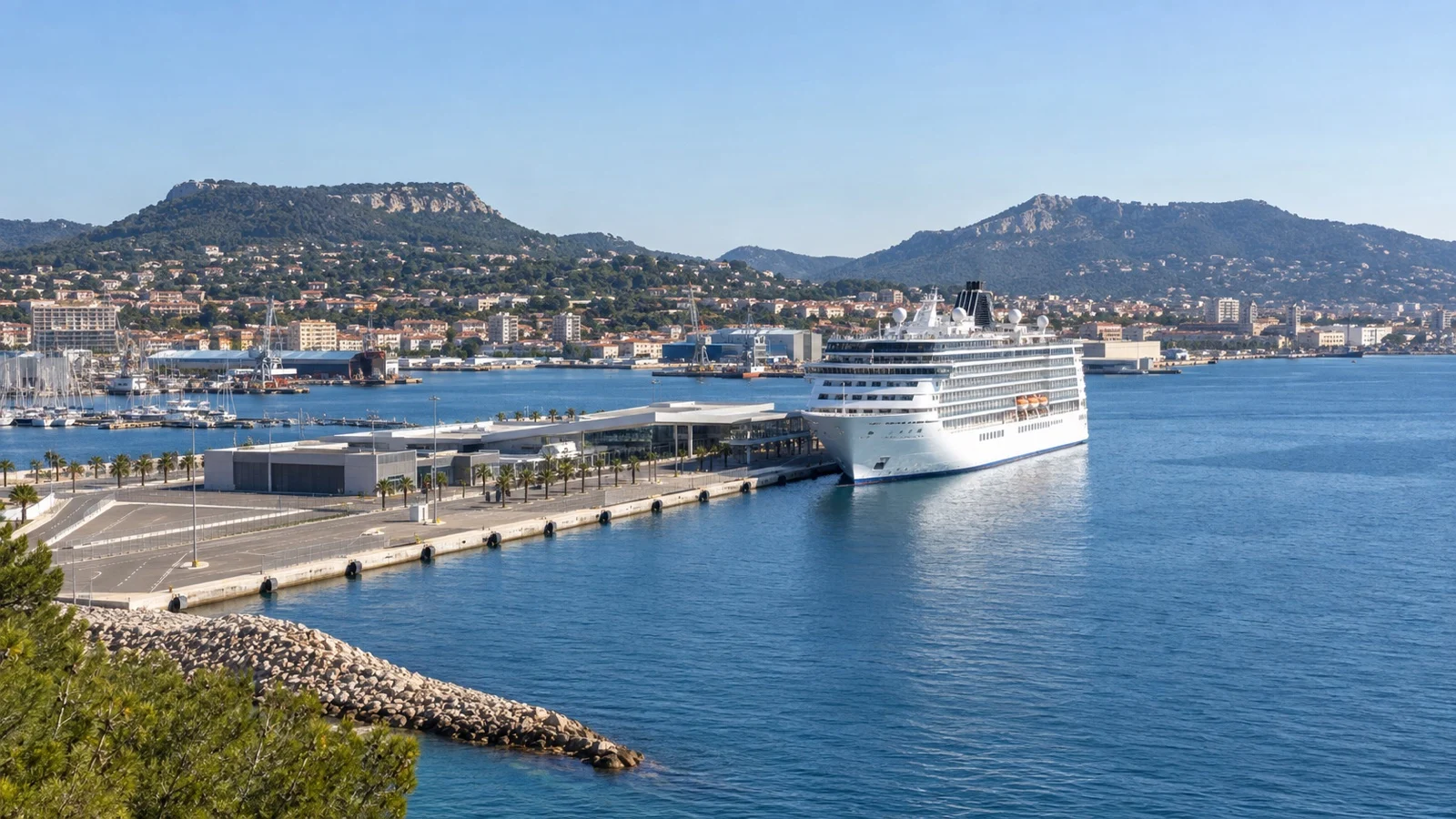
The official port estimates about a 30-minute walk from the cruise terminal to La Seyne center. It also points travelers to the nearby Rouve stop for local buses 81 or 83 toward Mairie de La Seyne, but routes and times must be checked for the exact date.
First ask whether the ship provides a free or paid sea shuttle, road shuttle, or another transfer. The port says ship-provided sea service can vary at the cruise line’s discretion, making the onboard announcement more useful than an old trip report.
Crossing the bay from La Seyne
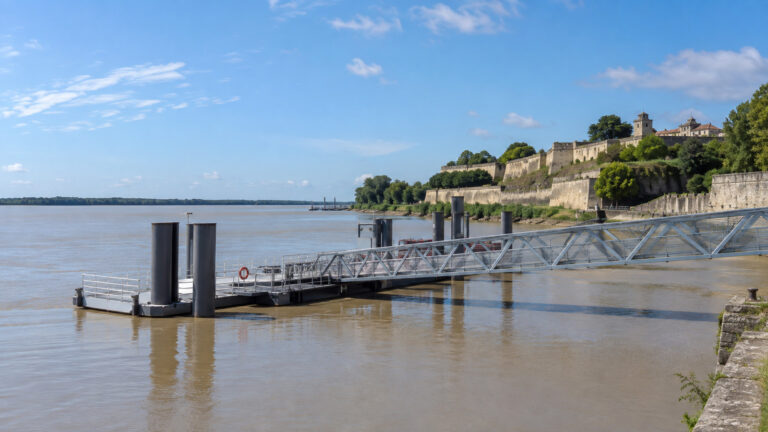
Public water-bus line 8M links central La Seyne with Toulon and turns transport into sightseeing. Réseau Mistral publishes current route information and seasonal timetables, so check the date-specific schedule before leaving either side.
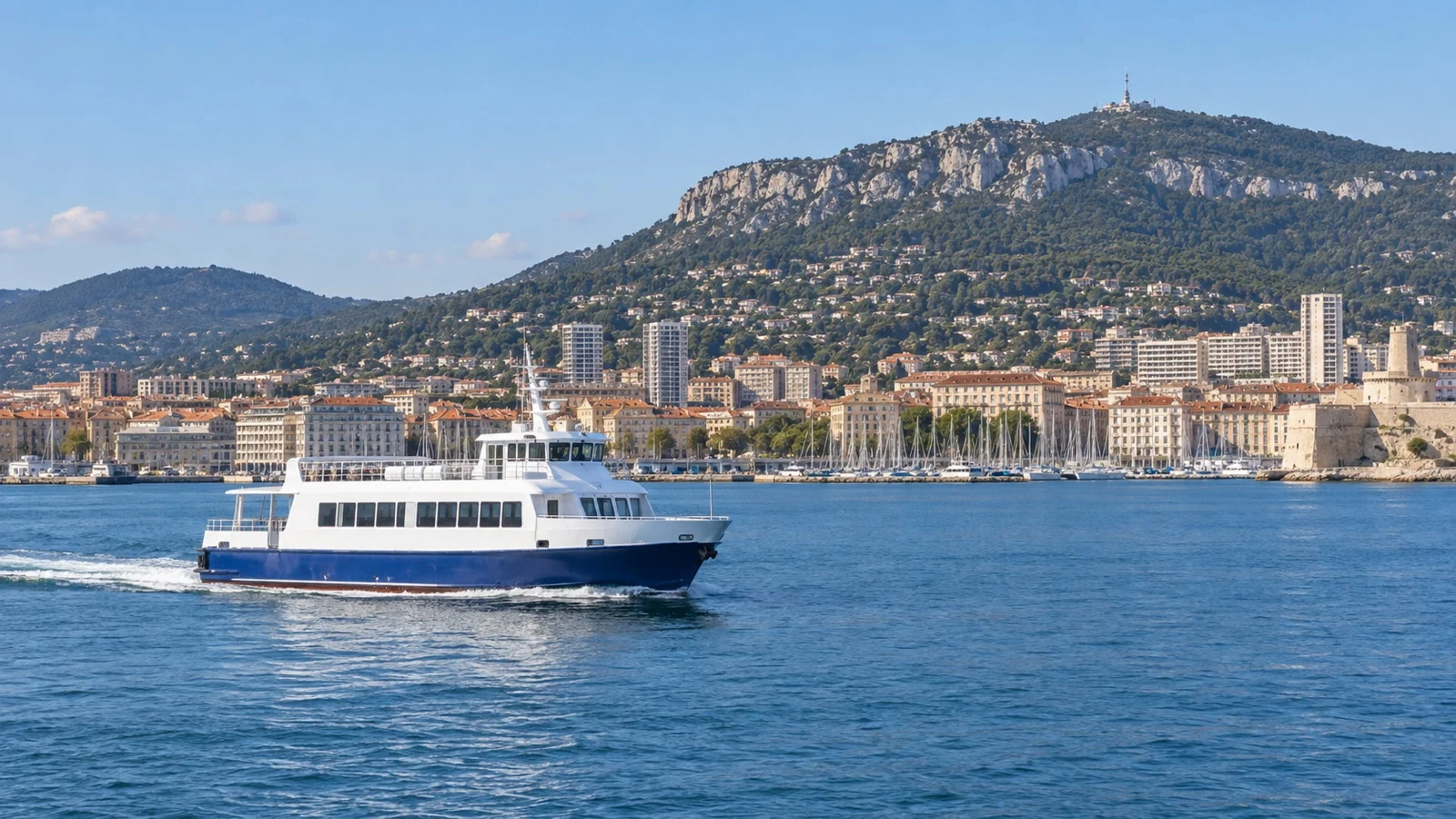
Allow roughly 40 to 60 minutes for the full public journey from the La Seyne cruise terminal to Toulon’s waterfront, including walking, waiting, the crossing, and orientation. A missed connection can add far more time than the boat ride itself.
A taxi may be faster, but road traffic around the bay can erase that advantage. Reserve the return if possible, confirm the approved terminal drop-off, and avoid assuming a vehicle will appear at the exact moment your buffer begins.
Why the harbor crossing is worth considering
The Rade de Toulon is a magnificent natural roadstead framed by naval facilities, hills, forts, marinas, and waterfront neighborhoods. A water bus makes the geography immediately understandable while avoiding part of the road circuit.
This is also an active French naval environment. Follow photography restrictions, remain outside controlled areas, and do not wander through a gate because a map appears to show a shortcut.
A walkable Toulon old-town plan
From the city terminal, begin along the harbor and continue toward Cours Lafayette. The market operates on scheduled mornings and the port notes that it is normally closed Mondays, but holidays and special events can change the pattern.
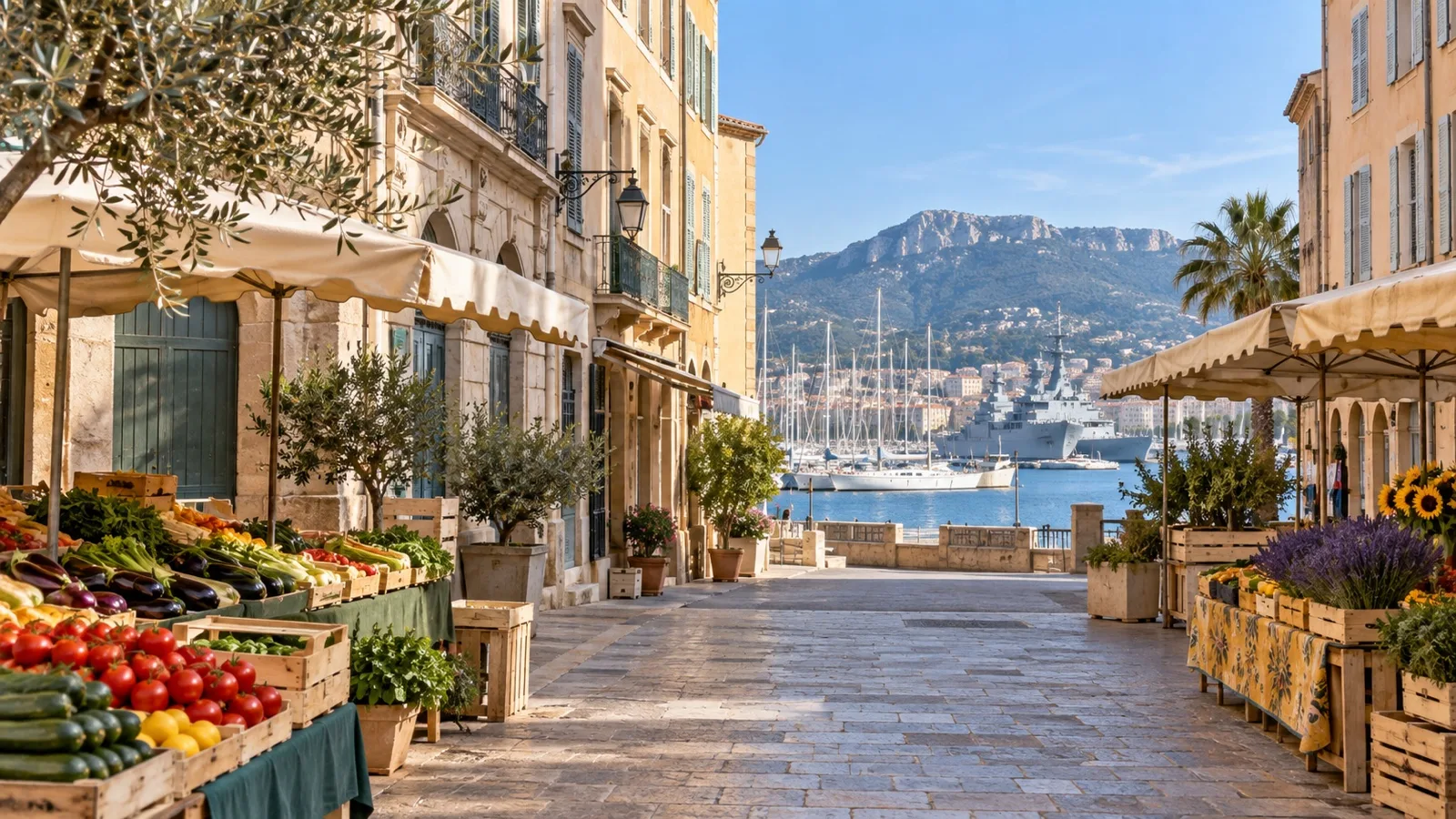
Produce, olives, cheese, flowers, spices, and rotisserie aromas make the market a sensory introduction to Provence. Keep your phone and wallet secure in the crowd, and do not block residents while constructing the perfect market photograph.
Continue through the lanes toward Toulon Cathedral, small squares, fountains, the opera district, and Place de la Liberté. The pleasure lies in architectural details, painted shutters, cafes, and ordinary city rhythm rather than a rigid checklist.
What to eat
Try cade, Toulon’s thin chickpea-flour specialty, when you find a reputable bakery or stall serving it fresh. A seafood lunch, Provençal vegetables, tapenade, local cheese, and seasonal fruit can turn an uncomplicated city walk into the day’s headline.
Menus may offer a fixed-price formula, but inclusions and service timing vary. Tell the server when you must leave and ask for the bill before the final coffee if your return requires a water bus.
Museums and Toulon’s naval story
The National Maritime Museum faces the naval base near the harbor and interprets Toulon’s long maritime history. Check official hours, ticketing, bag rules, and any security-related closure before building the day around an interior visit.
An active military port deserves deliberate behavior. Observe barriers and signs, avoid restricted photography, and do not use a museum visit as permission to explore operational spaces.
Other galleries and cultural venues may fit naturally into the old-town loop. Verify current opening days because many French museums close one weekday and smaller sites can change hours seasonally.
Mont Faron with a backup plan
Mont Faron rises directly behind Toulon and offers sweeping views over the city, bay, and Mediterranean coast. The signature cable car is reached by local transport from the center, with the official port currently directing visitors from Mayol toward the Téléphérique stop on bus 40.
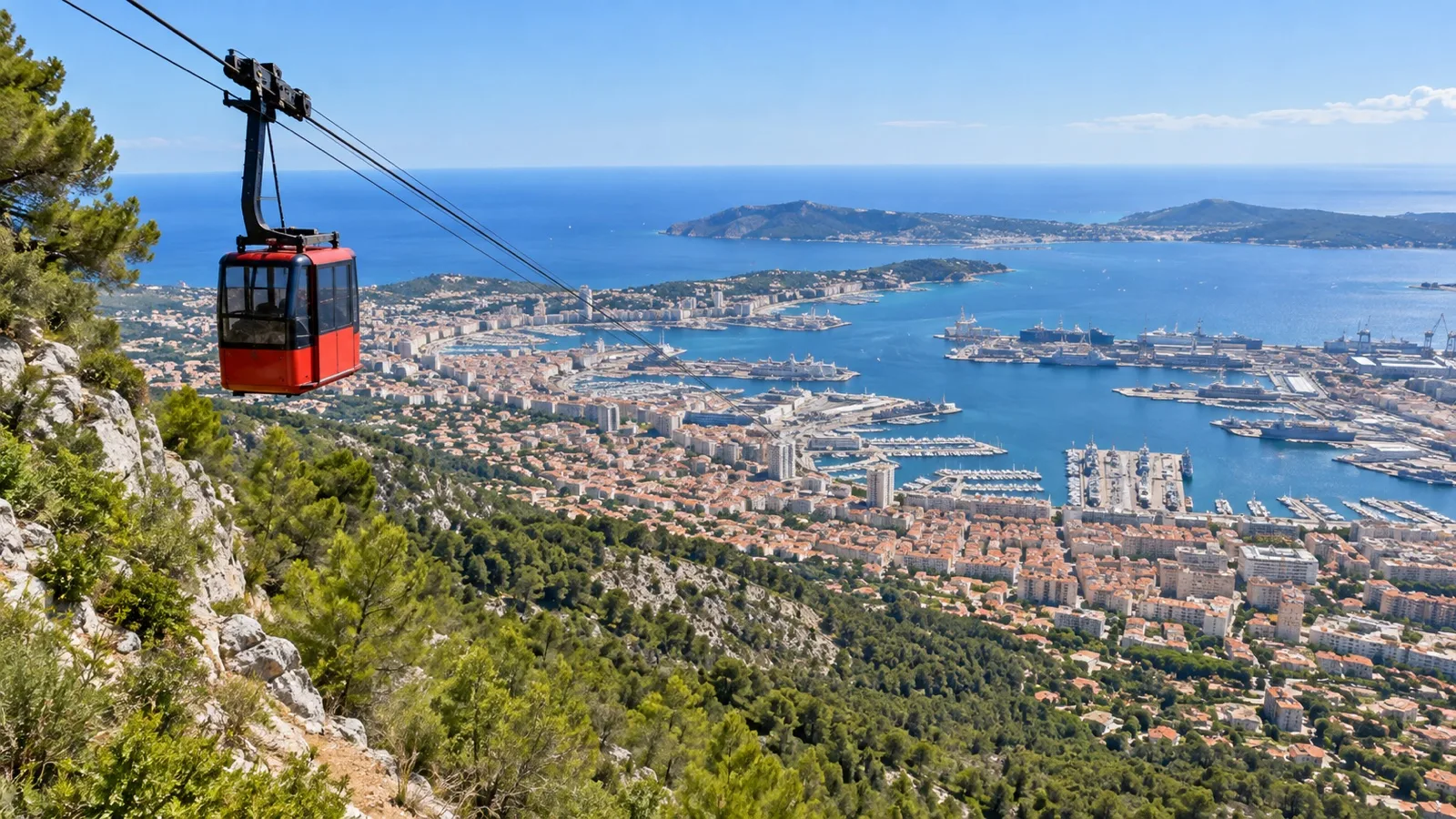
The cable car publishes seasonal operating dates and can close for wind, maintenance, or weather. Check its official site on the morning of the call and never make it your only reason for crossing the bay from La Seyne.
Allow time for the bus, walk to the lower station, ticket queue, ascent, viewpoint, descent, and connection back to the port. A single full cable-car cycle on a busy day can consume more of the call than the map suggests.
If service is suspended, pivot immediately to the market, harbor, museum, or old town. Waiting under a stationary cable car does not improve the wind forecast or your cruise day.
Mourillon beaches from Toulon
The sheltered beaches of Mourillon sit east of central Toulon and are the most logical beach choice from the city terminal. The port currently points visitors to local bus service from Mayol, but line numbers and stops should be verified on Réseau Mistral for the sailing date.
Mourillon combines sand, promenades, restaurants, and a neighborhood that still feels connected to daily Toulon. Swim only where current conditions and local guidance allow, and keep enough time for the bus or taxi back.
A beach day should not depend on a last-minute taxi. Save the transit timetable offline, note a backup stop, and leave the shoreline before the return crowd begins.
La Seyne and Les Sablettes
Passengers at La Seyne do not have to cross to Toulon. The town center has a Provençal market, small fish market, street-art route, waterfront, and Parc de la Navale on the former shipyard site.
The port highlights the historic shipbuilding landscape, including Porte des Chantiers and the lift bridge. Check current access to viewpoints and museums because maintenance or events can change what is open.
Les Sablettes is the area’s best-known beach and is more geographically sensible from La Seyne than from the Toulon city terminal. Local transport can connect the town, Tamaris coast, and beach, but schedules vary by season.
Choose either central Toulon or La Seyne and Les Sablettes as the main day. Crossing the bay twice for sightseeing, then traveling onward to a beach, creates too many links for a relaxed port call.
Wider Provence excursions
Bandol, Cassis, Le Castellet, Hyères, and other Provençal destinations appear on excursion menus from Toulon Bay. Each involves different road time, access restrictions, parking, and seasonal traffic.
A ship-sponsored excursion is the easiest choice for a distant destination because return logistics are coordinated with the vessel. Independent travelers should use a port-aware driver, agree on a conservative turnaround time, and avoid stacking multiple towns.
Cassis and the Calanques
Cassis is attractive for its harbor and access to the Calanques, but road congestion and regulated natural areas complicate a cruise-day visit. Boat departures, trail closures, fire-risk rules, and parking can all change with weather and season.
Do not promise yourself a boat trip until the operator confirms the schedule fits your ship and departure terminal. In summer, official fire restrictions may close trails even under perfectly blue skies.
Bandol and Le Castellet
Bandol offers a coastal atmosphere and wine-country associations, while Le Castellet brings a hill-village setting. A guided outing can connect them, but tasting schedules and winding roads make a strict turnaround essential.
French drink-driving laws apply to the driver, and the safest choice is simple when sampling wine. Use a professional driver and never let a tasting become an argument for rushing the return.
Accessibility without wishful thinking
Toulon city generally offers the simpler start because the waterfront and old center sit close to the terminal. The official port also describes on-demand mobility services at the city terminal, but capacity and booking requirements need direct confirmation.
La Seyne adds a transfer decision before sightseeing begins. Ask whether the ship shuttle, sea shuttle, local bus, and water bus can accommodate the exact wheelchair or scooter, including ramps, securement, tides, and assistance.
An accessible vehicle should be reserved rather than assumed, and the port advises advance booking for La Seyne taxis and cars with drivers. Request the pickup point and total transfer time in writing.
Old streets, market crowds, cable-car stations, beaches, and boat gangways present different barriers. Contact each operator directly and build a plan around the least predictable link.
Weather, mistral wind, and summer heat
Toulon is sunny, but the mistral and other strong winds can disrupt cable cars, water buses, and exposed harbor plans. Check Météo-France, Réseau Mistral, the cable car, and ship announcements rather than relying on the view from your balcony.
Summer heat makes stone streets and uphill walks tiring. Carry water, use sun protection, and schedule the market and old town early when possible.
Autumn and winter can bring rain, rough water, and shorter daylight. A museum, long lunch, and compact city loop provide a strong backup without pretending the weather is someone else’s problem.
Money, language, and connectivity
France uses the euro, and contactless cards are common in established businesses. Carry a small backup payment method for a market purchase, transit machine, or temporary connection failure.
French is the everyday language, though tourism staff often speak some English. A greeting before requesting help makes every interaction better, and destination names are easier when saved in writing.
Download transit tickets or schedules and terminal maps before leaving the ship. Mobile data can fail precisely when you need to identify the final connection.
Entry documents and port security
France’s entry requirements depend on nationality, passport status, and the full cruise itinerary. Use the official France-Visas service and your cruise line as the final authorities, especially as European travel authorization systems evolve.
Carry the ship card and identification specified in the daily program. Port security can inspect passengers and belongings, and restricted naval areas carry rules beyond ordinary tourist spaces.
Do not buy counterfeit goods or carry prohibited items through the terminal. Keep receipts for significant purchases and follow customs rules at the voyage’s later destinations.
Return timing that matches the terminal
From Toulon city, your return may be a straightforward walk, but market crowds, a museum visit, or a late bus can still delay it. Be at the terminal well before all-aboard rather than treating the gangway closing time as an arrival target.
From La Seyne, the return may include a water bus to central La Seyne, a walk or local bus, and cruise-terminal security. Missing one public departure can consume the entire safety margin.
I would aim to be back at the correct terminal 60 to 90 minutes before the published cutoff after an independent outing, with more space after a distant Provence trip. This is a planning preference, and the cruise line’s deadline always controls.
Four realistic Toulon cruise-day plans
Toulon city classic
Walk the harbor, visit Cours Lafayette, explore the old lanes and cathedral, then choose the maritime museum or a Provençal lunch. This is ideal from the city terminal and remains possible from La Seyne only when transfers run smoothly.
Mont Faron and old town
Check cable-car operation first, travel to the lower station early, enjoy the viewpoint, and return for a short old-town loop. If wind closes the lift, switch immediately to the museum and market.
La Seyne local day
Use local transport or walk into La Seyne, see Parc de la Navale and the waterfront, then add the market or street art. This avoids crossing the bay and keeps the return geography simple.
Les Sablettes beach day
Travel from La Seyne toward Les Sablettes using a verified current route, enjoy the beach and lunch, and leave early. Reserve a backup taxi or identify a second transit option before settling in.
Common planning mistakes
The first mistake is failing to confirm the terminal. A beautiful Toulon walking plan is not a walking plan when the ship is across the bay.
The second is trusting an old water-bus timetable. Réseau Mistral changes seasonal schedules, so verify the exact date and direction.
The third is making Mont Faron nonnegotiable. Wind can stop the cable car, and Toulon offers enough on the ground to pivot gracefully.
The fourth is adding a distant Provence town after crossing from La Seyne. Every extra link multiplies the chance that one delay will consume the return margin.
Toulon cruise port FAQ
Can I walk into Toulon from the ship?
Yes, when the ship uses Toulon Côte d’Azur Passenger Terminal, the waterfront and old center are close. From La Seyne, central Toulon requires a shuttle, road transfer, or public water-bus connection.
How do I reach Toulon from La Seyne?
First check for a ship-organized transfer. Public options can combine a bus or walk into central La Seyne with water-bus line 8M across the bay.
Is Toulon worth exploring without an excursion?
Absolutely, especially from the city terminal. The market, old town, harbor, museums, food, and local neighborhoods create a complete day.
Can I visit Mont Faron on a port day?
Yes, if the cable car is operating and the return timetable fits. Wind, queues, seasonal hours, and the terminal location should all influence the decision.
Which terminal is easier for reduced mobility?
Toulon city usually minimizes transfers, but individual needs and ship arrangements vary. Confirm the gangway, port service, vehicle, and route accessibility directly.
What is best from La Seyne on a short call?
Stay on the western side for La Seyne’s center, waterfront, Parc de la Navale, or a carefully timed Les Sablettes visit. This avoids spending a large share of the call crossing the bay.
My bottom line on Toulon
Toulon rewards travelers who treat the terminal name as the first attraction. A city berth opens an effortless old-town day, while La Seyne asks for a deliberate choice between crossing the bay and exploring the western shore.
Confirm the terminal, verify every transit timetable, keep a wind-proof backup, and return early. That small discipline leaves plenty of room for markets, maritime history, beaches, and one of Provence’s most impressive harbors.
Keep planning your French Riviera cruise
Continue with our guides to Marseille cruise port, Cannes cruise port, and Nice cruise port. Recheck the ship’s daily program after arrival because terminal assignments, shuttles, and final boarding instructions can change.