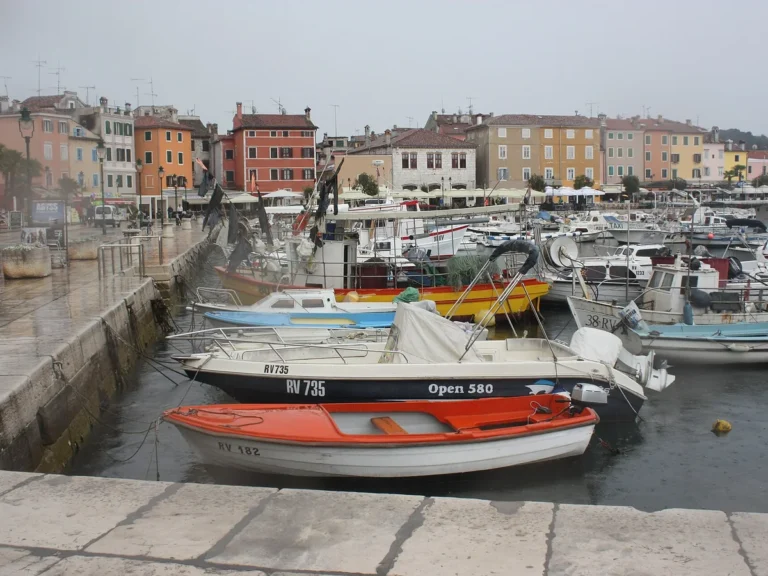
Cadiz Cruise Port: Old Town Walk & Seville by Train
Cádiz is one of the easiest major cruise calls in Spain because the old town begins almost outside the terminal. You can walk from the ship to plazas, markets, sea walls, museums, beaches, and the cathedral without paying for a transfer.
The real decision is whether to enjoy that gift or spend much of the day traveling to Seville. I would stay in Cádiz unless Seville is a personal priority and the live rail schedule leaves a generous return.

Cadiz Cruise Port Quick Facts
- Main terminal: The Alfonso XIII cruise terminal is about a five-minute walk from the historic center, according to the port authority.
- Ciudad pier: Its terminal has direct access through Paseo de Canalejas and Plaza de San Juan de Dios.
- Port operation: Cruise ships normally berth alongside, with the ship’s daily program controlling any change.
- Best local day: Cathedral, historic lanes, market, Torre Tavira, sea walls, and La Caleta.
- Best nearby trip: Jerez de la Frontera when current trains and a reserved attraction fit the call.
- Seville: Possible on a long call, but only with confirmed outbound and return transportation.
- Currency: Euro, with cards widely used and a little cash still practical.
- Return rule: Keep the final part of the day inside Cádiz and close to the ship.
Why the Walk Is So Easy
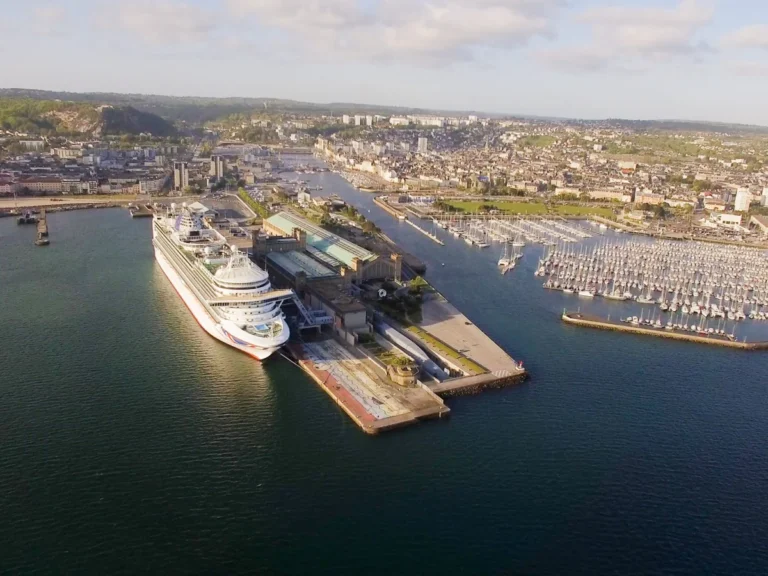
The Port of Cádiz occupies the sheltered side of the narrow peninsula, directly beside the historic center. That geography makes this a genuine walk-off call rather than a port where city-center marketing hides a long shuttle.
The official port page describes the Alfonso XIII terminal as the usual cruise facility and places the center about five minutes away on foot. Tourist information, taxis, coach parking, and visitor services are available around the terminal area.
Ships assigned to the Ciudad pier use a separate terminal with direct access toward Paseo de Canalejas and Plaza de San Juan de Dios. Check the daily program for your exact berth and the authorized pedestrian exit.
Once outside the port, the old town is compact and largely explored on foot. Narrow lanes, occasional cobbles, summer heat, and wind along the sea walls matter more than distance.
A First Walk Through Cádiz
Begin at Plaza de San Juan de Dios, where the town hall and cafes provide an easy orientation point. From there, continue toward the Barrio del Pópulo and the cathedral rather than crossing the peninsula immediately.
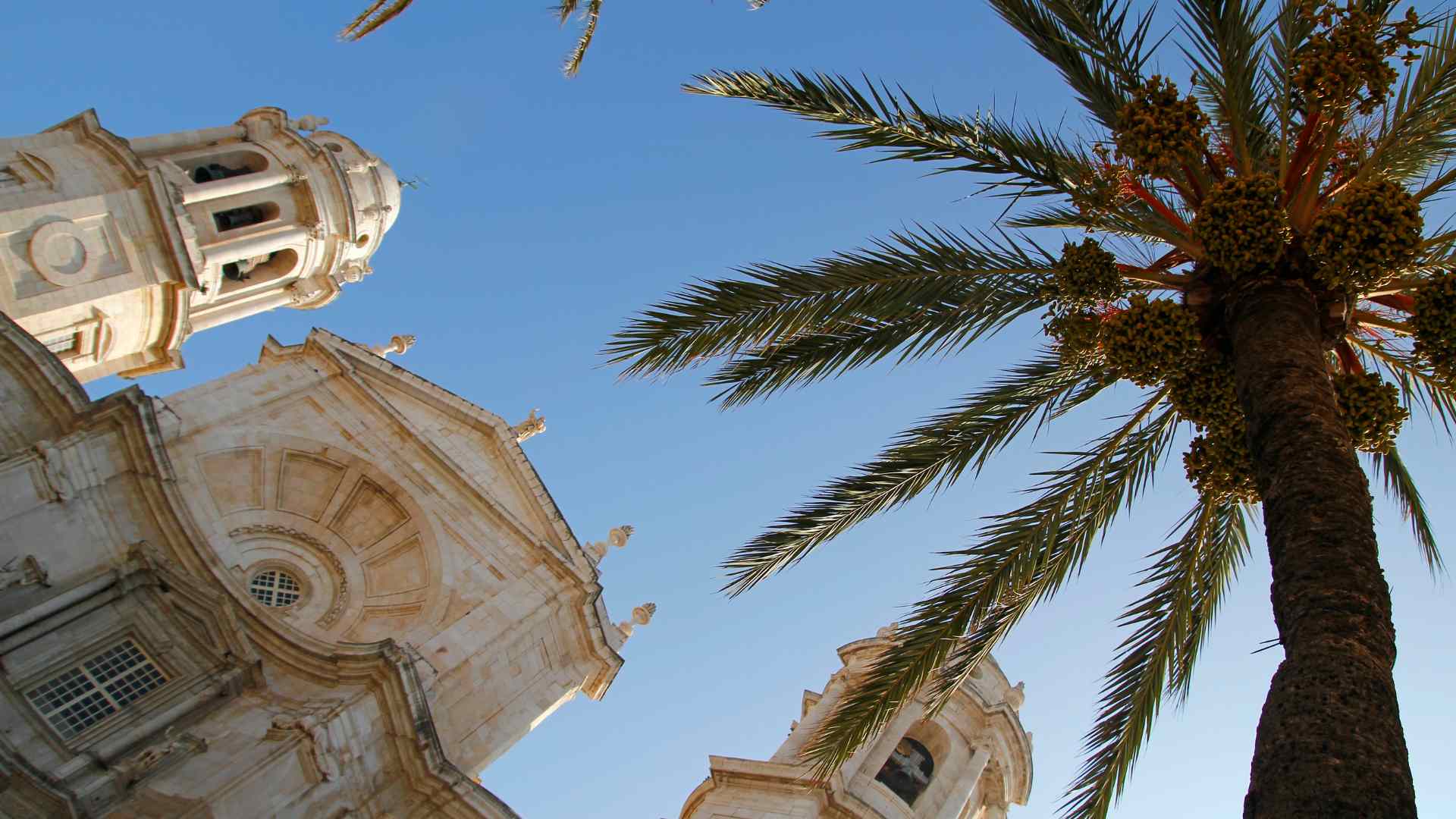
Cádiz Cathedral is the great visual landmark, with its golden dome visible from the waterfront. Check its official visitor information for current hours, worship restrictions, tower access, and admission before entering.
The Roman theater lies near the old cathedral and Pópulo district. Opening arrangements can change, so use the municipal tourism site for current access rather than assuming a free entrance is operating all day.
Continue toward the central market for food and daily life. The surrounding stalls and counters are useful for a snack or lunch, but verify opening patterns around Sundays, holidays, and afternoon closures.
Torre Tavira offers one of the clearest ways to understand the city’s rooftop landscape. Its camera obscura presentations can be timed and weather affected, so reserve or check directly rather than arriving at the busiest moment.
La Caleta and the Sea Walls
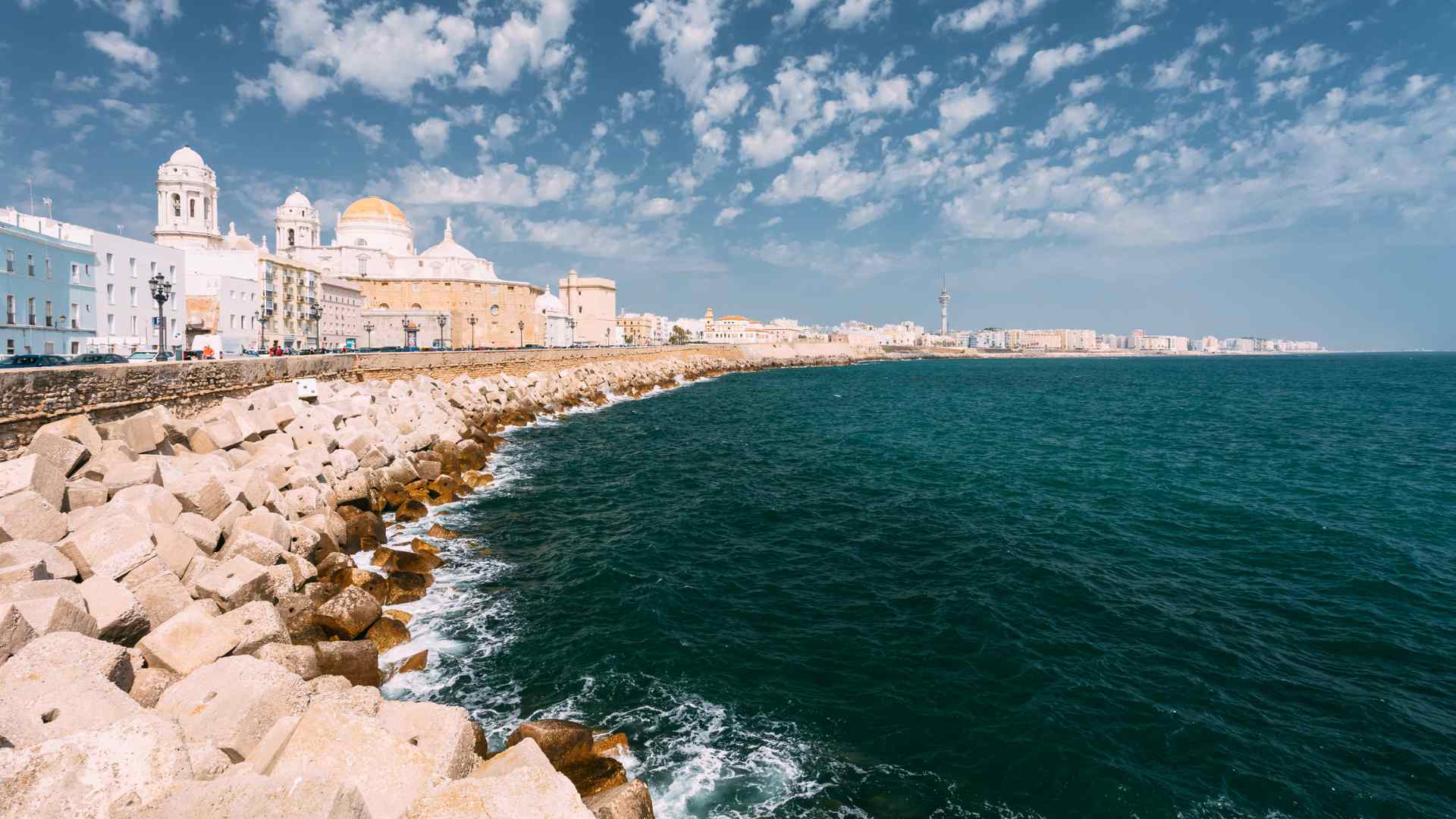
La Caleta is a small old-town beach framed by historic fortifications and the former spa building. It is easy to combine with a walk, though tide, water quality, wind, and local safety information should guide any swim.
The coastal route toward Parque Genovés and the ramparts gives Cádiz its best sense of place. Atlantic wind, bright sun, and exposed stretches make water and a light layer useful even when the temperature feels mild.
Parque Genovés offers greenery and shade near the western edge of the old town. Temporary works, event closures, or weather can affect paths, so follow local signs.
Loop back through plazas and lanes rather than retracing the same street. Cádiz is small enough to wander, and the surrounding water eventually corrects almost any wrong turn.
A Better Food Plan
Fried fish, tuna, shellfish, stews, and simple tapas fit Cádiz better than a rushed formal meal. Ask what is fresh, check the displayed menu, and allow enough time for service during the main lunch period.
The central market area is convenient for sampling several things without committing to a long meal. Established restaurants may offer a calmer seat, but reservations and cruise crowds can shape availability.
Jerez wines and local products appear throughout the city, yet a tasting should remain modest before a warm walk or gangway return. Keep liquids and food purchases within ship security and customs rules.
Jerez de la Frontera
Jerez is the most practical independent rail excursion for many Cádiz calls. It offers sherry houses, the Royal Andalusian School of Equestrian Art, churches, plazas, and a different inland atmosphere without the distance of Seville.
Use Renfe for the exact train schedule and buy the return before leaving Cádiz. Also confirm the walking or taxi connection from Jerez station to your reserved attraction.
Bodega visits and equestrian performances operate at specific times rather than continuously. Reserve directly with the venue and do not assume a train arrival will line up with the desired tour.
Make one major reservation the center of the trip, then leave room for lunch or a short walk. Trying to combine several bodegas, a horse show, and central Jerez can create the same rushed problem as Seville.
Return to Cádiz early enough to absorb a delayed train or a slow exit from the station. The final hour belongs near the ship, not on a platform in another city.
Seville by Train
Seville is magnificent and possible on some long calls, but the round trip consumes a substantial part of the day. Check Renfe for your exact date because journey times, train types, reservations, and service patterns can change.
Book both directions and choose a return with later workable alternatives. A final train that arrives just before all aboard is not a responsible plan.
Seville Santa Justa is not beside the cathedral, Alcázar, or Plaza de España. Add the local taxi, bus, or walking time at both ends instead of comparing station-to-station times only.
Reserve the Royal Alcázar or another timed priority directly through its official channel. Without a clear plan, a short Seville visit can disappear into ticket lines and cross-city movement.
A ship excursion can reduce the risk around independent return timing, though it may still offer limited free time. Read what is included and whether the tour enters attractions or only views them from outside.
I would choose Seville only when it is the main purpose of the call. If the decision comes from fear of missing out, Cádiz usually provides the more satisfying day.
Beaches Beyond La Caleta
Playa de la Victoria offers a much longer urban beach outside the historic peninsula. It requires local transport or a considerable walk, so confirm the current bus route or taxi return before settling in.
Beach services, accessible routes, water conditions, and lifeguard coverage vary by season. Check posted flags and municipal guidance rather than assuming an Atlantic beach is calm because the sky is clear.
For a mixed sightseeing and beach day, La Caleta is easier because it remains inside the old town. Choose Victoria when a longer stretch of sand is the day’s main priority.
History Without Overclaiming It
The port authority describes Cádiz as a city with roughly three thousand years of history and credits Phoenician origins. Archaeological interpretation continues to evolve, so it is safer to appreciate the city’s antiquity than repeat one exact founding year as settled fact.
The city later became important under Rome, in Atlantic trade, and during Spain’s constitutional history. The museum, Roman theater, Oratorio de San Felipe Neri, and sea defenses reveal different parts of that long story.
Use the municipal tourism office to check which sites are open on the day. Small museums and religious buildings may close for maintenance, services, holidays, or afternoon breaks.
Accessibility
Cádiz is unusually manageable for a historic peninsula because the cruise terminal and many waterfront routes are close and relatively level. Plaza de San Juan de Dios, Paseo de Canalejas, and sections of the promenade can suit wheels better than old inland lanes.
The Barrio del Pópulo and other older areas may include narrow paving, cobbles, curbs, and tight entrances. Tower routes, cathedral viewpoints, and some historic interiors may involve stairs.
Ask each attraction about its current step-free route, elevator, restroom, and companion policy. A building can have an accessible ground floor while its signature viewpoint remains reachable only by stairs.
Renfe provides assistance services, but eligibility, notice, station facilities, and train access should be arranged through the official system. Do not leave that conversation until you are standing on the platform.

Weather and Wind
Cádiz has an Atlantic climate that can feel milder than inland Andalusia, particularly in summer. Strong sun still makes water, a hat, and shade important during long outdoor walks.
Wind is the more distinctive issue along the sea walls and beaches. Carry a light windproof layer and avoid an umbrella that becomes difficult to control.
Rain can shift the day toward the cathedral, market, museums, and cafes. Check attraction hours before walking across town and use the port’s official notices for any operational change.
Money, Language, and Practical Safety
Spain uses the euro, and cards are accepted widely in Cádiz. Carry a little cash for small purchases, but choose a bank-operated machine and decline unnecessary currency conversion.
Spanish is the everyday language, while English availability varies. Save the berth and ship details offline, plus a translated note if you are traveling independently by train.
Use ordinary awareness in crowded markets, stations, and plazas. Keep phones and wallets secured and do not leave valuables unattended on the beach.
Three Practical Day Plans
For a short call, walk from the port to the cathedral, market, Torre Tavira area, sea walls, and La Caleta. Finish in Plaza de San Juan de Dios within an easy return of the ship.
For a moderate call, stay in Cádiz and add the museum, Roman theater, or a longer coastal walk. This is the best balance of history, food, and the Atlantic setting.
For a long call, choose Jerez with one reserved attraction or Seville with a tightly controlled schedule. Do not attempt both, and keep a later workable train behind your planned return.
Protect the Return
Work backward from all aboard and include the station walk, train delay, port security, and gangway. Cádiz makes the final return easy only after you are back inside the city.
Use the ship’s announced deadline rather than a universal buffer. Leave more margin for Seville, timed attractions, or any itinerary that depends on the final practical train.
Save the cruise terminal name and ship contact information offline. The port has more than one passenger facility, so asking for the port without the berth can create confusion.
Official Planning Resources
Use the Port of Cádiz cruise page for terminal information, estimated calls, and official port details. Check the Cádiz municipal tourism site for current attractions and local visitor information.
Use Renfe for the exact Jerez or Seville schedule, accessibility services, and ticket conditions. Reconfirm every timed attraction directly before the date of your call.
Final Thoughts
Cádiz is a rare port where doing less usually produces the better day. Walk the old town, eat well, follow the sea walls, and travel to Seville only when that city matters enough to justify the time and return risk.
How this guide was researched: This guide uses current official port, municipal, rail, attraction, and cruise-line sources, with independent editorial judgment where operations vary. Logistics and time-sensitive details were reviewed in September 2026; see our Editorial Policy.