Palermo Cruise Port: Markets, Mosaics & Monreale Gold
Palermo is the rare Mediterranean cruise port where the city begins almost as soon as the port ends. Walk beyond the harbor and you meet grand theaters, noisy markets, golden mosaics, layered churches, traffic, pastry counters, and a street plan that rewards curiosity more than perfection.
My favorite first visit stays mostly in Palermo and chooses two or three major interiors. Add Monreale only on a comfortable call, because the cathedral is magnificent but the hill transfer, ticketing, and return take time from an already rich city.
Quick Facts
- Typical arrival: Alongside in Palermo’s central port, often in the Molo Vittorio Veneto area.
- Tendering: Not the normal plan for most cruise calls, though the live berth always controls.
- Best independent day: Teatro Massimo, a market, Quattro Canti, Arab-Norman churches, Palermo Cathedral, and one long lunch or pastry stop.
- Best major excursion: Monreale Cathedral for its mosaics, with transportation planned before leaving the ship.
- Currency: Euro.
- Language: Italian and Sicilian, with English common in many visitor-facing businesses.
- Main challenges: Heat, traffic, uneven paving, church closures, market crowds, and Monreale return timing.
- Return rule: Keep extra time for city traffic, port security, and the walk from the gate to the gangway.
Where cruise ships arrive in Palermo
The Western Sicilian Sea Port Authority manages Palermo as part of its regional port system and publishes current arrival and port information. Most cruise passengers use alongside berths in the central harbor, but your ship’s assigned quay and exit procedure can change.
Molo Vittorio Veneto is a common cruise area, with the renovated maritime terminal serving the growing port. From the public exit, central Palermo is close enough for a walking day if your group handles urban surfaces and traffic.
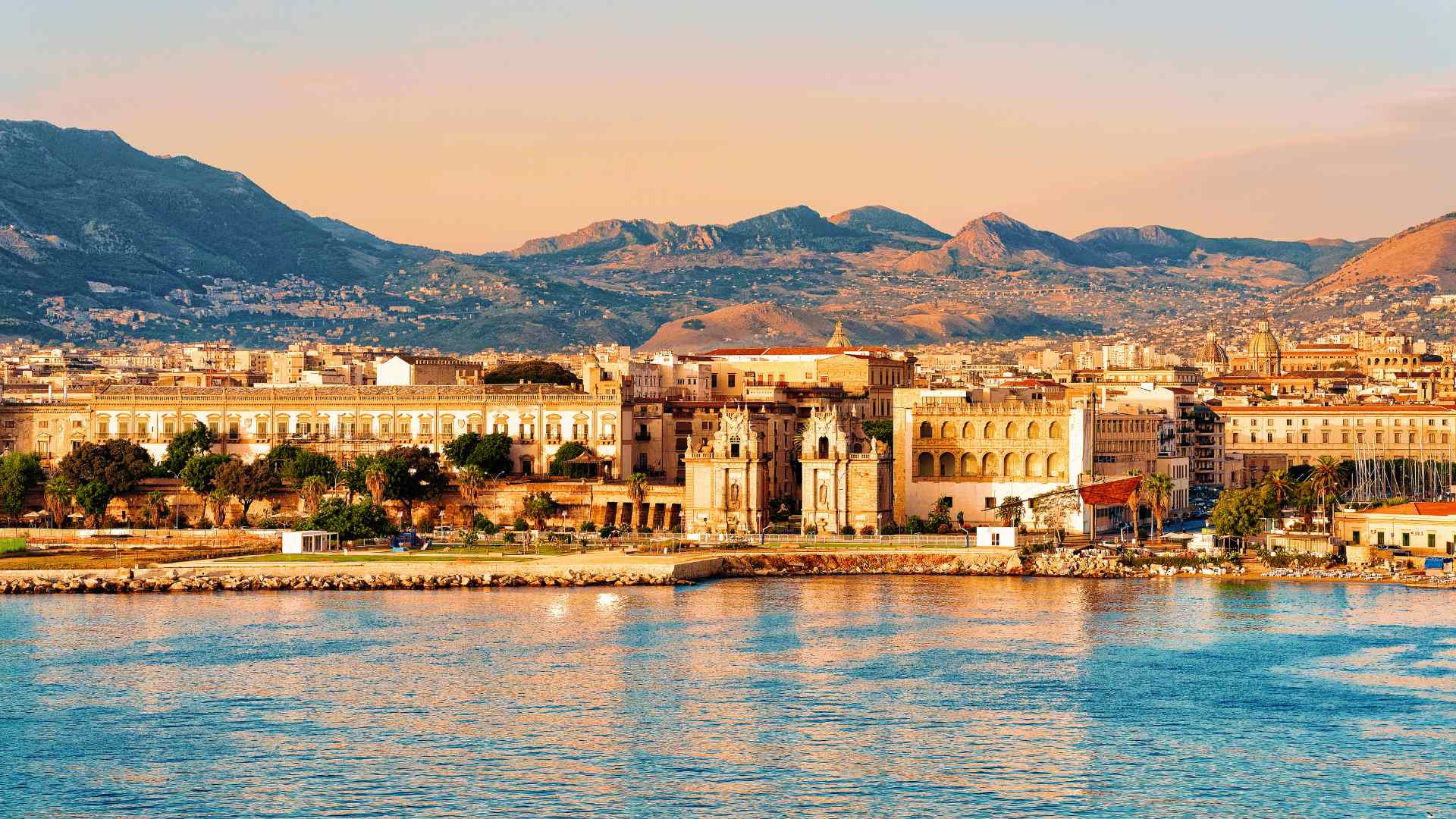
Do not treat the gangway as the same point as the city sidewalk. The secure pier, terminal route, and port gate add distance, so ask about shuttles or assistance when walking capacity is limited.
Take a photo of the ship’s terminal information before leaving. Taxi drivers need the port or terminal name, and saying cruise ship may not be precise when several vessels are in harbor.
The smartest way to move around
Walking is the best way to understand Palermo’s center because many major sights sit along or near a route between Teatro Massimo, the historic markets, Quattro Canti, Piazza Pretoria, the cathedral, and the Norman Palace. Traffic and parking make a private car less useful for hopping between closely spaced old-city stops.
The walking is urban rather than polished. Expect cracked or uneven paving, curbs, scooters, busy crossings, construction, market clutter, and stretches with little shade.
Palermo’s AMAT operates local public transportation, but routes, stops, and ticket rules should be checked near the visit. A bus can help with a longer leg, yet it should not be the only return option if the sailing deadline is close.
Taxis are useful for Monreale, mobility support, or a time-sensitive transfer. Use an official rank or a reputable booking method, agree on the fare structure, and confirm whether waiting or a scheduled pickup is included.
Why Palermo looks unlike anywhere else
Palermo’s great pleasure is the way cultures and centuries remain visible at the same intersection. Arab, Norman, Byzantine, Gothic, Spanish, Baroque, and modern Sicily do not line up neatly, which makes the city feel alive rather than curated.
The UNESCO World Heritage Centre describes Arab-Norman Palermo and the cathedral churches of Cefalù and Monreale as a group of nine religious and civic structures. Together they express the interchange of Western, Islamic, and Byzantine traditions under the Norman kingdom.
The Palermo components include the Royal Palace and Palatine Chapel, Zisa Palace, Palermo Cathedral, San Giovanni degli Eremiti, Santa Maria dell’Ammiraglio, San Cataldo, and the Admiral’s Bridge. You cannot visit them all well during one cruise call, and trying would flatten an extraordinary story into a checklist.
Teatro Massimo and the northern center
Teatro Massimo is a natural first landmark for travelers walking from the port. Its monumental exterior opens the route toward Via Maqueda, the Capo market, and the old city’s dense network of lanes.
Check the theater’s official schedule if an interior tour matters. Performances, rehearsals, private events, and guided-visit times can change access, so the exterior should remain an acceptable backup.
The nearby Capo market is strongest when you treat it as a working food district rather than a staged attraction. Move slowly, keep out of vendors’ work paths, ask before photographing people, and choose food from a busy stall with clear turnover.
Quattro Canti, Piazza Pretoria, and the Martorana
Quattro Canti is the theatrical hinge of central Palermo, where the city’s main historic axes meet beneath curving Baroque facades. It is easy to pass through quickly, but the changing light and street activity deserve a pause.
Piazza Pretoria sits nearby with its elaborate fountain, while Piazza Bellini gathers two very different Arab-Norman churches. Santa Maria dell’Ammiraglio, widely called the Martorana, is celebrated for mosaics, and San Cataldo is instantly recognizable by its red domes.
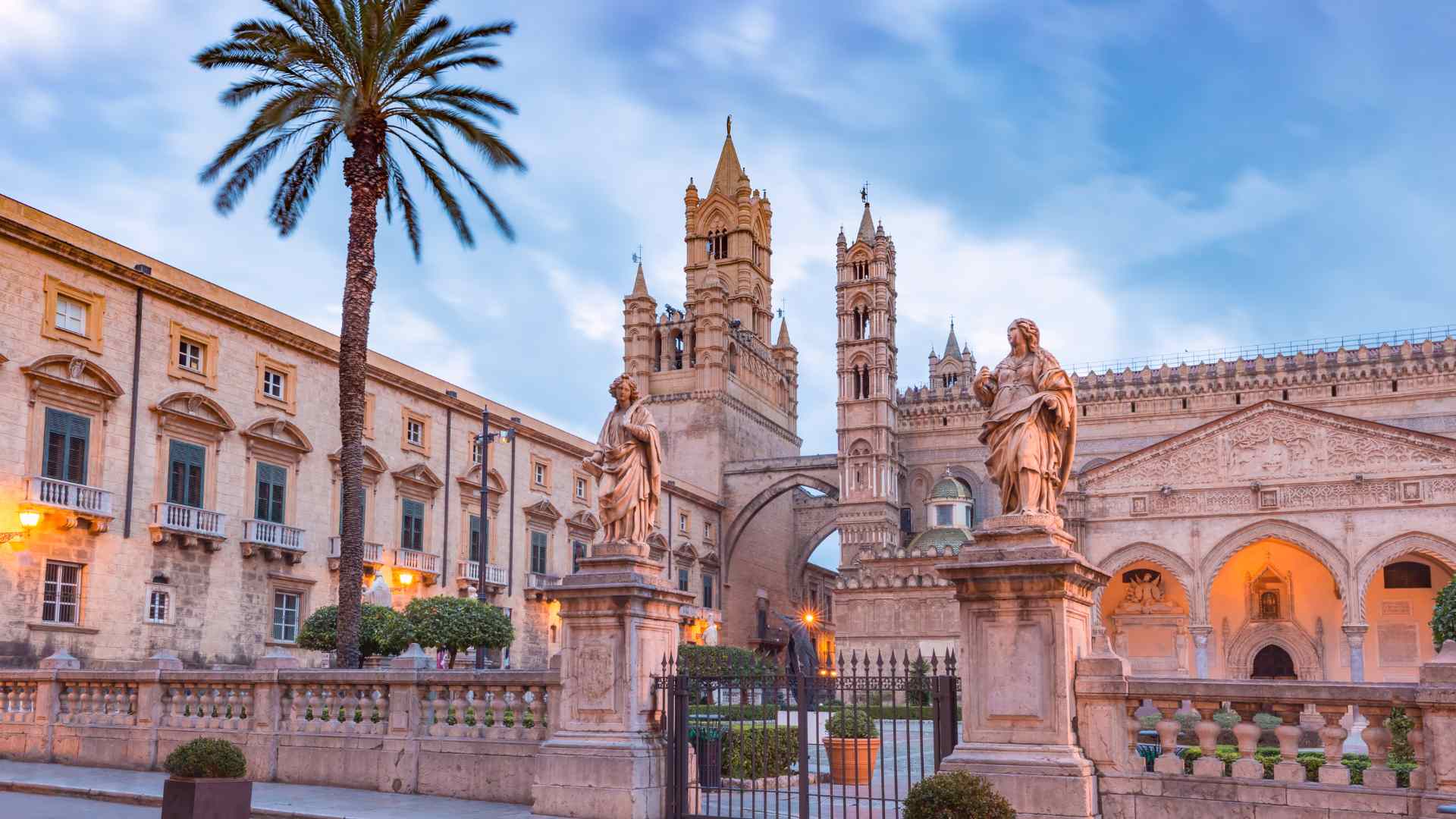
These are active religious and heritage sites, not interchangeable museum rooms. Verify opening times, dress respectfully, follow service restrictions, and keep a second nearby church in mind if one is closed.
A small fee can apply at individual interiors, and combined tickets may change. Use official onsite information rather than assuming a pass mentioned in an older guide remains valid.
Palermo Cathedral
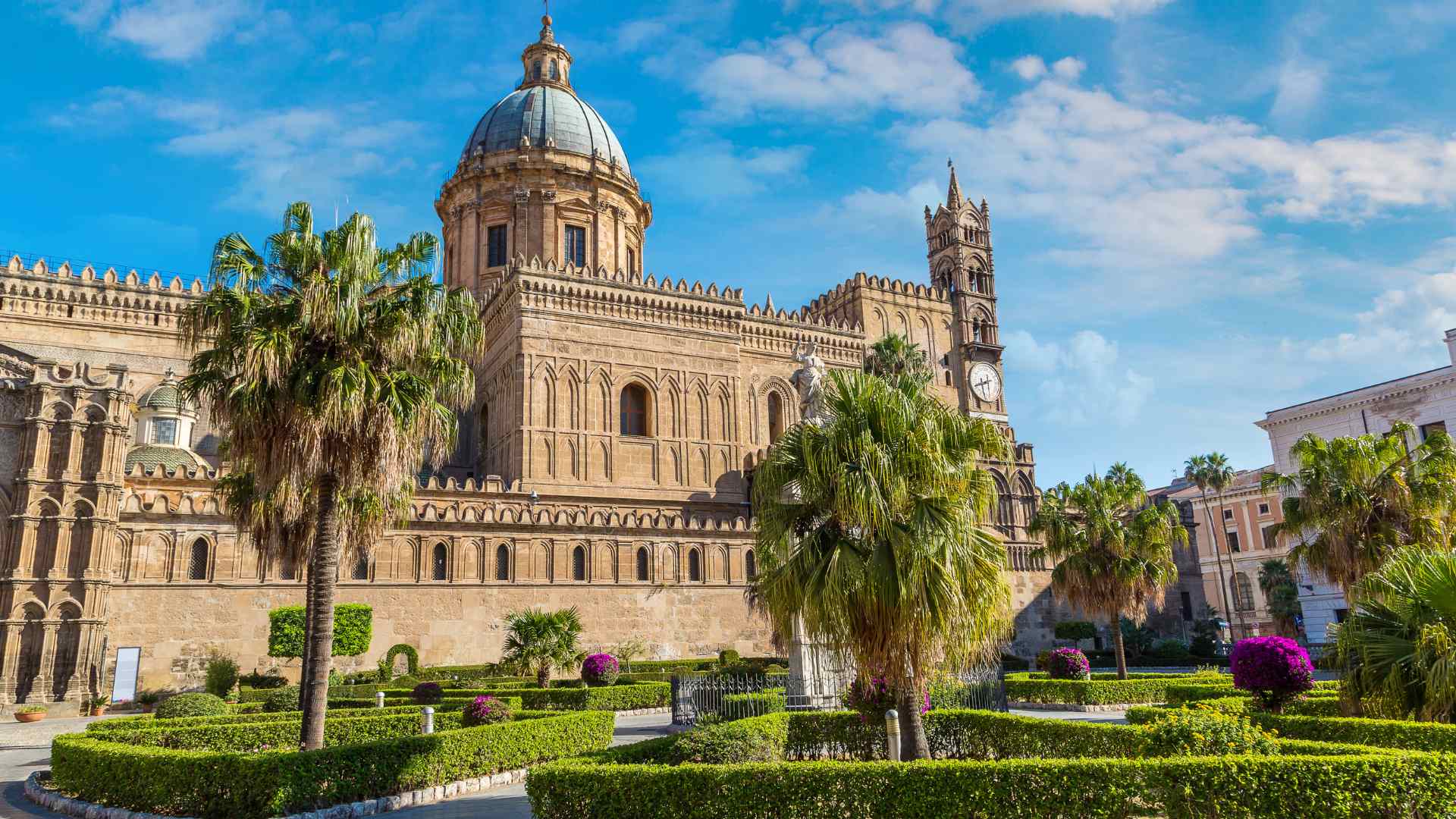
Palermo Cathedral wears its history on the outside, with towers, arches, domes, additions, and restorations stretching across centuries. The exterior and landscaped piazza are worth time even if a service or ticket line limits the interior.
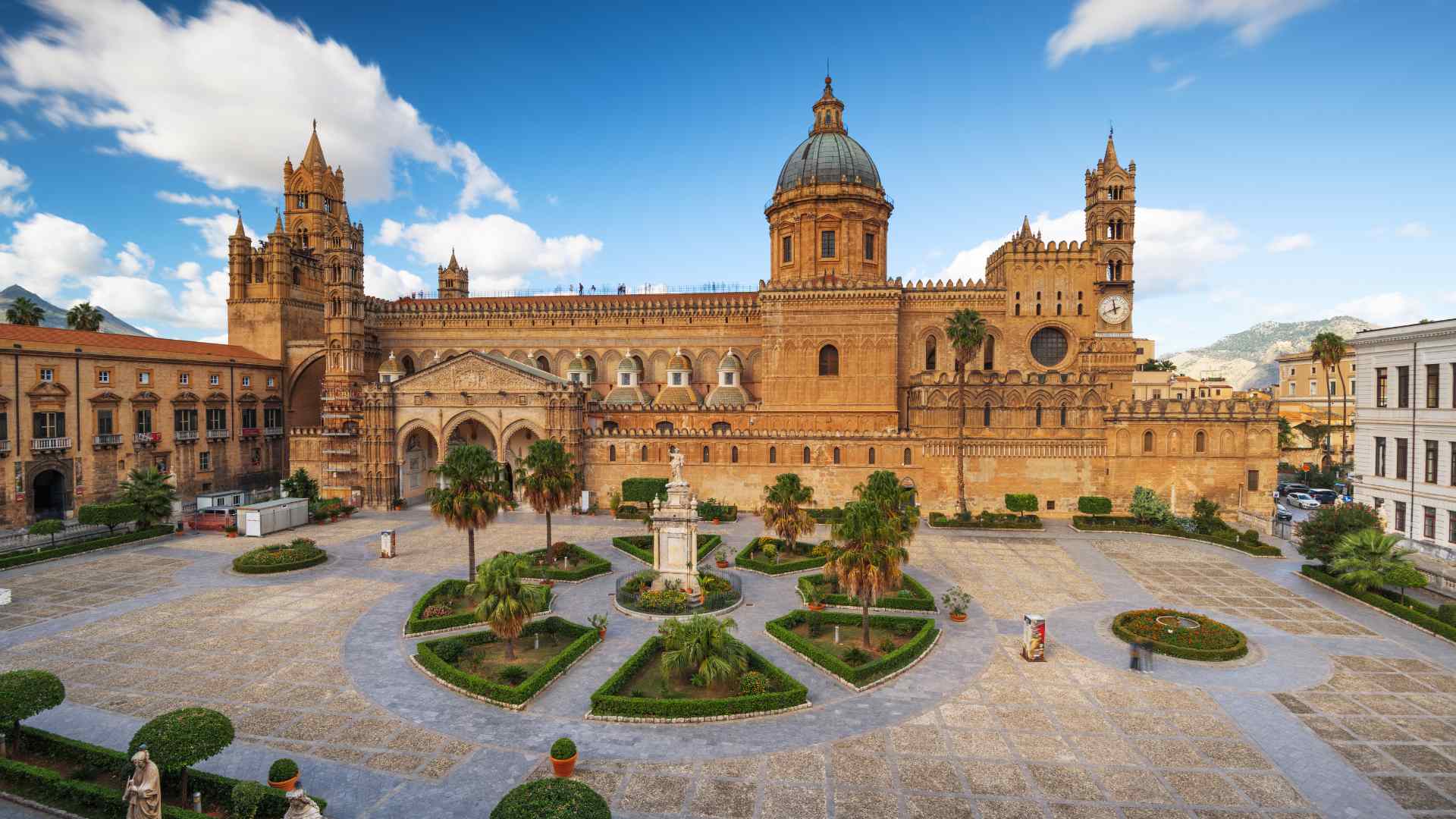
Different parts of the cathedral complex can have separate access rules and tickets. Check current information for royal tombs, treasury areas, crypts, or roof access rather than assuming one admission includes everything.
The roof experience involves height and stairs and is not necessary to appreciate the building. Travelers with limited mobility should prioritize the level areas that are comfortably accessible and ask staff about the current route.
Norman Palace and Palatine Chapel
The Palatine Chapel is Palermo’s essential interior for many art and history travelers. Gold mosaics, carved and painted surfaces, architecture, and courtly history create a concentrated expression of the cultural synthesis UNESCO recognizes.
The chapel sits within the Norman Palace, which remains an important institutional building. Official functions, parliamentary activity, security, ticket slots, and temporary closures can affect what visitors see.
Reserve or verify admission through the authorized site when this is your priority. Arrive with identification if required and allow time for security without booking the next church immediately afterward.
The palace is farther inland than the first old-city sights, which makes it a logical turnaround point for a walking route. From there, return through a different street or use a taxi when heat or fatigue has changed the plan.
Palermo’s markets
Ballarò, Capo, and Vucciria have different rhythms, and none is improved by trying to race through all three. Choose the market that fits your route and visit while the type of activity you want is actually happening.
Ballarò is a broad, energetic market district east of the central spine, while Capo fits neatly near Teatro Massimo and the cathedral route. Vucciria’s identity has shifted over time and can feel more like a food and nightlife area than the traditional daytime market imagined by older guidebooks.
Street food can be one of the day’s great pleasures, but ask what you are ordering if ingredients matter. Panelle, arancine, sfincione, seafood, offal specialties, granita, and cannoli offer very different versions of Sicily.
Watch belongings in close crowds and step aside before studying a map or phone. Ordinary urban awareness is enough for most visitors, but a busy aisle is not the place to leave a bag open.
Should you go to Monreale?
Monreale Cathedral is the strongest reason to leave central Palermo. Its mosaic interior and cloister belong to the same UNESCO serial property, and the hill setting adds a broad view over the Conca d’Oro toward the city and sea.
The decision is about time, not merit. Reaching Monreale involves traffic, a hill transfer, walking between the drop-off and cathedral, current admission procedures, and the return to Palermo.
A taxi, private driver, ship excursion, or current public transportation may work. For a cruise day, I prefer transportation that provides a confirmed pickup and enough waiting time to see the cathedral without watching the clock every minute.
Public bus details change, and the city and regional networks can be confusing to occasional visitors. Verify the operator, stop, ticket, frequency, and Sunday or holiday schedule before choosing this as your only return route.
Add Monreale on a long call when mosaics are the priority and your group can manage the walking. Skip it on a short day, after a late arrival, or when Palermo’s palace, markets, and churches already fill the available hours.
Three Palermo plans that do not feel rushed
The first-time city walk
Walk toward Teatro Massimo, pass through Capo or another chosen market, continue to Palermo Cathedral, and reserve the Palatine Chapel if it matters most. Return through Quattro Canti and Piazza Bellini with time for lunch or pastry.
This route gives you food, street life, major architecture, and one golden interior without leaving the city. Drop the farthest stop if heat, closures, or walking pace begin to compress the return.
The mosaic day
Arrange an early transfer to Monreale, visit the cathedral and cloister according to current access, then return to Palermo. Choose either the Palatine Chapel or the Martorana afterward rather than attempting every mosaic interior.
Keep lunch simple and near the later route. Monreale traffic or ticket delays should reduce the Palermo add-on, not the ship-return margin.
The food and atmosphere day
Choose one market, one church interior, one long meal, and a slow walk through the central piazzas. This plan is ideal for repeat visitors or anyone who wants Palermo as a living city rather than a monument collection.
Accessibility and low-walking planning
Palermo’s short map distances can hide difficult surfaces, curbs, traffic, steps, and limited shade. A port shuttle or taxi to the first major stop can preserve energy for the interior that matters most.
Historic churches may provide partial access while roofs, crypts, chapels, or cloisters remain more difficult. Contact priority sites directly and ask about the entrance, ramp, elevator, restroom, seating, and route for the traveler’s exact mobility device.
Monreale requires separate scrutiny because the vehicle drop-off may not be at the cathedral door. Ask about the remaining gradient, paving, steps, and how the return pickup works.
An accessible van should be booked early with the device’s dimensions, weight, and seating needs. Do not assume a standard taxi or tour coach can accommodate a full-size scooter.
Weather, dress, and timing
Summer Palermo can be hot, bright, and humid, which makes the old-city route feel longer. Start with the most important interior, carry water, use sun protection, and schedule a seated break before the hottest part of the day.
Church dress rules generally require covered shoulders and appropriate clothing. Carrying a light layer is easier than losing time to an argument at the entrance.
Rain changes market footing and makes polished or uneven stone slippery. Keep one indoor alternative and avoid committing the entire day to a route that cannot be shortened.
Work backward from all aboard and be near the port well before the hard deadline. Palermo traffic can slow a Monreale transfer even when the distance looks modest.
My final recommendation
For a first visit, stay in Palermo and give the city room to surprise you. Choose the Palatine Chapel or another major interior, walk through one market, see the cathedral and central piazzas, and eat something memorable.
Add Monreale when the cruise call is long and mosaics matter more than covering Palermo broadly. Arrange transportation before leaving the ship, protect the return, and resist pairing it with every famous stop in town.
Palermo is best when the route has structure but the clock has breathing room. The traffic, voices, domes, fried snacks, worn stone, and flashes of gold are not interruptions to the destination, because they are the destination.
How this guide was researched
This guide was checked in September 2026 against current information from the Western Sicilian Sea Port Authority, UNESCO, AMAT Palermo, and the City of Palermo tourism portal. Berths, church hours, tickets, public transportation, traffic, access, and dress rules can change, so confirm details for your sailing and read our Editorial Policy for sourcing and corrections.