New Zealand Cruise Ports: A Guide to Every Main Stop
New Zealand cruise planning comes down to three patterns: central berths, industrial ports with shuttles, and weather-sensitive tender calls. Use this guide to compare the main stops, then open the port-specific guide before booking a distant excursion.
North Island ports emphasize cities, Māori culture, and geothermal country, while South Island calls add wine, wildlife, and fiords. A good itinerary mixes long inland days with easier local ports.
The main season runs from roughly October through April, with longer summer days but no guarantee of calm weather. Most itineraries connect with Australia and can cross different entry and biosecurity systems.
New Zealand uses the New Zealand dollar, cards are widely accepted, and road travel is on the left. Safety is generally manageable, but distance, strong ultraviolet exposure, wind, and rapidly changing alpine or marine weather deserve planning.
Berth type changes the day: Bay of Islands, Akaroa, and Stewart Island commonly tender, while several docked ports still prohibit walking through the commercial area. Fiordland is scenic cruising with no shore landing.
Quick Facts
- Main cruise season: Most calls fall between October and April, with the largest concentration in the Southern Hemisphere summer.
- Currency and language: New Zealand dollars and English are used nationwide, while te reo Māori is also an official language.
- Road rules: Traffic keeps left, so look both ways carefully and use prearranged transport for distant port-day drives.
- Dock and tender mix: Auckland and Tauranga have alongside berths, while Bay of Islands and Akaroa commonly use tenders.
- Entry documents: Most travelers need either the correct visa or an NZeTA according to passport and circumstances, so check Immigration New Zealand before sailing.
- Operational caution: Wind, swell, visibility, commercial-port rules, and biosecurity processing can change the timing or shape of a call.
Auckland, the City of Sails
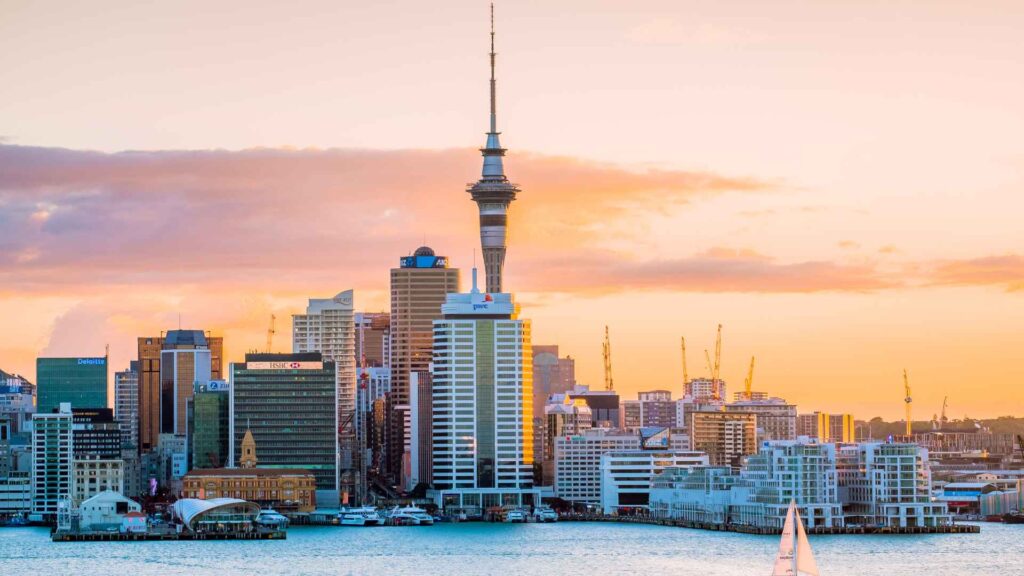
Auckland is the country’s main cruise hub and usually the port where voyages start or end. Ships berth right downtown at Queens Wharf or Princes Wharf.
That central berth is the big draw: you step off and you are already in the city, no shuttle needed, per the Port of Auckland. The Sky Tower, Viaduct Harbour and the ferry to Waiheke Island’s vineyards are all close.
My quick read: the easiest NZ port to do on your own, and a good one to arrive a day early for.
Bay of Islands, a tender call up north
Ships anchor in the Bay of Islands and typically tender to Waitangi Wharf or another landing named by the cruise line. Build at least 60 to 90 minutes around the final tender, especially if a tour returns by road or boat.
Waitangi Treaty Grounds is the essential history stop, while Paihia and Russell suit an easier independent day. Hole in the Rock trips add a second boat schedule and wildlife or sea conditions can alter the route.
My quick read: tender port, weather can affect it, best for cruisers who want the country’s origin story and blue-water scenery.
Tauranga, gateway to Rotorua and Hobbiton
Cruise ships berth beside Pilot Bay in Mount Maunganui, with the beach town close to the port exit. Rotorua and Hobbiton each take a substantial road transfer, so choose one and leave a two-hour port-return cushion.
Rotorua, about an hour away, delivers geothermal geysers and living Maori culture at places like Te Puia. The Hobbiton movie set near Matamata is the other big-ticket excursion.
My quick read: a docked port, but the best bits are inland, so pre-book a tour or transport and don’t dawdle at the pier.
Napier, the Art Deco town
Napier’s cruise berth sits inside a working port, so passengers normally use the authorized shuttle before walking the Art Deco center. Hawke’s Bay wineries require reserved transport and a sober driver.
Fun fact: that quick rebuild left Napier with one of the world’s most complete concentrations of 1930s Art Deco architecture, celebrated by Napier City Council. The compact center is easy on foot, and Hawke’s Bay wineries are close.
My quick read: a walkable, self-guided day for design lovers, with wine country as an easy add-on.
Wellington, the capital
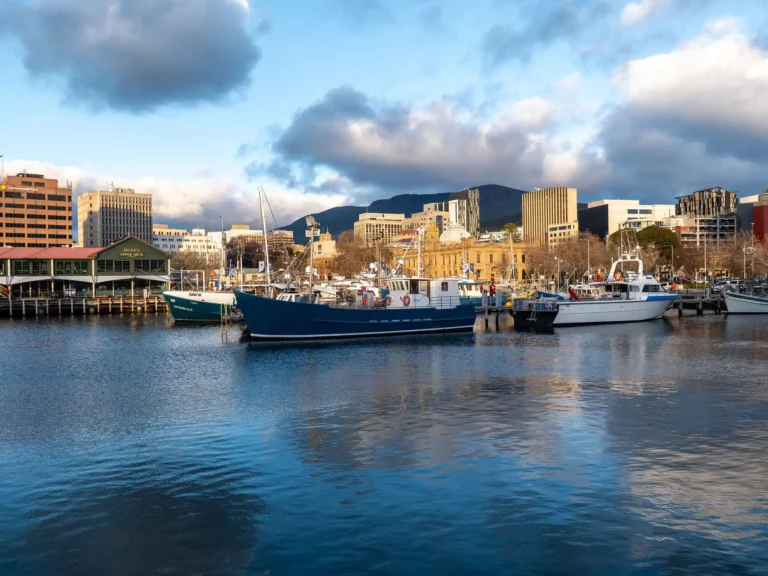
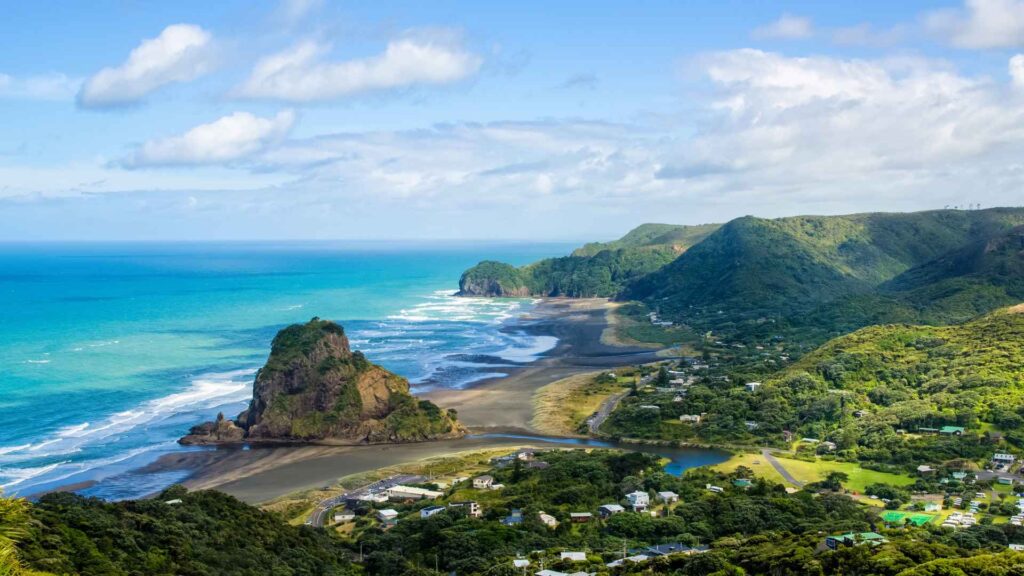
Wellington docks at CentrePort about 1 mile from downtown, and the ship determines whether guests walk or shuttle out. Taxis cannot collect or return passengers inside the port.
Te Papa is on the waterfront, but international visitors aged 16 and older currently pay NZ$35 while eligible New Zealand residents enter free. The cable car and compact downtown still make a strong independent day.
My quick read: museum, cable car and harbor walk make an easy on-foot day. Pack a layer, as Wellington earns its windy reputation.
Picton and Marlborough wine country
Ships use Port Marlborough facilities, and the assigned wharf determines whether guests walk or shuttle to Picton. Reserve wine, sound, or trail transport before arrival because each uses a different transfer chain.
Fun fact: nearby Marlborough is New Zealand’s largest wine region and the home of its world-famous Sauvignon Blanc, with cellar doors clustered around Blenheim. Boat trips and a stretch of the Queen Charlotte Track are the on-water options.
My quick read: a small, pretty port. Come for the Sounds and the wine, and arrange transport if tastings are the plan.
Christchurch, via Lyttelton or Akaroa
Most Christchurch cruise calls now berth at Lyttelton’s dedicated cruise facility, with ship or local transport connecting to Lyttelton and Christchurch. Walking through the operational port is not the sightseeing plan.
Smaller or specifically scheduled ships may anchor at Akaroa, where the landing point and tender time follow current harbor instructions. Christchurch is about 90 minutes away by road, making the village and harbor the lower-risk Akaroa choice.
My quick read: Lyttelton for the rebuilt garden city, Akaroa for harbor cruises and Hector’s dolphins. One docks, one tenders.
Dunedin, wildlife on the Otago Peninsula
Most ships dock at Port Chalmers, roughly 9 miles from central Dunedin, and use a shuttle, public bus, taxi, or tour. Peninsula wildlife trips need advance booking, with sightings never guaranteed.
Taiaroa Head supports the world’s only mainland breeding colony of northern royal albatross. Access, nesting activity, and viewing conditions vary, so use an authorized visit rather than promising a sighting.
My quick read: a docked port. Book wildlife tours ahead, and don’t miss the historic train station and the Octagon in town.
Fiordland, scenic cruising not a port
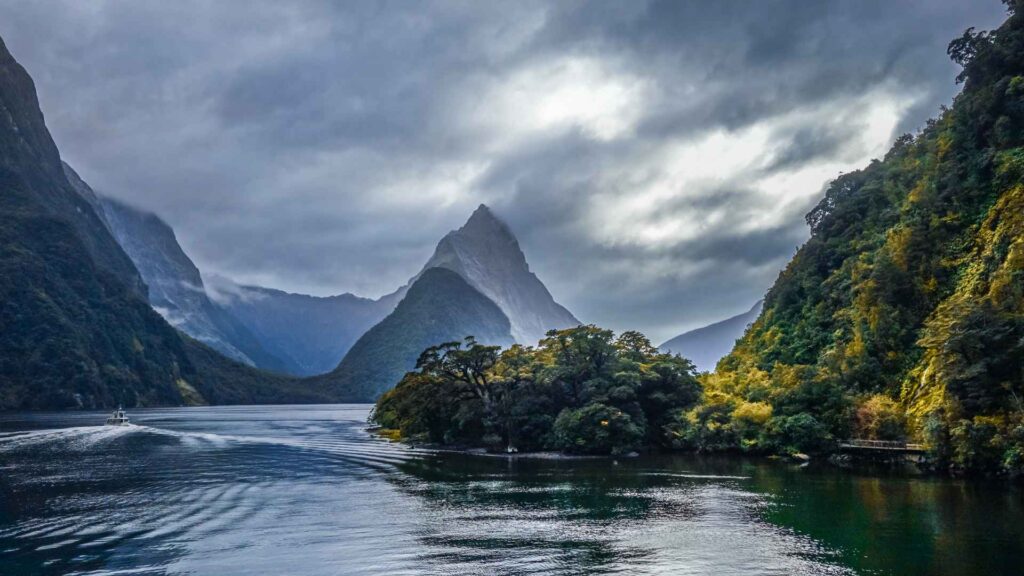
Fiordland is scenic cruising rather than a port call, so passengers remain aboard and the bridge team chooses a safe route. Schedule, visibility, and which sounds are entered can change with weather and maritime conditions.
Milford Sound, plus Doubtful and Dusky Sounds, sit inside Fiordland National Park. It forms part of the Te Wahipounamu UNESCO World Heritage area.
Rain creates temporary waterfalls and atmosphere in Fiordland, but strong wind or poor visibility can also restrict entry. Be on deck early with waterproof layers and follow the captain’s revised timing.
My quick read: the scenic highlight of most NZ cruises. Be on deck early, dress warm, and treat the timing as flexible.
How I’d plan a New Zealand cruise
Use port-day length, not the itinerary’s printed arrival and departure alone, because clearance, tendering, and shuttles reduce usable time. Alternate one major inland excursion with a local day to avoid building every call around a long road return.
Confirm terminal, tender, and shuttle instructions for every call shortly before sailing. Reserve Rotorua, Hobbiton, peninsula wildlife, wine, and water-taxi trips early, but choose refundable terms where weather can intervene.
Entry and biosecurity before the first port
Most cruise passengers need either the correct New Zealand visa or an NZeTA, depending on nationality and circumstances, while Australian citizens have a different exemption. Check Immigration New Zealand and allow at least 72 hours for an NZeTA request.
Everyone entering must complete the New Zealand Traveller Declaration, with sea travelers able to submit it from 24 hours before the ship leaves its last overseas port for New Zealand. Follow the cruise line’s process for repeat domestic calls.
Biosecurity officers can inspect food, plants, animal products, outdoor gear, and dirty footwear. Declare uncertain items and clean hiking shoes before arrival because undeclared risk goods can bring penalties.
Other itinerary calls
Gisborne and Stewart Island are usually tender-style calls, while Timaru, Nelson, New Plymouth, and Bluff use working-port arrangements that may require a shuttle. These less frequent stops reward local plans because transport inventory is thinner and long excursions have fewer backups.
Gisborne suits wine and East Coast culture, Timaru offers Caroline Bay and South Canterbury, Nelson opens to art and Abel Tasman, New Plymouth centers on Mount Taranaki and gardens, Bluff connects with Invercargill and the Catlins, and Stewart Island favors Oban and nature. Verify the exact landing and tour availability for the specific sailing.
Accessibility and return buffers
A docked label does not guarantee a step-free day because gangways, industrial shuttles, tour coaches, beaches, and heritage sites have separate barriers. Ask the cruise line and operator for exact transfer details rather than a general accessible rating.
Aim for the port 60 to 90 minutes before all-aboard after a local city day, about two hours after a distant road trip, and earlier when a tender or water taxi adds another link. Ship excursions provide the strongest schedule protection when the route has no practical backup.
Quick answers
When is New Zealand’s cruise season?
Roughly October to April, the Southern Hemisphere summer, with the busiest sailings over December to February.
Which ports tender rather than dock?
Bay of Islands and Akaroa are typically tender calls, while Auckland, Tauranga, Napier, Wellington, Picton and Dunedin usually dock. Always confirm with your line.
Is Milford Sound a port stop?
No. Fiordland is a scenic-cruising morning, so you stay aboard and watch the fiords from deck rather than going ashore.
How this guide was researched: Unless a first-hand visit is explicitly identified above, this guide is based on independent research using official port, tourism, transit, government, and attraction sources where available. Logistics and time-sensitive details were reviewed in September 2026; see our Editorial Policy.