River Cruise Embarkation After a Land Tour, Train or Bus: What Actually Happens
If your itinerary says you are “departing from a land tour, train/bus travel hotel,” there is no mystery port hiding on the map. It is a transfer label: your land stay or overland journey ends, and the real river-cruise embarkation happens next.
My quick take
This is one of those itinerary phrases that looks much more complicated than the day usually feels. If the land package and cruise were booked together, the cruise line normally tells you where to leave your luggage, when to meet, and how you are getting to the ship.
The part I would pay attention to is not the bus itself. It is whether your hotel stay, train segment, or land tour is operated by the cruise line or something you booked independently, because that determines who is responsible when a delay happens.
River cruises move berths far more often than ocean cruises move terminals, so I would never assume yesterday’s docking location is still correct. Your final transfer notice matters more than a map you saved three months ago.

The quick facts
- Where you land: At the line-assigned ship berth after a hotel, rail, motorcoach, or escorted land transfer.
- Dock or tender: Usually alongside at a river quay, though the exact berth can change close to embarkation.
- Into town: Not applicable in the usual sense because this is a transfer workflow rather than a standalone port call.
- Currency and language: Depends on the embarkation country and city.
- Time zone: Depends on the embarkation location.
- How often the call is missed: Not applicable: this label describes a transfer into the cruise rather than a scheduled sightseeing port.
Six answers to get before transfer day
- Who operates the transfer? Confirm whether the cruise line, a land-tour partner, your travel advisor, or you are responsible for reaching the ship.
- Where and when do you meet? Get the hotel lobby area, station exit, or other pickup point in writing, along with the time.
- What happens to checked luggage? Ask when to tag it, where to leave it, and whether it travels with your group or on a separate truck.
- What stays with you? Keep your passport, medication, money, phone, charger, valuables, and one useful layer in your day bag.
- Is lunch or sightseeing included? The answer tells you whether this is a direct ride or a full transfer-day program.
- How do you reach the ship in an emergency? Save the cruise line’s day-of-travel number and the ship or local contact offline.
What this itinerary wording actually means
That awkward phrase is an operational label rather than a destination. It bundles the end of a hotel or overland program with the transfer to the actual embarkation point.
The day may include hotel checkout, luggage collection, a motorcoach or rail segment, sightseeing, and finally boarding the ship. Your cruise documents should name the real meeting place and transfer operator, and those instructions outrank the wording in an itinerary database.
AmaWaterways’ current land-package information, for example, says its Cruise Manager continues with guests on land and coordinates details including transfers and luggage. Other lines and third-party tour operators structure extensions differently, so check what your own booking actually includes.
If you booked the hotel independently, do not assume the cruise line will pick you up there. Your documents may instead tell you to meet at an official hotel, central meeting point, train station, airport, or directly at the ship.
This is one reason river cruising feels different from an ocean embarkation day. My river cruise vs. ocean cruise guide covers the bigger differences, but the short version is that river operations are much more flexible and much less terminal-driven.
The hotel morning is usually the easy part
On a cruise-line land package, the hotel lobby often becomes your temporary cruise terminal. Expect written or app-based instructions for the meeting time, luggage collection, and pickup point, but ask the host if any piece is missing.
I would read that notice twice and take a photo of it. Pickup times can be earlier than you expect because the line may be moving several motorcoach groups, fitting in a sightseeing stop, or waiting for the ship to clear its previous guests.
Do not put your passport, medication, phone charger, wallet, or anything you need during the day inside the suitcase that disappears downstairs. Once the luggage truck leaves, you may not see that bag again until it is outside your cabin.
Hotel checkout can happen hours before cabins are ready. That gap may include lunch, sightseeing, or a scenic transfer, so confirm the day’s inclusions before assuming you will board immediately.
If you are extending the trip independently, ask the hotel to hold your luggage rather than dragging it around town. Most full-service hotels are accustomed to storing bags for guests after checkout, though policies vary.
When a train is part of the transfer

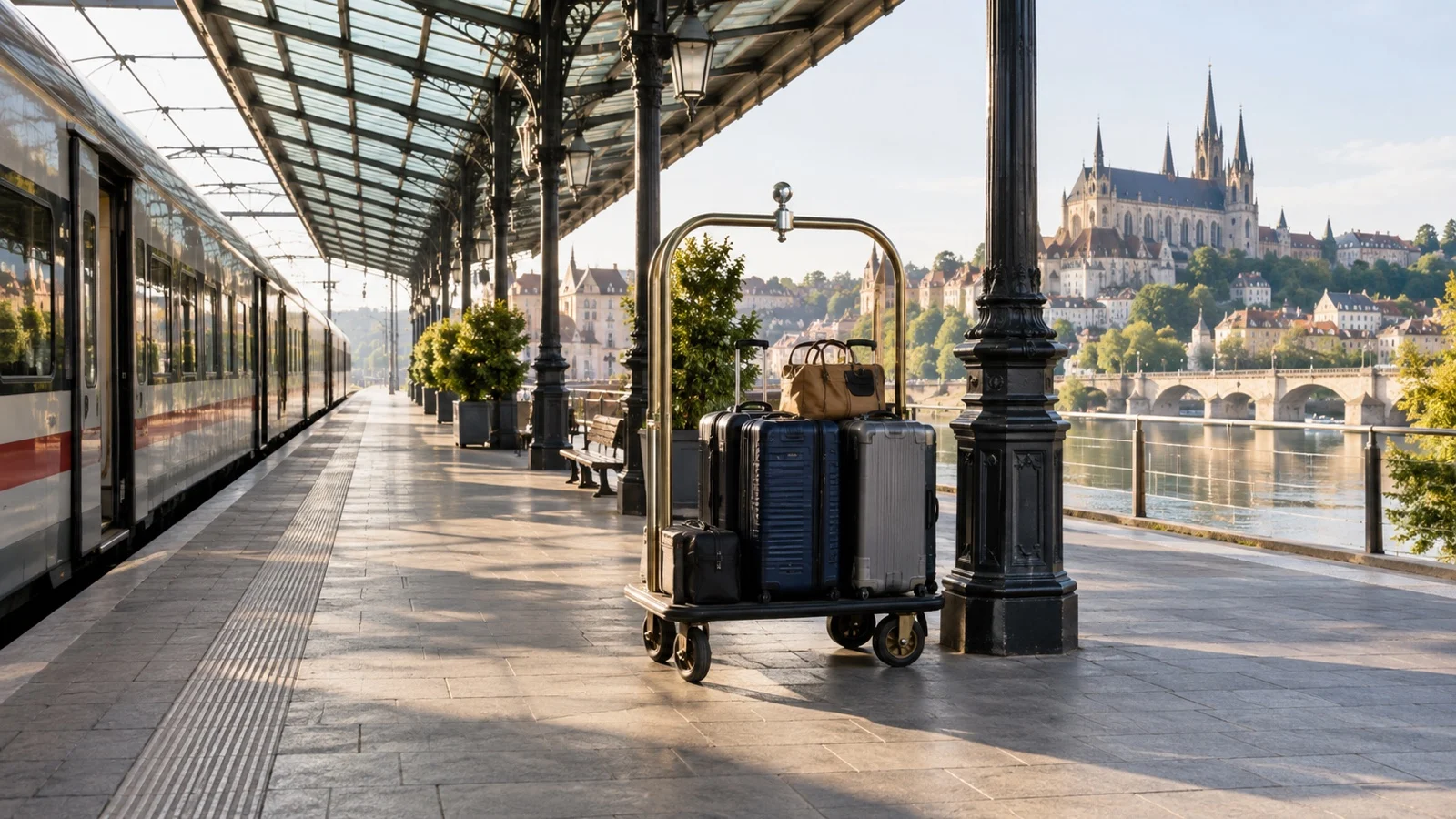
A train segment can be either wonderfully easy or the one piece I would prepare for more carefully. European stations are efficient, but platforms can change, elevators can be out of service, and a two-minute connection feels very different when you have a 45-pound suitcase.
If the cruise line escorts the train journey, follow the luggage instructions rather than improvising. Some programs move larger luggage separately while guests travel with a day bag, which is far easier than wrestling everything through a station.
If you are traveling independently to embarkation, I would build a generous buffer. A river ship can sometimes wait for a delayed line-operated group, but it has no obligation to wait for an independently booked train.
For an independent European rail trip, use the national train operator for the current schedule, platform information, reservations, and disruptions. The European Union’s rail passenger-rights guide explains delay and cancellation protections, but those rights do not make the cruise ship wait for you.
Keep in mind that “train transfer” does not always mean the train pulls up beside the ship. You may still have a short motorcoach ride or taxi from the station to the berth.
When the bus ride is longer than expected
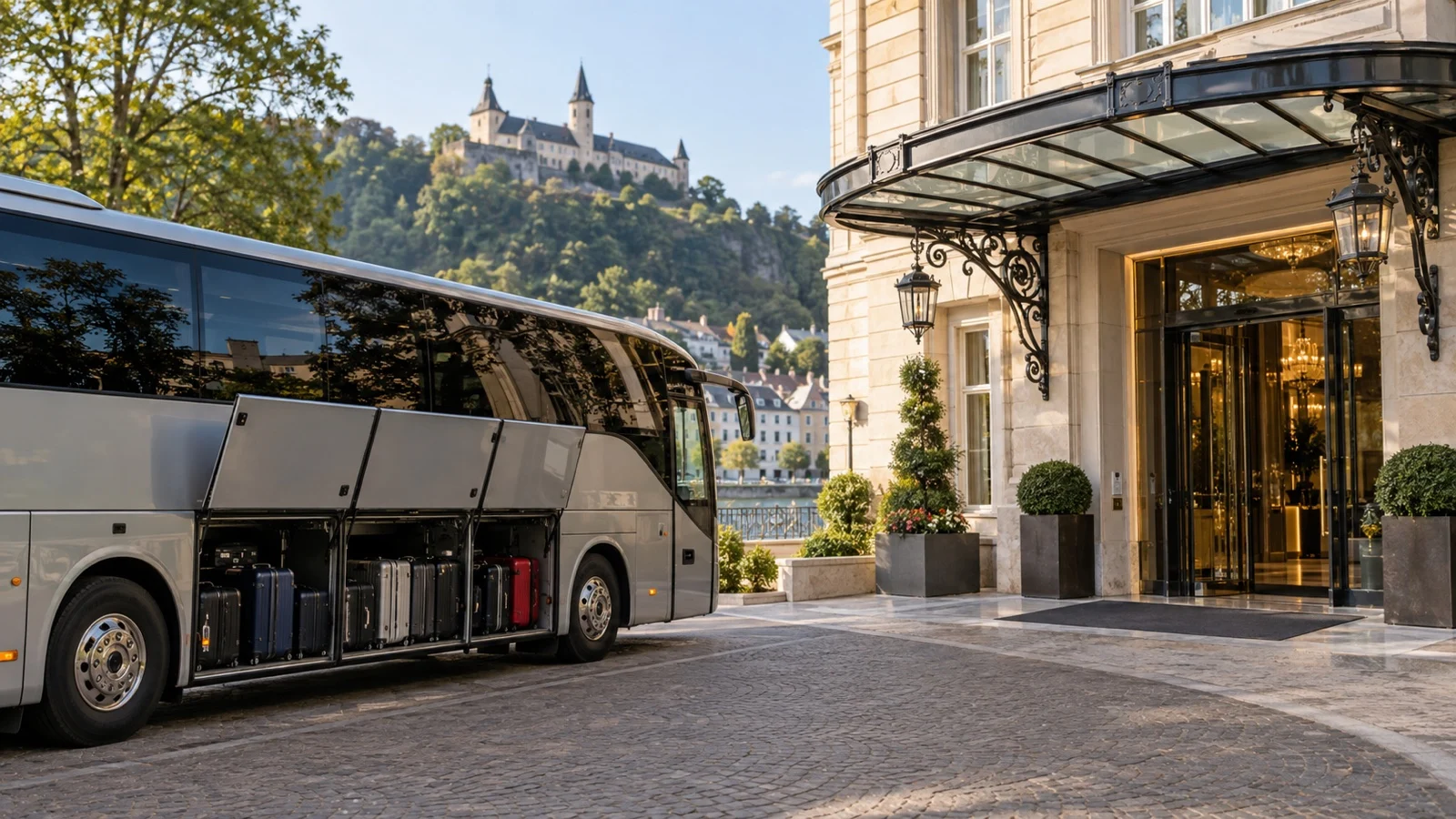
Motorcoach transfers are incredibly common because they solve several river-cruise problems at once. They move people and luggage together, they can follow a ship whose berth changed, and they allow the line to add sightseeing while cabins are being prepared.
The tradeoff is traffic. A transfer that looks like 90 minutes on a map can stretch when a highway closes, a city center is congested, or forty guests need a rest stop.
If the motorcoach is line-operated, the cruise team can track its own group and coordinate around a delay far more easily than it can track an independent taxi. I would still read the transfer terms rather than treating “the ship will wait” as an unlimited promise.
Bring water, a snack, and anything you need for several hours. Even a comfortable motorcoach becomes much less comfortable when your sweater, medication, and charging cable are all inside a suitcase in the luggage hold.
This is also why I would not schedule a nonrefundable private tour during the first afternoon unless the cruise line clearly promises free time. Transfer-day itineraries have too many moving parts.
Why the ship berth may change at the last minute
Ocean cruisers are trained to think in terminal numbers. River cruisers need to think in confirmed same-day instructions, because a ship can move to another quay for water levels, traffic, port authority decisions, rafting space, or a schedule change.
The move might be tiny, such as another berth along the same waterfront, or significant enough that the motorcoach goes to a nearby town instead. This is normal river-cruise operations rather than evidence that something has gone wrong.
Low water is the bigger wildcard on some rivers. My river cruise water levels guide explains how lines may swap ships, use motorcoaches, or change embarkation points when the river is not cooperating.
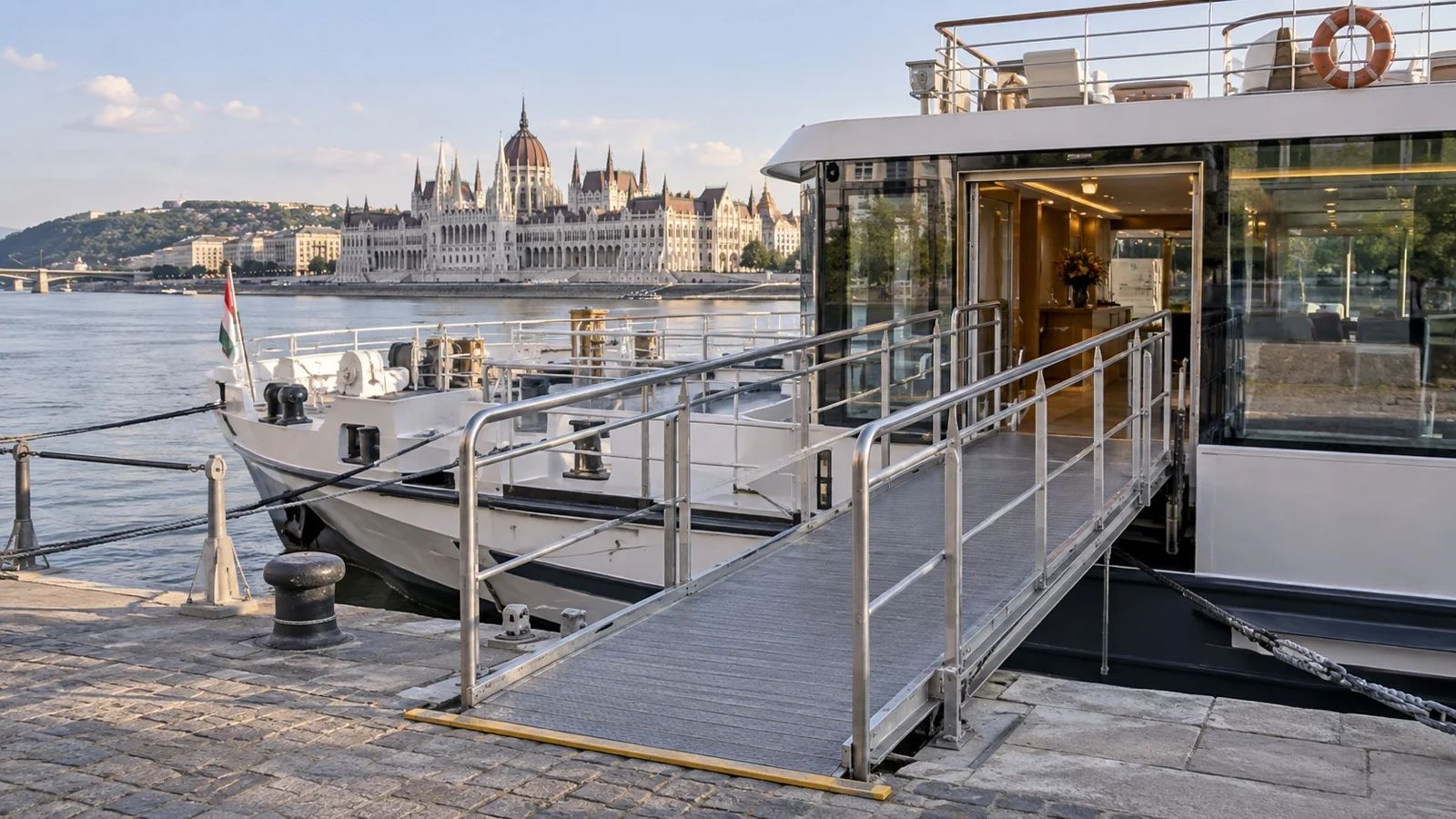
Rafting is another surprise for first-timers. A ship may dock alongside another ship, meaning you walk through one or more neighboring vessels to reach the shore, which I explain in my river cruise double-docking guide.
That flexibility is exactly why I would use the line’s transfer if it is already included. The driver and cruise manager get the berth update directly, while an independent traveler has to chase it down.
What I would do if the land package is independent
If you booked your own hotel or land tour, the responsibility shifts to you. I would get the ship’s same-day berth from the cruise line, confirm it again that morning, and leave more travel time than the map says you need.
Do not ask the hotel concierge for the ship location and assume the answer is final. The concierge can arrange transportation, but the cruise line is the authority on where its ship is actually waiting.
I would also keep the cruise line’s emergency number offline on my phone. If a train is canceled or traffic completely stops, calling early gives the line far more options than arriving at an empty quay after departure.
Travel insurance matters more when you build the pieces yourself, but the policy wording decides whether a missed train, traffic delay, or trip interruption is covered. Save receipts and contact the insurer promptly if a disruption forces you to change the plan.
If the cruise starts after several independent travel days, I would sleep in the embarkation region the night before. Saving one hotel night is not worth turning a rail strike or flight delay into a race for the ship.
Accessibility and luggage realities
The hardest part of these transfer days is often not distance but transitions. Hotel elevators, station platforms, motorcoach steps, cobblestones, gangways, and rafted ships can all appear in the same afternoon.
If you use a wheelchair, scooter, walker, or cannot climb motorcoach steps, tell the cruise line before final payment rather than at breakfast on transfer day. Vehicle and gangway arrangements can require advance planning.
My broader river cruise accessibility guide explains why river ships can be less straightforward than ocean ships for mobility equipment. The biggest issue is usually the changing shore infrastructure, not the cabin itself.
I would pack lighter than I would for a resort stay if the itinerary includes several hotels and trains. Every extra suitcase becomes another object that has to make the same handoff you do.
Keep one small bag that can stay with you all day. That bag should contain documents, medication, valuables, basic toiletries, a layer, water, and enough charging power to survive a delay.
How I would plan the day
The night before, I would photograph the transfer notice and set an alarm that leaves time for breakfast without rushing. I would also separate my day bag before the large suitcase gets tagged for collection.
In the morning, I would confirm the luggage collection time, meeting point, and whether lunch is included. Those three answers tell you almost everything you need to know about the practical shape of the day.
During the transfer, I would keep my expectations loose. The route may include sightseeing, the ship may not be ready exactly when you arrive, and the berth may change while you are still on the road.
Once aboard, I would unpack only after checking the daily program for the first briefing or dinner time. River cruises often start moving quickly, and you do not want to miss the safety talk because every shirt is suddenly on the bed.
If you are choosing a pre-cruise hotel yourself, my guides to Budapest river cruise hotels, Vienna river cruise hotels, and Basel river cruise hotels show how much easier embarkation becomes when you stay on the right side of town.
Quick answers
Is “land tour, train/bus travel hotel” an actual cruise port?
No. It is usually an itinerary database label for a hotel or overland transfer that leads to the real embarkation berth.
Will the cruise line move my luggage?
Usually yes on a line-operated land package, but confirm your specific program. Independently booked hotel stays may require you to manage luggage yourself.
Can the embarkation berth change?
Yes. River ships routinely change quays because of water levels, traffic, berth availability, or operational decisions.
Should I book my own train to the ship on embarkation day?
You can, but I would build a large buffer and avoid a tight same-day connection.
What should stay in my carry-on?
Passport, medication, valuables, phone, charger, water, a layer, and anything you cannot comfortably go several hours without.
The last word
On a properly organized land package, this awkward label usually describes a fairly simple handoff. You check out, follow the written meeting and luggage instructions, travel with the group, and board at the berth the operator confirms.
The plan becomes more fragile when the hotel, rail ticket, and transfer were booked independently. In that case, arrive in the embarkation region the night before, confirm the berth on the day, and build enough time to recover from one failed connection.
How this guide was researched: This guide uses current cruise-line land-package information, European Union rail passenger guidance, and independent transport planning sources. Sources were reviewed in September 2026 under our Editorial Policy.