Berlin River Cruise Port: Berths, Reichstag, Museum Island, and Transit
Berlin can be a thrilling river cruise call, but it is also a place where one vague word on an itinerary can cause a lot of confusion. A berth labeled Berlin might put you near the government quarter, elsewhere along the city’s waterways, or at a transfer point that requires local transportation.
The best plan begins with the exact pier name in your cruise documents. Once you know where the ship will stop, Berlin’s excellent transit network makes it possible to build a focused day around modern government, Museum Island, Cold War history, or one neighborhood.
Where River Cruise Ships Stop in Berlin
Berlin is crossed by the Spree and Havel rivers, canals, and lakes, with many landing places used by different kinds of passenger vessels. Do not assume that every multi-day cruise ship uses the same pier.
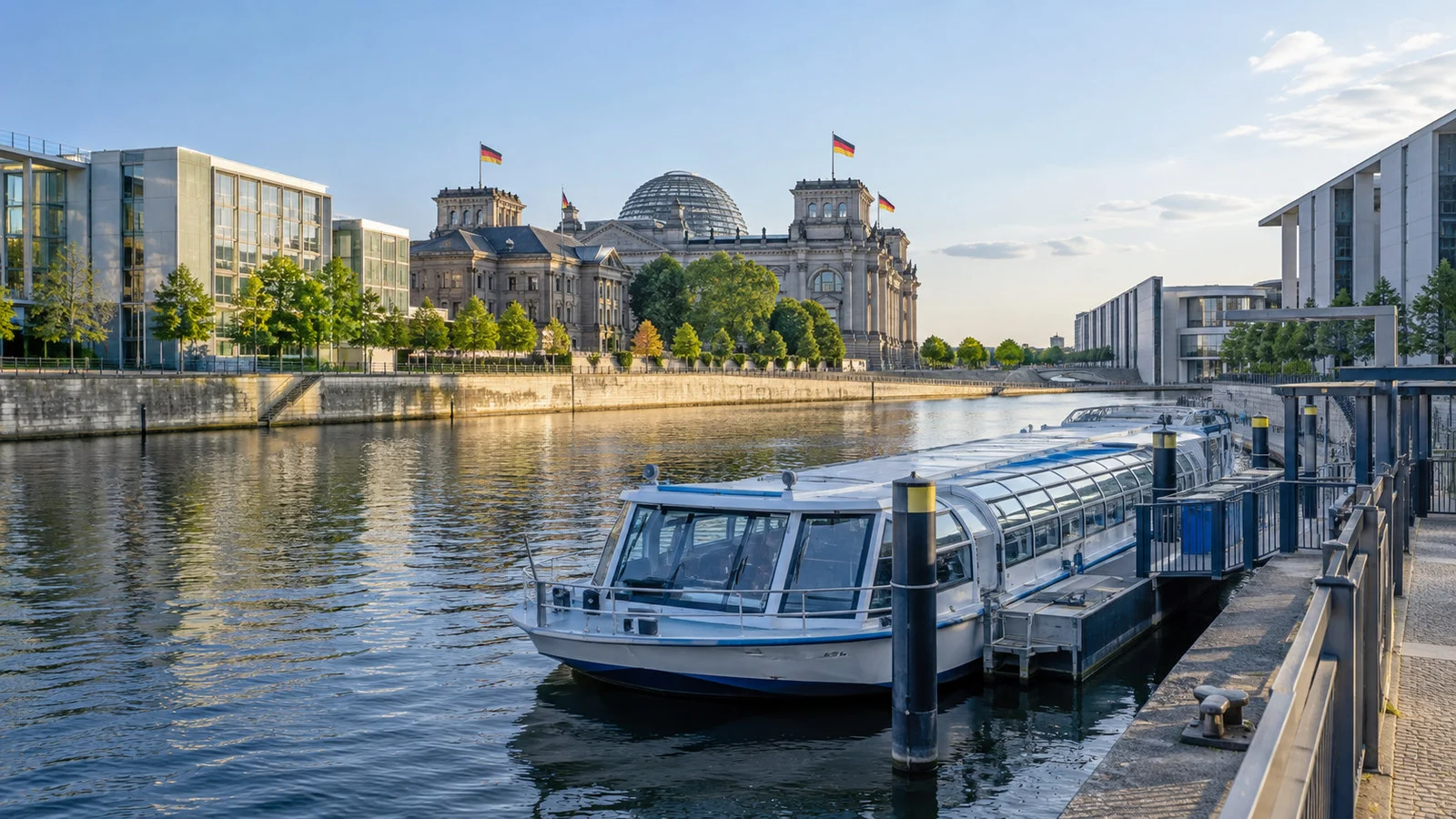
The official city guide lists Pier Hauptbahnhof as a very central departure point for river cruises and boat trips, south of the main railway station near Moltkebrücke. It is beside the government quarter, with the Chancellery, Paul Löbe House, and Reichstag close by.
That listing is useful for understanding the location, but it is not a guarantee that your particular vessel will stop there. Vessel size, bridge clearance, route, operating company, and local instructions can lead to a different Berlin berth.
Check the pier name, street address, and return point in the cruise line’s daily program before leaving the ship. If the itinerary provides only the word Berlin, ask the cruise director for the precise location and nearest transit stop.
Quick Facts
- Port style: Multiple city waterways and piers, with the exact berth set by the operator
- Most useful first step: Save the berth address and nearest transit station before going ashore
- Top nearby sights from Hauptbahnhof: Reichstag, government quarter, Brandenburg Gate, and Tiergarten
- Best museum area: Museum Island, with individual museums requiring separate planning
- Local transport: S-Bahn, U-Bahn, trams, buses, regional trains, and taxis
- Currency: Euro
- Language: German, with English common in major visitor settings
- Emergency numbers: 112 for ambulance and fire, 110 for police
- Return rule: Use the ship’s all aboard time, not an attraction closing time
If You Are Near Hauptbahnhof
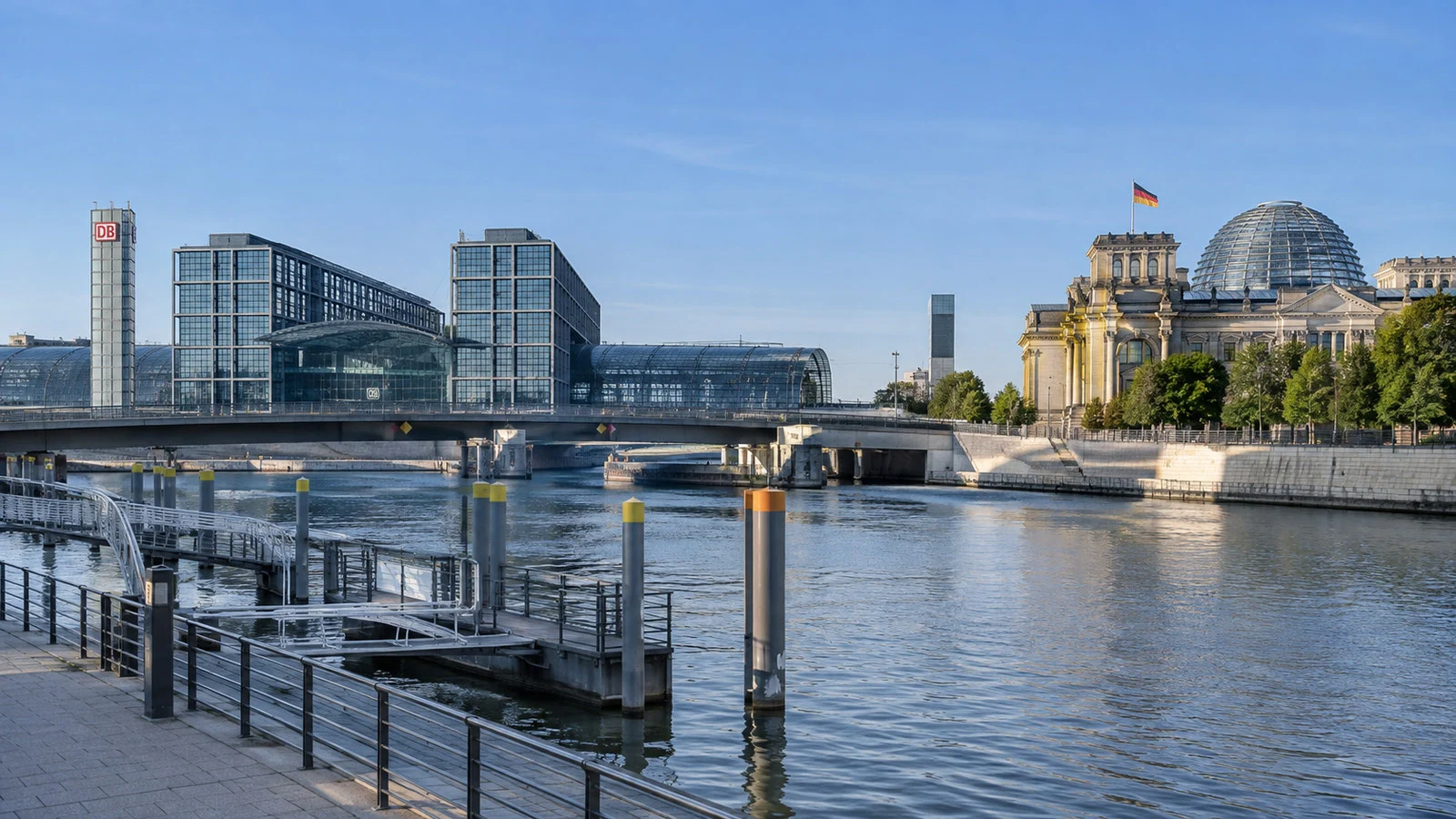
A Hauptbahnhof landing is wonderfully practical because the station and government quarter are close. The official pier page currently lists S-Bahn services, the U5, trams, buses, and regional trains within a short walk.
Start by crossing toward the Reichstag and the open spaces around Platz der Republik. From there, Brandenburg Gate and the Memorial to the Murdered Jews of Europe fit naturally into a compact walking route.
The Reichstag dome is free to visit, but the German Bundestag requires advance registration and identification details. Maintenance, parliamentary business, and security requirements can affect access, so confirm the latest rules before reserving your day around it.
If you did not register in advance, limited same-day registration may be available when spaces remain. It is not a reliable foundation for a short cruise call, so enjoy the exterior and government quarter rather than waiting on a possibility.
Using Berlin Public Transportation
Berlin’s network is the key to seeing more without wasting the day in traffic. The S-Bahn, U-Bahn, trams, and buses share an integrated fare system, but ticket zones and products should be checked at the time of travel.
Use the official BVG journey planner for live routes, elevator status, and service changes. A route that looks simple on a static map can become slower when construction or a station closure affects the connection.
Validate or activate the correct ticket before boarding when the fare rules require it. Inspectors work across the network, and a cruise badge does not replace a local transit ticket.
Save the ship’s berth as a pinned location rather than searching for a generic Berlin port on the return. If the stop is outside the center, also record the last practical train, tram, or bus connection that still leaves a generous buffer.
Museum Island in 2026
Museum Island is a UNESCO World Heritage ensemble in the historic center, but it is not one museum with one entrance. The Altes Museum, Neues Museum, Alte Nationalgalerie, and Bode Museum each have distinct collections, hours, ticket arrangements, and accessibility details.
The biggest planning correction is the Pergamonmuseum. Its main building is closed for major renovation during the 2026 cruise season, with a partial reopening announced for June 2027, so do not follow older advice telling you to queue there.
The separate Pergamonmuseum Panorama exhibition remains an option while the main building is closed. Check the Staatliche Museen zu Berlin website for current openings, tickets, and renovation updates.
For ancient Egypt and the bust of Nefertiti, the Neues Museum is the logical choice. For 19th-century painting and sculpture, look at the Alte Nationalgalerie, while the Bode Museum suits visitors interested in sculpture, Byzantine art, and coins.
Choose one major museum for a short call and reserve a timed ticket if the official booking system recommends it. Trying to sample every building usually creates more security lines than meaningful time with the collections.
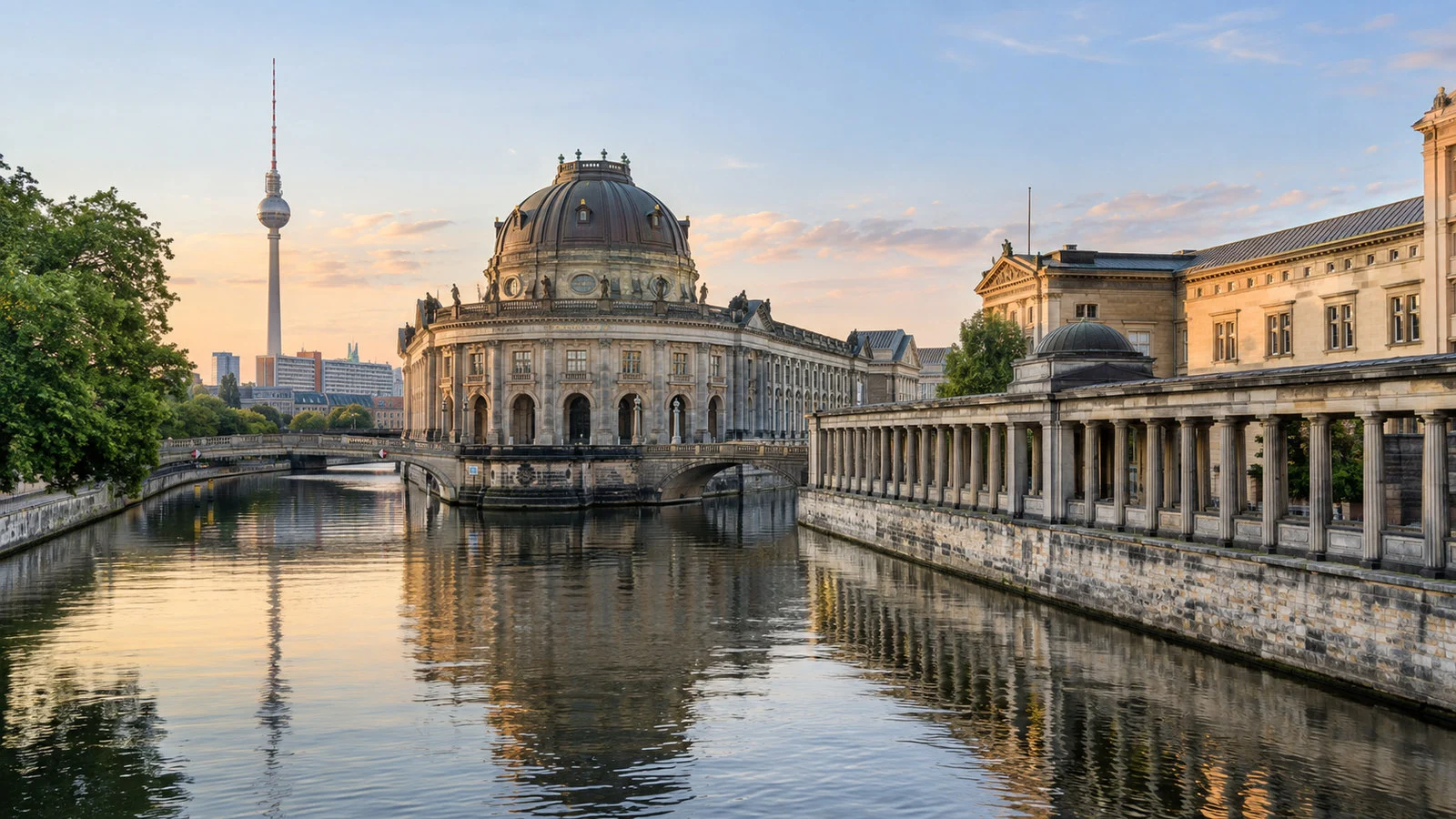
A Government Quarter and Museum Island Route
If you begin near Hauptbahnhof, walk through the government quarter to the Reichstag exterior and Brandenburg Gate. Continue east along Unter den Linden toward Museum Island, then visit one preselected museum.
This route gives you a readable cross section of Berlin, from federal government to the reconstructed historic center. Use the U5 or another live BVG route for the return instead of retracing every step on foot.
Allow extra time around museum entrances and the Reichstag security perimeter. Large events, demonstrations, and official motorcades can change pedestrian access even when the attractions remain open.
A Berlin Wall History Route
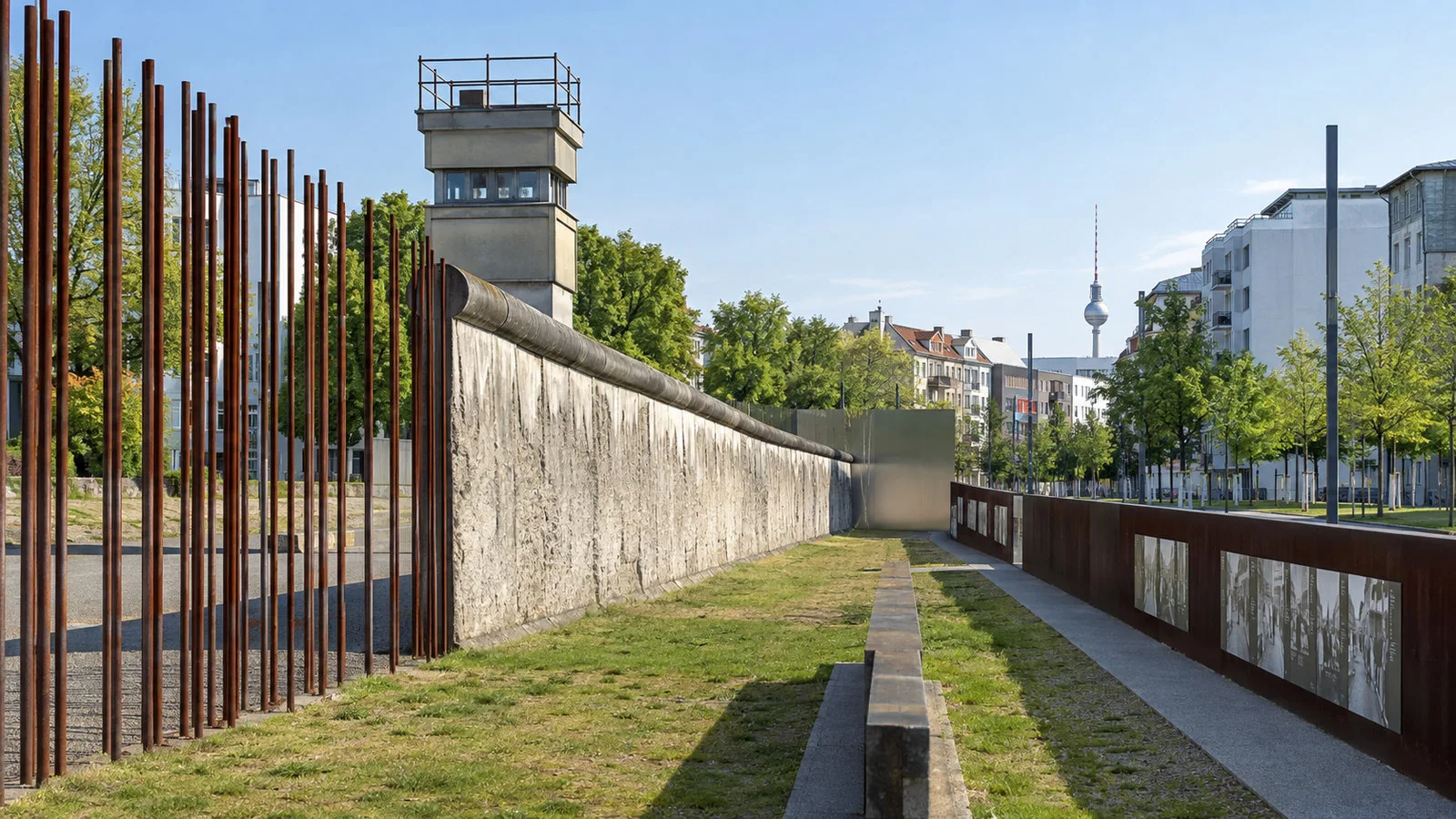
If recent history matters more than museum collections, make the Berlin Wall Memorial on Bernauer Strasse your anchor. The preserved border area, outdoor exhibition, documentation center, and viewing platform explain the divided city with far more context than a quick photo stop.
The Berlin Wall Foundation publishes current hours and confirms that admission to the memorial exhibitions is free. The outdoor grounds have broader access hours than the indoor visitor and documentation centers, so check the official page before setting out.
Nordbahnhof is the most useful nearby S-Bahn station, and the M10 tram also serves the area. This is a better use of a short day than racing between Bernauer Strasse, East Side Gallery, and Checkpoint Charlie simply to collect names.
Independent Day or Ship Excursion
Berlin works well independently when the berth is clearly identified and your plan uses one or two districts. Public transportation is extensive, major attractions publish English-language visitor information, and the center has many obvious landmarks.
A ship excursion earns its place when you want historical narration, have a distant berth, or prefer not to manage connections. It can also simplify the return when the vessel is using a location unfamiliar to local taxi drivers.
Do not assume that a ship excursion guarantees access to a sold-out museum or the Reichstag dome. Read the inclusions carefully and confirm whether the tour enters an attraction or only pauses outside.
Accessibility
Accessibility begins at the gangway, and that part is controlled by the vessel and berth rather than the city transit system. Ask the cruise line about steps, gradients, railings, gangway width, and assistance at the exact Berlin landing.
Hauptbahnhof has elevators between its multiple levels, but a working elevator today can still be out of service tomorrow. Check live BVG accessibility information and build a backup route before traveling with a wheelchair or limited mobility.
Many central sidewalks are broad, yet construction, cobblestones, curb work, and long station corridors add effort. The government quarter is generally easier underfoot than some historic streets around Museum Island.
Each museum publishes its own accessibility guidance, and not every entrance is the step-free entrance. Contact the selected venue in advance when lift dimensions, companion admission, seating, or accessible restrooms are essential.
Food, Payments, and Rest Stops
Berlin has abundant cafes, bakeries, casual restaurants, and station food halls. A simple lunch near your chosen attraction protects sightseeing time better than crossing the city for one famous address.
Cards are common, but a small amount of euro cash remains useful for occasional kiosks, markets, or payment disruptions. Keep valuables secure around busy platforms and ticket machines, just as you would in any major capital.
Public restrooms may require a small payment, and large stations are often the most predictable places to find facilities. Museums generally reserve restrooms for ticketed visitors after security screening.
Weather and What to Wear
Berlin weather can shift quickly between sun, wind, and rain, especially near the river. Bring a light waterproof layer and shoes that stay comfortable across pavement, station corridors, and museum floors.
Summer can be hot, and many outdoor routes offer less shade than expected around the government quarter. In colder months, the breeze along the Spree makes the temperature feel sharper, so dress in removable layers.
How Much Can You See?
Berlin is too large for a complete visit during one port call. A satisfying day usually combines one major theme with the sights naturally located around it.
For a short call near Hauptbahnhof, choose the government quarter and Brandenburg Gate. With more time, add one Museum Island venue or travel to the Berlin Wall Memorial, but not both unless your schedule has a generous margin.
An overnight can support a broader plan, yet the vessel’s evening access rules still matter. Confirm whether the gangway remains open and whether the berth changes overnight before booking a late performance or dinner.
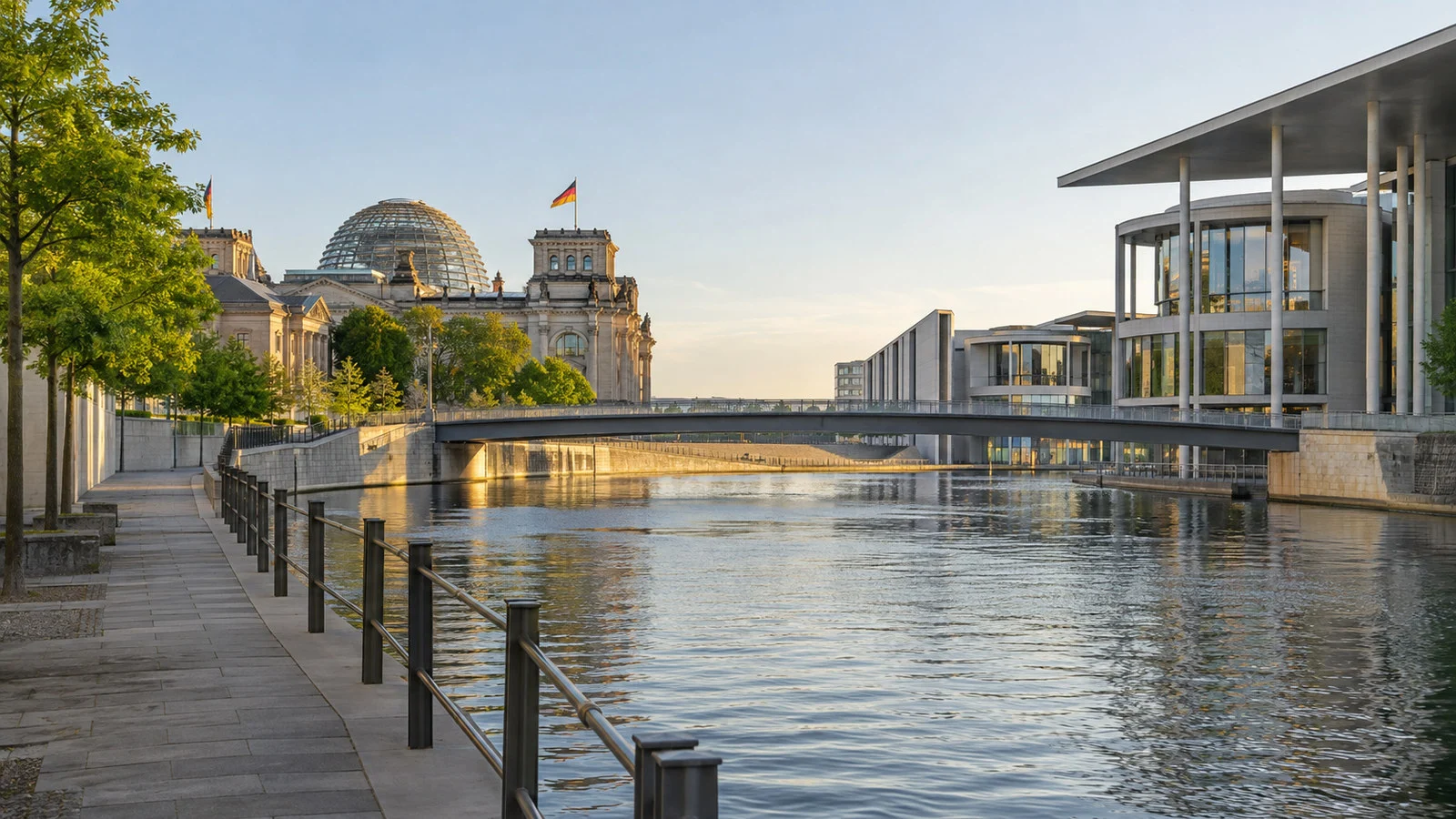
Getting Back to the Ship
Berlin’s size makes return planning more important than raw distance. A missed connection, elevator outage, or road closure can turn a comfortable schedule into a stressful one.
Set a personal turnaround time that gets you back well before the ship’s deadline. Use rail or U-Bahn for the main return when practical, then keep taxi fare and the berth address available as a backup.
Tell a taxi driver the street address or nearest landmark, not only the name of a cruise company. Berlin has many piers, and a generic request for the river cruise dock is not precise enough.
Take a photo of the gangway sign, emergency contact, and all aboard time before leaving. That tiny habit is especially valuable when the ship is not at a famous central landing.
Is Berlin a Good River Cruise Stop?
Yes, if you treat it as a focused city day rather than a race through every landmark. Government architecture, world-class museums, and powerful 20th-century history all work well, but each deserves enough time to be more than a photograph.
The exact berth is the detail that makes or breaks the plan. Confirm it first, choose one clear priority, use live official transit information, and leave a return buffer worthy of a city this large.