Utrecht River Cruise Port: Berths, Oudegracht, and Dom Tower
Utrecht is a lovely counterpoint to Amsterdam, with lively canals, medieval landmarks, and a compact center that rewards slow wandering. The main planning challenge is not what to see, but confirming where your river ship will stop and how your operator will connect you with the old city.
Do not build the day around a generic Utrecht port pin. Use the exact berth name, shuttle instructions, and all aboard time in your ship’s daily program, because docking arrangements can vary by vessel and itinerary.
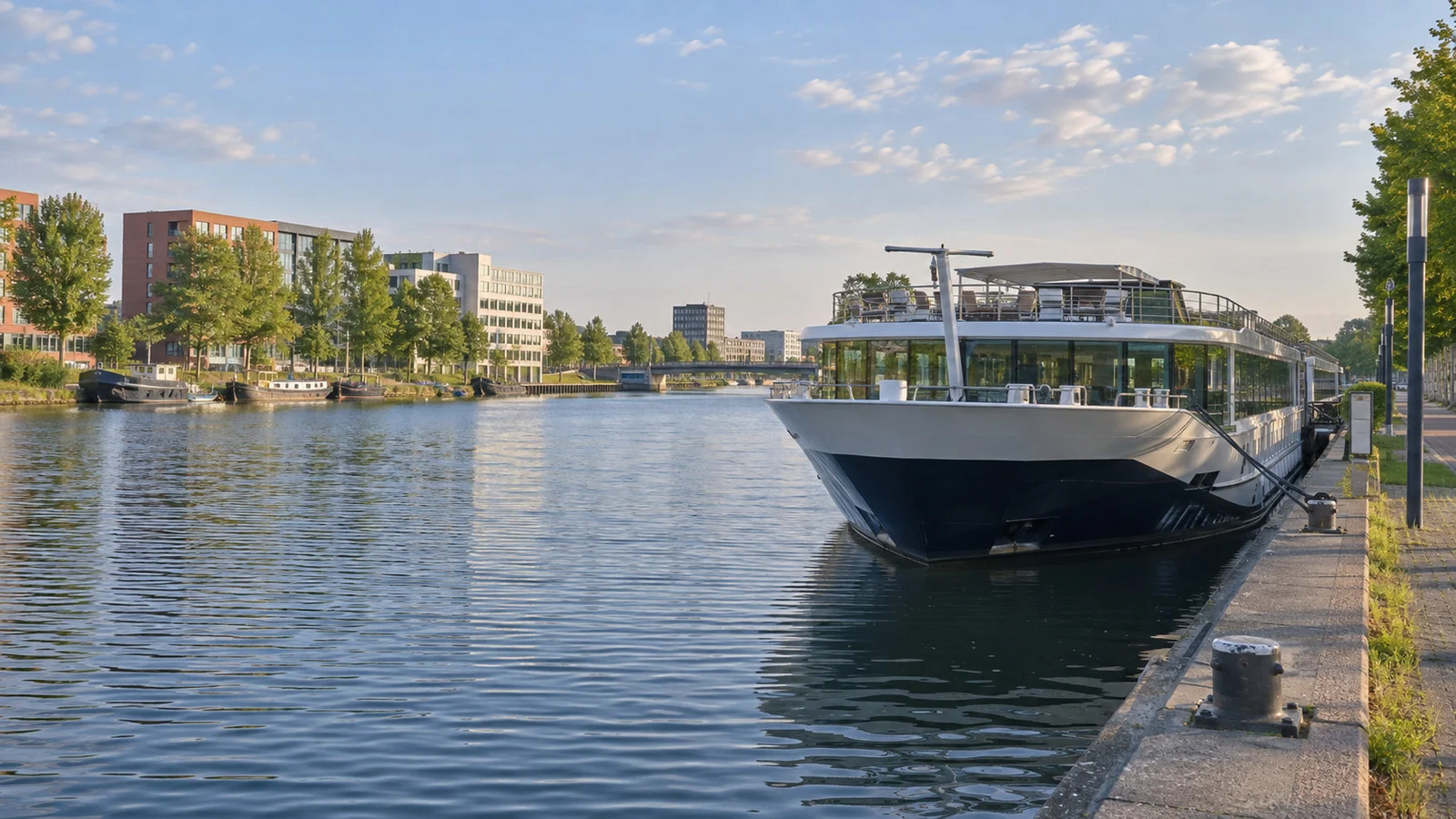
Where River Cruise Ships Stop in Utrecht
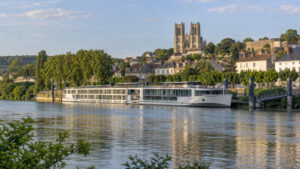
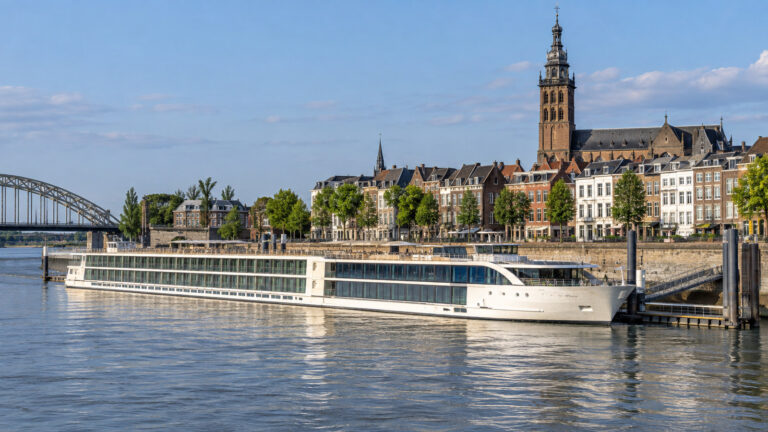
Utrecht sits within a network of historic canals and larger commercial waterways, including the Amsterdam-Rhine Canal. The picturesque Oudegracht in the old center is a sightseeing destination, not a berth you should assume a multi-day river ship can use.
Your cruise line may arrange a berth on a larger waterway, a coach transfer, or another local landing plan. The precise setup is operational information, so the cruise director and gangway notice are the reliable sources for your sailing.
Before leaving, photograph the berth address and the nearest recognizable landmark. Ask whether the shuttle runs continuously, follows fixed departure times, or is reserved for passengers on organized excursions.
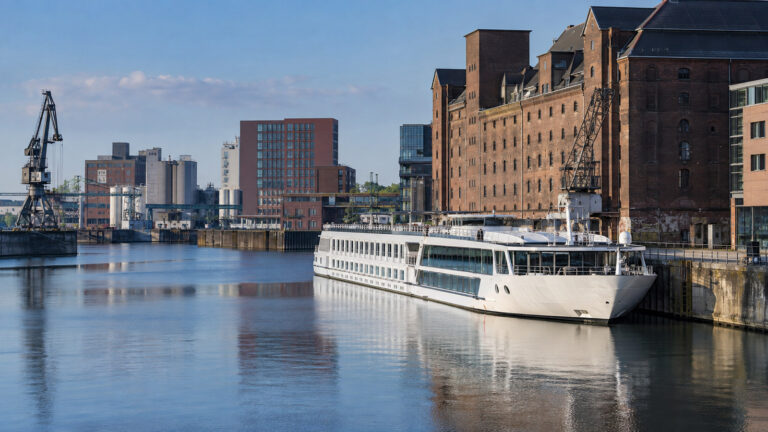
A bare quay may have few passenger services, and access can feel more industrial than scenic. Carry water and anything essential for the day rather than expecting shops, restrooms, or a taxi line beside the gangway.
Quick Facts
- Port style: Operator-assigned berth on Utrecht’s larger waterways, often with a transfer into the center
- First planning step: Confirm the exact berth, shuttle plan, and final return time on board
- Best local sights: Oudegracht, Dom Tower, Dom Square, and the canal wharves
- Central transport hub: Utrecht Centraal
- Currency: Euro
- Language: Dutch, with English widely used in visitor settings
- Emergency number: 112
- Best strategy: Explore the old center on foot after completing the transfer
- Return rule: Leave enough time for both the city journey and any ship shuttle
Getting From the Berth to the Old Center
Transfer time depends entirely on the actual quay, so fixed mileage estimates can be misleading. Follow the cruise line’s same-day guidance instead of assuming a previous passenger’s berth will be yours.
A ship shuttle is often the simplest option when it is offered. Confirm its city drop-off point and return schedule, since the last shuttle may leave earlier than the final gangway deadline.
Taxis and ride services can work well, but a lightly used quay may not have cars waiting. Arrange the pickup in advance when possible and enter the full berth address for the return.
Utrecht Centraal is the city’s major rail and transit hub on the edge of the central district. Its location is useful for orientation, but it does not mean every cruise berth is walkable from the station.
If the ship suggests public transportation, verify the route in a live planner and check in and out correctly. Dutch payment and ticket rules can change, so use current operator instructions rather than an old screenshot.
Why the Oudegracht Is Special
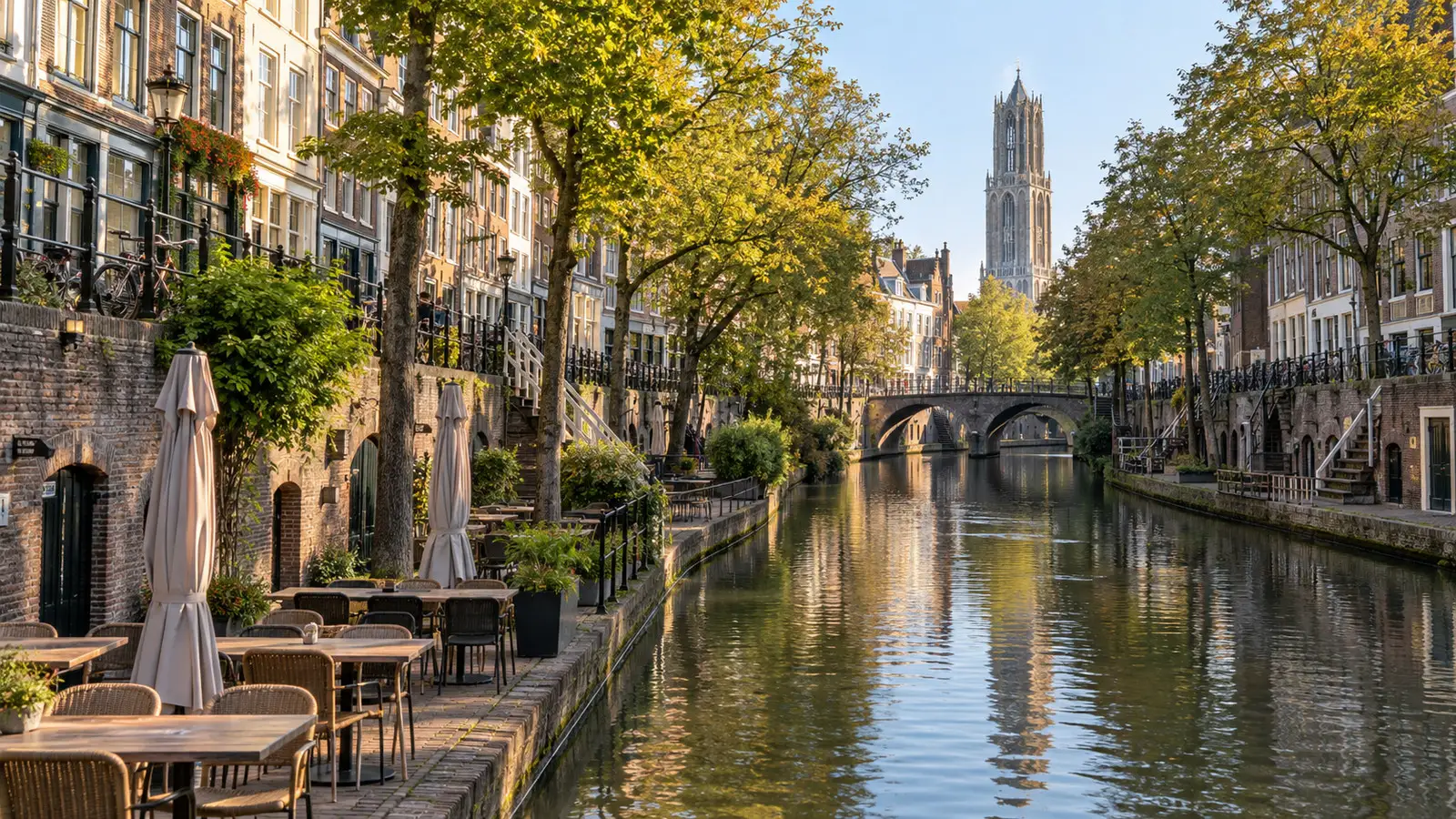
The Oudegracht runs through the historic center and gives Utrecht its most recognizable streetscape. Its lower wharves and cellar spaces create a second level of activity beside the water, below the streets and bridges above.
Cafes, restaurants, and small businesses occupy many of the old wharf spaces. Even without a reservation or formal attraction ticket, a walk along the upper canal streets delivers the city’s essential atmosphere.
The lower wharves are atmospheric but can involve steps, uneven paving, and narrow passages. Travelers with limited mobility can still enjoy strong canal views from the upper street level.
The official Discover Utrecht site publishes current walking ideas, events, attractions, and visitor information. Check it shortly before your call because festivals and street works can alter the easiest route through the center.
Dom Tower and Dom Square
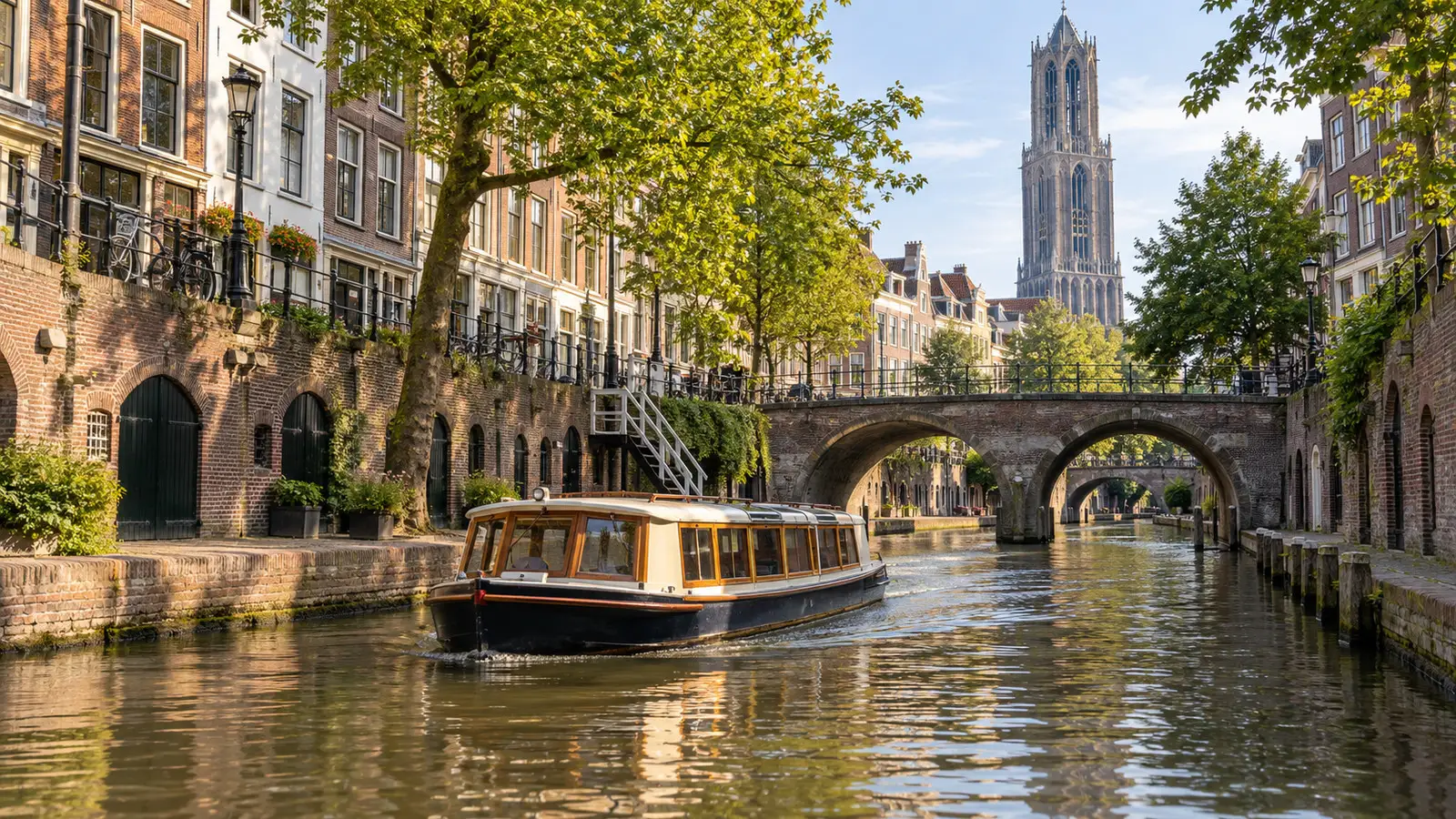
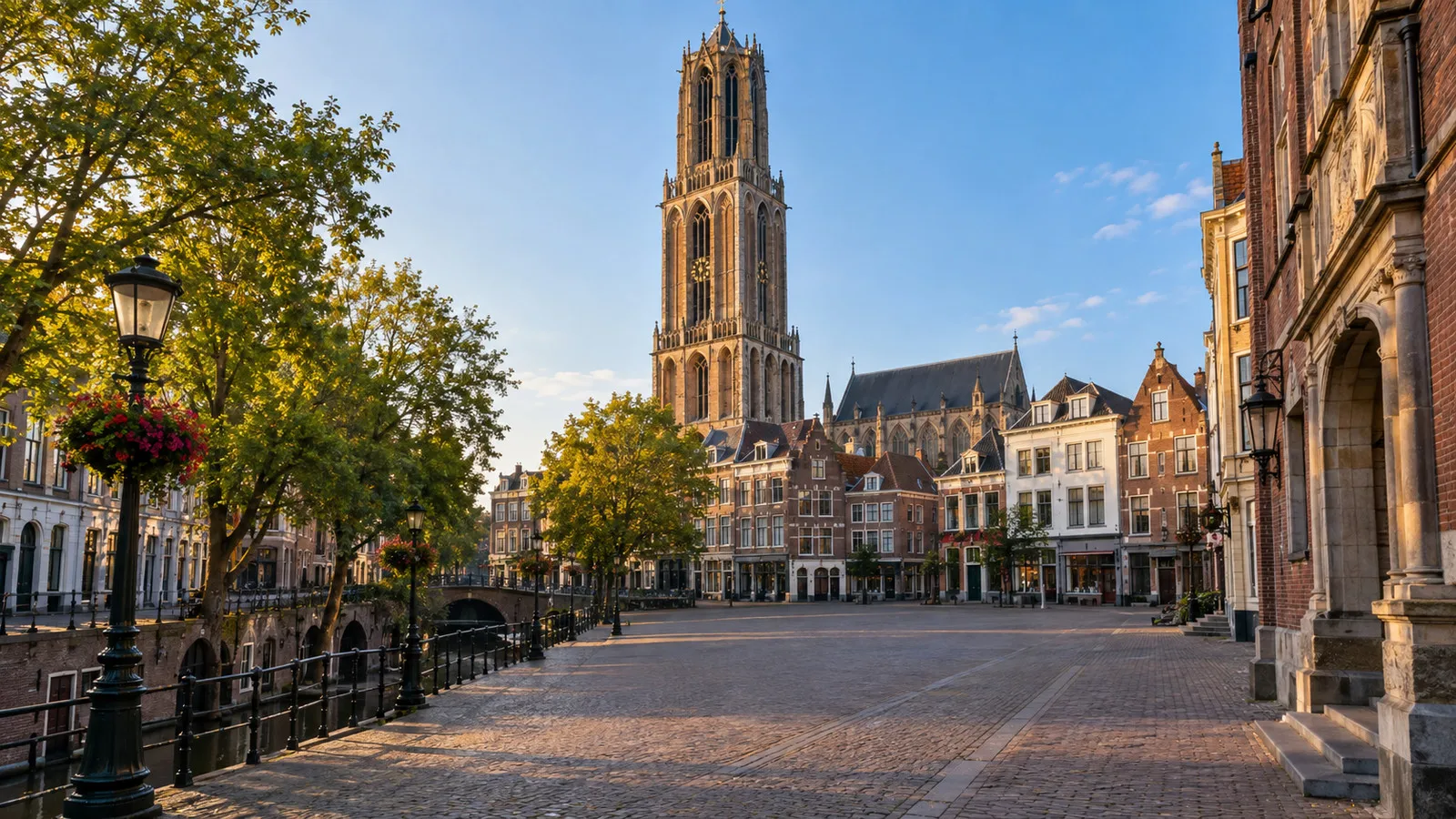
The Dom Tower is Utrecht’s defining landmark and an easy visual anchor while you explore. It stands apart from the cathedral after the nave between them collapsed centuries ago, leaving today’s open Dom Square.
Access to the tower is through a scheduled staircase tour rather than a casual walk-in climb. The official Dom Tower website recommends advance ticket booking and identifies the Tourist Information Centre at Domplein 9 as the tour starting point.
The climb is a serious physical commitment, so allow time for the guided format as well as the stairs. Bags are not allowed in the tower, and the attraction provides lockers according to its current visitor guidance.
If climbing does not suit you, the tower is still impressive from Dom Square and the surrounding lanes. The Dom Church, cloister garden, and nearby DOMunder experience offer other ways to explore the area’s history.
A Practical Half-Day Walking Route
Begin at the cruise shuttle drop-off or Utrecht Centraal and walk into the historic center. Head toward the Oudegracht, follow the canal at upper street level, and continue to Dom Square.
At Dom Square, choose either a prebooked tower tour or a gentler visit around the cathedral area. Return by a different stretch of the Oudegracht, leaving time for coffee or lunch beside the water.
This route is deliberately simple because the transfer back to the ship is the part you cannot improvise at the last minute. Add a museum only when your port hours and shuttle schedule provide a comfortable margin.
Museums and Architecture
Utrecht has several worthwhile museums, and the best choice depends on your interests. Museum Speelklok focuses on self-playing musical instruments, while Centraal Museum covers art, design, fashion, and the city’s cultural history.
The Rietveld Schröder House is Utrecht’s UNESCO-listed modern architecture landmark, but it is outside the tightest old-center loop. Entry is controlled and advance booking is important, so treat it as the anchor of your day rather than a spontaneous add-on.
DOMunder explores archaeology beneath Dom Square and uses timed visits. Current language options, accessibility, and ticket conditions should be checked with the attraction before you reserve.
One museum plus the Oudegracht is a more satisfying plan than rushing through several ticketed sites. Utrecht’s pleasure comes from the spaces between attractions as much as from the interiors.
Canal Cruises and Boat Tours
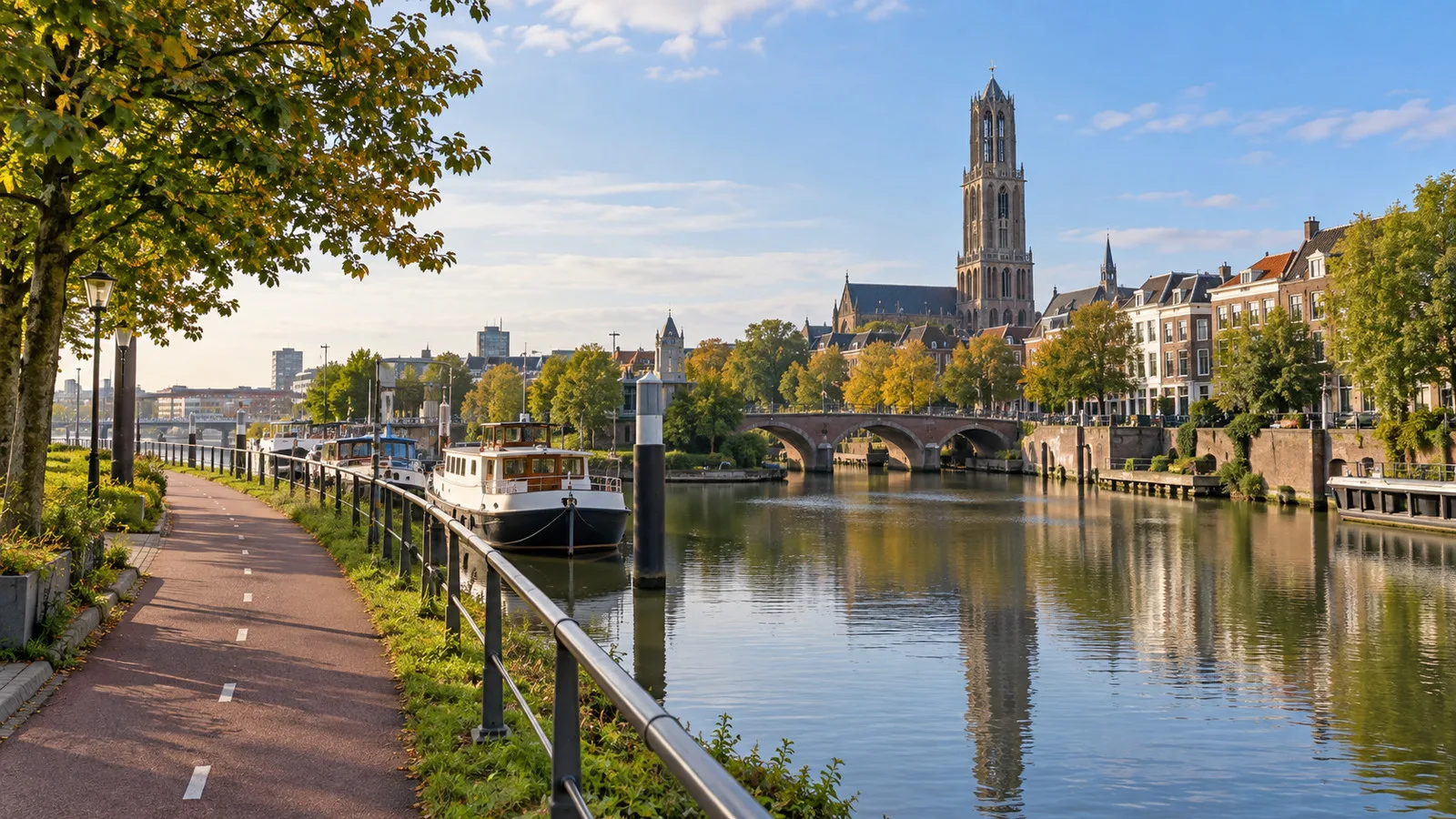
A local canal tour can reveal the wharf cellars and bridges from water level, but it is separate from your river cruise ship. Departure points, boat accessibility, and seasonal schedules vary by operator.
Do not book a tour that ends too close to the ship’s return deadline. Allow time to disembark the sightseeing boat, walk back to the transfer point, and complete the final journey to the quay.
Low boats, narrow boarding points, or steps may affect accessibility on historic canals. Contact the tour operator directly if level boarding or space for a mobility device is essential.
Independent Visit or Ship Excursion
Utrecht’s center is easy to explore independently once you arrive. The main uncertainty is the link between the ship and the city, not navigation around the Oudegracht.
A ship excursion is useful when it includes the transfer, guarantees a practical return, or combines Utrecht with a site outside the center. It can also reduce uncertainty when the berth has limited public transportation.
Independent time works beautifully for a relaxed canal walk, Dom Square, and lunch. Ask where and when the ship shuttle collects independent passengers before setting off.
Read excursion descriptions carefully because a panoramic stop may not include Dom Tower entry or a museum ticket. A phrase such as free time in Utrecht may also be much shorter after coach travel than the headline duration suggests.
Accessibility
Start with the gangway because quay conditions vary and may include a slope, steps, or uneven ground. The cruise line can confirm whether assistance and suitable vehicles are available on your specific call.
The upper streets in central Utrecht are generally the practical choice for wheelchair users and travelers who avoid stairs. Lower wharf areas often require a descent and may have irregular surfaces.
The Dom Tower visit is a staircase tour and is not the right choice for many mobility needs. Enjoy the tower from Dom Square and use official attraction guidance to select a more accessible nearby experience.
Utrecht Centraal is a large, busy station with long internal walking distances. Use its official station page for current facilities and request rail assistance in advance when Dutch Railways advises it.
Food, Payments, and Practical Stops
The canal district has many cafes, bakeries, restaurants, and terraces, making Utrecht an easy place for an unhurried lunch. Waterfront tables can fill in good weather, so keep a second choice on the upper street.
Cards and contactless payments are common, including for small purchases, but carrying a little euro cash is sensible. Payment policies belong to each business, and public restrooms may require a fee.
Do not plan on finding every service at the ship’s quay. Use the central station or old center for restrooms, food, and supplies before starting the return transfer.
Weather, Bicycles, and Street Awareness
Rain is possible in every season, and canal-side air can feel cooler than a sheltered square. Bring a light waterproof layer and shoes with grip for damp stone and uneven paving.
Bicycles have priority in marked cycle lanes, and Utrecht riders move quickly. Look in both directions before crossing a bike path and avoid standing in it while checking a map.
Utrecht is comfortable for most visitors, but normal city awareness still applies around the station and busy shopping streets. Keep bags closed in crowds and use 112 for a genuine police, fire, or medical emergency.
Returning to the Ship
Begin the return earlier than the map suggests because the final step may involve a shuttle with a fixed schedule. Traffic, a slow taxi pickup, or a missed connection can erase a seemingly generous margin.
Save the quay address in writing and show it to the driver. A request for the Utrecht cruise port is too vague when ships can use different landing arrangements.
If your operator provides a shuttle, arrive at the pickup point before the stated departure. The last vehicle may not wait for passengers who are walking from another part of the center.
Your ship’s all aboard time is the controlling deadline. Set a personal turnaround time that puts you back at the gangway with enough room for a delay.
Is Utrecht Worth a River Cruise Stop?
Yes, especially if you enjoy canal architecture, cafe breaks, and a city that feels active without requiring a huge sightseeing checklist. The Oudegracht and Dom Square create a memorable half-day even when you skip every ticketed attraction.
The berth may not be the beautiful part of the call, and that is fine. Confirm the transfer, keep the walking plan compact, and give Utrecht enough unstructured time to show why its canals feel different from Amsterdam’s.