Baton Rouge River Cruise Port: City Dock and Downtown Guide
Baton Rouge usually gives river cruisers a central landing beside Riverfront Plaza, but the levee, gangway, heat, and changing museum access shape the day. Confirm City Dock in the daily program, then choose a compact downtown route or a vehicle-assisted Capitol visit with enough time for security and the return.
Baton Rouge River Cruise Port Quick Facts
Into Town: City Dock is beside Riverfront Plaza downtown. Expect a levee or ramp transition; exact berth and walking distance depend on vessel assignment.
Currency and Language: U.S. dollar. English is dominant; Louisiana’s French, Spanish, Indigenous, African, and Creole histories shape local names and culture.
Time Zone: Central Time: CST (UTC-6) in winter and CDT (UTC-5) during daylight saving time.
How Often the Call Is Missed: Not published. High or low water, fog, severe weather, river traffic, dock limits or itinerary changes can disrupt the call.
No port, city or cruise line publishes an audited Baton Rouge missed-call percentage. A shifted berth, revised gangway, shortened stop or changed excursion can occur without losing the city completely.
Do River Cruises Still Stop in Baton Rouge?
Yes. Viking’s 2026 America’s Great River itinerary includes Baton Rouge, and the company warns that ports and shore excursions remain subject to change.
American Cruise Lines also operates Lower Mississippi programs that use the city, and Baton Rouge approved a long-term nonexclusive docking agreement with the company in late 2025. The word “nonexclusive” matters because a contract supports active calls without assigning every visiting passenger vessel the same place forever.
The city updated its dock ordinance in February 2026 specifically for commercial river passenger vessels and tourism-related special vessels. That is unusually solid evidence for a river stop whose online port descriptions are often copied from one optimistic paragraph to another.
Baton Rouge is normally a port of call rather than the beginning or end of a mainstream Mississippi itinerary. Confirm your own booking, since cruise lines can create special departures, charters, and hotel packages that do not follow the usual pattern.
Where Do Ships Dock in Baton Rouge?
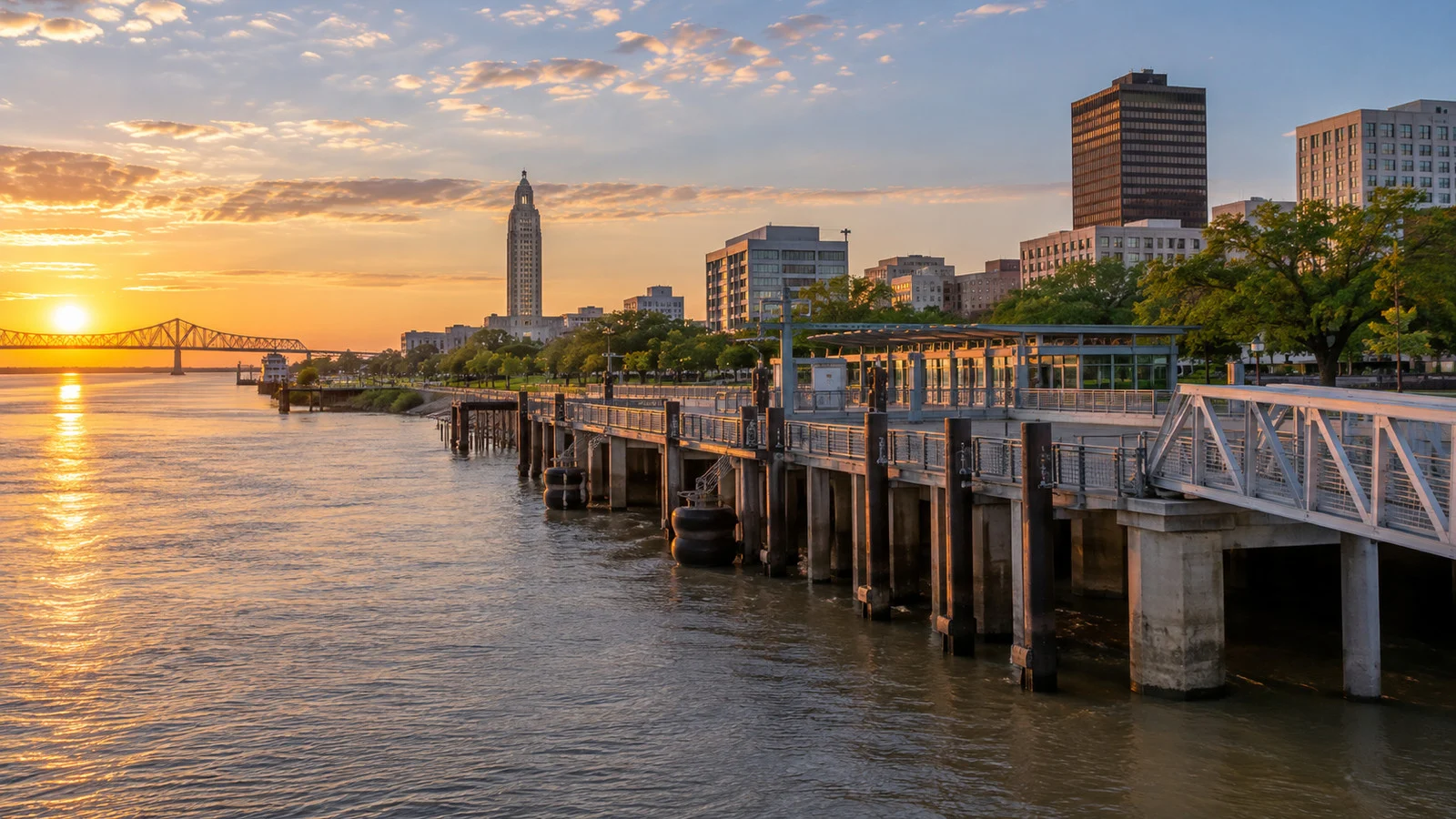
The primary downtown landing is the Baton Rouge City Dock on the left descending bank of the Mississippi River, north of the Horace C. Wilkinson Bridge.
City documents and a recent economic assessment call it the Riverfront Dock or Paperclip Dock.
The official visitor bureau lists Riverfront Plaza and City Dock at 300 River Road, directly across from the Raising Cane’s River Center. It describes the dock as a facility for visiting vessels and the surrounding 5.4-acre plaza as a riverfront public space.
The city ordinance says the dock has limited space and is used for temporary passenger-vessel berthing. Vessel length, arrival order, maintenance, river stage, commercial traffic, security, and operator agreements can therefore influence the exact setup.
A ship may use the City Dock directly, but no reader should treat that as an unconditional berth guarantee. If an operator assigns another landing or provides a shuttle, follow the ship’s daily program rather than walking confidently to a lovely empty paperclip.
Rafting alongside another passenger vessel is operationally possible on river systems, but Baton Rouge does not publicly promise it as the standard arrangement. Ask whether you will cross another ship, use stairs, or encounter a steep gangway before deciding that the call is step-free.
How the Levee Changes Your Walk
The Mississippi River levee is not decorative landscaping. It separates the water-level dock from downtown and creates an up-and-over transition that can matter more than the horizontal distance on your phone.
Riverfront Plaza includes paved paths, terraces, an overlook, seating, and event areas, with some ADA-accessible features. That does not certify the vessel gangway or the complete ship-to-street route for your particular water level.
A low river can create a longer or steeper gangway climb, while higher water can bring the ship closer vertically but introduce stronger current and dock restrictions. Rain can make metal surfaces and levee approaches slippery.
Once you are on the downtown side, the Old State Capitol and Louisiana Art and Science Museum are close. The modern State Capitol and Capitol Park Museum are farther north and deserve either a deliberate walk or a short vehicle ride.
Walking Distances from City Dock
From a City Dock position near Riverfront Plaza, Louisiana’s Old State Capitol and the Louisiana Art and Science Museum are in the nearby downtown area. Ask the crew for the day’s walking route because the vessel position and levee transition affect the distance.
The current Louisiana State Capitol is north of the riverfront landing and requires a longer walk than the Old State Capitol. Allow additional time for security screening, the levee transition and hot or wet weather.
Capitol Park Museum sits near the modern Capitol and belongs in the same north-downtown outing. A cruise shuttle, excursion motorcoach, taxi, or rideshare may be smarter than walking when heat, rain, mobility, or a short call is involved.
Do not calculate return time from a straight-line map alone. The levee crossing, traffic signals, security exit, and gangway descent all return for an encore.
Louisiana’s Old State Capitol
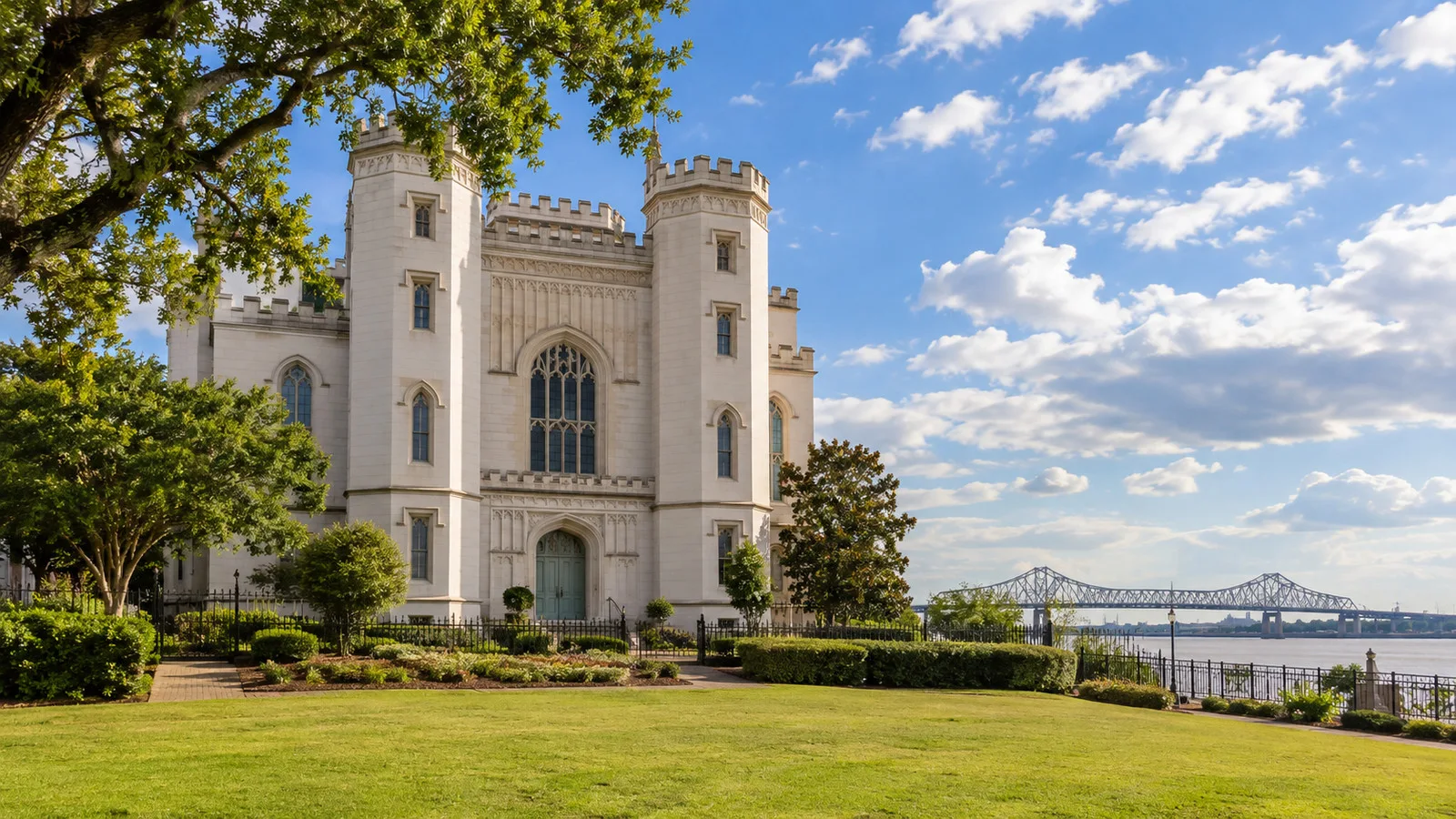
The Gothic Revival Old State Capitol is the easiest major museum visit from the riverfront. Its stained-glass interior and castle-like exterior make it visually memorable, while the exhibits address Louisiana political history and democratic life.
The museum’s official site lists free admission, Tuesday through Friday hours of 10 a.m. to 4 p.m., and Saturday hours of 9 a.m. to 3 p.m. It is closed Sunday and Monday under the current regular schedule.
Those closures catch river cruisers because ships have no obligation to arrive on a museum-friendly weekday. Check for a special event or holiday opening, but do not build a Sunday call around a locked historic door.
The building has an elevator serving exhibition levels, but the sloped grounds, historic thresholds, and route from the dock should still be considered. Travelers needing a specific accommodation should contact the museum and the cruise line before sailing.
The Modern Louisiana State Capitol
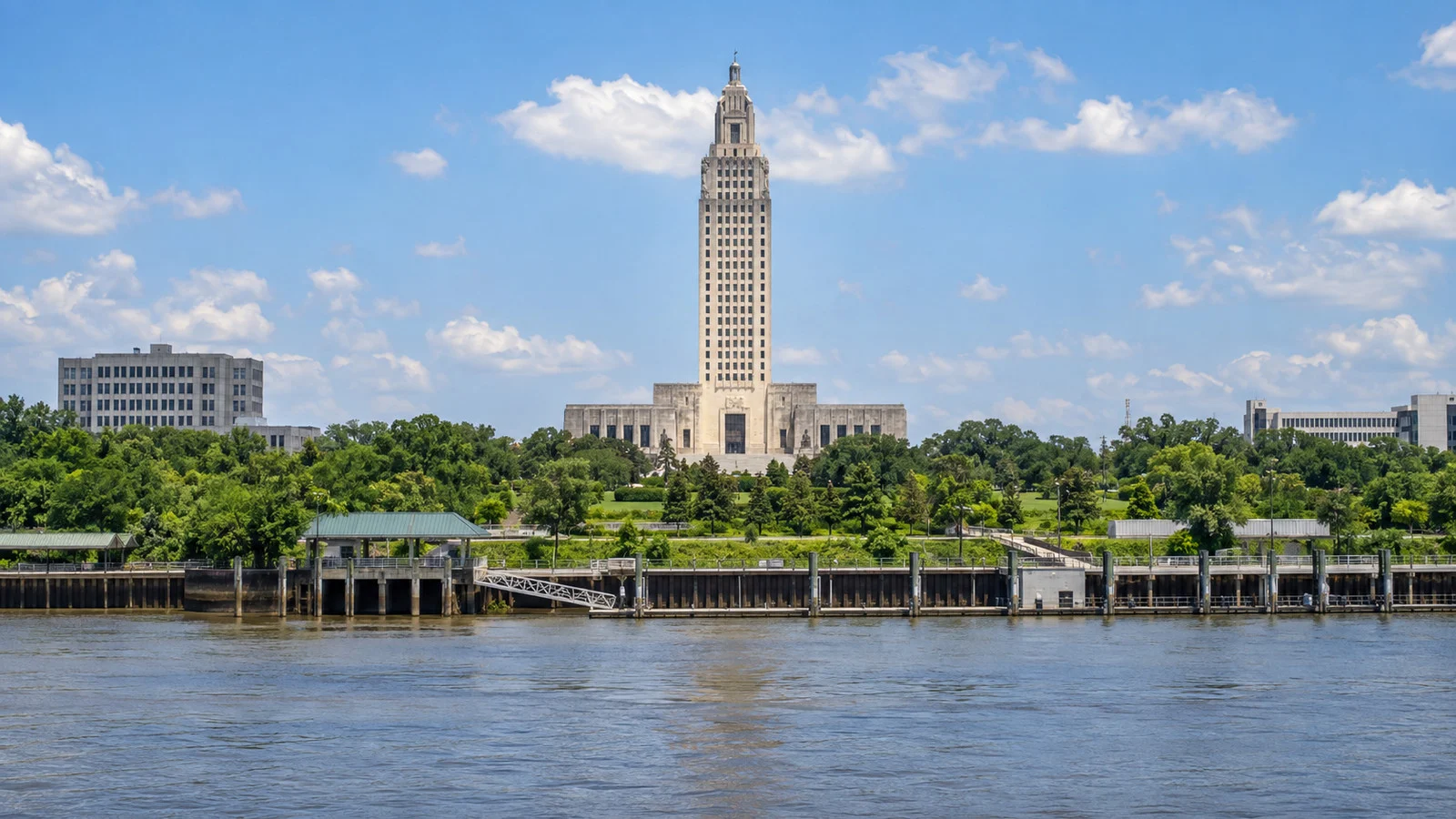
The 34-story Art Deco State Capitol was completed in 1932 and stands 450 feet high, making it the tallest state capitol in the United States. The grounds include the burial site and statue of Governor and U.S. Senator Huey P. Long, who was assassinated in the building in 1935.
The official welcome-center page lists free admission and regular building hours of 8 a.m. to 4:30 p.m. daily, with closures on several major holidays.
The official state page currently says the observation deck is closed for renovations. Check again before visiting if the view is your main reason to go.
The building is undergoing a multiyear waterproofing and rehabilitation project. Current legislative guidance directs visitors to an east-side entrance near Arsenal Park and requires metal-detector and bag screening.
Accessible entrances with automatic doors are located on both sides, and elevators serve public areas. Legislative sessions, official business, construction, and security can restrict spaces that a general tourism page makes sound permanently available.
Capitol Park Museum
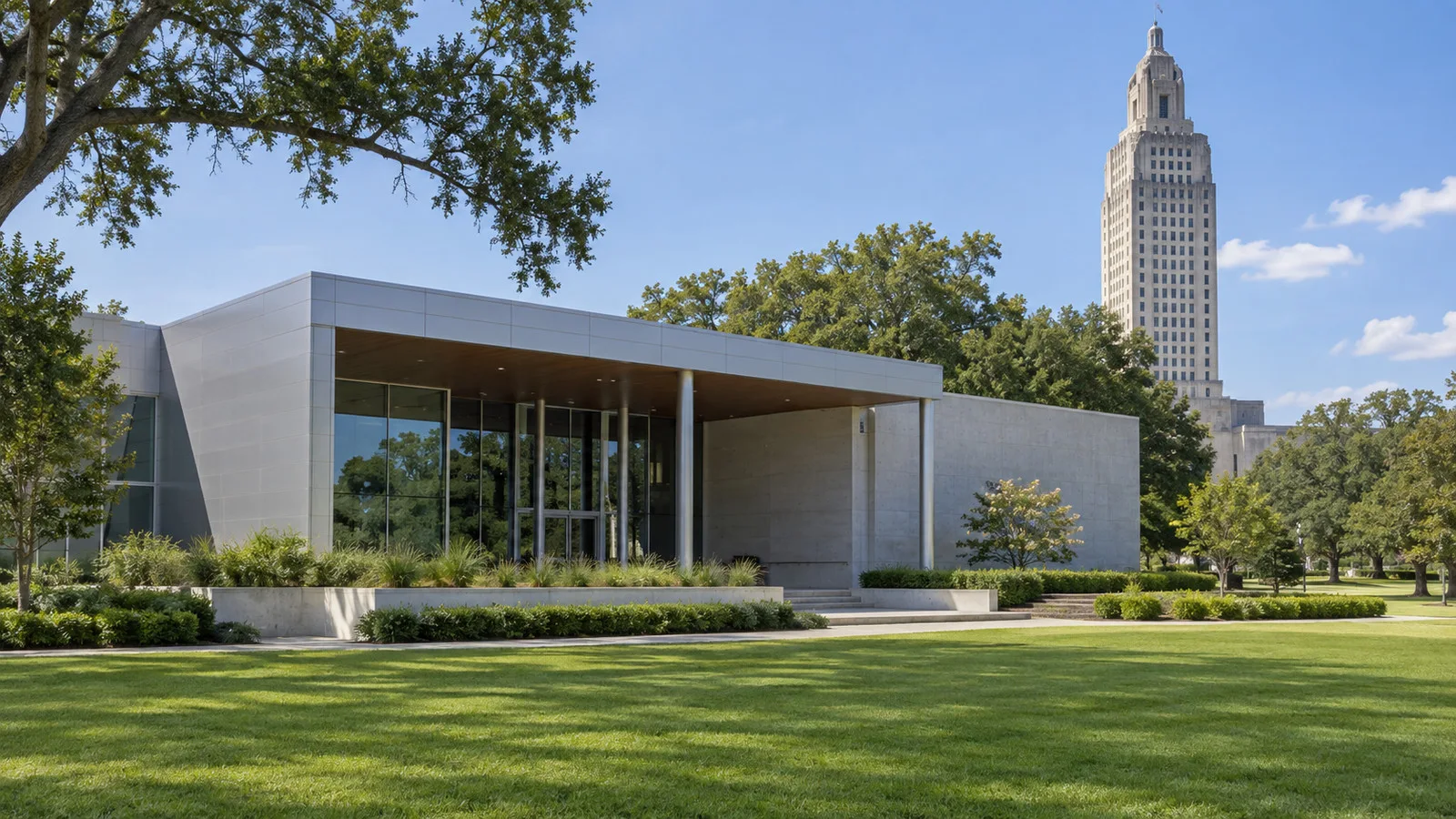
Capitol Park Museum is the best single indoor overview when you want Louisiana history, culture, industry, music, foodways, and regional identity in one place. Its scope is more useful than reducing the state to beads, gumbo, and whichever accordion wandered nearest the brochure rack.
The Louisiana State Museum currently lists the property at 660 North Fourth Street and generally operates it Tuesday through Saturday. Hours, admission, exhibitions, and state-holiday closures can change, so verify the museum calendar for your call date.
Allow enough time for the galleries plus transport or walking time. Pairing it with the modern Capitol works well because the two are in the same northern downtown area.
The museum also helps put river excursions into context. Louisiana’s history includes Native nations, European colonization, enslavement, emancipation, migration, civil rights struggles, extractive industries, environmental change, and extraordinary cultural creation.
History Without the Magnolia Filter
Baton Rouge means “red stick” in French, a name connected to an Indigenous boundary marker described during early French exploration. The modern city developed through Indigenous, French, Spanish, African, Caribbean, Acadian, and American histories rather than one tidy founding story.
The Mississippi made Baton Rouge a seat of government, trade, industry, forced labor, migration, and military strategy. That history produced wealth and culture, while also resting heavily on the labor and dispossession of people whose stories were long pushed to the margins.
If your cruise offers a plantation excursion outside town, look for interpretation that names enslaved people, explains the labor system, and treats the site as more than an attractive house. Architecture matters, but so do the people who built, maintained, and were held captive within that economy.
Downtown museums provide a better foundation for understanding those layers than a quick collection of photo stops. The Old State Capitol’s 2026 Reconstruction exhibition and Capitol Park Museum are especially relevant starting points.
What About the USS Kidd?
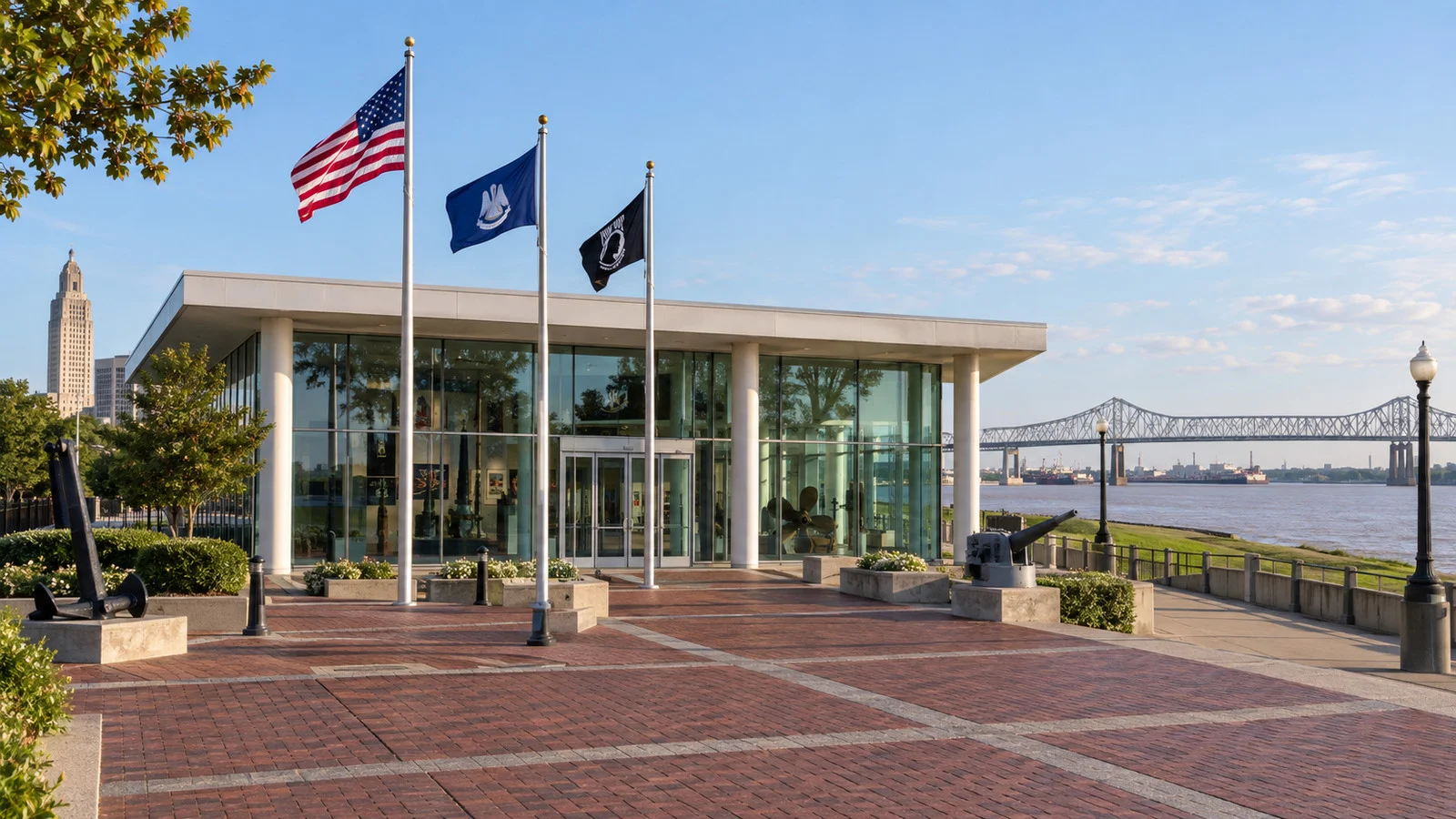
The USS Kidd Veterans Museum is beside the riverfront and would normally be an obvious port-day attraction. In 2026, however, the Fletcher-class destroyer itself remains away from Baton Rouge for overhaul.
The USS KIDD Veterans Museum should be checked directly before the call because the destroyer and shore museum can have different operating status, hours, and admission. Do not promise a ship tour until the official visitor notice confirms that the vessel is back on site and open.
That means a listing calling it a walkable ship tour can be geographically right and operationally wrong. Check the official homepage shortly before your cruise, because “hoping for spring” is not a reopening schedule.
When the ship eventually returns, its steep ladders, high thresholds, confined passages, and historic naval design will present substantial mobility barriers. The shore museum is the appropriate experience to verify separately.
Accessibility from Ship to City
Baton Rouge has a better starting point than many small Mississippi calls because Riverfront Plaza and downtown have paved public spaces. The weak link is often the changing vertical route between vessel, dock, and top of levee.
Ask the cruise line whether the ship uses City Dock, whether the gangway meets an accessible route, how steep it is at the expected river stage, and whether another vessel must be crossed. Also confirm that an accessible shuttle has space for your device.
The Old State Capitol has an elevator, while the modern Capitol has accessible entrances and public elevators. Temporary construction paths, security lines, heavy doors, and outdoor distance still matter.
Our river cruise accessibility guide includes a pre-cruise question list covering gangways, rafting, shuttle lifts, restrooms, and mobility-device handling. Request answers in writing when a call’s suitability affects whether you can book.
Heat deserves to be treated as an access issue too. A one-mile sidewalk can be technically smooth and functionally unusable during a heat advisory for someone with limited stamina or temperature sensitivity.
River Levels and Flooding
The National Weather Service maintains the Baton Rouge Mississippi River gauge as station BTRL1. Its current thresholds set action stage at 30 feet and minor flood stage at 35 feet, but those numbers describe the gauge and should not be used as a DIY berth forecast.
A ship, dock operator, and captain can alter operations below official flood stage because current, gangway geometry, drift, commercial traffic, and safe mooring loads matter. Conversely, a high gauge reading does not automatically mean protected downtown streets are underwater.
Low water can also affect a Mississippi itinerary through draft restrictions, shoaling, tow traffic, and altered schedules elsewhere on the route. The reason for a Baton Rouge change may have developed hundreds of river miles away.
Spring often brings higher river levels, while late summer and fall bring tropical-storm risk and oppressive heat. Fog, severe thunderstorms, lightning, and high winds can temporarily stop gangway use or delay the ship.
Check the National Weather Service river forecast close to travel, then let the cruise line interpret what it means operationally. River data are valuable; freelance captaining from a hotel room is less so.
Weather and What to Wear
Baton Rouge is humid subtropical, with long hot summers, mild winters, frequent rain, and fast-building thunderstorms. Summer heat indexes can make an apparently short downtown route feel much longer.
Wear breathable clothing, sun protection, and shoes with grip for the levee and gangway. Carry water, a compact rain layer, and a light indoor layer for enthusiastic air conditioning.
During thunder, do not linger on the exposed levee for one more river photograph. Follow crew and city instructions, since lightning near a metal gangway is not improved by confidence.
Hurricane season does not mean every late-summer call is unsafe, but tropical systems can change river schedules well before local weather deteriorates. Cruise lines may revise ports to protect the vessel, crew, guests, and downstream timing.
Food and a Practical Downtown Break
Downtown has restaurants and cafes within a reasonable walk of Riverfront Plaza, though weekend and Monday hours can be thinner than expected. Check the restaurant’s own same-day listing rather than trusting a review written when brunch apparently lasted forever.
Cajun and Creole are related but distinct cultural and culinary traditions, and neither is shorthand for “very spicy.” Ask about preparation, seafood, shellfish, pork, roux, dairy, and cross-contact if you have allergies.
A short call pairs well with the Old State Capitol, a downtown lunch, and a riverfront walk. A longer call supports the modern Capitol and Capitol Park Museum, ideally with vehicle transport in hot weather.
Safety Around the Riverfront
The Mississippi at Baton Rouge is a fast, heavily trafficked commercial river. Stay behind barriers, keep off mooring equipment, and never enter the water from the dock or levee.
Watch for uneven transitions, bicycles, service vehicles, and traffic when leaving the plaza. At night or during a quiet weekend, use normal city awareness and keep valuables discreet.
Call 911 for an emergency and save the ship’s local number before going ashore. A crew contact can solve a return-to-ship problem faster than explaining “the large white boat by the levee” to a driver.
Return earlier than the minimum margin if severe weather is approaching. Gangway access can pause during lightning or high wind even while you are looking directly at the ship.
Can You Explore Baton Rouge Independently?
Yes, when the ship uses City Dock and you can manage the levee route. The Old State Capitol, riverfront, downtown restaurants, and Louisiana Art and Science Museum make a compact independent cluster.
Use a cruise shuttle or rideshare for the modern Capitol and Capitol Park Museum if time or heat is tight. Confirm the return address as Riverfront Plaza and City Dock at 300 River Road, then verify that this is actually your vessel’s landing.
An organized tour makes more sense for attractions outside downtown or for plantation, swamp, LSU, and regional history outings. Distances, traffic, and a fixed all-aboard time make rental-car improvisation more work than charm.
For broader route planning, our Mississippi river cruise ports guide explains how downtown docks, levees, landing stages, and motorcoach-based calls differ from city to city. Baton Rouge is one of the more independent-friendly stops, provided the gangway cooperates.
The security, weather, and return plan I would use
For the modern Capitol, use an accessible taxi or ship transfer and allow time for the current public entrance, metal-detector screening, and bag rules. Bring accepted photo identification if the current visitor instructions require it, and check the observation deck notice rather than planning around an older tourism listing.
Keep City Dock, the Old State Capitol, and one museum as the weather-proof core, then add the Capitol only if the heat and schedule cooperate. Summer heat, thunderstorms, lightning, and tropical weather can make an otherwise short levee walk slow or temporarily stop gangway use.
Follow the ship’s stated return time and allow extra margin after a vehicle trip. Confirm the accessible shuttle, gangway slope and whether another vessel must be crossed, because a paved public plaza does not certify the complete ship-to-street route.
Foreign passengers still follow current United States entry rules for their nationality and itinerary. Carry the identification named by the cruise line, especially if the ship or excursion moves through a controlled docking or government-building checkpoint.
A Good Port-Day Plan
For two easy hours, walk from Riverfront Plaza to the Old State Capitol, check the current exhibits, and return through downtown with a coffee or snack. This plan fails on Sunday and Monday under the museum’s regular schedule, so use the riverfront and art museum calendar as alternatives.
For four hours, take a vehicle north to the modern Capitol and Capitol Park Museum, then work back toward the ship. Confirm the observation deck’s renovation status before allocating time to a view that may still be behind a closed door.
For limited mobility, select the operator’s panoramic or shuttle-based option only after verifying the vehicle lift and gangway. A smooth museum interior does not cancel a steep dock transition.
For a history-focused day, favor the two capitols and Capitol Park Museum over a checklist of exterior photos. Baton Rouge rewards context, and its political history is far too lively to be reduced to one assassination and a tall building.
The Bottom Line
Baton Rouge is an active and unusually practical Mississippi river-cruise stop with an official downtown passenger dock. The City Dock is real, central, and useful, but its limited space and the river’s changing level mean exact berth and gangway conditions still belong to the day’s operation.
Walk to the Old State Capitol, ride to the modern Capitol when heat or time demands it, and verify renovation and museum closures before leaving the ship. Give the levee, river, and Louisiana’s complicated history the respect they deserve, and Baton Rouge becomes much more than a capital-city photo stop.
How this guide was researched: No firsthand Baton Rouge visit is claimed. Details were checked against Viking, Baton Rouge city dock records, Visit Baton Rouge, Louisiana government and museum pages, USS KIDD and National Weather Service information.
Logistics and time-sensitive details were reviewed September 12, 2026. See our Editorial Policy.