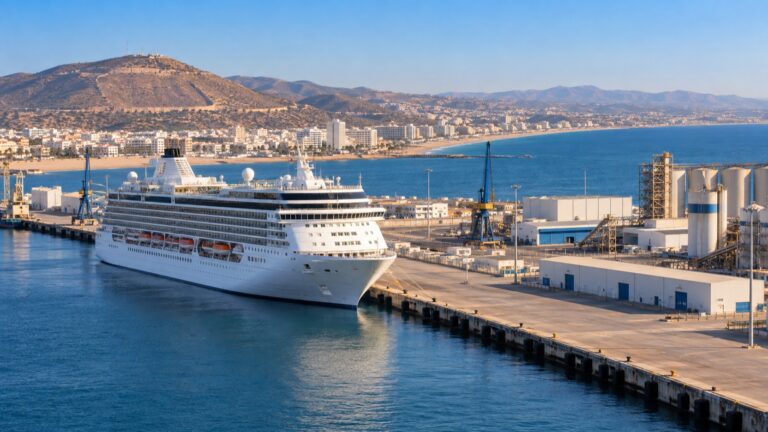
Esna River Cruise Port: Khnum Temple, Nile Lock and Market
Esna can be a temple call, a lock transit, an overnight mooring, or only a sailing landmark, and those versions allow very different visits. Confirm the operator’s landing, lock timing, admission, heat plan, accessibility, and return before treating the town as a guaranteed independent stop.
Esna river cruise port quick facts
- Into Town: Esna has no universal cruise terminal; central moorings can be walkable, while lock-side or outlying landings may require an operator transfer.
- Currency and Language: Egyptian pound (EGP). Arabic is official; English is common with guides and at major visitor sites.
- Time Zone: Egypt Standard Time, UTC+2, moving to UTC+3 during daylight saving time.
- How Often the Call Is Missed: Not published. Lock lines, maintenance, mooring availability and schedule compression can turn a planned visit into transit-only time.
No operator or Egyptian waterway authority publishes an audited Esna missed-call rate. A published transit-only passage through Esna is not a missed call, even if passengers never go ashore.
My quick take
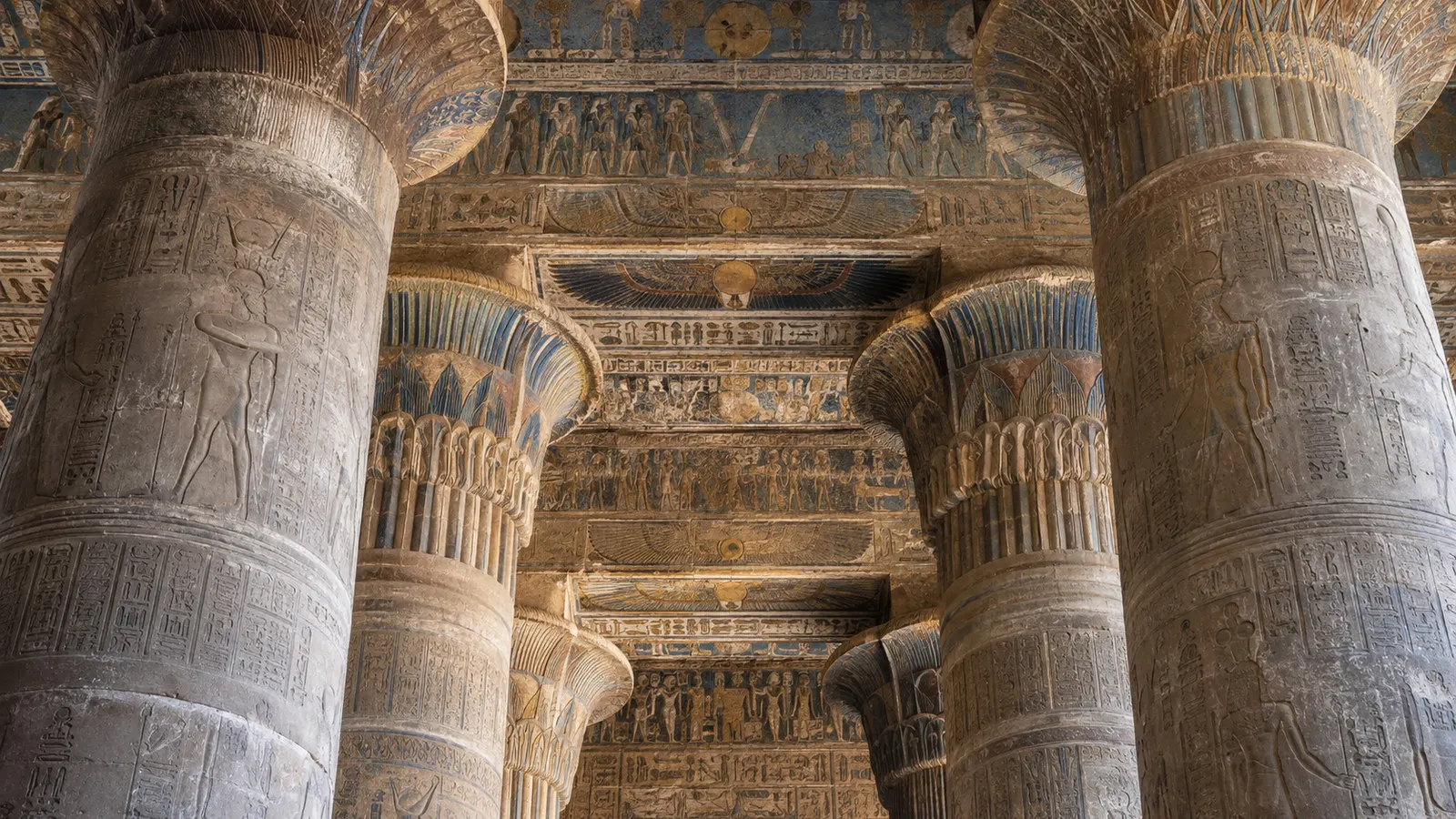
If your cruise includes Khnum Temple, go. The restored colors, tightly packed columns and deep setting below modern street level make it one of the most distinctive compact temple visits on the Nile.
Pair the temple with Al-Qisariyya Market and Wakalat al-Geddawi if the guide and all-aboard time permit. This turns a stone-only stop into a look at the trading city that grew around the sanctuary.
If the ship is only waiting for the lock, stay aboard unless the cruise director explicitly authorizes independent time. A visible minaret or market roof is not permission to improvise a gangway.
Does every Nile cruise stop in Esna?
No. Most standard Luxor-Aswan routes must pass the Esna barrage and locks, but passage is not the same as a port call.
Egypt’s official tourism guide says most cruise-boat itineraries do not include a visit to Esna Temple. That is unusually direct guidance and explains why two people on similar Nile sailings can describe completely different Esna experiences.
Viking’s current Pharaohs & Pyramids Esna day offers both an included temple excursion and an included village walk, with excursions subject to change. Other programs can name Esna as a sailing point without including a temple outing.
Both are legitimate itinerary designs. Your booking page, final documents and onboard briefing determine whether Esna is a sightseeing call, not the route line on a generic Nile map.
Where Nile cruise ships moor in Esna
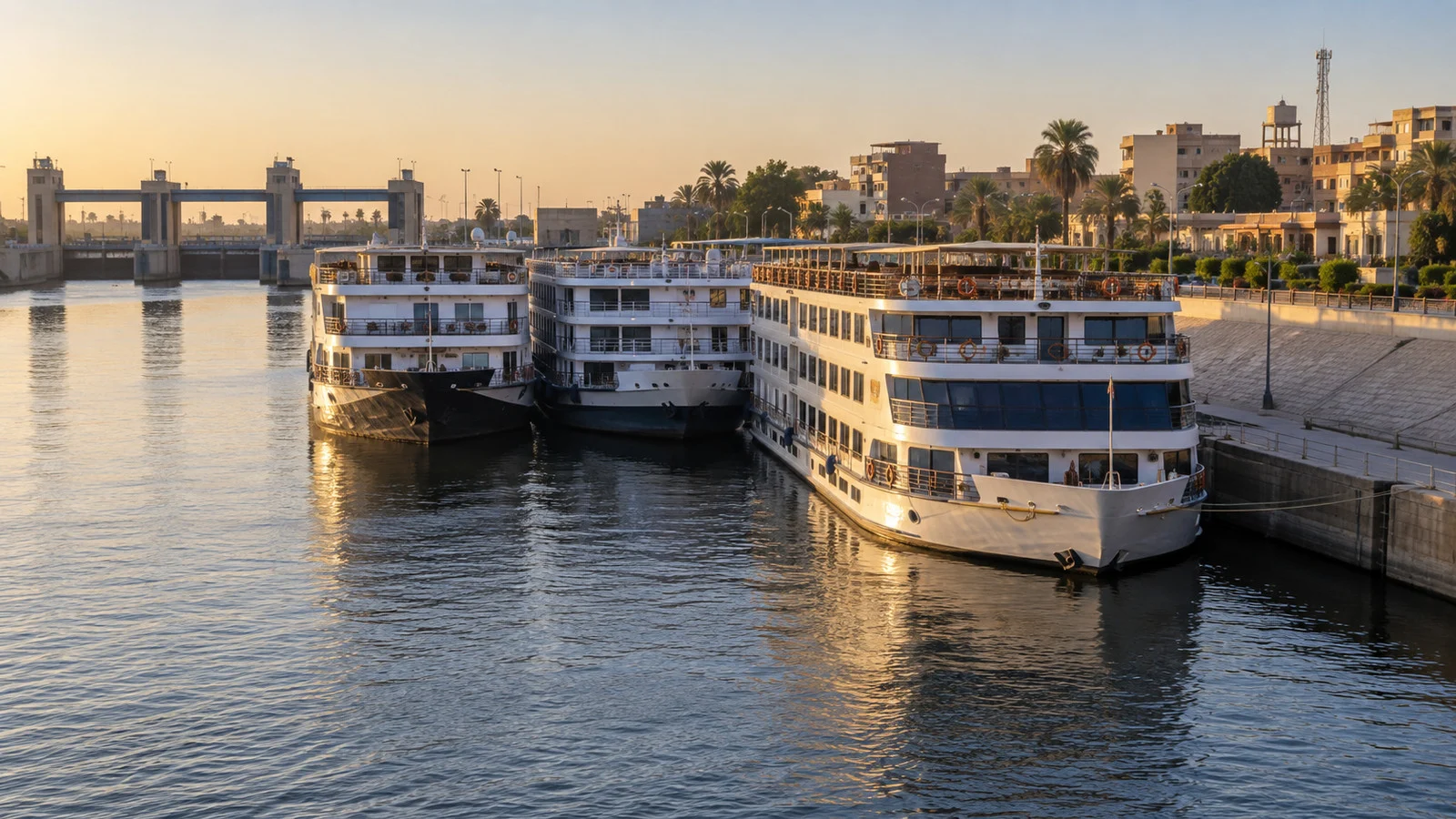
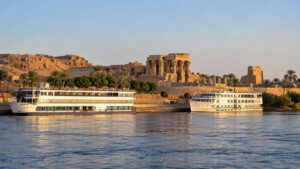
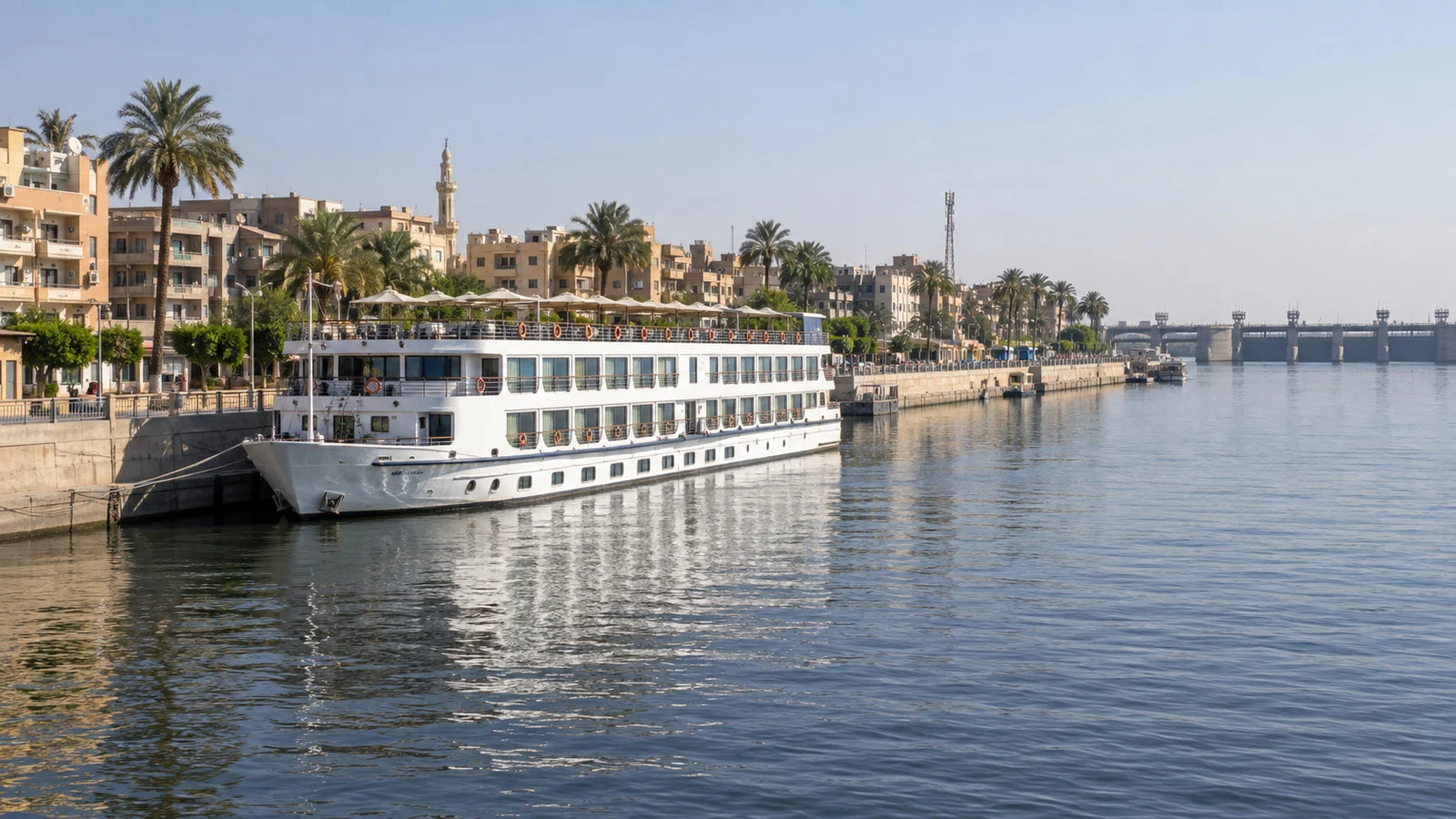
Esna does not publish a traveler-facing terminal roster assigning every hotel ship to one numbered pier. Vessels may use different west-bank moorings according to size, operator arrangements, traffic, security, lock sequence and how long the stop is intended to last.
A ship planning a guided town visit may use a central landing or provide a short transfer. A vessel waiting for its lock slot may remain at an operational position that is inconvenient or unauthorized for independent sightseeing.
Dahabiyas, larger motor ships and private vessels also have different drafts, gangways and shore-service needs. One traveler’s pin therefore cannot be promoted into a universal Esna cruise terminal.
Rafting alongside another hotel ship is possible on the Nile, especially when traffic bunches around major stops. The site’s river-cruise rafting guide explains why a simple-looking landing can include extra stairs, thresholds and a walk through another vessel.
The Esna Lock in plain English
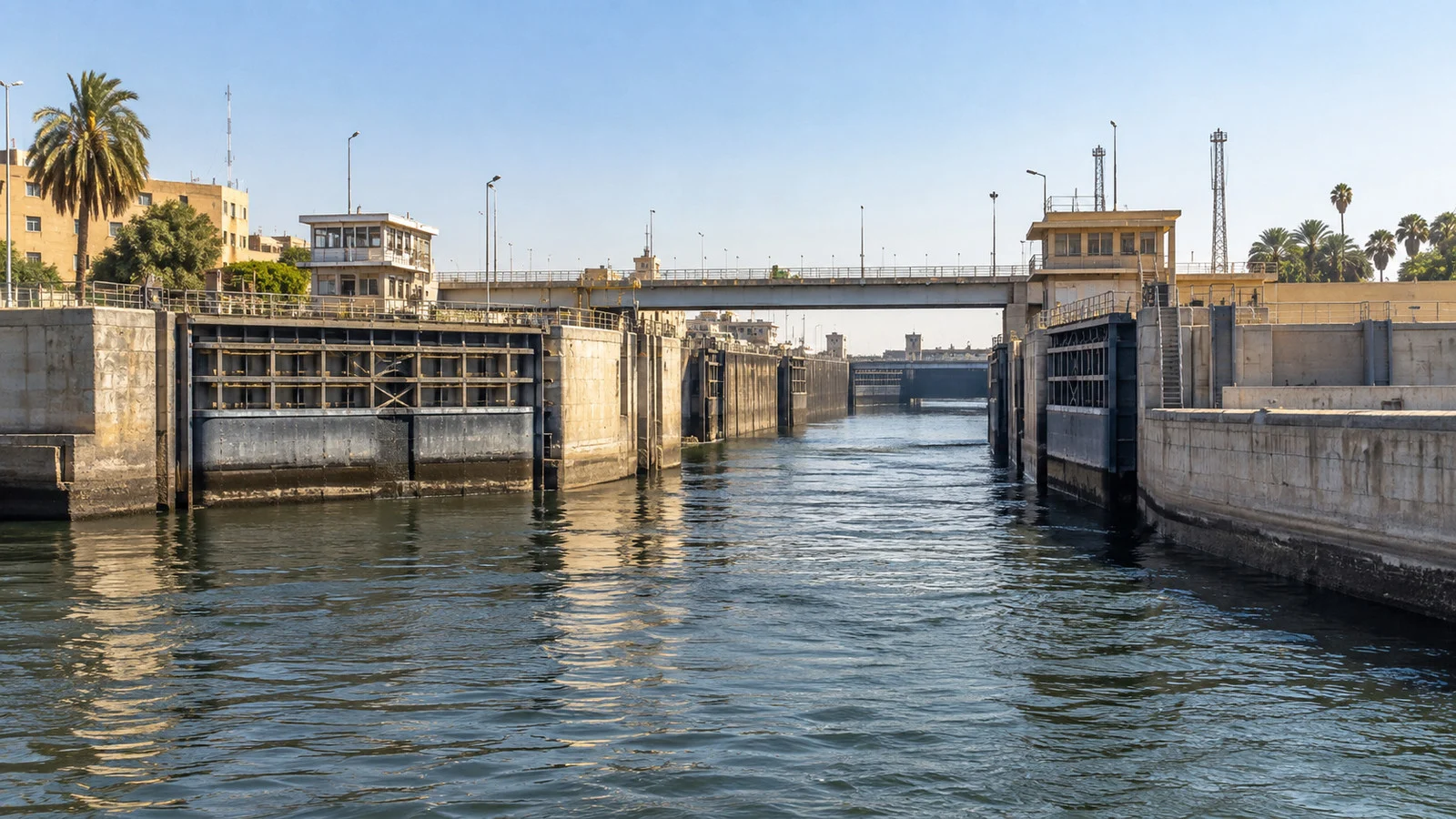
The new Esna barrage controls Nile water levels for irrigation and navigation. A lock chamber lets a vessel enter at one water height, closes the gates, changes the chamber level and releases the ship on the other side.
Egypt’s Ministry of Water Resources and Irrigation says the main modern barrage and its original navigation lock entered service in 1993. A second lock was added in 2008 to improve passage for tourist vessels and keep traffic moving during maintenance.
After a major rehabilitation, the eastern lock’s filling or emptying cycle was reduced from about 22 minutes to no more than 15 minutes. That figure describes the chamber operation, not your total wait in a line of ships.
Approach control, vessel order, gate cycles, maintenance and upstream traffic can make the complete transit much longer. Do not plan an independent appointment by adding 15 minutes to the first sight of concrete.
Current work at the barrage
The Ministry’s May 2026 Esna update describes ongoing modernization of operating, control and monitoring systems at the new barrage. That phase was scheduled for completion in October 2026.
The work discussed spillway-gate systems and related infrastructure rather than announcing a blanket passenger-navigation closure. Still, active engineering and routine lock maintenance are sensible reasons to expect operational sequencing instead of a guaranteed clock time.
The Ministry says the two locks receive scheduled weekly and monthly maintenance, with repairs made when faults occur. Your captain and the waterway authority, not a blog or shore vendor, decide when the vessel can proceed.
The famous lock-side vendors
Small-boat merchants often approach waiting cruise ships with scarves, galabiyas and textiles. Bargaining can happen from deck to boat, with goods tossed up in bags and rejected items or payment tossed back.
It can be funny, skillful and intensely sales-driven at the same time. Keep clear of crew work areas, never lean dangerously over the rail and follow any ship rule restricting purchases or photography.
Agree on the currency and total price before accepting an item. “Twenty” needs an Egyptian-pound or dollar-sized noun attached to it, because textile-based diplomacy becomes less charming when the ship starts moving.
Photograph people only with permission. Egypt’s official tourism guidance requires written consent before photographing Egyptian citizens and forbids photographing children.
Temple of Khnum: what survives
Esna Temple stands in the old center on the Nile’s west bank, roughly 37 miles south of Luxor. It was dedicated principally to the ram-headed creator god Khnum, with other locally important deities represented in its theology and inscriptions.
The surviving monument is primarily the pronaos, or great columned hall, rather than a complete temple complex. Its 24 columns stand in six rows, with richly varied capitals and walls showing Roman emperors performing Egyptian rituals.
The Ministry dates the underlying Ptolemaic construction to the second century BCE and the surviving hall’s completion to the Roman period. Decoration continued under later emperors, leaving dense ritual, calendrical and astronomical texts.
The official Experience Egypt guide to Esna highlights the Latopolitan Zodiac and two cryptographic hymns written largely with ram and crocodile signs. You do not need to read hieroglyphs to appreciate a ceiling that has recently reacquired its color and visual nerve.
Why the colors look so fresh
An Egyptian-German conservation project has been cleaning soot, dust, bird residue and salt from the ceiling, columns and reliefs. The work revealed pigments and details hidden beneath dark deposits for generations.
A recent Ministry inspection reported restoration of the astronomical ceiling and the interior faces of all 18 inner columns, with additional wall and exterior-column work continuing. Restoration zones can therefore affect the precise visitor route even while the temple remains open.
Respect barriers, avoid touching painted surfaces and follow flash instructions at the site. The ceiling does not need a helping hand, however enthusiastic.
Check current temple hours and prices
The official EgyMonuments ticket page was temporarily unavailable during the September 12 review. Do not rely on an older price or schedule without checking the live page or asking your operator.
Prices and hours can change during Ramadan, restoration work or special events. Leave enough time before the last-entry cutoff shown for your visit date.
Cruise excursions often include the admission and guide, but do not assume. Read the excursion inclusions before buying a duplicate nonrefundable ticket online.
The walk from a central landing
From a central west-bank mooring, the temple and old market may be reachable on foot through active town streets. Ask the guide for that day’s walking time because Esna has no universal cruise landing.
The exact distance can expand quickly when a ship uses an outlying berth or passengers must cross another vessel. Heat, traffic, uneven pavement and vendor stops also make a map’s walking time optimistic.
Use the operator’s guide when one is provided. Esna’s old center is compact, but navigating a working market while watching the all-aboard clock is not improved by pretending every alley is a shortcut.
Al-Qisariyya Market is part of the point
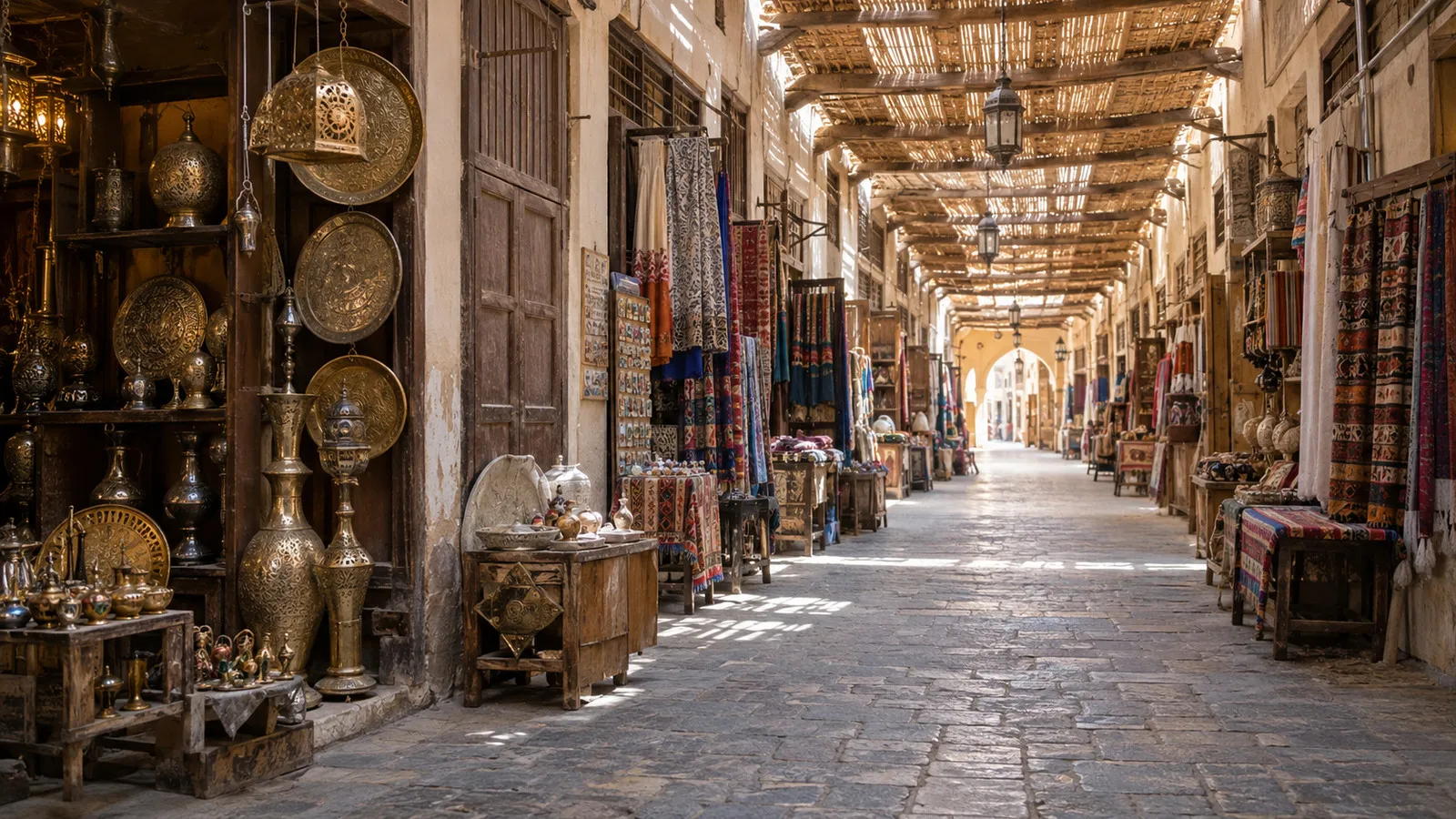
Al-Qisariyya is Esna’s historic market street, associated with textiles, tailoring and local trade. It is not simply a line of souvenir stalls created when cruise ships appeared.
A USAID-supported heritage program upgraded part of the market after consulting owners and tenants, while local merchants invested in their shops. The project’s Esna results report counted 114 shops in the market at that stage.
Walk with awareness because this remains a commercial street serving residents. Ask before photographing vendors, bargain respectfully and leave room for shoppers who did not schedule their errands around your Egyptology.
Textiles can make practical purchases, but inspect stitching and fabric rather than buying only for the performance. Agree on price and currency, then pay with manageable bills.
Wakalat al-Geddawi and the old trading city
Opposite the temple stands Wakalat al-Geddawi, a restored Ottoman-period caravanserai built around an open courtyard. Its lower spaces served trade, while upper rooms accommodated merchants arriving through Upper Egypt’s commercial networks.
The Ministry reopened the building in 2021 after restoration supported by USAID. It now helps explain Esna as a trading town with Islamic and Ottoman history rather than a Roman hall surrounded by unexplained modern buildings.
An official Ministry price schedule previously included entry to the wakala with an Esna Temple ticket. Confirm that arrangement at the counter because ticket bundles and opening patterns can change.
If time is short, view the courtyard and interpretation before returning through the market. Do not enter private, closed or restoration areas simply because the architecture looks inviting.
Accessibility in Esna
Accessibility begins at the ship, and Esna has no universal gangway specification. Mooring height, rafting, shore surface and whether a transfer is used can matter more than the temple’s improved visitor paths.
Egypt’s Ministry says the temple-area upgrade added routes intended to facilitate movement for visitors with disabilities, along with seating, shade and improved visitor services. Its recent project update does not publish gradients, doorway widths or an end-to-end wheelchair route from every cruise landing.
The temple lies below present street level, so confirm the exact accessible entrance and whether all primary viewing areas are reachable without steps. Restoration barriers can also redirect visitors on the day.
The market presents narrower passages, irregular surfaces, crowds and occasional curb changes. The site’s river cruise accessibility guide lists the gangway, transfer and restroom questions worth sending before departure.
Heat, clothing and street comfort
Esna can be intensely hot, and parts of the old-center walk have limited shade. Carry water, use sun protection and take the guide’s pace seriously even when the temple looks close.
Wear light clothing that covers shoulders and knees comfortably for town streets and religious surroundings. Closed walking shoes are more useful than elegant sandals on uneven pavement and busy market lanes.
Keep valuables secure without treating every interaction as a threat. Polite firmness, a clear “no, thank you” and continued walking are more effective than turning a scarf discussion into an international incident.
How Esna itinerary changes usually work
Lock lines can delay a ship before or after the planned visit. Operators may shorten free time, move the guided walk, visit before transiting or classify the night as navigation only.
Maintenance, mooring availability, security instructions and the wider Luxor-Edfu-Kom Ombo schedule can also matter. Nile cruise itineraries are tightly linked, so recovering time at Esna may protect a timed temple visit elsewhere.
Low river conditions are not the only concern on a regulated waterway. Lock operations and berth logistics can disrupt a call even when the ship has sufficient water beneath it.
If Khnum Temple is essential, choose an itinerary that names the excursion rather than merely listing Esna. Reconfirm it in the final documents, because shore excursions remain subject to operational change.
Two realistic Esna plans
Guided shore call: Visit Khnum Temple first, continue through Al-Qisariyya and add Wakalat al-Geddawi only if the guide confirms it is open. Stay with the group and return directly to the assigned gangway.
Long independent window: Buy the temple ticket through the official platform or counter, then walk the market and wakala if the opening hours and all-aboard time allow. Build your return around the assigned berth and the operator’s stated meeting time.
Esna works best as part of a connected Upper Nile plan. The site’s Aswan cruise port guide covers the southern gateway, while the Africa cruise ports guide helps orient the wider region.
Money and shopping
Egyptian pounds are the clearest currency for small market purchases, and small bills reduce the chance of a change dispute. Cards may work at official counters and larger shops but should not be assumed for every vendor.
The official EgyMonuments platform accepts Visa and Mastercard, as do its stated booking channels. Keep the digital ticket accessible offline because a strong signal is not one of Khnum’s guaranteed creations.
Do not buy antiquities, carved fragments or anything represented as genuinely ancient. Reputable textiles, spices and modern crafts are happier souvenirs and involve far fewer conversations with customs officers.
Quick answers
Do all Nile cruises stop at Esna Temple?
No; many pass through the lock without a sightseeing call, while some 2026 itineraries explicitly include the temple and town.
Where do Nile cruise ships dock in Esna?
Operators use different west-bank moorings and lock-side positions; no authoritative public roster supports one universal berth for every vessel.
How long does the Esna Lock take?
The eastern chamber’s fill or empty cycle can take about 15 minutes, but waiting in line and the complete transit may take much longer.
How much is Esna Temple?
Check the official EgyMonuments listing or your excursion documents because the ticket page was temporarily unavailable during the September 12 review.
Can I walk from the ship to Khnum Temple?
Possibly from a central landing, but berth location, rafting, traffic and operator permissions determine whether walking is practical.
Is Esna Temple wheelchair accessible?
The Ministry reports improved accessible paths, but travelers should confirm the exact entrance, gradient, restoration route and gangway for their sailing.
What should I buy in Esna?
Look for modern textiles and local crafts, agree on price and currency first, and avoid anything presented as an antiquity.
How I would protect an Esna visit
Use the cruise operator’s daily program for the landing and lock sequence because Egypt’s water authority can manage navigation works and traffic. A scheduled passage does not guarantee enough shore time for the temple or market.
Check the official monument listing for current admission and opening information, then visit with the guide when the line requires an escort. Carry water, modest clothing and small cash, and return by the operator’s stated meeting time.
Egypt entry and eVisa rules depend on nationality and itinerary, so use the official government portal and cruise line. Temple steps, uneven streets, rafting, steep gangways, and heat require separate access checks rather than one general “accessible” label.
How this guide was researched: No firsthand sailing or site visit is claimed. Details were checked against Viking, Egypt’s water ministry, Experience Egypt and the official monument listing.
Logistics and time-sensitive details were reviewed September 12, 2026. See our Editorial Policy.