Melk Cruise Port: The Abbey, the Walk and Timing
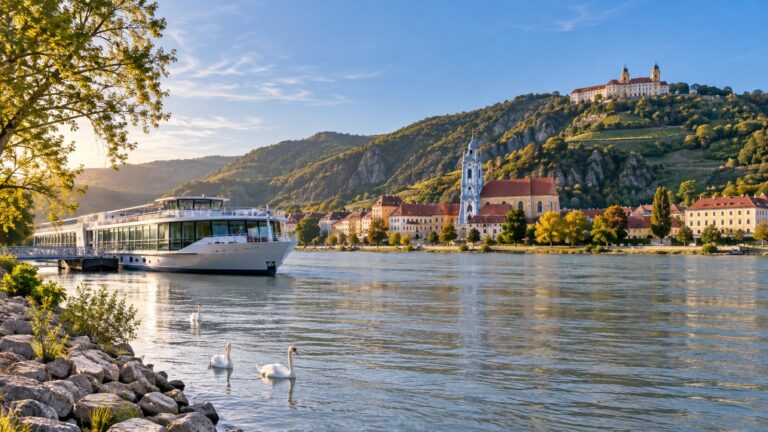
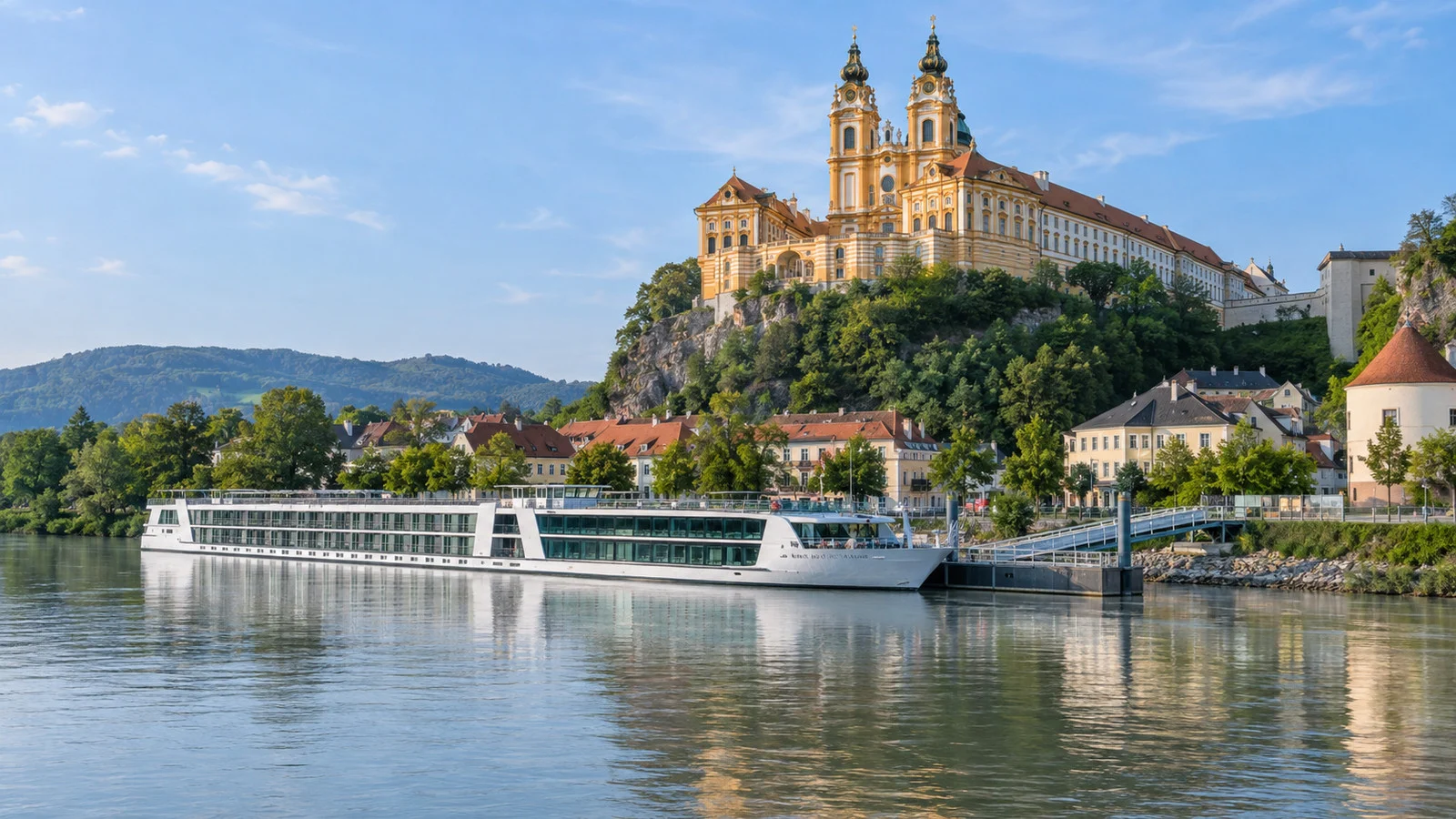
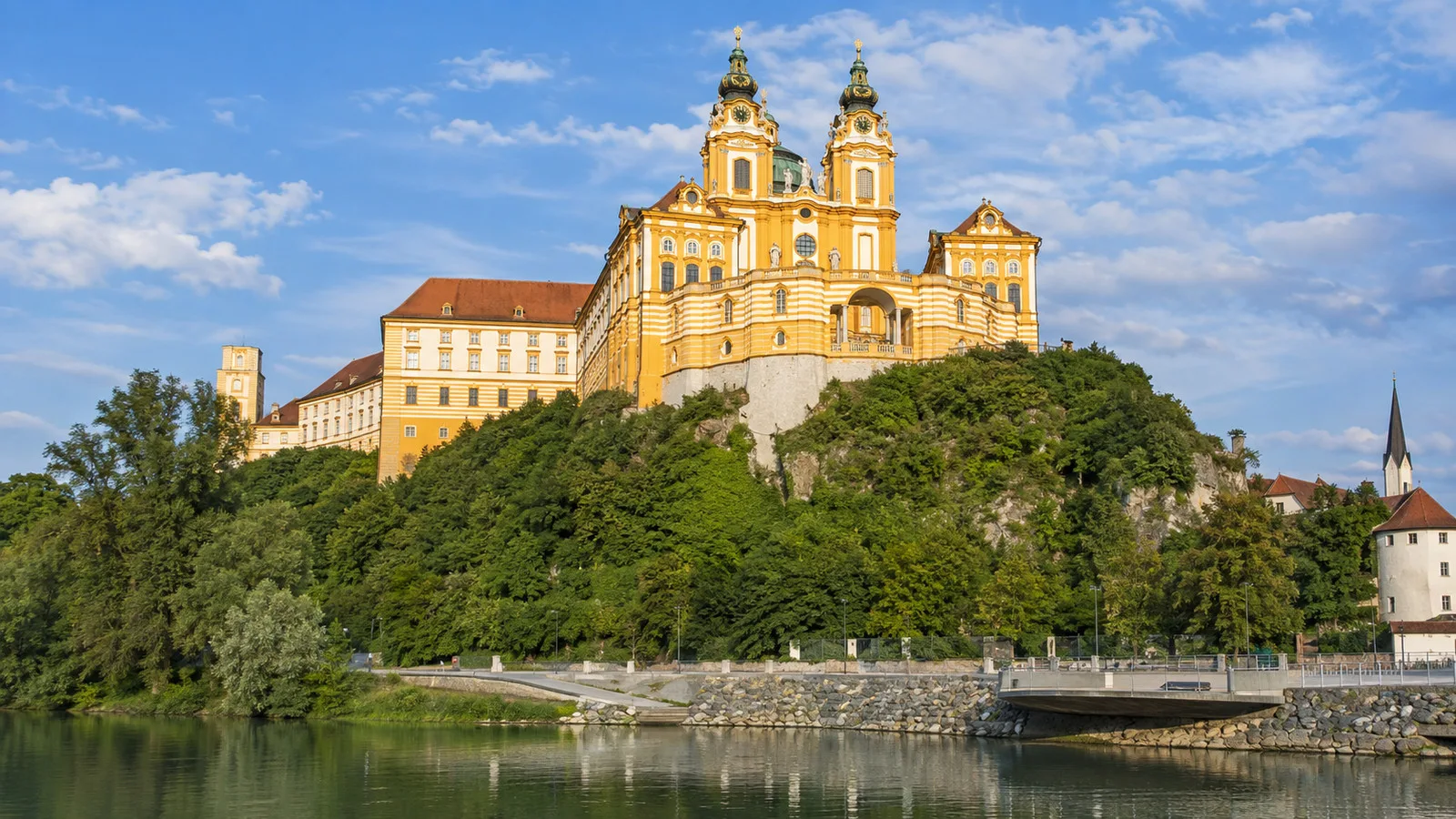
Melk is a compact Danube town dominated by a Benedictine abbey on the rock above it. Most cruise calls revolve around that one extraordinary complex, so the best plan begins with your abbey tour time and works backward to the gangway.
The town and river landing are straightforward, while busy mornings can bring rafted ships and several motorcoach groups to the abbey at once. Use the cruise line’s reserved entry when it fits your interests, then leave time for the park or old center.
Quick Facts
- Country: Austria
- River: Danube
- Region: Western gateway to the UNESCO-listed Wachau Cultural Landscape
- Landing: Riverside pontoons below town, sometimes with ships rafted alongside
- Main sight: Melk Abbey, including museum rooms, Marble Hall, balcony, library, church, and seasonal park
- Transfer: The abbey says the ship station is about a five-minute drive from its parking lot
- Currency: Euro
- Language: German
- Best short-call plan: Abbey tour, park or terrace, old town, and a café stop
- Accessibility note: Most of the abbey visit is accessible with staff assistance, while the park and garden pavilion have limitations
How the Landing Works
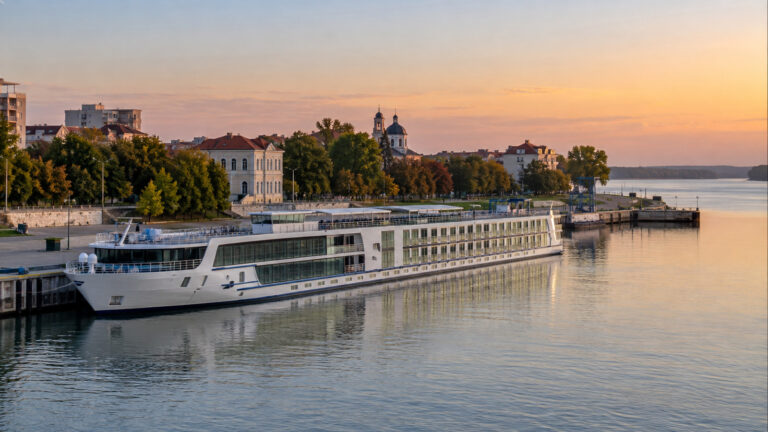
River vessels use pontoon landing stages rather than an ocean-style terminal. When several ships arrive close together, one may secure to the pontoon while others tie alongside it.
Passengers on an outer vessel may cross another ship’s gangway, reception area, or lounge before reaching the bank. Follow crew signs, expect thresholds and steps, and ask for help before entering a crowded crossing.
Most cruise lines use a coach for the uphill trip to the abbey, particularly for included group visits. Independent travelers can walk through town, but the final approach rises and takes longer than the direct map distance suggests.
Save the ship’s landing location and all-aboard time before leaving. Rafting arrangements can change while vessels reposition during the day.
Melk Abbey Hours and Tickets in 2026
The abbey’s official 2026 schedule allows visits with or without a guided tour from March 28 through November 1. It lists 9 a.m. to 5:30 p.m. from April 1 through October 31, with last admission at 5 p.m.
On March 28 through 31 and November 1, hours are 9 a.m. to 4:30 p.m., with last admission at 4 p.m. Winter access changes to scheduled guided visits on many weekdays and broader independent visiting on weekends and Christmas holidays.
The official 2026 adult price is €16, while pupils and students through age 27 with valid identification pay €8. A guided tour adds €4, and the listed family ticket is €32.
English tours for individual travelers run at published seasonal times and last about 50 minutes. Check the abbey’s dated page immediately before your visit because special events, worship, and future seasonal schedules can change access.
What the Abbey Visit Includes
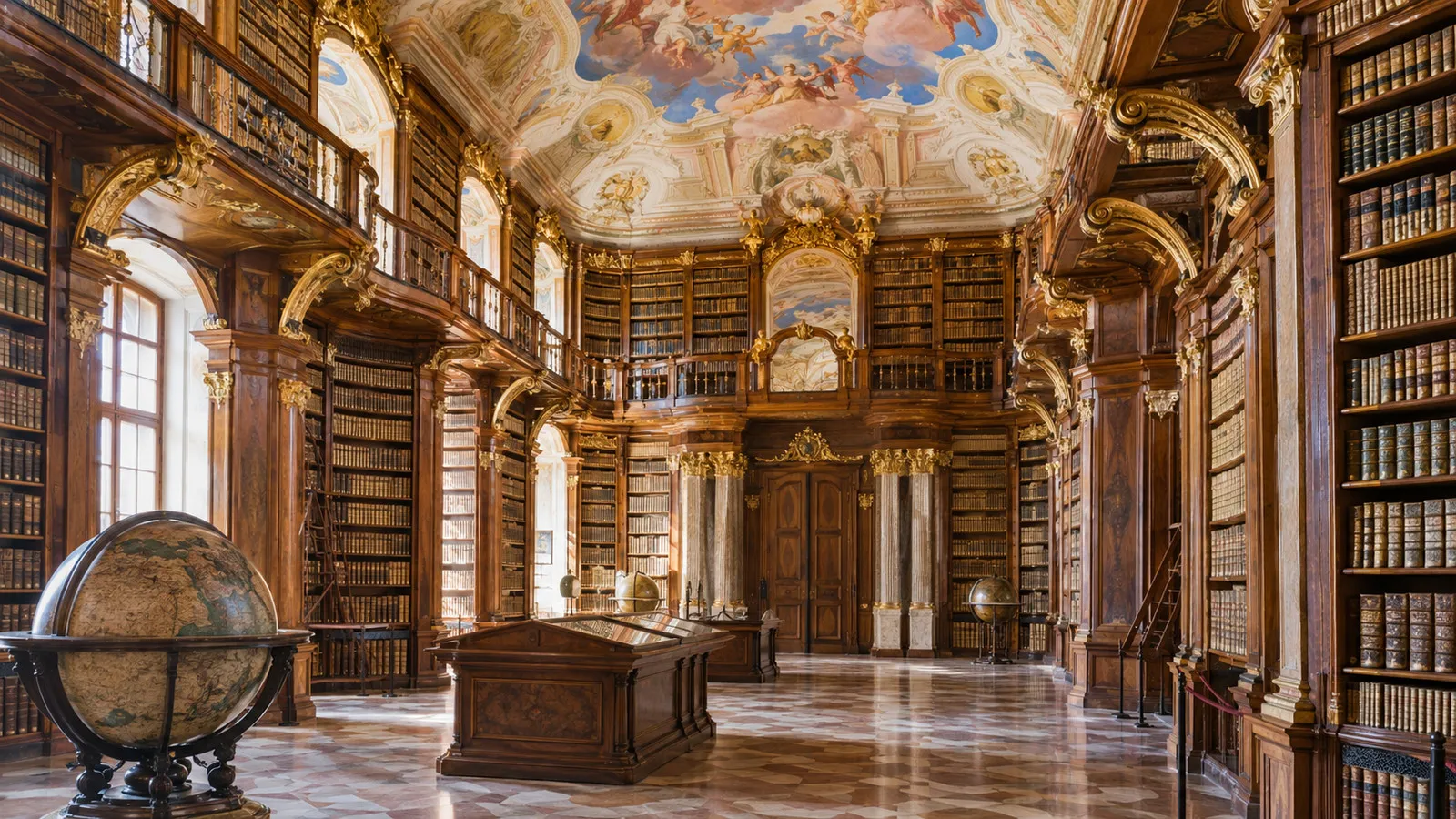
The standard visitor route moves through the Imperial Staircase and Corridor, museum rooms, Marble Hall, balcony, and library. Guests then visit the abbey church independently after a guided tour.
The library and church are the emotional high points for many passengers, but the museum sequence gives them necessary context. Keep pace with your group because fixed entry slots and one-way movement may make backtracking difficult.
Interior photography is restricted, so follow current signs and staff instructions rather than assuming phone cameras are permitted. Outdoor courtyards, terraces, and viewpoints provide plenty of photographic opportunities.
Melk remains an active Benedictine monastery and church. Services, school activity, and community life take priority over sightseeing.
The Abbey Park and Northern Bastion
The park is an excellent counterweight to the busy interior route. In 2026, official park hours run from March 28 through October 31, with longer opening from April 1 through October 24.
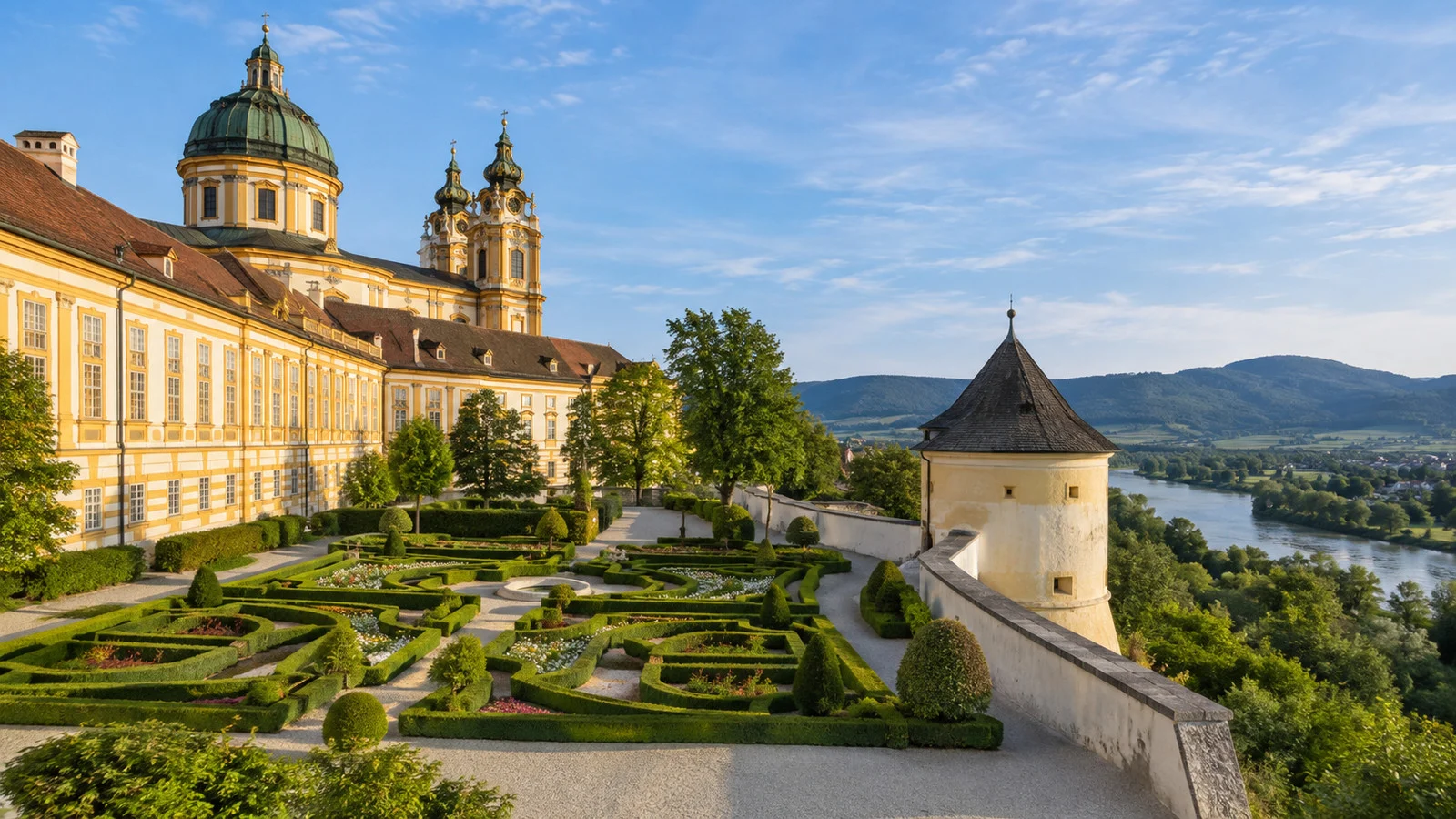
The Baroque garden pavilion, mature landscape, and quieter paths deserve at least 30 minutes when the park is open. The pavilion interior is not wheelchair accessible, and gravel paths may be difficult for mobility devices.
The Northern Bastion and panoramic terrace add another perspective over the complex and surrounding Wachau. Choose either the park or town if your call is short instead of rushing through both.
Walking Through Melk
The old center sits between the river and abbey and is easy to explore on foot. Small squares, historic façades, shops, and cafés turn the route back to the ship into a pleasant extension rather than mere transportation.
The walk is short in distance but includes the slope between town and the abbey terrace. Travelers with limited stamina may take the included coach uphill and walk down only if knees and paving allow.
Restaurants and shops can become busy when several tour groups finish together. If lunch matters, reserve through the ship or choose a café away from the most direct coach route.
Wachau Boats, Bikes, and Rail
Scheduled passenger boats, seasonal trains, buses, bicycles, and taxis can extend a long call into the Wachau. These services operate on specific seasonal calendars, so check the official timetable for your exact date and direction.
Many cruise itineraries already sail through the valley between Melk and Krems, often calling at Dürnstein as well. Before buying another boat ticket, confirm what scenery and towns the ship includes later.
Emmersdorf sits across the Danube and is associated with Wachau rail service, but it is not the same place as the Melk ship station. Reaching it requires additional ground transportation and is better suited to a long or independent stay.
Cycling can work for confident riders with a full day and confirmed one-way logistics. Reserve a properly fitted bike, use a helmet, and leave enough time for crowds and village streets.
Why the Wachau Is UNESCO Listed
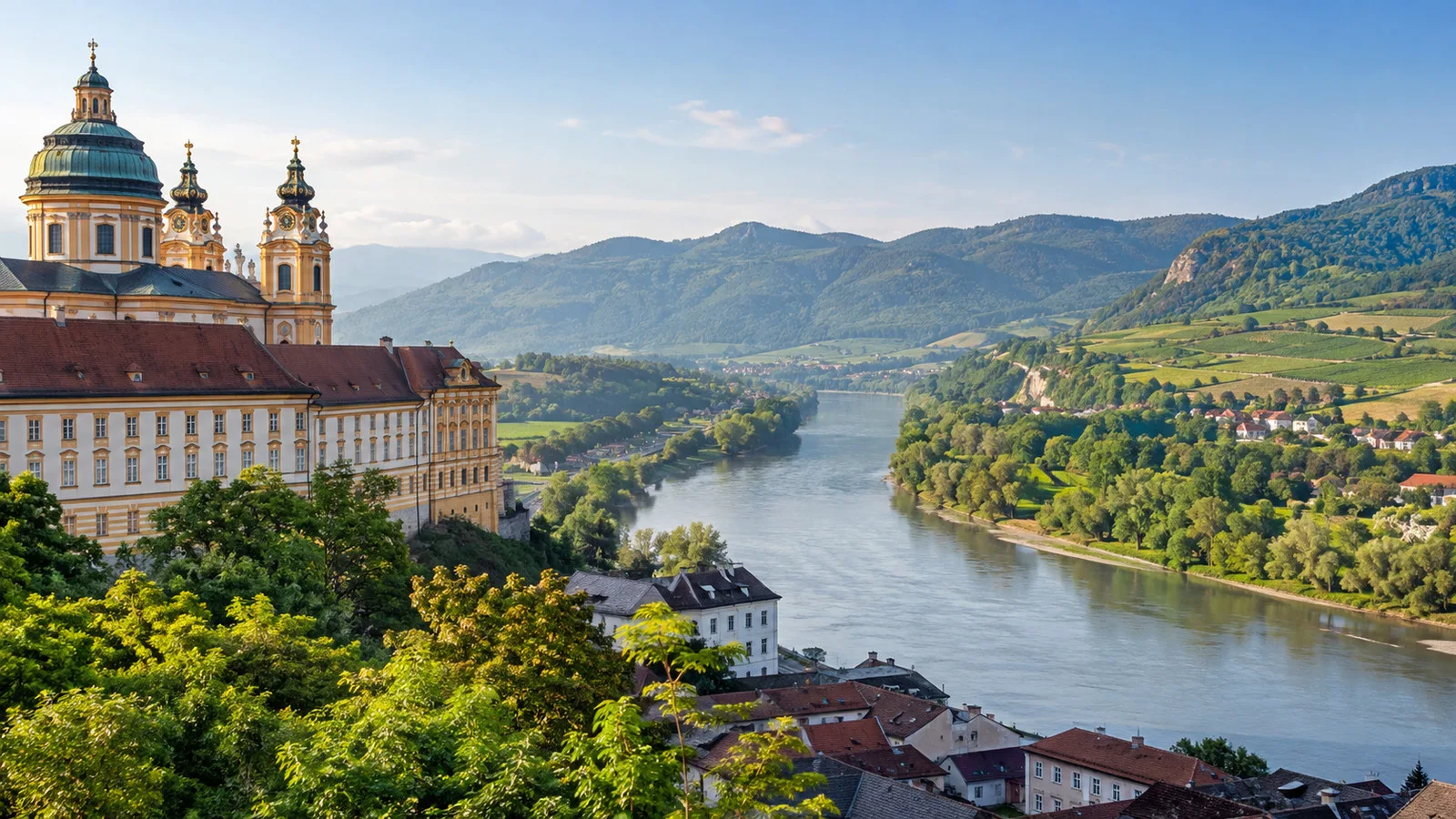
UNESCO describes the Wachau as the Danube Valley between Melk and Krems, preserving architecture, towns, villages, vineyards, apricot orchards, and land use shaped over centuries. Melk Abbey forms one of the landscape’s monumental anchors.
The view from the abbey balcony connects the building to river and farmland better than any isolated room can. Look for terraced slopes, settlement patterns, and the route your ship will follow rather than treating the visit as an indoor museum only.
Water Levels and Itinerary Changes
High or low Danube water can affect navigation, landing positions, gangway angles, and whether a ship reaches Melk. Heavy rain upstream or extended dry weather may produce a coach segment, changed port, ship swap, or revised sailing time.
Keep independent tickets flexible and avoid tight onward plans. The cruise operator must match current conditions with the ship’s draft and itinerary, so its same-day update is more useful than a general forecast.
Accessibility
The abbey says most of its visitor route is wheelchair accessible, with staff helping guests reach areas that lack direct barrier-free access. Check in at the ticket or information counter so the team can organize the correct route.
Accessible restrooms are available in several parts of the complex, and the abbey restaurant is accessible. Two wheelchairs may be reserved for visitors who cannot manage longer distances.
The park’s gravel surfaces can challenge wheelchairs, and the garden pavilion interior is not accessible. Ask about these limitations before buying a separate park ticket.
Getting ashore remains variable because a rafted berth adds ship thresholds, stairs, and multiple gangways. Request help from the crew after the actual mooring arrangement is known.
Three Practical Plans
A Short Morning
Take the included transfer and guided abbey visit, then return through town or by coach. Add the park only if your group finishes with enough time.
A Balanced Half Day
Visit the abbey interior, spend time in the park or Northern Bastion, and walk downhill through old Melk for coffee. This gives both monument and town room to breathe.
A Long Wachau Day
Complete the abbey first, then add one confirmed boat, bicycle, rail, or road extension. Return one connection early and keep the ship’s landing details available offline.
Common Questions
How far is the abbey from the ship?
Melk Abbey says the ship station is about a five-minute drive from its parking lot. Walking means passing through town and climbing to the abbey terrace.
How long is a guided tour?
The official schedule describes an abbey tour of about 50 minutes. Add time for the church, park, Northern Bastion, shop, and town according to your interests.
Can I visit independently?
Yes during the seasons and hours that allow visits without a guide. A ship’s reserved tour may still be valuable on a crowded morning with fixed entry slots.
Is the abbey wheelchair accessible?
Most of the visitor route is accessible with staff assistance, according to the abbey. The park’s gravel and garden pavilion interior have specific limitations.
Final Take
Melk works best as a focused abbey and town visit rather than a platform for too many side trips. Secure the right entry time, look beyond the famous library to the park and landscape, then enjoy the Wachau from the ship.
How this guide was researched: Unless a first-hand visit is explicitly identified above, this guide is based on independent research using official abbey, UNESCO, transportation, tourism, and waterway sources where available. Logistics and time-sensitive details were reviewed on September 12, 2026, under our Editorial Policy.