Harwich Cruise Port: Parkeston Quay and Old Town
Harwich is an easy port once you understand its one important quirk: your ship arrives at Harwich International Port in Parkeston, not beside the historic streets of Harwich old town. The railway station next to the terminal is the link between the working quay and the waterfront most visitors have come to see.
This is a commercial ferry port with solid passenger infrastructure, sheltered berths, and straightforward onward transport. It is also one of those calls where a modest plan often produces the best day, whether that means maritime Harwich, Roman Colchester, or Constable country around Flatford.
Quick Facts
- Port location: Harwich International Port, Parkeston, Harwich, Essex CO12 4SR.
- Arrival type: Cruise ships normally berth alongside, so routine tendering is not part of the call.
- Old town access: Harwich Town is two local rail stops from Harwich International, with Dovercourt between them.
- Rail connection: The station is adjacent to the ferry and cruise terminals, with inland connections made through Manningtree.
- Currency: Pound sterling.
- Language: English.
- Time zone: Greenwich Mean Time in winter and British Summer Time during the seasonal clock change.
- Best simple plan: Ride the train to Harwich Town and explore the lighthouses, harbor, pier, and maritime streets on foot.
- Best larger excursion: Choose either Colchester or Flatford, leaving a generous return margin.
- Accessibility: Confirm the ship’s gangway, any shuttle, and rail assistance separately before travel.
Where cruise ships dock in Harwich
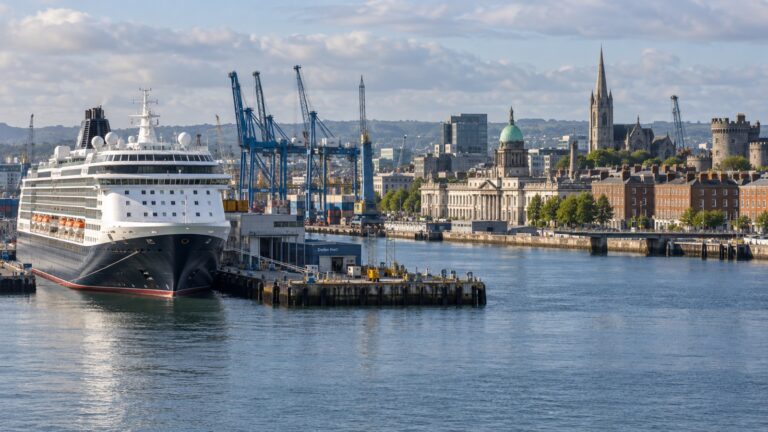
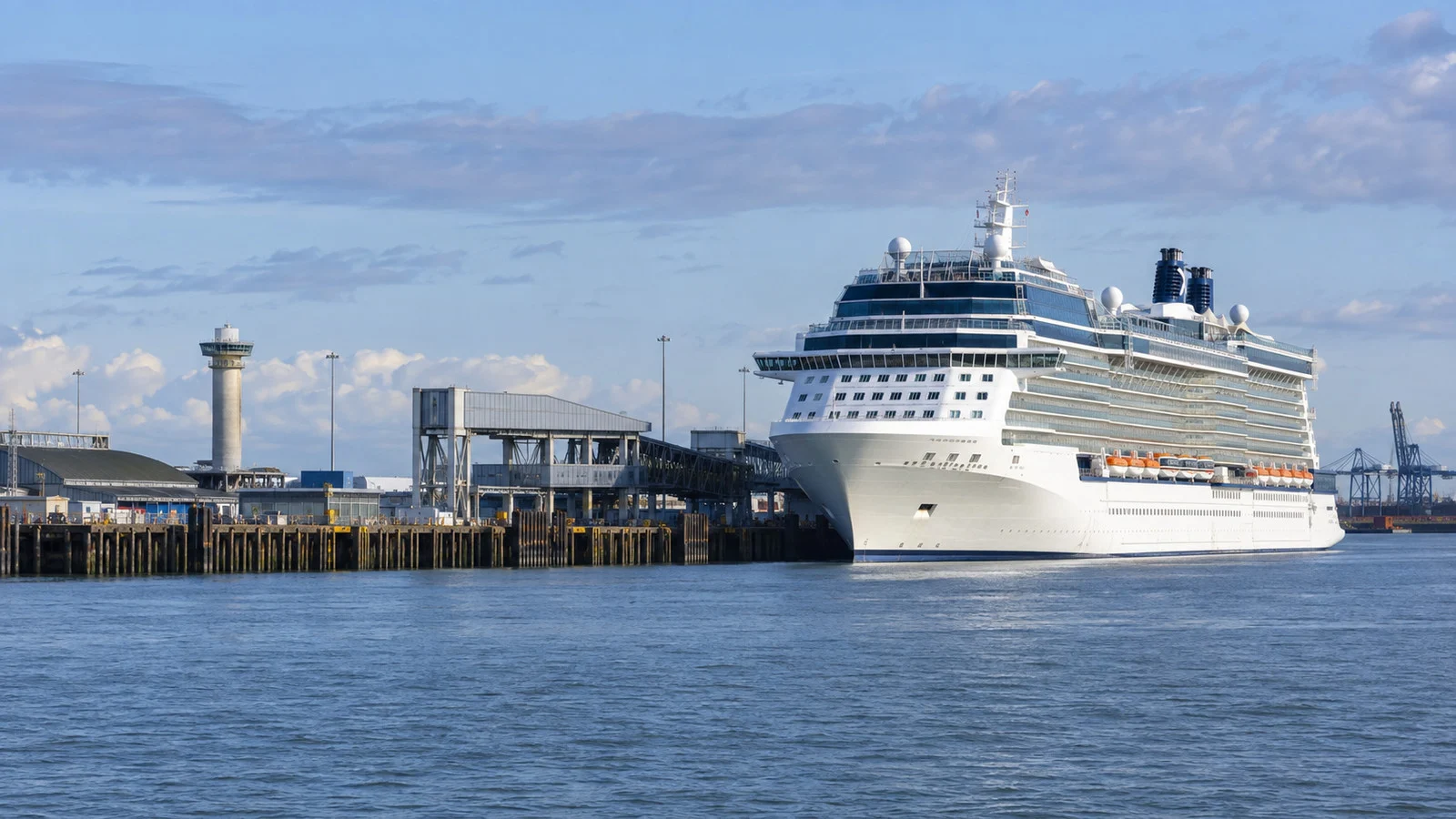
Cruise passengers use Harwich International Port at Parkeston Quay, a working terminal on the River Stour. The historic center of Harwich lies farther east on the peninsula, so the first view from the gangway is functional rather than postcard-pretty.
The port’s official passenger facilities page describes an air-conditioned terminal, airport-style baggage facilities, and a covered walkway connecting the building with the passenger berths. Toilets, accessible facilities, vending machines, a rail ticket machine, passenger lifts, and luggage trolleys are among the listed amenities.
Harwich remains a major ferry gateway, so the terminal may feel busier around a Stena Line sailing even when cruise traffic is light. Follow the signs and instructions issued for your ship because cruise check-in, baggage handling, and security can operate separately from the ferry flow.
Several supermarkets, coffee shops, and casual food outlets sit within about a ten-minute walk of the port, according to the operator. They are useful for forgotten basics, but they should not be confused with Harwich old town or its historic waterfront.
Getting from Parkeston Quay to Harwich
Harwich International railway station is beside the terminal and is usually the cleanest way to reach town. Local trains continue through Dovercourt to Harwich Town, the stop closest to the historic core and Ha’penny Pier.
Check the live Greater Anglia station information and timetable before leaving the ship. Service patterns can change, engineering work can alter weekend journeys, and a missed local train can consume more time than the short distance suggests.
A taxi works well for travelers who prefer door-to-door transport, but quiet call days do not always produce a waiting line of cars. The port publishes local taxi contacts, and arranging the return at the same time is sensible if the ship’s schedule is tight.
Walking from the terminal to the old town is possible in a purely geographic sense, but it is not the pleasant harbor stroll many passengers imagine. The route begins in the working port district, so the train or a booked taxi is the more practical choice, especially with luggage or limited mobility.
A relaxed day in historic Harwich
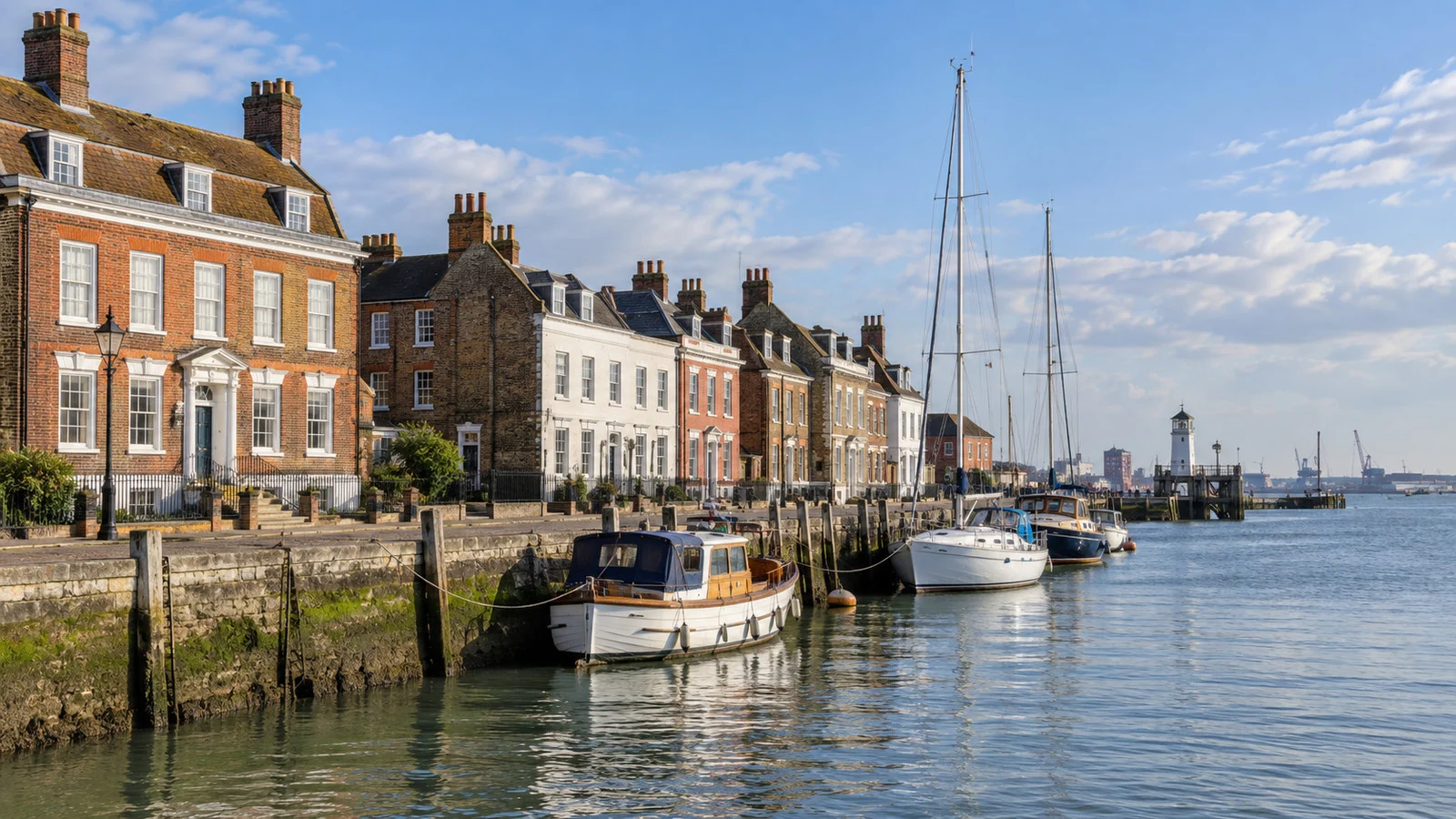
Harwich rewards slow wandering rather than a checklist. From Harwich Town station, the old streets, waterfront, pier, former lighthouses, and maritime landmarks fit into a compact route with plenty of chances to stop and watch the harbor.
Begin around King’s Quay Street and the seafront, then work toward Ha’penny Pier. The harbor view is wonderfully busy, with ferries, pilot boats, yachts, and the container cranes of Felixstowe creating a backdrop that feels unmistakably maritime.
The Harwich Society maintains a local heritage program and looks after several small sites, but volunteer-run opening times can be limited. Treat an interior visit as a bonus unless the published schedule clearly overlaps your call.
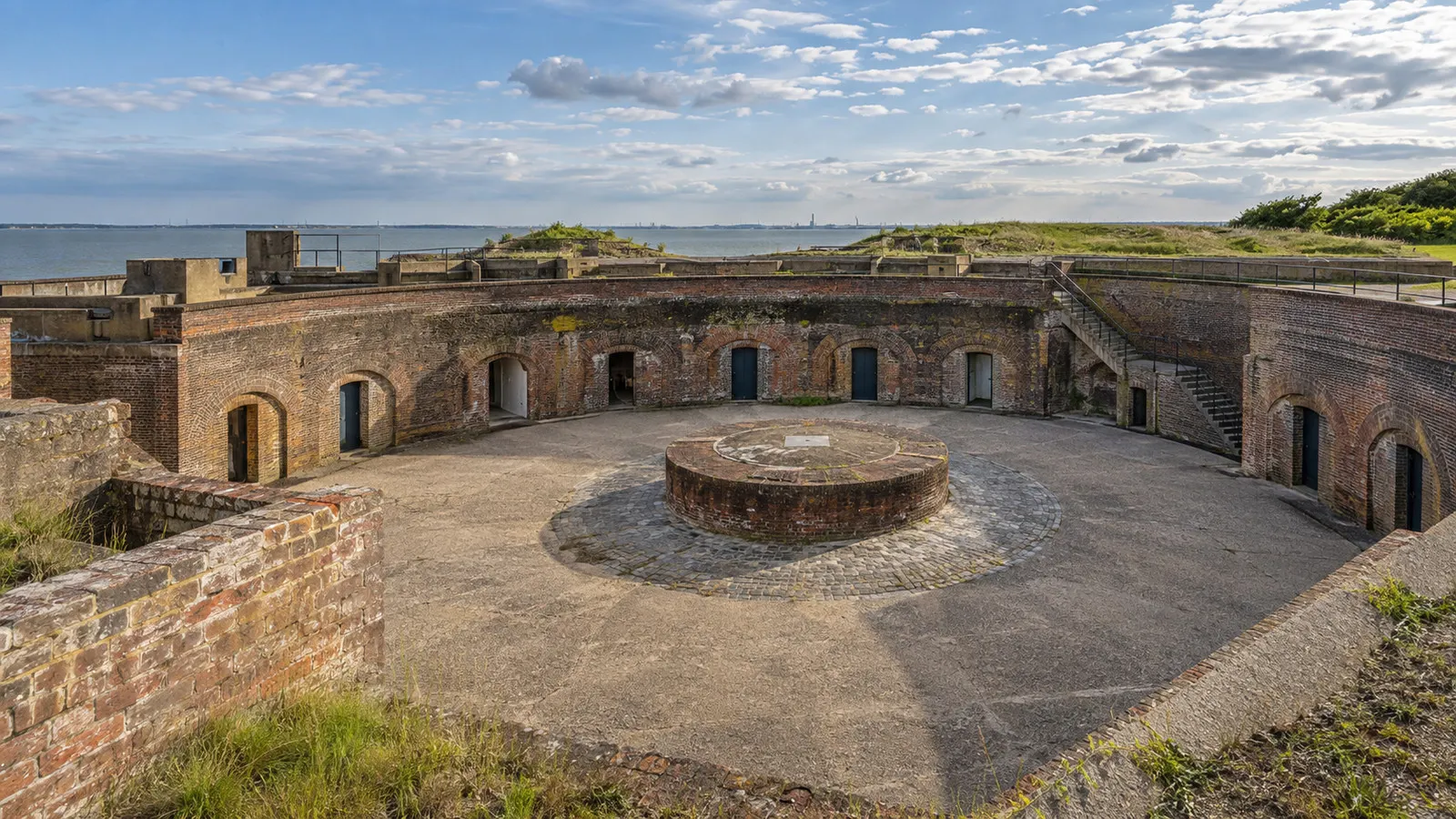
Harwich Redoubt
The circular Harwich Redoubt was built in the early nineteenth century as part of Britain’s coastal defenses during the Napoleonic era. Its brick casemates, central parade ground, and gun positions feel much larger and more atmospheric than the approach from the surrounding residential streets suggests.
The fort is cared for by volunteers and normally operates on seasonal schedules, with special events on selected dates. Check the current opening information before making it the centerpiece of your day, because seeing the exterior is not the same experience as entering the fort.
Expect uneven ground, historic surfaces, steps, and cool interior spaces. Travelers using a wheelchair or walking aid should contact the attraction directly for current route details rather than relying on a general description of the site.
The High and Low Lighthouses
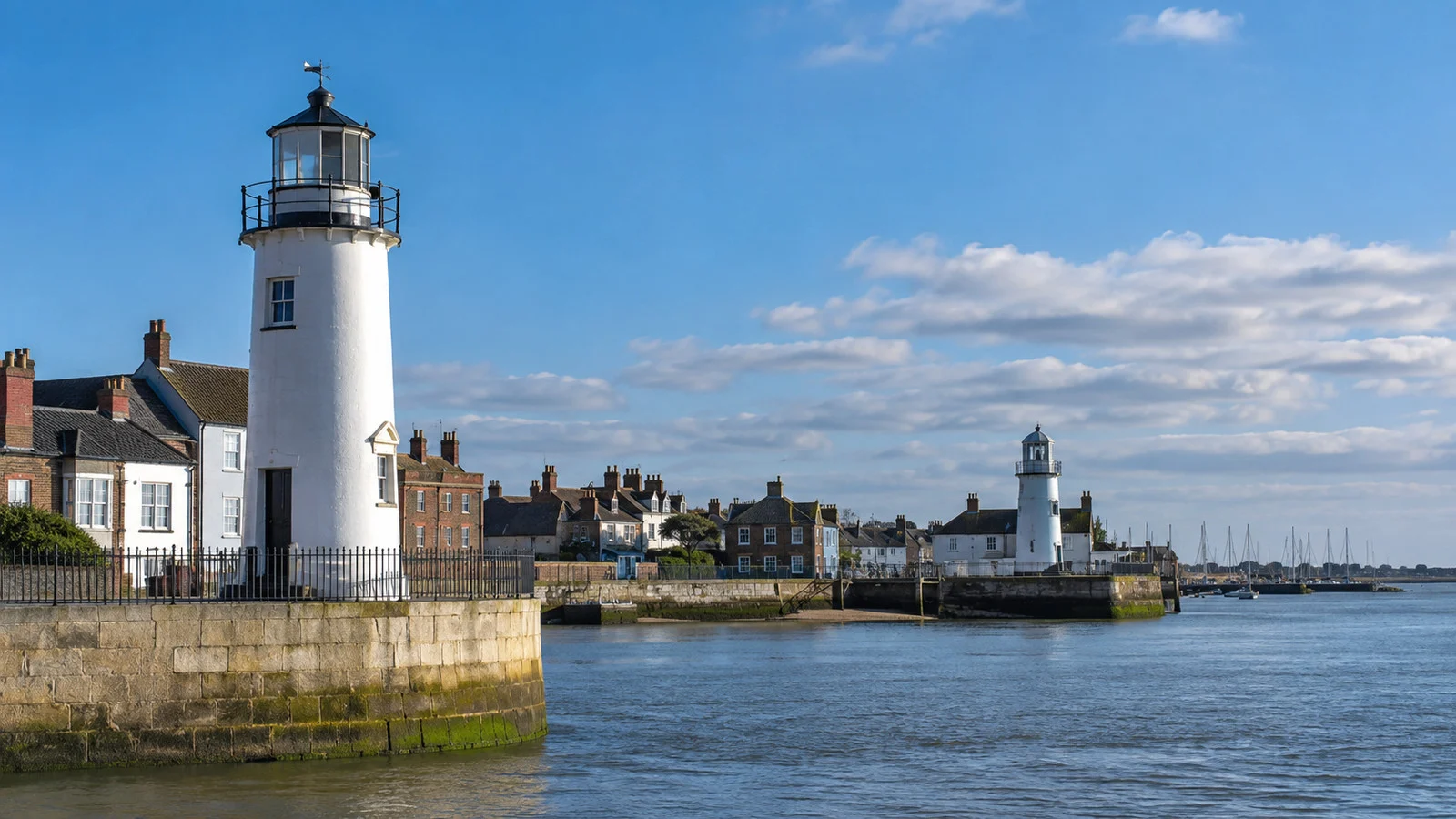
Harwich’s High and Low Lighthouses were built as a pair of leading lights, helping mariners follow the safe line into the harbor. Both survive, even though changes in the navigable channel eventually made their original role obsolete.
The Low Lighthouse on the seafront houses a small maritime museum when open, while the High Lighthouse stands inland along the same historic alignment. Their compact displays and volunteer hours make them better suited to a flexible old-town walk than a rigid timed itinerary.
The High Lighthouse involves a substantial stair climb and has no elevator. Even without going inside, lining up the two towers offers a clear visual lesson in how leading lights once guided ships.
Ha’penny Pier, LV18, and the working harbor
Ha’penny Pier is the natural pause point on the waterfront, with broad views across the confluence of the Stour and Orwell. It is also close to cafes and the town’s central streets, which makes it an easy place to reassess the weather and your remaining time.
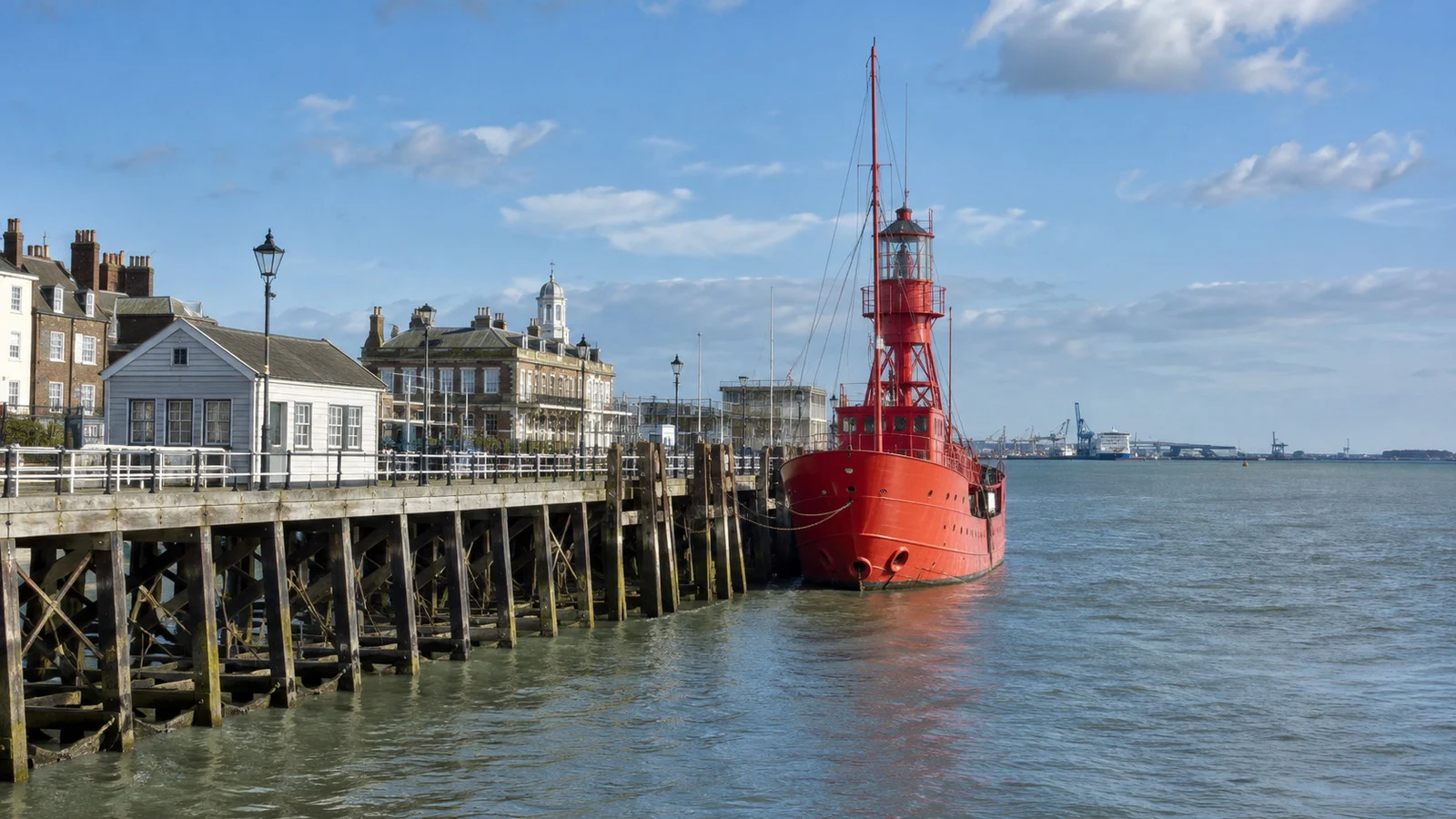
Lightship LV18 is often the brightest object in the scene, its red hull moored close to the pier. Access and events vary, so enjoy it first as part of the harbor landscape and check locally before expecting to board.
Electric Palace Cinema and maritime stories
The Electric Palace is a rare surviving early purpose-built cinema and remains part of the town’s cultural life. Film schedules do not necessarily align with a cruise visit, but the exterior belongs on any architectural walk through old Harwich.
Nearby streets carry connections to Christopher Jones, master of the Mayflower, as well as generations of shipbuilders, sailors, pilots, and ferry workers. The pleasure here comes from finding those stories in an ordinary living town rather than entering one large museum.
Harwich also preserves a seventeenth-century treadwheel crane, another reminder that moving cargo once depended on human power and simple mechanics. Like several local heritage properties, interior access may be limited to specific seasonal opening dates.
Colchester as a shore excursion
Colchester is the strongest independent excursion for travelers who want a larger museum and a deeper Roman story. Rail journeys require a connection through Manningtree, followed by a walk or local transport from the station into the historic center.
Colchester Castle Museum occupies a Norman keep built over the foundations of the Roman Temple of Claudius. Exhibits connect the city’s Roman, Iron Age, medieval, and later history, while special tours and temporary programs can require separate planning.
Use the museum’s official page for current admission, opening hours, and accessibility instead of relying on an old price quoted in a port guide. On a cruise day, the real calculation is the complete return journey, not the fastest advertised train in one direction.
Build in a full earlier-train margin at Manningtree, particularly on a Sunday or during planned engineering work. If the schedule feels tight, Harwich itself is the better choice and does not feel like a consolation prize.
Flatford and Constable Country
Flatford sits in the Dedham Vale landscape associated with John Constable and The Hay Wain. The National Trust cares for key buildings and countryside here, including Bridge Cottage and the setting around Flatford Mill and Willy Lott’s House.
Manningtree is the nearest rail hub, but the final stretch to Flatford is not a simple station-to-door transfer. A country walk may suit active visitors in good weather, while a prebooked taxi or organized excursion is more dependable for anyone managing time or mobility.
Check the National Trust’s Flatford information for current building access, parking, facilities, and seasonal hours. The landscape remains the main attraction, so waterproof footwear matters after rain even when indoor spaces are closed.
Trying to combine Flatford, Colchester Castle, and Harwich old town creates too many transport links for one comfortable call. Pick one inland destination, or keep the day local and save the countryside for a longer stay.
Accessibility at the port and in town
The port lists level or ramped access in its passenger facilities, along with lifts and accessible toilets. That does not guarantee the conditions on your specific ship’s gangway, so arrange assistance through the cruise line before sailing.
Rail accessibility can depend on the platform, lift availability, boarding ramps, and staffing at the time of travel. Book Passenger Assist when appropriate and recheck the journey on the day, including both Harwich International and your destination station.
Historic Harwich is compact, but old paving, curbs, narrow entrances, and stairs affect several attractions. A waterfront route can still be enjoyable without entering every building, and a taxi between the terminal and pier can simplify the day.
Parking and embarkation planning
Passengers beginning a cruise in Harwich should follow signs for the designated cruise parking area, not the public Park and Pay lot. The port says staff normally assist with baggage and a courtesy bus makes the short transfer to the cruise terminal.
Use the port’s current parking and taxi page for arrangements rather than assuming the general parking rates apply to a cruise booking. Confirm any reservation, arrival window, vehicle-height restriction, and accessible transfer directly before departure.
Travelers arriving by train should allow time for the connection at Manningtree and any disruption on the main line. Arriving in the area the day before embarkation gives far more resilience than aiming for the final practical service on sailing day.
Weather and what to wear
Harwich can feel cooler on the quay than an inland forecast suggests because the waterfront is exposed to wind. A light waterproof shell and a layer you can remove are useful even during a bright summer call.
Rain can change the appeal of Flatford’s footpaths and make old paving slippery, while strong wind makes the open pier noticeably colder. Check the local forecast shortly before leaving the ship and keep one indoor alternative in mind.
Winter and shoulder-season daylight also matter if your ship arrives late or departs early. The old town is atmospheric in softer light, but limited attraction hours make a flexible walking route especially valuable outside summer.
Can you visit London from Harwich?
London is connected by rail, usually with a change at Manningtree, but a cruise call is rarely the ideal time to make the trip. The combined outward journey, station transfers, return buffer, and walk from Liverpool Street leave much less sightseeing time than the timetable first suggests.
If Harwich is your embarkation or disembarkation port, London makes sense as a pre-cruise or post-cruise stay. If it is a port call, Colchester or Harwich itself offers a better balance of substance and low-stress logistics.
A sensible Harwich port day
For the easiest independent day, take the local train to Harwich Town, walk the waterfront and historic core, and return one service earlier than the final train you could theoretically use. That plan leaves room for a lighthouse or fort visit if the doors are open without making the whole day depend on volunteer hours.
Choose Colchester when the museum is your priority, or Flatford when the landscape matters more and you have dependable last-mile transport. London belongs before or after the cruise unless your ship offers an unusually long stay and you are comfortable with the rail risk.
Harwich is a quieter member of the United Kingdom’s cruise ports, and that is part of its charm. A working harbor, an old cinema, a pair of redundant lighthouses, and a compact maritime town create a port day that feels specific to the place.
How this guide was researched: This guide was checked against current official port, rail, attraction, operator, and destination information. Operational details were reviewed September 12, 2026; confirm the live berth, transport schedule, attraction hours, accessibility, and cancellation terms before travel.
See our Editorial Policy.