Takamatsu Cruise Port: Berths, Gardens and Island Ferries
Takamatsu can be one of Japan’s easiest independent cruise days when the ship uses the central Sunport berth. Trains, ferries, Tamamo Park, shopping streets, and a very serious bowl of udon all sit close enough to make the city feel unusually cooperative.
The exact berth still controls the day. Confirm whether the ship is at Tamamo or Asahishinmachi before planning a walk, garden visit, or ferry to an island.
Quick Facts
- Destination: Takamatsu, Kagawa Prefecture, Japan
- Main central berth: Tamamo district at Sunport Takamatsu
- Alternate berth: Asahishinmachi Container Terminal
- Nearest station from Tamamo: JR Takamatsu Station, listed about three minutes away on foot
- Main city sights: Ritsurin Garden, Tamamo Park, shopping arcades, and Sunport waterfront
- Island options: Naoshima, Teshima, Shodoshima, Megijima, and Ogijima
- Currency: Japanese yen
- Time zone: Japan Standard Time, UTC plus 9
- Best simple plan: Ritsurin Garden, Tamamo Park, and Sanuki udon
- Island rule: Choose the return ferry before the outbound sailing
- Accessibility: Strong around Sunport, more variable in gardens, ferries, and island transport
Where cruise ships berth
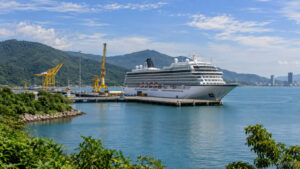
Japan’s official cruise port guide lists two Takamatsu locations for cruise calls. The central Tamamo berth is at Sunport, while the Asahishinmachi Container Terminal lies farther from the main station and visitor district.
The guide places JR Takamatsu Station and its bus facilities about three minutes on foot from the Tamamo location. It describes the station connection from Asahishinmachi as a drive rather than a walk.
That difference is large enough to change an independent plan. A day that begins with a five-minute stroll at Sunport may require a shuttle or taxi from the alternate terminal.
Read the daily program and photograph the all-aboard notice before leaving. Save any shuttle stop and final departure time, because the ship’s berth may not be obvious from the ferry district.
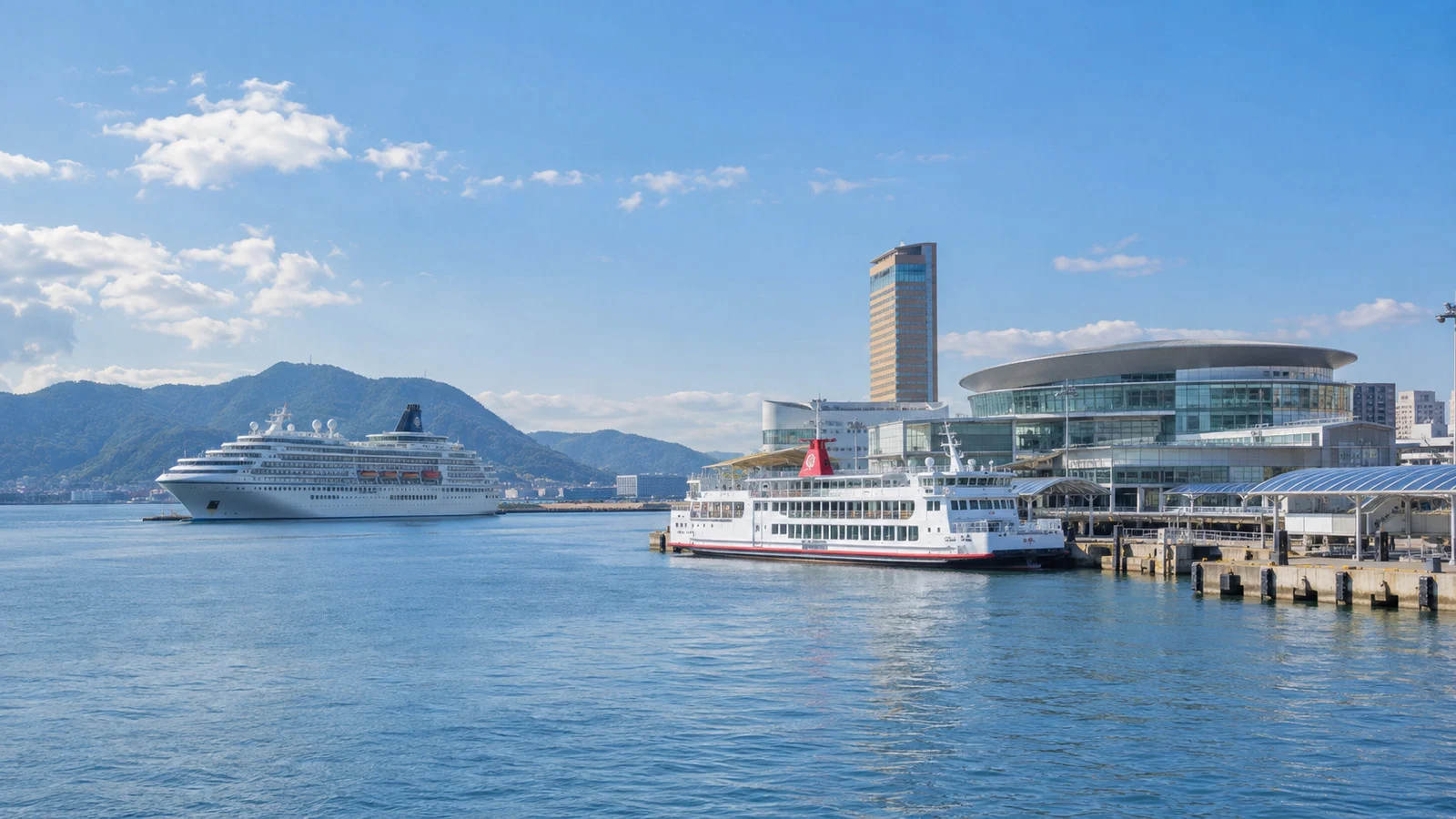
The Tamamo cruise quay
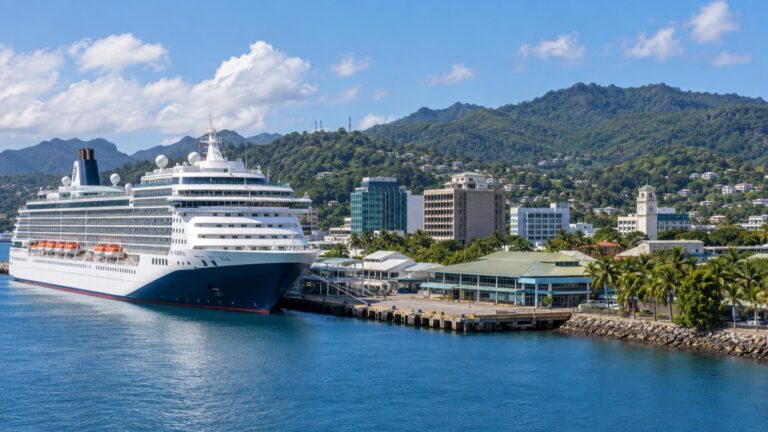
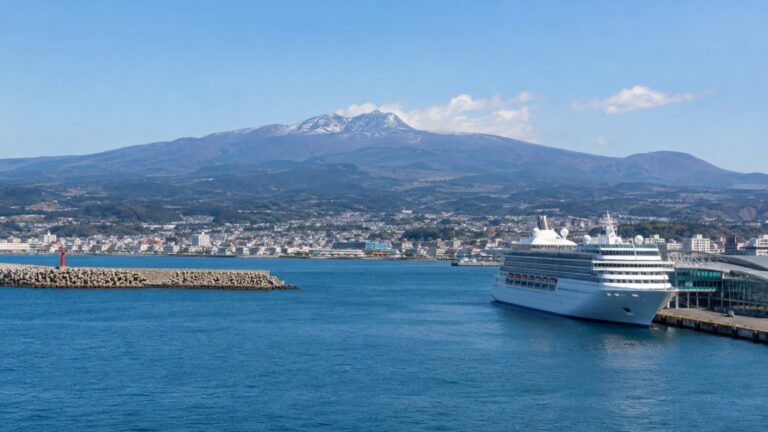
Kagawa Prefecture describes the Tamamo passenger quay as a 50,000-ton-class facility. Its official facilities page lists a 310-meter quay, including an 85-meter dolphin section, with a depth of 10 meters and a 20-meter apron.
Those published dimensions explain why the berth suits many small and mid-size cruise vessels. They do not guarantee that a particular ship will use it, since size, schedule, traffic, and port operations still matter.
The same official page identifies a passenger terminal, ferry and high-speed-boat areas, a rest house, and the red Setoshirube lighthouse. Sunport is a working transport hub rather than a self-contained cruise mall.
When the vessel is central, orientation is easy. JR Takamatsu Station, the island ferry piers, Takamatsu-Chikko rail station, Tamamo Park, and the waterfront sit in the same compact area.
Getting around on foot and by train
Central Takamatsu is flat by Japanese city standards and well suited to walking. The covered shopping arcades provide useful shelter from rain, summer sun, and the moment when a quiet side street becomes more interesting than planned.
Kotoden’s Takamatsu-Chikko station is near Tamamo Park and connects the port area with Ritsurin and other parts of the city. JR Takamatsu Station serves regional rail and sits in the Sunport complex.
Stored-value transport cards may work across much of the network, but card compatibility and ticket products can change. Check the current operator guidance instead of buying a day pass simply because it sounds efficient.
If the ship uses Asahishinmachi, take the provided shuttle when available. Walking from an industrial terminal is not the same experience as leaving the central passenger quay.
Ritsurin Garden
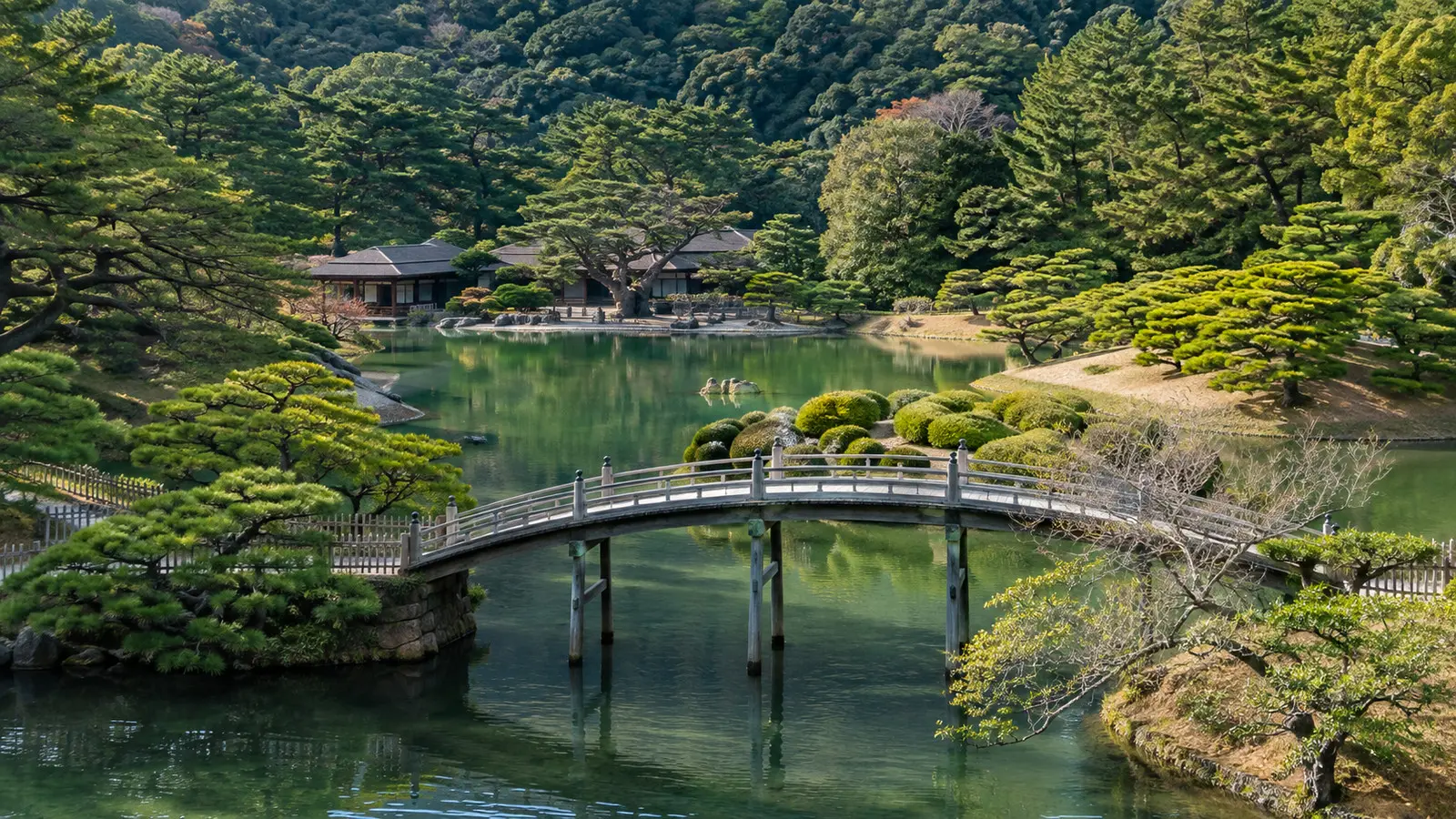
Ritsurin Garden is Takamatsu’s strongest first-time attraction and the safest choice for a port day. Its ponds, bridges, pines, teahouses, and borrowed view of Mount Shiun create a landscape that rewards slow looking.
The garden is designated a Special Place of Scenic Beauty and has developed over several centuries. The experience is not a straight path to one viewpoint, but a series of carefully composed scenes.
Check the official Kagawa visitor information for current seasonal hours and admission. Opening times change through the year, and special events can affect access.
A proper circuit involves gravel, sand, slopes, small bridges, and considerable walking. Travelers with limited time can choose a shorter route around the main southern garden rather than trying to cover every path.
Use Kotoden, a taxi, or a ship excursion depending on the berth and mobility needs. Keep a return option that does not depend on one perfectly timed train.
Tamamo Park and Takamatsu Castle
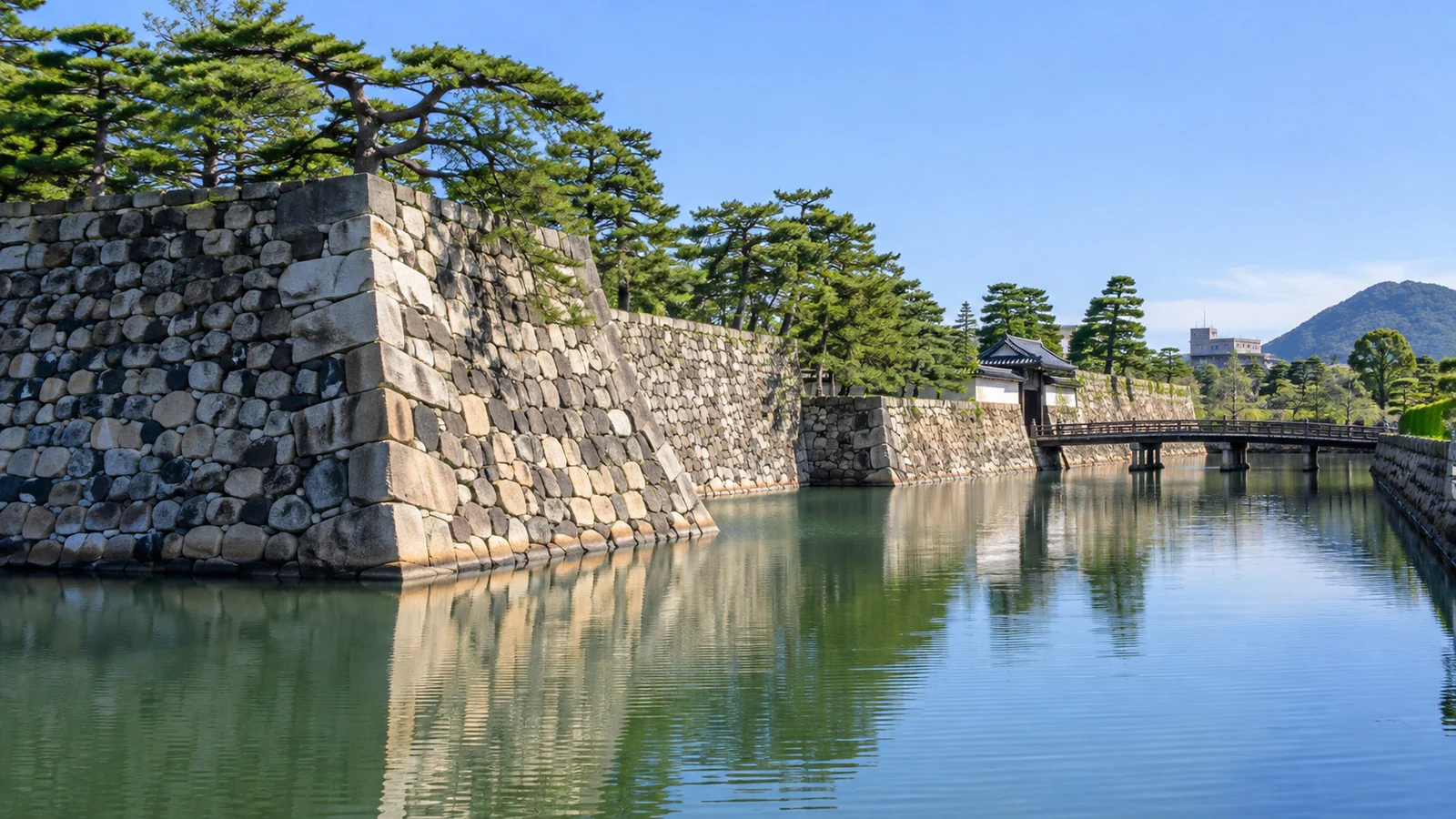
Tamamo Park is the easiest substantial sight from the central berth. It preserves the remains of Takamatsu Castle, a coastal fortress whose moat draws seawater from the harbor.
The original main keep no longer stands, so arrive for moats, walls, surviving turrets, gates, and Hiunkaku rather than a complete castle tower. The relationship between fortification and sea is what makes the site distinctive.
Check the official park information for current hours, admissions, closures, and building access. Seasonal schedules can change, and some historic structures include steps.
Tamamo Park works well before or after Ritsurin Garden. It is also a sensible fallback if a ferry is canceled or the ship’s call becomes shorter.
The island ferry decision
Takamatsu is a major gateway to the islands of the Seto Inland Sea. Naoshima, Teshima, Shodoshima, Megijima, and Ogijima are all tempting, but every island plan has two schedules: the boat and what happens after landing.
Start with the ship’s all-aboard time and work backward. Choose a comfortable return sailing, identify the next backup, then decide whether the outbound ferry leaves enough useful time ashore.
The Benesse Art Site Naoshima access page publishes ferry and high-speed-boat schedules between Takamatsu and Miyanoura. It specifically warns that the two vessel types use different piers in both ports.
Do not assume that seeing a boat at the waterfront means you have found your departure. Confirm the company, destination, pier number, ticket rules, and whether the service carries only passengers or also vehicles.
Weather, maintenance, festivals, and seasonal operations can alter timetables. Recheck the ferry operator on the morning of the call instead of relying on a screenshot made months earlier.
Can you visit Naoshima on a cruise day?
Yes, when the port call is long and the return plan has a generous buffer. Takamatsu is one of the main gateways to Naoshima, and Miyanoura provides access to island buses and major art areas.
The challenge begins after the ferry. Museum reservations, open-day calendars, local buses, bicycle availability, hills, and distances between art sites all consume time.
Several major art facilities have regular closure days or timed admission. Check the official open-days calendar and book required tickets before treating the island as your port-day centerpiece.
On a short call, remain in Takamatsu. Ritsurin Garden, Tamamo Park, udon, and the waterfront create a complete day without risking the only comfortable ferry back.
On a long call or overnight, Naoshima can be worth the arithmetic. Return on an earlier sailing than the final possible boat and keep enough time to reach the gangway from the ferry pier.
Other islands from Takamatsu
Megijima and Ogijima can suit travelers who want smaller island communities and coastal scenery. Their ferry schedules still require the same return-first planning.
Teshima has major contemporary art sites but introduces another layer of ferry and bus coordination. Shodoshima is larger, with ports and attractions spread far enough apart that a vehicle or organized tour may be necessary.
Do not combine multiple islands during a normal cruise call. Ferry connections that look elegant on paper leave little protection against a delay.
A Triennale year can bring additional art, crowds, and service changes, while an ordinary year has a different rhythm. Confirm the current event calendar rather than borrowing a festival itinerary from a previous season.
Mount Yashima and Yashimaji
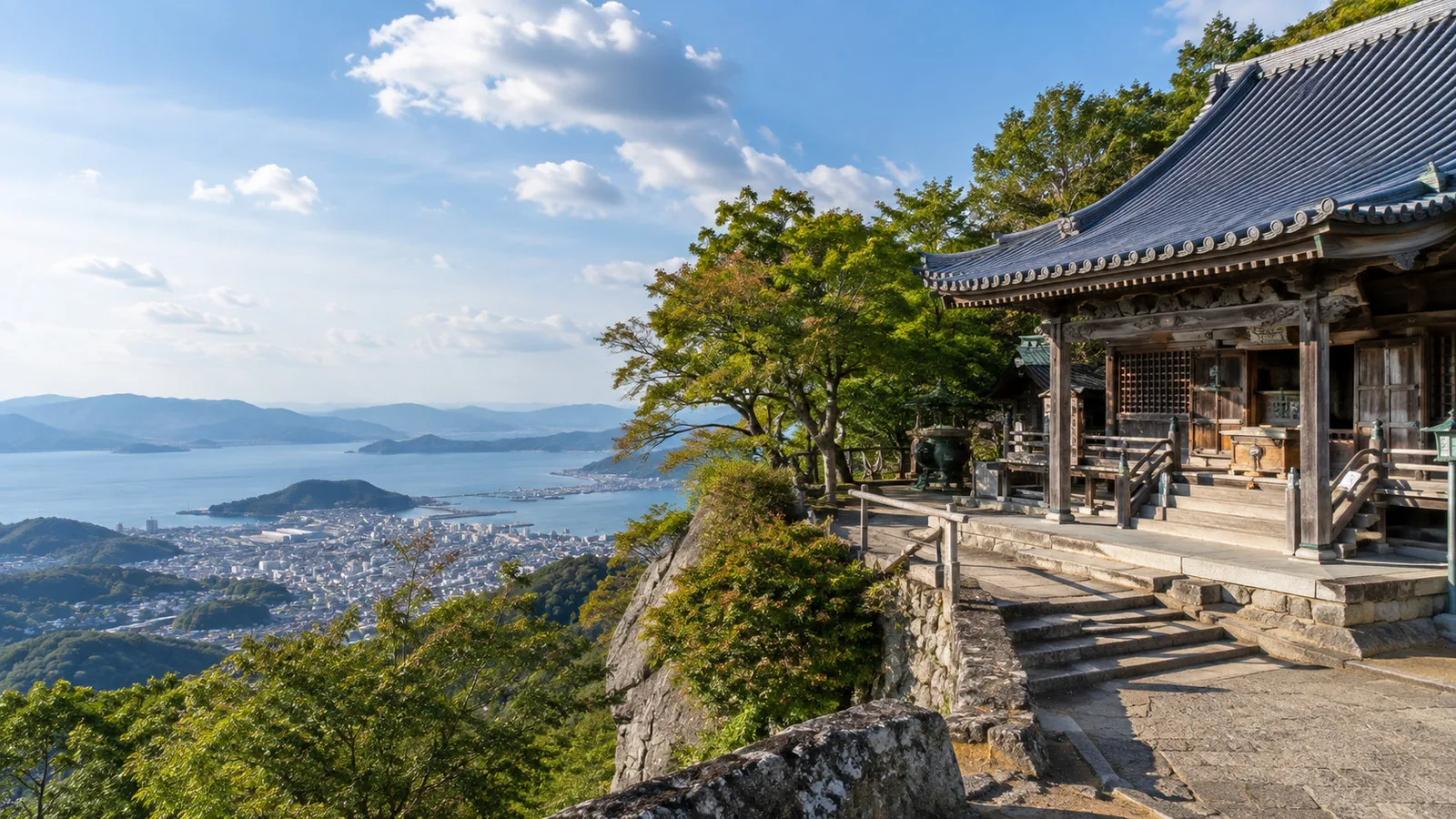
Yashima is a flat-topped plateau east of central Takamatsu with wide views across the Seto Inland Sea. Yashimaji is temple 84 on the Shikoku pilgrimage and adds religious and historical context.
The summit is not a simple walk from the port. Public transport, a shuttle connection, or a taxi is needed for the final approach.
Choose Yashima when views and temple history matter more than an island crossing. It is easier to abandon or shorten than a ferry trip if weather or port timing changes.
Sanuki udon
Kagawa is famous for Sanuki udon, with thick, resilient noodles served in styles ranging from simple broth to chilled dipping preparations. A small local shop can be one of the day’s best stops.
Many popular shops open early and close when the day’s noodles sell out. Eat before late-afternoon sightseeing rather than assuming every recommendation serves dinner.
Ordering systems vary, especially at self-service shops. Watch the person ahead, choose the noodle size and temperature, then add toppings before paying.
Carry some yen because smaller restaurants may not accept every card. Return trays and dishes as directed, and avoid turning a busy counter into a tutorial on international payment networks.
Sunport waterfront and Setoshirube
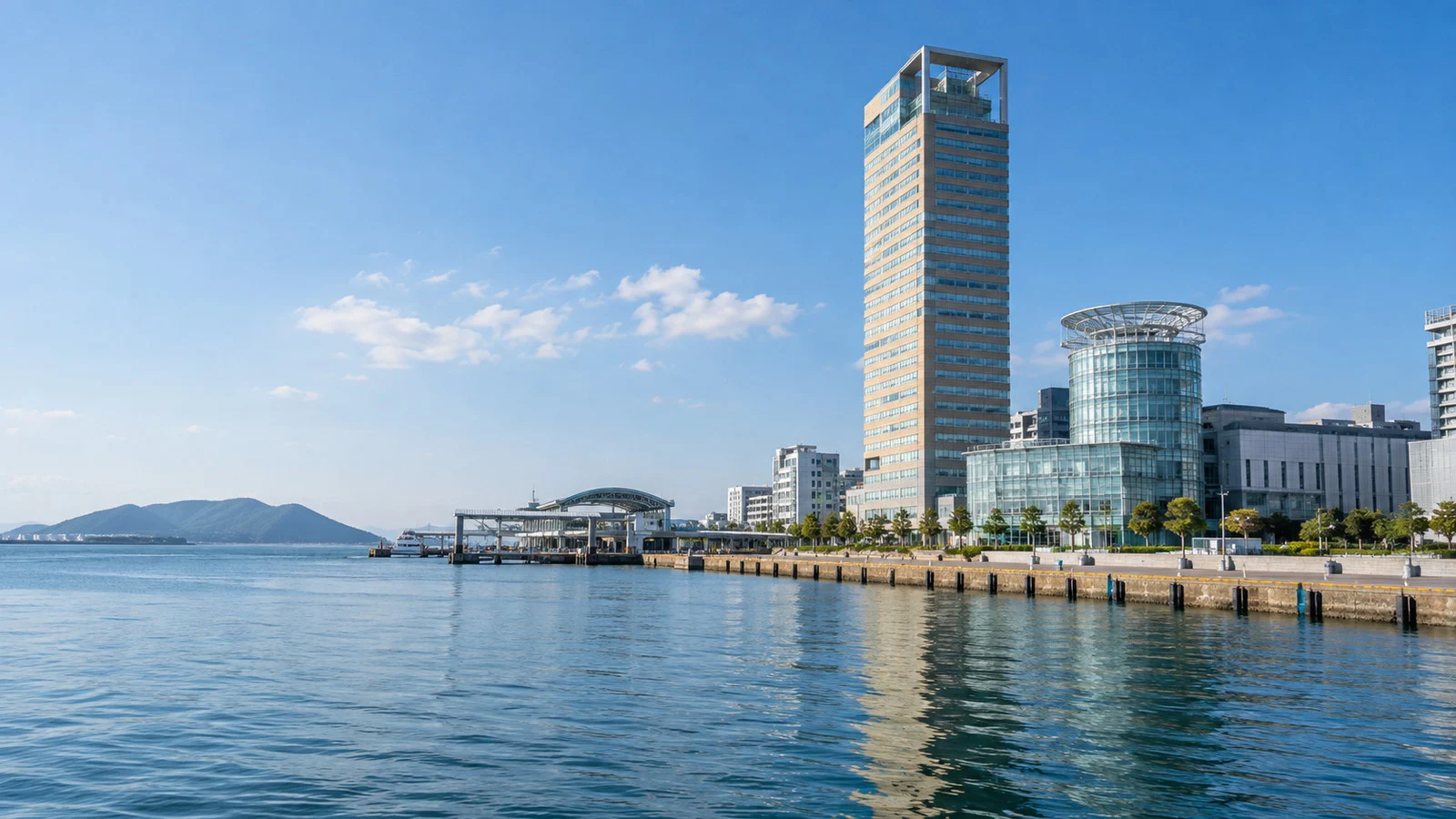
The Sunport promenade is ideal for a short walk before departure. It offers views of ferries, islands, the cruise ship, and the changing light across the inland sea.
Kagawa Prefecture identifies the red Setoshirube beacon as the world’s first glass lighthouse. The walk along the breakwater is exposed, so wind, heat, rain, and the distance back to the ship deserve attention.
The waterfront is also a useful fallback when Ritsurin or an island no longer fits. A port day does not fail because the plan becomes udon, castle walls, ferries, and a lighthouse.
Accessibility
Sunport’s modern plazas and station approaches are generally the easiest part of the day for mobility. The ship’s gangway angle, exact berth, shuttle, and any terminal restrictions still need confirmation.
Ritsurin Garden offers beautiful routes but includes gravel, sand, bridges, slopes, and long distances. Ask about wheelchair availability and request the most suitable shorter circuit.
Tamamo Park is more compact, although walls, turrets, and historic interiors include steps. A grounds visit can remain satisfying when upper areas are inaccessible.
Island ferries are the weakest link in an accessible plan. Boarding ramps vary with vessel and tide, high-speed boats can be tighter than car ferries, and island buses may have limited space.
Ask the ferry operator about step-free boarding for the exact sailing and mobility device. Do not infer vessel access from a level terminal building.
Weather and typhoon planning
Takamatsu has a relatively mild and dry climate by Japanese standards, but summer can be hot and humid. Carry water, sun protection, and a light rain layer even when the morning looks settled.
Typhoons and strong winds can disrupt cruise ships, local ferries, trains, and flights. Check the Japan Meteorological Agency, the ship, and the ferry operator when severe weather is possible.
Never pressure a local operator to maintain a sailing for your cruise schedule. A canceled island trip is disappointing, but it is safer than losing the only return during deteriorating conditions.
Spring and autumn often suit long walks better than midsummer. Seasonal gardens and island light can be beautiful without requiring festival crowds.
Three sensible Takamatsu plans
For a short call, visit Tamamo Park, explore Sunport, eat Sanuki udon, and walk part of the shopping arcade. This plan remains flexible if the berth or weather changes.
For a full city day, make Ritsurin Garden the centerpiece and add Tamamo Park or the central arcades. Use Kotoden or a taxi to reduce walking when needed.
For a long call or overnight, choose one island with confirmed ferries, attraction openings, reservations, and a comfortable return. Naoshima is the obvious art choice, but it is not the automatic best plan for every schedule.
Common questions
How close is the port to JR Takamatsu Station?
The official cruise port guide places the station about three minutes on foot from the central Tamamo berth. The alternate Asahishinmachi terminal requires a road transfer.
Do cruise ships tender at Takamatsu?
The official guide lists alongside berths at Tamamo and Asahishinmachi. The exact assignment and gangway arrangement still depend on the vessel and call.
Can you visit Naoshima independently?
Yes, if the call is long and the return ferry, museum openings, reservations, island transport, and weather all align. Choose the return sailing before buying the outbound ticket.
Do you need cash?
Carry yen for small udon shops, local buses, temple offerings, and backup. Larger transport facilities and attractions may accept cards, but payment methods can vary.
The last word
Takamatsu gives cruise passengers a rare luxury: a rewarding city plan that does not require a heroic transfer. Ritsurin Garden, Tamamo Park, udon, and the waterfront can fill the day without ever boarding an island ferry.
Choose an island only when the timetable and ship schedule leave comfortable room for failure. The art will still be there on a future trip, while the all-aboard time has very little interest in artistic interpretation.
Research note
This guide was desk-researched on September 12, 2026 using Japan’s official cruise port guide, Kagawa Prefecture port information, Kagawa tourism guidance, and Benesse Art Site Naoshima. It does not claim a personal sailing, berth inspection, garden visit, or island trip.
Berths, ferry timetables, fares, attraction hours, reservations, accessibility, and weather can change, so confirm final details with the ship and official operators before travel.