Mississippi River Cruise Ports: New Orleans to St. Paul
A Mississippi River cruise is not a chain of polished terminals linked by a scenic waterway. It is a journey through working cities, levee landings, industrial reaches, bluff towns, locks, floodplains, music history, and communities whose relationship with the river changes from one bend to the next.
That variety is the appeal, but it also explains why the exact landing and daily plan matter. A ship may berth beside downtown in one city and lower its bow ramp toward a remote bank in the next, with an included motorcoach becoming the only practical connection to the advertised destination.
Quick take
Treat the lower and upper Mississippi as two distinct cruise experiences. New Orleans to Memphis brings food, music, plantation sites, Civil War history, and a broad open river, while Saint Louis to Saint Paul brings locks, wooded bluffs, smaller river towns, and a stronger sense of the engineered navigation system.
The mistake is expecting a European-style stroll into town at every stop. Some calls are wonderfully independent, but others work only because the cruise line has arranged a coach between a functional landing and the place named on the itinerary.
Quick Facts
- Core regions: Lower Mississippi from New Orleans toward Saint Louis, and Upper Mississippi from the Saint Louis area toward Saint Paul
- Typical landing: City wharf, floating dock, levee, or temporary riverbank landing
- Getting ashore: Usually by gangway or bow ramp rather than tender
- Into town: Walkable at selected city landings, but often dependent on an included motorcoach
- Currency: United States dollar
- Language: English
- Time zone: Central Time across the main New Orleans to Saint Paul route
- Navigation difference: The lower river is open navigation, while the upper route uses a system of locks and dams
- Main disruption risks: High water, low water, fog, storms, dredging, lock closures, landing conditions, and river traffic
- Best planning rule: Confirm the exact landing and daily program aboard because the itinerary name alone is not enough
Why the landings feel different from ocean cruise ports
Mississippi riverboats are built to work with varied waterfronts. On some vessels, a long ramp extends from the bow, allowing the crew to create a walkway where no conventional passenger terminal exists.
The result can be convenient and surprisingly simple, but it is not uniform. Ramp angle, surface, distance to the coach, and walk into town all depend on the landing and the river level that day.
Do not search only for a city’s “cruise terminal” before sailing. Ask the ship’s front desk for the current landing name, nearest street address, local contact, and whether guests may walk away independently.
If you book a private guide, send the live pin or written directions supplied onboard. A driver waiting at a famous riverfront several miles away is not useful when the ship has moved to an operational berth.
Who sails the Mississippi now
American Cruise Lines operates multiple United States riverboats on Mississippi itineraries, while Viking markets voyages aboard Viking Mississippi. Both companies publish lower, upper, and broader river programs, but routes, durations, ships, and included experiences change by season.
Use the American Cruise Lines Mississippi page or Viking’s official Mississippi listings for current products. The itinerary attached to your own booking remains the controlling document, especially when a brochure groups several departures under one name.
Do not use an older port list to plan nonrefundable tours. Operators may alter a landing, substitute a town, reverse the order, add a hotel night, or use a motorcoach connection when river operations require it.
The lower river from New Orleans to Memphis
The lower Mississippi feels large, powerful, and commercial. Ocean-going ships, towboats, barges, refineries, grain facilities, flood-control structures, and broad bends remind you that this is one of the country’s major transportation corridors.
New Orleans is the natural place to add time because it offers far more than an embarkation morning can hold. Arrive at least one night early, and preferably two, if the French Quarter, Garden District, music, museums, or Creole and Cajun food matter to you.
River-cruise hotel and transfer arrangements vary, so follow the operator’s directions rather than assuming you will board at the same terminal as a large ocean ship. Keep medicine and documents with you when luggage is transferred separately.
New Orleans
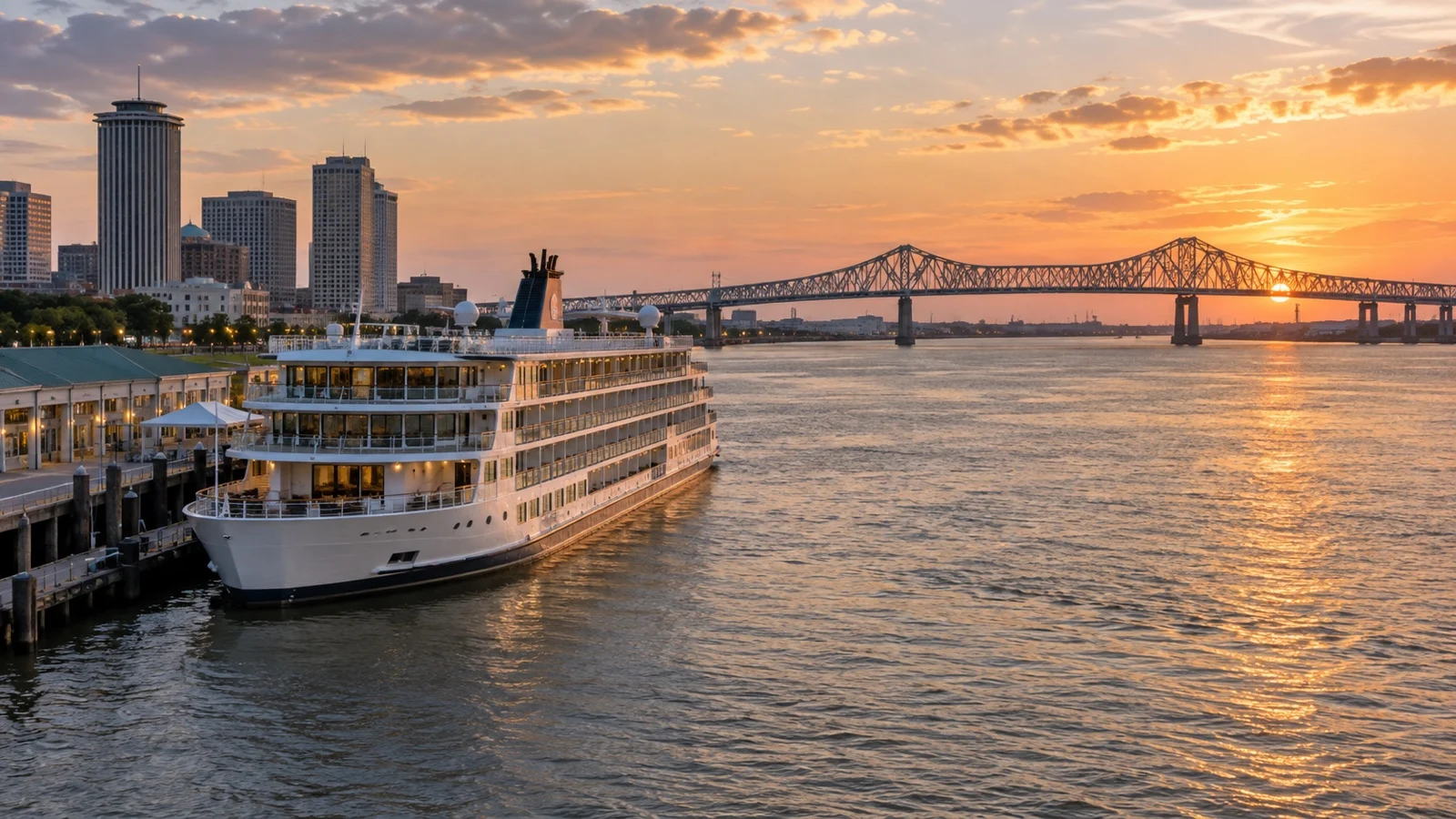
New Orleans rewards independent exploration better than almost any other stop on the river. Streetcars, taxis, rideshare, walking routes, and a dense historic core make it possible to build a day around your own interests rather than a single panoramic loop.
Heat, humidity, uneven sidewalks, festivals, and heavy rain can change the effort quickly. Build a slower pace than the map suggests, reserve major meals if needed, and return to the assigned meeting point rather than to a remembered riverfront dock.
Saint Francisville
Saint Francisville sits above the river landscape and offers a compact historic-town atmosphere. The day’s logistics may involve a landing and coach connection, so listen carefully for shuttle frequency and the final departure from town.
This is a place to choose a few buildings, gardens, or local stories rather than rush through a checklist. Shade and restrooms deserve attention in warm months, particularly for travelers who walk slowly.
Natchez
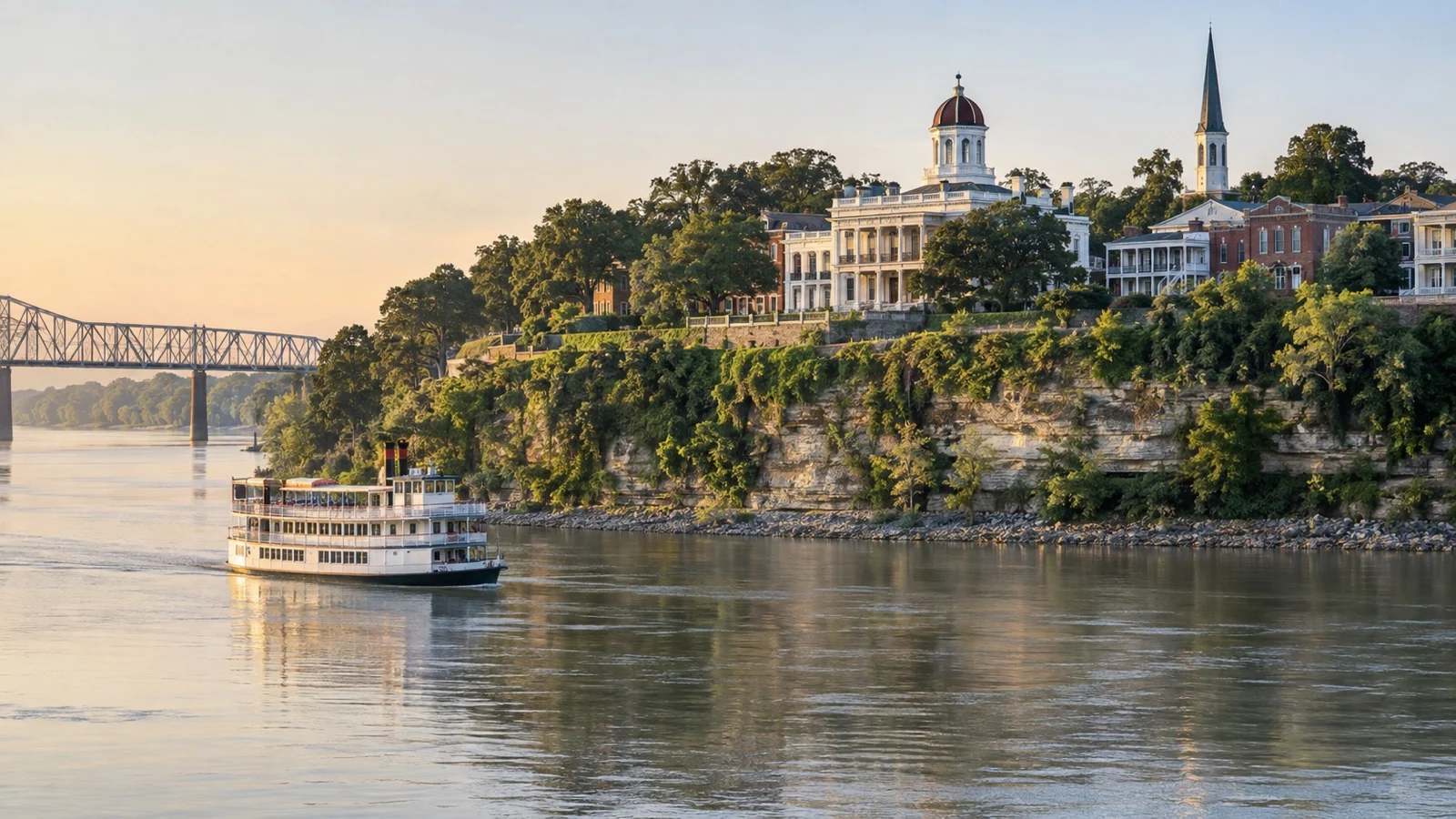
Natchez occupies a bluff above the Mississippi, with the Under-the-Hill waterfront below and historic districts higher up. The vertical separation matters because a short distance on the map can involve a real climb.
Use a shuttle or included tour when offered, then decide whether to return downhill on foot. Historic houses have varied steps, thresholds, and accessibility, so select the property that fits your interests and mobility rather than assuming every tour is similar.
Vicksburg
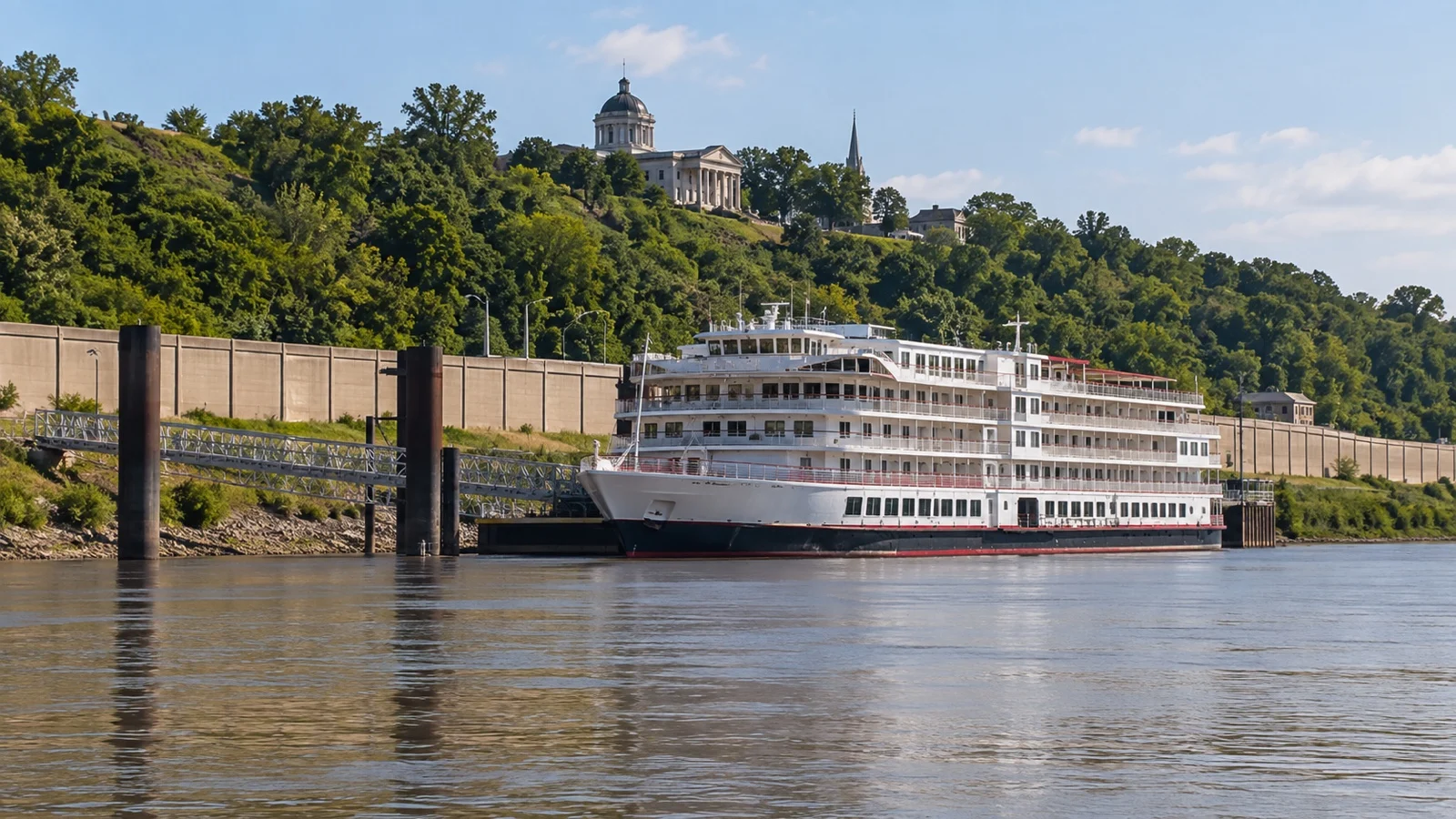
Vicksburg is the most substantial military-history day on the lower river. The National Park Service preserves the campaign and siege landscape, along with monuments, earthworks, and the recovered ironclad USS Cairo.
The park is spread out, making a guided vehicle tour more useful than trying to understand it from a single stop. Check the official Vicksburg National Military Park site for current roads, hours, closures, facilities, and accessibility before relying on a particular route.
Memphis
Memphis can overwhelm a one-day plan because Beale Street, the National Civil Rights Museum, Stax, Sun Studio, Graceland, barbecue, and river history pull in different directions. Pick two priorities and accept that the rest belong to another trip.
The city offers more independent transportation than a rural landing, but your ship may not be beside the attraction district. Confirm the berth, local traffic, and all-aboard time before leaving the cruise program.
Music museums often use timed tours or sell out, while Graceland requires a longer transfer than many first-time visitors expect. Reserve only what fits a conservative schedule and leave space for an early return.
The river changes above Saint Louis
The lower river below the Saint Louis region operates without the staircase of navigation locks seen farther north. Above it, locks and dams maintain a navigable channel through a sequence of pools, changing both the scenery and the ship’s daily rhythm.
A lock passage can be fascinating from the open deck. The vessel enters a chamber, gates close, water level changes, and the ship continues at the elevation of the next pool.
Lock timing depends on traffic, maintenance, river conditions, and operations, so the schedule cannot be treated like a train timetable. A tow with barges may occupy the chamber, and the riverboat’s passage can happen at an inconvenient hour.
Saint Louis
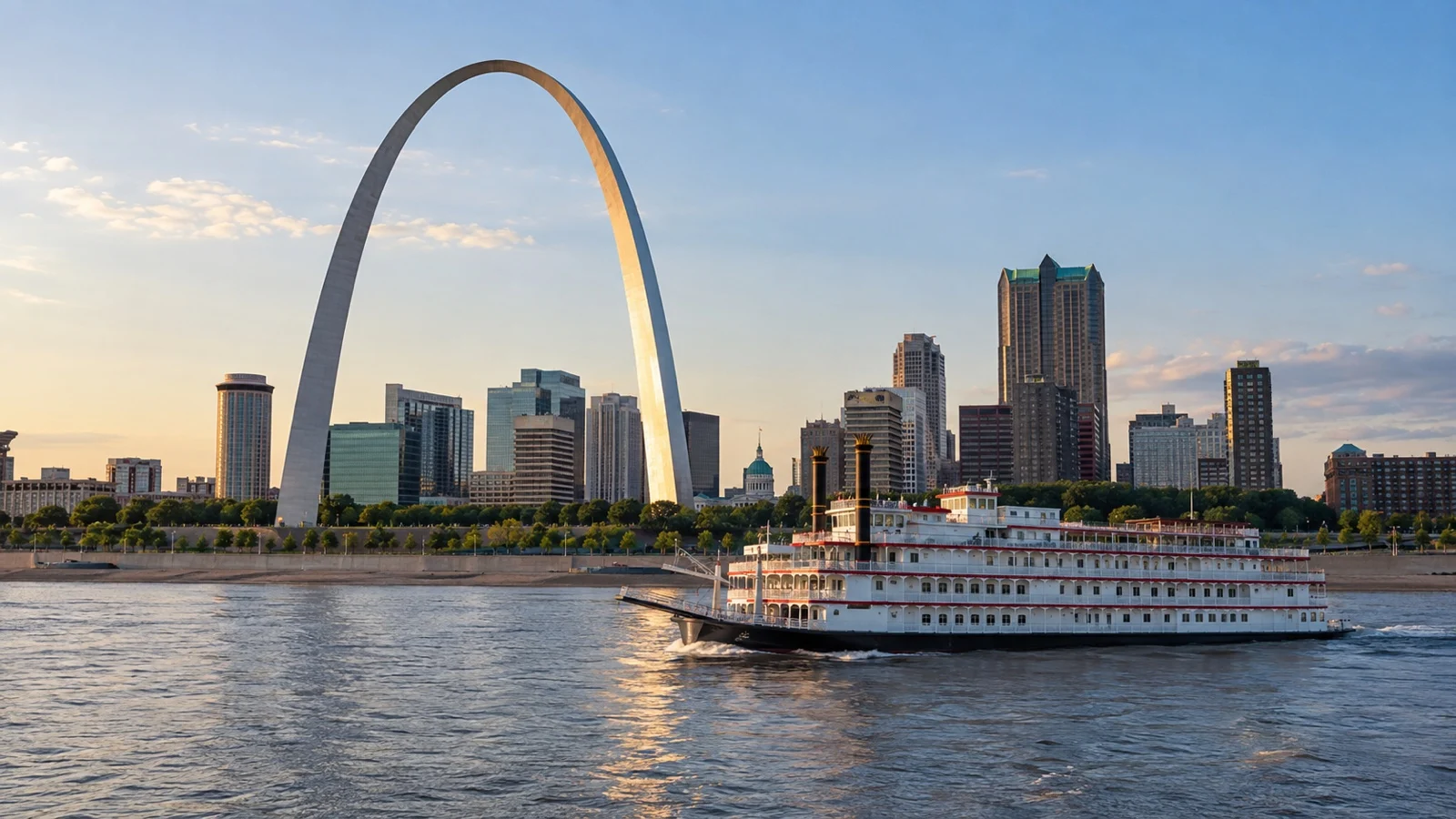
Saint Louis is the hinge between lower and upper river cruising, with the Gateway Arch making the geography instantly recognizable. The city is large enough for independent touring, but landing locations and transportation still need confirmation.
Gateway Arch National Park uses timed entry for the tram experience and applies security screening. Check the official National Park Service information before booking, and do not assume a view of the Arch from the ship means the entrance is a five-minute walk.
City Museum, the Missouri Botanical Garden, music sites, and neighborhood food can compete with the Arch for your limited hours. Choose one anchor attraction and add something nearby rather than spending the day crossing the metropolitan area.
Hannibal
Hannibal leans enthusiastically into its Mark Twain connection and works well as a compact small-town call. Museums, river views, and literary history can fit into a relaxed plan when the landing and shuttle place you close to the center.
Some attractions include stairs, hills, or confined historic spaces. Read the daily program carefully and ask whether a motorcoach or shuttle is available before assuming the whole visit is level and walkable.
Dubuque
Dubuque is one of the best places to understand the river itself rather than simply look at it. The National Mississippi River Museum and Aquarium connects natural history, navigation, wildlife, and human use in a format that suits a broad range of travelers.
The city rises away from the waterfront, so additional sightseeing can introduce hills. Treat the museum as the day’s core and add downtown only if the landing, shuttle, and timing make that easy.
La Crosse and Winona
La Crosse and Winona showcase the upper river’s bluff country, where wooded slopes frame narrower reaches of water. Itineraries do not always include both, and the selected landing may change how much independent walking makes sense.
These are pleasant places for a panoramic drive, local museum, or short downtown visit. Fall color can be gorgeous, but exact timing changes with weather and should never be treated as guaranteed.
Red Wing
Red Wing combines a working river town with surrounding bluffs and a recognizable downtown. It is the sort of upper-river call where a modest plan often feels more satisfying than a long coach ride.
Walking routes can still include grades, and the ship may not use the same spot on every visit. Ask onboard for the simplest route into town and the time of the last shuttle if one is operating.
Saint Paul
Saint Paul is a logical northern gateway and deserves an extra hotel night when schedules allow. Its riverfront sits below much of the city, so a skyline that looks close from the water may involve a steep rise or vehicle transfer.
Departure and arrival arrangements may use a hotel, coach, or landing outside the point a map suggests. Follow the cruise line’s current instructions for baggage and transfers, particularly if you have arranged an independent flight.
Do not book a tight same-day flight after a long river itinerary. Lock waits, river conditions, or a changed disembarkation plan can move the practical arrival time even when the operator works hard to protect scheduled transfers.
Locks and dams on the upper Mississippi
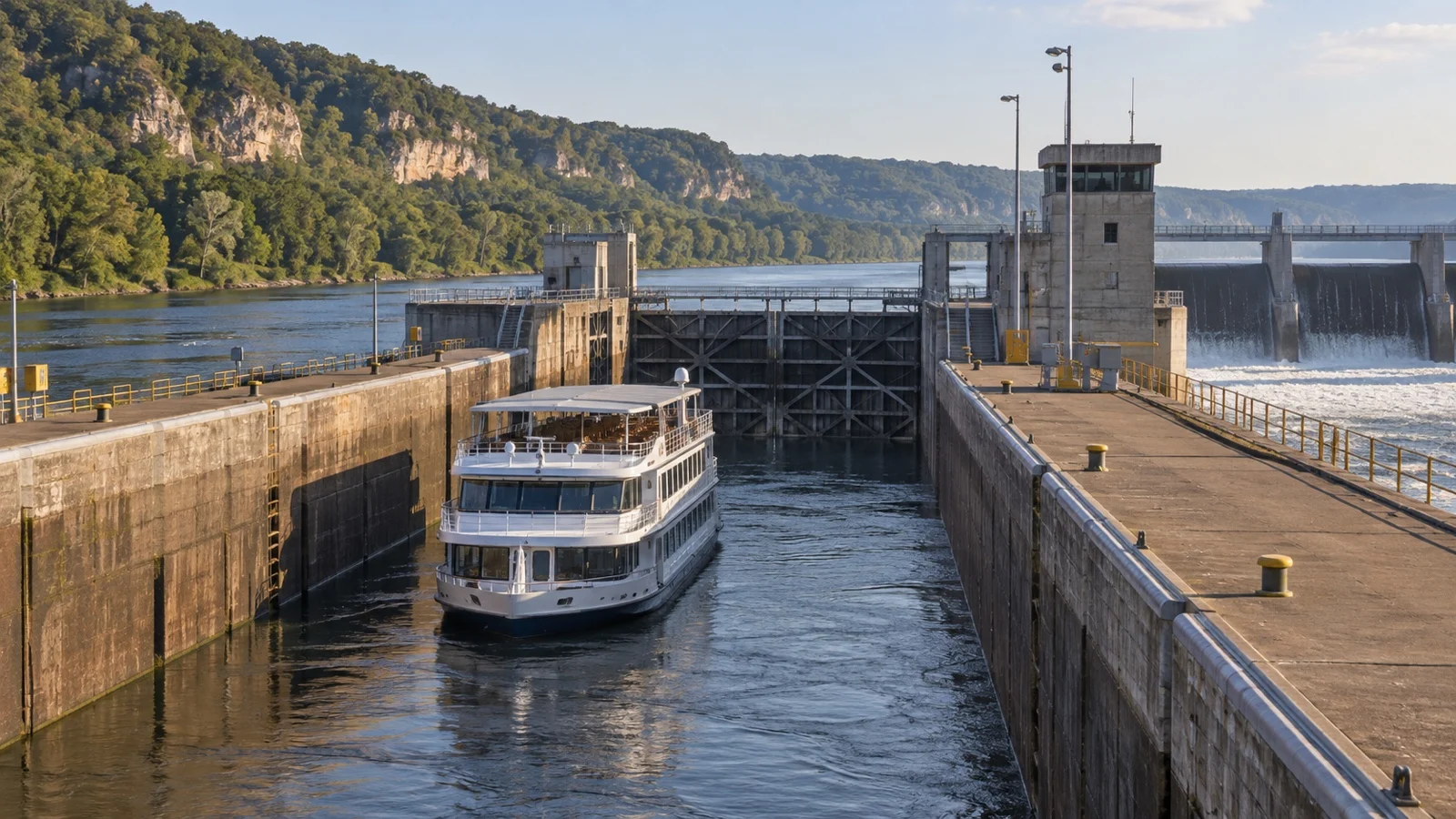
The United States Army Corps of Engineers operates and maintains the navigation system, including the nine-foot channel and numerous lock-and-dam sites above the Saint Louis area. Rock Island District and Saint Paul District responsibilities cover much of the route used by upper-river cruises.
The Corps publishes navigation notices, lock information, closures, and maintenance updates, which are more useful than speculation in a passenger forum. Start with the Rock Island District navigation pages and Saint Paul District navigation pages when a lock issue is affecting the sailing.
Passengers do not need to monitor every lock to enjoy the trip. The practical point is simply that the upper river has operational gates and chambers that can delay or reshape a day.
Watch at least one passage from an open deck if conditions allow. The slow lift, close concrete walls, tow traffic, and nearly century-old infrastructure explain the upper river better than a lecture slide ever could.
High water, low water, and changing ports
The Mississippi does not need to be closed for conditions to affect a cruise. A landing can become too steep, muddy, flooded, shallow, or otherwise unsuitable even when the main navigation channel remains open.
High water may cover access roads, affect bridge clearance, increase current, or make a landing unsafe. Low water can expose banks, narrow usable approaches, increase dredging needs, and prevent a vessel from using the planned site.
The operator may substitute a landing, add a coach transfer, change the order, shorten a call, or replace part of the route. Read the cruise contract before booking so you understand what changes are permitted and when compensation is or is not offered.
For current conditions, the National Water Prediction Service provides river observations and forecasts. Gauge information is valuable context, but it does not tell a passenger whether a particular ship will use a particular landing, so the captain and operator remain the final source.
How included motorcoaches shape the trip
On rural calls, the included coach is not merely a sightseeing upgrade. It may be the only dependable link between the ship’s operational landing and the historic site or town named in the brochure.
Listen for shuttle intervals, meeting points, and whether the bus makes a loop or a single departure. Photograph the schedule because a verbal time heard over breakfast is easy to misremember.
Independent exploration works best in New Orleans, Memphis, Saint Louis, and Saint Paul, where transportation choices are broader. Even there, use the live landing location and build a return buffer rather than relying on a generic downtown-to-port estimate.
In a small town or levee stop, rideshare may be unavailable or unable to locate the ship. If you leave the organized program, arrange the return before walking away and carry the ship’s contact details offline.
Accessibility along the Mississippi
Modern United States riverboats can offer elevators and designated accessible cabins, but fleet layouts differ. Confirm the exact ship, cabin doorway, bathroom, elevator stops, gangway, and device policy in writing.
The landing is a separate question because a bow ramp onto a bank can change angle with the river level. Gravel, grass, temporary matting, wet slopes, and distance to the coach can make an otherwise accessible day difficult.
Ask whether the excursion coach has a lift, where a wheelchair is secured, and what combined weight or size limits apply. An elevator on the ship does not guarantee accessible shore transportation or a step-free historic attraction.
When a landing is unsuitable, staying aboard may be the safest option. Discuss how the operator communicates that assessment and what onboard services remain available before sailing.
When to sail
There is no single perfect month for the entire river because New Orleans and Saint Paul have dramatically different climates. A comfortable lower-river season can be too cold or outside the normal operating period farther north.
Spring and fall usually make New Orleans, Natchez, Vicksburg, and Memphis easier than peak summer heat, though storms and high-water episodes remain possible. Summer brings long days but also humidity that can turn a walking tour into an endurance test.
Upper-river sailings cluster in the warmer part of the year, with fall color drawing particular interest. Late-season beauty comes with cooler mornings, shorter daylight, and no guarantee that leaves will peak during your exact week.
Pack layers, a compact rain shell, sun protection, and shoes that handle wet ramps and uneven ground. The open deck can feel much cooler than the street, especially while the ship is moving.
Choosing a Mississippi itinerary
First, decide whether you want the culture and history of the lower river or the scenery and locks of the upper river. A longer combined route can be rewarding, but it also means more days, more potential operational changes, and more repeated coach routines.
Second, compare the actual port list rather than the itinerary name. New Orleans to Memphis products can differ in which Louisiana and Mississippi towns they include, while upper routes may vary among Iowa, Wisconsin, and Minnesota calls.
Third, compare what is included, from hotel nights and airport transfers to excursions, drinks, gratuities, and premium tours. The headline fare does not reveal the full cost when inclusions differ.
Finally, study the named ship and cabin. Balcony style, elevator access, dining setup, solo inventory, accessible rooms, and outdoor shade can matter more over two weeks than one additional port.
Common Mississippi cruise mistakes
The first mistake is assuming every port is walkable because the ship docks on a river. A levee landing may have nothing nearby except the buses arranged by the cruise line.
The second is booking several independent attractions in Memphis or Saint Louis without accounting for transfers. Two well-chosen stops will usually beat four hurried ones.
The third is treating the printed itinerary as an operational guarantee. River levels, lock work, weather, and landing access can require sensible changes.
The fourth is using a weather forecast without checking heat index or severe-weather alerts. Mississippi humidity, thunderstorms, and exposed landings can matter more than the headline temperature.
The final mistake is booking a flight too close to embarkation or disembarkation. A buffer night protects an expensive cruise from air delays at the start and river delays at the end.
Quick answers
Do Mississippi riverboats use tenders?
They normally use a gangway, bow ramp, floating dock, wharf, or riverbank landing rather than tendering passengers ashore. The precise arrangement depends on the vessel and site.
Can I walk into every port?
No. Some landings are near central attractions, while others require a cruise-line coach to reach the town or excursion.
Are there locks on the whole Mississippi route?
The lock-and-dam system shapes the upper river above the Saint Louis area. The lower river toward New Orleans is an open navigation river without the same sequence of cruise-ship lock passages.
Can river levels change the itinerary?
Yes. High water, low water, landing conditions, dredging, weather, and lock operations can alter a port, timing, or transfer even when the ship continues sailing.
Which cities are easiest to explore independently?
New Orleans, Memphis, Saint Louis, and Saint Paul generally offer the broadest transportation and attraction choices. The actual berth and time in port still control what is practical.
How early should I arrive?
Arrive at least one night before embarkation, with two nights ideal in New Orleans if you want meaningful sightseeing. Consider another buffer after the cruise before a separate flight or commitment.
The last word
A Mississippi cruise works best when you stop expecting every riverbank to behave like a terminal. The changing landings, coach connections, working traffic, locks, and river towns are not side details but the structure of the journey.
Choose the half of the river that fits your interests, confirm the daily landing aboard, and leave room for the captain to adapt. Do that and the route becomes a fascinating portrait of America rather than a list of ports that failed to match a brochure.
How this guide was researched: Unless a first-hand visit is explicitly identified above, this guide is based on independent research using current operator itineraries, United States Army Corps of Engineers navigation information, National Park Service visitor guidance, and National Weather Service river data. Logistics and time-sensitive details were reviewed on September 12, 2026, under our Editorial Policy.