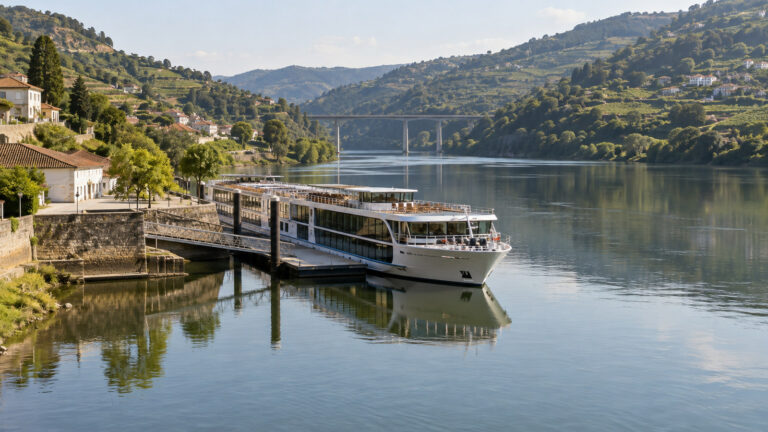
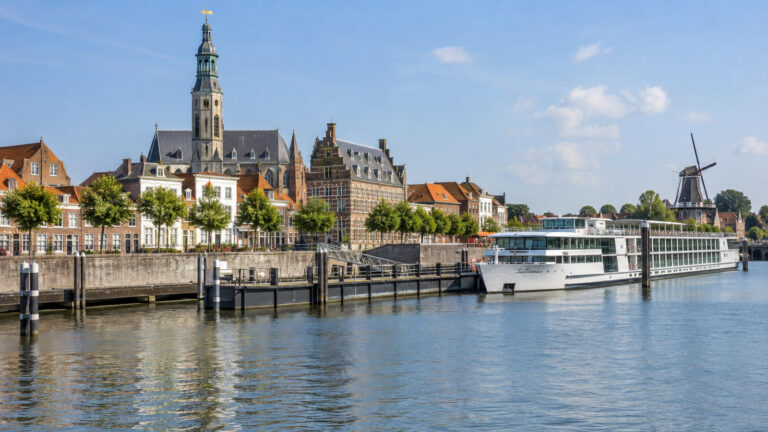
Basel River Cruise Port: Where Rhine Cruises Start and End
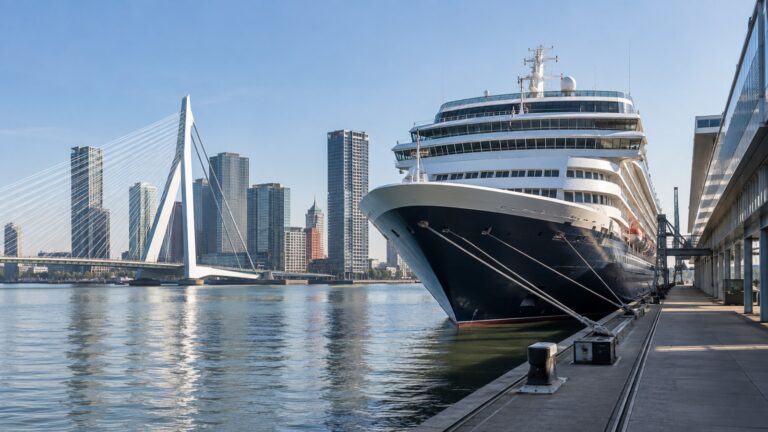
Basel is where many Rhine cruises begin or end, but the city does not have one universal cruise terminal. Passenger ships use landing stages in different riverside districts, and the practical plan for a taxi, tram, hotel, or flight depends on the exact berth assigned to your vessel.
That small detail is the difference between an easy Basel transfer and a stressful search along the Rhine. Once the quay is confirmed, Basel becomes a compact, polished gateway with excellent public transportation, an atmospheric old town, major art museums, and direct connections to Switzerland, France, and Germany.
Quick Facts
- River: Basel sits on the Upper Rhine near the borders of Switzerland, France, and Germany.
- Passenger landing areas: St Johann, Klybeck, and the border-triangle area, with the final berth assigned locally.
- Main rail station: Basel SBB, which handles Swiss and international connections.
- Closest airport: EuroAirport Basel Mulhouse Freiburg, with ground transportation into Basel.
- Currency: Swiss franc, although cards are widely accepted and some businesses also take euros.
- Local language: German, with Swiss German common in conversation and English widely used in visitor settings.
- Best buffer: One hotel night before embarkation or after disembarkation, especially when an international flight is involved.
Where River Cruise Ships Dock in Basel
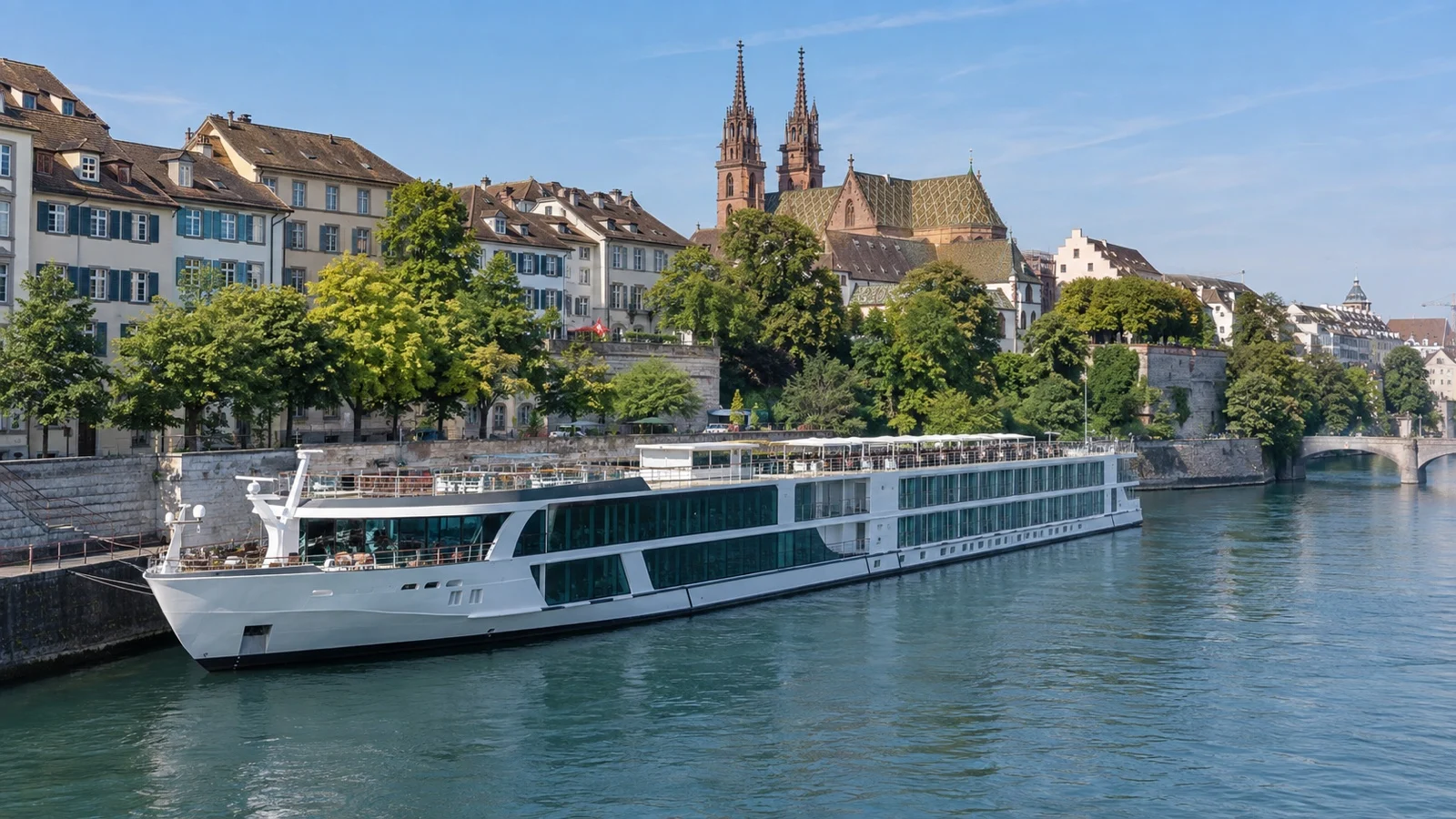
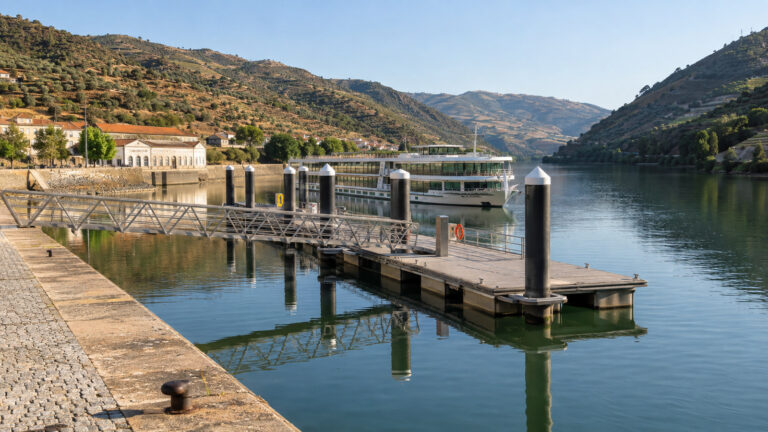
Basel Tourism’s official arrival guide identifies three passenger landing areas in the St Johann and Klybeck districts and near the border triangle. These are working riverfront locations rather than one centralized terminal with a single street address.
Your cruise documents may name a likely landing stage, but operations can change. Water levels, traffic, quay availability, and the movement of other vessels can all affect where the ship ultimately ties up.
Ask the cruise line for the final quay name and exact address shortly before travel, then confirm it again on embarkation day. If you are meeting a driver, send the written address rather than describing the berth as simply the Basel port.
Information panels at the passenger terminals provide directions toward the center. They are useful after arrival, but travelers hauling luggage will usually be happier with a tram or taxi than a long riverside walk.
St Johann, Klybeck, and the Border Triangle
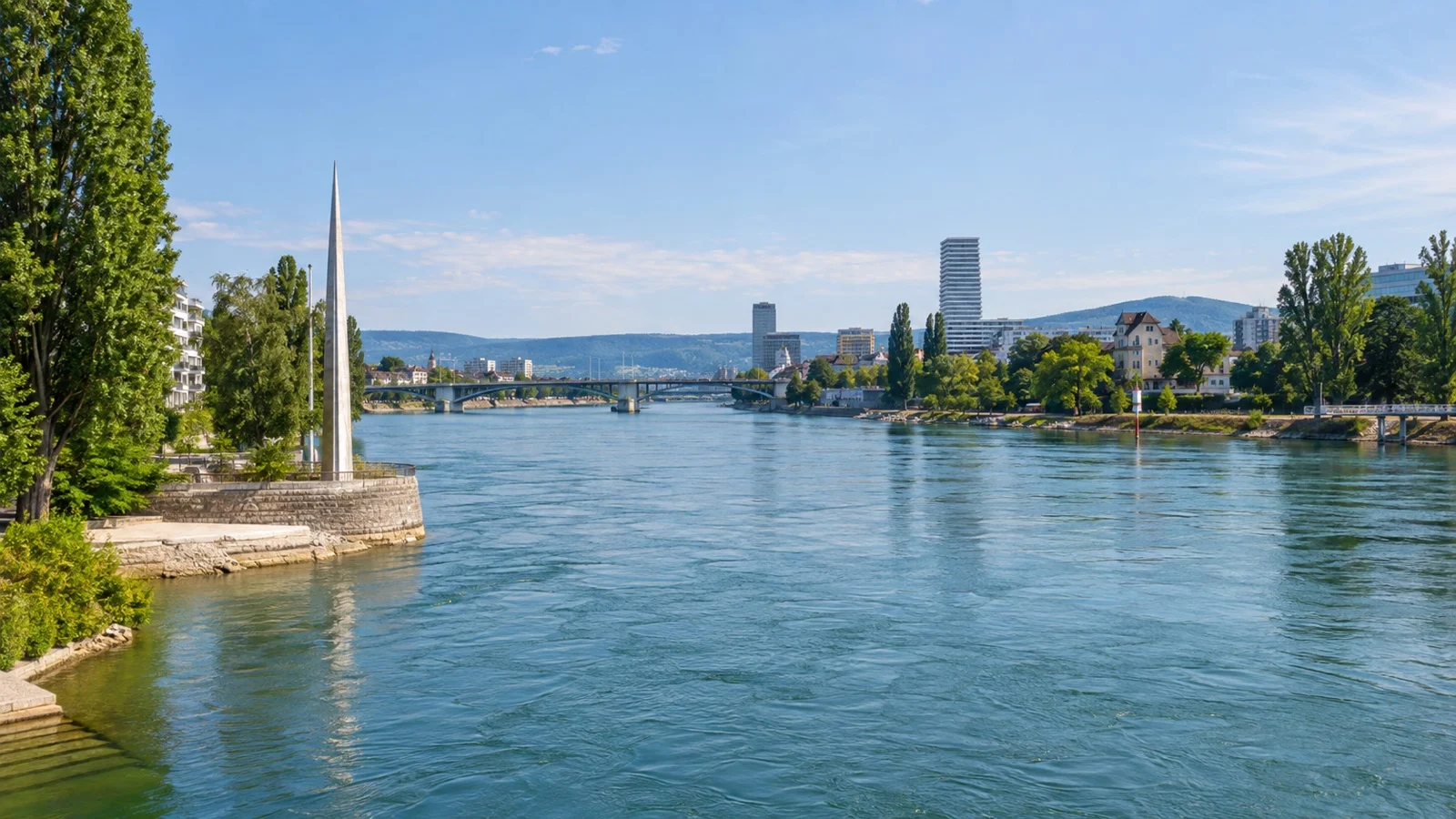
St Johann lies on the Grossbasel side of the Rhine, while Klybeck is across the river in Kleinbasel. Both names can refer to more than a single patch of pavement, so the landing-stage detail still matters.
The border-triangle location is farther from the postcard center and close to the meeting point of Switzerland, France, and Germany. It can be fascinating geographically, but it is not the berth to approach by guessing from an old-town hotel map.
River ships may also tie alongside one another when the quay is busy. Reaching land can then involve walking through neighboring ships, crossing extra thresholds, and using more than one gangway.
This rafting arrangement is normal in European river cruising, but it can affect privacy, cabin views, and accessibility. A room facing open water in the afternoon may face another vessel by evening.
Getting from the Quay to Central Basel
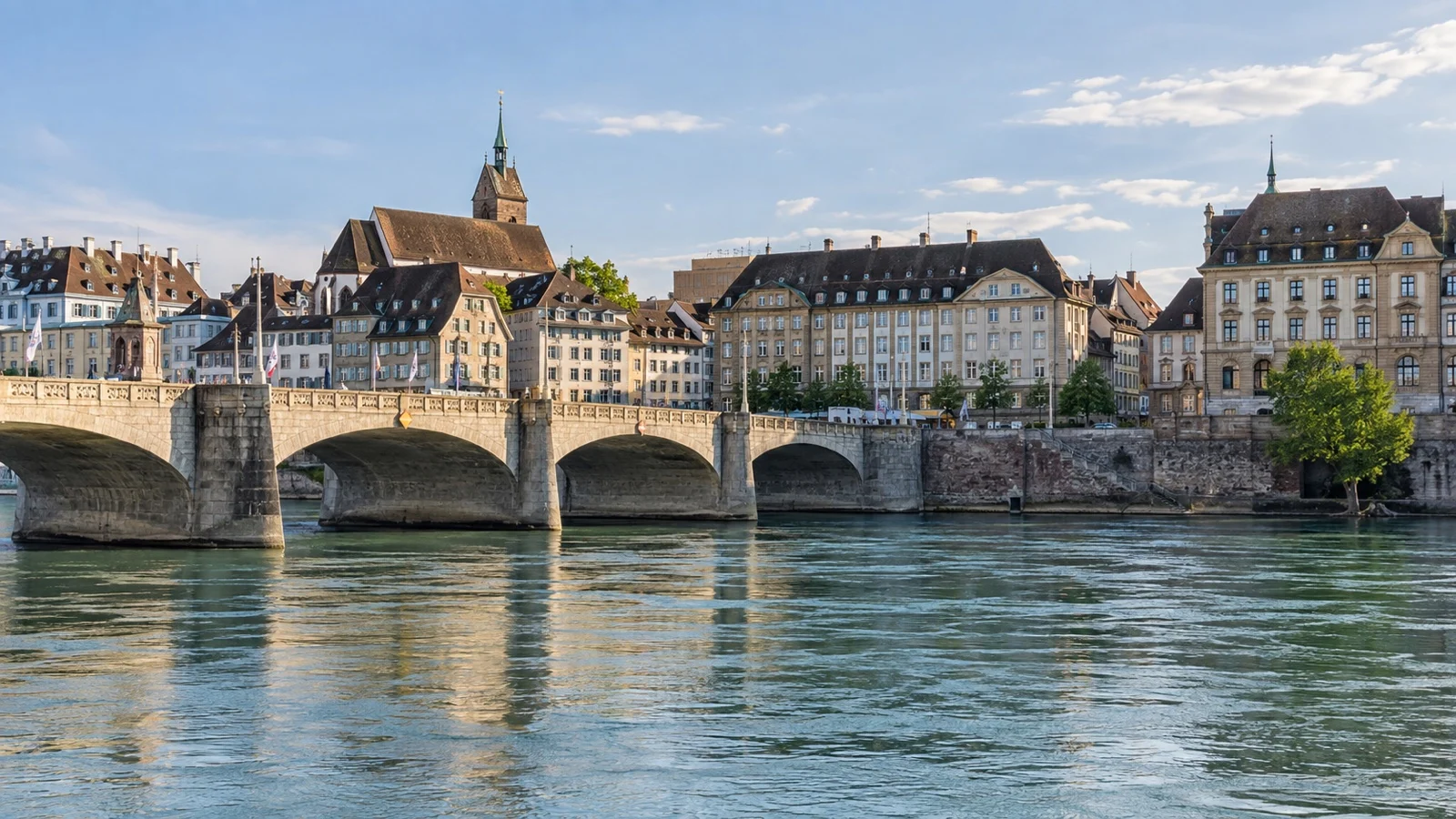
Basel’s tram and bus network makes the landing stages manageable once you know the nearest stop. Route numbers and service patterns can change, so use the current local transport planner rather than memorizing instructions from an old cruise review.
A taxi is the simplest choice with heavy luggage, a tight schedule, or limited mobility. Give the driver the exact quay and vessel name, since ships can move and several landing areas may be active at once.
Walking into the center can be pleasant in good weather if your berth is reasonably close and you are traveling light. The Rhine promenade offers an attractive approach, but distance, paving, construction, and the final climb into the old town vary.
The BaselCard: Useful but Not Automatic
The BaselCard is a guest benefit for qualifying overnight accommodations in Basel. According to the official BaselCard page, participating hotel, hostel, bed-and-breakfast, and apartment guests receive free local public transportation and discounts on a range of attractions.
A night aboard a river ship does not automatically create the same hotel benefit. If you are staying ashore, confirm that your property participates and ask what documentation can be used for the arrival journey before check-in.
The card’s discounts, travel zone, and conditions can change, and it does not cover every destination outside Basel. Check the current official terms before building a day trip around free transportation.
EuroAirport to the Basel River Cruise Port
EuroAirport Basel Mulhouse Freiburg serves three cities and stands on French territory near the Swiss border. The terminal has French and Swiss customs sectors, so follow signs for the Basel side when heading into Switzerland.
BVB bus 50 runs directly from the Swiss-sector terminal forecourt to Basel SBB, with a scheduled ride of about 20 minutes. From the station, continue by tram or taxi toward the assigned quay and check the current timetable on the official EuroAirport transport page before travel.
A private transfer avoids the connection but still requires the exact ship location. Send any berth update to the driver immediately and keep the cruise line’s local emergency number available.
Border and customs questions can arise when a flight, transfer, hotel, and ship sit in different countries or sectors. Carry your passport and booking details rather than assuming the short distance makes documentation irrelevant.
Zurich Airport and Basel SBB
Zurich Airport offers a much larger range of flights and rail connections to Basel. Some journeys are direct while others require a change, so check the live schedule through Swiss Federal Railways for your travel date.
Trains arrive at Basel SBB, not at the ship. From the station, complete the journey by local tram or taxi after confirming the quay.
Allow more time than the scheduled rail trip alone. Finding the platform, buying a ticket, handling luggage, making a connection, and locating a driver or tram stop all add friction after a long flight.
Why an Extra Night in Basel Helps
A pre-cruise hotel night protects the sailing from flight delays, missed rail connections, and late luggage. It also gives the cruise line time to confirm a berth change before you set out for the ship.
A post-cruise night removes the pressure of an early disembarkation followed by an international flight. Cruise lines generally require cabins to be vacated in the morning, and low water or operational changes can alter the final transfer plan.
If only one extra night fits the budget, place it before the departure that would be most expensive to miss. The right answer depends on whether Basel is your embarkation or disembarkation point and how flexible the flight ticket is.
What Rhine Itineraries Do from Basel
Basel is a common gateway for northbound Rhine cruises toward Strasbourg, the Middle Rhine, Cologne, and Amsterdam. Some itineraries travel shorter regional sections, while longer programs combine the Rhine with the Main, Moselle, Dutch waterways, or connected river systems.
Do not judge the entire route by conditions visible at the Basel quay. A ship can be safely alongside in Basel while a shallow section, high-water restriction, lock issue, or bridge clearance farther away changes the itinerary.
The Middle Rhine and its castle-lined gorge are well downstream from Basel. Travelers usually reach that scenery after other calls, so a short Basel stay should focus on the city rather than trying to recreate the whole cruise route as a day trip.
Low Water, High Water, and Ship Swaps
Low water can reduce the depth available in free-flowing parts of the Rhine, while high water can reduce bridge clearance and trigger navigation restrictions. The operational effect depends on the river section, vessel dimensions, forecast, and the captain’s safety assessment.
A cruise line may adjust sailing times, substitute a port, move guests by coach, or arrange a ship swap around a restricted reach. Basel can remain the planned passenger gateway even when the vessel that arrives is not the one originally expected.
Keep the cruise line’s app and contact details active during the final days before departure. A location change sent by email is easy to miss while traveling internationally.
Basel in Half a Day
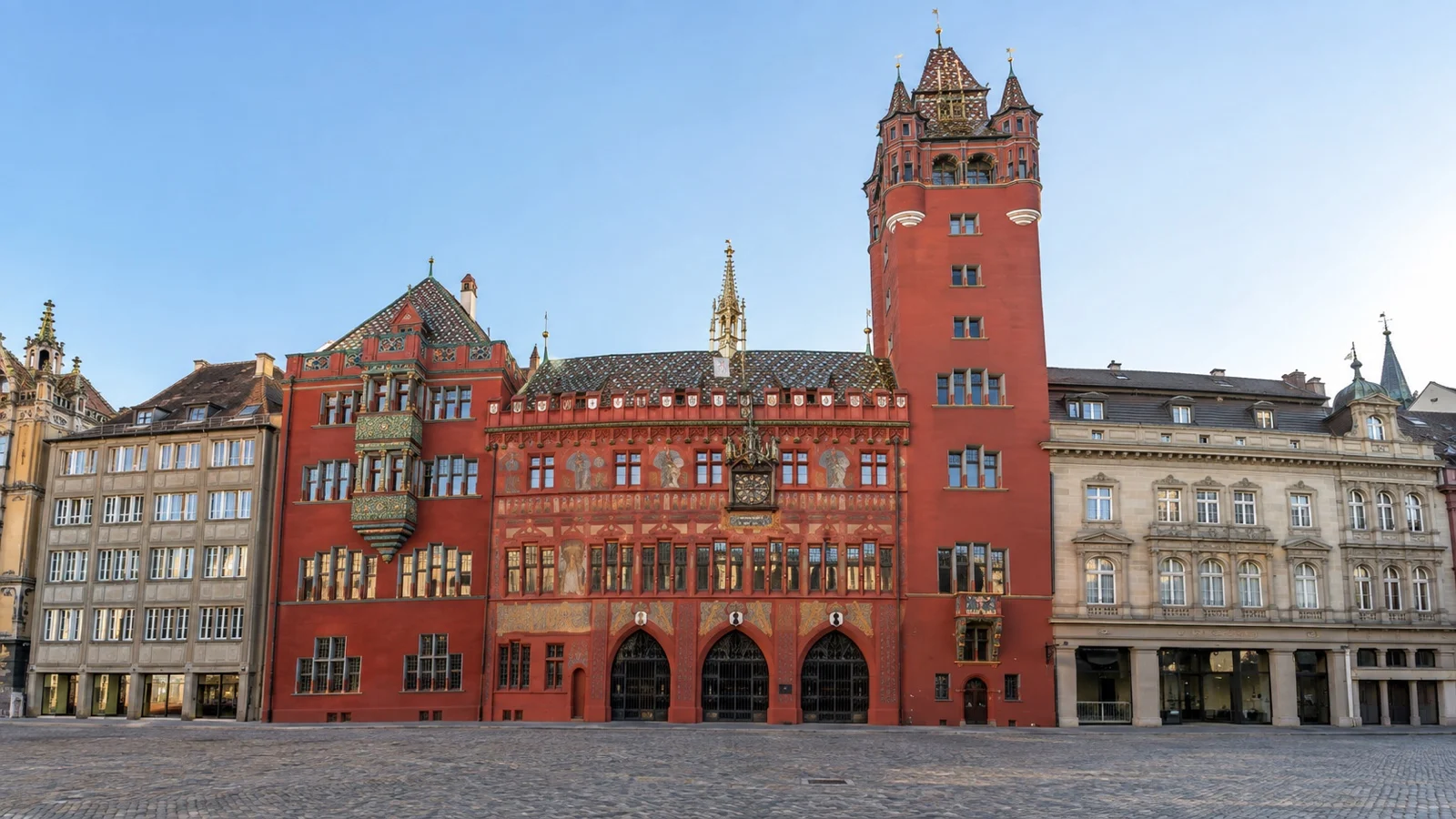
Basel rewards a simple walking route rather than an overstuffed checklist. Marktplatz, the red sandstone City Hall, the old-town lanes, Basel Minster, and the Pfalz terrace provide a strong introduction without complicated transport.
The Pfalz terrace behind the Minster looks over the Rhine and Kleinbasel. From there, descend toward the river, cross a bridge or take one of the small current-powered ferries when operating, and return through the opposite bank’s neighborhoods.
The ferries use the river current and a cable rather than an onboard motor. Check seasonal operation and payment details locally, because service can be affected by conditions on the Rhine.
A half day should leave a generous margin for reaching the ship. Basel’s center is compact, but an assigned berth beyond the nearest old-town stretch can make the return longer than expected.
Basel’s Art Museums
Basel is one of Europe’s strongest art cities, and a museum can easily become the main event rather than a rainy-day backup. Kunstmuseum Basel is the central choice for a broad collection, while Museum Tinguely focuses on the Swiss artist’s kinetic work.
Fondation Beyeler presents modern and contemporary art in Riehen, outside the old-town core. Check exhibitions, timed-entry rules, and directions on the official Fondation Beyeler website before committing a short port day.
Museum hours often include a weekly closure day, and temporary exhibitions can change crowd levels. Always use the museum’s own calendar rather than a cruise forum for the day you plan to visit.
Basel Minster, City Hall, and the Old Town
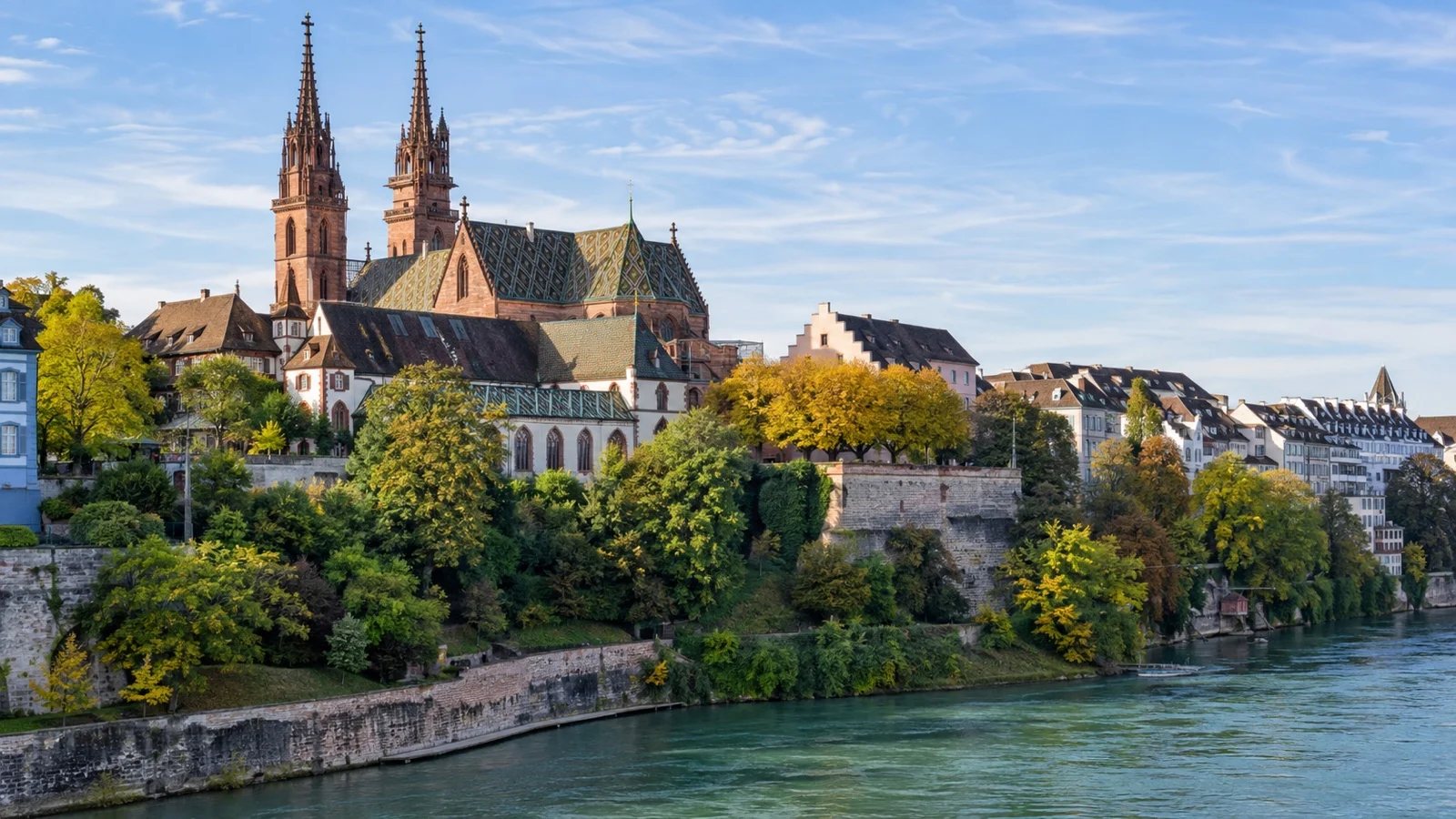
Basel Minster’s twin towers and red sandstone walls dominate the historic center above the Rhine. The church, cloister, and terrace create a worthwhile stop even if tower access is closed or unsuitable.
City Hall faces Marktplatz with a vivid red facade and painted courtyard. The surrounding streets climb and dip, mixing medieval lanes with shops, fountains, and later architecture.
Travelers with limited walking tolerance should use public transport for the approach and save energy for the compact center. Cobbles, steps, and gradients matter more than the distances suggested by a flat map.
Breisach, Strasbourg, and Nearby Rhine Stops
Breisach and Strasbourg are common early or late calls on itineraries using Basel. They are separate ports with their own berths and shore arrangements, not alternate names for the Basel cruise terminal.
Breisach is often used as a gateway to the Black Forest or the Alsace wine region. Its hilltop old town creates a very different port experience from Basel’s urban museums and cross-border transportation network.
Strasbourg brings canals, a monumental cathedral, and a larger historic center. If your itinerary already includes it, resist using your Basel buffer day for a rushed duplicate transfer unless a specific exhibition or event makes the journey worthwhile.
Money, Cards, and Phone Service
Switzerland uses the Swiss franc, not the euro. Cards work widely, and some businesses accept euros, but the merchant can choose the exchange rate and may return change in francs.
A modest amount of local cash is useful for small purchases, but there is little reason to carry a large sum. Decline unnecessary currency conversion at a payment terminal if your card offers a better rate, after checking your own bank’s terms.
Basel’s borders create a less obvious phone issue because a device can connect to a French or German network near the river. Travelers without inclusive European roaming should check the network name and their plan before using mobile data.
Accessibility and Luggage
Ask the cruise line about the actual embarkation route, including gangway width and slope, steps, elevator coverage, and whether guests must cross another vessel. A statement that the ship has an elevator does not describe the quay or the neighboring ship.
Basel’s public transportation is generally efficient, but boarding with large luggage or a mobility device still requires planning. Use the local operator’s current accessibility information and allow extra time for an unfamiliar stop.
Travelers who need step-free access should request a suitable vehicle for airport and station transfers. Provide exact mobility-device dimensions and weight rather than relying on the word accessible alone.
Embarkation and Disembarkation Day
On embarkation day, keep passports, medication, chargers, travel documents, and one change of clothes in a bag that stays with you. Checked luggage may be handled separately, and cabins are not always available when the first guests arrive.
On disembarkation day, the ship may ask guests to leave well before a hotel room or evening flight is ready. Arrange luggage storage through a hotel, station service, or another confirmed provider before counting on extra sightseeing.
Avoid making a tight flight connection depend on the ship arriving at a precise minute. River conditions and operational delays are real, even at a well-connected turnaround city.
Choosing the Right Basel Hotel
An old-town hotel is best for sightseeing, while a property near Basel SBB simplifies rail and airport connections. A quayside choice only helps if the ship uses the berth you expect, which may not be confirmed when the room is booked.
Check air conditioning, elevator access, luggage storage, and the walking route from the nearest tram stop. Historic charm loses some appeal when heavy bags meet stairs on a warm afternoon.
A qualifying accommodation may include the BaselCard, but confirm participation directly. Also ask how the guest card is delivered and what can be used on the inbound trip before physical check-in.
When to Visit Basel
Spring and early fall often provide comfortable walking weather, while summer brings long days, outdoor river life, and the possibility of heat. Winter river cruises center on Christmas markets, shorter daylight, and colder, sometimes damp conditions.
Large fairs, festivals, and art events can raise hotel prices and crowd public transportation. Check the city’s official event calendar before choosing a buffer night, especially when flexibility matters.
No season removes the possibility of navigation changes. Book for the atmosphere you want, then protect the trip with sensible flight timing and flexible ground arrangements.
The Bottom Line
Basel is an excellent Rhine gateway once you solve the berth question. Confirm the landing stage in writing, choose the airport or rail transfer that matches your schedule, and add a hotel night if an expensive connection depends on everything running perfectly.
The city itself deserves more than a hurried transfer, whether your priority is the Minster, old town, art museums, or a ferry crossing powered by the Rhine. A little preparation turns Basel from a logistical waypoint into a memorable first or final port.
Landing stages, transit routes, guest-card terms, schedules, and navigation conditions can change, so confirm current details with your cruise line and official local providers. See our Editorial Policy for how we research and update guides.