Heidelberg River Cruise Port: Mannheim and Ludwigshafen Guide
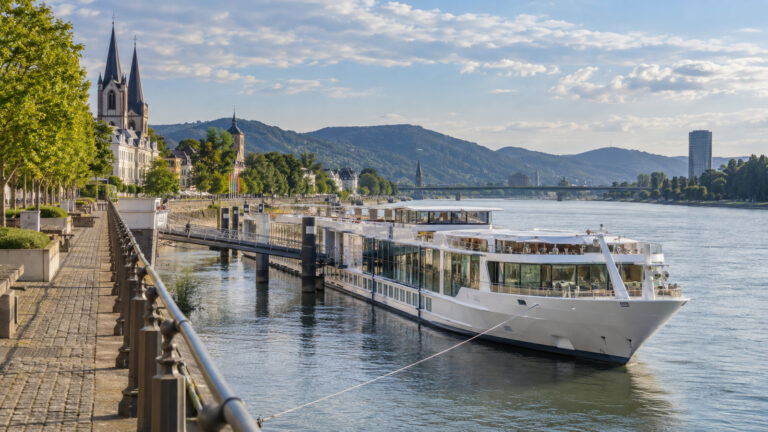
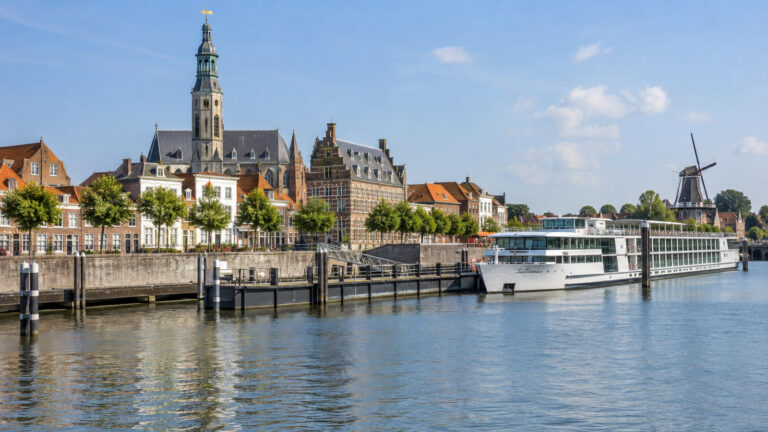
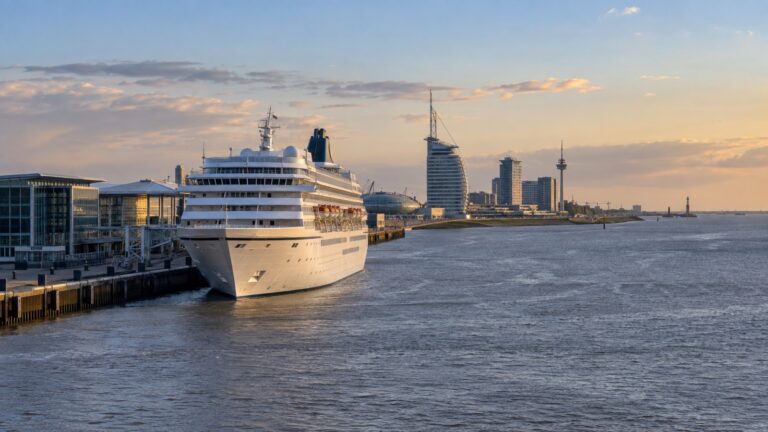
Heidelberg is one of river cruising’s most romantic place names and one of its least helpful berth labels. Your itinerary may promise red sandstone castle ruins and a storybook Old Town while your ship is quietly tying up on the Rhine in Mannheim or Ludwigshafen.
That is not a trick, just river geography doing paperwork. Heidelberg sits inland on the Neckar, while the major Rhine berths serving it lie roughly 12 to 15.5 miles away and can change by operator, sailing and berth availability.
Heidelberg river cruise port quick facts
Into Town: Heidelberg is not the Rhine berth; operator motorcoaches typically transfer from Mannheim or Ludwigshafen in an estimated 30 to 45 minutes.
Currency and Language: Euro and German. English is common in tourism, while cards are widely accepted and some small purchases may favor cash.
Time Zone: Central European Time, UTC+1 in winter and UTC+2 during daylight saving time.
How Often the Call Is Missed: No reliable percentage is published. Rhine water levels, berth availability, traffic or itinerary changes can alter the landing or Heidelberg excursion.
No port or cruise line publishes a combined Mannheim, Ludwigshafen and Heidelberg missed-call rate. A berth, transfer, excursion or port change is possible, but no measured cancellation rate is available.
My quick take
Take the cruise-line excursion if Heidelberg is your priority. It handles the uncertain berth, motorcoach transfer and castle logistics while protecting your return to a ship that may sail soon after the tour.
Explore Mannheim independently when your vessel docks there and the itinerary offers enough time, or use Ludwigshafen’s Rhein-Galerie for practical shopping beside the ship. The essential first step is learning which side of the Rhine gets your gangway, preferably before confidently walking in the wrong direction.
What should this port actually be called?
“Heidelberg River Cruise Port” is the clearest traveler-facing title because Heidelberg is the destination people search and recognize. Operationally, “Mannheim or Ludwigshafen for Heidelberg” is more accurate for many Rhine itineraries.
AmaWaterways’ current 2026 Rhine itinerary explicitly calls Ludwigshafen the gateway for its Romantic Heidelberg excursion. CroisiEurope instead lists Rhine sailings that cruise to Mannheim before an excursion to Heidelberg.
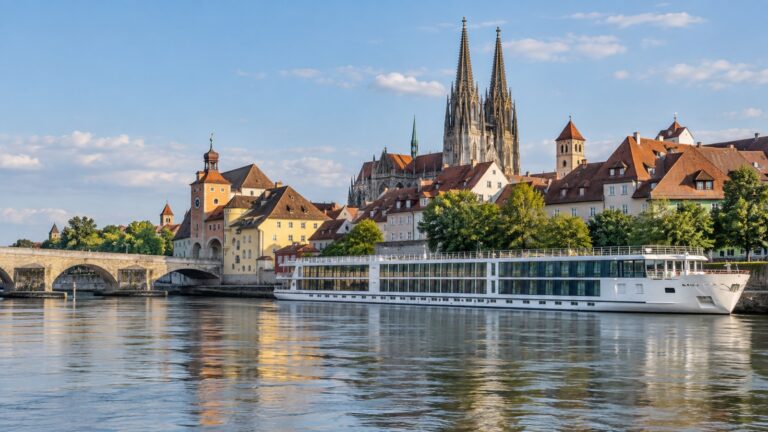
Some smaller vessels can navigate the Neckar and call at Heidelberg itself. Even then, a current CroisiEurope itinerary warns that a Heidelberg stop may be replaced by Mannheim or Ludwigshafen, which is a useful reminder that the itinerary name does not freeze the berth.
The accurate answer is therefore conditional. Check the final cruise documents and morning briefing for the actual city, quay and excursion meeting point.
Ludwigshafen berth evidence
Ludwigshafen occupies the west bank of the Rhine directly opposite Mannheim. AmaWaterways uses it as a named 2026 port for Heidelberg, Speyer, Schwetzingen and Ladenburg excursion choices.
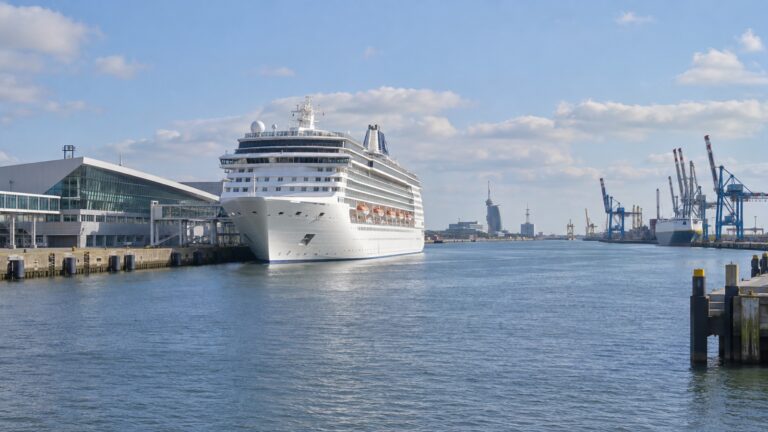
The Rhein-Galerie shopping center has its own documented cruise landing at Im Zollhof 4. Its current ship list includes several AmaWaterways and Avalon vessels, and the center says cruise ships land immediately outside during the main season.
This is excellent evidence for an active Ludwigshafen landing, but it still does not mean every cruise vessel uses Rhein-Galerie. Another assigned berth, double-docking arrangement or operational change can alter the exit point.
If your ship is at Rhein-Galerie, shops, cafes and restrooms are only minutes away during opening hours. The center currently opens Monday through Saturday and closes Sunday, so a Sunday call may deliver a magnificent view of practical shopping behind locked doors.
Mannheim berth evidence
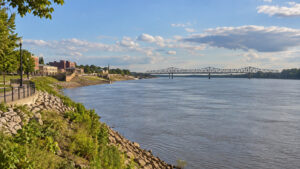
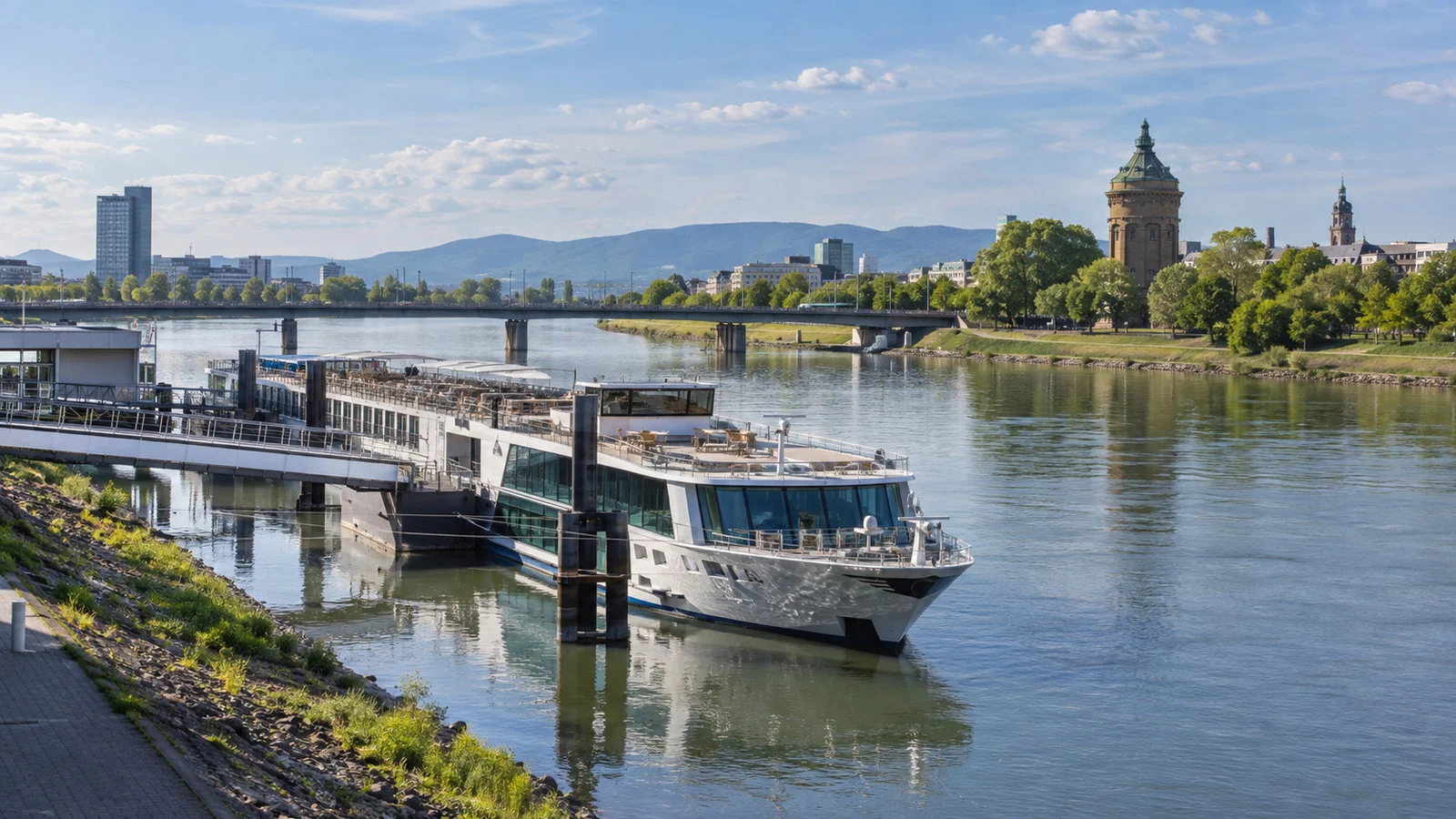
Mannheim sits on the east bank of the Rhine where the Neckar meets it. Its port authority requires passenger vessels carrying passengers to use designated locations along Rheinkai between Rhine kilometer 424.700 and 425.060.
The official Mannheim port order is far stronger evidence than an undated travel map. It confirms an authorized passenger-ship zone, but not one guaranteed gangway coordinate within that zone.
Mannheim recorded hundreds of passenger-ship calls in recent port statistics, and current CroisiEurope itineraries use the city for Heidelberg excursions. It is an established river-cruise port, not merely a substitute name invented by itinerary writers.
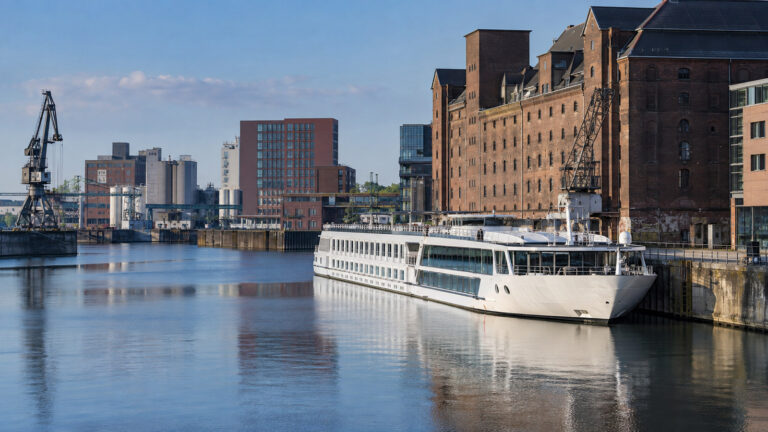
The quay may feel more working riverfront than cute medieval landing. Mannheim’s charms begin with an organized grid, a huge Baroque palace and a city that decided street addresses could resemble algebra.
Is Heidelberg itself on a river?
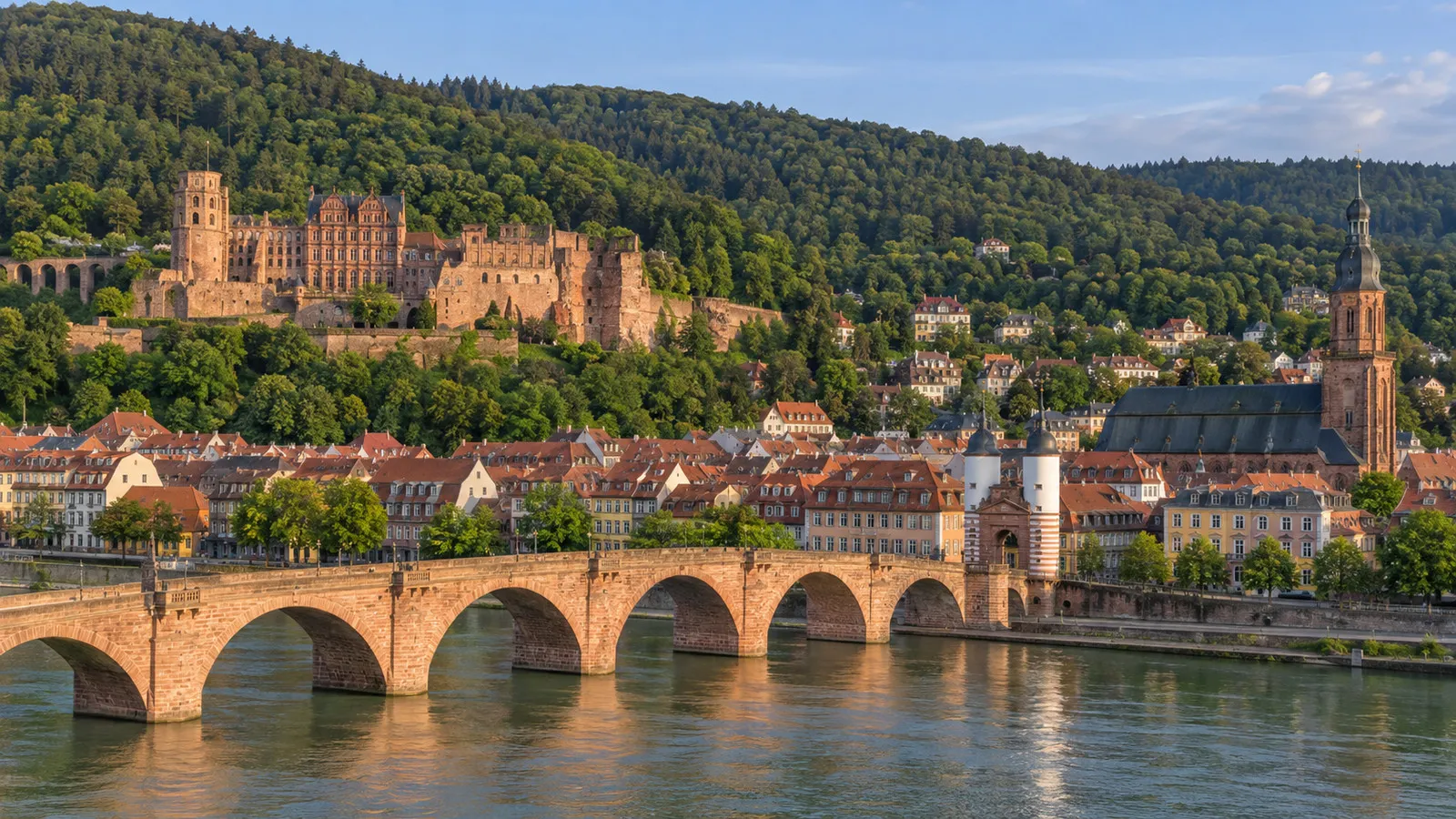
Yes. Heidelberg sits on both banks of the Neckar, upstream from the river’s confluence with the Rhine at Mannheim.
Calling Heidelberg “inland” means it is inland from the Rhine cruise corridor, not landlocked. Some itineraries sail onto the Neckar, but the vessel’s dimensions, bridge clearance, water conditions, schedule and available landing determine whether that happens.
This distinction prevents two common mistakes. Heidelberg does not have a Rhine berth, and a Rhine itinerary mentioning Heidelberg does not necessarily navigate the Neckar.
The ship may remain in Mannheim or Ludwigshafen while passengers travel by motorcoach. It may also move between ports during the excursion, so never assume you will return to the original gangway unless the operator says so.
How long is the transfer to Heidelberg?
Allow an estimated 30 to 45 minutes by cruise motorcoach from a Mannheim or Ludwigshafen berth to Heidelberg under ordinary conditions. Traffic, motorcoach routing, Old Town access rules and the actual quay can make the trip shorter or longer.
Heidelberg lies roughly 12 to 15.5 miles from the Rhine berths as a planning range. The operator may drop guests near the Old Town, at a motorcoach staging area or directly into a castle-focused itinerary.
Listen carefully for the return location and whether free time ends at the same place the bus arrived. A picturesque pedestrian street has an impressive ability to make every side lane look like the correct one.
Can you visit Heidelberg independently?
Public trains connect Mannheim and Ludwigshafen with Heidelberg, but a do-it-yourself trip has several moving parts. You must reach the correct station from the berth, travel to Heidelberg, continue from its main station to the Old Town and reverse the entire chain before sailing.
An estimated rail ride from Mannheim’s main station to Heidelberg takes about 15 to 25 minutes on suitable services, excluding the berth transfer and onward local transit. Ludwigshafen adds its own station choice and connection variables.
Attempt this only with a long port stay, live journey planning and generous return margin. If the ship relocates during the excursion window, independent transportation may deliver you efficiently to yesterday’s gangway.
The organized excursion is usually the better value in risk, even if not the cheapest ticket. Independent travel makes more sense for repeat visitors who understand the region’s transit and have written confirmation of the departure berth.
Heidelberg Old Town
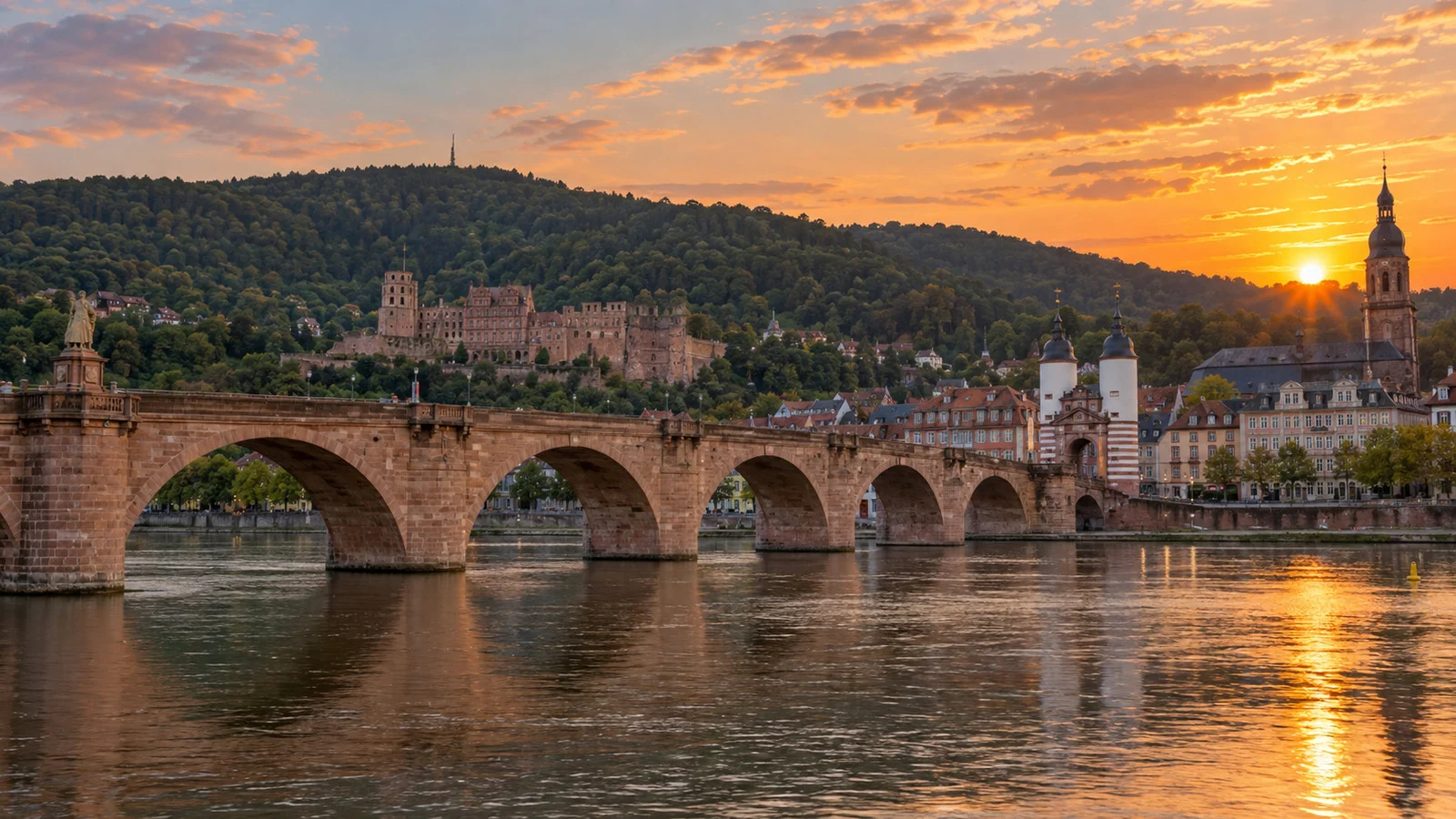
Heidelberg’s Altstadt stretches along the south side of the Neckar beneath the castle. Hauptstrasse forms its long pedestrian spine, linking squares, churches, university buildings, cafes and more souvenir temptations than one tote bag should reasonably face.
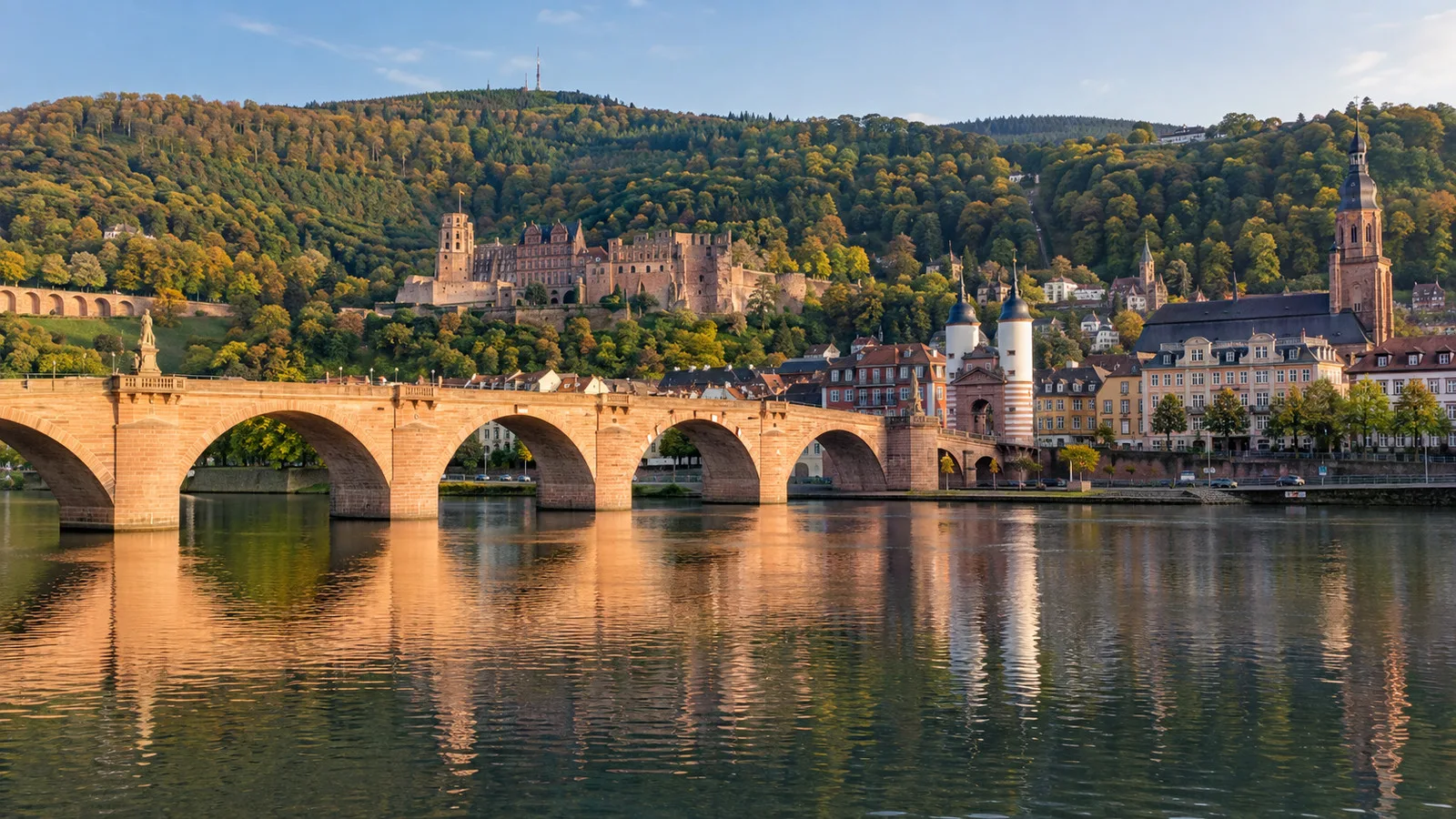
Marktplatz, the Church of the Holy Spirit and Kornmarkt cluster within an easy central walk. The Old Bridge crosses the Neckar nearby and supplies the classic view toward the castle and wooded Königstuhl hillside.
The City of Heidelberg’s official sightseeing page highlights the castle, Old Town, bridge and Philosopher’s Path. It also makes clear that the city’s attractions extend beyond the famous ruins.
A guided excursion commonly combines an Old Town walk with the castle or a panoramic stop. If free time is short, stay around Marktplatz, Kornmarkt and the bridge rather than beginning an ambitious cross-city expedition.
Heidelberg Castle and funicular
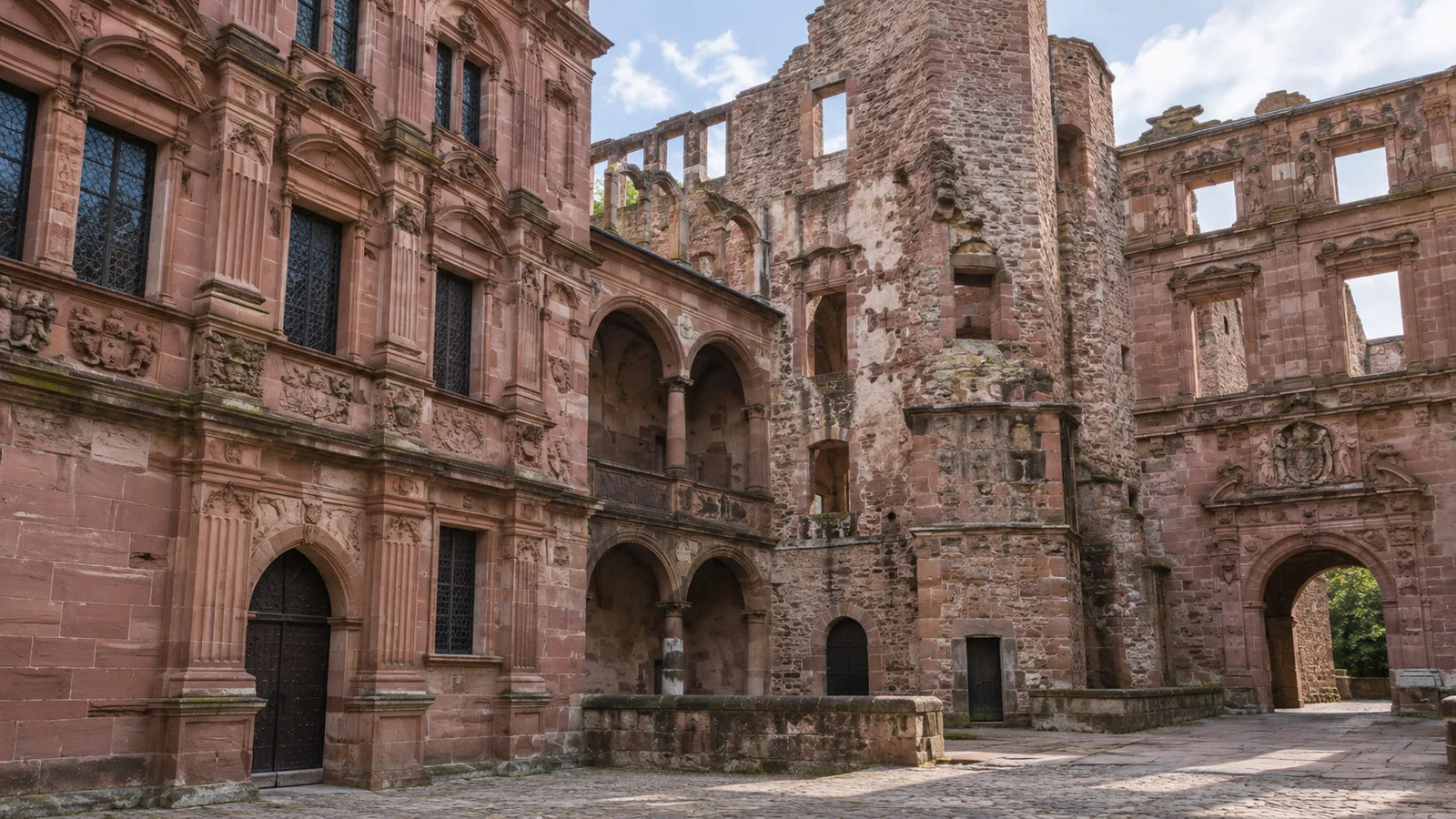
Heidelberg Castle rises above the Old Town in partially ruined red sandstone grandeur. The complex includes the courtyard, terraces, Great Tun and German Pharmacy Museum, while interior rooms require a guided tour.
The castle’s official 2026 visitor information currently lists daily opening from 9 a.m. to 6 p.m., with last admission at 5:30 p.m. Holiday exceptions, event restrictions and ticket prices can change.
The lower funicular runs from Kornmarkt to the castle and Molkenkur. Its 2026 summer timetable lists service every 10 minutes, but planned maintenance or special events can interrupt normal operation.
Do not buy duplicate admission before checking the excursion inclusions. The standard castle ticket includes the lower funicular return, castle courtyard, Great Tun and pharmacy museum, while an interior guided tour costs extra.
Walking uphill is possible but steep. Use the funicular when time or knees are precious, two resources a river cruise is surprisingly good at testing.
Philosopher’s Path
The Philosopher’s Path climbs the north side of the Neckar and rewards walkers with the postcard panorama across Old Town to the castle. It is not a flat riverfront promenade despite the calm name.
AmaWaterways offers it as an active alternative on several Ludwigshafen calls. Choose that guided version if the viewpoint matters, because steep approaches, uneven surfaces and limited time complicate an improvised visit.
Travelers with mobility limitations can enjoy excellent views from the castle terrace or Old Bridge approaches instead. A beautiful panorama does not become more philosophical because your calves are filing a complaint.
If your ship docks in Mannheim
Mannheim deserves more than gateway status when the itinerary gives free time. The city center uses numbered and lettered blocks around the Baroque palace, with the Paradeplatz, Planken shopping street and landmark Water Tower forming practical targets.
Distance from the authorized Rheinkai zone to central sights varies by the exact landing. Allow an estimated 15 to 30 minutes on foot or use local transit after confirming the gangway and stop.
The Baroque palace can substitute nicely for Heidelberg Castle when transfers are canceled or you prefer less motorcoach time. Verify opening hours and interior access directly because university and museum operations can affect what is visitable.
If your ship docks in Ludwigshafen
Rhein-Galerie makes immediate errands easy, and the Rhine promenade provides a low-pressure stretch ashore. Mannheim lies across the river, but reaching its central grid requires a bridge or local transit rather than a hop across the water.
Ludwigshafen is also the starting point for operator excursions to Speyer, Schwetzingen and Ladenburg. Check whether independent passengers may reboard during the call, since that changes how useful the ship is as a midday base.
If Heidelberg’s tour is canceled, ask whether the operator substitutes Mannheim, Speyer or another regional stop. Do not assume the only alternative is several hours inside a shopping center, pleasant though its coffee may be.
Water levels, berth changes and missed calls
High or low Rhine water can alter navigation, while berth availability may switch a call between neighboring cities. Neckar navigation adds bridge clearance and its own water conditions for itineraries attempting Heidelberg directly.
CroisiEurope explicitly reserves the right to replace a Heidelberg stop with Mannheim or Ludwigshafen on a current itinerary. That operator disclosure is the clearest reason to write this guide around a three-city system rather than a fictional single terminal.
A change does not always cancel the Heidelberg excursion. A motorcoach can often reach the same destination from the alternate Rhine bank, although traffic and revised timing may shorten free time.
Accessibility
The decisive barriers are the gangway, motorcoach and castle hillside, not simply the distance on a map. Ask the cruise line whether the excursion vehicle has a lift, whether mobility devices ride in the luggage hold and how much standing the guided walk requires.
Historic Old Town paving can be uneven, and the castle complex includes slopes and limited routes through an old monument. The site’s river cruise accessibility guide provides a question list for ships, gangways and shore vehicles.
Confirm funicular access before relying on it, especially during maintenance. Travelers staying near the Rhine berth should also ask about ramp slope when vessels are double-docked.
The practical checks I would make before Heidelberg
Ask whether the ship is in Mannheim, Ludwigshafen, a Neckar berth, or another Rhine landing, and get the coach return point in writing. Heidelberg is the destination rather than a guaranteed port, and the vessel may move while guests are on the excursion.
Use the cruise-line transfer when the castle and Old Town are the priority, because it protects a return across city traffic to an uncertain berth. Check the castle and funicular schedules, choose either the upper castle experience or a slower Old Town day, and keep at least 90 minutes for an independent return to Mannheim or Ludwigshafen.
Check Germany and Schengen entry rules, live admission and funicular fees, and official Rhine notices before the call. Castle steps, steep lanes, cobbles, coach access, rafting, heat, and high or low water all need separate accessibility and schedule checks.
Quick answers
Does a Rhine cruise ship dock in Heidelberg?
Usually not on mainstream Rhine itineraries. Many ships dock in Mannheim or Ludwigshafen and send passengers to Heidelberg by motorcoach, although some Neckar itineraries call closer or directly.
Which port is better for Heidelberg, Mannheim or Ludwigshafen?
Neither has a meaningful sightseeing advantage when the cruise line provides a direct motorcoach. The better berth is the one your ship actually uses with the strongest excursion timing.
How far is Heidelberg from the Rhine berth?
Plan on roughly 12 to 15.5 miles and an estimated 30 to 45-minute motorcoach ride. Traffic and the exact berth can change that range.
Can the berth change after booking?
Yes. Operators may switch among Heidelberg, Mannheim and Ludwigshafen because of navigation, availability or operational needs.
Should I book the Heidelberg excursion?
Yes if the castle and Old Town are priorities. The organized transfer is safer than independently coordinating berth transport, regional rail and a possible ship relocation.
What can I do near the ship?
At Ludwigshafen’s Rhein-Galerie landing, use the shops and promenade when open. At Mannheim, the exact Rheinkai position determines the walk to the grid center and palace.
The last word
Heidelberg is the destination, Mannheim or Ludwigshafen is often the port, and the Neckar is the missing piece that makes the labels sensible. Once those three facts are clear, the day becomes much easier to plan.
Read the final berth notice, choose the organized transfer when Heidelberg matters and save independent rail adventures for generous schedules. For neighboring Rhine planning, compare the site’s Cologne river cruise port guide and Basel river cruise port guide.
How this guide was researched: This guide was independently checked on September 12, 2026, against the Mannheim Port Authority, Rhein-Galerie Ludwigshafen, the City of Heidelberg, Heidelberg Castle, Heidelberg Funicular, ELWIS waterway notices, and current cruise-line instructions. Reconfirm the landing, gangway, transfer, attraction rules, travel documents, river and weather conditions, accessibility, costs, and all-aboard point because live operations can change.