Punta del Este Cruise Port Guide: Tender, Beaches & Casapueblo
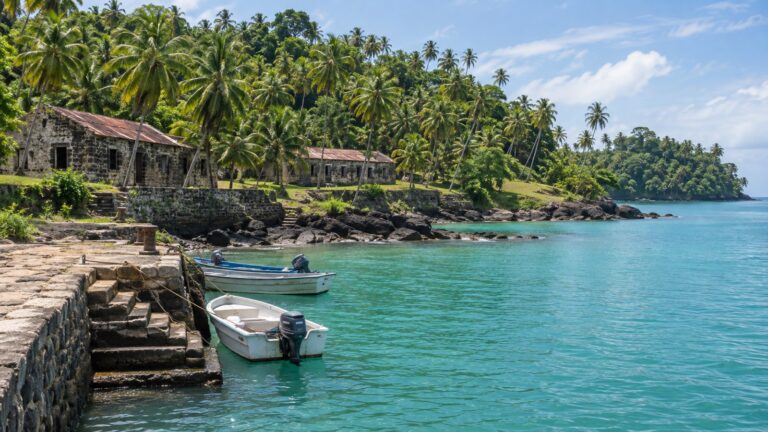
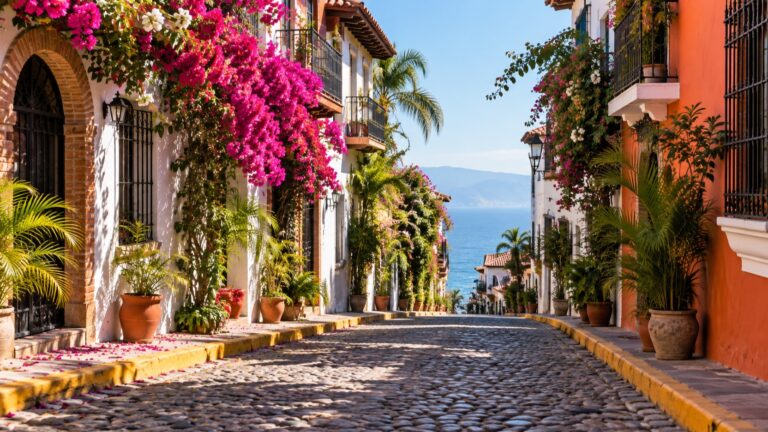
Punta del Este is Uruguay’s polished beach resort, but a cruise day here does not need to be expensive or complicated. Tenders bring you into the peninsula, where a harbor, lighthouse, shopping streets, public art, and two very different beaches fit into one satisfying walk.
The big decision is whether to stay on the peninsula or use precious tender time for Casapueblo at Punta Ballena. Both plans work, but combining everything is how a breezy seaside day turns into a taxi negotiation with one eye on the clock.
Quick Facts
- Arrival: Cruise ships anchor in Maldonado Bay and tender passengers to Punta del Este’s harbor.
- Best independent plan: Walk the peninsula, harbor, Avenida Gorlero, La Mano, and one beach.
- Famous landmark: La Mano by Chilean artist Mario Irarrázabal at Playa Brava, Parada 1.
- Beach choice: Playa Mansa is generally the more sheltered side, while Playa Brava faces the Atlantic.
- Casapueblo: A separate taxi, tour, or other arranged transfer to Punta Ballena.
- Currency: Uruguayan peso, with cards common but a small amount of local cash useful.
- Language: Spanish.
- Accessibility: The peninsula has manageable paved areas, but tender boarding is the first and most important barrier.
How cruise passengers arrive
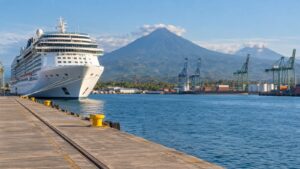
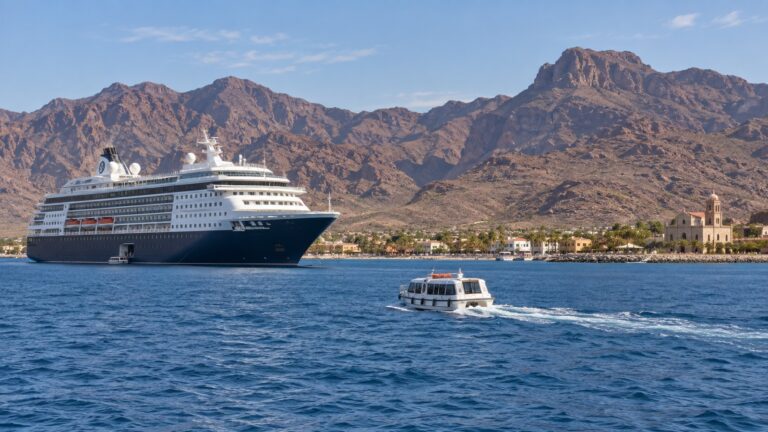
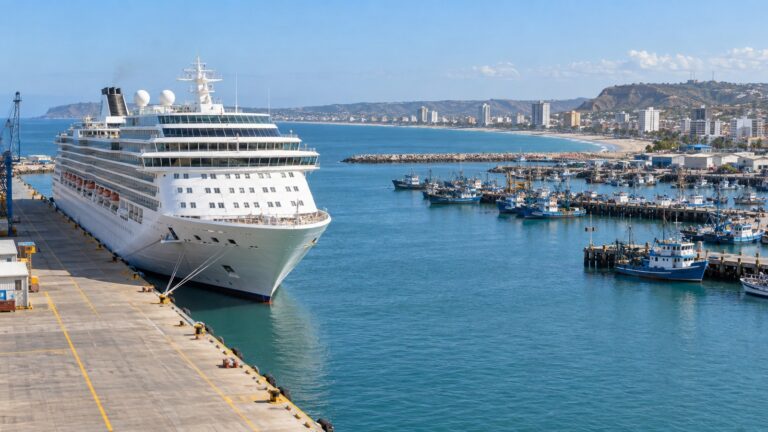
Large cruise ships do not berth at the compact yacht and fishing harbor. They anchor in Maldonado Bay and use a mix of ship tenders and local shore boats to carry passengers to the peninsula.
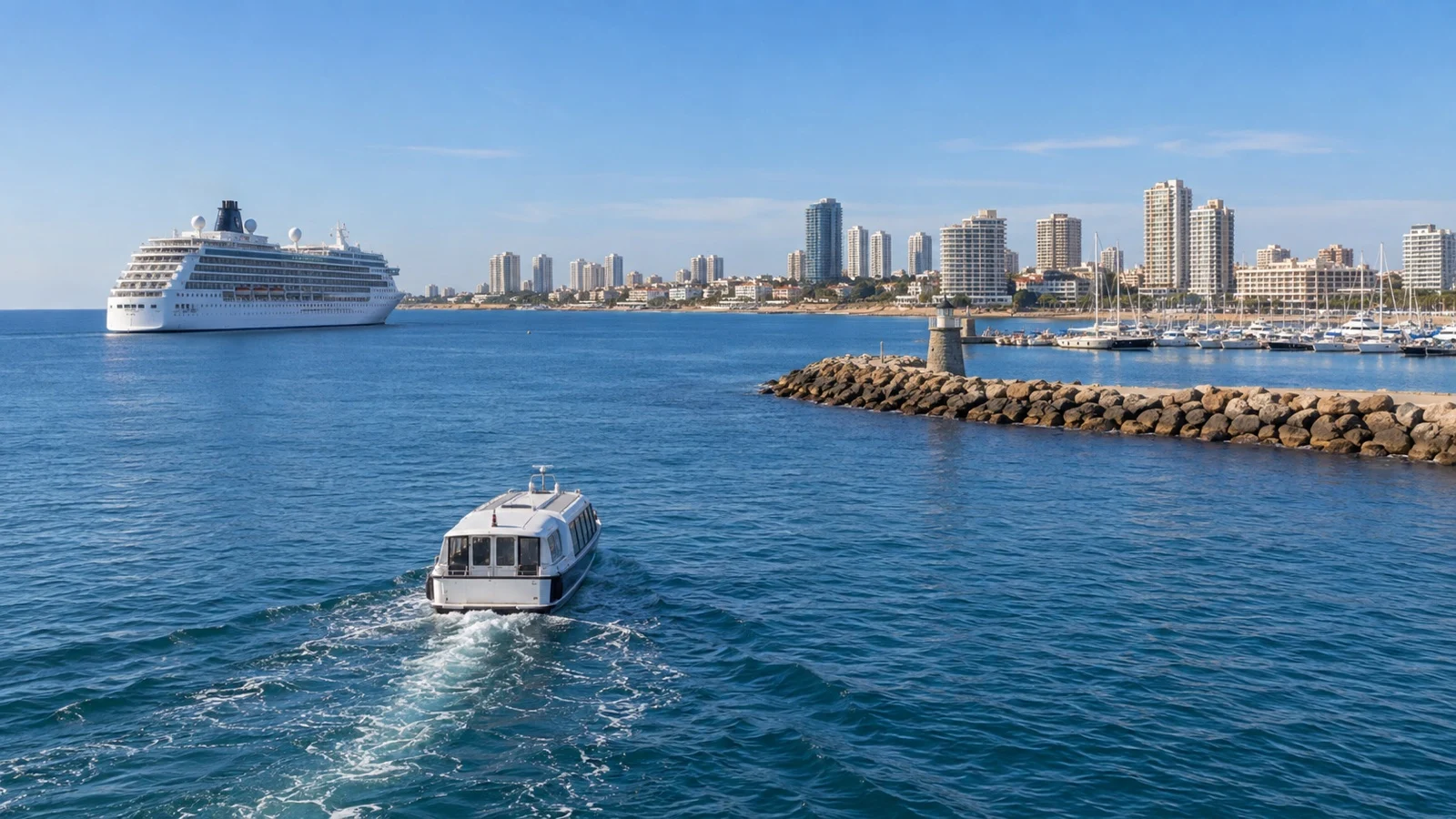
Shipping-agent information for Punta del Este anchorage operations places larger vessels roughly one mile from the pier in the more distant anchorage, protected by Gorriti Island. The actual ride and boarding sequence depend on sea conditions, vessel size, and the operation arranged for your ship.
Your cruise line’s tender tickets, last-boat time, and mobility rules outrank every schedule you find online. Collect a ticket early if independent passengers need one, and keep both hands available when stepping between the ship and a moving tender platform.
The peninsula is built for wandering
The tender landing puts you near a working harbor where fishing boats, pleasure craft, sea lions, cafes, and seafood restaurants share the waterfront. It feels upscale without forcing you into a paid attraction, which is exactly why independent travelers do so well here.
The municipal tourism guide identifies the Rambla de Circunvalación as the classic promenade around the peninsula. Follow as much of the waterfront loop as weather and energy allow, then cut inland when you want shops or shade.
Avenida Gorlero is the peninsula’s traditional commercial spine, lined with restaurants, stores, and services. Plaza Artigas, between Calle 23 and Calle 25, is associated with an artisan fair, while Calle 20 is the polished shopping alternative.
Build the walk around La Mano
La Mano is the giant hand rising from the sand at Playa Brava, created by Chilean sculptor Mario Irarrázabal. The official Maldonado guide places it within the Paseo de Las Américas group of outdoor works at Playa Brava’s first parada.
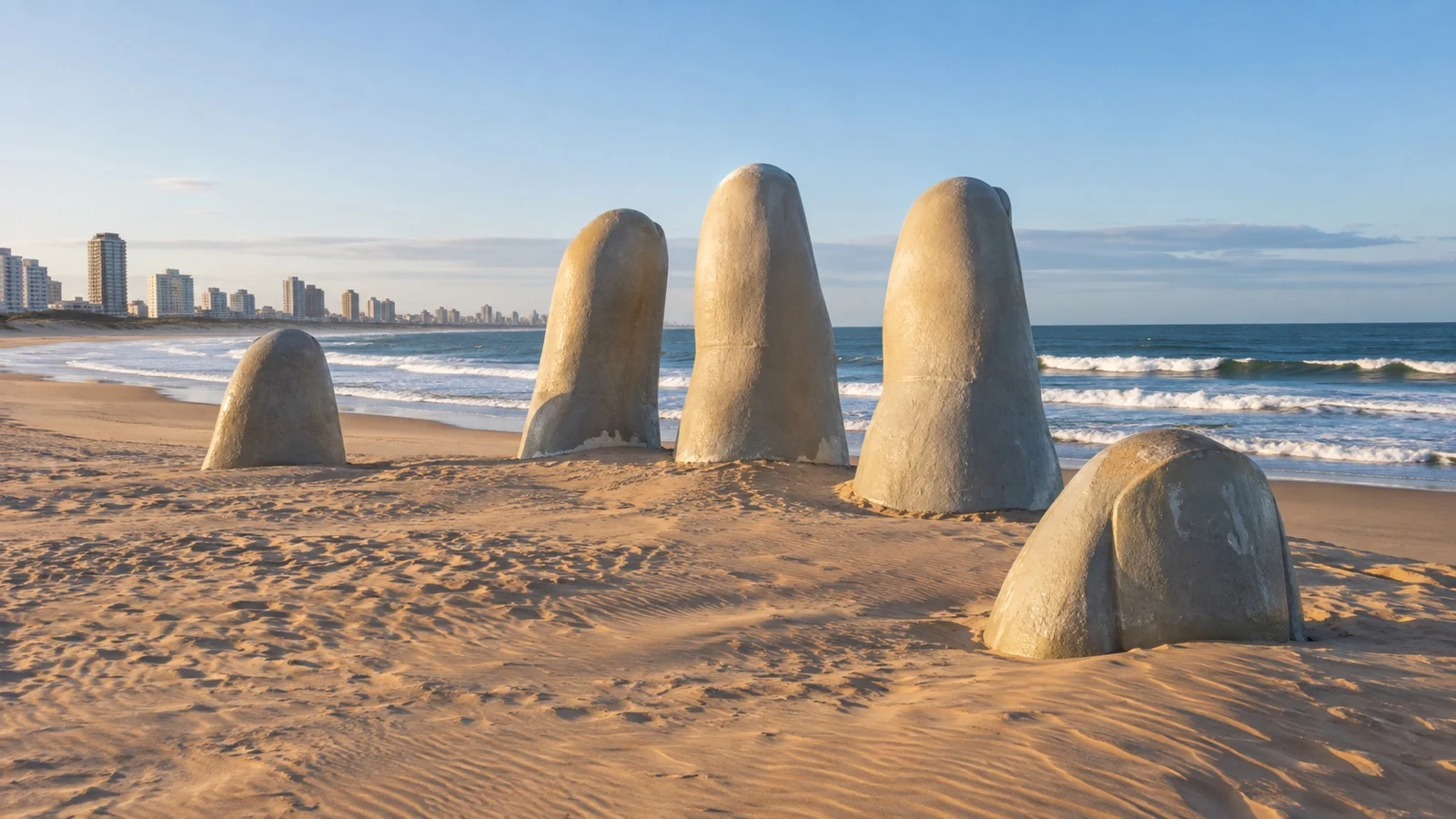
The sculpture is popular, so an early arrival makes photos easier and leaves you room to enjoy the setting. Please do not climb, scratch, or treat public art like gym equipment, even when everyone around you seems committed to the same pose.
From La Mano, return through Gorlero or continue along the water before circling toward the harbor. The peninsula is compact, but sun, wind, and beach detours make distances feel different from a clean line on a map.
Playa Mansa or Playa Brava?
Punta del Este sits where the Río de la Plata meets the Atlantic, and the two sides of the peninsula have distinct personalities. Playa Mansa is the more sheltered bay side, while Playa Brava receives more open-ocean energy and can have stronger surf.
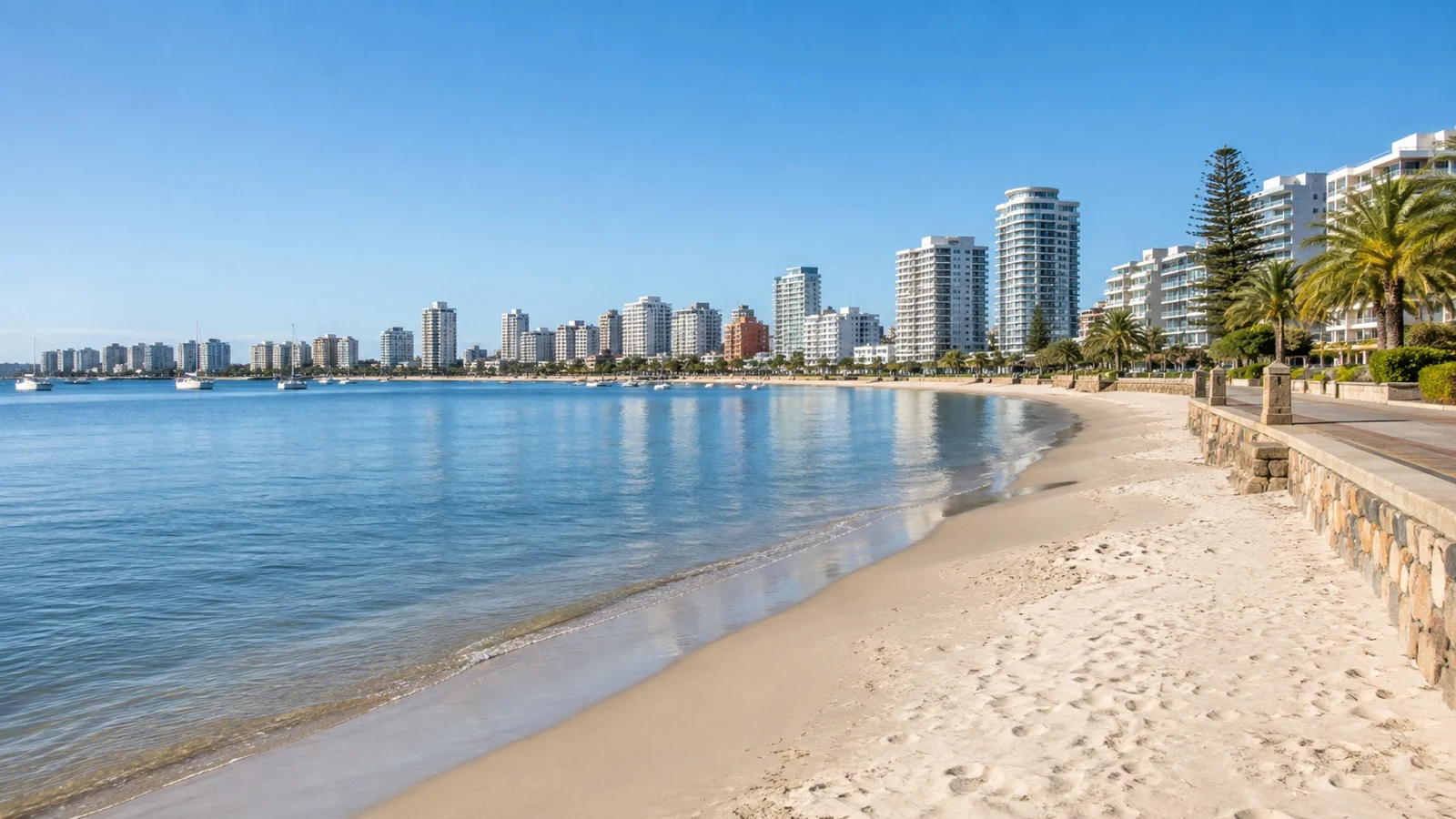
Choose the beach based on that day’s flags, wind, lifeguard coverage, and water conditions rather than the name. A calm photograph from last week says nothing about today’s current, water temperature, or surf.
If swimming matters, change near facilities you have already identified and keep sand out of anything needed for tender boarding. A waterfront walk and coffee can be the better choice on a cool, windy, or crowded day.
The lighthouse and old peninsula
The white and red Punta del Este lighthouse anchors the quieter side of the peninsula near the Church of Our Lady of Candelaria. Even when interior access is unavailable, the surrounding streets provide a pleasant contrast to modern towers and busy beaches.
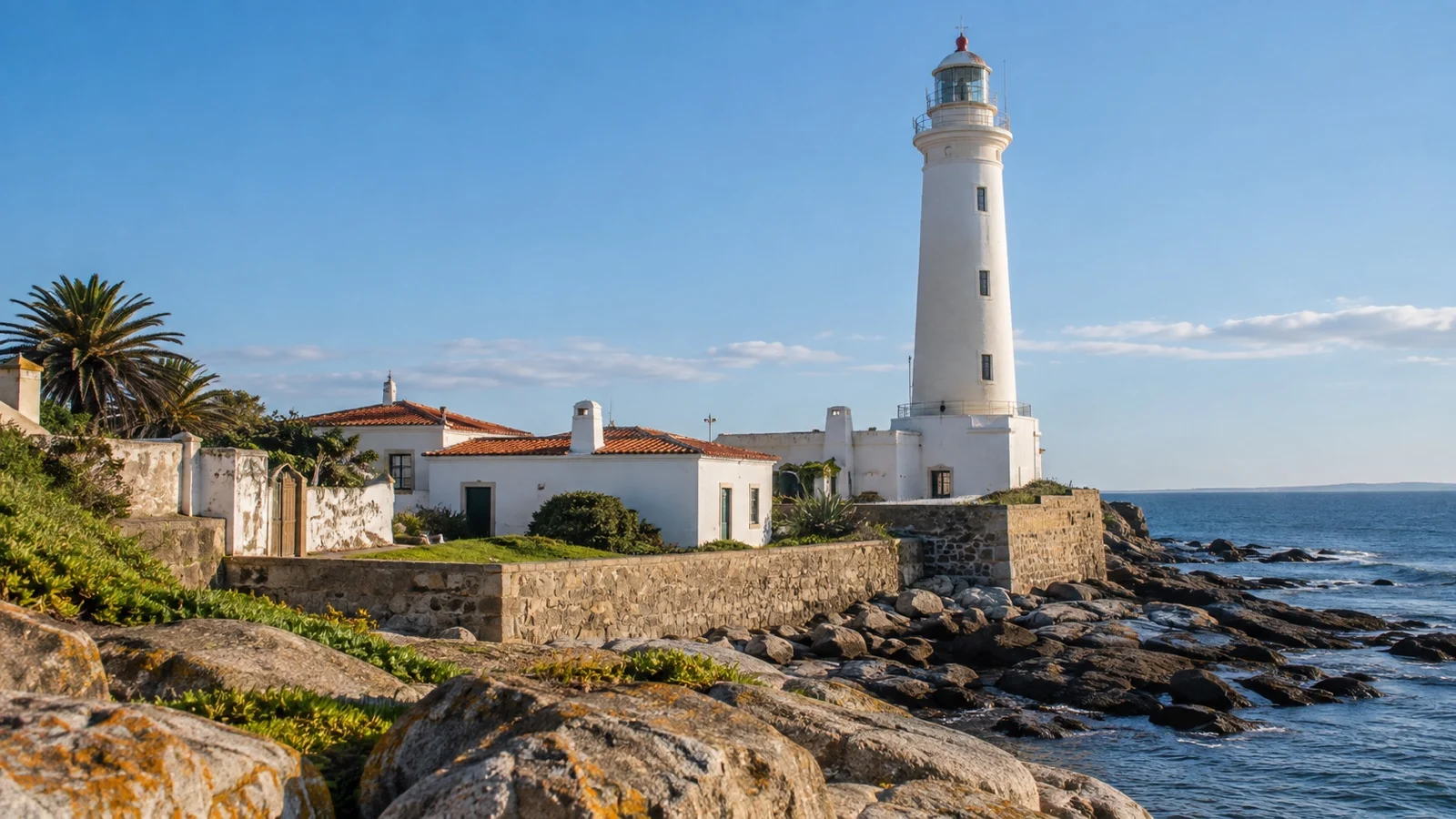
This is also where a slow walk shows the resort’s layers: modest older homes, gardens, maritime views, and the occasional burst of glossy development. Pair it with the harbor if you want character without the long loop to La Mano.
Casapueblo is the big transport decision
Casapueblo is the sculptural white home and studio created by Uruguayan artist Carlos Páez Vilaró at Punta Ballena. It contains a museum workshop with paintings, ceramics, sculptures, a cinema, five galleries, and three terraces overlooking the coast.
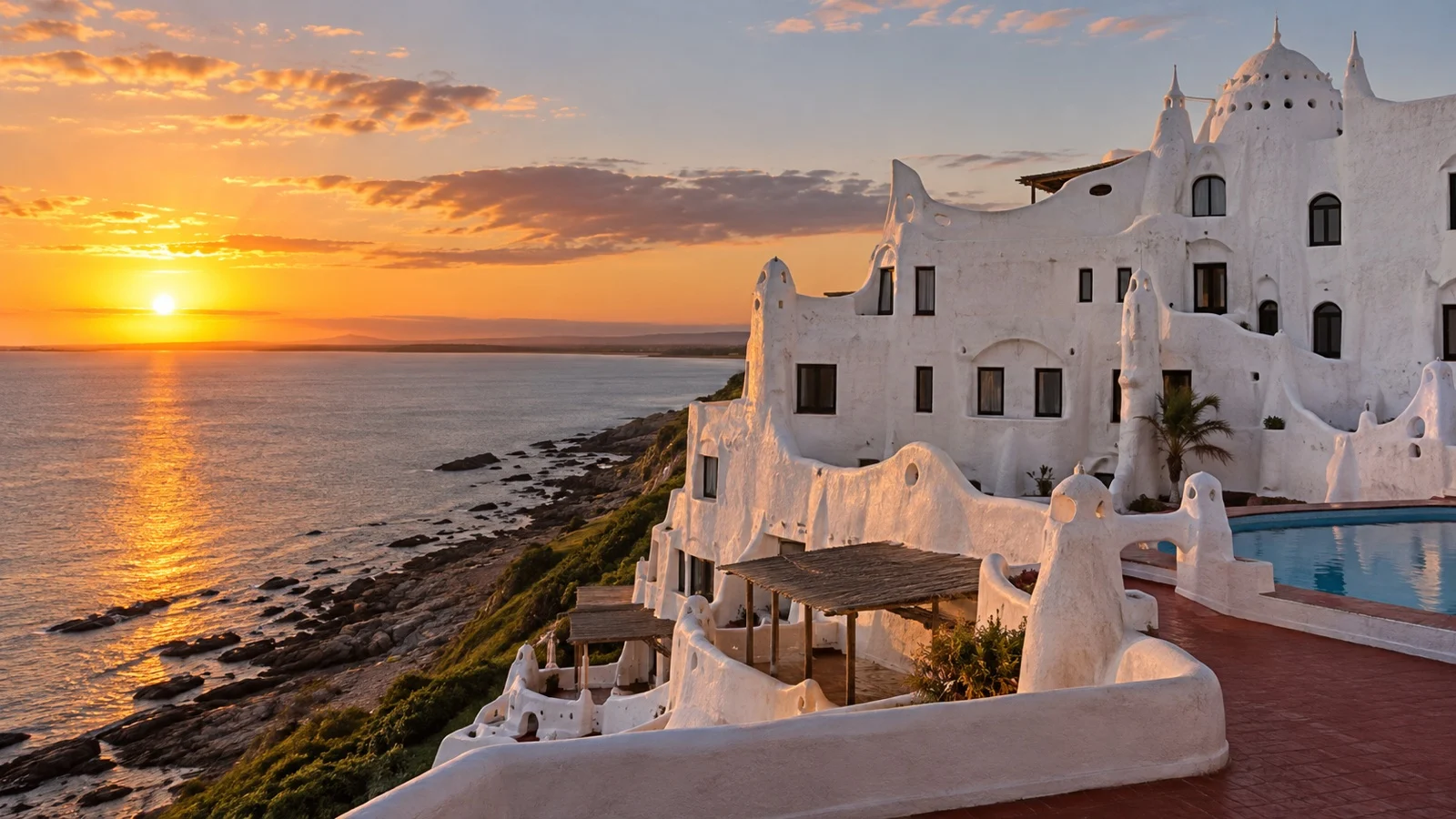
The official Casapueblo museum lists daily opening from 10 in the morning until sunset. Its famous sunset ceremony is lovely for land travelers, but most cruise calls require you to return to the ship long before that moment.
Punta Ballena is outside the walkable peninsula, so use a ship excursion, prearranged driver, or clearly agreed round-trip taxi. Confirm the fare, waiting time, admission arrangements, and return point before leaving Punta del Este.
Casapueblo combines beautifully with one quick peninsula stop, but not with an ambitious beach day and island boat tour. If art and architecture are your priorities, give the museum the center of the day instead of treating it as a photo drive-by.
Boat trips and wildlife
Gorriti Island and Isla de Lobos tempt visitors back onto the water, but a second independent boat schedule adds risk to an already tender-dependent port. Choose a reputable operator, verify whether the tour observes wildlife from the vessel or includes any landing, and understand the cancellation policy.
The Maldonado tourism guide places Isla de Lobos about five miles offshore and identifies it as an important sea-lion site with a lighthouse. Keep wildlife wild by following the crew’s distance rules and never feeding, touching, or chasing animals for a photograph.
Taxis and buses
Taxis are the cleanest solution for Casapueblo, neighborhoods beyond the peninsula, or travelers limiting walking. Ask whether the fare is metered or fixed, confirm the currency, and write down the agreed price if language or noise makes the conversation uncertain.
Local buses can be useful for experienced independent travelers, but routes and payment details require current local confirmation. A cruise day is not the moment to discover that your return stop sits across a multilane road or that the next bus does not fit the tender deadline.
A smart half-day plan
Take an early tender, walk from the harbor through the peninsula, visit the lighthouse area, continue to Avenida Gorlero, and finish at La Mano. Return toward the port by a direct inland route, leaving time for lunch or the artisan stalls near Plaza Artigas.
If walking is limited, use a taxi for a peninsula circuit that includes the lighthouse, Playa Brava, La Mano, and a waterfront viewpoint. Save Casapueblo for a longer call or a dedicated organized tour.
A relaxed full-day plan
For a long call, go directly to Casapueblo in the morning, return to Punta del Este for lunch, then walk to La Mano or relax along Playa Mansa. That sequence protects the distant attraction first and keeps your final hours close to the tender landing.
The alternative is a completely local day with the full Rambla loop, beach time, shopping, and an unhurried meal. It may sound less dramatic, but it is often the version that feels most like Punta del Este.
Accessibility begins with the tender
Tender boarding can involve steps, gaps, moving platforms, and a transfer that may become unsafe in swell. Ask the cruise line before sailing whether your mobility device can be carried and what physical transfer is required.
Ashore, much of the central peninsula uses paved sidewalks, but curbs, uneven surfaces, sand, and long distances still matter. An accessible taxi or prearranged private tour can reduce fatigue, though availability should be confirmed ahead rather than assumed at the pier.
Weather and what to wear
Uruguay’s summer cruise season can bring bright sun, warmth, and strong coastal wind, while shoulder-season calls may feel much cooler than a tropical itinerary suggests. Pack layers, sun protection, water, and shoes that handle both pavement and a damp tender floor.
Wind and swell can slow or suspend tendering even when the town itself looks pleasant. Treat any revised onboard instructions as operational facts, not optional suggestions.
Money, language, and practical habits
Uruguay uses the Uruguayan peso, and cards are widely accepted in established businesses. Carry a modest amount of local cash for small purchases, ask which currency a quoted price uses, and decline dynamic currency conversion unless you understand the rate.
Spanish is the everyday language, although English may be spoken in tourism businesses. A friendly buenos días, por favor, and gracias smooth nearly every interaction.
Punta del Este generally feels comfortable in busy visitor areas, but normal city habits still apply. Watch phones and wallets in crowds, use licensed transport, and keep valuables with you rather than unattended on the beach.
How early to return
Be back near the tender landing well before the final boat because the queue, security process, and bay crossing all sit between you and the ship. A line at the pier is not permission to arrive after the published cutoff.
When visiting Casapueblo, work backward from the ship’s last tender and add road traffic, payment, and boarding time. I would rather spend an extra half hour at the harbor than watch the anchorage from the wrong side of the water.
My honest take
Punta del Este is one of those ports where independent walking delivers the place without much friction. The peninsula gives you art, architecture, two coasts, shopping, and lunch while keeping the tender pier within reach.
Choose Casapueblo when its art genuinely excites you, not because every tour brochure says it is essential. Otherwise, stay local, follow the water, photograph the hand, and let Uruguay’s most famous resort be pleasantly easy.
Ellie is the editor behind CruisePorts.co and writes practical port guides for travelers who want clear choices without the fluff. This guide was checked against current Maldonado tourism, Casapueblo, and port-agent information, but always confirm tender operations and return times with your cruise line.