Baie-Comeau Cruise Port Guide: Dock, Town & Seasonal Tours
Baie-Comeau feels different from the polished cruise capitals farther up the Saint Lawrence. This is a working Côte-Nord city shaped by forest, water, industry, hydroelectric power, and a French-speaking community that meets the broad river on a grand scale.
The port day can be wonderfully personal, especially during fall foliage season, but it rewards current information. Cruise transportation, attraction hours, and dam tours can be seasonal, while distances between the dock, the two main urban sectors, and inland sights make improvisation harder than the map suggests.
Quick Facts
- Port: Baie-Comeau, on Québec’s Côte-Nord
- Waterway: North shore of the Saint Lawrence estuary
- Arrival: Typically alongside at an industrial multi-user dock, subject to the ship’s confirmed plan
- Town access: Usually requires organized transportation, a shuttle, taxi, or tour
- Currency: Canadian dollar
- Language: French, with English availability varying by service
- Popular sights: Sainte-Amélie Church, local heritage districts, nature sites, and hydroelectric excursions
- Seasonal caution: Some attractions and tours do not operate through the full autumn cruise period
- Weather: Cool, changeable, and often windy near the water
- Return rule: Use the ship’s all-aboard time and the official shuttle schedule
Where cruise ships arrive
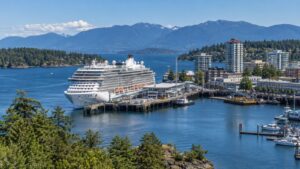
Cruise vessels generally use Baie-Comeau’s working multi-user port facilities rather than a downtown promenade berth. Industrial activity and security rules mean passengers should follow marked routes and staff instructions instead of walking away from the ship on their own.
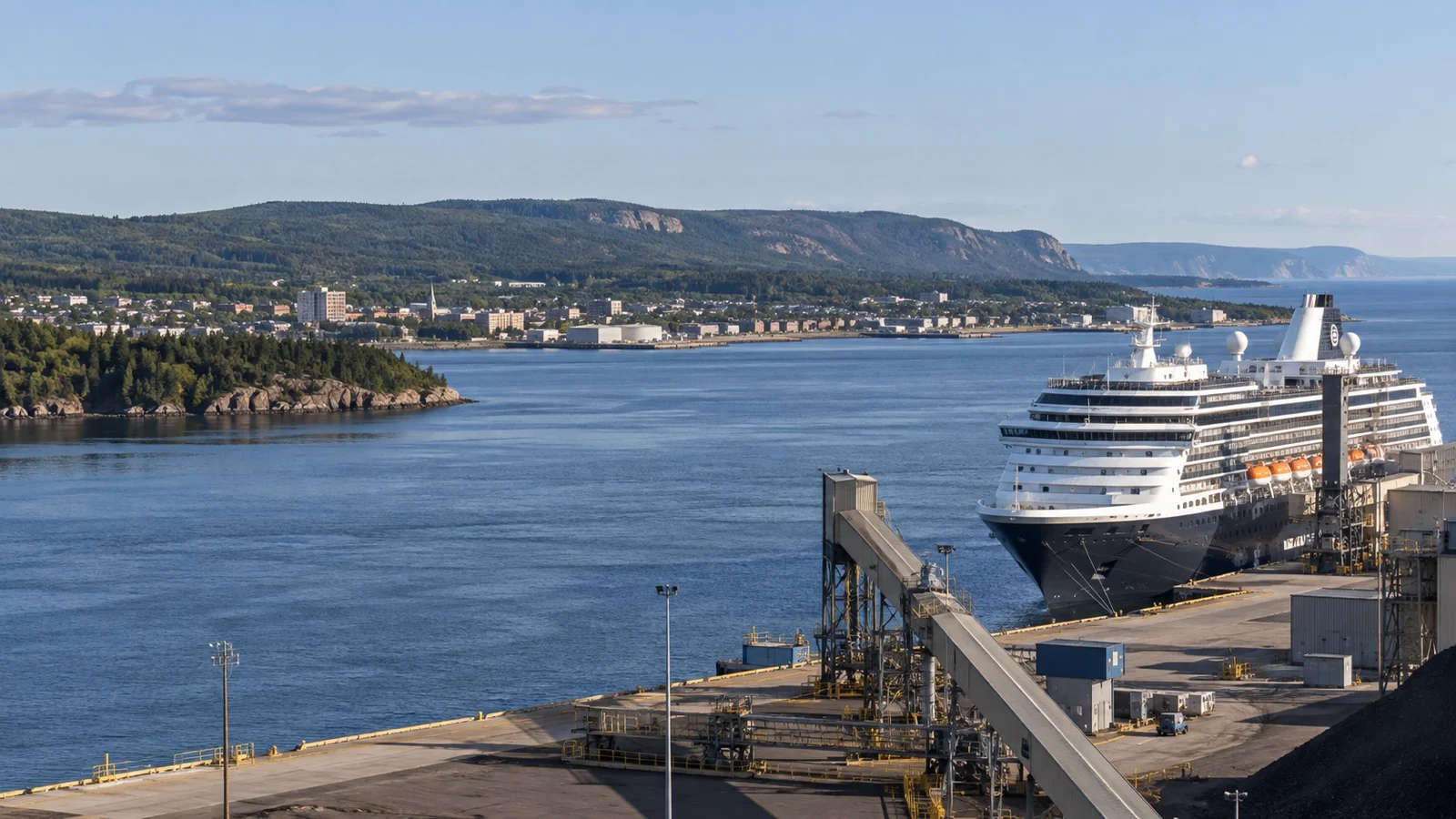
The local ground plan can include cruise shuttles, welcome services, tour coaches, and taxis, but the exact arrangement varies by call. Confirm the shuttle stops, frequency, last return, and accessibility with the ship or welcome team before leaving the dock.
Do not assume the vessel will tender because the city sits on a broad estuary, and do not assume every berth allows unrestricted pedestrian access. The cruise line’s daily program is the final source for your ship’s actual operation.
Passengers with mobility equipment should ask about gangway slope, dock surfaces, shuttle lifts, and available adapted transportation. A level-looking industrial apron can still involve long distances, gravel, weather exposure, or bus steps.
Understanding Baie-Comeau’s layout
Baie-Comeau is not one compact historic core wrapped around the cruise berth. The modern city includes distinct urban areas, and attractions may be spread between the original Baie-Comeau sector, the Hauterive sector, waterfront zones, and inland routes.
This layout explains why a shuttle or organized tour is valuable even when the destination sounds small. Walking distance alone does not show road access, industrial boundaries, elevation, or the gap between points of interest.
If a cruise shuttle operates, photograph its stop sign and note the last departure in both directions. Ask whether it follows a loop or a direct route, because missing one bus may create a longer delay than expected.
Offline mapping helps, but local instructions matter more. A map can direct you toward a road that is unsuitable for pedestrians or away from the designated cruise pickup area.
A town-focused day
A town day works well for travelers who prefer local stories, architecture, food, and a relaxed pace. It is also the safest choice when the call is short, weather is unsettled, or seasonal excursions are unavailable.
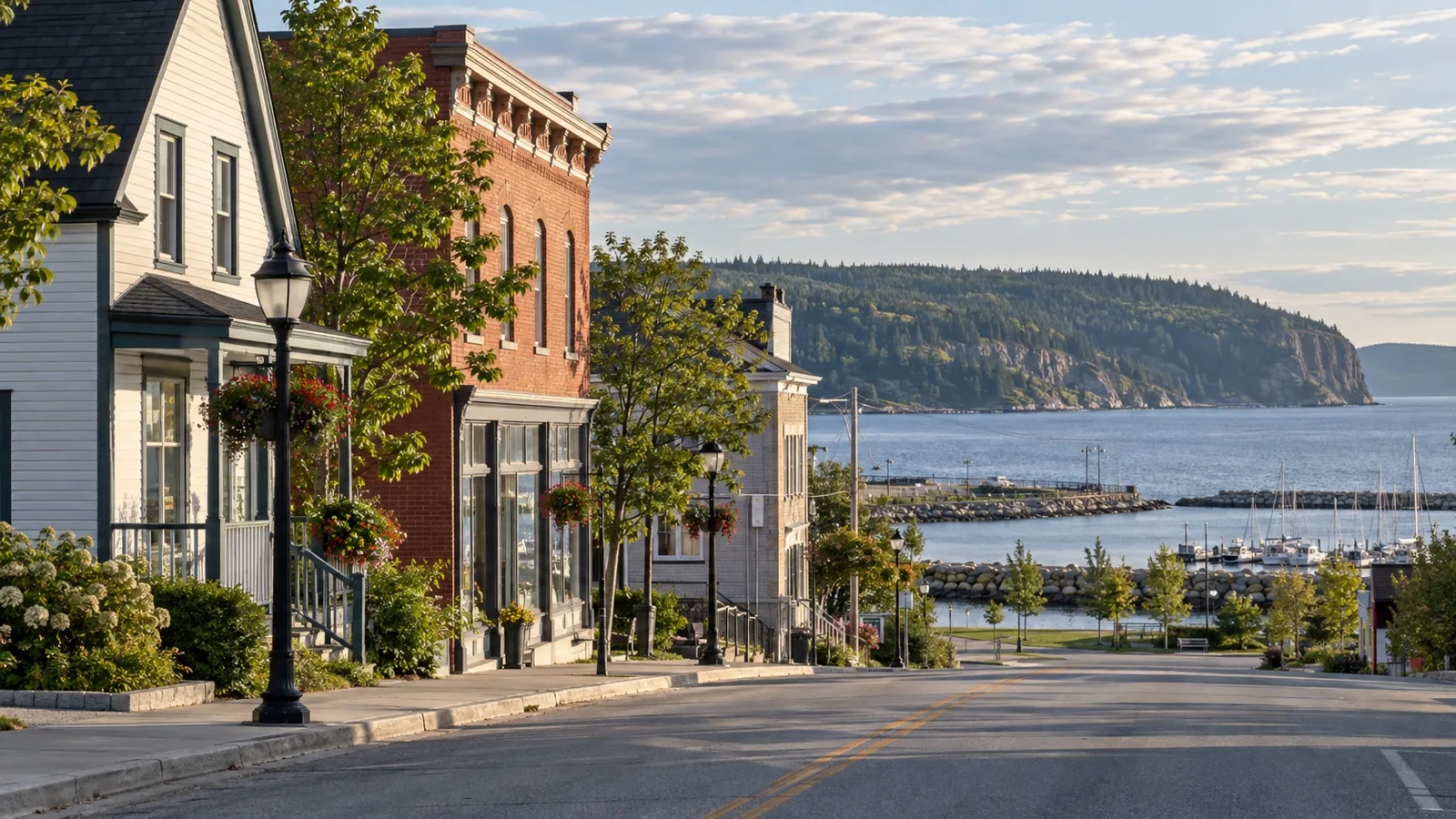
Sainte-Amélie Church is one of Baie-Comeau’s defining heritage buildings, known especially for its interior decoration and fresco work. Access and guided visits can be seasonal or tied to cruise operations, so confirm that it is open before making it the anchor of an independent plan.
The surrounding original town sector reflects the city’s twentieth-century industrial origins. A local guide can connect the streets, homes, church, and civic buildings to the paper industry and the rapid creation of the community.
Baie-Comeau’s story is not ancient by European standards, but it is unusually concentrated. The city grew from ambitious northern resource projects, and that history remains visible in its scale and layout.
Pointe Saint-Gilles and easy nature
Wooded areas and riverfront viewpoints offer a gentler alternative to a long coach tour. Pointe Saint-Gilles is often highlighted locally for paths, gardens, and scenery close to the historic sector, though current public access should be confirmed.
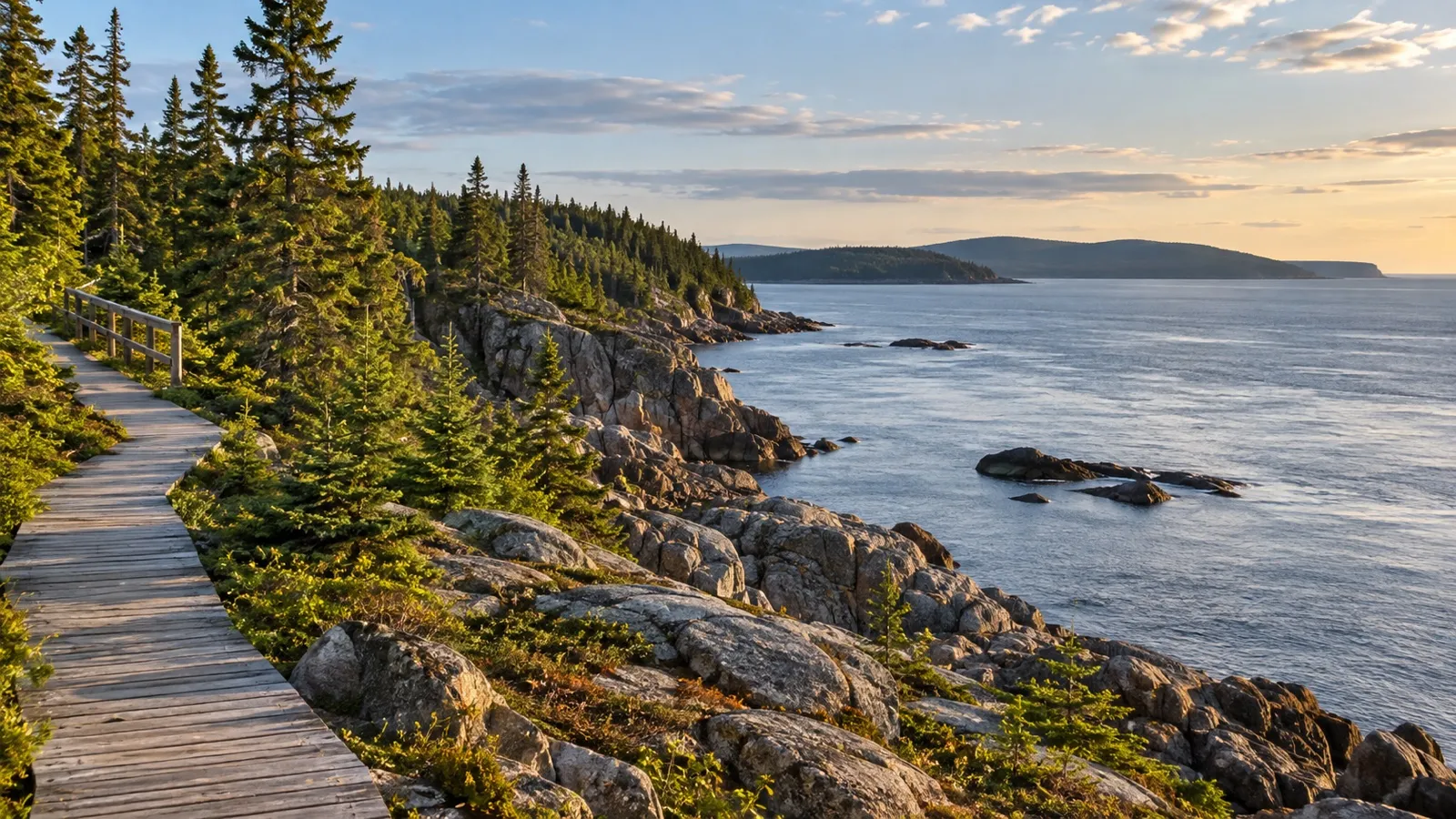
Autumn can bring beautiful color, damp leaves, cool air, and slippery roots at the same time. Wear shoes with grip and choose a route that leaves energy for the shuttle and gangway return.
Do not expect formal garden displays or visitor services to remain identical late in the season. A quiet walk can still be rewarding when flowers have faded, but restrooms, staff, and programmed activities may be reduced.
Stay on marked paths and respect closures. The North Shore environment can feel gentle near town, yet wet ground and abrupt weather changes deserve attention.
Manic-2 and the Jean-Lesage generating station
Baie-Comeau is a natural gateway to the Manicouagan hydroelectric story. The Jean-Lesage generating station, long known as Manic-2, is reached by road inland and may be offered as a guided excursion when Hydro-Québec’s visitor program is operating.

This is a fascinating choice for engineering-minded travelers because the landscape and power system are part of Québec’s modern history. It is not, however, a year-round walk-in attraction.
Official tour dates, reservation rules, identification requirements, footwear, age limits, security procedures, and accessibility can change. Confirm all details directly with Hydro-Québec or through the cruise excursion operator before counting on the visit.
The road journey and controlled entry make timing important. A ship-organized tour is often the most practical way to align the station visit with port security and all aboard.
Do not confuse Manic-2 with the much farther Daniel-Johnson Dam, often called Manic-5. Excursion titles should be read carefully because the two facilities require very different amounts of road time.
Why late-season calls need a backup plan
Many Saint Lawrence itineraries reach Baie-Comeau during September or October, when fall color may be excellent but summer visitor programs are winding down. A tour described in a general guide may no longer operate on your date.
Verify attraction openings and tour departures rather than relying on a seasonal headline. When a dam visit, garden activity, boat trip, or interpretation center is unavailable, the ship may substitute another local experience.
Build a backup around town heritage, a nature walk, local shopping, or a scenic drive. Flexibility matters more here than collecting a fixed list of famous sights.
Fall daylight, wind, and temperature can change quickly. An itinerary that works in July may need a shorter outdoor segment during an October call.
The Saint Lawrence and marine wildlife
The Saint Lawrence estuary is one of the great geographic presences of the day. From shore or ship, the water can look more like an inland sea than a river, with changing light, distant land, and active commercial traffic.
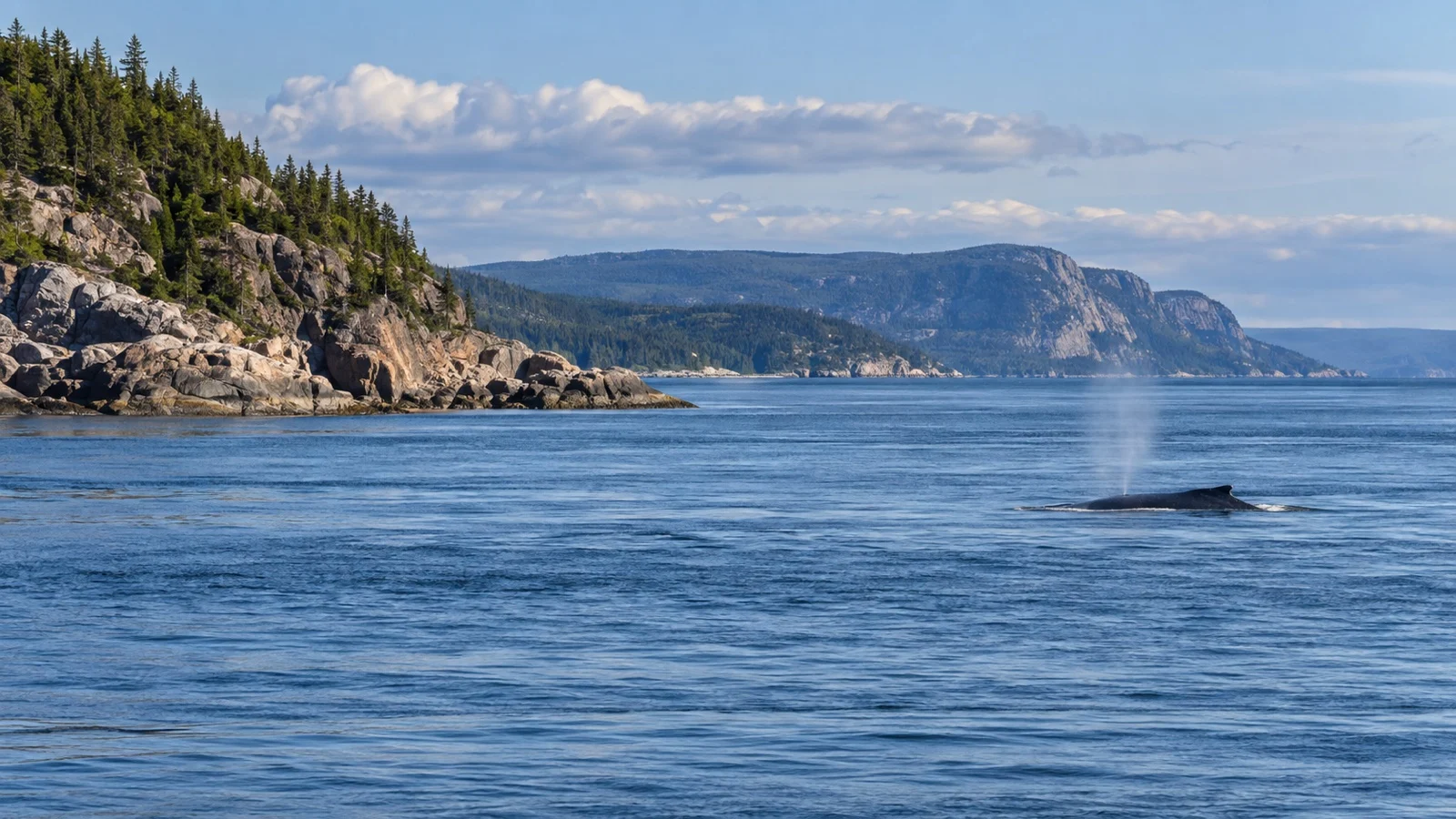
Marine mammals occur in the wider region, but no shoreline sighting is guaranteed. Binoculars improve your chance of noticing distant movement without encouraging unrealistic expectations.
A wildlife boat trip should be booked only with a qualified operator whose schedule fits the ship. Confirm departure location, vessel type, warm clothing requirements, cancellation policy, and return margin.
Follow current marine mammal viewing rules and the operator’s instructions. Responsible observation keeps distance from animals and never treats a close approach as something the captain can promise.
Indigenous context and respectful travel
The Côte-Nord is part of a region with deep Innu presence and living Indigenous communities. Any cultural experience should be approached as an opportunity to listen to contemporary voices, not as a display frozen in the past.
Choose programs led by or developed with the community when they are available. Follow photography guidance, ask before recording people, and purchase art from sellers who can identify the maker and origin.
Place names, river systems, and travel routes carry stories that long predate the industrial city. A thoughtful guide can help connect modern Baie-Comeau with the much longer history of the territory.
Industrial history and hydroelectric landscapes
Forestry, paper production, aluminum, shipping, and hydroelectric development shaped Baie-Comeau’s growth. This industrial identity is not background clutter; it is central to understanding why the city exists in its present form.
A guided city or regional tour may explain how abundant water, forests, port access, and large energy projects supported development. The most interesting views often come with a story rather than a standalone monument.
Industrial zones remain working environments. Photograph only where permitted, stay with the group, and never cross security barriers for a better angle.
Travelers interested in engineering should ask whether the tour includes an interior visit, an exterior viewpoint, or interpretation only. These are different experiences and depend on current operations.
Weather and what to wear
Baie-Comeau cruise calls often bring cool mornings, wind off the Saint Lawrence, passing rain, and large temperature swings. Dress in layers that can be added or removed during bus rides and outdoor stops.
A waterproof shell is more useful than a bulky coat that absorbs rain. Add a warm midlayer, gloves and a hat for later-season calls, plus shoes that handle wet pavement and leaves.
Check Environment and Climate Change Canada’s current forecast and alerts close to arrival. Conditions along the water or inland near a hydroelectric site may differ from the reading in the city center.
Protect cameras and phones from rain, and keep a dry layer for the return. A damp morning becomes much less comfortable when you still have several hours before sailing.
Accessibility and reduced-mobility planning
The alongside arrival can be simpler than tendering, but the dock is not the entire accessibility picture. Gangways, industrial surfaces, coach steps, attraction entrances, and uneven outdoor paths all need separate consideration.
Ask the cruise line whether the town shuttle is wheelchair accessible and whether mobility devices require advance registration. A standard coach may have storage but no passenger lift.
Sainte-Amélie Church, heritage buildings, and nature areas may each have different accessible entrances. Request the exact route and restroom information rather than relying on a broad “accessible” label.
For Manic-2 or another industrial visit, confirm security and mobility requirements directly with the operator. Some controlled areas may involve stairs, standing, narrow passages, or restrictions that cannot be changed on the day.
A panoramic drive with selected accessible stops can be a strong alternative. It provides regional context without asking every member of the group to manage trails or long periods on foot.
Families and multigenerational groups
Baie-Comeau can work well for families when the day has a clear theme. Hydroelectric power, forest ecology, shipping, and the enormous Saint Lawrence give children concrete ideas to follow.
Check minimum ages and safety rules for any industrial tour. If a child cannot participate, the restriction may apply to the entire family’s booking rather than just one section.
A town shuttle, short nature walk, warm snack, and waterfront viewpoint create an easier rhythm for mixed ages. Keep extra clothing ready because children cool down quickly in wind and light rain.
Near the port and river, close supervision is essential. Working docks, traffic, steep banks, and cold water are not play areas.
Food, language, and money
French is the everyday language in Baie-Comeau, and English availability varies. A friendly “bonjour” is always a good beginning, and a translation app can help with menus or independent transportation.
Look for Québec comfort food, local baking, seafood, regional products, and a warm drink suited to the weather. Restaurant hours may be limited outside the summer peak, so confirm before walking far from the shuttle route.
Canada uses the Canadian dollar, and cards are widely accepted in established businesses. Carry a backup card and a modest amount of cash for small purchases or temporary connection problems.
Tipping follows Canadian practice in full-service restaurants and taxis. Check whether gratuity is already included for a group before adding another amount.
If buying food products, remember your ship and home country may restrict what can be carried onboard or brought through customs. Sealed, labeled goods are usually easier to manage than fresh items.
Independent transportation
Baie-Comeau is not a port where I would count on stepping outside and instantly finding unlimited taxis. Cruise-day demand can be concentrated, while distances and return timing make a one-way ride risky without a firm plan.
Reserve a driver in advance for any inland attraction or multi-stop itinerary. Confirm pickup location, total price, waiting time, vehicle size, cancellation terms, and the exact return deadline in writing.
Rental cars add flexibility but also require time for paperwork, pickup, fueling, and return. Verify where the vehicle will actually be delivered, because an airport or downtown office may not be convenient to the dock.
Cell coverage is generally useful in populated areas, but do not make a long trip dependent on live navigation alone. Download the route and carry the port-agent contact information.
How to protect your return to the ship
Begin with all aboard, then work backward through the last shuttle, travel time, and a delay buffer. The industrial dock may not allow you to solve a late arrival by simply running down a public sidewalk.
On a ship tour, follow the guide’s meeting times even when a stop feels short. On an independent trip, leave distant attractions early enough to absorb road work, weather, or a vehicle problem.
Photograph the shuttle schedule and confirm whether the final bus leaves at the stated time or arrives then. That small distinction matters when departures are infrequent.
Carry your cruise card, required identification, daily program, and port-agent number. Keep a paper note as backup in case your phone loses power or signal.
Simple plans for different call lengths
Short call
Use the official shuttle and focus on one town sector, a heritage visit, and a nearby scenic stop. Avoid a distant independent drive unless the timing is exceptionally clear.
Medium call
Choose a guided city and nature combination or a seasonal hydroelectric excursion designed for the ship. Leave room for weather and the last shuttle.
Long call
A broader regional drive may become practical, but do not confuse extra hours with unlimited distance. Select one main destination and protect the final part of the day.
Common Baie-Comeau planning mistakes
The first mistake is assuming the dock sits in the middle of a walkable tourist district. Use the official transportation plan and respect port security boundaries.
The second is booking Manic-2 based on a summer description for a fall cruise date. Verify the official operating season and reservation rules.
The third is packing for a mild forecast without accounting for wind and rain. Layers, waterproof protection, and good shoes belong in the day bag.
The fourth is treating Baie-Comeau as a checklist of major monuments. Its appeal comes from local stories, the Saint Lawrence, northern landscapes, and the relationship between nature and industry.
Frequently asked questions
Can I walk from the cruise ship into town?
Do not assume unrestricted pedestrian access from the working dock. Follow the ship’s instructions and use the authorized shuttle, tour, or taxi arrangements.
Does Baie-Comeau use tenders?
Cruise calls are generally associated with alongside port facilities, but the ship’s confirmed plan controls. Operational changes are always possible.
Can I tour Manic-2 on any cruise date?
No. Guided access is seasonal and subject to Hydro-Québec’s current schedule, reservations, security rules, and operational conditions.
Is Manic-2 the same as Manic-5?
No. The Jean-Lesage generating station is commonly called Manic-2, while the Daniel-Johnson Dam is associated with Manic-5 much farther inland.
Is English widely spoken?
French is the primary language, and English availability varies by business and guide. Basic French greetings and an offline translation tool are useful.
What should I wear in fall?
Bring warm layers, a waterproof shell, a hat, gloves, and shoes with grip. Conditions can feel colder beside the Saint Lawrence than the temperature alone suggests.
Is there enough to do without an excursion?
Yes, if an official shuttle connects the dock with town and current attractions are open. A heritage stop, local food, and an easy nature walk can make a rewarding day.
My take on Baie-Comeau
Baie-Comeau is not trying to be Québec City in miniature, and that is exactly why I enjoy it. The port offers a more direct look at Côte-Nord life, where industry, forest, river, weather, and community all belong to the same story.
I would choose one locally guided experience, dress more warmly than the morning forecast seems to require, and keep the shuttle schedule close. The quieter scale lets the place speak for itself.
Planning sources include Tourisme Côte-Nord, Hydro-Québec visitor information, Cruise the Saint Lawrence, the City of Baie-Comeau, and Environment and Climate Change Canada. Confirm berth access, shuttle operation, attraction and dam-tour dates, weather, and all-aboard time with the cruise line and official operators close to sailing.