Isle of Pines Cruise Port: Kuto Tenders, Beaches and Oro Bay
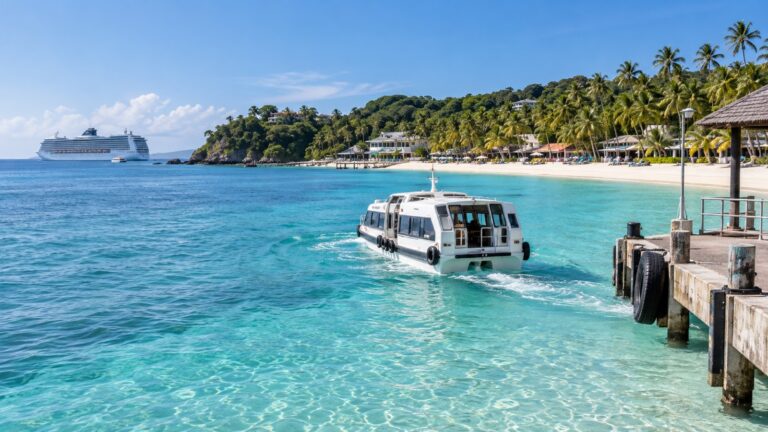
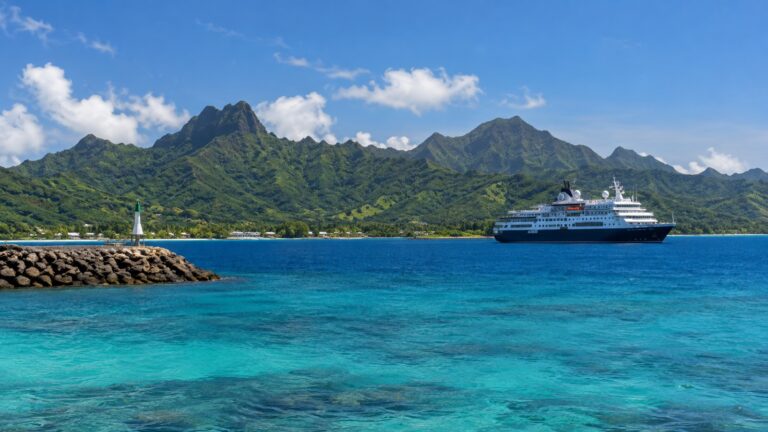
The Isle of Pines looks almost impossible from the water. Tall columnar pines rise above bright sand and a lagoon that shifts from pale turquoise to deep blue, while the cruise tender carries you toward a place where local custom matters as much as the scenery.
A wonderful day can be as simple as walking between Kuto and Kanumera Bays. Reaching Oro Bay, taking a traditional pirogue through Upi Bay, or touring the island requires firm arrangements, cash planning, and respect for Kunié land and access rules.
Quick Facts
- Destination: Isle of Pines, part of New Caledonia
- Local name: Kunié
- Usual cruise arrival: Tender landing in the Kuto area
- Easy on-foot plan: Kuto Beach and nearby Kanumera Bay
- Popular excursions: Oro Bay, Upi Bay pirogues, island drives, caves, and village visits
- Currency: CFP franc, code XPF
- Language: French and local Kanak languages, with English availability varying
- Transport: Limited, so reserve tours or vehicles rather than expecting an on-demand network
- Accessibility: Challenging because of tenders, sand, uneven paths, and boat transfers
- Return rule: Treat the last-tender time as the absolute deadline
How the Kuto tender works
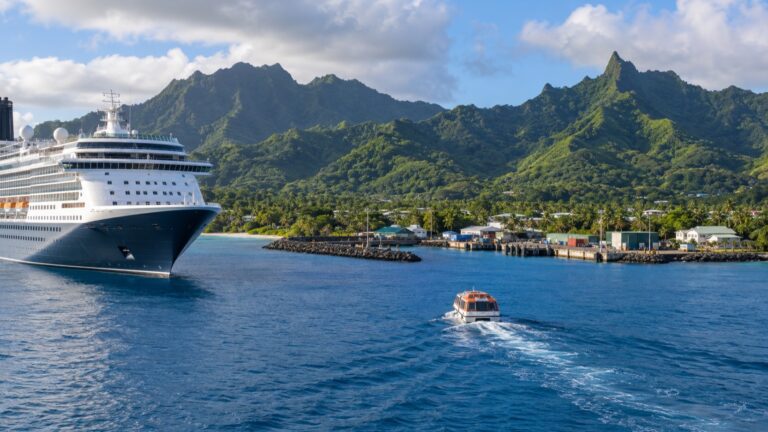
Cruise ships normally anchor offshore and carry passengers to the Kuto area in tender boats. The exact landing, ticket system, and operating window are controlled by the ship and local authorities on the day.
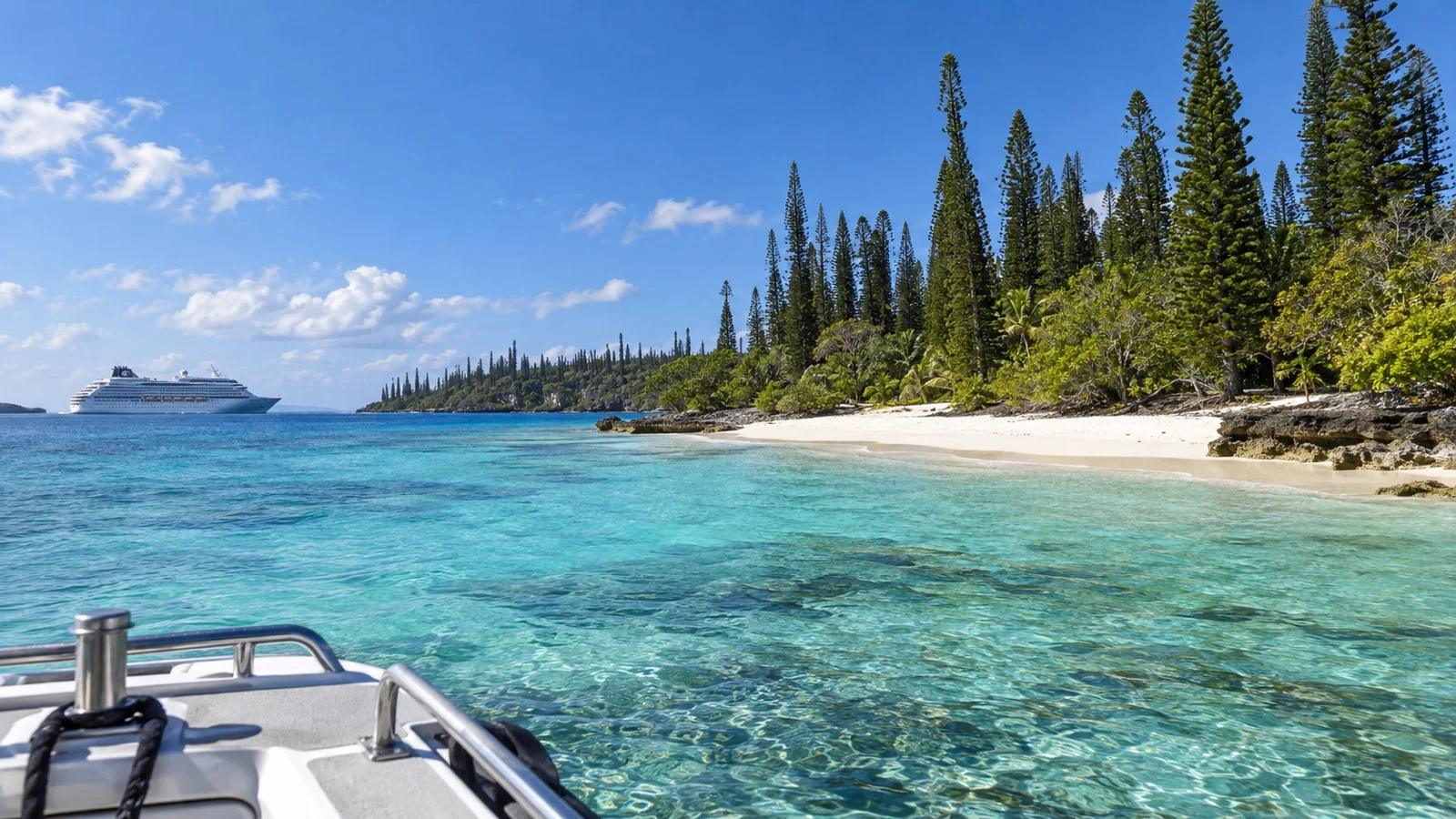
Tendering means steps, a moving platform, and possible spray even when the lagoon looks calm. Boarding can slow when many passengers leave at once or when wind and swell affect the transfer.
Read the ship’s daily program for tender tickets, meeting points, identification requirements, and the last boat back. If you have an independent excursion, tell the operator that your arrival time depends on clearance and tender queues.
Guests using wheelchairs, scooters, or other large mobility equipment should speak with the cruise line before the port day. Crew members decide whether a transfer is safe based on sea conditions, equipment, and the individual’s ability to board.
Never assume the final tender will wait because you can still see the ship. Once boarding closes or sea conditions change, the crew may not be able to send another boat.
Kuto Beach is the easiest beautiful day
Kuto Beach is the natural first stop for most independent visitors. Its broad arc of light sand, calm-looking water, and pines can deliver exactly the tropical day many passengers imagined without a vehicle.
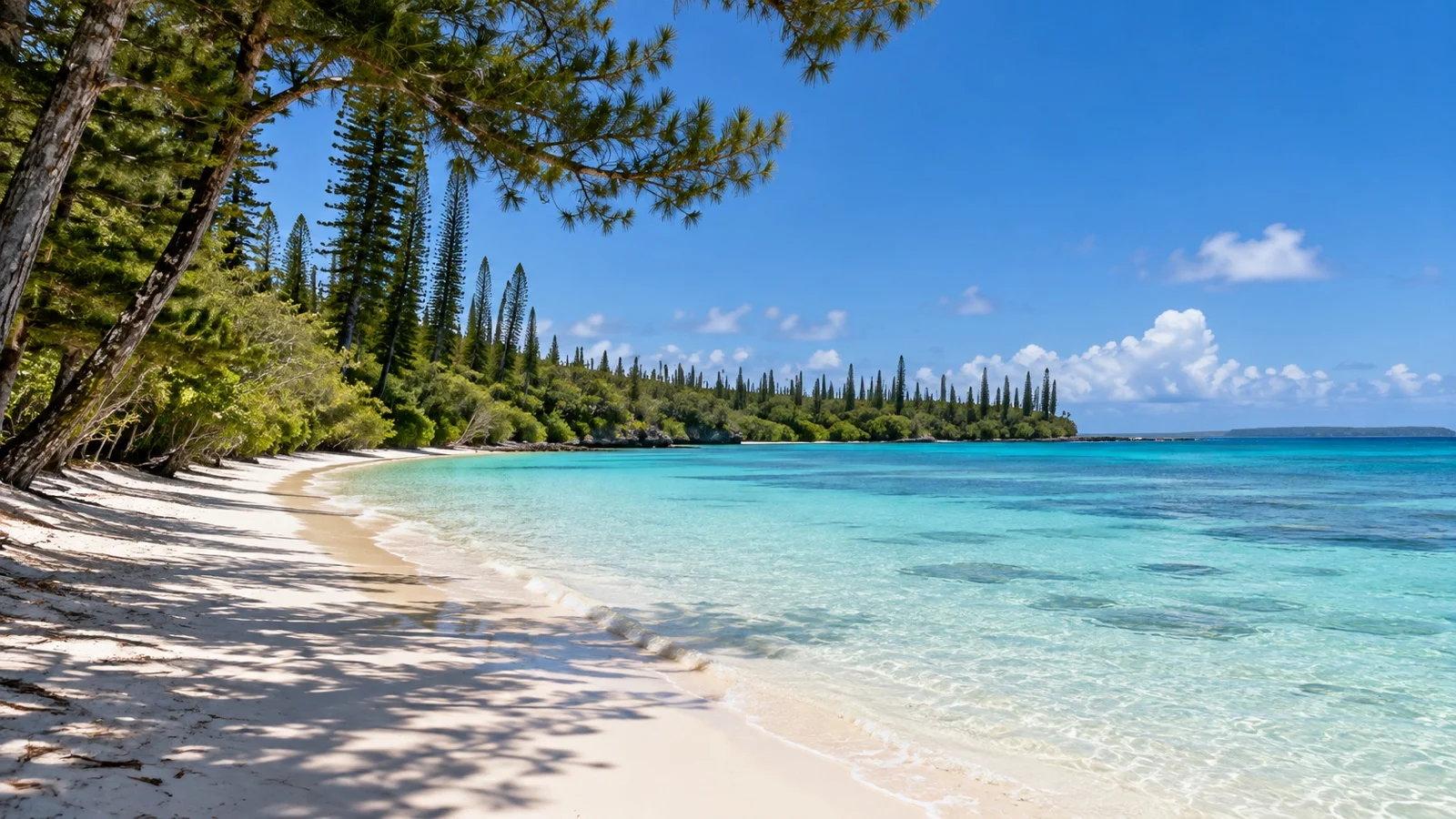
Before settling in, note the path back to the tender landing and any temporary barriers. Local operations can change the exact passenger flow, and a crowded beach looks different when you are trying to return on time.
Bring a towel if permitted, reef-conscious sun protection, water, and secure storage for valuables. Shade is valuable but not guaranteed, especially when many guests arrive together.
Check water conditions rather than assuming the sheltered appearance means there is no risk. Watch children closely, stay within comfortable depth, and follow any local signs or instructions.
Kuto works especially well for short calls or uncertain weather. You can swim, walk, take photographs, and still keep the return logistics simple.
Kanumera Bay and the sacred rock
Kanumera Bay lies close to Kuto, reached across the narrow land connection between the bays. The water, sand, and pines create another striking scene, but this is also where cultural respect becomes essential.
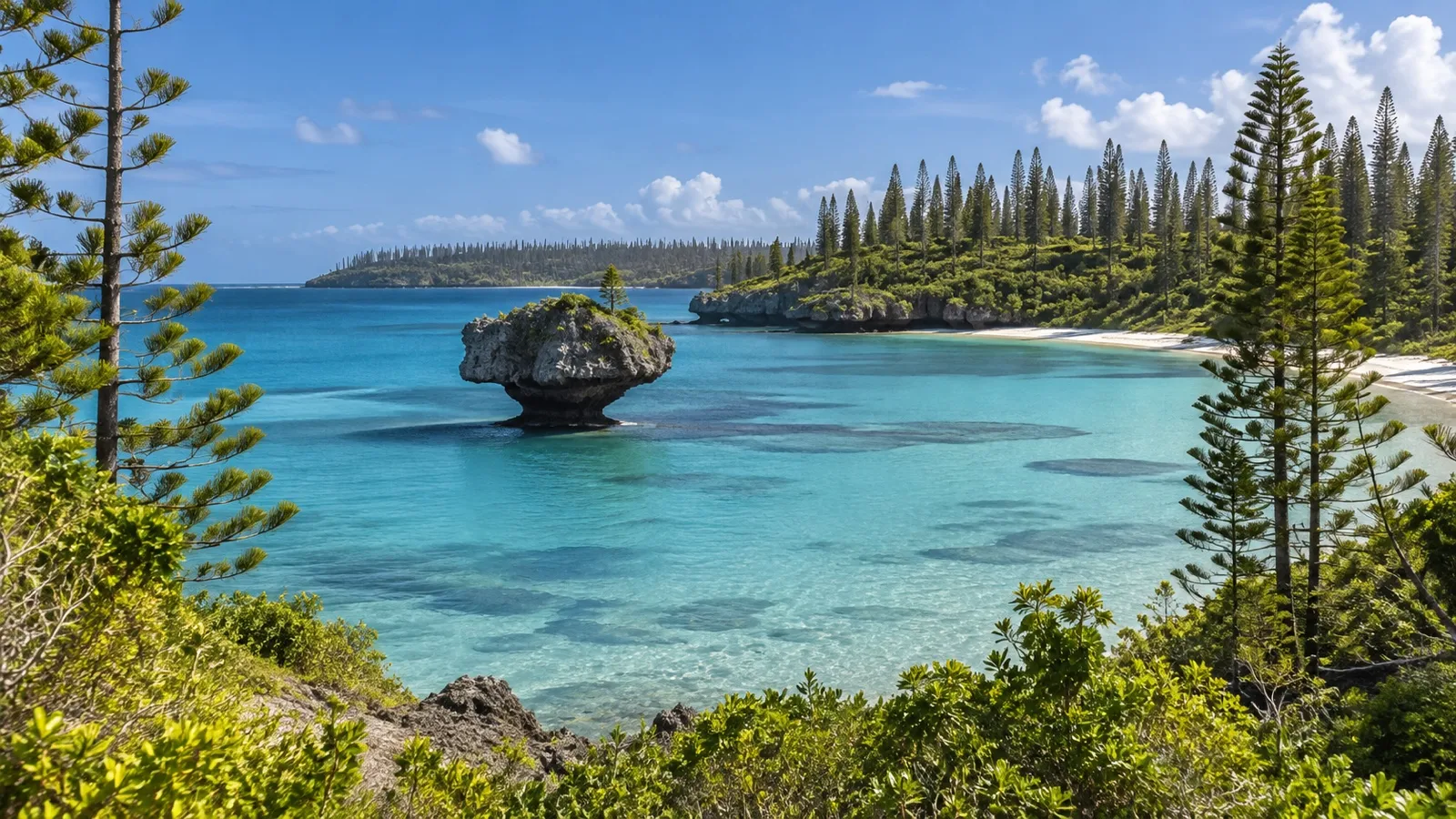
The prominent rock in the bay is sacred and must not be climbed. Treat signs, ropes, and local instructions as firm boundaries rather than suggestions for finding a better viewpoint.
Access rules can change, and parts of the shoreline may be subject to customary permission or temporary closure. Ask locally before entering paths, private areas, or water access points that are not clearly public.
Snorkeling quality depends on tide, visibility, weather, and where entry is permitted. Never stand on coral, chase turtles, feed fish, or remove shells and marine life.
The walk between Kuto and Kanumera is short for many visitors, but sand and uneven ground can be tiring. Allow more time on the return than the map suggests.
Oro Bay and the natural pool
Oro Bay is one of the island’s most famous landscapes, where water, coral formations, and pines create a protected-looking natural scene. It is not beside the Kuto tender, so transport and current access arrangements are essential.
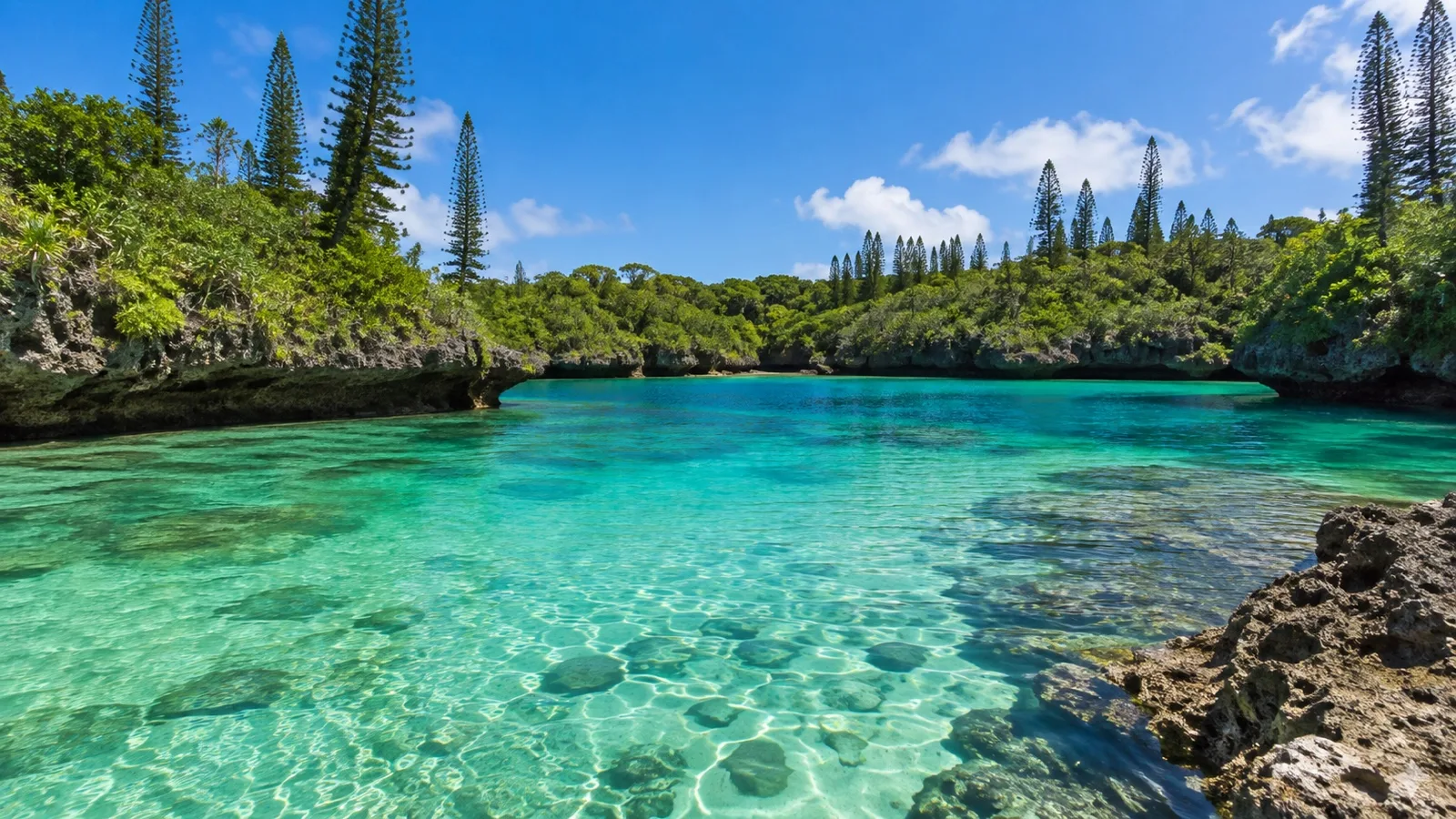
The natural pool area lies within a culturally significant landscape connected to local clans. Fees, permissions, walking routes, guide requirements, and closures can change, and visitors should follow the current community rules.
Do not arrive assuming unrestricted entry because an old blog described a simple path. Reserve through a reputable local operator or confirm with official tourism information how access works on your date.
The route can involve uneven ground, roots, sand, shallow water, or slippery surfaces. Water shoes may help, but they do not replace careful footing or local guidance.
Swimming and snorkeling should be low-impact. Avoid touching coral, use no-anchor areas responsibly, and leave every natural object where you find it.
Oro Bay is best treated as the main excursion rather than one stop in a rushed island loop. Give the landscape time and keep a generous return margin to Kuto.
Traditional pirogues in Upi Bay
A traditional outrigger pirogue through Upi Bay can be one of the island’s most memorable experiences. The quiet boat, coral islets, reflections, and pines create a perspective that a road tour cannot match.
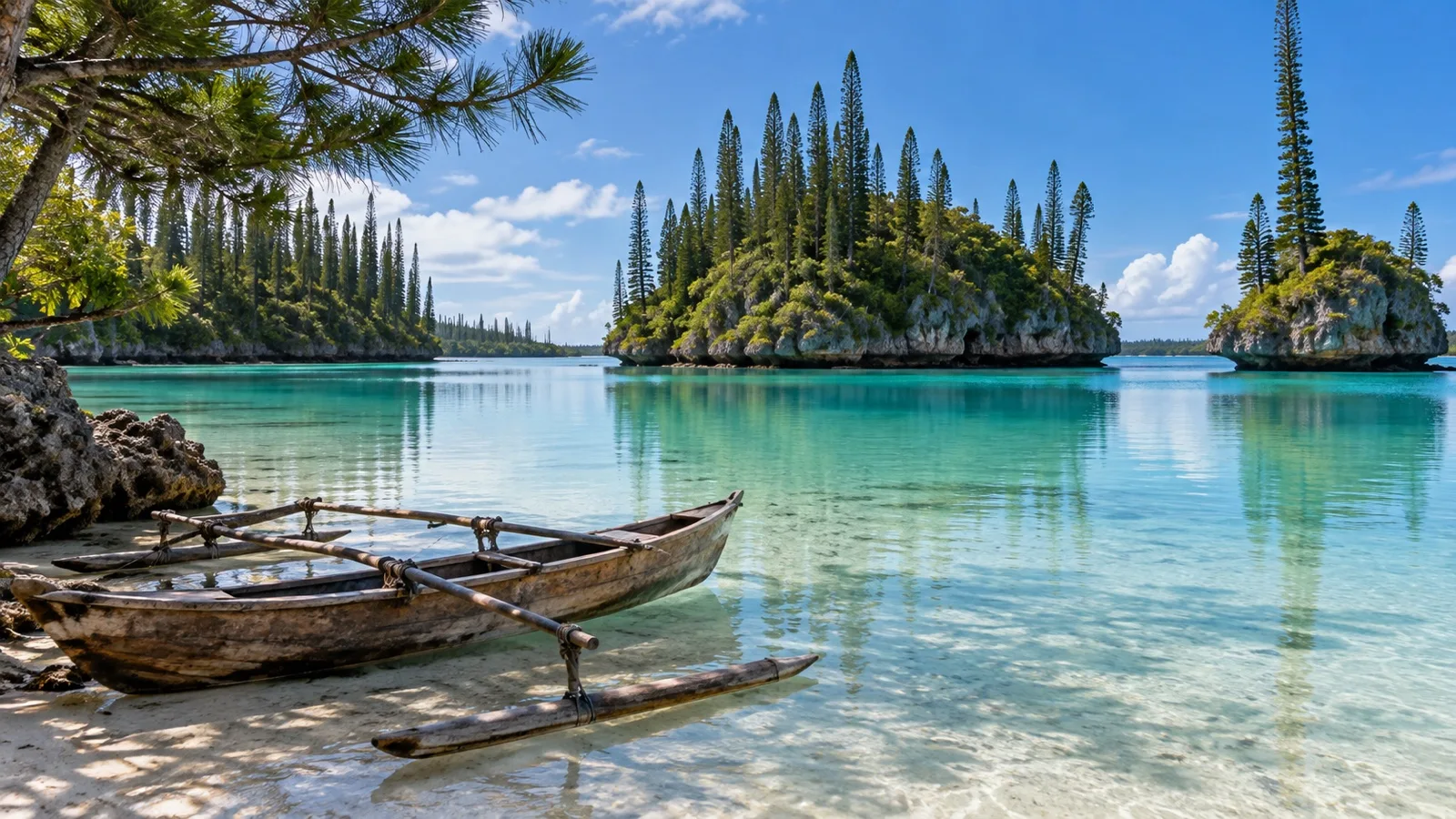
This outing is usually arranged in advance and depends on wind, tide, operator availability, and the day’s route. Confirm where you meet, how you reach the departure point, what the trip includes, and how you return to Kuto.
Boarding may require stepping through shallow water or balancing on an uneven boat. Ask about footwear, dry storage, flotation equipment, and mobility requirements before booking.
Some itineraries combine the pirogue with a walk toward the Oro area. The walking surface and water level can vary, so a generic “easy” rating may not describe the conditions you encounter.
Follow the boatman’s instructions and remain seated when asked. The pirogue is a living local tradition, not just a decorative prop for photographs.
Island tours and Vao
A road tour can reveal parts of Kunié beyond the two cruise beaches. Routes may include Vao, Saint Maurice Bay, historic churches, memorials, caves, viewpoints, or remnants of the French penal-colony period.
Vao is the island’s main village and an important community center. Visitors should dress respectfully around churches, ceremonies, schools, and everyday village life.
Saint Maurice Bay is known for its religious memorial setting and carved wooden figures, but the meaning of the site deserves a guide’s explanation. Do not treat memorials or sacred spaces as casual photo props.
Cave visits can involve dark, damp, uneven ground and local access arrangements. Bring proper shoes and never enter an unmarked cave or private path without permission.
Tour vehicles and English-speaking guides are limited. Reserve early, confirm the pickup at Kuto, and make sure the driver understands the last-tender deadline.
Pic N’Ga and hiking
Pic N’Ga is the island’s highest point and can offer broad views when conditions are clear. The hike is not a casual extension of a beach stroll and may require customary permission, a local guide, or an access fee.
Heat, humidity, mud, roots, steep sections, and limited shade can make the route demanding. Verify the current trail status and allow enough time to descend, travel back, and reach the tender landing.
Carry water, sun protection, insect repellent, and sturdy shoes. Turn back if weather worsens or the route becomes unclear.
For a short cruise call, the beach or a guided island circuit is often the wiser choice. Save the summit for a day with confirmed access and a comfortable time buffer.
Weather, wind, and cyclone awareness
The Isle of Pines has a warm maritime climate, but conditions are not permanently calm or sunny. Wind, showers, heat, and tropical systems can affect tenders, small boats, road excursions, and visibility.
Check Météo-France New Caledonia for the Isle of Pines forecast, marine conditions, vigilance notices, and cyclone information. Then follow the captain’s announcements, because ship operations reflect conditions at the actual anchorage.
A cloudy day can still be beautiful, while a clear sky does not guarantee a smooth tender ride. Pack a light rain layer, sun protection, and a dry pouch for electronics.
If a boat trip is canceled for safety, use Kuto and Kanumera as the backup if shore access remains open. Do not pressure a local operator to sail when conditions are unsuitable.
Snorkeling and lagoon care
Clear water makes snorkeling tempting, but visibility and current vary by location and tide. Ask where swimming is permitted and whether there are coral, boat, or customary restrictions.
Use well-fitting equipment and stay with a partner. A flotation vest is valuable for less-confident swimmers, especially when wind or fatigue increases.
Coral is living habitat, so never stand on it or break pieces loose. Keep distance from turtles and other wildlife, avoid feeding animals, and take every piece of trash back with you.
Reef-safe behavior matters more than collecting an underwater photograph. Move slowly, control your fins, and choose a sandy entry where local guidance allows it.
Beach conditions vary across the island
Each bay has its own exposure, access rules, reef features, and facilities. Choose the day’s beach using current local advice rather than expecting every shoreline to match the same postcard scene.
Sand width, water clarity, and usable swimming space change with tide and weather. Ask where conditions are most suitable, then respect any temporary closure or customary restriction.
Accessibility and reduced-mobility planning
This is a challenging port for many travelers with reduced mobility because the day begins with a tender. Sand, boat steps, uneven paths, limited adapted vehicles, and beach access add further obstacles.
Ask the cruise line whether you can use the tender safely with your specific device and level of mobility. A collapsible chair may be treated differently from a powered scooter, and sea state can change the decision.
Kuto may be the most practical shore experience once landed, but moving across soft sand can still be difficult. Confirm whether assistance, beach mats, accessible restrooms, or suitable seating will be available on your date.
Oro and Upi excursions often include transfers, wet boarding, or rough paths. Request exact descriptions from the operator before booking, not just a broad activity level.
A short scenic drive can be an excellent alternative when an appropriate vehicle is reserved. Do not count on finding an adapted taxi spontaneously at the tender landing.
Families and children
Children often adore the Isle of Pines because the day can revolve around sand, shallow-looking water, boats, and nature. The same setting requires close supervision around the tender landing, roads, reefs, and deeper channels.
Choose one main activity and protect time for shade, water, and snacks. A long multi-stop tour can feel less successful than a relaxed morning at Kuto and Kanumera.
Explain the sacred-rock rule before reaching Kanumera and make respect part of the adventure. Children can understand that some beautiful places are important to local families and should not be climbed.
Bring sun protection, insect repellent, water shoes if appropriate, and a change of clothes. Familiar snacks are useful because food availability and opening hours can be limited.
Food, money, and services
The local currency is the CFP franc, shown as XPF. Cash is useful because small vendors, drivers, beach services, or temporary stalls may not accept cards.
Do not assume euros, Australian dollars, or credit cards will be accepted everywhere. Obtain local currency before the port day or use an official option identified by the cruise line.
Food choices near Kuto may be limited and can become busy when a ship is anchored. Bring water and a backup snack while still supporting local vendors when they are operating.
Bougna is a traditional Kanak dish often cooked slowly with root vegetables, coconut milk, and meat or seafood. It may require advance ordering and should be enjoyed through a reputable local host or tour rather than expected as instant takeaway.
Lobster and seafood availability can be seasonal and regulated. Order through established providers and do not buy wildlife products whose legal origin is unclear.
Language and cultural respect
French is widely used, while Kunié identity and local Kanak languages remain central to island life. English may be limited outside organized cruise services.
Learn a simple French greeting and approach every interaction patiently. A translation app with downloaded language files can help when there is no signal.
Customary land rights shape access to beaches, caves, forests, and cultural sites. If a local person says an area is closed or permission is required, accept the answer without argument.
Ask before photographing people, ceremonies, homes, or private property. Buying directly from local guides and artisans is one of the best ways to make the visit beneficial as well as memorable.
Independent transport and booking
The Isle of Pines does not offer a dense turn-up-and-go public transport network for cruise passengers. Vehicles, guides, and boats are limited, so popular departures can fill before arrival.
Book through the cruise line or a reputable local operator and reconfirm shortly before the call. Get the pickup point, total price, payment currency, included fees, cancellation policy, and return time in writing.
If arranging a driver at the landing, agree on the full route and round-trip terms before leaving Kuto. A one-way ride to Oro or a remote beach can become a serious problem when no vehicle is waiting later.
Offline maps are helpful, but they do not show customary permission or a temporary closure. Local instructions always outrank a route drawn by a phone.
Protecting your return to the ship
The last-tender time is the hard deadline, and the safest plan reaches Kuto well before it. The ship’s scheduled sailing time is not the time to begin traveling back across the island.
Tell every driver and guide the last-tender time, then agree on an earlier drop-off. Keep a buffer for road delays, a late boat, changing weather, and tender queues.
Carry your cruise card, required identification, daily program, and port-agent contact details in a waterproof pouch. Save a screenshot and keep a paper copy in another bag.
If weather begins to worsen, follow ship messages and return instructions immediately. Tender operations can be shortened for safety even when your excursion was originally booked for longer.
Simple plans for different call lengths
Short call
Stay with Kuto and Kanumera, respect all access signs, and return before the tender rush. This delivers the island’s signature scenery with the fewest moving parts.
Medium call
Choose one reserved island tour, pirogue trip, or Oro excursion, then leave a generous return margin. Do not try to add every beach and cave.
Long call
A fuller circuit may combine cultural sites, a cave, and lagoon scenery with a local guide. Keep the final portion of the day flexible in case weather or transport changes.
Common Isle of Pines planning mistakes
The first mistake is treating the tender landing like a full-service urban terminal. Transport, cash, shade, food, and connectivity can all be limited.
The second is assuming every beautiful place is freely accessible. Customary ownership and sacred-site rules must be respected.
The third is booking a one-way ride without a guaranteed return. Round-trip transport is essential for Oro and other distant areas.
The fourth is climbing the sacred rock at Kanumera because other visitors appear to do it. Do not climb it.
Frequently asked questions
Where do cruise tenders land?
Cruise passengers usually arrive in the Kuto area, but the ship will confirm the exact landing and procedure. Follow the daily program rather than an old map.
Can I walk to a beach?
Yes, Kuto Beach is immediately accessible for many guests, and Kanumera Bay is nearby. Sand and uneven ground may still be difficult for limited mobility.
Can I climb the rock in Kanumera Bay?
No. The rock is sacred, and visitors must not climb it.
Can I visit Oro Bay independently?
Only with current permission, confirmed access information, and reliable round-trip transport. A reputable local or ship tour is usually the simplest cruise-day option.
Do I need cash?
Yes, CFP francs are useful because card acceptance can be limited. Do not rely on foreign currency being accepted.
Is snorkeling guaranteed to be good?
No. Visibility, wind, tide, access, and water conditions vary, and local restrictions may apply.
What happens if the weather changes?
The ship may delay, shorten, or cancel tendering, while local operators may alter water activities. Follow official instructions and keep a Kuto-based backup plan.
My take on the Isle of Pines
The Isle of Pines does not need an ambitious checklist. Kuto and Kanumera can fill a port day with extraordinary color, while a carefully arranged pirogue or Oro trip adds depth when the timing and conditions cooperate.
I would carry cash, move gently through the lagoon, listen closely to local rules, and return early. Paradise feels more meaningful when you visit it with humility.
Planning sources include New Caledonia Tourism, the Isle of Pines tourism office, Météo-France New Caledonia, and current cruise-line and local-authority instructions. Confirm tender operations, customary access, tour departures, weather, payment, and the last-tender deadline close to your visit.