Amsterdamøya Cruise Port: A Cruiser’s Guide to Svalbard’s Smeerenburg Shore
Amsterdamøya has no pier, town, café, road, or helpful little kiosk selling magnets. A visit means joining a tightly managed expedition landing in a protected Arctic landscape where wildlife, sea state, ice, and cultural remains get the final vote.
What an “arrival” really means
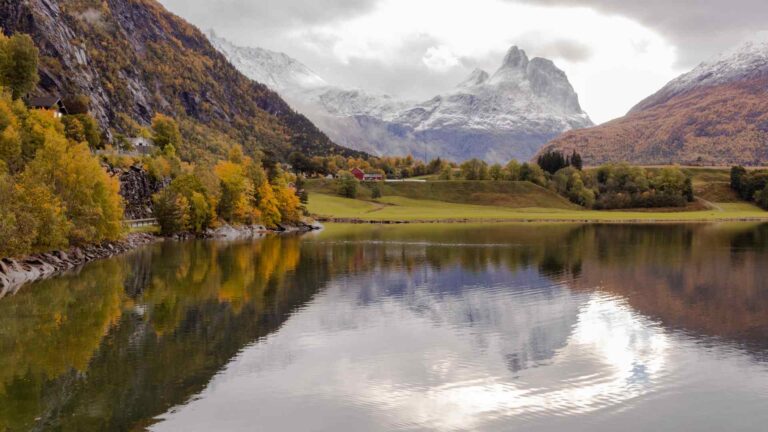
Amsterdamøya lies in northwestern Spitsbergen within Nordvest-Spitsbergen National Park. Smeerenburg, the historic whaling site on the island’s southeastern side, is the name most passengers will hear during the briefing.
Your ship will not dock. If conditions allow, expedition staff launch small inflatable boats, establish a landing area, post wildlife guards, and move guests ashore in groups according to the operator’s plan.
The plan can change after breakfast, after the first scout boat, or while you are already wearing every waterproof item you own. That is not disorganization, it is competent polar operations responding to a place with no breakwater and no promise of cooperation.
Some calls may become Zodiac cruises without a landing, and others may be canceled or replaced entirely. The most useful attitude is curiosity without entitlement, because “Plan B” in Svalbard can still contain glaciers, seabirds, walrus, or a bay so still that everyone briefly forgets how cold their hands are.
Quick Facts
- Where you land: a beach, and only if the day allows it. There is no pier, road or settlement on the island. Expedition ships anchor off and put people ashore by Zodiac at Smeerenburg, the seventeenth-century Dutch whaling site on the south-eastern corner, inside Nordvest-Spitsbergen National Park.
- Dock or tender: Ships tender ashore, by Zodiac, with a wet landing straight on to the beach.
- Into town: Not applicable.
- Currency and language: The Norwegian krone (NOK) and Norwegian apply across Svalbard, but nothing is for sale here and nothing may be collected.
- Time zone: Central European Summer Time (CEST, UTC+2) during the expedition season, CET (UTC+1) in winter.
- Operational caution: Fog, ice, wind, wildlife, and sea conditions can alter or cancel Zodiac operations, so follow the expedition team’s current plan.
Why Smeerenburg matters
Dutch whalers established Smeerenburg during the seventeenth-century bowhead-whaling era. The settlement’s name means “blubber town,” an admirably direct piece of branding for a place built around processing whales.
What survives is subtle rather than monumental. Archaeological features include the remains of blubber ovens, building traces, graves, and objects or deposits in the ground, all protected as cultural heritage under Svalbard’s rules.
Do not expect a reconstructed village with actors enthusiastically rendering blubber. Smeerenburg asks visitors to look closely at low forms in the landscape and listen to a guide who can connect them to European commerce, dangerous seasonal work, and the devastating extraction of Arctic wildlife.
The Governor of Svalbard explains that cultural remains dating from 1945 or earlier are automatically protected. Visitors must not move, damage, dig around, or remove them, and protected remains include a surrounding security zone unless otherwise determined.
That rule covers apparently ordinary fragments too. A piece of wood, bone, brick, or rusted metal is not a free souvenir just because it lacks a label and gift-shop barcode.
The landing, step by careful step
The ship’s mandatory briefing should explain clothing, biosecurity, Zodiac procedure, wildlife distance, and emergency signals. Follow your operator’s exact instructions, since landing methods vary with the vessel, staff, weather, and the site plan agreed for that visit.
Most expedition landings require stepping between ship and Zodiac, then making a wet or shallow-water exit at the beach. Crew provide handholds, but balance, knee movement, grip, and the ability to follow rapid instructions still matter.
At Smeerenburg, guides may create a perimeter or a guided route rather than allowing free wandering. This protects both people and archaeology, and it keeps the group within a defensible area if a polar bear is detected.
The island has no visitor infrastructure, with no restrooms, shelter, surfaced path, clinic, or independent transport ashore. Serious care depends on the ship and a potentially long evacuation, so suitable medical-evacuation and trip-interruption coverage matters before departure.
Use the restroom before departure and bring only the approved equipment. A backpack should be small enough not to swing into another passenger while boarding, while loose scarves and dangling straps are better left in the cabin.
Rules tightened in 2025: tourist landings in Svalbard’s protected areas are confined to designated sites, and ships carrying more than 200 passengers cannot enter the national parks and large nature reserves covered by the rule. Smeerenburg is not an automatic entitlement, so the operator must confirm that the ship, site, permit framework, and daily plan comply.
From March through June, visitors and vessels must stay at least 1,640 feet from a polar bear; from July through February, the minimum is 984 feet. The broader ban on disturbing, luring, or pursuing bears still applies, and the expedition team may require greater distance or abandon the operation.
Polar bears change every decision
Polar bears can occur anywhere in Svalbard, including coastlines that appear empty. The Governor’s guidance tells visitors to keep a good distance, avoid disturbing bears, and never seek them out in a way that creates danger.
Only qualified expedition staff should manage shore safety. Passengers must stay within the marked area, obey recall signals immediately, and never stroll over a ridge or around a corner for a cleaner photograph.
If a bear is present, the landing may be abandoned before you see it. That can feel anticlimactic, but a distant animal that remains undisturbed and a group that returns safely to the ship is exactly what a successful decision looks like.
Walrus also require distance and calm behavior. They can be surprisingly mobile on land, and an operator may reroute or cancel a beach landing to avoid pressuring a resting group.
Bird colonies, nests, and molting animals deserve the same respect. Wildlife is not scenery placed around a historical site, and the best guides will alter the human route rather than force an animal to alter its own.
What you may actually see
A successful Smeerenburg landing often combines tundra, low archaeological features, views across the bay, and an interpretation of the whaling station. The emotional weight comes from the contrast between a quiet beach today and the industrial killing and rendering that once took place there.
Glaciers and rugged mountains frame this part of northwest Spitsbergen. Visibility can be crystalline, milky, fogbound, or all three during one outing, so photographs are a bonus rather than a guaranteed catalog spread.
Wildlife possibilities include walrus, seals, Arctic birds, and polar bears, but possibility is the honest word. No responsible operator can promise a particular species at a particular landing.
The remains themselves may look modest to an untrained eye. Stay close enough to hear the historian or expedition guide, because context transforms shallow depressions and stone outlines into evidence of seasonal buildings, furnaces, graves, and human ambition at an Arctic edge.
Smeerenburg’s cemetery and fragile remains demand particular care. Never step inside marked features, perch on stones, or improve a photograph by rearranging the past.
A Zodiac cruise can be the better outcome
When surf, wildlife, or heritage concerns prevent landing, expedition staff may offer a small-boat cruise if conditions remain suitable. From the water, you can read the shape of the bay, watch seabirds, scan beaches, and appreciate how exposed the old station was.
This option is not second-rate. It can produce better wildlife viewing with less disturbance, and it avoids concentrating boots around vulnerable archaeological traces.
The tradeoff is cold. Sitting still in an open boat drains warmth faster than walking ashore, especially when spray reaches gloves or a breeze finds the one gap between hood and collar.
Dress for the Zodiac, not for the temperature displayed in the ship’s lobby. Waterproof outerwear, insulated layers, warm head protection, waterproof gloves, and the operator-required boots or flotation equipment are normal rather than theatrical.
Keep binoculars attached and cameras protected from spray. Changing lenses in a bouncing boat is an excellent way to introduce salt water, cold fingers, and regret to one another.
Accessibility and physical reality
Amsterdamøya is not an accessible port call in the conventional sense. The ship-to-Zodiac transfer, moving boat, wet landing, uneven natural ground, cold, and absence of facilities create substantial barriers.
Some expedition vessels have systems that help passengers with limited mobility into boats, while others require a confident assisted step. Ask the operator before booking, then ask the onboard expedition leader again because the day’s sea state may change what is safe.
Even passengers who can board may decide that remaining seated in a Zodiac for a long period is uncomfortable. A shorter cruise, viewing from an outer deck, or joining an onboard lecture can be the better experience rather than a consolation prize.
Walking sticks are useful only if the operator permits and disinfects them for biosecurity. Wheeled mobility devices generally cannot negotiate this kind of landing, and there is no smooth route once ashore.
Be candid about balance, joint mobility, and the ability to get up after a stumble. Arctic staff can assist, but there is no dignity in concealing a limitation until a moving boat is beside a rocky beach.
Biosecurity is part of the visit
Svalbard’s environment is vulnerable to non-native seeds, soil, and organisms carried on clothing and equipment. Expedition operators commonly inspect and clean boots, tripods, bags, and outerwear before landings, then repeat cleaning between sites.
Help by arriving with pockets, hook-and-loop fasteners, and boot treads free of mud and seeds. Do not bring food ashore unless the expedition team specifically permits it, and take every scrap back to the ship.
Nothing should be collected, including stones, bones, feathers, plants, or historical fragments. The ideal footprint is a boot mark that the next weather system removes.
Drone use is prohibited in Svalbard’s national parks and nature reserves from April 1 through August 31, with additional bird, wildlife, cultural-site, and aviation restrictions elsewhere. Leave the drone packed unless the expedition operator and current Governor guidance explicitly confirm a legal location and date.
Photography without becoming the problem
A moderate telephoto lens and binoculars are more useful than trying to approach wildlife. Keep your body inside the group perimeter and let guides determine safe viewing positions.
Cold shortens battery life, so carry a spare in an inner pocket. Protect equipment from condensation by letting it warm gradually inside a closed bag when returning to the ship.
Photograph archaeological features from designated routes rather than stepping over them. If another passenger is in the frame, patience is cheaper than damaging a protected site for an empty landscape.
Do not let the camera erase the scale of what happened here. A few wide images, a close detail taken from the route, and time spent listening will tell a stronger story than two hundred near-identical furnace-ring photographs.
Weather, sea ice, and timing
Expedition visits generally occur during the navigable summer season, but ice conditions vary from year to year and even within a voyage. The ship’s master and expedition leader decide whether the area can be approached safely.
Fog can reduce visibility with startling speed. Wind can raise surf on the landing beach, while swell from farther away may make Zodiac transfers unsuitable even under a bright patch of sky.
There is no independent fallback plan ashore. If the operation closes, you return when instructed, because the team must account for every person before moving vessels or responding to wildlife.
This is also why exact landing times are unreliable. A flexible morning may involve scouting, moving to another site, or waiting for conditions, and the daily program should always be read as an intention rather than a contract with the Arctic.
Two good ways to experience the call
If the landing opens
Join the guided route, listen closely to the historical interpretation, and spend some time looking outward across the bay. Smeerenburg makes most sense when industry, ecology, and the vulnerable traces underfoot are considered together.
The downside is that a shore group can feel constrained. Those boundaries are the price of visiting a place where safety and preservation matter more than personal wandering.
If the landing closes
Take the Zodiac cruise if offered and physically suitable, or watch from the ship while attending the expedition team’s briefing or recap. Use maps and lectures to understand what distance and weather have hidden.
The limitation is obvious, since you may not set foot on Amsterdamøya. Yet landing at all is never the measure of a polar voyage’s success, and refusing to force the issue is one of the clearest signs that an operator respects Svalbard.
What I would skip
I would skip any attempt to rank the day by wildlife count. A quiet cultural landing can be exceptional, while a rushed bear sighting that changes the animal’s behavior is not a win.
I would also skip bringing a giant camera kit ashore unless I could carry and operate it securely. Free hands, warm fingers, and safe Zodiac movement have greater practical value than the lens left fogging at the bottom of a bag.
Most importantly, I would skip the language of “conquering” or “checking off” Amsterdamøya. The island is not a remote trophy, and visitors are temporary guests in a protected place shaped by both exploitation and recovery.
The verdict
Amsterdamøya suits travelers who enjoy uncertainty, interpretation, and close attention more than conventional sightseeing. Compare it with our guides to Akpatok Island and Anzac Cove, two very different shores where arrival mechanics shape the entire day.
Go to the briefing, dress more warmly than pride recommends, and follow every boundary without negotiation. Our guide to what a tender port is explains the small-boat basics, though expedition Zodiacs add stricter procedures.
How this guide was researched: Unless a first-hand visit is explicitly identified above, this guide is based on independent research using official port, tourism, transit, government, and attraction sources where available. Logistics and time-sensitive details were reviewed in September 2026; see our Editorial Policy.