Andros Cruise Port: A Cruiser’s Guide to the Green Cyclades
Andros is the Cyclades island that surprises travelers who expect every Greek port to look dry, whitewashed, and tightly packed around a cruise pier. Springs, green valleys, stone villages, shipowner mansions, serious art, and a rugged coastline give it a character that feels distinct from the better-known islands farther south.
It is also an unusual cruise call, often visited by smaller ships and frequently dependent on tender arrangements. The most important question is not simply what to see, but where your tender lands and how much of this long island you can reach without risking the return.
Quick Facts
- Country: Greece
- Island group: Northern Cyclades
- Main ferry port: Gavrio on the west coast
- Island capital: Chora, also called Andros Town, on the east coast
- Cruise style: Infrequent small-ship call with berth or tender details set by the operator
- Currency: Euro
- Signature experiences: Chora architecture, contemporary art, Batsi waterfront, beaches, and green inland villages
- Main planning challenge: Distance between Gavrio, Batsi, and Chora
- Best planning rule: Confirm the landing point before booking transport
Start with the correct harbor
Gavrio is Andros’s main ferry gateway on the west coast and the island’s practical transport hub. Chora lies across the island on the east coast, so it is a destination rather than a neighborhood you can casually add to a short visit from Gavrio.
A small cruise ship may use a berth, anchorage, or landing arrangement that differs from the regular ferry pattern. Read the ship’s port notice and tender instructions before reserving a taxi, museum ticket, or tour.
If you land in Gavrio
Gavrio offers cafés, basic shops, vehicle rentals, and transport connections within a compact waterfront area. It is useful rather than monumental, and its main advantage is quick access to the west coast.
Batsi and several beaches can fit comfortably into a moderate call if transport is confirmed. Chora requires a cross-island drive and should be treated as the centerpiece of the day.
If your tender uses another landing
Do not apply Gavrio distances to an itinerary that lands elsewhere. Ask the cruise team for the exact pier name, walking conditions, last tender time, and any local shuttle before leaving the ship.
A map pin from a third-party cruise listing may be approximate. The operational information supplied onboard on the day is the source that matters.
Chora is the cultural prize
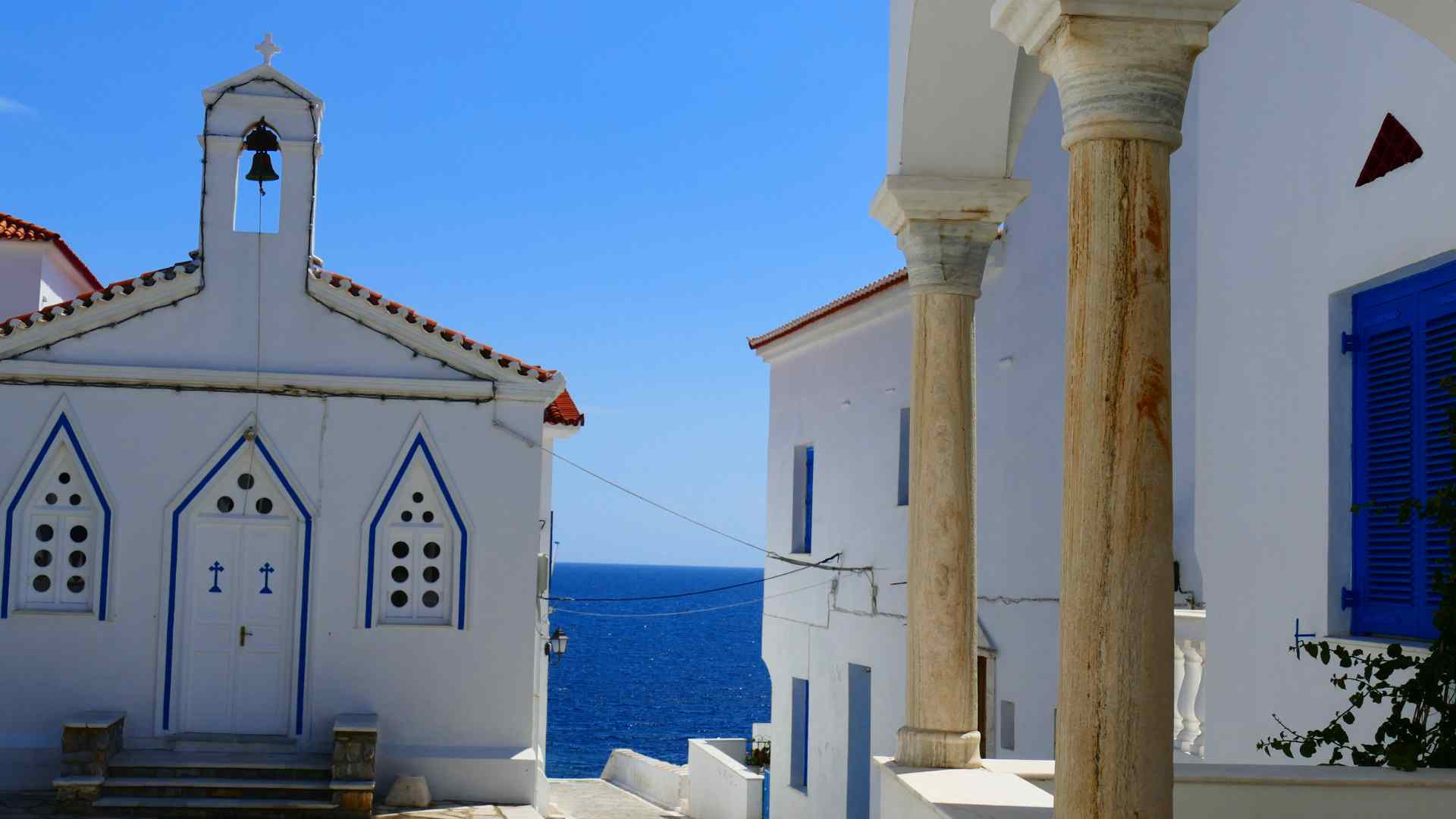
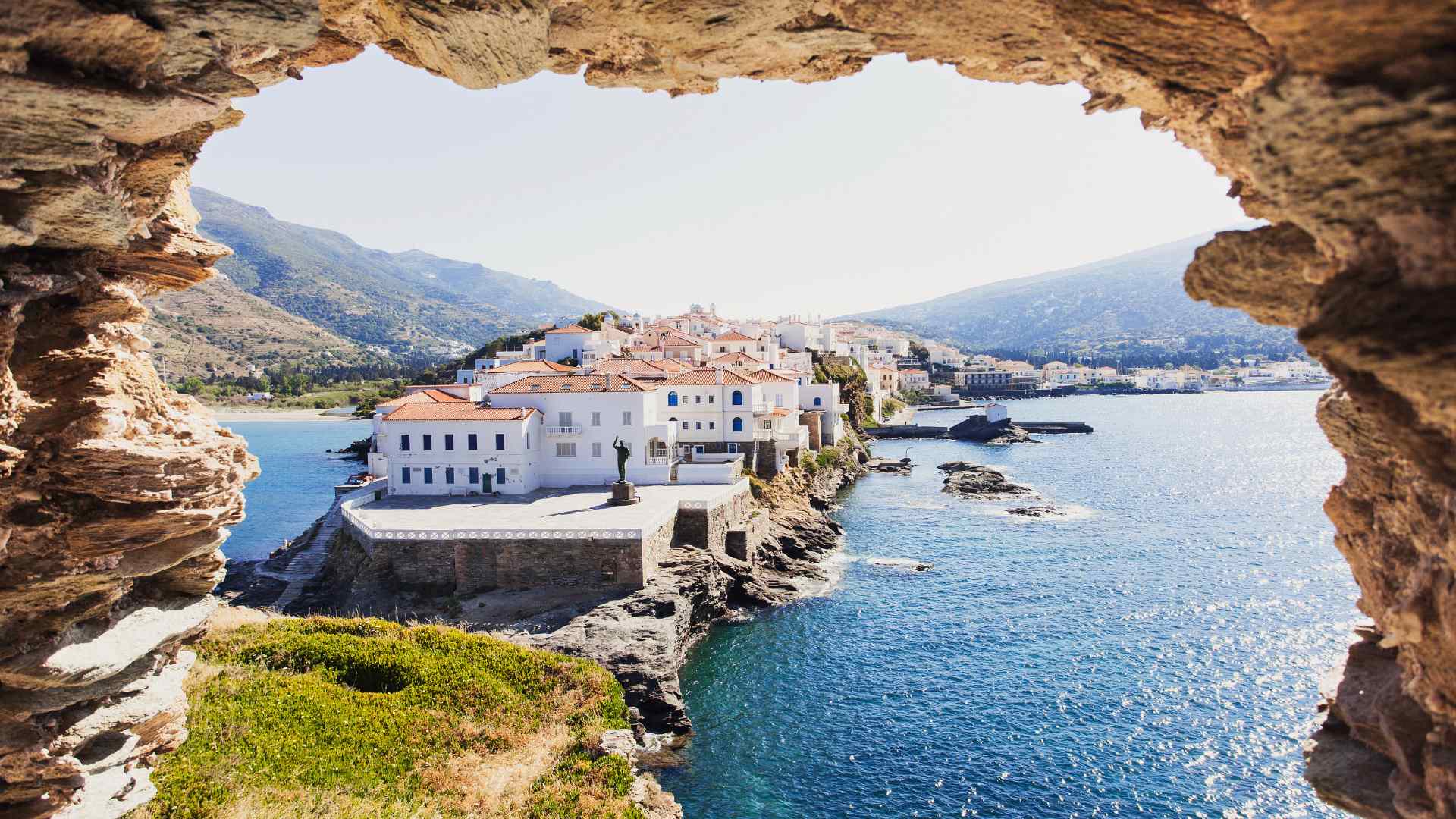
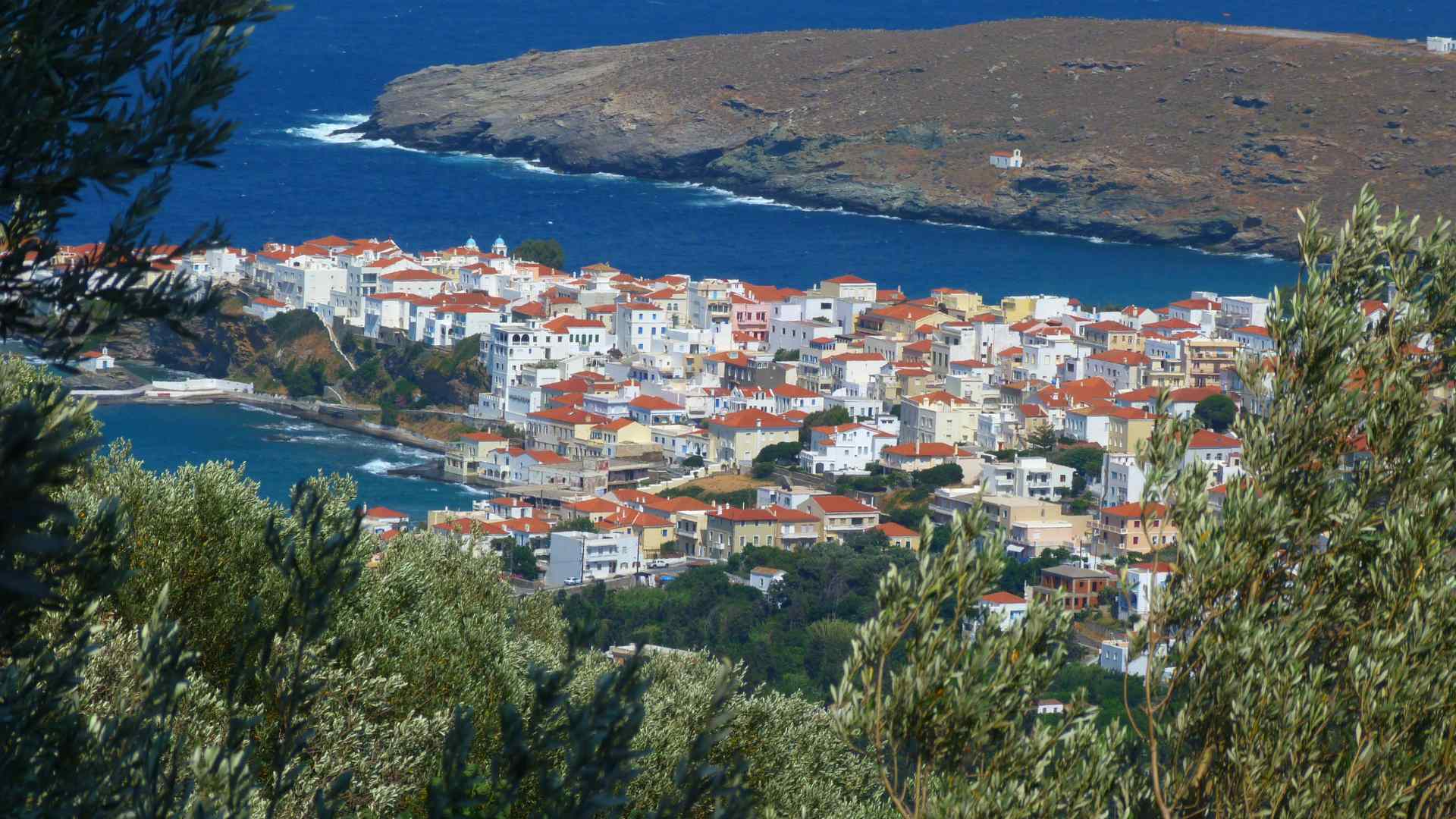
Chora occupies a narrow peninsula between two bays, with neoclassical houses, lanes, small squares, and sea views appearing between buildings. Andros’s long maritime tradition is visible in the dignified mansions built by island shipping families.
The center rewards slow walking rather than a checklist sprint. Allow time for the changing views toward the water and for the climb back through lanes that may include steps and polished stone.
The Museum of Contemporary Art
The Museum of Contemporary Art of the Basil and Elise Goulandris Foundation gives Chora cultural weight far beyond what many visitors expect from a small island town. Its permanent collection and seasonal exhibitions make it a destination in its own right.
Opening days, hours, ticket rules, and exhibition schedules change through the year. Check the museum’s official website for your date and do not build a cross-island journey around an assumed summer schedule.
Museums and maritime history
Chora also has archaeological and maritime collections that can deepen a visit when their hours align. Small Greek museums may close on particular weekdays or operate shorter shoulder-season hours, so verify each one directly.
A museum pair plus lunch can easily fill the useful time in town. Resist adding a distant beach merely because it looks close on an island-wide map.
Tourlitis Lighthouse and the waterfront
The Tourlitis Lighthouse stands on a rock offshore and has become one of Andros’s signature images. It is a viewing and photography subject rather than a normal walk-in attraction.
From Chora’s seaward side, the lighthouse, remains of the Venetian castle, and open Aegean create a dramatic composition. Wind and spray can be strong, so stay on safe public paths and behind barriers.
Batsi is the easy west-coast alternative
Batsi curves around a sheltered bay south of Gavrio, with a beach, waterfront restaurants, and hillside houses. It delivers the relaxed Greek-island atmosphere many passengers want without committing to the longer cross-island trip.
This is often the smarter choice for a short call, a slow tender operation, or a party that prefers lunch and a swim to museums. Confirm taxi availability in both directions instead of assuming a vehicle will be waiting when you want to leave.
A simple Batsi plan
Walk the waterfront, choose a café, and decide whether conditions suit a beach stop. Keep enough time to return to the landing area before the last tender queue forms.
Beach services are seasonal, and the sea may be rough even on a bright day. Carry what you need and follow local flags or lifeguard instructions where provided.
Beaches near Gavrio
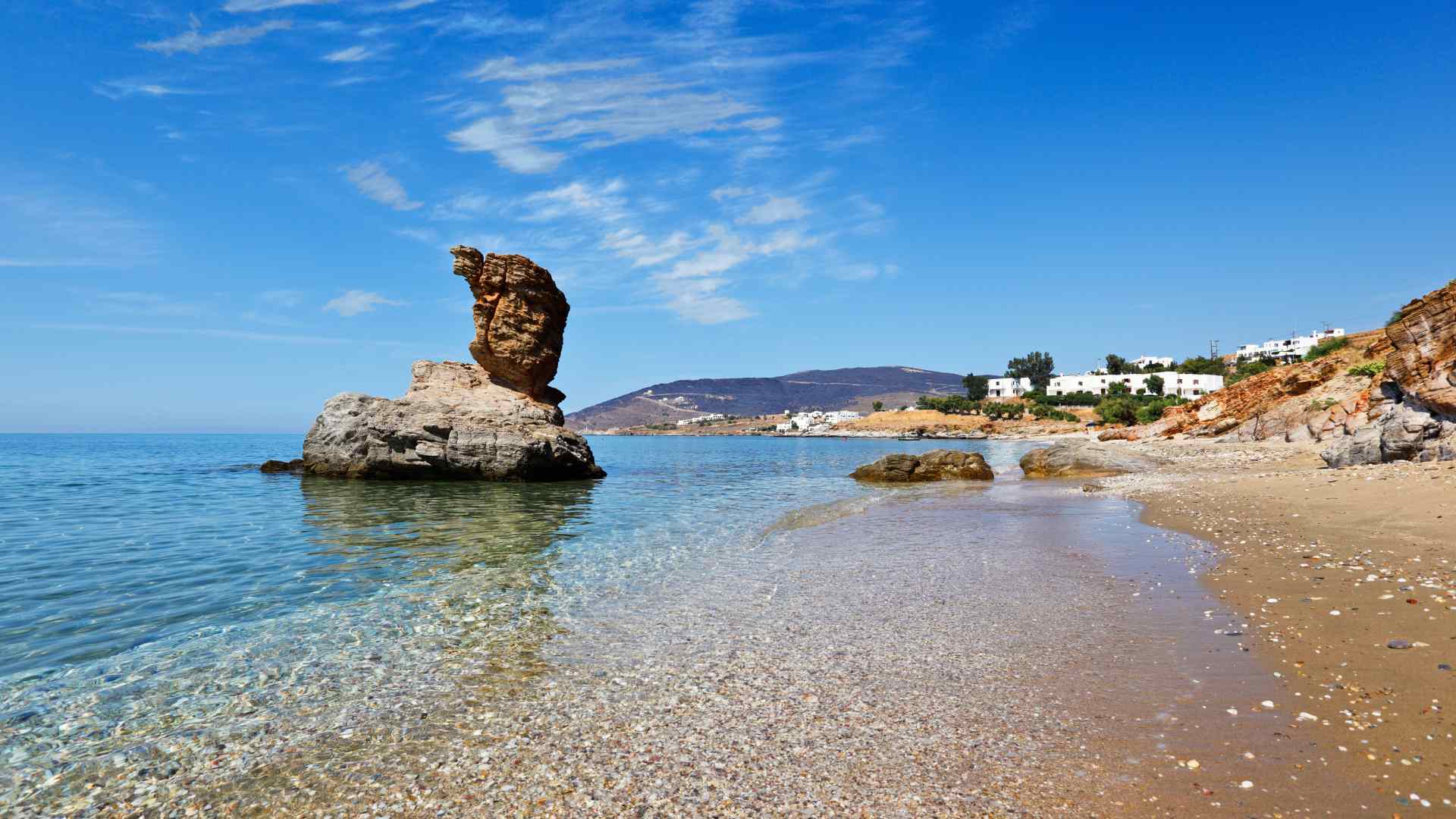
Agios Petros and other west-coast beaches may fit into an independent port day when road access and return transport are confirmed. The prettiest stretch on a map is not always the easiest place to find a taxi at the end of the visit.
Ask where the driver will return, agree on the pickup time, and keep the driver’s contact details. Cruise passengers should avoid isolated coves unless transport is part of a dependable arrangement.
Swimming safely
The Aegean can produce waves, currents, and wind that are not obvious from the road. Use an organized beach when possible and do not enter the water just because other visitors are swimming.
Protect against the sun, wear footwear on hot or stony surfaces, and leave valuables secured. The ship’s all aboard time matters more than squeezing in one final swim.
Inland villages, springs, and valleys
Andros is greener than the Cyclades stereotype because its terrain captures moisture and supports springs, trees, and cultivated valleys. Villages such as Menites and Apikia reveal stone lanes, water features, and a quieter interior.
These places work best with a driver or tour that understands cruise timing. Combining inland stops with Chora can be rewarding on a long call, but the route should be agreed before departure.
Pythara waterfalls
The Pythara area near Apikia involves a walk on natural terrain rather than a roadside photo stop. Water flow and trail conditions vary, and summer images may not represent what you find on your visit.
Wear proper shoes and ask a current local source about access. Do not attempt the path if heat, rain, footwear, or time makes the return uncertain.
Andros Routes and cruise-day hiking
Andros Routes maintains and documents a network of historic paths connecting villages, valleys, chapels, and coast. The project has helped preserve the island’s walking heritage and gives longer-stay visitors an exceptional way to explore.
A marked path is not automatically suitable for a short port call. Route length, elevation, heat, water, surface, and the transport connection at the far end all require advance planning.
How to choose a safe walk
Use the official route information, select a short out-and-back option, and set a firm turnaround time. Download the route before leaving reliable service and tell someone in your party where you are going.
Stone paving can become slippery, while exposed sections can be exhausting in direct sun. Carry water, sun protection, and footwear with grip even when the walk begins inside a village.
Transport across the island
Public buses serve key settlements, but a published route does not guarantee a cruise-friendly connection in both directions. Confirm the current timetable for the exact weekday and season, then identify a backup.
Taxis and private tours are more practical for a focused visit to Chora or an inland circuit. Reserve early on a known cruise date because the island’s supply is not designed around mass-market passenger volumes.
Rental cars
A rental car offers freedom, but narrow roads, village parking, unfamiliar turns, and summer traffic consume time. Confirm the office hours, insurance, fuel policy, vehicle return procedure, and port location in writing.
Do not plan from an optimistic driving estimate alone. Add time for finding the car, parking, walking to the attraction, and returning it before the tender deadline.
Tendering and wind
Andros sits in a windy part of the Aegean, and tender operations depend on the captain’s safety assessment. A calm-looking bay from your balcony does not guarantee that every transfer point is comfortable.
Listen for announcements and take motion medication according to your clinician’s advice before the boat ride if needed. On the return, arrive ahead of the final tender rather than joining the largest possible last-minute queue.
Three realistic port-day plans
Short call or delayed tender
Stay near the landing point, explore Gavrio if that is where you arrive, and add Batsi only when return transport is secure. A relaxed meal and waterfront time are better than a rushed cross-island drive.
Culture-focused visit
Prearrange a direct transfer to Chora, visit the contemporary art museum if it is open, and walk the seaward lanes. Agree on the return pickup before the driver leaves and skip inland detours unless the call is long.
Long call with private transport
Combine Chora with one inland village or viewpoint chosen for current conditions. Keep the route compact, allow for slow roads, and return toward the landing area well before the deadline.
Accessibility
Accessibility depends heavily on the ship’s landing method. Tender steps, moving boats, gangway angles, and the ability to transfer mobility equipment should be discussed with the cruise line before sailing.
Gavrio’s waterfront is comparatively manageable, but Chora includes slopes, steps, and uneven lanes. Ask museums and transport providers directly about step-free entrances, vehicle space, restrooms, and the exact distance from drop-off to door.
A private scenic drive may work better than a walking tour for travelers with limited mobility. Confirm that the vehicle can pause legally at viewpoints and that the planned stops match the traveler’s actual needs.
Food, money, and practical details
Greece uses the euro, and cards are common in established businesses. Carry a modest cash backup for small purchases or a technical problem, but do not depend on finding an ATM during a tight transfer.
Andros specialties may include local cheeses, sausages, preserved vegetables, sweets, and dishes shaped by island farming as well as the sea. Ask what is seasonal and allow enough time for a sit-down meal before committing to it.
Bring water, sunscreen, a hat, and a light layer for wind. Shoulder-season conditions can feel cool near the water even when the sun is strong.
Photography and drones
Chora’s lanes, the Tourlitis Lighthouse, Batsi’s bay, and the green interior all suit different lenses. Keep equipment simple if you are transferring by tender or walking on stone steps.
Drone operation in Greece is governed by aviation rules and may also be restricted near ports, settlements, archaeological sites, wildlife, and crowds. Check the official Greek aviation map and obtain every required authorization before launching.
Common mistakes
The biggest mistake is assuming the ship lands in Chora because that is the place featured in photographs. The next is planning from a ferry timetable without confirming the cruise tender point and final return procedure.
Travelers also underestimate Andros’s size and the time lost to arranging transport on arrival. Decide whether your priority is Chora, Batsi, a beach, or the interior, then build the day around that single choice.
Final verdict
Andros rewards cruise passengers who respect its geography. Chora is the cultural standout, while Batsi and the west coast offer a simpler day when the call is short or the tender runs slowly.
Confirm the landing place, secure the return, and leave part of the schedule empty. The island’s appeal lies in its quiet confidence, and it is easiest to notice when you are not racing across it.
Check the Museum of Contemporary Art Andros, Andros Routes, and your cruise line’s current port instructions before finalizing the day. Tender points, museum hours, buses, taxis, beach services, trail conditions, and weather can change, so verify every time-sensitive detail for your sailing date.