Upper Mekong River Cruise Ports: Chiang Khong to Vientiane
An Upper Mekong cruise is part voyage, part border crossing and part cheerful surrender to a river that rearranges its front porch every season. The places on the itinerary may be called ports, but several are really a road transfer, a sloping bank or a patch of sand chosen because the captain likes today’s water level.
That is not a defect. It is the reason this route feels more like an expedition than a procession of identical docks, provided you know when to expect a gangway and when to expect sturdy shoes.
My quick take
Chiang Khong is the Thai border gateway, not the Lao embarkation port. Most north-to-south cruise passengers cross the Fourth Thai-Lao Friendship Bridge, clear Lao immigration and transfer by road to the ship at Huay Xai, also written Houayxay.
Pak Beng is the classic overnight stop, Luang Prabang is the route’s cultural heavyweight and Pak Lay is an expedition landing or transfer point. Vientiane may be the advertised endpoint even when the ship does not dock in the capital, because some programs finish the river leg near Pak Lay and continue by road.
Upper Mekong stops compared
- Chiang Khong and Huay Xai: This is a Thai border gateway followed by Lao immigration, a road transfer, and embarkation. Concentrate on meeting the operator and boarding without rushing; border processing, road timing and river conditions can change the handoff.
- Pak Beng: This riverside overnight town uses a seasonal bank or pier landing. The market, temple, lodge stay, or operator excursion fits the call; water level and bank conditions can change the exact landing.
- Luang Prabang: This major heritage stop can use several Mekong landings. Give the Old Town, temples, museums, and evening food time priority; the exact pier or transfer arrangement can still change.
- Pak Lay: This is a small-town expedition landing and frequent road-transfer point. An operator-led walk, market, or onward transfer is realistic; the landing and onward-transfer timing are operator-specific.
- Vientiane: The capital may be the itinerary endpoint even when passengers arrive by road rather than at a city river berth. Use a prearranged tour, hotel, or onward transfer; read the day-by-day itinerary to confirm whether arrival is by ship or road.
No port authority or cruise line publishes audited missed-call percentages for this route. Walking and transfer times labeled as estimates can shift with the landing, traffic and river stage.
First, understand what “port” means here
The upper river does not offer a chain of standardized terminals. The Mekong River Commission describes physical obstacles and turbulent sections in the upper reaches, where experienced pilots and shallow-draft vessels remain essential.
Ships may put a gangway directly onto a basic landing, anchor near a sandbank or use a local boat for an excursion. A sandbank barbecue or overnight anchorage is an itinerary experience, not a public port where you can hail a taxi and pursue a private noodle agenda.
Several vessels also pass through the navigation lock at the Xayaburi hydropower project between Luang Prabang and Pak Lay. Lock timing, changing depths and the captain’s assessment can alter the order or duration of expedition stops without removing the route’s main cities.
Chiang Khong and Huay Xai: two countries, one embarkation day
Chiang Khong sits in Thailand, across the Mekong from Laos. The actual Lao river journey generally begins at Huay Xai after passengers cross the Fourth Thai-Lao Friendship Bridge and complete immigration formalities.
Official Lao tourism information identifies Huay Xai as a popular departure point for boats to Pak Beng and Luang Prabang. Cruise operators commonly collect passengers after Lao immigration, then use a minivan or coach for the remaining trip to the Huay Xai pier.
This is not a walk-off port call. The border post, bridge, town and river landing are separate places, so use the operator’s transfer unless the cruise contract clearly says otherwise.
The official Lao eVisa portal lists the Fourth Thai-Lao Friendship Bridge in Bokeo as an accepted entry point and says applicants should carry a printed approval letter. Visa eligibility, fees and passport rules depend on nationality, so check the official portal and the cruise line well before travel.
Border administration, flight or road delays, and river conditions can adjust the embarkation process. Follow the operator’s meeting instructions and leave generous time for the handoff.
Pak Beng: the overnight stop with a built-in hill
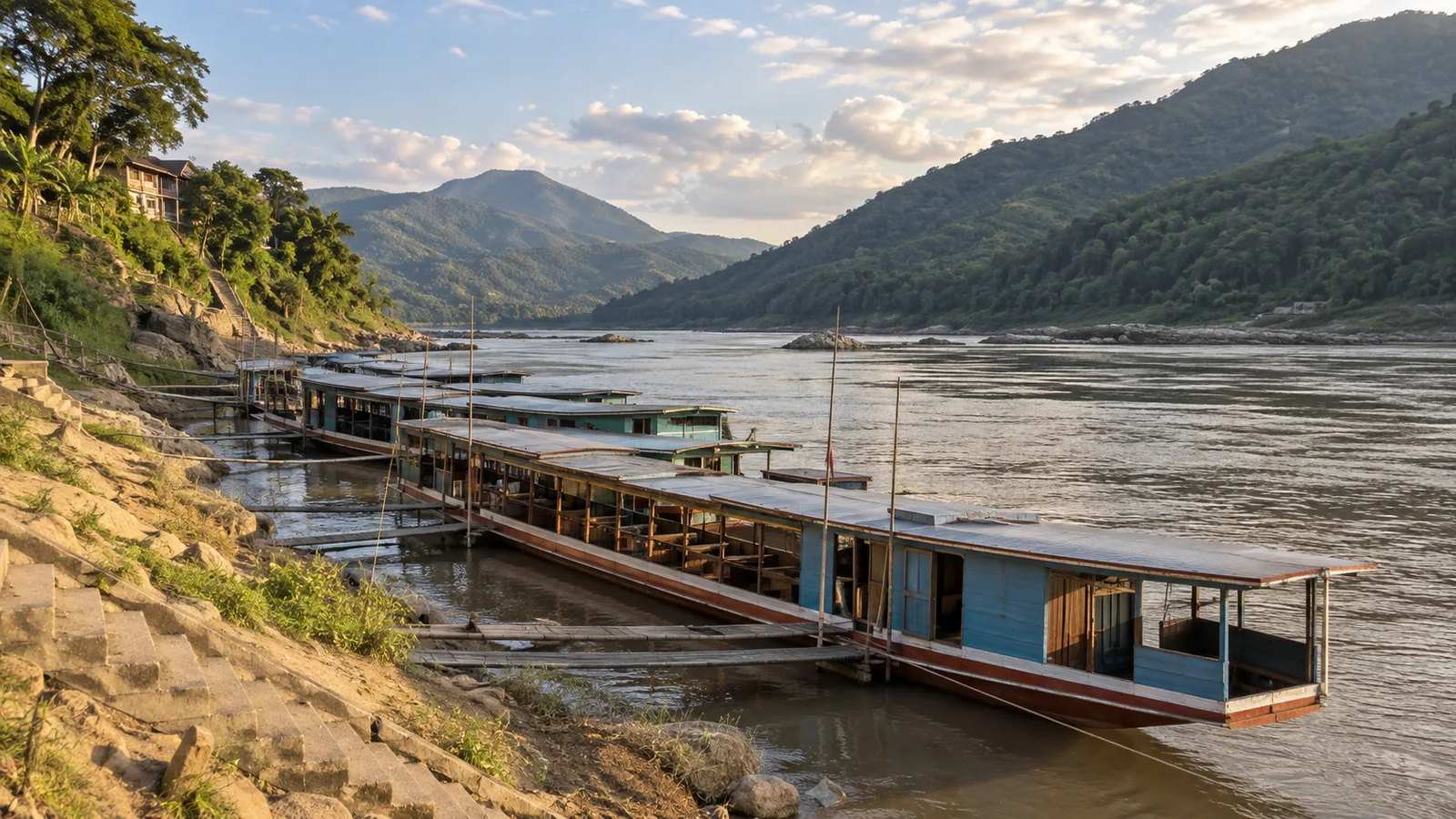
Pak Beng occupies a hillside above the Mekong roughly between Huay Xai and Luang Prabang. On two-day boat journeys it is the natural overnight break, and on longer expedition cruises it can combine a town visit with a lodge stay or organized excursion.
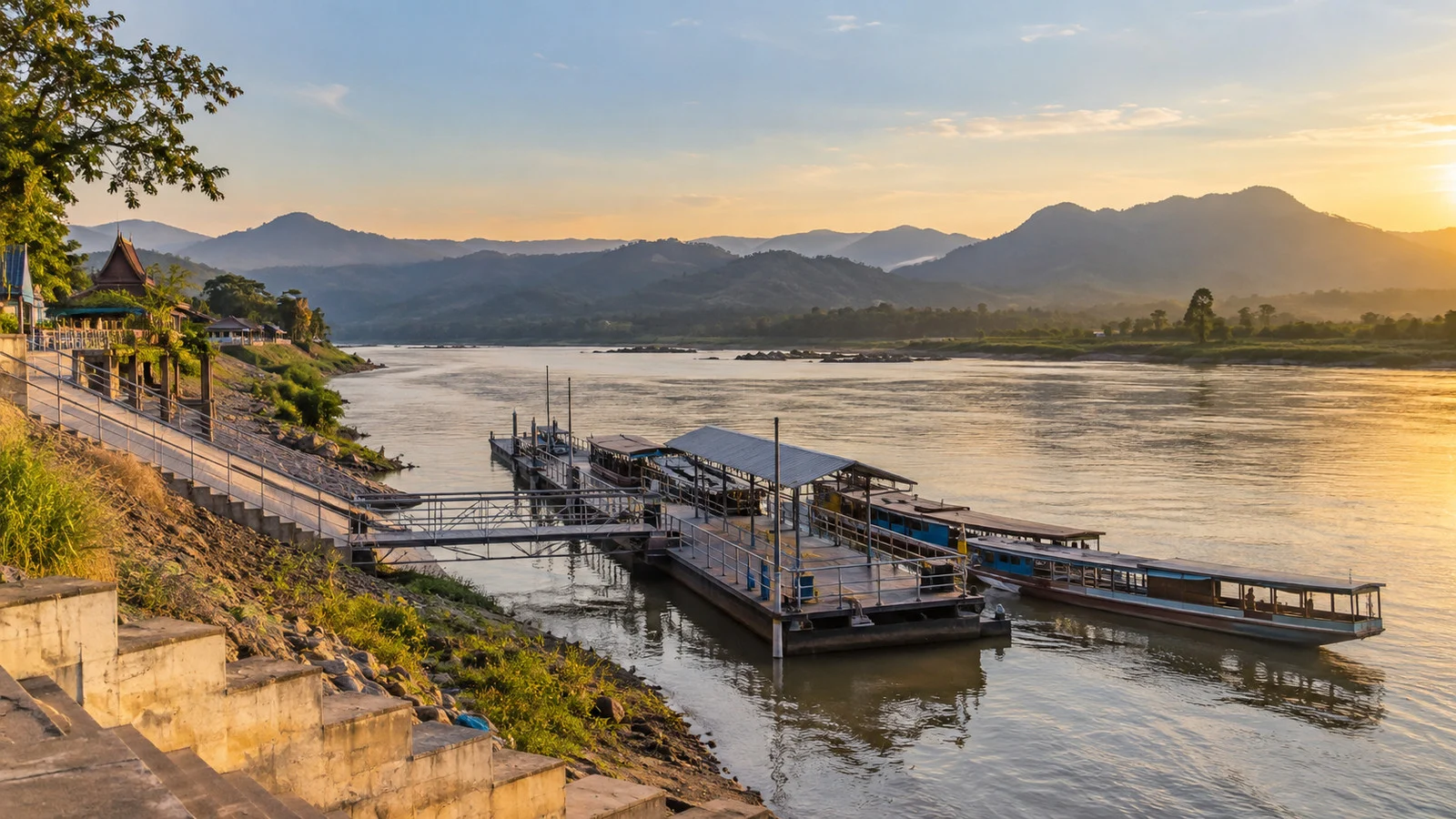
Do not picture one universal cruise terminal. Depending on the vessel and water level, passengers may use a fixed section of landing, a floating stage, a sloped bank or a smaller transfer boat.
The first practical challenge is vertical. From a typical landing, the market and main road can be an estimated 5 to 20 minutes away on an incline, with uneven steps or packed earth possible near the river.
Some current operators move guests ashore for a hotel or lodge night while the vessel remains secured separately. Confirm whether checked luggage stays aboard, goes to the room or needs to be reduced to an overnight bag, because “one night in Pak Beng” describes several different systems.
Mekong Cruises publishes a representative Huay Xai, Pak Beng and Luang Prabang route, including the overnight stop. Operator schedules help explain the usual sequence, but they do not guarantee your precise landing.
Low water, a stronger current, bank condition, or another vessel occupying the preferred spot can change the landing, excursion, or timing. Treat the operator’s daily plan as the current one.
Luang Prabang: the stop that deserves the longest stay
Luang Prabang sits on a peninsula where the Mekong and Nam Khan meet. UNESCO recognizes the town for its blend of traditional Lao urban form, religious architecture and European colonial influence.
It is the route’s easiest place to explore independently once you know where the ship has landed. The catch is that “Luang Prabang pier” can mean different river steps or bankside landings, and an operator may add a shuttle or local boat.
From a reasonably central Mekong landing, Wat Xieng Thong and the historic peninsula may be an estimated 5 to 25 minutes away on foot. A farther berth can make a tuk-tuk or operator shuttle the better beginning, especially in heat or after rain.
A strong half-day links Wat Xieng Thong, the old town lanes, the former Royal Palace complex and the base of Mount Phousi. Add the climb only if the steps, temperature and ship time all agree with the idea.
The morning alms tradition is a religious practice, not a photo set. Observe quietly from a respectful distance, dress appropriately and participate only with local guidance rather than buying random food from an opportunistic curbside package.
Independent travelers should carry the ship’s contact details and the exact landing name in Lao if possible. The site’s broader advice on walkable cruise ports still applies, but Luang Prabang’s walkability begins after the variable riverbank transition.
Luang Prabang is a marquee stop, so a shifted pier or local-boat transfer is more plausible than losing the city altogether. Confirm the landing before setting out independently.
Pak Lay: small town, big logistical job
Pak Lay, sometimes written Paklay, is a small Mekong town in Xayaburi Province. Expedition itineraries use it for a local walk, a basic bank landing or the handoff from river vessel to road transportation.
There is no standardized international cruise terminal to plan around. Expect crew-managed access that may involve a narrow gangway, dirt, steps or a local boat, then a short walk or vehicle into town.
Pak Lay also matters because it can be the practical end of the navigable itinerary for passengers continuing to Vientiane. On one current Heritage Line itinerary, guests check out near Pak Lay around 9 a.m. and reach Vientiane by road at approximately 12:30 p.m.
That published schedule is one operator’s plan, not a universal transfer time. Road conditions, the precise landing and city traffic can change the journey, so do not book a tight independent flight based on three and a half hours looking pleasantly exact.
Pak Lay’s exact landing, activity, and transfer time can change with conditions. The town’s role in the journey often survives even when the riverbank used on the day does not.
Vientiane: endpoint does not always mean river berth
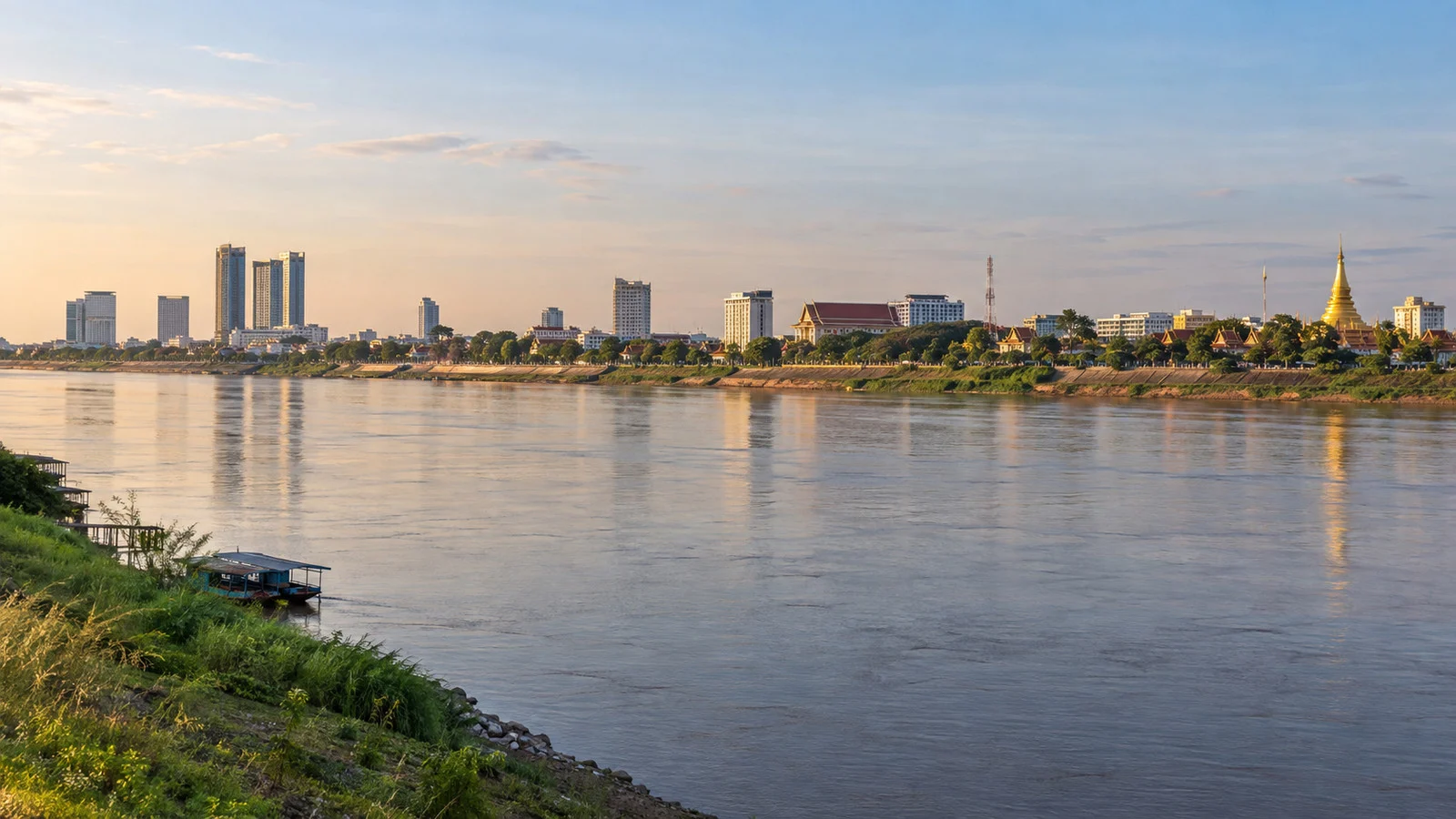
Vientiane stands on the Mekong opposite Thailand, but a cruise advertised as Huay Xai to Vientiane may not carry passengers to a central capital-city dock. Some vessels finish the navigable passenger segment near Pak Lay and deliver guests to Vientiane by road.
Read the day-by-day itinerary for verbs such as “disembark,” “transfer” and “arrive.” If the program promises a Vientiane arrival at lunchtime after morning checkout, you may be arriving by minivan rather than waving at the Patuxai from a sundeck.
Passengers continuing to Thailand may use the First Thai-Lao Friendship Bridge near Nong Khai, which is different from the Fourth Friendship Bridge used near Chiang Khong and Huay Xai. Check the correct border crossing on every visa, transfer and pickup confirmation.
The exact docking or transfer pattern described as “Vientiane” varies by itinerary. Reaching the capital may involve a scheduled road transfer even when the river portion or arrival time changes.
Water levels change the stairs, not just the view
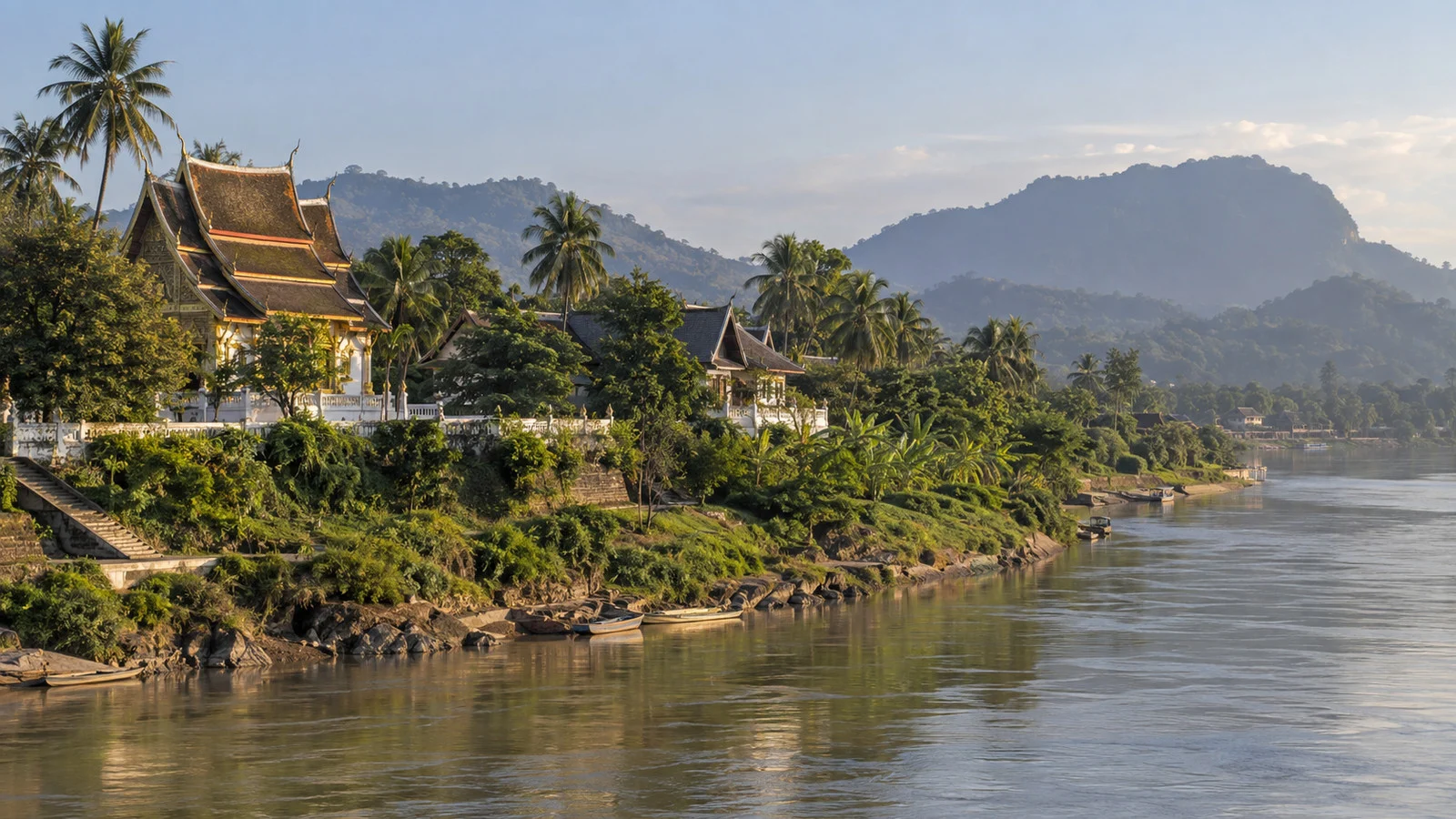
The Mekong’s monsoon cycle generally raises water during the May-to-November wet season and lowers it through the dry months. Daily conditions still depend on rainfall, tributaries, upstream operations and local channel shape, so season alone is not a forecast.
At low water, exposed rocks and sandbars can restrict the channel, require altered sailing hours and create a longer climb from ship to road. At high water, stronger current, flooded edges and submerged sandbanks can remove the exact landing or outdoor program shown in a brochure.
The MRC’s hydrometeorological monitoring explains its regional gauge network and flood-season forecasting. Passengers can use the data for context, but only the captain and local operator can decide whether a landing is safe.
Tenders, sandbanks and double docking
A tender or local longboat may carry passengers between the main vessel and a shallow landing. Keep both hands available, follow the crew’s seating instructions and wait for assistance rather than testing whether the boats share your sense of timing.
Rafting beside another vessel is also possible at busy stops. The guide to river-cruise rafting and double docking explains why reaching shore may require crossing another ship’s lobby and steps.
Accessibility and mobility reality
This is a challenging route for anyone who cannot manage steps, unstable surfaces or assisted boat transfers. Even a vessel with an elevator may not solve the final gap between its deck and a muddy or sandy bank.
Ask the operator about the full sequence at every named stop: cabin to deck, deck to tender, tender to bank and bank to vehicle. “Coach excursion available” does not answer whether the first 30 feet require balancing on a moving gangway.
Travelers with limited mobility should request recent photographs of typical landings and a written answer about tender transfers. The site’s river-cruise accessibility guide provides a useful question list, but the operator’s vessel-specific response is decisive.
Quick answers
Does an Upper Mekong cruise leave from Chiang Khong?
Chiang Khong is normally the Thai gateway. Passengers cross into Laos and embark at Huay Xai, subject to the operator’s precise meeting and transfer instructions.
Is Pak Beng a tender port?
Sometimes, but not always. The vessel, water level and chosen bank determine whether passengers use a direct gangway, fixed landing or smaller transfer boat.
Can I walk into Luang Prabang from the ship?
Often yes, once ashore, but the walk is an estimated 5 to 25 minutes from a reasonably central landing. A more distant or difficult berth can require a shuttle or tuk-tuk.
Does the ship dock in Vientiane?
Do not assume it does. Some itineraries end the river journey near Pak Lay and include a road transfer to Vientiane.
The last word
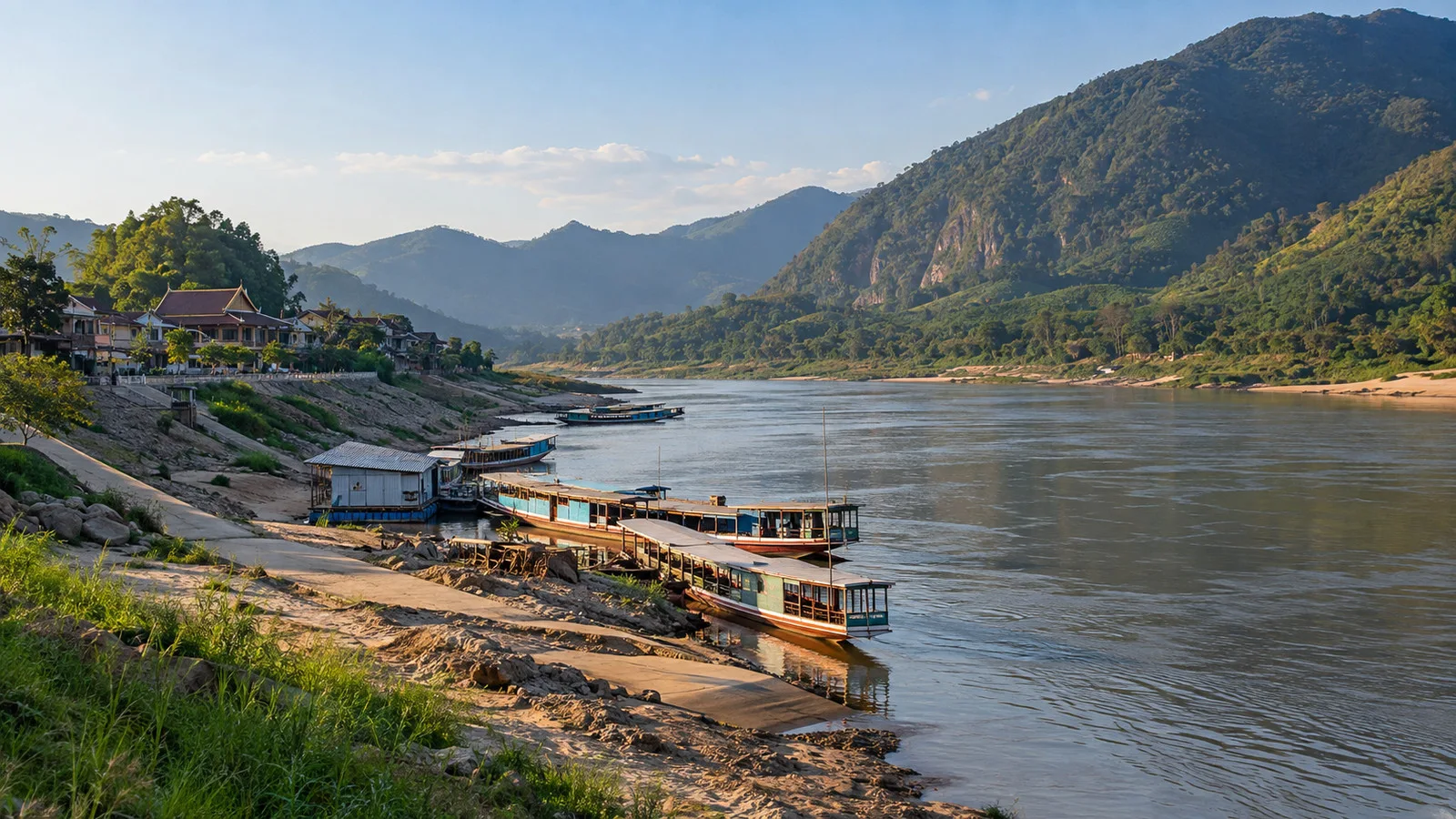
The Upper Mekong rewards travelers who replace the word “terminal” with “meeting point.” Chiang Khong begins the border story, Huay Xai begins the Lao voyage, Pak Beng breaks the journey, Luang Prabang anchors it, and Pak Lay may quietly hand the final chapter to a road bound for Vientiane.
Confirm the meeting place, visa entry point, luggage plan and actual disembarkation town before departure. Then let the crew solve the day’s riverbank while you concentrate on the rare pleasure of traveling through a landscape that still dictates the schedule.
How this guide was researched: No firsthand visit is claimed; border rules, route geography, water-level systems, heritage details and current cruise operations were checked against the Lao government eVisa portal, official Laos tourism information, UNESCO, the Mekong River Commission and published operator itineraries. Facts were reviewed September 12, 2026, while all labeled walking or transfer ranges are editorial planning estimates; see the CruisePorts.co Editorial Policy.