Shimizu Cruise Port: Fuji Views, Pines and Tuna
Shimizu is the port where everyone walks outside and looks up. Mount Fuji may rise beyond cranes, warehouses, fishing boats, and Suruga Bay, or it may vanish behind cloud so completely that you begin to suspect the postcards are teasing you.
The smart plan works either way. Shimizu offers tuna, a walkable waterfront, the pine grove at Miho, hillside views from Nihondaira, and the magnificent Kunozan Toshogu shrine, so Fuji can be the miracle on top rather than the only reason the day succeeds.
Quick take
Shimizu is one of Japan’s easiest ports to enjoy independently if you keep the geography honest. The waterfront is simple, but Miho and Nihondaira sit in different directions and combining them carelessly creates more transport than sightseeing.
Choose one major outing, then return for lunch or a harbor stroll. If the mountain is clear early, take the photograph immediately because Fuji does not sign a contract to remain visible after breakfast.
Quick Facts
- Usual cruise berth: New Pier 2 at Hinode Wharf
- Port type: Normally an alongside berth
- Walk to JR Shimizu Station: About 30 minutes according to the port committee
- Walk to Shin-Shimizu Station: About 20 minutes according to the port committee
- Best close options: Waterfront attractions, seafood, and local shopping
- Signature excursions: Miho no Matsubara, Nihondaira, and Kunozan Toshogu
- Currency: Japanese yen
- Language: Japanese, with English support varying by venue
- Big expectation check: Mount Fuji visibility is never guaranteed
Where cruise ships dock in Shimizu
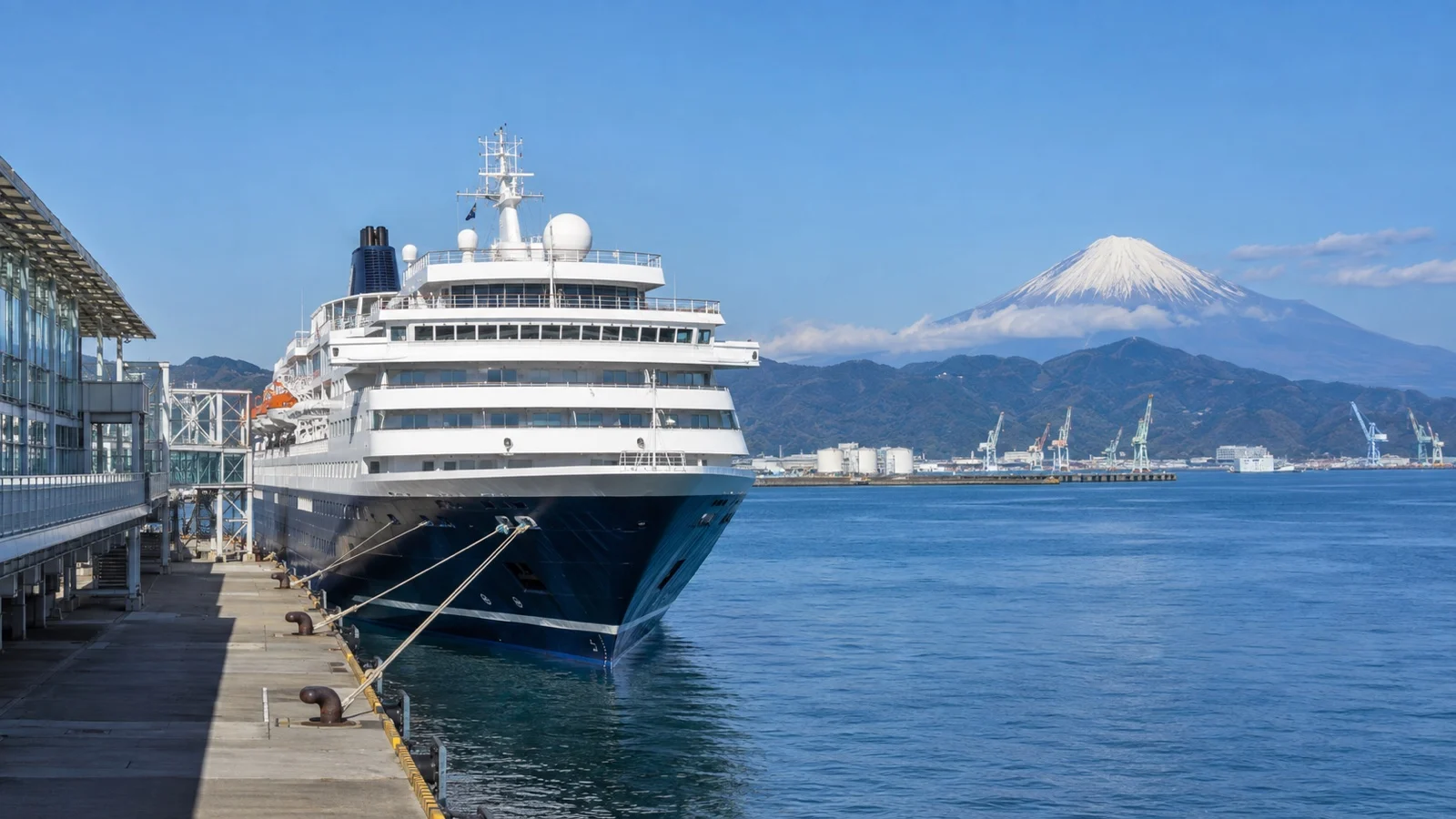
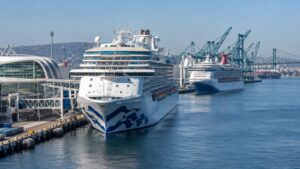
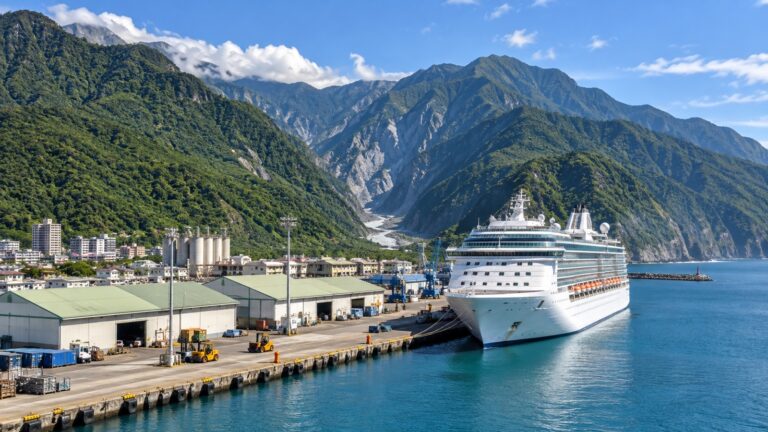
The Shimizu Port Passenger Ships Promotion Committee says cruise ships normally berth at New Pier 2 in the Hinode Wharf area. Your ship can still receive a different operational assignment, so use the daily program and gangway announcement as the final source.
Hinode Wharf is a working waterfront with visitor attractions close by, but it is not directly beside the main rail station. The official port access page estimates a 30-minute walk to JR Shimizu Station and a 20-minute walk to Shin-Shimizu Station on the Shizuoka Railway.
Those times assume you are comfortable walking and choose the correct route. Add margin for traffic lights, crowds, warm weather, mobility, and the exact position of the gangway.
Port welcome events, information booths, or local shuttles may appear on a particular call, but they are not permanent transport infrastructure. Accept the help when it exists and keep a plan that works when it does not.
The view of Mount Fuji
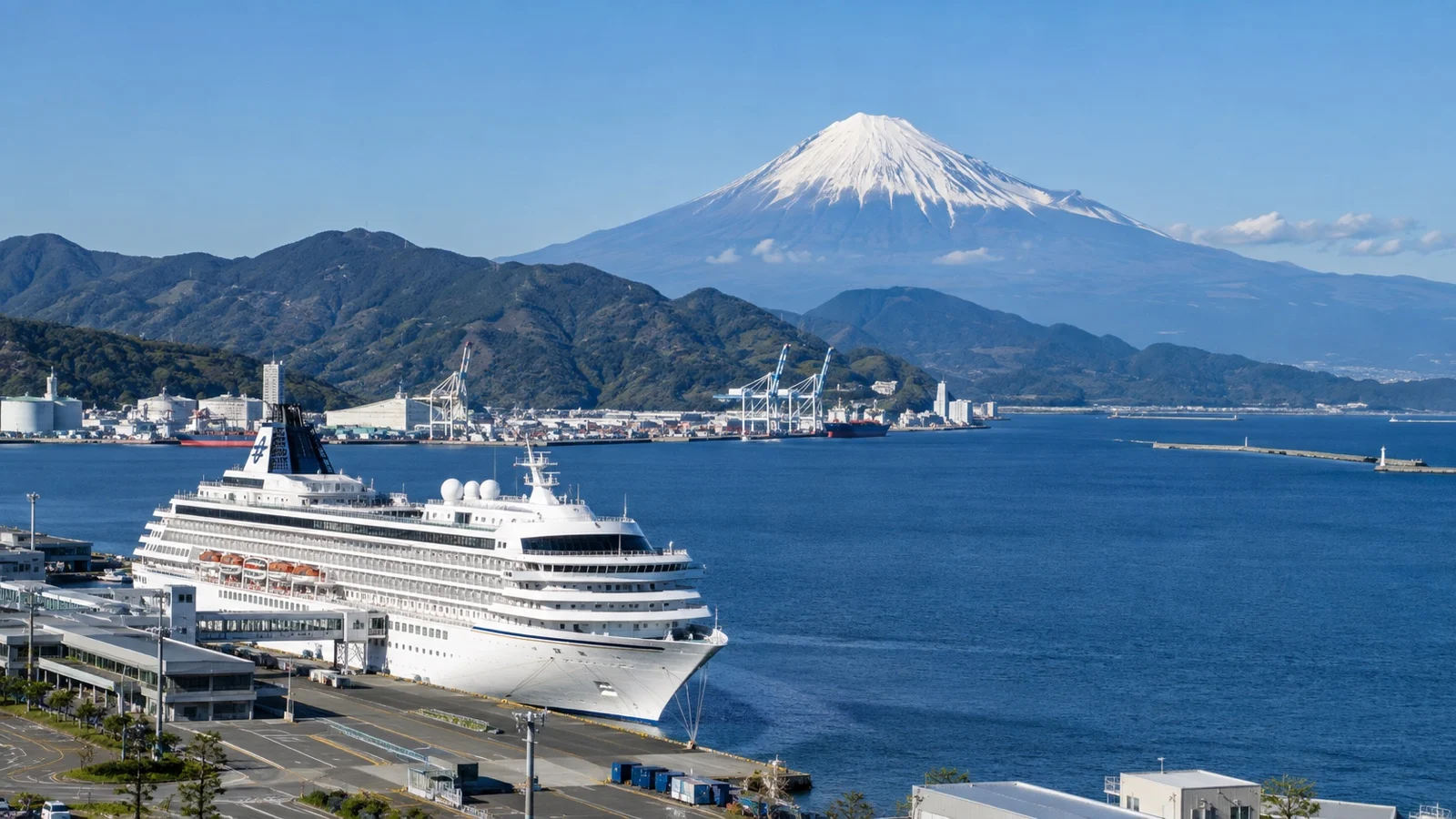
Shimizu can deliver one of the great cruise-port views, with Mount Fuji rising behind the harbor and Suruga Bay. It can also deliver a blank wall of cloud while the lower slopes remain perfectly sunny.
Visibility depends on moisture, haze, cloud, season, and the hour. Cooler, drier conditions often improve the odds, while heat and humidity can hide the mountain even on a pleasant day.
Look as soon as you wake, check again from the open deck, and photograph the mountain before leaving if it is visible. A later viewpoint may be more elevated but less clear.
Do not let a hidden summit derail the day. The port, food, shrine architecture, pine coast, and local culture remain real when the mountain is not performing.
Getting around from Hinode Wharf
Walking works for nearby waterfront attractions and for travelers heading toward the central rail area without a tight schedule. Use marked crossings and sidewalks, since the most direct-looking line on a map can meet port fencing or a busy road.
A taxi is the easiest way to begin a trip to Miho, Nihondaira, or another attraction with awkward connections. Show the destination in Japanese, confirm whether you need the driver to wait, and keep the berth name ready for the return.
Local buses can connect the station and outlying sights, but routes and frequencies need same-day verification. Photograph the stop name and posted return timetable before walking away from it.
JR Shimizu Station is useful for regional rail, while Shin-Shimizu Station belongs to the local Shizuoka Railway network. Make sure your map is sending you to the correct station before you start a 20 or 30-minute walk.
Miho no Matsubara
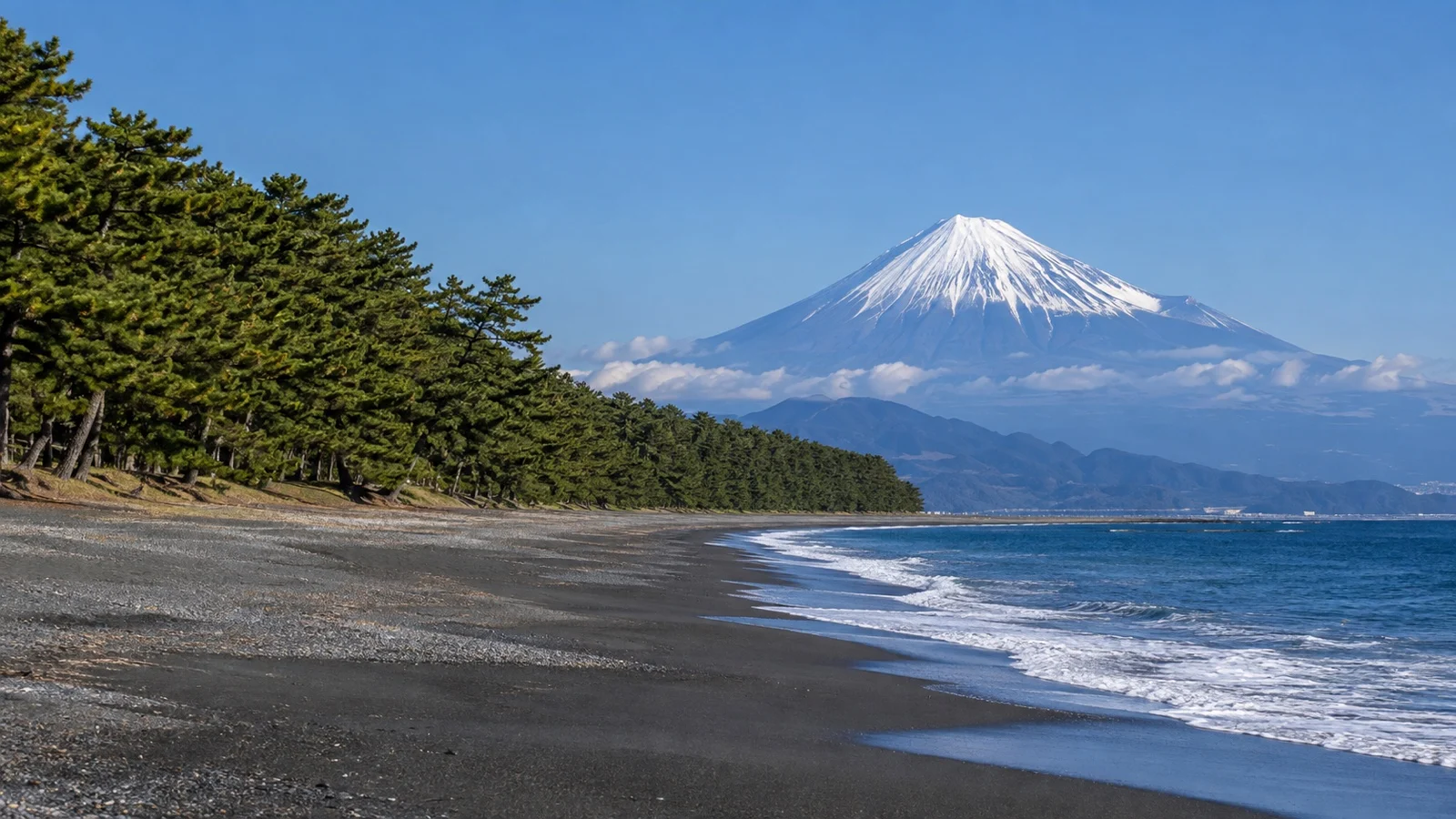
Miho no Matsubara is a coastal pine landscape on the Miho Peninsula, celebrated for its relationship with Mount Fuji and its long presence in Japanese art and legend. UNESCO includes the pine grove as one component of the Fujisan World Heritage property.
The World Heritage designation is cultural, reflecting Fuji as a sacred place and source of artistic inspiration. It does not promise an unobstructed mountain view, and the beach may be gray or dark rather than the white-sand image some visitors imagine.
Walk the designated routes, protect tree roots, and respect every conservation barrier. Coastal wind can be strong, and the loose surface is harder for wheels and unsteady walkers than an ordinary paved promenade.
The Hagoromo legend adds another layer to the visit, but approach it through local interpretation rather than a rushed summary. If Fuji is hidden, the old pines, shoreline, and cultural connection still make the place worthwhile.
Miho is not the same stop as Nihondaira, even though both are marketed for Fuji views. Combining them requires deliberate transportation and enough time to absorb more than a parking lot.
Nihondaira and its outlooks
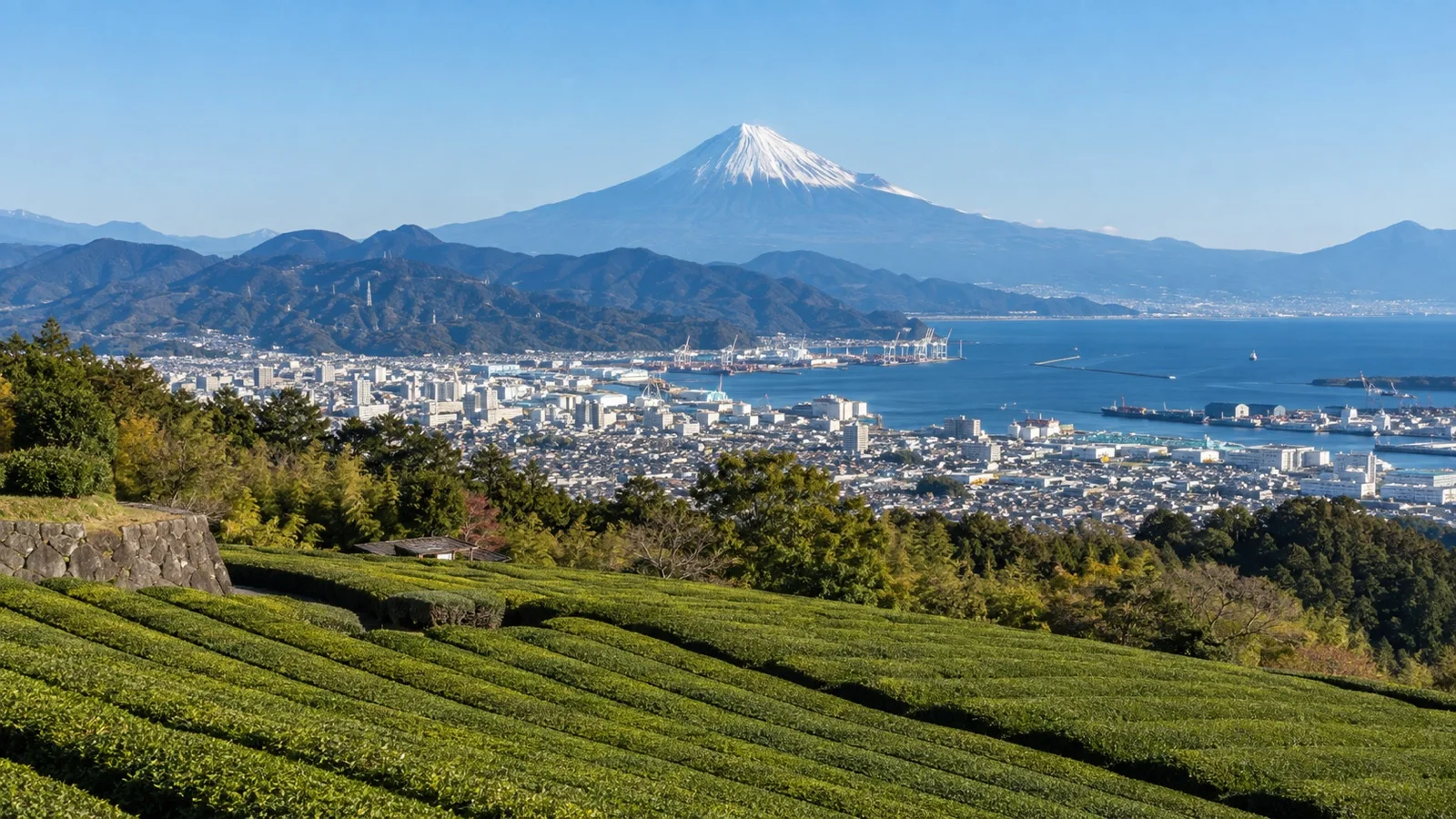
Nihondaira rises above Shimizu with broad views over Suruga Bay, the port, city, and Mount Fuji when the weather cooperates. It is a natural pairing with Kunozan Toshogu because the ropeway connects the hilltop area with the shrine.
The Nihondaira Yume Terrace offers an elevated viewing experience, but opening access and weather conditions should be checked directly. Cloud can erase Fuji while leaving an impressive bay panorama, so do not judge the visit by a single missing peak.
Independent travelers should arrange the return before lingering. A taxi queue, missed bus, or ropeway interruption can consume the margin between a beautiful view and a frantic drive to the ship.
The Nihondaira Ropeway
The ropeway is the practical connection between the Nihondaira side and Kunozan Toshogu. Its short aerial journey saves visitors from approaching the shrine by the long stone stairway on the coastal side.
Service can pause for weather, inspections, or maintenance, and capacity becomes important when cruise groups arrive together. The operator has announced a planned suspension from December 1 through 21, 2026 for equipment upgrades, so check the official operating notice for your date.
A ropeway ticket does not replace shrine admission, and a combined product may have its own conditions. Buy only after confirming that the schedule fits the ship’s all-aboard time.
Kunozan Toshogu Shrine
Kunozan Toshogu enshrines Tokugawa Ieyasu and was established at his burial place by order of the second shogun, Hidetada. The shrine’s richly colored, lacquered architecture became an important model for later Toshogu design.
The official shrine describes its main buildings as a nationally designated treasure and notes that they were created before the famous Nikko Toshogu complex. Details in carving, pattern, metalwork, and color reward a slower look than a photograph from the courtyard.
This is an active Shinto shrine. Wash or purify as directed, keep voices low, follow photography restrictions, and step aside for worshippers and ceremonies.
Travelers who do not use the ropeway can approach from below by a demanding stone stairway. Do not choose that route casually in heat or with limited mobility, and remember that climbing up does not solve the transport problem on the opposite side.
The attached museum holds material connected with Ieyasu and later Tokugawa shoguns, but separate hours or admission may apply. Check current access if the museum is a priority rather than assuming it is included in every visit.
Seafood and the tuna connection
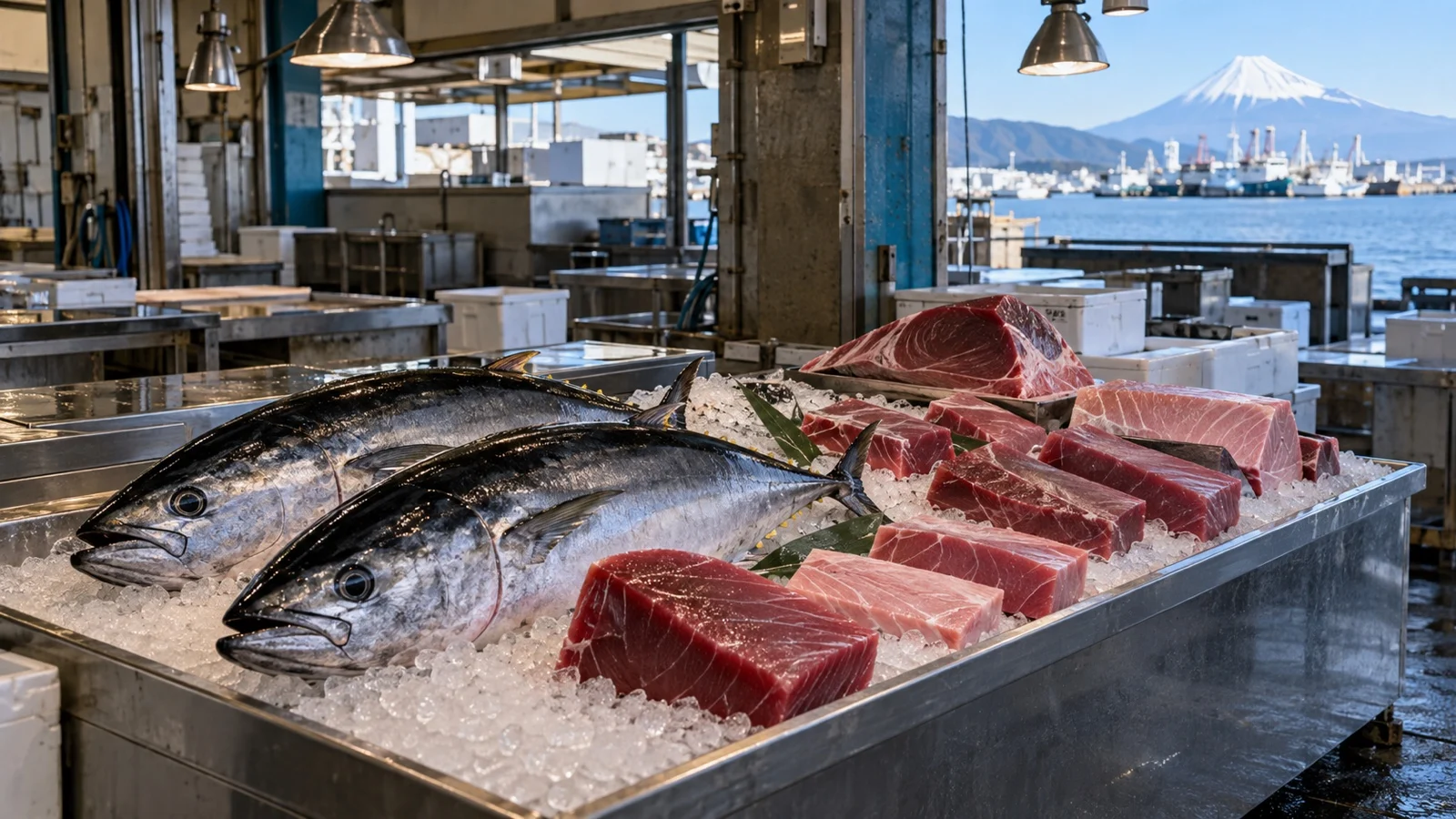
Shimizu is one of Japan’s great seafood ports, and tuna is the headline. Markets and restaurants near the central harbor area serve sashimi, sushi, rice bowls, grilled fish, and local preparations that make lunch part of the destination rather than a gap between excursions.
Choose a busy, established counter and ask what is best that day. Terms such as lean tuna, medium-fatty tuna, and fatty tuna describe different cuts, and the most expensive option is not automatically the one you will enjoy most.
Opening hours, weekly closures, and sellouts matter because many seafood businesses run on market rhythms rather than cruise schedules. Check the current business page if one shop or dining hall is essential.
Carry some yen even where cards are advertised, and be ready for a line. A bowl eaten calmly is better than ordering premium fish with six minutes left before a bus.
Japan has strict waste and dining etiquette in many public spaces. Eat where permitted, return trays correctly, and carry small trash until you find the appropriate bin.
Shimizu waterfront and Dream Plaza
The Hinode waterfront gives you an easy fallback day with harbor views, shopping, food, and family attractions. It is the right answer when Fuji is hidden, an excursion returns early, or you simply want a low-stress port call.
S-Pulse Dream Plaza is a recognizable waterfront complex close to the cruise area, with shops, dining, and entertainment. Individual facilities keep their own hours and ticketing rules, so check before promising a child one specific attraction.
Fans of Chibi Maruko-chan may recognize Shimizu as the setting connected with the creator’s childhood and the long-running series. Enjoy the local connection without assuming every visitor attraction is included in a general shopping-center visit.
The harbor promenade can be breezy and exposed. Keep a light layer handy even when the inland forecast feels warm.
A trip into central Shizuoka
Shimizu is part of Shizuoka City, and rail makes it possible to visit the larger central district. The practical day includes the walk or ride to the station, train frequency, and onward transport, not just the brief time shown between station names.
Central Shizuoka offers shopping, food, parks, and historical sites linked with Tokugawa Ieyasu. Pick one anchor rather than trying to combine downtown Shizuoka, Nihondaira, Miho, and the port in the same call.
Confirm attraction closure days and allow a generous return. An urban train is reliable, but a delayed local connection or wrong station exit can still erase the ship margin.
Tea in Shizuoka
Shizuoka Prefecture is one of Japan’s best-known tea regions, and green tea appears in shops, cafes, sweets, and souvenirs throughout the port day. Look for clear origin information if buying a premium product, since Shizuoka branding can cover different producers and styles.
A tasting is more useful than choosing by price alone. Ask about brewing temperature and steeping time, because delicate Japanese green tea can turn bitter when prepared like black tea.
Packaged tea is easy to carry, but agricultural import rules vary by destination. Keep the label and declare food products when required.
Money, connectivity, and language
The currency is the Japanese yen, and card acceptance continues to grow. Small restaurants, local buses, shrine counters, and older machines may still be simpler with cash or a compatible Japanese transit payment method.
English signage is common at major visitor sites but less certain in taxis and small businesses. Save the destination, port, and station names in Japanese on your phone and on paper.
Download offline maps and translation files before leaving the ship. A portable battery protects the same device you may need for navigation, tickets, photographs, and the ship’s emergency number.
Public wireless access should be treated as a convenience rather than a return plan. Screenshot reservations and timetables so a weak connection cannot strand the information you already found.
Accessibility and mobility
The usual cruise arrival is alongside, which avoids the tender barrier, but the gangway can still be steep and the route across the working pier can be long. Ask the cruise line what assistance will be available at the specific berth.
The waterfront is the easiest independent option, although curb cuts, crossings, and construction can affect the route. A taxi saves energy for travelers who find the station walk too long.
Miho’s beach and pine paths include loose and uneven surfaces. Check with the visitor facility about the most accessible viewpoint and current path condition before setting out.
The Nihondaira Ropeway can avoid the coastal stairway to Kunozan Toshogu, but boarding dimensions, station elevators, and mobility-device rules must be confirmed with the operator. Historic shrine grounds may still contain steps and uneven thresholds after the cable car ride.
Do not accept a general statement that the excursion is accessible without asking about the bus, ropeway, shrine route, and restroom. Each link in the chain matters.
Weather and what to wear
Shimizu can be warm and humid in summer, wet during seasonal rain, and breezy beside Suruga Bay. Spring and autumn may begin cool and become mild, making layers more useful than one heavy garment.
Wear comfortable walking shoes with grip, carry a compact rain layer, and use sun protection even when cloud hides Fuji. Heat can build on paved waterfront and shrine approaches.
Typhoons and strong weather can disrupt ships, buses, ropeways, and attractions. Follow official notices and the captain rather than trying to rescue a prepaid itinerary when transport is suspended.
Fuji visibility and safe operations are separate questions. A perfectly clear mountain does not guarantee that wind allows a ropeway or that the ship can keep its planned schedule.
Three realistic Shimizu days
The easy waterfront day
Stay around Hinode Wharf, enjoy harbor views, browse Dream Plaza, and make seafood the main event. Add the station or nearby market area only if the walk and operating hours suit you.
The Fuji landscape day
Choose Miho no Matsubara or Nihondaira as the principal destination, using a taxi, ship excursion, or carefully confirmed bus. Return for a waterfront meal rather than adding a second distant viewpoint.
The shrine day
Travel to Nihondaira, use the ropeway, and give Kunozan Toshogu enough time for the architecture and setting. Check every operating notice and leave a wide return margin before adding anything else.
Quick answers
Can I walk from the cruise ship to town?
Yes, but the official estimate is about 30 minutes to JR Shimizu Station and 20 minutes to Shin-Shimizu Station. The nearby waterfront attractions are a more convenient walk from Hinode Wharf.
Will I see Mount Fuji?
Maybe, because cloud and haze can hide it even on an otherwise pleasant day. Look early and build a plan that remains worthwhile without the view.
Should I visit Miho or Nihondaira?
Choose Miho for the pine coast and World Heritage landscape, or Nihondaira for elevation and a natural pairing with Kunozan Toshogu. Trying to do both on a short call can feel rushed.
Is Kunozan Toshogu easy to reach?
The common visitor route uses transportation to Nihondaira followed by the ropeway. The coastal stair approach is physically demanding and should not be treated as a casual shortcut.
What should I eat in Shimizu?
Tuna and other Suruga Bay seafood are the obvious choices, with sushi, sashimi, and rice bowls widely available. Check live hours because market businesses may close earlier than general tourist attractions.
The last word
Shimizu is not a pass-or-fail Mount Fuji test. It is a generous port of pine landscapes, dazzling shrine craft, working-harbor energy, tea, and seafood, with the mountain appearing when the weather decides you have earned a little luck.
Choose one meaningful outing, keep your return simple, and take the Fuji photograph the instant it presents itself. If the summit never appears, order another slice of tuna and enjoy the day that actually arrived.
How this guide was researched: This guide was checked against current official information from the Shimizu Port Passenger Ships Promotion Committee, Nihondaira Ropeway, Kunozan Toshogu, and the UNESCO World Heritage Centre. Logistics and time-sensitive details were reviewed on September 12, 2026, under our Editorial Policy.