Shenzhen Cruise Port: Shekou Ferries and Visa Rules
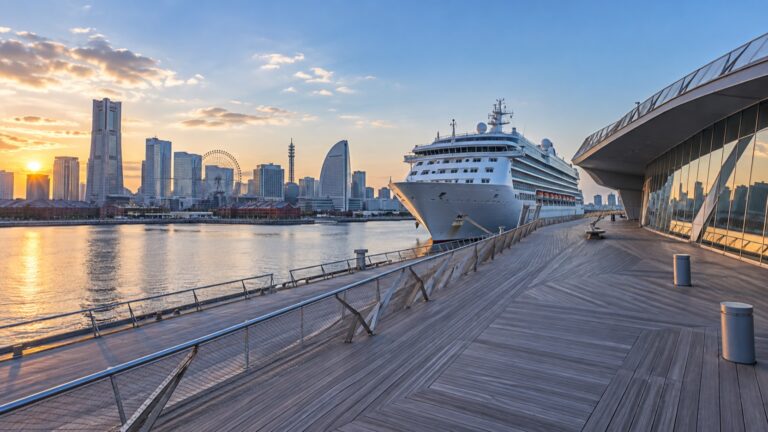
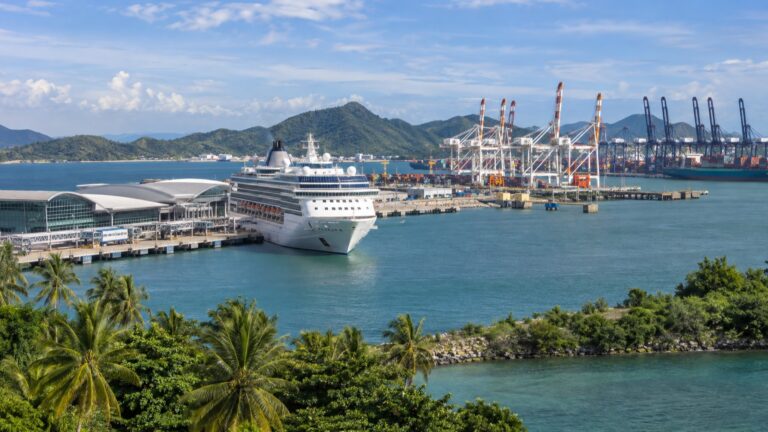
Shenzhen does not ease you into China. It arrives as a sweep of glass towers, green hills, container traffic, ferries, and neighborhoods that seem to have been built between one breath and the next.
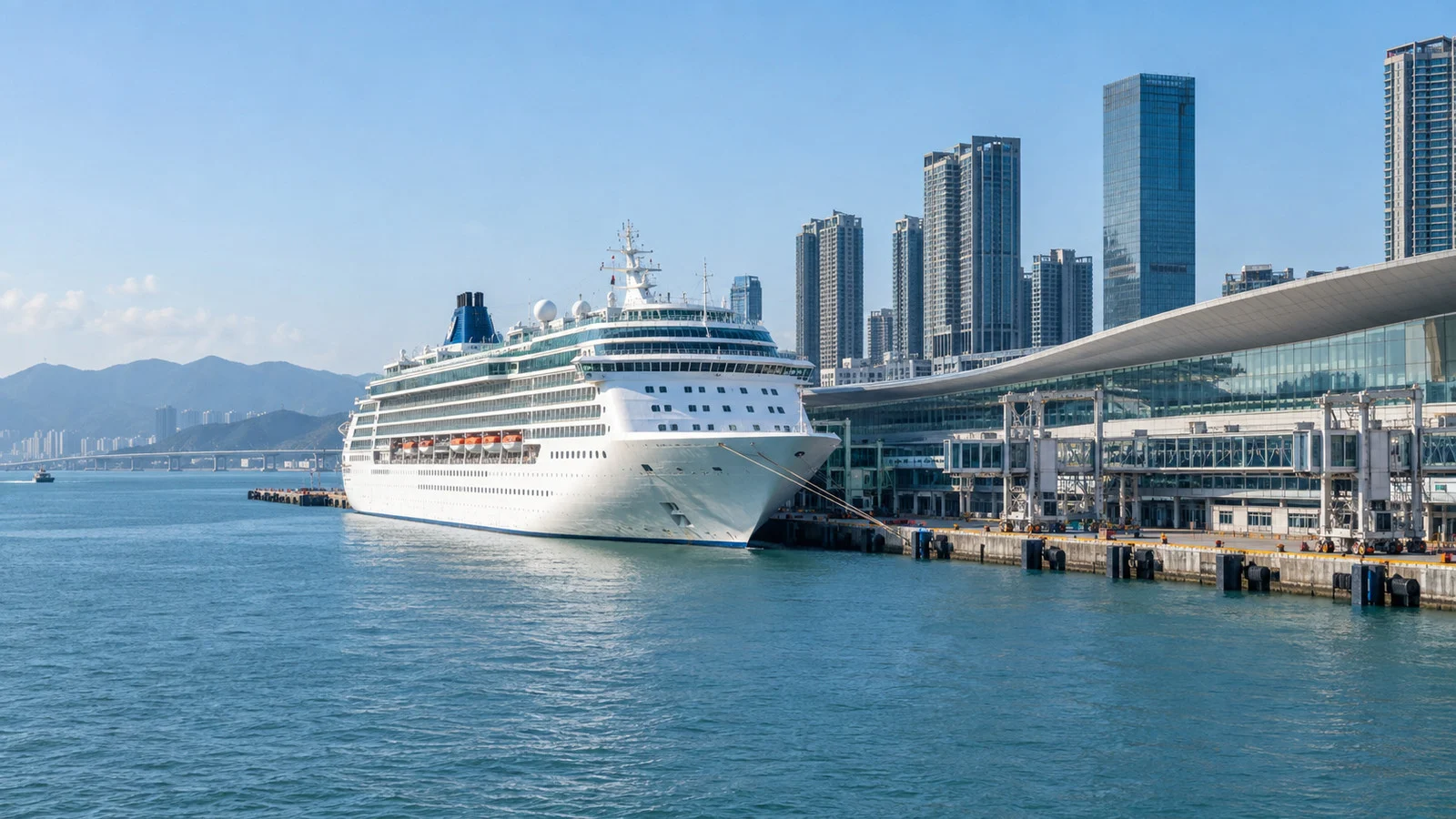
Your ship will normally use Shekou Cruise Home Port in Nanshan District, on the city’s western waterfront. It is a modern gateway, but the best day here starts with one practical decision: enjoy western Shenzhen at a relaxed pace, or commit to a longer ride into the center and protect a generous return buffer.
My quick take
Shekou is one of those ports where the terminal area is genuinely useful rather than something to escape. Sea World, waterfront walks, cafes, and the historic Chiwan area make it possible to have an interesting day without spending hours in traffic.
Do not treat a same-day ferry to Hong Kong or Macao as a casual cruise excursion. Those trips involve a separate international or regional border process, and a missed sailing or document problem can turn an adventurous idea into a very expensive lesson.
Quick Facts
- Primary cruise terminal: Shekou Cruise Home Port in Nanshan District
- Terminal address: 1 Haiyun Road, Shekou, Shenzhen
- Best nearby area: Sea World and the Shekou waterfront
- Currency: Chinese yuan
- Language: Mandarin Chinese, with English support varying by place
- Best for a short call: Shekou, Sea World, and Chiwan
- Main planning issue: Immigration eligibility and travel time across a very large city
- Do not assume: That a ferry connection or visa-free policy applies to your passport and itinerary
Where cruise ships dock in Shenzhen
Shekou Cruise Home Port opened in 2016 and combines an ocean cruise terminal with scheduled passenger ferry services. The complex faces the Pearl River estuary, west of Shenzhen’s principal downtown districts.
That mixed role explains why the building can feel busier than a single-purpose cruise terminal. Follow the signs for your ship and its assigned processing area rather than joining a line simply because other travelers are carrying luggage.
Large ships may use different berths or boarding arrangements according to the day’s operations. If you use a wheelchair, scooter, or walking aid, ask the cruise line before arrival whether the route involves a steep gangway, a shuttle, long corridors, or assistance at security.
Arrival, immigration, and visa rules
China entry rules deserve more attention than the sightseeing list. Eligibility can depend on nationality, passport validity, the exact ports on the itinerary, whether you arrive and depart on the same ship, and whether you are traveling with an organized group.
China’s National Immigration Administration describes a cruise-group visa-free policy for qualifying foreign tourist groups of two or more people that are organized and received by a travel agency registered in China. Under that policy, the group must follow the scheduled cruise itinerary, visit approved areas, and leave China with the same ship within the permitted period.
That is not a blanket promise that every independent cruise passenger can enter without a visa. Nationality-based exemptions, transit arrangements, and cruise-group policies are separate pathways, each with its own conditions.
Use the cruise line’s written instructions for your particular voyage and check them against current guidance from the National Immigration Administration or the Chinese embassy or consulate serving your home country. Do this well before departure, because the terminal staff cannot fix an ineligible passport or missing visa after the ship arrives.
Carry your passport and any landing card, tour confirmation, or photocopy requested by the ship. Keep a screenshot or paper copy of the ship’s emergency contact, berth details, and all-aboard time, since mobile access can be unreliable just when you need it most.
What the terminal experience is like
Expect the usual sequence of ship security, border formalities, and a walk through a large terminal. Shenzhen transport authorities have highlighted multilingual signage and translation support at the home port, but you should still save the destination name and address in Chinese on your phone.
Official visitor information lists taxis at the home port, while current local ground operations may also include ride-hailing pickup zones and cruise shuttles. Ask terminal staff where your specific service collects passengers instead of relying on an old map or a driver’s message in an app.
Do not plan a tight independent departure immediately after the scheduled docking time. Clearance can take longer than expected, especially when several processes or large tour groups move at once.
Getting around from Shekou
Shenzhen’s metro is the most predictable option for longer journeys, and the network has expanded quickly. Station names, transfers, and terminal connections can change, so check the current official map and follow live station signage on the day of your call.
The words Shekou Port, Sea World, and cruise home port can refer to different points around the peninsula. Confirm that your navigation app is sending you to the active cruise terminal at 1 Haiyun Road rather than to an older ferry location or a similarly named metro stop.
A taxi or licensed ride-hailing car is easiest for Chiwan, Nantou, or a customized loop. Traffic is the variable, and the trip that looks comfortable in the morning may be much slower during an evening surge or after an event.
Show the destination in Chinese, verify the vehicle and plate, and keep the terminal address ready for the return. If a driver offers to wait, agree on the price and method of payment before you leave the vehicle.
Sea World and the Shekou waterfront
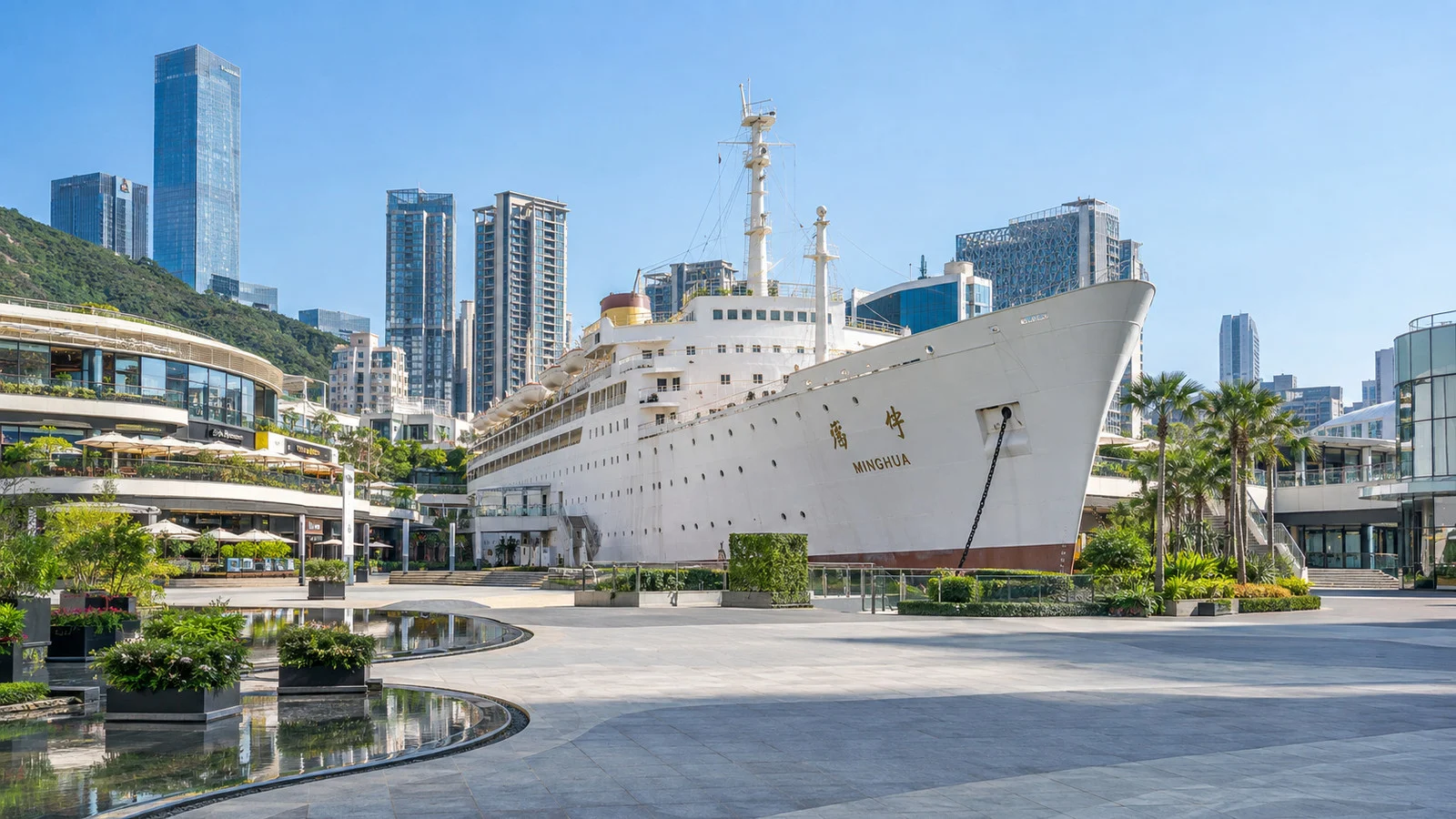
Sea World is the simplest independent outing from the cruise port. Despite the name, it is not primarily an aquarium; it is a dining, shopping, and entertainment district centered around the landlocked Minghua ship and a broad public plaza.
The neighborhood works well when you want coffee, lunch, a waterfront stroll, and a little urban people-watching without a complicated itinerary. It is also a forgiving choice for a late arrival because you can shorten or lengthen the visit as the ship’s clock demands.
Walk with normal city awareness and use marked crossings, because roads around the developing waterfront can be broad. Opening hours and individual venues change, so choose what is operating when you arrive instead of building the entire day around one restaurant.
Chiwan and the Tianhou temple
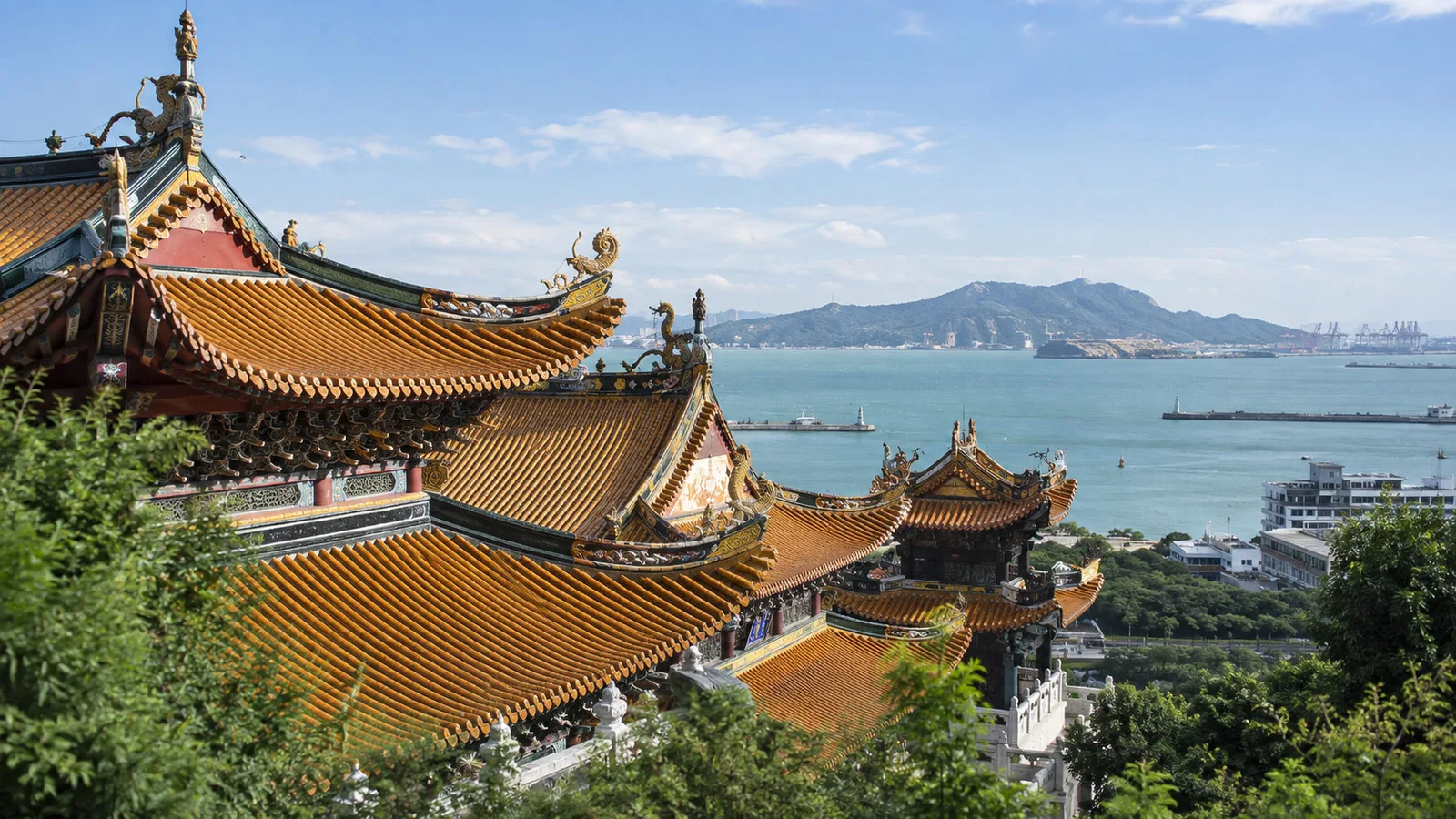
Chiwan offers a quieter counterpoint to Shenzhen’s futuristic skyline. Its best-known historic site is the Chiwan Tianhou Temple, dedicated to the sea goddess who is also known as Mazu.
The Shenzhen government notes that the temple has a long maritime association and was rebuilt in the early 1990s, with only parts of the earlier structure surviving. Go for the cultural setting and seafaring connection, not for the illusion that every visible building is ancient.
Dress respectfully, keep your voice low around worshippers, and ask before photographing ceremonies or interiors. Current access, renovation work, and opening arrangements should be confirmed locally, especially if the temple is the centerpiece of your outing.
Nantou Ancient Town
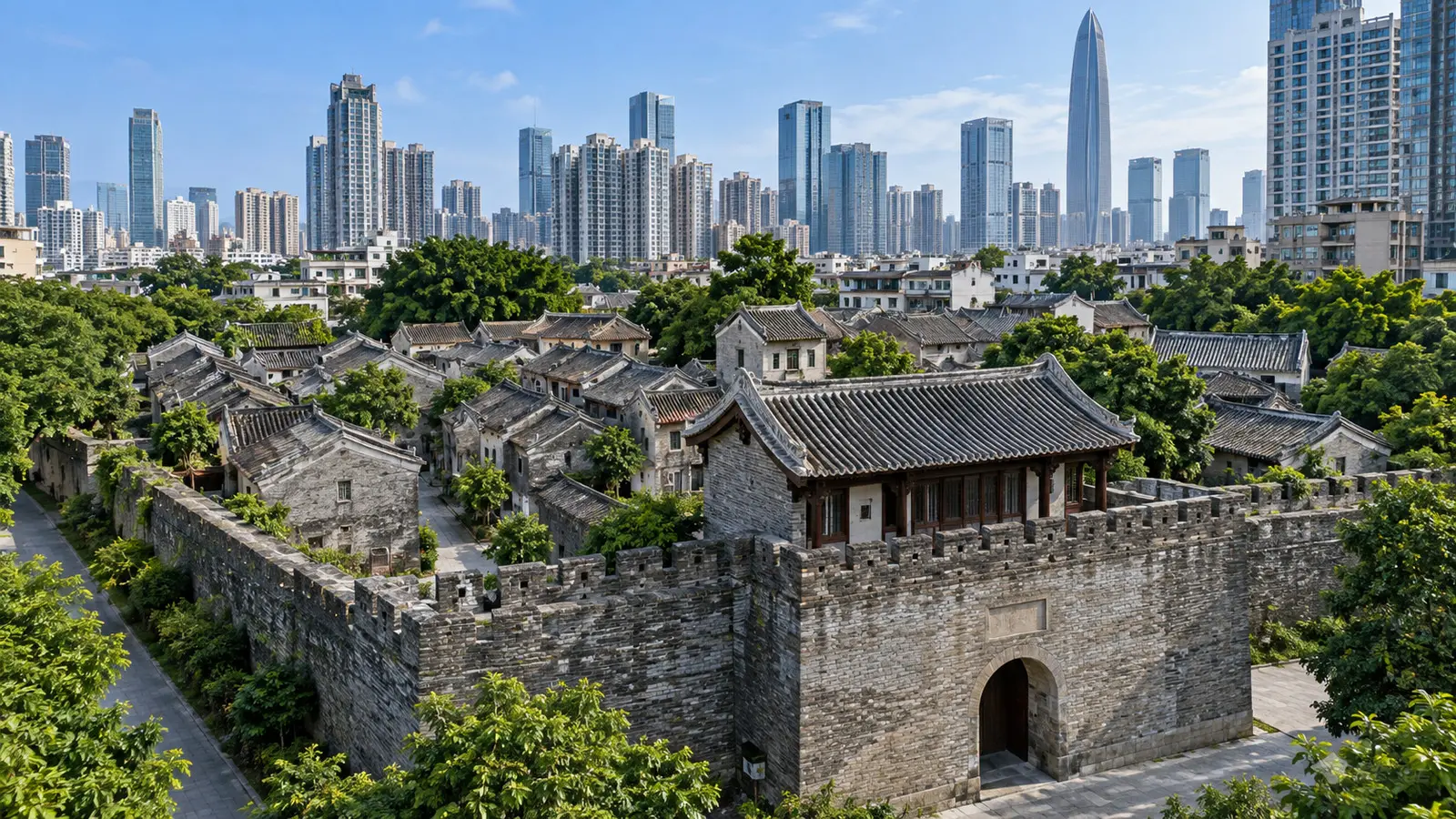
Nantou Ancient Town is a good middle-distance choice for travelers interested in the layers beneath modern Shenzhen. The district mixes old lanes, gates, adaptive reuse, galleries, small shops, and contemporary creative spaces rather than presenting a sealed historic monument.
It tells a more complicated story than the skyscraper stereotype. Give yourself time to wander, but set a firm departure alarm because a taxi back to Shekou can be affected by city traffic.
Going deeper into central Shenzhen
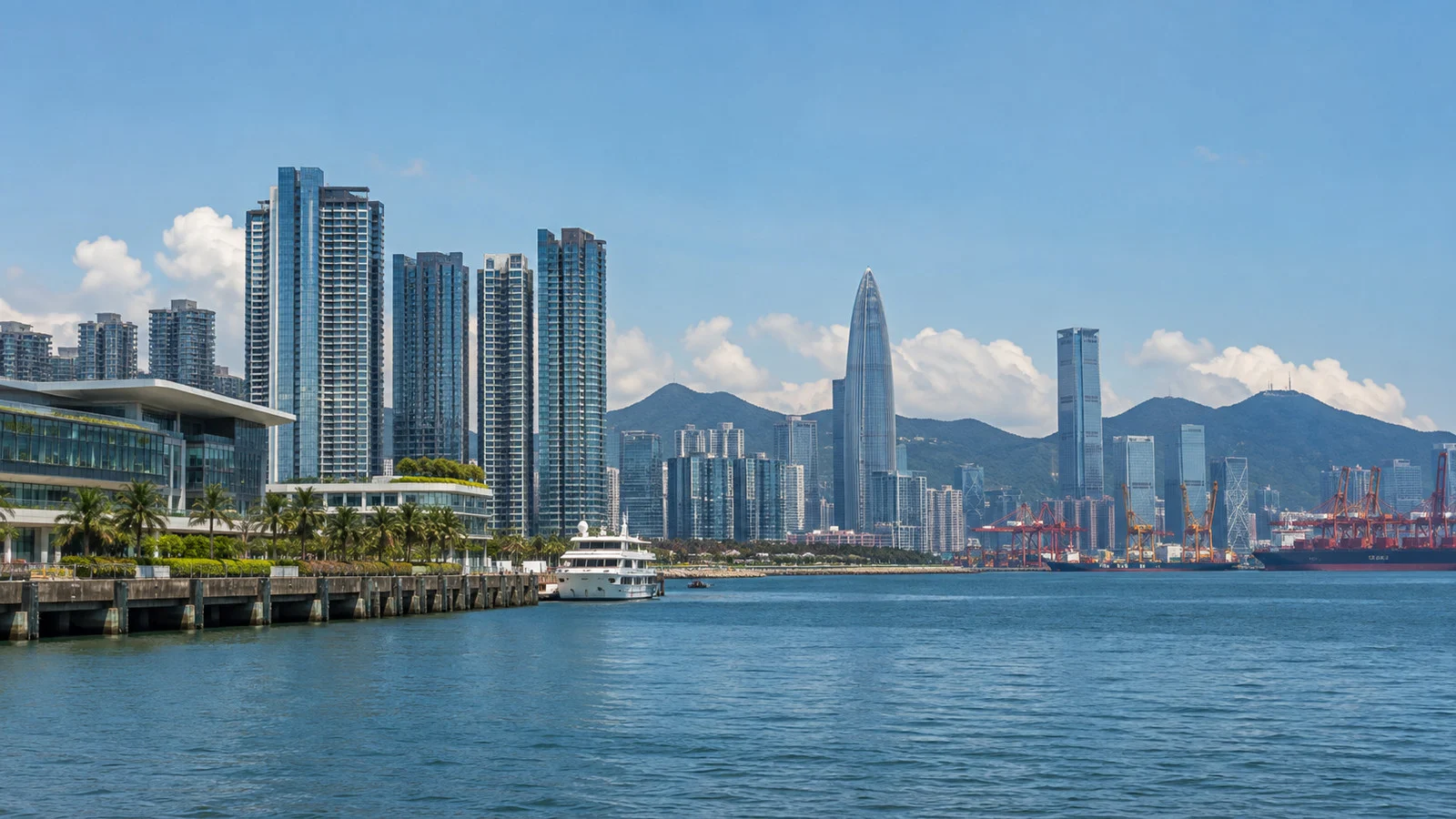
Central districts such as Futian can reward a longer call with civic architecture, major shopping centers, museums, and dramatic skyline views. They also require more transport time than the map may suggest, particularly once station walks and security checks are included.
Check museum reservations and closure days directly with the venue before you travel across town. Many popular cultural sites use timed admission, identity checks, or app-based booking systems that may not be easy to arrange at the door with a foreign passport.
If you want a skyline-focused day, pick one district and one anchor attraction rather than collecting distant landmarks. Shenzhen is enormous, and repeated cross-city transfers consume the very hours you came ashore to enjoy.
Ferries to Hong Kong and Macao
Shekou has direct passenger ferry connections with Hong Kong and Macao, which makes the home port an important regional hub. That does not make either place a sensible spontaneous side trip during an ordinary cruise call.
A ferry journey requires a ticket, the right travel documents, time for outbound and inbound border formalities, and enough margin for cancellation or delay. You must also be legally able to reenter mainland China and return to the ship after crossing the boundary.
Services associated with Hong Kong International Airport are designed around eligible flight connections and special baggage or immigration procedures. They are not a shortcut for a quick sightseeing loop through Hong Kong.
If your cruise line sells a supported excursion that crosses a boundary, read exactly what documents and protections are included. Otherwise, save Hong Kong or Macao for a separate stay and enjoy Shenzhen while the ship is actually in Shenzhen.
Money and payments
Mainland China relies heavily on mobile payments, while international cards and cash acceptance vary by merchant. Set up a permitted payment option before the trip if your bank and chosen app support it, but carry a modest yuan backup for places where your preferred method fails.
Tell your bank you are traveling and do not depend on a single card. Hotel desks, major malls, and established attractions are generally easier for visitors than tiny shops, yet even there the exact terminal or foreign-card support can change.
Use an official bank cash machine if you need cash, shield your personal identification number, and decline help from strangers. Ask for the total before confirming a digital payment, since unfamiliar screens make it easy to approve the wrong amount.
Phones, maps, and internet access
Some services and apps commonly used outside mainland China may not function in the same way on local networks. Download offline maps, translation language packs, booking confirmations, and the terminal address before sailing.
A screenshot with Chinese characters is often more useful than a long spoken explanation. Keep your battery healthy with a portable charger, because navigation, translation, payments, and ship messages can all depend on the same device.
Use only connectivity tools that are lawful for your circumstances and follow the cruise line’s guidance. Public wireless networks may require a local phone number or identity verification, so never make free wireless access your only plan.
Accessibility and mobility planning
The modern terminal and metro system can be manageable for travelers with limited mobility, but the full route may include long walks, elevators that are not beside the stairs, and crowded security areas. Ask for assistance early rather than after the group has started moving.
For independent travel, have the Chinese name of each destination and request an accessible vehicle in advance if you need one. A folding wheelchair may fit in more cars than a rigid chair, but never assume the trunk size or driver assistance will meet your needs.
Sea World offers a relatively flexible nearby outing, though construction detours, curb heights, and weather can affect the experience. Travelers who fatigue easily should prioritize one close neighborhood and save energy for the return through the terminal.
Weather and what to wear
Shenzhen has a warm, humid subtropical climate with hot summers, seasonal heavy rain, and a risk of tropical weather. A compact rain layer, sun protection, breathable clothing, and shoes with good grip are useful through much of the cruise season.
Typhoons and intense rain can disrupt ships, ferries, roads, and outdoor attractions with little regard for a carefully planned day. Follow the captain and local authorities, and treat a transport suspension as a safety decision rather than an inconvenience to work around.
Air-conditioning can feel aggressive after the heat outdoors, so a light layer earns its place in your day bag. Drink sealed water regularly and slow down if the humidity is higher than you expected.
Three realistic ways to spend the day
A short or delayed call
Stay in Shekou, explore Sea World, walk the waterfront, and have a relaxed meal. This is the least stressful plan and the easiest to shorten if clearance takes longer than expected.
A half-day cultural loop
Pair the Chiwan Tianhou Temple area with Sea World, using a taxi or confirmed local transport between stops. Keep the final part of the day close to the ship so a traffic surprise does not become a boarding problem.
A full-day city look
Choose either Nantou or one carefully selected central Shenzhen attraction, then return to Shekou with a substantial margin. Do not combine central Shenzhen with an independent Hong Kong or Macao ferry trip.
Safety and returning to the ship
Shenzhen is a major city, so use the same habits you would in any busy urban area. Keep valuables controlled in crowds, use licensed transportation, and step away from anyone creating pressure around money, tickets, or a supposedly urgent change of plan.
Your ship uses its own all-aboard time, which can be well before departure. Confirm whether that time is shown in ship time or local time, set more than one alarm, and aim to be back at the terminal before the official deadline rather than exactly on it.
Take a photo of the terminal entrance you used and note the ship’s berth before leaving. If something goes wrong, call the port agent or ship emergency number printed in the daily program instead of relying on social media messages.
Quick answers
Can I walk from the cruise terminal to Sea World?
The area is nearby, but the practical walking route can depend on construction, controlled terminal exits, weather, and your mobility. Ask the information desk for the current pedestrian route before setting out.
Can I visit Hong Kong during a Shenzhen port call?
Only if your documents, reentry rights, transport schedule, and cruise timing all support it, and even then the risk can be substantial. A cruise-line-organized option is much safer than improvising an international ferry trip.
Do I need a Chinese visa?
Possibly, because the answer depends on your nationality and exact itinerary. Do not infer eligibility from another passenger’s experience; verify the current official rule and your cruise line’s written instructions.
Is Shenzhen good for independent exploration?
Yes, especially around Shekou, if you prepare Chinese addresses, payment backups, offline tools, and a clear return plan. Longer independent trips require more comfort with a huge transit network and variable traffic.
The last word
Shenzhen rewards travelers who stop treating it as merely the mainland side of Hong Kong. Keep the plan focused, respect the border rules, and let Shekou’s maritime history sit beside the city’s startling modern energy.
No firsthand visit is claimed. This guide was independently checked September 12, 2026, against current official information from the Shenzhen Municipal Government, the National Immigration Administration, and the Shenzhen Municipal Transport Bureau.
Entry policies, ferry schedules, terminal operations, attraction access, and local transport can change, so verify the details that affect your sailing before you leave.