Beaufort, NC Cruise Port: Front Street, Blackbeard and Wild Horses
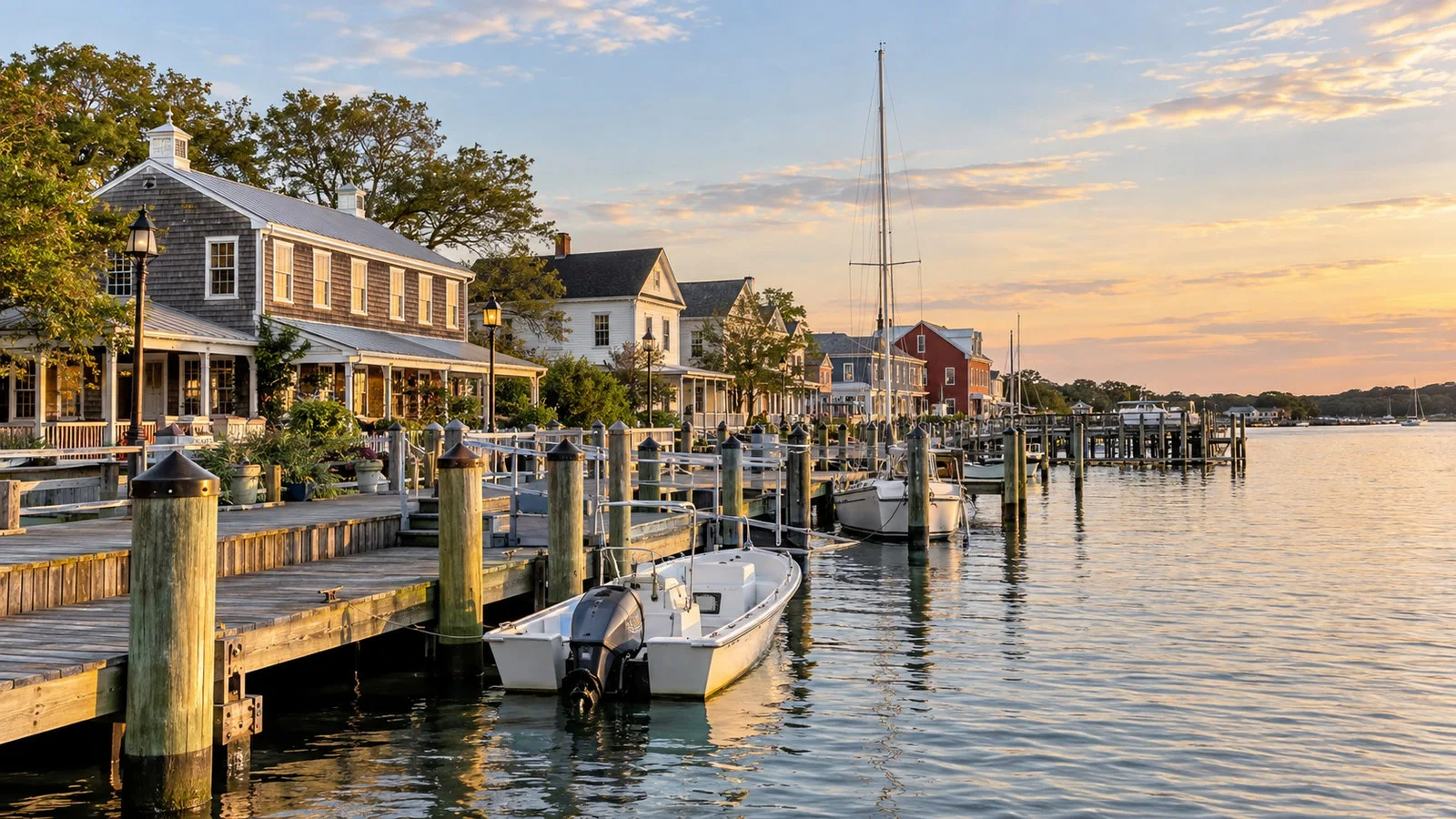
Beaufort, North Carolina, gives small-ship passengers a wonderfully simple choice. Stay in the compact waterfront town for maritime history and an easy stroll, or use a carefully timed ferry for wild horses and barrier-island scenery.
The town itself is forgiving, but the islands are not. Ferry schedules, wind, tides, soft sand, and the ship’s return deadline should decide whether Shackleford Banks or Cape Lookout belongs in your day.
This is Beaufort pronounced “BO-furt,” not the South Carolina city with the same spelling. Adding North Carolina to a taxi request or map search prevents an unexpectedly large mistake.
My quick take
I would keep a short call entirely in town and combine the North Carolina Maritime Museum with Front Street and the historic district. That plan has strong local character without tying the day to a boat connection.
For a longer call, Shackleford Banks is the most distinctive nature outing from Beaufort. Book only after the complete outbound and return schedule leaves a generous cushion before all aboard.
Cape Lookout is a bigger commitment than Shackleford because the ferry ride is longer. The lighthouse exterior remains a striking destination, but the National Park Service currently lists the tower closed because of deteriorated stairway conditions.
Beaufort quick facts
- Best for: Maritime history, Blackbeard artifacts, a walkable waterfront, seafood, and barrier-island nature
- Arrival: Follow the cruise line’s current berth, tender, gangway, and shuttle instructions
- Walkability: Excellent in the Front Street and historic-district core, with some uneven surfaces and old thresholds
- Best short-call plan: Maritime Museum, Front Street, Beaufort Historic Site, and a relaxed meal
- Best longer outing: Shackleford Banks when the authorized ferry schedule leaves a safe return margin
- Currency: US dollars, with cards widely useful and some cash handy for small purchases
- What to pack: Water, sun protection, insect repellent, a light rain layer, and shoes for sand
Where cruise passengers arrive
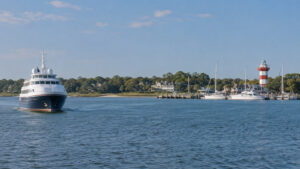
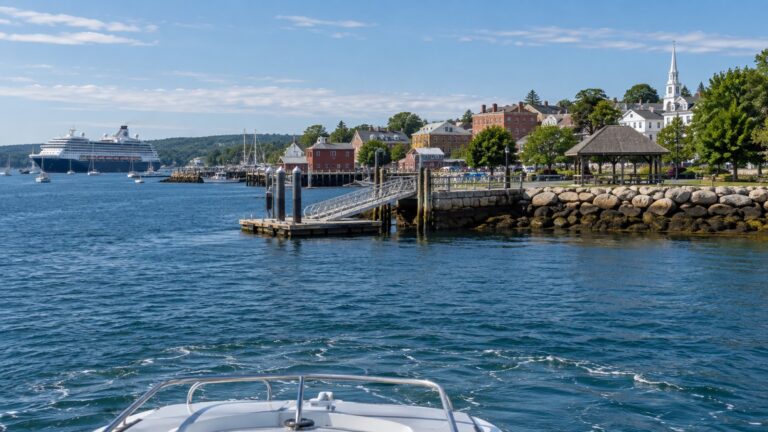
Beaufort’s visitor-facing waterfront follows Front Street beside Taylor’s Creek. Once you reach that area, the museum, restaurants, boat operators, and historic streets are close enough to make a vehicle unnecessary for most passengers.
Do not assume every vessel uses the same dock or arrival method. Small-ship operations can involve different berths, gangways, shuttles, or tenders depending on the vessel and conditions.
The daily program is your source of truth for the landing point and return procedure. Photograph the dock, tender pier, or shuttle stop and keep the ship’s local contact information available offline.
If you are embarking or disembarking in Beaufort, confirm the cruise line’s supported airport and transfer plan before booking flights. The town does not have a major commercial airport, and the nearest-looking option on a map may not match the operator’s logistics.
The best town-only day
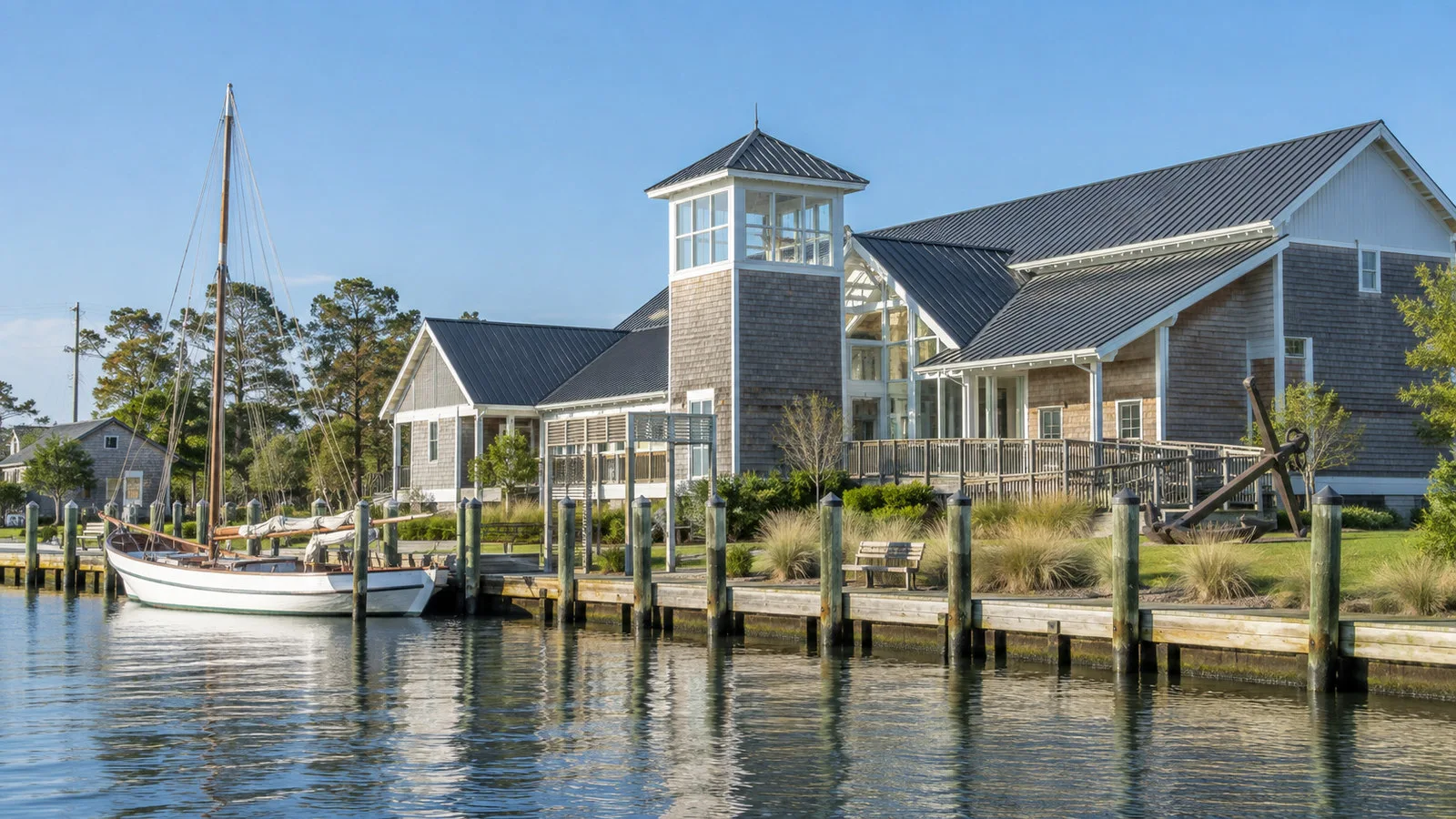
Start at the North Carolina Maritime Museum because its fixed opening hours are less flexible than a waterfront walk. The museum currently publishes Tuesday through Saturday hours from 10:00 to 17:00, with Sunday, Monday, and state-holiday closures.
Admission is listed as free, although donations support the museum. Check the official museum site before your call because programs, galleries, and holiday schedules can change.
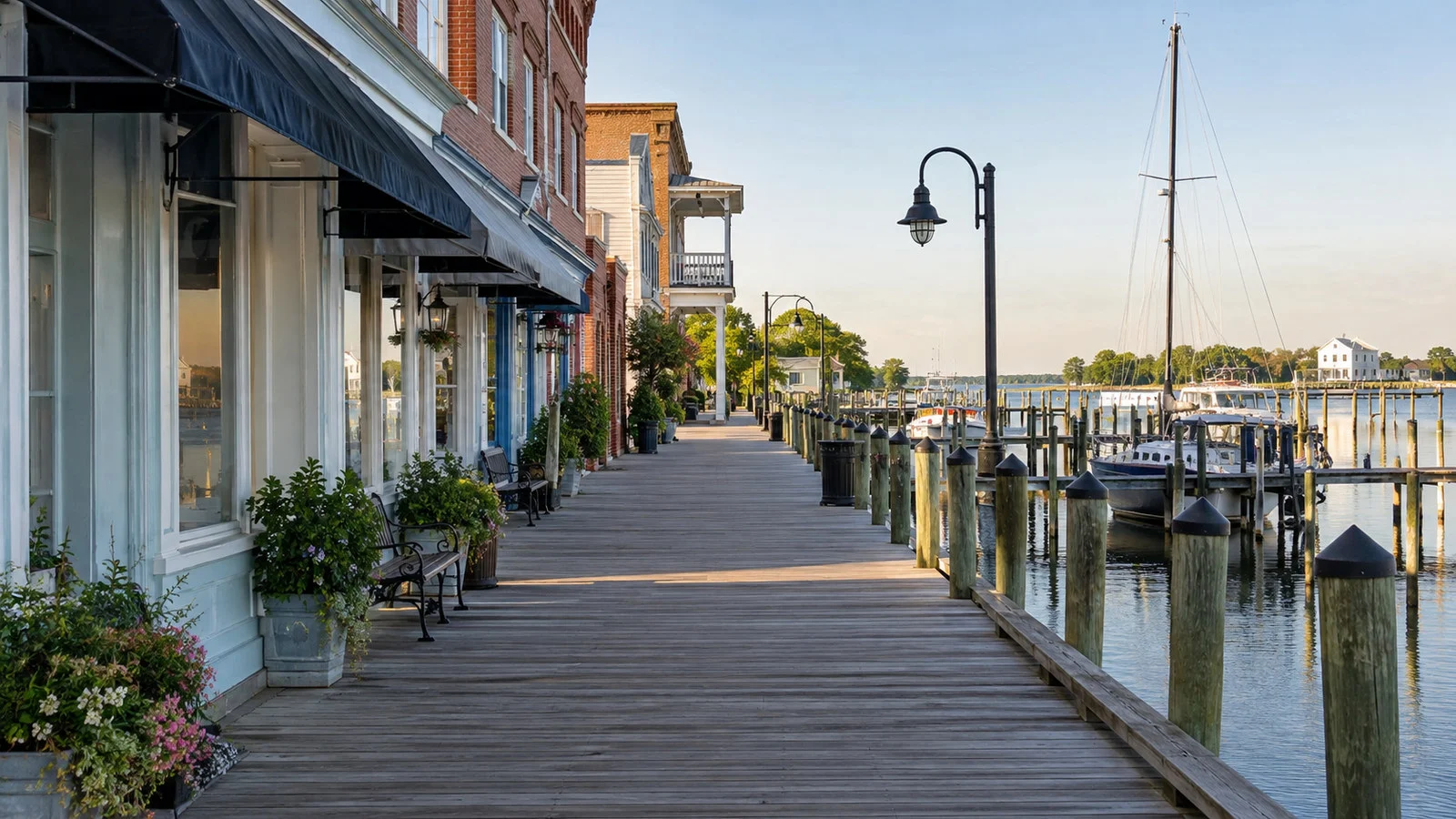
After the museum, walk Front Street for harbor views, galleries, shops, and restaurants. Turn inland for historic homes, the Beaufort Historic Site, and the Old Burying Ground area if time and weather cooperate.
You do not need a formal tour to enjoy the street pattern and architecture. A scheduled historic-site tour is worthwhile when you want interior access or stories that a self-guided loop cannot provide.
Save lunch until you have checked the all-aboard time and any tender deadline. Waterfront restaurants can become busy when day visitors and boat tours return together, so an early meal or quick backup is sensible.
Blackbeard and Queen Anne’s Revenge
The Maritime Museum is the best local starting point for Blackbeard because it displays artifacts connected with Queen Anne’s Revenge. The ship ran aground near Beaufort Inlet in 1718, and the wreck site was discovered in 1996.
North Carolina’s official Queen Anne’s Revenge Project explains the ship’s longer history as the French slave-trading vessel La Concorde before Blackbeard captured it. That context makes the exhibit more meaningful than a simple pirate-treasure display.
The active conservation laboratory is at East Carolina University’s West Research Campus in Greenville, not inside the Beaufort museum. In Beaufort you see selected conserved objects and interpretation rather than the full working lab.
Do not rush the exhibit if maritime archaeology is the reason you came. Its story links piracy, the Atlantic slave trade, underwater research, and preservation in a way that deserves more than a quick photograph.
Two different wild-horse destinations
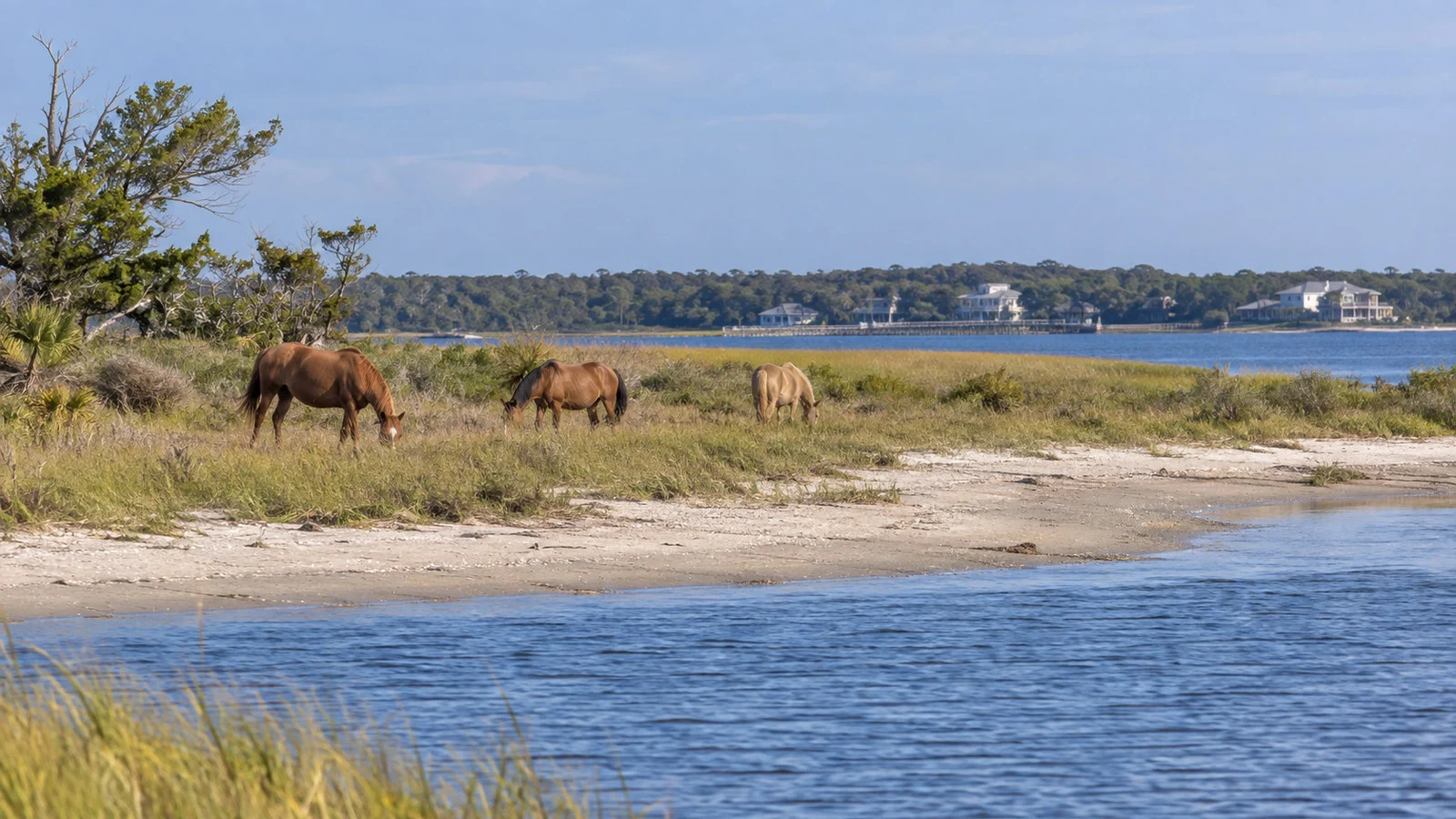
“Wild horses near Beaufort” can refer to two separate herds. Shackleford Banks belongs to Cape Lookout National Seashore, while the Rachel Carson Reserve sits directly across Taylor’s Creek from town.
The distinction matters when you book because the boats, landing points, terrain, and rules are not interchangeable. Confirm the named island and the return location before paying.
Shackleford Banks
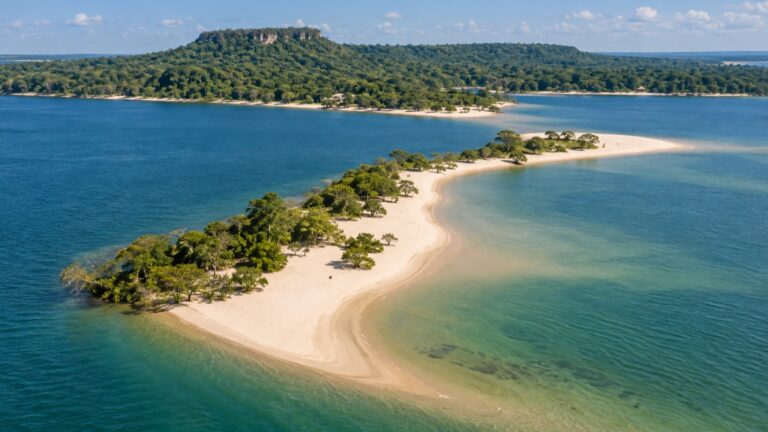
The National Park Service says Shackleford Banks is home to more than 100 wild horses. Visitors reach the barrier island by boat or passenger ferry and watch the herd without feeding, touching, surrounding, or following the animals.
Island Express Ferry Service is the park’s authorized passenger-ferry concessioner for routes from Beaufort and Harkers Island. NPS currently describes the Beaufort trip to the west end of Shackleford Banks as about 20 minutes, but schedules vary through the season.
The island is a natural environment with deep or soft sand, limited toilets, and no drinking-water source. Bring everything you need and carry every piece of trash back to the mainland.
A horse sighting is not guaranteed just because the ferry reaches the island. Let wildlife move naturally, and never push farther from the landing than your fitness and return time allow.
Rachel Carson Reserve
The Rachel Carson Reserve includes islands and estuarine habitat across Taylor’s Creek from historic Beaufort. It is accessible only by private boat or passenger ferry even though it looks close enough to touch from the waterfront.
North Carolina asks visitors to remain at least 50 feet from the reserve’s feral horses, with a larger distance preferred for natural behavior. Watering holes and shorebird nesting areas are closed to visitors.
A guided boat outing is the easiest option for most cruise passengers because it handles tide, route, and local interpretation. Independent paddling belongs to experienced paddlers who understand currents, boat traffic, landing conditions, and changing weather.
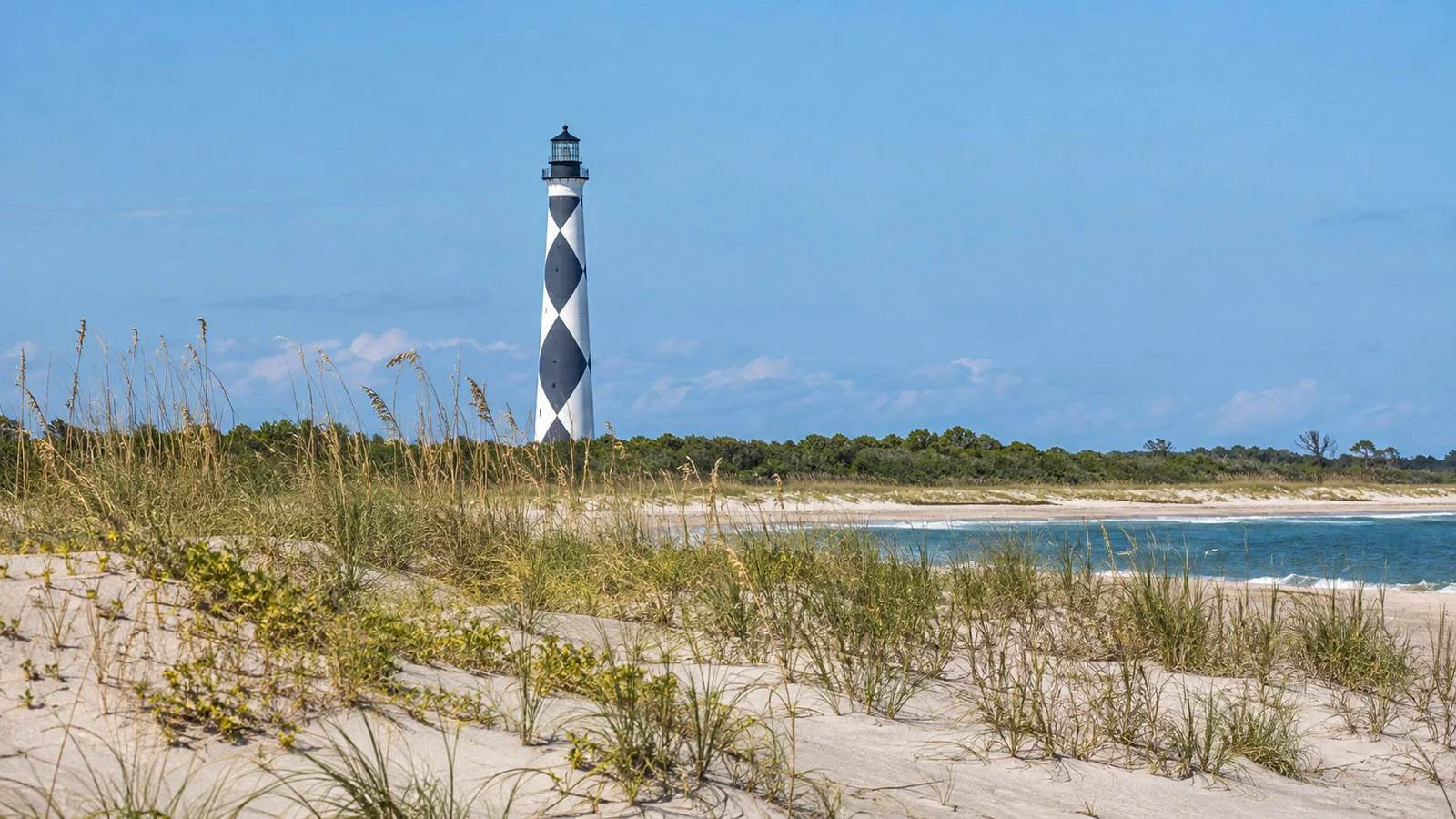
Cape Lookout Lighthouse
The black-and-white diamond pattern makes Cape Lookout Lighthouse one of the region’s signature sights. Reaching it from Beaufort requires a longer ferry commitment than visiting western Shackleford Banks.
NPS describes the Beaufort passenger-ferry trip to the lighthouse area as about 40 minutes. That is one direction, so include boarding, disembarking, exploration, the return ride, and the trip from the ferry landing back to your ship.
The current park conditions page lists the Cape Lookout Lighthouse tower closed because of deteriorated stairway conditions. You can still value the light-station landscape and exterior, but do not book expecting a climb.
The Keepers’ Quarters Museum and other seasonal services have their own operating status. Check the park’s alerts and the ferry operator on the morning of your call because weather and dock conditions can change service.
If the scheduled return reaches Beaufort close to all aboard, choose the town day instead. A lighthouse photograph is not worth gambling on the ship’s departure.
Ship excursion or independent ferry
A ship excursion makes sense when an island is your highest priority, the call is short, or the public ferry offers only one usable return. Read the description for the exact destination, transportation, walking surface, wildlife format, and cancellation policy.
Independent booking works best when the operator confirms both sailings and you still have a large return buffer. Save the confirmation, meeting point, and cancellation terms offline.
Weather can cancel either arrangement, and a ship-sponsored tour cannot guarantee calm water or wildlife. Its main value is simpler coordination with the vessel, not control over nature.
Do not combine separate ferry products unless one operator has packaged and guaranteed the connection. A missed island transfer can erase the return margin you thought you had.
Accessibility and walking conditions
Central Beaufort is compact, but old thresholds, curbs, brick, dock ramps, and uneven surfaces can complicate a short route. Ask the cruise line about accessible disembarkation and contact any priority venue about its exact entrance and restroom.
Barrier-island trips are much more demanding. The NPS accessibility guide says the ferries are only partially accessible and that tide and boat style can change the landing.
Shackleford Banks has soft sand, few amenities, and no boardwalk from its west-end dock. The ferry may also land directly on a sound-side beach.
NPS says manual beach wheelchairs may be borrowed on a first-come basis from the Beaufort Visitor Information Center or Harkers Island Visitor Center. A helper is required, and the ferry service should confirm it can carry the chair before you commit.
The Cape Lookout ferry dock currently has limited accessibility while permanent repairs remain incomplete. Travelers with specific mobility needs should verify the current dock condition directly rather than relying on a general accessibility label.
Weather, water, and wildlife safety
Coastal weather can cancel a ferry even when Beaufort’s streets remain comfortable. Check the ship, ferry operator, and park alerts on the morning of your call.
Bring water, sun protection, insect repellent, and a light rain layer for any island trip. Shade and drinking-water sources are limited, so a sunny forecast does not reduce the need to prepare.
Never feed a wild horse or move closer for a better photograph. If an animal changes its direction or behavior because of you, increase the distance immediately.
Ocean and inlet currents demand respect even on a calm-looking day. Follow current NPS swimming guidance and closures, and remember that the park’s remote beaches do not have the support services of a developed resort.
Atlantic tropical systems can disrupt marine operations during hurricane season and beyond the center of a storm. Avoid invented missed-call percentages because no official Beaufort cruise statistic supports that precision.
Three realistic time plans
Two to three hours
Visit the Maritime Museum if it is open, stroll Front Street, and take a short historic-district loop. Keep the whole day in town.
Four to five hours
Combine the museum and historic center with a meal or a prebooked local boat tour that has an early return. Skip the boat if the published timing leaves only a narrow cushion.
Six hours or more
Consider Shackleford Banks after matching the full ferry schedule to your ship’s day. Cape Lookout can work only when the longer ride and current operating conditions still leave a comfortable return.
Do not treat a long call as permission to combine every island. One meaningful nature outing plus a little time in Beaufort is the stronger day.
What to book before sailing
Book the island ferry or ship excursion in advance if it is the reason you chose this itinerary. Select the exact destination and return rather than assuming every ticket includes Shackleford, the lighthouse, or both.
Keep the museum, historic-site tours, and restaurant ideas flexible until the ship confirms arrival logistics. A town-only day does not need heavy advance planning.
Save screenshots of every timed reservation and the ship’s local contact information. Cell service is not a substitute for an offline return plan.
Getting back to the ship
Start with the all-aboard time shown in the daily program, then work backward through the dock, tender, or shuttle procedure. A final tender deadline may be earlier than the headline departure time.
For a town day, begin walking back before the waterfront feels rushed. Similar docks and boat slips can be confusing when you return from a different street.
For an island day, choose a return ferry earlier than the last sailing that could theoretically work. Weather, boarding delays, and the walk from the ferry office to your ship all consume the margin.
If conditions change, let go of the island plan early and enjoy Beaufort. The museum and waterfront are not a consolation prize.
Is Beaufort worth leaving the ship for?
Absolutely, especially for travelers who like maritime history and small coastal towns. Beaufort has enough within a short walk to reward even a brief call.
The wild horses and Cape Lookout landscape add a special layer when ferry timing and weather line up. They should remain optional because the town day is strong on its own.
If this kind of port appeals to you, compare the compact character of Amelia Island and the maritime setting of Port Angeles. Broader planning is available in the East Coast cruise ports guide.
Quick answers
Can I walk around Beaufort from the ship?
Usually, once you are ashore near the Front Street waterfront. Confirm the exact berth, tender, or shuttle arrangement because each call can operate differently.
Where can I see Blackbeard artifacts?
The North Carolina Maritime Museum in Beaufort displays artifacts associated with Queen Anne’s Revenge. Check its current opening days before planning the visit.
Can I see wild horses from Front Street?
You may spot horses across Taylor’s Creek, but a sighting is not guaranteed. Boat trips provide access to the Rachel Carson Reserve or Shackleford Banks, which are different destinations.
Is the Cape Lookout Lighthouse open for climbing?
No. NPS currently lists the tower closed because of deteriorated stairway conditions, so verify any future change on the park conditions page.
How long is the Beaufort ferry to Shackleford Banks?
NPS describes the ride to the west end of Shackleford Banks as about 20 minutes. The seasonal schedule, boarding time, island visit, and return matter more than the ride alone.
What is the safest short-call plan?
Stay in town for the Maritime Museum, Front Street, and the historic district. Add an island only when an early return fits comfortably.
The last word
Beaufort does not need an ambitious itinerary to feel memorable. Blackbeard history, working boats, old streets, and Taylor’s Creek already make a complete port day.
Choose Shackleford or Cape Lookout only when the ferry schedule, park status, weather, mobility, and ship deadline all agree. That is how you keep the island adventure exciting instead of stressful.
How this guide was researched: This guide was checked in September 2026 against current information from the North Carolina Maritime Museum, Queen Anne’s Revenge Project, Cape Lookout National Seashore, and Rachel Carson Reserve. Cruise arrivals, ferry operations, park access, and attraction hours can change, so confirm details for your sailing through our Editorial Policy.