Antsiranana Cruise Port: Diego Suarez, Amber Mountain and Bays
Antsiranana is the official name, Diego Suarez is the familiar historic one, and both lead to the same vast bay in northern Madagascar. The city sits close to a working harbor, while the Three Bays, Amber Mountain, Red Tsingy, and Emerald Sea pull a cruise day in very different directions.
This is not a port for stacking distant attractions because road condition matters more than a simple mileage number. Choose one landscape, confirm the secure-port exit, and let the return margin shape the route from the beginning.
Quick Facts
- Official name: Antsiranana, though Diego Suarez remains common in cruise schedules, French-language use, and local conversation.
- Arrival: Ships commonly use a working port berth when available, while larger vessels or berth conflicts can create a tender arrangement.
- Best easy excursion: A city and Three Bays route delivers coastal scenery without the longest regional drive.
- Best nature excursion: Montagne d’Ambre National Park offers rainforest, waterfalls, crater scenery, and endemic wildlife.
- Official currency: The Malagasy ariary is standard, and small cash matters outside established tour businesses.
- Essential strategy: Use a cruise-aware operator, choose one distant goal, and target the city well before the ship’s deadline.
The harbor and secure-port exit
Antsiranana’s harbor combines commercial, naval, fishing, and passenger activity inside one of the world’s great natural bays. Expect security, trucks, cargo operations, rough quay surfaces, and a controlled route between the ship and the public side of the port.
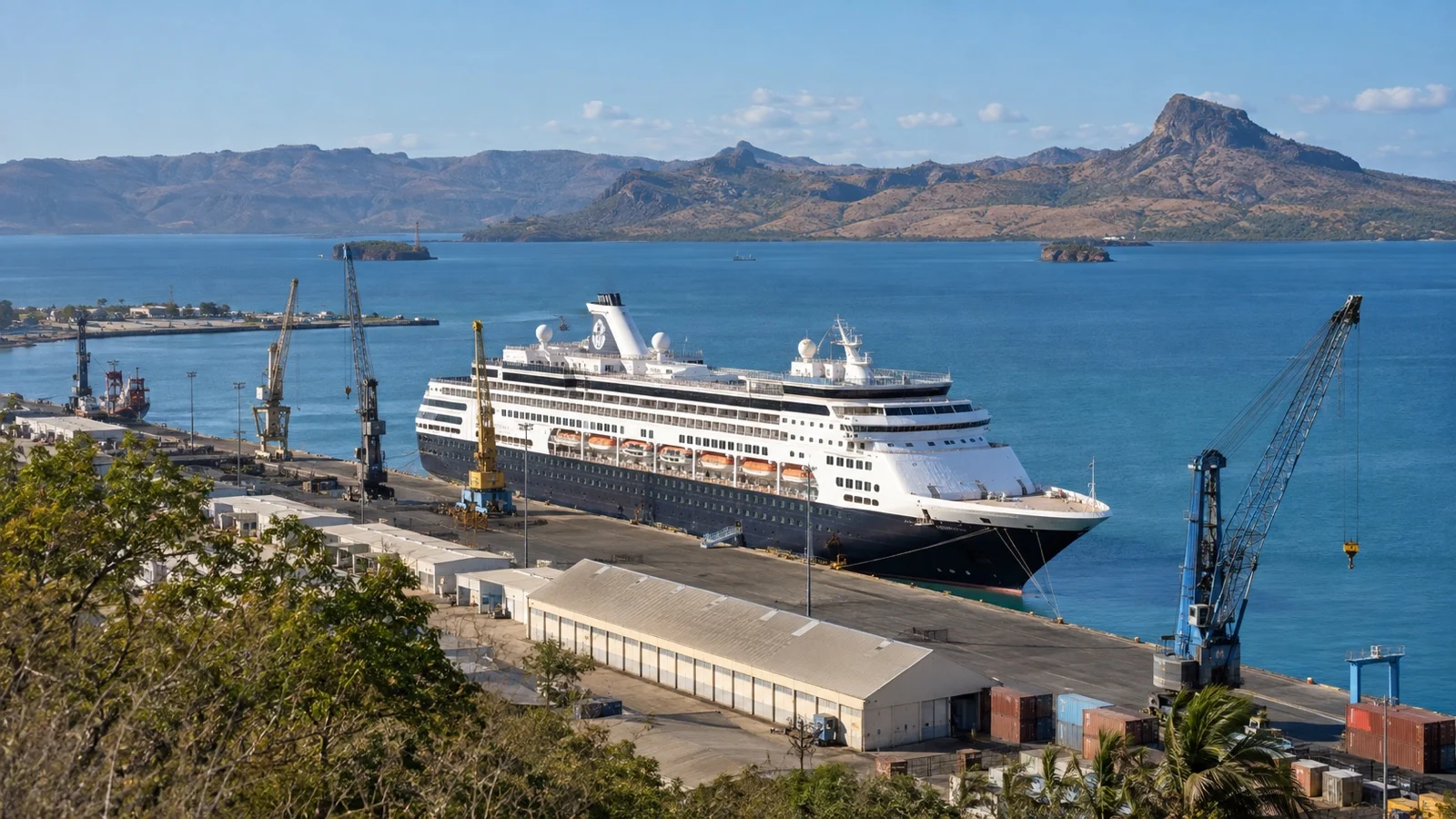
The center is relatively close after leaving the gate, but passengers should not assume they can walk freely through the secure zone. Use the shuttle, marked exit, or organized transfer provided for the call, then note exactly where the final return loads.
Private operators may need to meet outside the gate rather than beside the ship. Require a map pin, local telephone number, vehicle description, driver name, and written ship-time commitment before paying.
Public sources can disagree about whether a particular ship docks or tenders, which is a reason to avoid the word always. The daily program and captain’s announcement are the final operational sources for the vessel.
Exploring Antsiranana city
Central Antsiranana mixes wide streets, weathered colonial-era architecture, markets, shops, pousse-pousse, and glimpses of the bay. Morning has the most energy, while the hottest middle hours can slow business and make walking less comfortable.
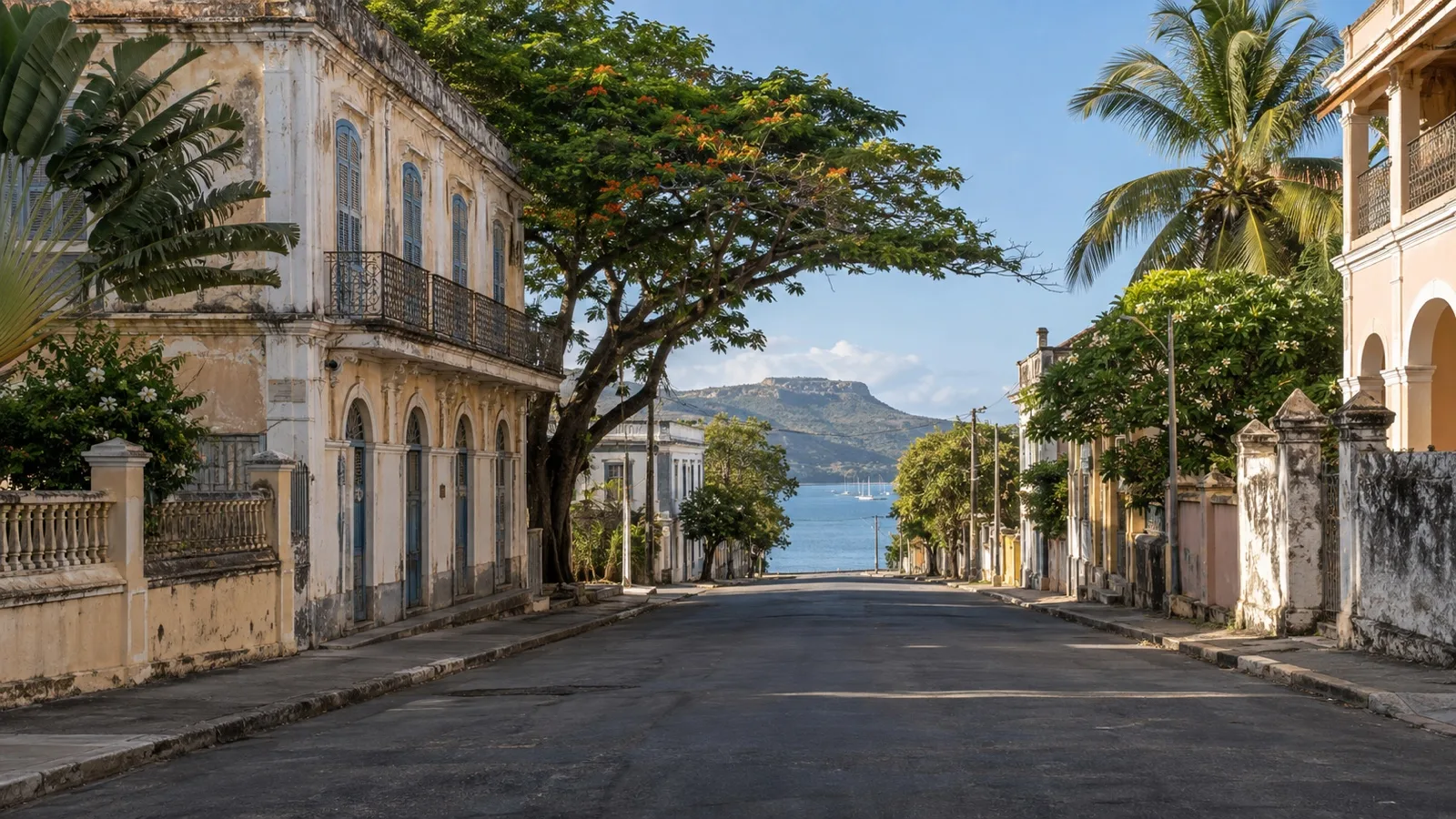
The market is best approached with small ariary notes, modest clothing, and permission before photographs. Keep valuables secure in crowds and agree on the fare before entering a pousse-pousse, tuk-tuk, or taxi.
Nosy Lonjo, often called Sugar Loaf, is the iconic island in the bay and carries sacred meaning. Admire it from approved viewpoints and follow local guidance rather than treating it as a casual landing or climbing destination.
A city route is the most resilient option after late clearance or a shortened call. It can be expanded with one bay viewpoint and contracted without stranding the group far from the ship.
The Three Bays and Ramena
Sakalava, Pigeon, and Dunes bays form a popular coastal circuit east of the city, often paired with Ramena village or broad bay views. The drive stays closer than the major inland parks, which makes it the easiest regional excursion to adapt.
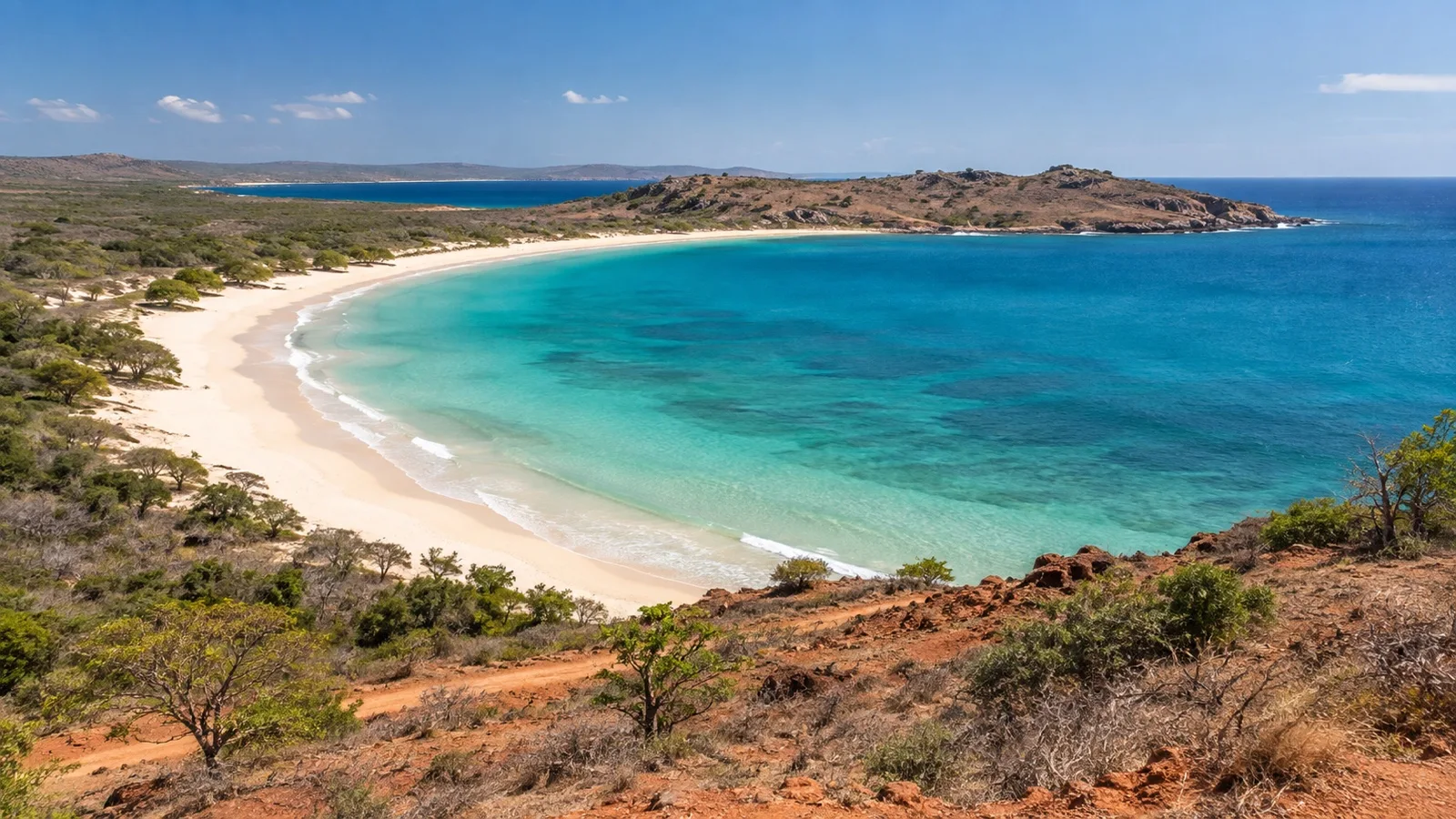
Road surfaces, wind, surf, and heat make a guide and suitable vehicle worthwhile. Put the farthest stop first, then work back toward Antsiranana so every later decision reduces rather than increases the return risk.
Swimming should follow current local advice because each bay has different exposure, currents, facilities, and supervision. Carry drinking water and sun coverage, then confirm whether restrooms, shade, lunch, and beach equipment are actually included.
The Three Bays suit travelers who want scenery without a demanding forest trail. Even so, the coastal road can be rough and a low-clearance vehicle may turn a pretty plan into a slow one.
Amber Mountain National Park
Montagne d’Ambre National Park rises south of Antsiranana near Joffreville, trading coastal heat for humid rainforest, waterfalls, crater lakes, and endemic species. The official Madagascar National Parks network identifies the protected area in the Diana region and manages it under national environmental authority.
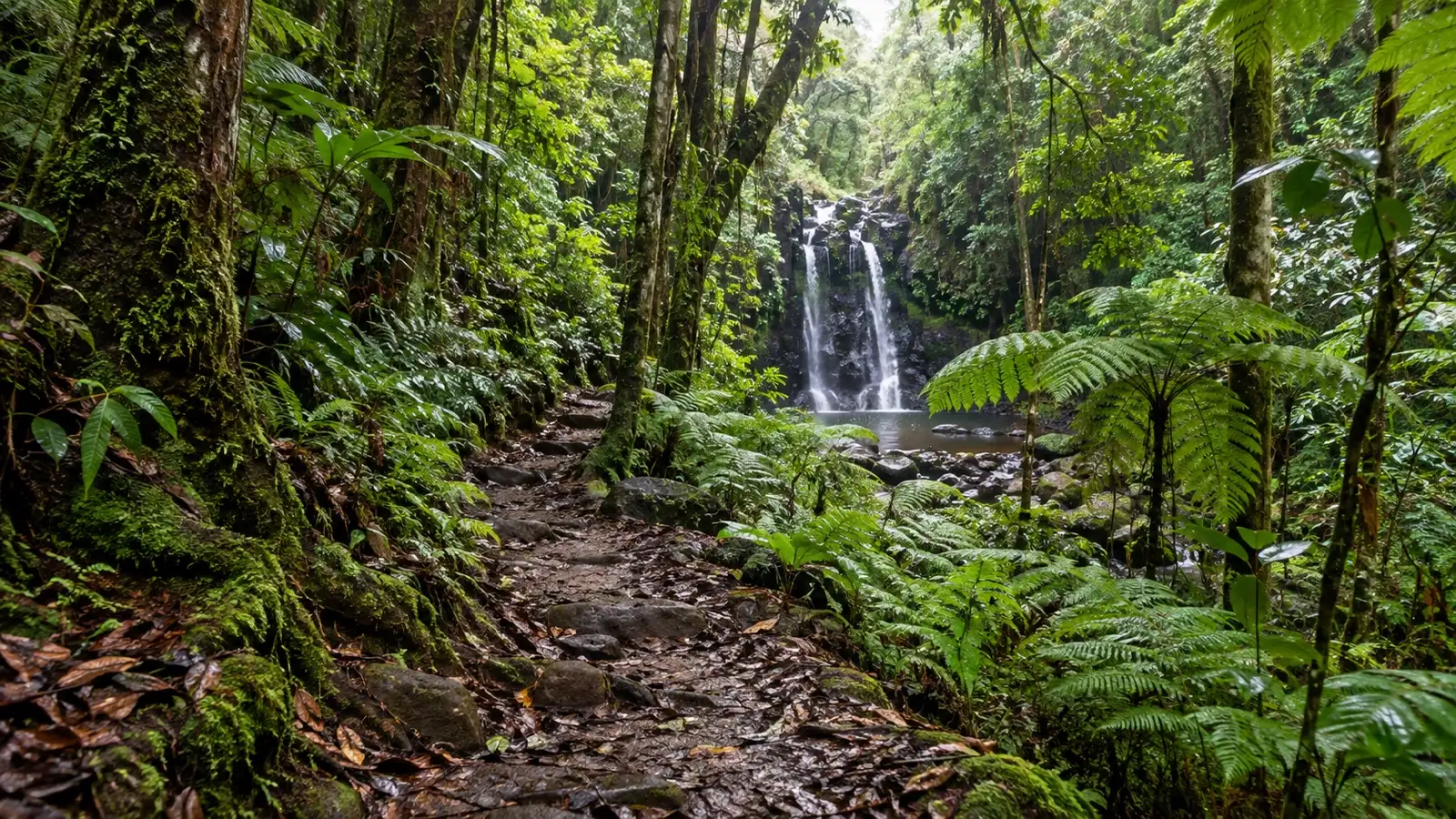
The excursion combines a road climb with a guided forest walk, making it the day’s anchor rather than one item in a coast circuit. Confirm the park’s current opening, admission, guide requirement, vehicle access, trail choice, and port-cancellation terms before booking.
Trails can be muddy, rooted, steep, and slippery, while wildlife sightings remain uncertain. Wear secure closed shoes, carry a light rain layer, and never feed or handle lemurs, chameleons, birds, or other animals.
Ask whether the tour uses an easier waterfall and viewpoint route or adds longer forest sections. The word moderate is not useful without distance, elevation, surface, restroom, shade, and the number of steps from the vehicle.
A ship excursion is the conservative choice because the day depends on both road and trail conditions. An established independent guide can work well when the vehicle is reliable and the return buffer is written into the plan.
Red Tsingy
Red Tsingy is a striking landscape of red laterite pinnacles shaped by erosion south of the city. It requires a longer and rougher road commitment than the coastal circuit, so the formations should be the day’s sole distant goal.
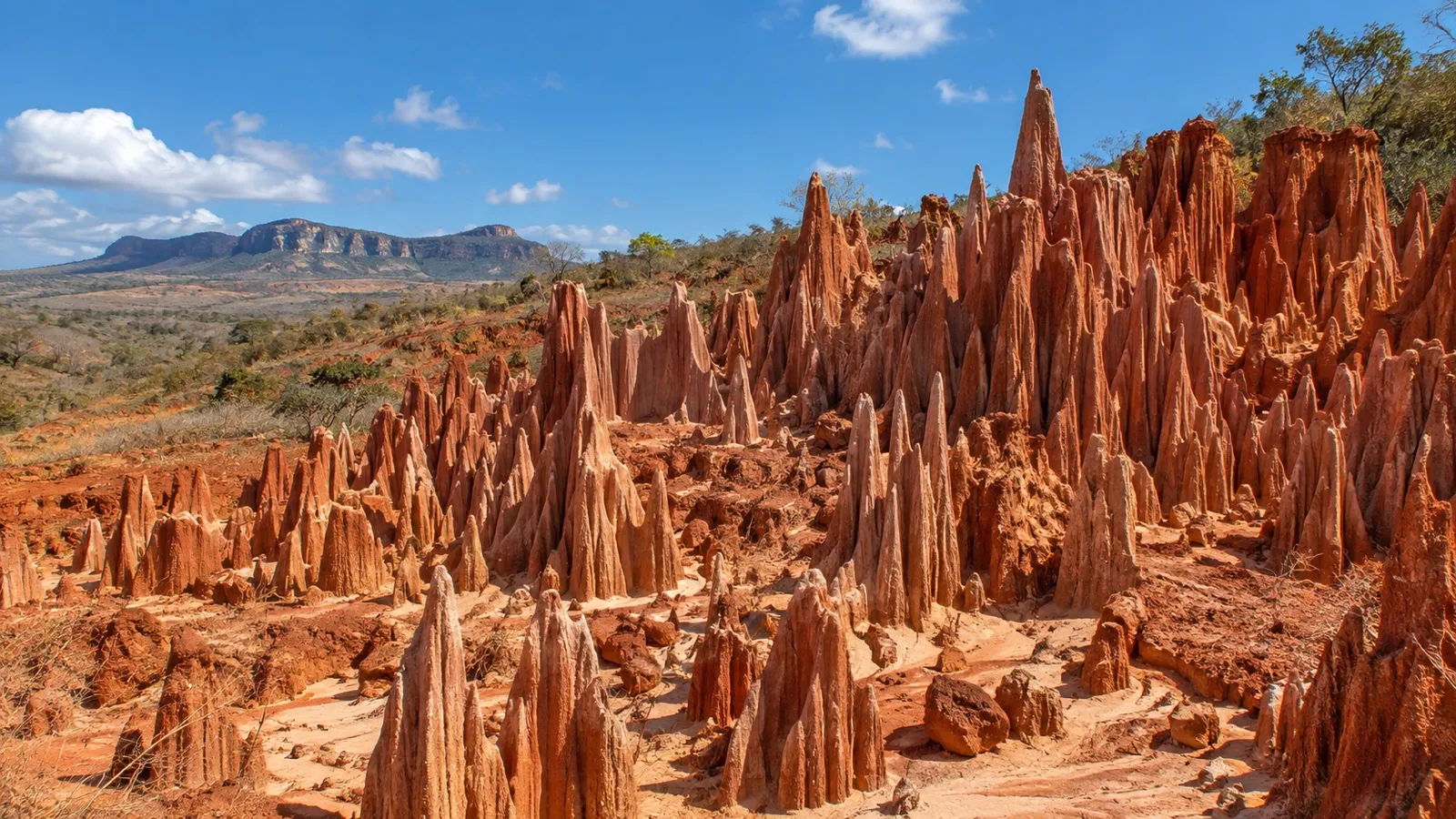
The pinnacles are fragile, paths are exposed, and shade is limited. Stay on the guide’s route, do not climb the formations, and carry more water than a short photography stop seems to require.
Combining Red Tsingy with Amber Mountain can create a very long day unless the ship sells a carefully designed excursion. An independent combination requires excellent road intelligence, a suitable vehicle, an early start, and a return margin large enough to absorb trouble.
I would choose Amber Mountain for forest and wildlife potential or Red Tsingy for geology and exposed scenery. Seeing one properly is better than spending the day inside a vehicle between both.
Emerald Sea
Mer d’Émeraude excursions usually involve a road transfer toward Ramena followed by a local boat across the bay. The second transport clock makes wind, sea state, loading, and safe boat operation central to the plan.
Use an operator that provides life jackets, shade, safe boarding, snorkeling supervision, and a return designed around the cruise ship. Visibility, wildlife, water conditions, and the lunch location are never guaranteed.
A cruise ship can remain safely berthed while a smaller boat trip is canceled for local conditions. Keep a Three Bays or Antsiranana alternative ready instead of pressuring an operator to launch.
Entry documents and the official eVisa portal
Madagascar’s visa requirements depend on nationality, passport, length of stay, and the cruise line’s group-clearance procedure. A transit call arriving by sea may be handled differently from an independent tourist flying into the country.
The official Madagascar eVisa service warns travelers about fraudulent websites and identifies the government’s platform for online tourist visa applications. Use it only when the cruise line or a Malagasy authority says an individual application is necessary.
Follow the ship’s written instructions for passport handling and the document required ashore. Do not assume a visa-on-arrival process described for airports automatically applies to a cruise-port call.
Health planning deserves advance thought
Current official travel-health guidance says malaria is present throughout Madagascar and especially frequent in coastal regions. Speak with a doctor or travel-medicine specialist before sailing because preventive medicine, timing, and personal suitability require individualized advice.
Use effective insect repellent, wear coverage when practical, and seek prompt medical advice for fever during or after the trip. Mosquito precautions also reduce exposure to dengue and chikungunya.
Drink sealed or properly treated water and choose food that is cooked thoroughly and served hot. Bring prescriptions and essential supplies from the ship because local medical capacity and medication availability can be limited.
Travel insurance should include emergency medical care and evacuation appropriate to Madagascar. A long road day outside Antsiranana deserves a plan for what happens if illness, injury, or vehicle failure occurs.
Respecting fady and local communities
Local taboos known as fady can guide behavior around sacred sites, tombs, communities, wildlife, water, and food. Follow the place-specific instruction of a knowledgeable local guide, especially near Nosy Lonjo and culturally important landscapes.
Ask before photographing people, homes, ceremonies, or sacred places. Dress modestly away from beaches, greet before beginning a transaction, and avoid buying wildlife products, protected wood, shells, or artifacts of uncertain origin.
Money, language, and connectivity
The Malagasy ariary is the legal currency, while some established tours may quote euros or US dollars. Confirm the payment currency in writing, carry small ariary notes, and do not rely on cards or a quick port ATM.
Malagasy and French are widely used, while English varies by operator and setting. A written destination, driver contact, and agreed price prevent more confusion than a confident guess.
Power and mobile data can fail, particularly outside the city. Download tickets, map pins, operator numbers, and the ship’s emergency contact before departure.
Weather, wind, and cyclone season
Antsiranana is hot and famously windy, with a broadly wetter season from November through April and a drier period from May through October. Tropical cyclone risk is concentrated in the warmer rainy months, while heavy rain can damage roads at other times.
Amber Mountain can be cool and wet while the coast remains bright and hot. Carry rain protection, sun protection, water, and secure shoes that work in both environments.
Wind affects swimming, local boats, and any tender operation. The cruise line makes the final decision for ship tenders, while the local boat captain controls the safety of an Emerald Sea departure.
Keep one lower-friction backup for every major excursion. The city and closer coast can still create a rewarding day when forest roads or marine conditions close the first choice.
Accessibility and physical effort
An alongside call can still involve a steep gangway, secure-port shuttle, rough surfaces, traffic, and vehicle steps. Confirm whether the shuttle can carry a wheelchair or scooter and whether assistance is available at both ends.
Amber Mountain paths are natural and often wet, Red Tsingy is exposed and uneven, and local boats may have difficult boarding. Ask for exact walking distance, step height, seating, shade, restroom access, and mobility-device storage.
A city drive or close coastal route is the most adaptable choice for limited mobility. The operator should still explain road roughness, how much walking begins after each vehicle stop, and whether a traveler may remain seated.
If the call tenders, safe transfer depends on the vessel and actual sea conditions. The cruise line must make the final determination, even when a traveler managed a different tender elsewhere.
Return timing on northern Madagascar roads
From town, reach the official transfer point at least 60 minutes before final boarding unless the ship sets an earlier requirement. From Amber Mountain or Red Tsingy, target arrival in Antsiranana 90 minutes or more before the deadline, then add port security.
Road condition can change faster than distance, especially after rain. The operator’s live local knowledge and vehicle condition matter more than an optimistic map estimate.
Put the farthest or most failure-prone segment first, then finish closer to the city. Every later stop should make the return easier rather than moving the vehicle away from the ship again.
How I would plan the day
For a short call or late clearance, I would stay in Antsiranana and add one bay viewpoint with an approved driver. That route contracts gracefully if the port process takes longer than expected.
For coastal scenery, I would book the Three Bays and work back through Ramena toward the city. For wildlife potential, I would make Amber Mountain the sole regional anchor.
For geology and photography, Red Tsingy deserves the whole distant portion of the day. For water, Emerald Sea needs a responsible boat operator and a road-based backup.
If two major regional attractions sound tempting, choose the one that fits the weather and road report that morning. A calm, complete experience is more valuable than proving how much northern Madagascar can fit into eight hours.
Frequently asked questions
Are Antsiranana and Diego Suarez the same city?
Yes. Antsiranana is the current official name, while Diego Suarez remains common in cruise and French-language use.
Do cruise ships dock?
Many calls use the working port when a suitable berth is assigned, but larger ships or berth conflicts can require anchoring and tenders. Follow the final daily program for the vessel.
Can I combine Amber Mountain and Red Tsingy?
Only on a long and professionally organized excursion with current road information and a very large return margin. Choosing one is safer and usually more enjoyable.
Can I explore independently?
The city can be explored independently after following the approved route out of the secure port. Regional sights require reliable transport, local knowledge, and a written return plan.
My final advice
Antsiranana can deliver city character, wild bays, rainforest, marine scenery, or surreal red pinnacles. Pick one regional direction, confirm the port exit, and let Madagascar’s roads keep a little dignity.
I would plan the return and health precautions before the attraction order. Once those pieces are honest, northern Madagascar becomes an adventure instead of a race.
How this guide was researched: This guide was independently checked on September 11, 2026, against Madagascar National Parks, Madagascar’s official eVisa service, current government health and entry guidance, official tourism information, and cruise-line operating instructions.
Reconfirm the berth or tender, secure-port exit, visa handling, health precautions, park access, road conditions, weather, transportation, and final return time before sailing because live conditions can change.