Loreto Cruise Port: Tender, Mission & Sea of Cortez
Loreto is a tender port with a rare gift: the small-boat landing puts you close to a walkable historic center, while the sea beyond town is a protected national park. The only hard choice is whether to spend the day on cobbles or water.
The arrival is small by design
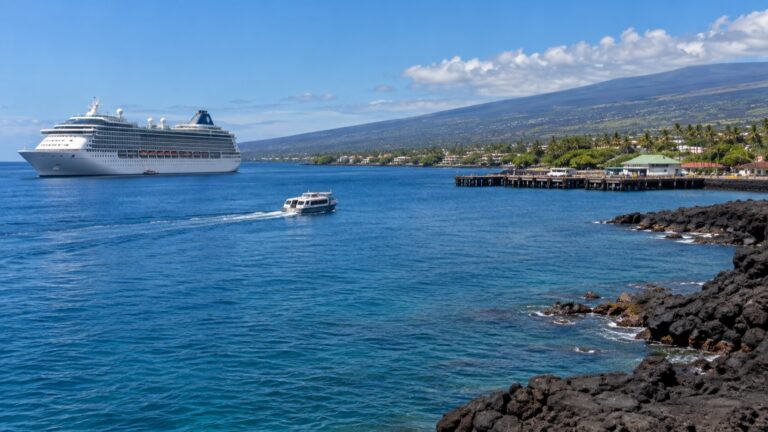
Large cruise ships do not dock at a full-size terminal in central Loreto. They anchor offshore and use tenders that land near the marina and waterfront, a distinction the current Princess Mexico guide states directly.
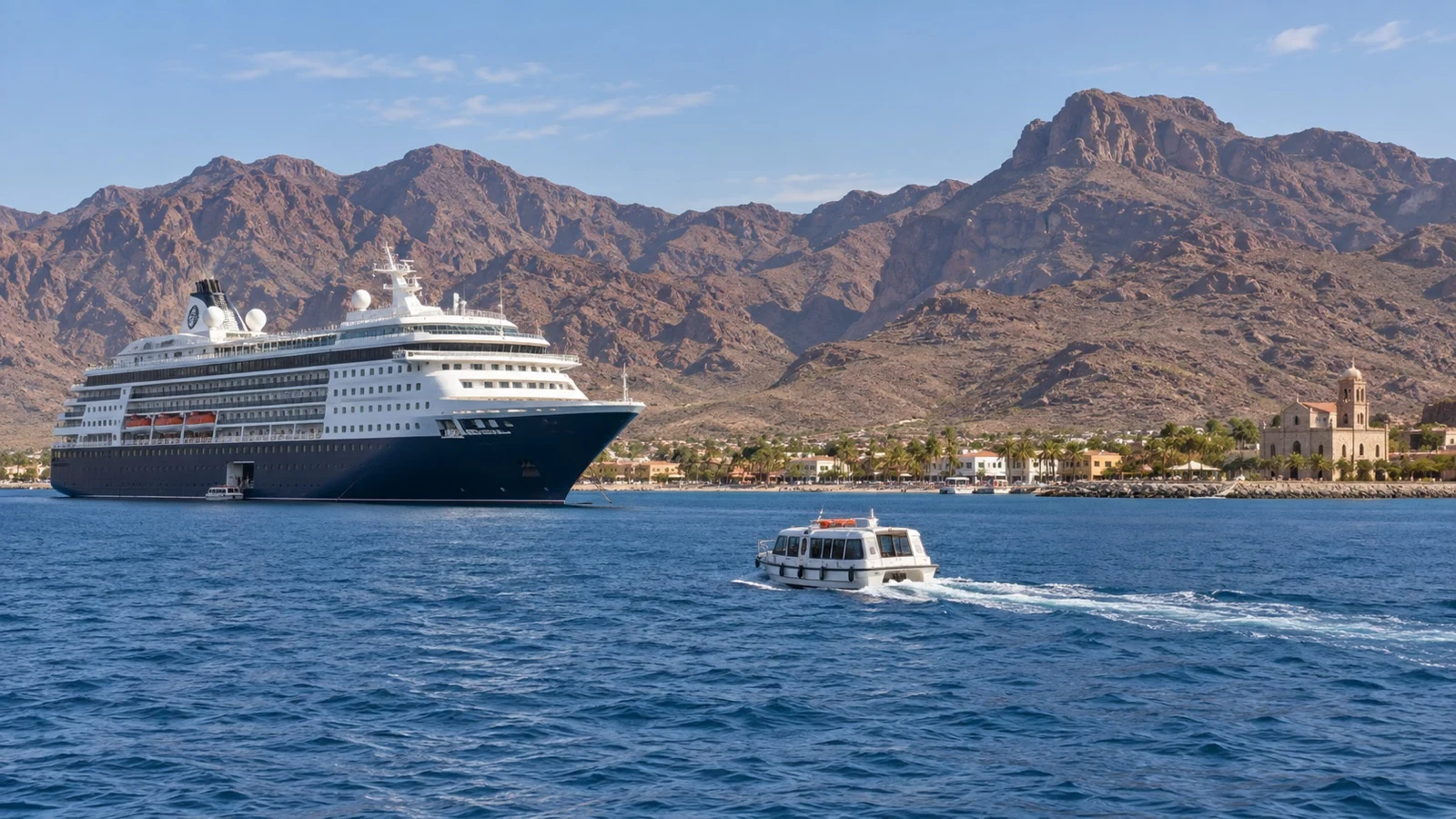
The Mexican Navy’s Loreto port information describes a concrete fiscal pier and protected basin for smaller craft. That is the scale of the landing operation, so the cruise tender rather than the ship enters the central harbor area.
Loreto remains an operating cruise port in 2026. Princess is actively selling 2026-27 cruises to Loreto, while Holland America’s live 12-day Historical Baja Peninsula voyage runs December 7 to 19, 2026 with Loreto among its Sea of Cortez calls.
Do not accidentally plan for Puerto Escondido
Puerto Escondido is a separate marina and harbor south of Loreto, sometimes used by smaller vessels or named in nautical material. A normal itinerary that simply says “Loreto” means the anchor-and-tender call near Loreto’s town waterfront unless your cruise line states otherwise.
Check the daily program for the exact landing and transfer instructions. Do not book a driver to “Loreto port” without sending the ship name and a screenshot, because the wrong marina creates a spectacularly unnecessary road problem.
Loreto cruise port quick facts
- Where you land: the small-craft pier and waterfront beside the Loreto marina, on the Gulf of California side of the Baja peninsula. The ship stays at anchor offshore, and the landing is a short stroll from the Malécon rather than a cruise terminal. Do not confuse it with Puerto Escondido, a separate harbor about 15 miles south.
- Dock or tender: There is no berth for a full-size ship at Loreto.
- Into town: You land in town.
- Currency and language: Mexican pesos (MXN) and Spanish, Carry small peso notes for taxis, tips and small vendors.
- Time zone: Mexican Pacific Standard Time (UTC−7) all year in Baja California Sur.
- How often the call is missed: High (roughly 8 to 15%): wind or swell can halt tender operations.
The gentle loop through old Loreto
Start on the Malecón, where the sea stays in view and the town reveals its scale. The official Baja California Sur tourism guide recommends the waterfront walk for bay views and the sight of fishing boats returning with their catch.
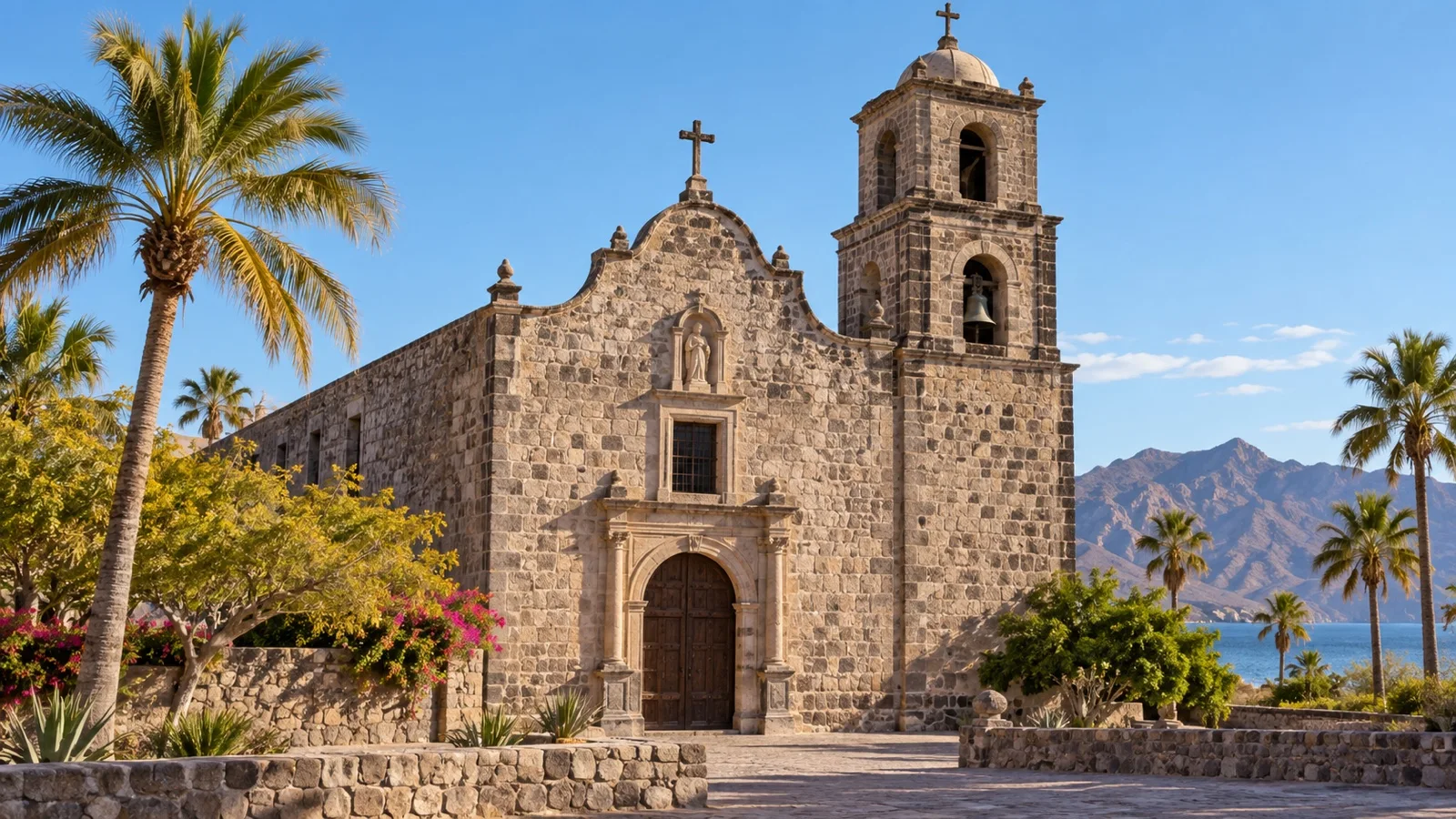
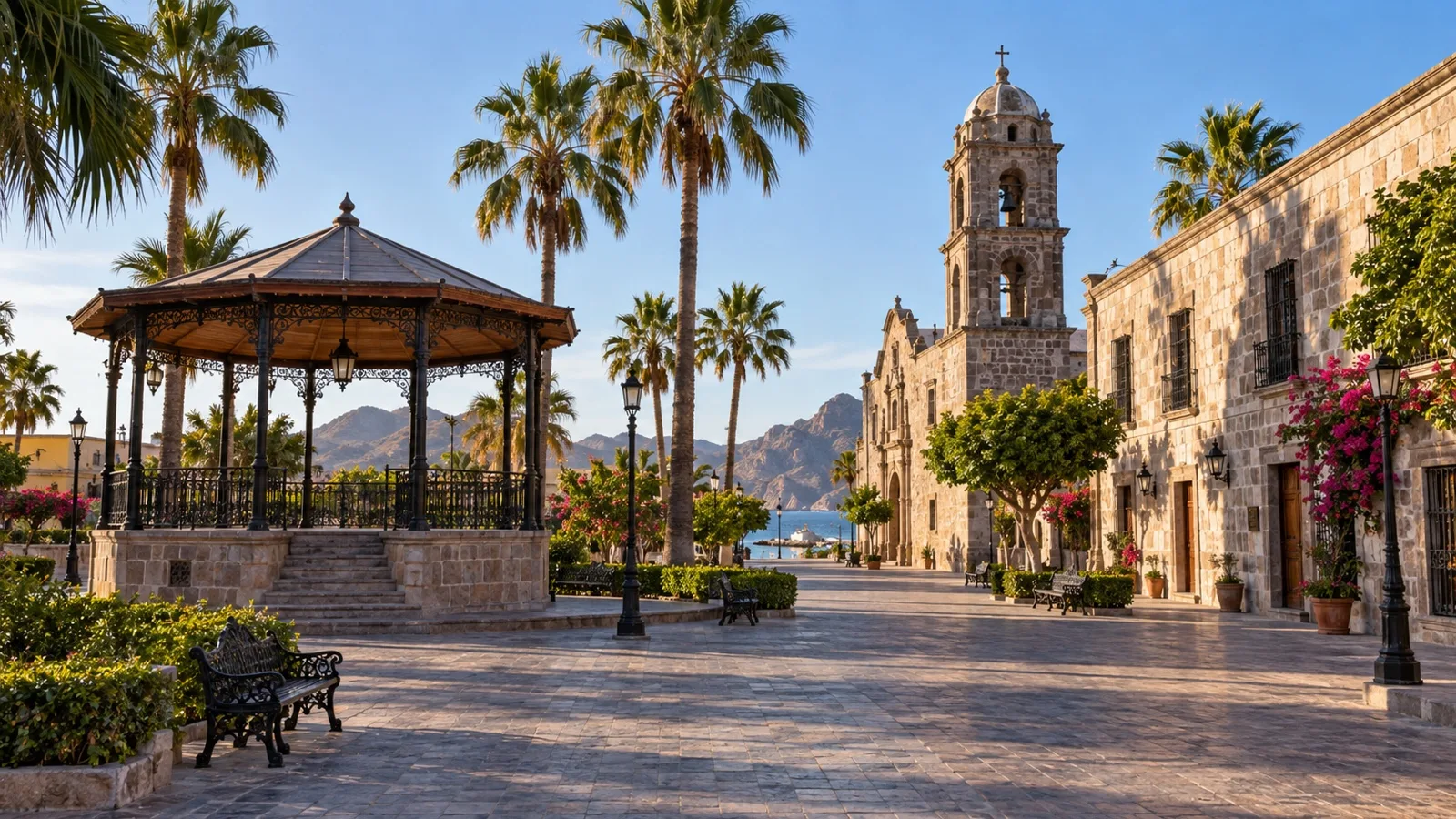
Turn inland toward the central plaza and the stone Misión de Nuestra Señora de Loreto. The mission marks the beginning of the historic mission route that extended north through the Californias, while the adjoining museum adds context beyond the handsome façade.
Check current opening hours before building the day around the museum, especially on Sundays or holidays. The plaza, pedestrian streets, shops, and cafes still make a satisfying circuit if a door remains closed.
Loreto rewards slow observation more than aggressive sightseeing. Order lunch, look for local seafood, and keep enough pesos for small businesses that may not welcome a foreign card with the same enthusiasm as a hotel desk.
This route is easy to shorten after a delayed tender. You can remain within a few blocks of the waterfront during the final hour and remove most road risk from the return.
A four-hour town visit can give the Malecón 45 minutes, the mission and museum area 90 minutes, and lunch another hour. The remaining time belongs to shops, a shaded drink, and the tender line, which is a far healthier owner of spare minutes than a distant taxi.
Carry small peso notes for simple purchases and ask before photographing people or working fishing activity. Loreto is a living community, not a stage set that appears only when a ship lowers its boats.
Bahía de Loreto National Park from a small boat
The islands and waters offshore form Bahía de Loreto National Park, a protected marine landscape rather than an open playground. The official CONANP park page highlights marine mammals and says movement within the protected area is by smaller boats called pangas or lanchas.
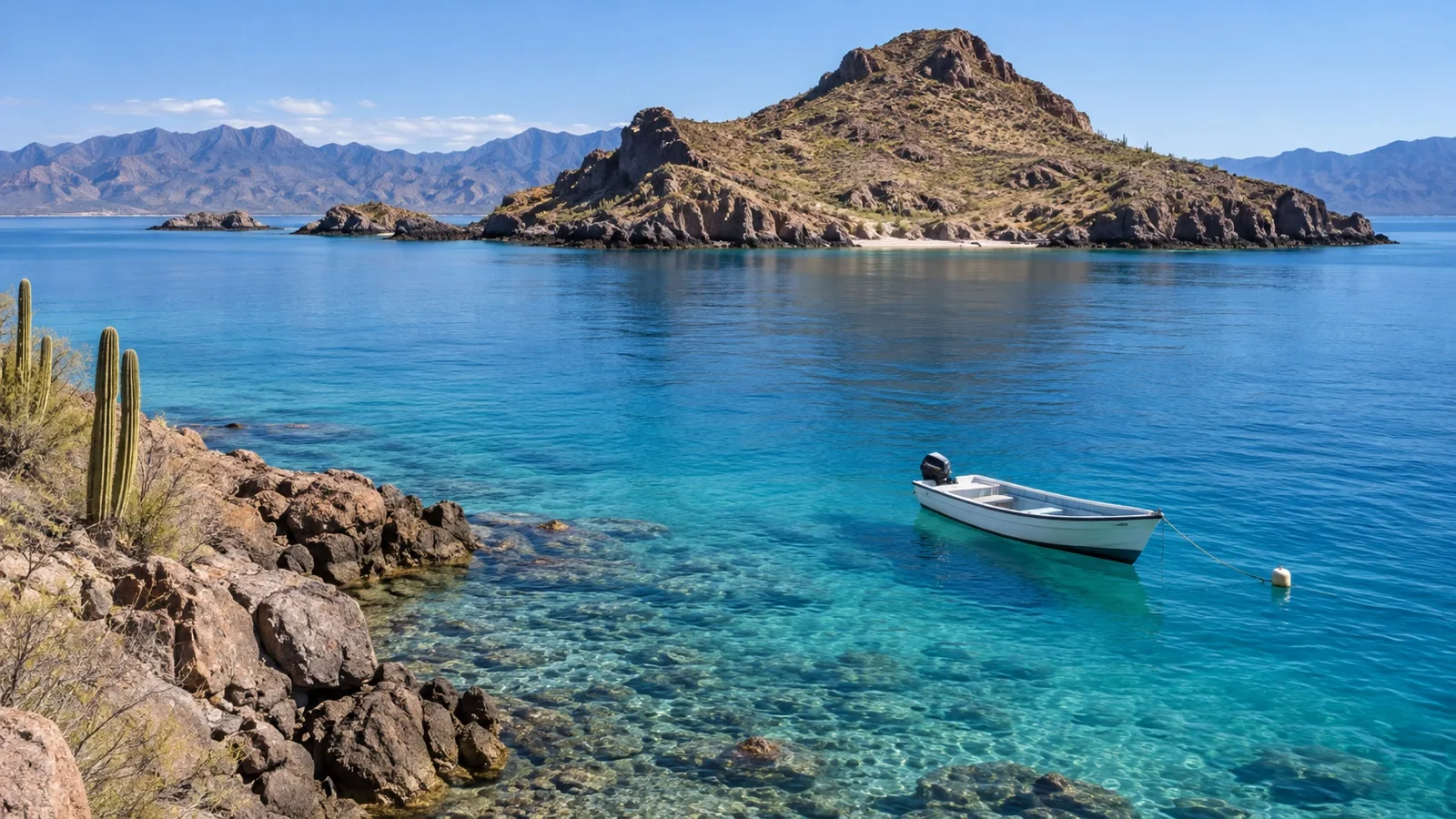
Book a permitted operator that carries life jackets, respects wildlife distances, and understands the cruise return. Ask whether the conservation bracelet or park fee is included, which island or reef is planned, and what happens if wind changes the route.
Whales, dolphins, sea lions, turtles, and birds are possible in the region, but none accepts a performance contract. Season, weather, luck, and park rules decide what you see, and responsible operators do not chase or crowd animals.
A ship excursion reduces return risk, while an independent trip needs a conservative finish time and a written meeting point. Your cruise tender is one boat connection, so adding another boat deserves more buffer rather than less.
San Javier and the Sierra: beautiful, not nearby
Mission San Francisco Javier sits in the Sierra de la Giganta and offers a dramatic contrast to the coast. The route climbs inland on winding roads, which makes a cruise-aware driver or ship excursion the practical choice.
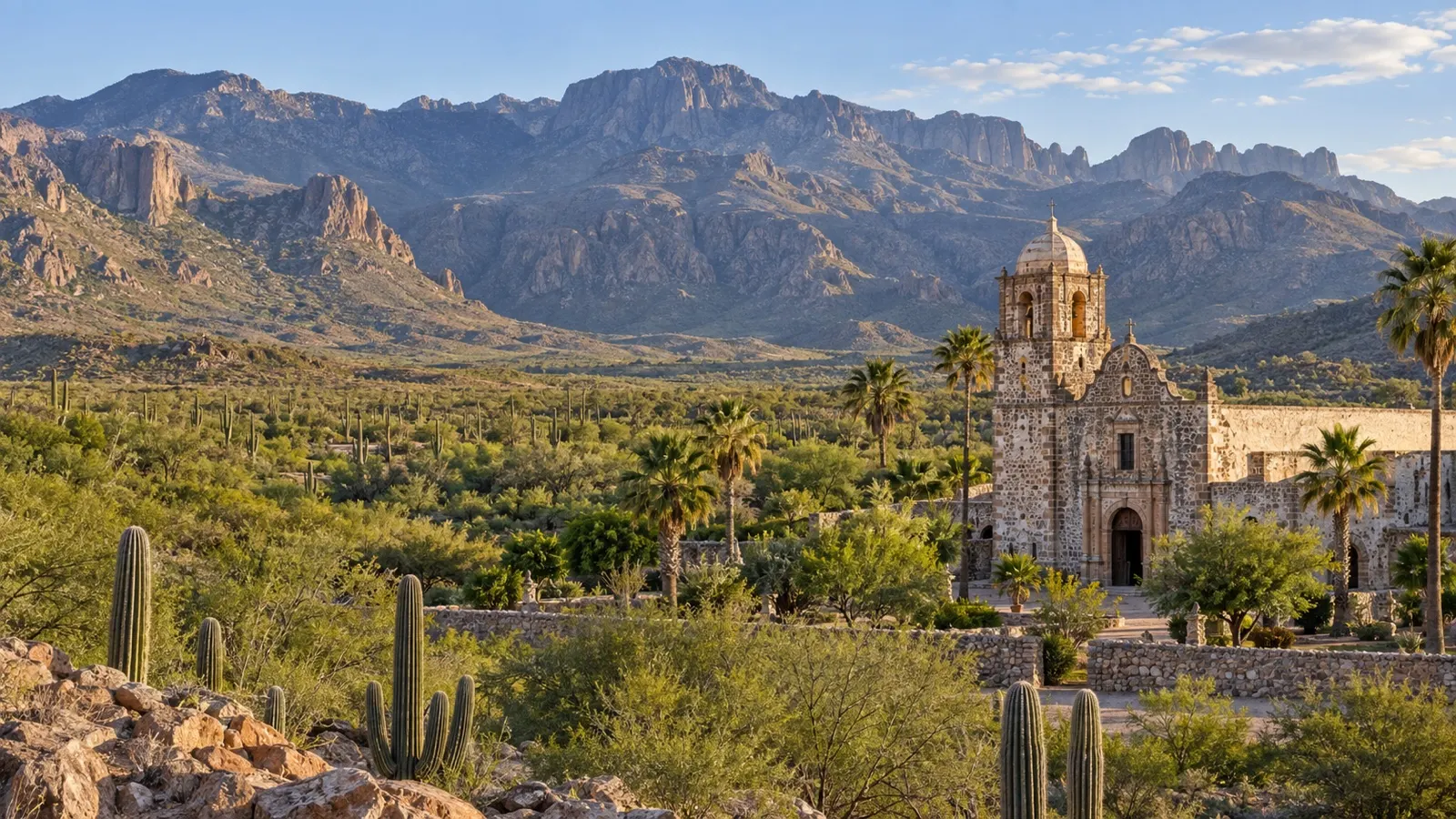
Ask for the true door-to-door duration, number of stops, restroom arrangements, and return guarantee. A scenic mountain road can be the highlight of the day, but it cannot be hurried safely because the tender line became inconvenient.
Travelers prone to motion sickness may prefer the flat town loop or a calm-water plan. Road bends and small boats are both happier when medication is taken according to medical advice before symptoms begin.
Getting around without a terminal taxi rank fantasy
Central Loreto is compact enough for walking, and that is its greatest transport advantage. For beaches, mountains, and remote sites, use an authorized taxi, ship excursion, or prearranged local operator.
Agree on a taxi fare and return pickup before leaving the waterfront. Send the pier location in writing and keep the driver’s number, because a one-way ride into a quiet landscape is only half a plan.
Ordinary regional transport is not designed to deliver cruise passengers to a remote attraction and back inside a tender window. A rental car adds office hours, navigation, insurance, fuel, and the possibility of losing time on an unfamiliar road.
Accessibility begins at the moving gap
The cruise tender may require stairs and a step between moving vessels, so ask the line whether your mobility device is accepted and whether you must transfer to a fixed seat. Weather can make an otherwise approved transfer unsafe on the day.
The Malecón and central streets offer the lowest-transfer itinerary, but paving, curbs, heat, and uneven historic surfaces remain. A companion or accessible taxi can conserve energy between the waterfront and mission area.
Panga trips may involve narrow gunwales, beach landings, or no step-free restroom, while Sierra vehicles can have high steps. Ask about the actual craft, vehicle, dock, and destination instead of accepting a general promise that assistance is available.
Desert sun, winter breeze, and sea conditions
Loreto has a dry desert climate, strong sun, and cooler winter mornings than many passengers expect from Mexico. Carry water, high-SPF sunscreen, a brimmed hat, and a light layer for the tender ride.
Wind can change the comfort and safety of both the ship tender and a national-park boat tour. Listen for announcements, use a life jacket, and allow the captain to cancel without treating good judgment as a customer-service failure.
Swim only where the operator or local authority says conditions are suitable. Remote beaches may lack lifeguards, shade, drinking water, and reliable phone coverage even when the photographs look wonderfully uncomplicated.
Entry, park permits, and wildlife distance
Mexico’s visa and entry rules depend on nationality, residence documents, and the full itinerary, while the ship often coordinates port clearance. Follow the cruise line’s passport instructions and never rely on a generic promise that every cruise passenger can enter without a visa.
Mexican customs and agricultural rules control food, plants, seeds, meat, animal products, medication, and protected natural material. Leave buffet food aboard, keep medicines labeled, and never buy coral, turtle shell, archaeological material, or wildlife products.
Bahía de Loreto National Park operators need the appropriate authorization, and visitors may owe a current conservation charge. Confirm the operator, permitted route, park bracelet or proof of payment, life jackets, wildlife-distance rules, and no-take restrictions before boarding.
Islands, rookeries, and nesting areas can close seasonally or for conservation. Do not land without permission, fly a drone, collect shells, feed animals, or pressure a captain to approach closer than current CONANP rules allow.
A return buffer for every version of Loreto
Use the ship’s posted last-tender time as the deadline, not the departure time on the itinerary. For the walkable town loop, join the return line 45 to 60 minutes before that cutoff.
For a national-park panga trip, return to the Loreto waterfront at least 75 minutes before the final cruise tender. That allows for small-boat unloading, walking to the correct landing, and a line.
For San Javier or another mountain drive, target central Loreto 90 minutes before the last tender. If a ship scheduled to depart at 17:00 posts a 16:00 last boat, an independent road tour should aim for the waterfront by about 14:30.
Loreto cruise port FAQs
Do cruise ships dock in Loreto?
No full-size cruise ship normally docks downtown. Ships anchor offshore and tender passengers to the small-craft waterfront near the marina.
Can I walk from the tender to the mission?
Yes. The Malecón, main plaza, mission, museum, shops, and restaurants are close enough for a compact walking day.
Is Puerto Escondido the Loreto tender pier?
Not for a normal itinerary labeled simply Loreto. Puerto Escondido is a separate harbor south of town, so follow the exact location printed by your cruise line.
Can the Loreto call be canceled?
Yes. Wind, swell, visibility, or other operational conditions can delay or cancel tendering when the captain judges transfer unsafe.
More Baja and Mexico ports
Compare Loreto’s tender and walkable center with the resort-marina arrival in our Cabo San Lucas cruise port guide and the remote berth described in our La Paz cruise port guide. Continue north with Ensenada cruise port, then use our Mexico cruise ports overview for the wider route.
We verify arrival details and distinguish town piers from nearby harbors under our Editorial Policy. Recheck the anchor position, tender landing, national-park rules, and final boat before your visit.
How this guide was researched: This guide is based on independent research using official port, immigration, customs, health, park, tourism, and attraction sources. Details were checked against the Loreto harbor authority, Baja California Sur tourism, CONANP, Mexico’s immigration and customs authorities, and current cruise-line guidance and reviewed September 10, 2026; see our Editorial Policy.