Kampong Tralach River Cruise Port Guide: Village Landing and Oudong
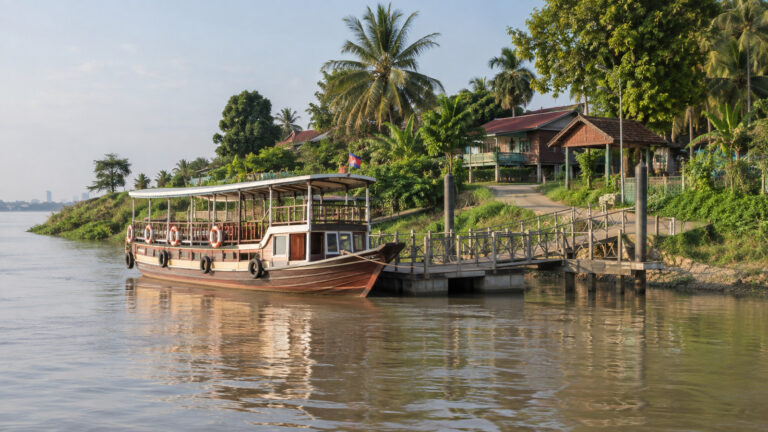
Kampong Tralach is not a conventional cruise port with a terminal, marked taxi stand, or waterfront promenade. It is a rural stop where the landing, village route, and transportation are normally built into the river cruise program.
That simplicity is exactly why the call can be memorable. You trade polished infrastructure for rice fields, local roads, a historic pagoda, and the possibility of continuing to Oudong, Cambodia’s former royal capital.
What Kampong Tralach means on an itinerary
Kampong Tralach is a district in Kampong Chhnang Province along the Tonle Sap River corridor northwest of Phnom Penh. Cruise lines may use the name for a village landing, an excursion area, or a combined day that includes Oudong.
The exact shore plan varies by operator, season, water level, and sailing direction. Treat the final documents and onboard briefing as authoritative, because a description copied from another cruise may show a different landing or sequence.
Some current Mekong programs emphasize Oudong without naming Kampong Tralach as a separate port. AmaWaterways, for example, currently includes a day focused on Cambodia’s royal capitals and explicitly warns that itineraries can change.
This is an excursion stop, not a place where independent services gather whenever a ship arrives. If your program includes it, the cruise operator is usually coordinating the shore access, vehicles, guides, and timing as one package.
Quick Facts
- Setting: Rural Kampong Chhnang Province on the Tonle Sap River corridor
- Arrival: Landing arrangements vary by vessel and water conditions
- Independent access: Generally impractical from a temporary or rural river landing
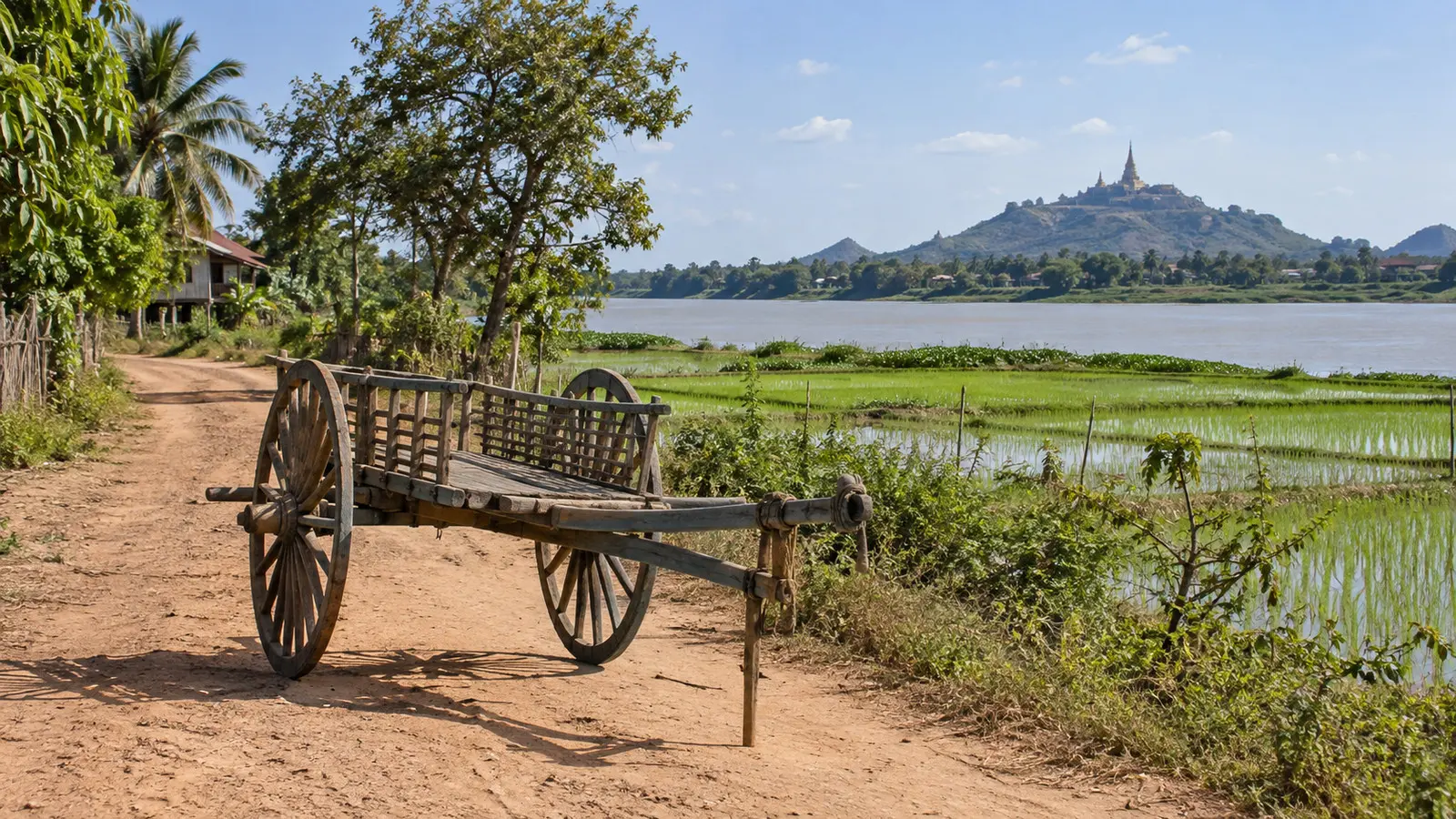
- Signature experience: A slow village journey that may include an ox cart
- Historic stop: Wat Kampong Tralach Leu and its traditional religious setting
- Common onward excursion: Oudong, a former Cambodian royal capital
- Currency: Cambodian riel, with US dollars commonly accepted in tourism
- Time zone: Indochina Time, UTC+7 throughout the year
Getting ashore
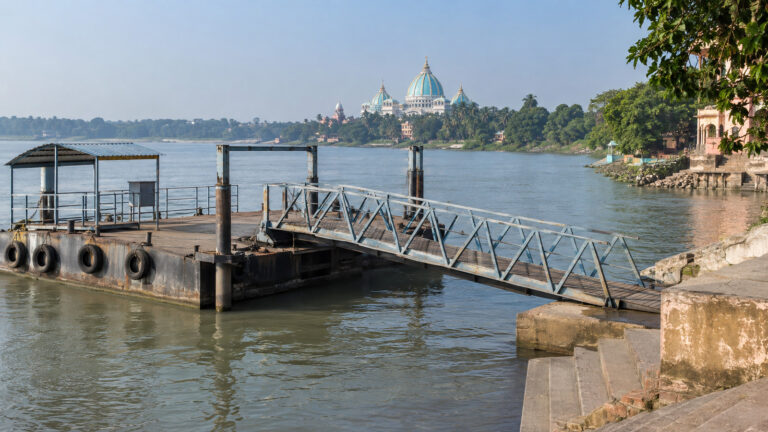
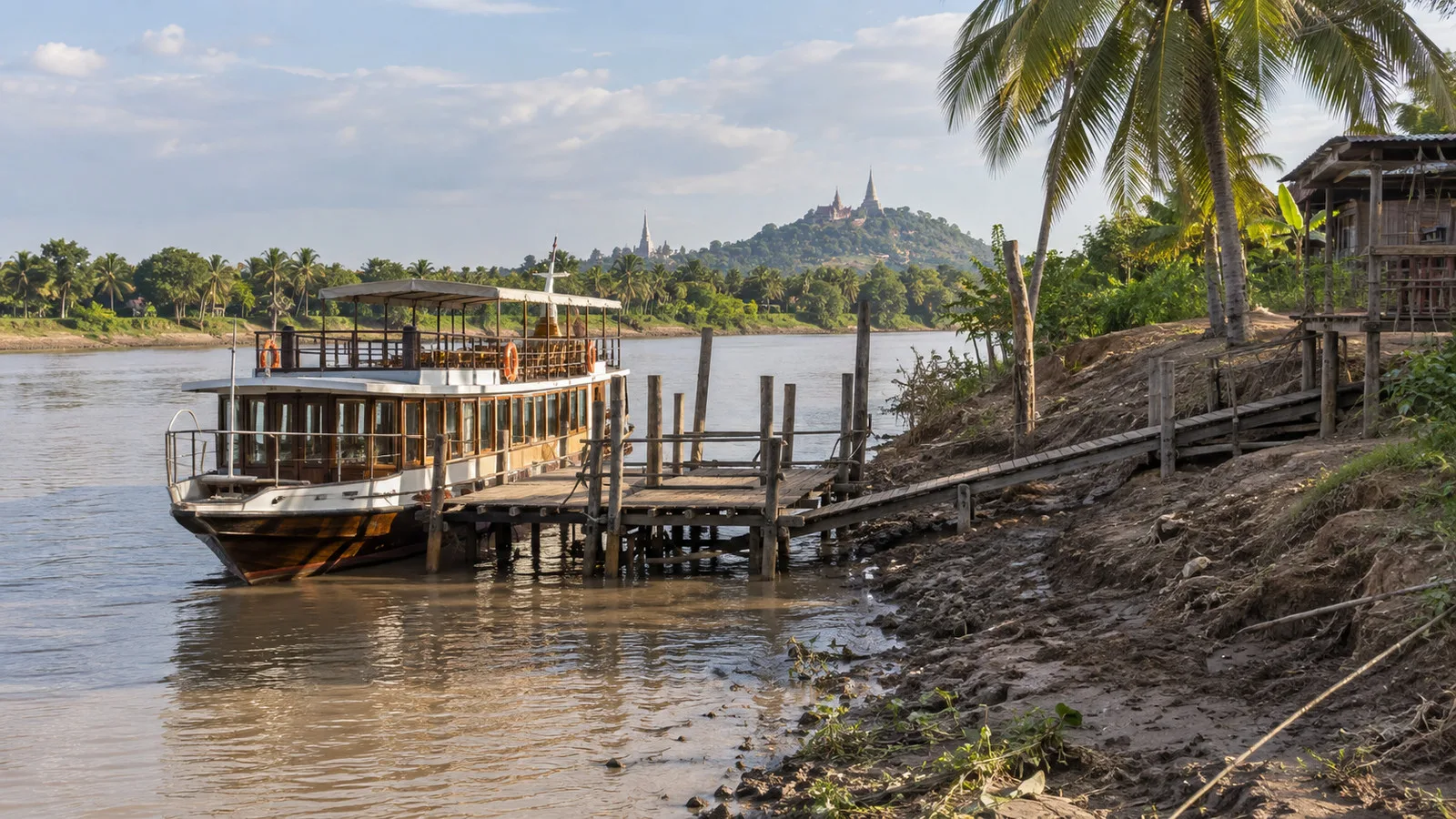
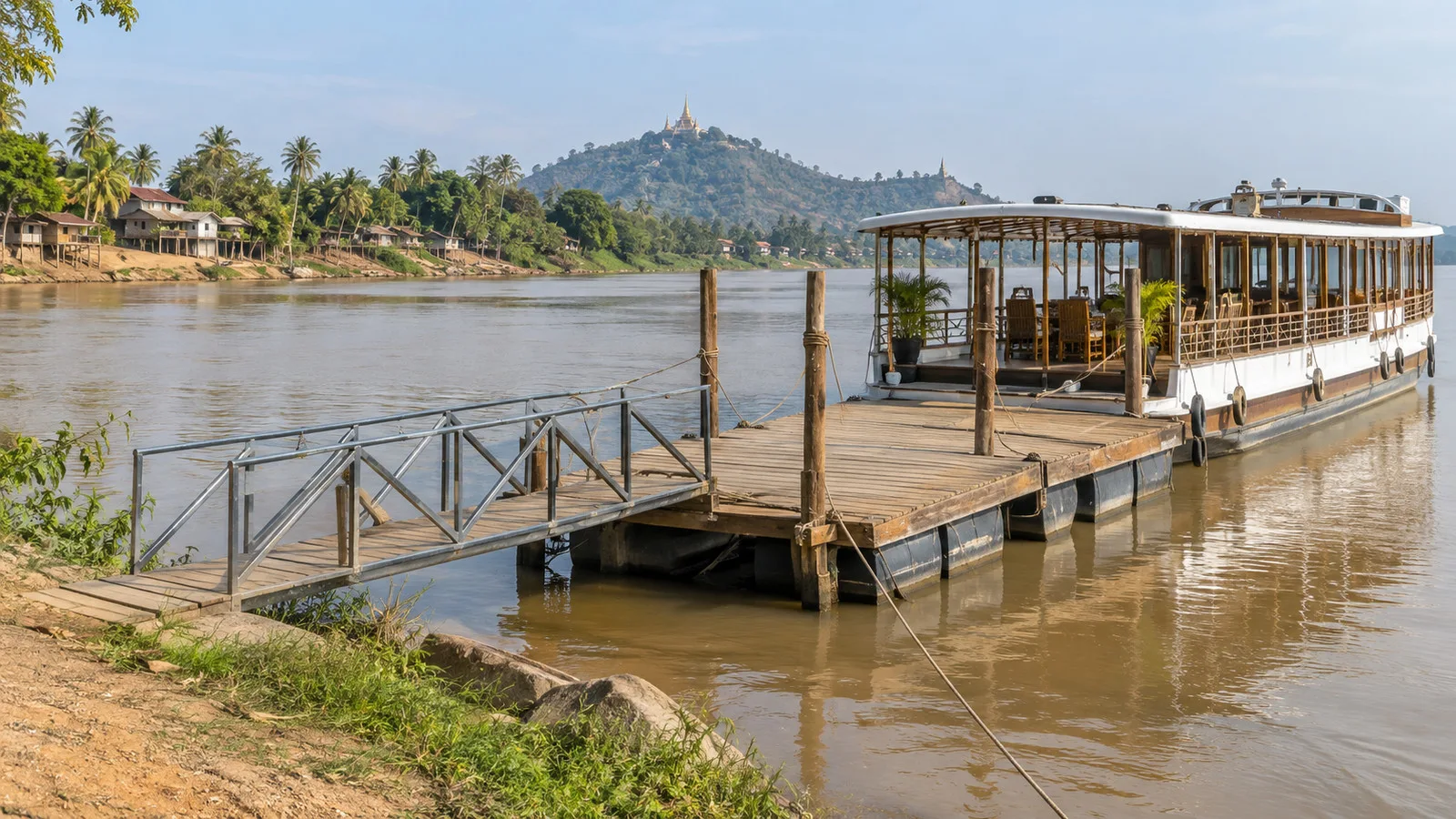
Do not picture a permanent cruise terminal when preparing for Kampong Tralach. Your vessel may secure near a simple riverside point, use a small local boat, or arrange another form of access depending on conditions.
The bank can be dirt, grass, sand, or a basic stepped surface rather than a level concrete pier. Rain and changing river levels may alter the slope, so take the crew’s mobility briefing seriously even if photographs from a previous season look easy.
Wear closed shoes with grip and keep both hands available when moving between boat and shore. A small day bag is easier than a loose tote, and a crew member can advise where photography is safe during the landing.
Once ashore, stay with the assigned group until the guide explains the route and reunion point. Rural paths can branch between homes and fields without the signs a traveler expects in a city.
The ox-cart experience
Several river cruise itineraries have used ox carts for part of the Kampong Tralach visit. When included, this is a slow village journey rather than transportation designed to meet modern accessibility standards.
The seat may be wooden, the climb up can be awkward, and the ride can jolt over ruts. Hold on where instructed, keep feet and belongings inside the cart, and tell the guide before boarding if back, hip, or balance issues make the motion unsafe.
The appeal is the pace, not speed or spectacle. Moving slowly gives you time to notice fields, livestock, houses, roadside activity, and the changing landscape between river and village.
Remember that residents are living their normal lives along the route. Ask before taking close portraits, avoid photographing children as props, and do not assume every person or home is part of a performance.
If your sailing replaces the cart with another vehicle or walking route, that is not necessarily a downgrade. Weather, road conditions, animal welfare, and local arrangements can all change how an operator delivers the day.
Wat Kampong Tralach Leu
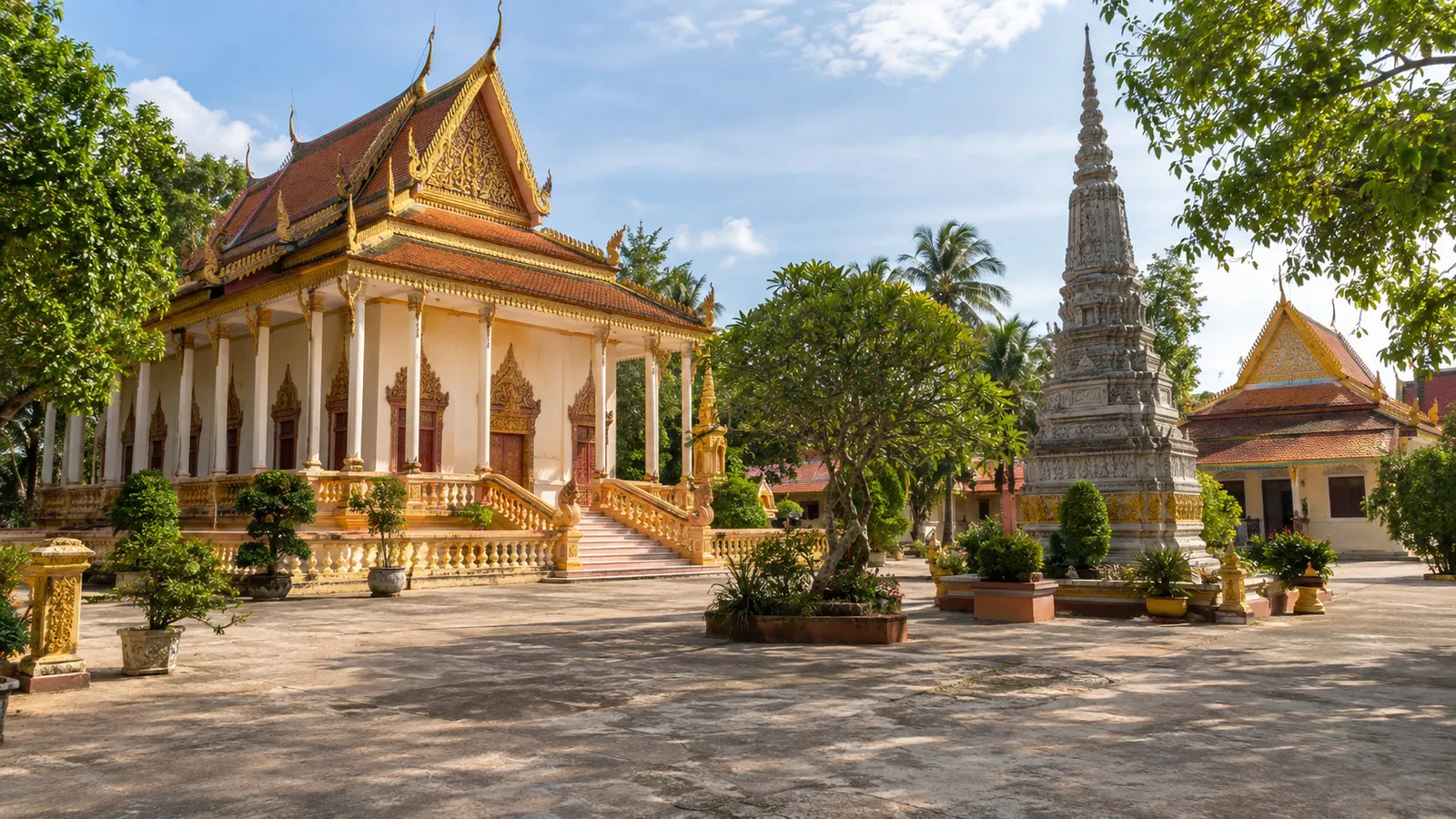
Wat Kampong Tralach Leu, also called Wat Puthi Rokha Ram, is a historic Buddhist pagoda associated with the district. Its religious life matters as much as its architecture, so approach it as an active sacred place rather than an abandoned monument.
Dress with shoulders and knees covered, remove shoes when directed, and keep your voice low around worshippers. A light scarf or overshirt makes respectful coverage easy without adding much weight to a humid-weather day bag.
Older murals are among the details often discussed at the pagoda, but lighting, access, and conservation needs can limit what a group sees. Follow the guide’s photography instructions, especially inside religious buildings.
Offerings and donations should be voluntary and handled in the way your guide explains. Do not touch statues, murals, or ritual objects, even when there is no barrier around them.
Oudong, Cambodia’s former royal capital

Oudong is the major historical destination often paired with this rural river corridor. It served as a Cambodian royal capital for centuries before the court moved to Phnom Penh in the nineteenth century.
The wider area includes stupas, shrines, monasteries, and hilltop viewpoints linked with royal and Buddhist history. Your specific itinerary may focus on a monastery at the base, a blessing, the hill, or a combination of these experiences.
Do not assume every Oudong visit includes the full climb. Heat, timing, group ability, restoration, and road access can change the route, while some programs prioritize a monastery experience over the highest summit.
If the climb is offered, expect long stairways and sustained exposure to heat. Take the pace slowly, use handrails where available, and turn around early if completing the ascent would make the return difficult.
The view across the plains helps explain why the old capital was placed here. Even visitors who remain lower on the hill can gain useful context from a guide who connects the landscape with Cambodia’s political and religious history.
Should you take the ship excursion?
Yes, this is one of the clearest cases for staying with the cruise program. A rural landing may have no independent taxis, ticket office, or reliable way to reconnect with the vessel after the group leaves.
The cruise line coordinates the landing, local transport, guide, and return. That coordination is the experience itself, not merely an expensive substitute for a walk you could arrange on your own.
If more than one excursion is offered, compare physical demands rather than choosing by title alone. Ask about the ox-cart step, walking surface, vehicle air conditioning, restroom stops, hill stairs, and total time away from the ship.
Travelers who cannot manage the full outing should ask whether a shorter village or monastery option exists. Staying aboard may be more comfortable than reaching a basic landing and discovering there is no accessible alternative.
Accessibility, honestly
Kampong Tralach can be challenging for wheelchair users and anyone who needs firm, level surfaces. The combination of boat transfers, an unimproved bank, dirt paths, animal carts, and Oudong stairs is very different from a paved European river port.
Ask the cruise line for the actual plan on your departure, not a generic activity rating. The vessel, water level, landing point, cart design, coach, and temple route all affect whether the excursion is workable.
A folding cane may help on firm ground but can sink into mud or loose soil. Trekking poles are useful only if the operator permits them during transfers and you can keep a hand free when boarding.
Travelers with back or neck concerns should think carefully about the ox cart. The ride’s charm comes with real jolts, and a motorized alternative may not be available once the group reaches shore.
If you decide to go, tell the cruise director about limitations before excursion groups are assigned. Early notice gives the team the best chance to place you near assistance or explain a less demanding option.
What to wear
Choose lightweight, breathable clothing that also meets temple standards. Long, loose pants or a below-knee skirt and a shirt covering the shoulders work better than carrying several pieces to put on at each sacred stop.
Closed walking shoes are the safest choice for a rough bank and dusty track. Sandals can catch on cart steps, expose feet to mud, and offer little grip after a tropical shower.
A wide-brimmed hat, sunscreen, and water are essential in the dry season. During wetter months, add a compact rain jacket and a washable bag for anything that becomes muddy.
Leave expensive jewelry and delicate clothing aboard. Dust, animal-cart surfaces, rain, and repeated transfers are all part of the day.
Heat, rain, and river conditions
Cambodia is hot for much of the year, with a wetter southwest monsoon period and a generally drier season later in the calendar. Humidity can make a moderate walk feel much harder than its distance suggests.
Rain changes more than comfort because it can soften banks, flood low tracks, and alter where vessels stop. A revised landing or excursion is a normal operational response, not necessarily a sign that planning failed.
Drink water before you feel thirsty and use shade whenever the guide pauses. Electrolytes can help some travelers, but they do not replace food, rest, or medical advice for anyone with a health condition.
Protect electronics in a sealed pouch and keep medications in your personal bag. A sudden shower or splash during a small-boat transfer can soak an open backpack quickly.
Money, tipping, and shopping
The Cambodian riel is the official currency, while US dollars remain common in visitor transactions. Bring clean small notes and expect change to be given in riel, especially for inexpensive purchases.
There may be only a few informal opportunities to buy drinks or crafts along the excursion. Do not depend on card terminals, ATMs, or the ability to break a large bill at a rural stop.
Ask the cruise director about the operator’s tipping guidance before going ashore. This avoids awkward pressure and helps you understand whether local guides, drivers, or cart operators are covered by a broader gratuity policy.
Buy only what you can carry through every transfer. A bulky souvenir becomes much less appealing when you need both hands for the riverbank.
Photography and respectful visits
The rural landscape is beautiful, but it is also home and workplace for local families. Ask permission for close portraits and accept a no without negotiation.
Avoid distributing candy or money directly to children unless a trusted local partner has specifically organized it. Unplanned giving can create conflict, encourage children to miss school, and turn a normal village encounter into a transaction.
At temples, watch what local worshippers do and follow the guide’s instructions. Never stand above a seated monk for a close photograph, and do not pose in ways that make sacred objects into props.
During the ox-cart ride, secure your camera before rough sections. A dropped phone is difficult to retrieve safely when a line of carts is moving along a narrow track.
Health and safety
Use insect repellent, especially near fields and standing water, and consider long sleeves around dawn or dusk. Keep routine medications with you because returning to the ship early may not be simple once the coach departs.
Drink sealed or properly treated water and use good hand hygiene before eating. Rural heat and a bumpy ride are an unpleasant combination for anyone already dehydrated or unwell.
Cambodia uses 117 for police, 118 for fire, and 119 for ambulance, although language and rural response limitations can matter. In practice, contact the guide, cruise director, or ship’s emergency number first unless immediate local help is required.
Check current Cambodian entry, health, and travel information before the cruise rather than relying on a port guide. Visa systems, public-health advice, and local conditions can change after an article is published.
Getting back to the vessel
Stay with the organized group and note whether you return to the same landing or meet the vessel elsewhere. River itineraries sometimes move the ship while guests travel by road, so yesterday’s return pattern may not apply.
Keep the ship’s contact details and the cruise director’s instructions in a waterproof pouch. Mobile data cannot be assumed on every rural road, which makes a screenshot more useful than a link stored only online.
Use restrooms when the guide points them out, even if you do not feel an urgent need. Facilities can be widely spaced, and a convoy cannot always make an unscheduled stop.
If you become separated, do not wander toward the river based on general direction. Contact the guide or operator and remain at a clearly identifiable location.
How the stop fits a Mekong cruise
Kampong Tralach provides a rural counterpoint to Phnom Penh’s palaces, museums, traffic, and restaurants. Its value comes from observing the relationship between river, road, agriculture, village life, and religious sites.
Itineraries on this part of the journey are especially sensitive to water conditions and cruise-line logistics. Some sailings use road transfers between Siem Reap and a navigable embarkation point, while others reshape the Cambodian portion around the river level.
Read your final itinerary closely and expect adjustments. The experience may still deliver the same themes even when the named landing or order of visits changes.
Is Kampong Tralach worth the stop?
Yes, if you enjoy the smaller moments of river travel and arrive without demanding a headline monument at every stop. The day can connect rural Cambodia with the religious and royal history of the Oudong area in a way a city tour cannot.
The excursion is less suitable for travelers who need predictable step-free access or strongly dislike rough rides. Honest preparation matters here, because the basic landing and uneven transport are not minor details.
My advice is to take the organized experience, listen closely to the mobility briefing, and let the pace stay slow. Kampong Tralach makes sense as a river-cruise stop precisely because it is not an ordinary port.
Before you leave the ship
Confirm the landing method, footwear advice, ox-cart arrangement, Oudong route, temple dress code, restroom plan, and final return point. Carry water, sun protection, insect repellent, small cash, required medication, and the ship’s contact details.
Most importantly, bring patience and respect. The best version of this day is not a staged ride through scenery, but a carefully managed visit to a living rural community.