Shimonoseki Cruise Port: A Practical Guide
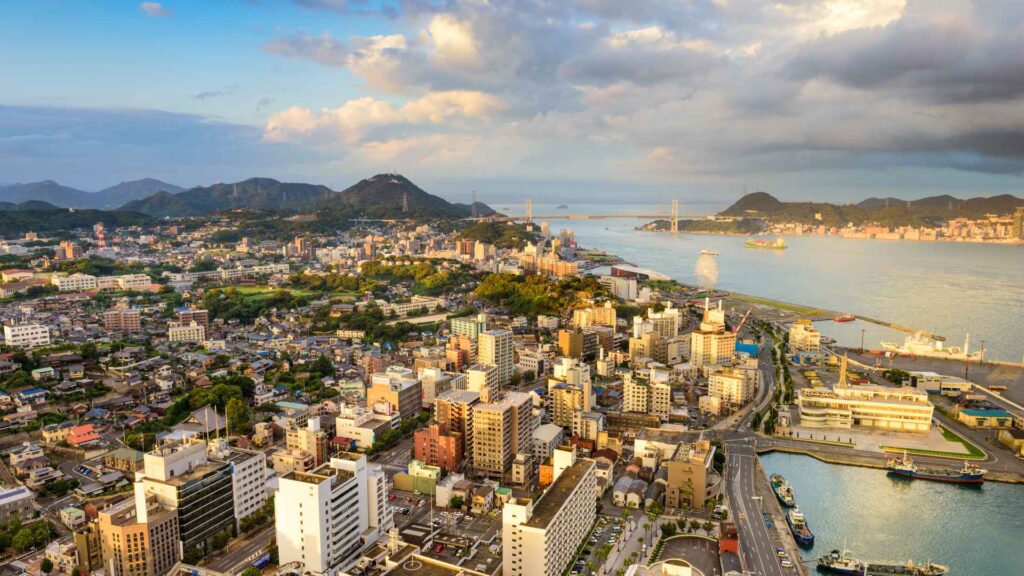
Shimonoseki sits at the very southwestern tip of Honshu, staring across the narrow Kanmon Strait at Kyushu. It is Japan’s fugu (pufferfish) capital and a compact, walkable port with a great fish market, so here is how I would plan the day.
My quick take
Shimonoseki is an easy, low-stress call: eat your way through Karato Market, soak up the strait history, then decide whether to wander into Kyushu on foot. If you want more Japanese ports to string together, I lean on my Japan cruise ports guide and the first-timer port picks.
The quick facts
- Where you land: cruise ships use one of Shimonoseki Port’s assigned berths on the Kanmon Strait. The distance to Karato waterfront depends on the specific quay, while Kitakyushu sits across the water.
- Dock or tender: Ships normally berth alongside, although the quay and any shuttle or secure-area vehicle transfer are confirmed for each call.
- Into town: Karato Market and the strait sights may be walkable or require a shuttle or taxi, depending on the assigned berth.
- Currency and language: Japanese yen (JPY) and Japanese. Carry some cash for the market stalls; convenience-store ATMs usually take foreign cards.
- Time zone: Japan Standard Time (JST, UTC+9).
- How often the call is missed: Low (roughly 1 to 2%): tropical storms can make the approach unsafe.
Japan is a very safe, easygoing destination for a port day (broadly a US State Department Level 1). The bigger planning question here is simply how far you want to roam from the ship.
Getting around
The good news is that Shimonoseki’s headline sights cluster along the strait, so a lot of the day can be done on foot. Karato Market, the waterfront and Akama Shrine sit in one walkable stretch.
For anything further out, local buses run along the coast and taxis are easy to grab near the port. If you want to reach the bullet-train network, the Sanyo Shinkansen stops at Shin-Shimonoseki Station, a short local hop from the center.
One genuinely fun option: you can walk to Kyushu. The Kanmon Pedestrian Tunnel runs about 2,560 feet under the strait, takes about 15 to 20 minutes, and crosses the Yamaguchi to Fukuoka prefecture border roughly 190 feet below sea level.
The stops I’d actually spend time on
Shimonoseki rewards a food-and-history day more than a checklist. Here are the places I would genuinely prioritize.
- Karato Market: the heart of a Shimonoseki visit, piled with fresh seafood and famous for fugu. On weekends and public holidays the “Iki-iki Bakangai” event turns it into a sushi-and-tasting street at wholesale-style prices.
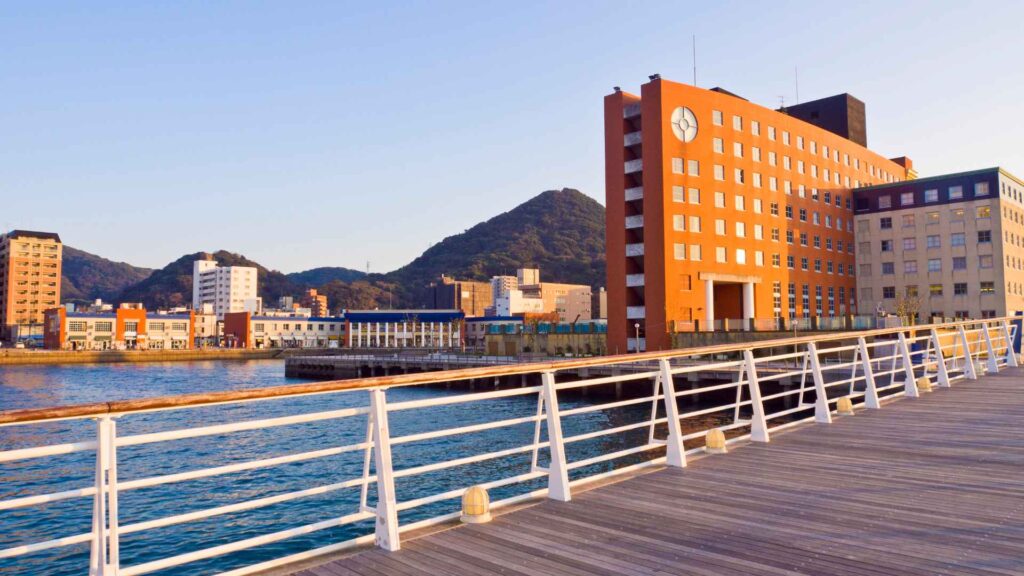
- Kamon Wharf: the boardwalk of restaurants and shops right beside the market, with open views over the Kanmon Strait. An easy place to sit with a seafood bowl and watch the ships thread the channel.
- Kaikyokan (Shimonoseki Marine Science Museum): the waterfront aquarium known for its pufferfish and blowfish displays. A good rainy-hour backup and a hit with families.
- Akama Shrine: a striking vermilion shrine on the strait, dedicated to the child Emperor Antoku, who died here in the 1185 Battle of Dan-no-ura. That clash in these very waters was the decisive naval battle of the Genpei War, and it ushered in roughly 700 years of samurai rule.
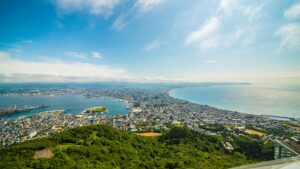
- Kanmon Strait waterfront: the promenade that faces the narrowest point of the channel, spanned by the Kanmon Bridge. It is the best free view in town, especially at dusk.
- Kanmon Pedestrian Tunnel: the walk-under-the-sea route to Kyushu. Doing a round trip on foot, with a country border underwater at the halfway mark, is a genuine oddity worth the time.
- Hinoyama Park: the hilltop lookout above the strait, where you can watch boats navigate the channel below and take in the bridge and Kyushu beyond.
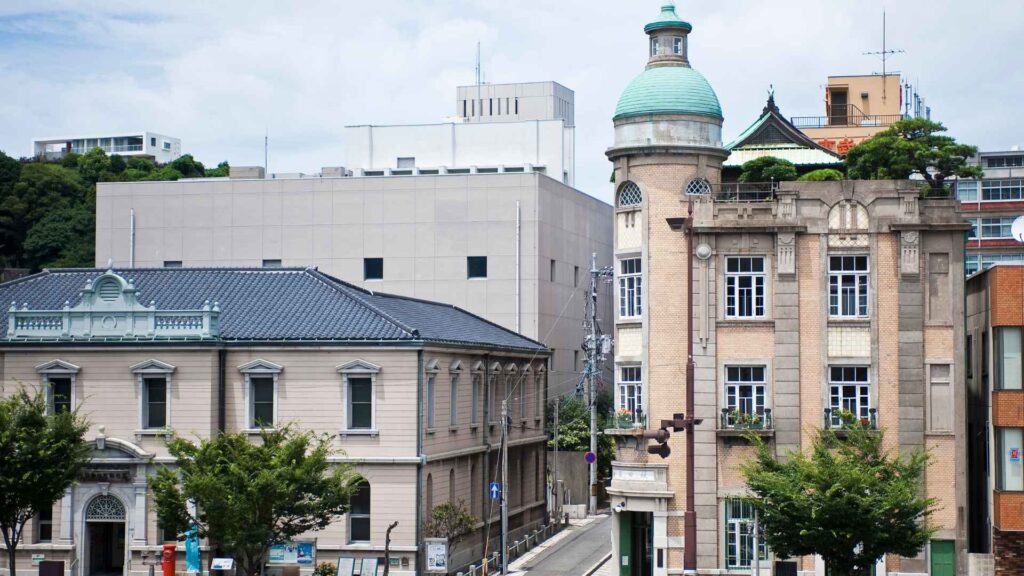
- Chofu castle-town district: a preserved former samurai quarter of old walls, temples and quiet lanes, a short ride east of the center for anyone wanting a calmer, historic wander.
- Kozanji Temple: an old temple in the Chofu area, home to a nationally designated hall, and an easy pairing with a stroll through the castle town.
- Moji Retro (Kitakyushu): the handsome early-1900s port district on the Kyushu shore across the strait, reachable via the pedestrian tunnel or a quick ferry. A pleasant add-on if you want to say you crossed to another island.
If you have a rental car or a long day, two scenic trips sit further out in Yamaguchi. The Tsunoshima Bridge arcs over shallow, brilliant-blue summer water to Tsunoshima island (a famous photo spot), and the Motonosumi Inari Shrine lines a clifftop above the Sea of Japan with a trail of 123 red torii gates.
Both are memorable, but they are roughly a couple of hours out toward Nagato, so I would only chase them with a full day and confident timing.
How I’d plan the day
Short on time (about 3 hours): walk to Karato Market, graze on fugu and sushi, then stroll the strait promenade to Akama Shrine and back.
Half day (about 5 hours): add the Kanmon Pedestrian Tunnel walk under the strait, plus the Kaikyokan aquarium or Hinoyama Park for the view.
Full day (8 hours): keep the market morning, then choose one bigger trip: the historic Chofu district and Kozanji, a crossing to Moji Retro, or a drive to the Tsunoshima Bridge. Build in a comfortable buffer to be back aboard.
Whichever you pick, I would treat Karato Market as the anchor and plan everything else around a long, unhurried lunch.
A realistic word on accessibility
The core waterfront (the port, Karato Market, Kamon Wharf and the promenade) is flat and largely step-free, which makes it one of the gentler Japanese port days. The Kanmon Tunnel is reached by lift on both sides.
Some sights are hillier: Hinoyama Park, shrine steps and the Chofu lanes involve slopes and stairs. As always, tide and ramp gradient at the gangway can vary, so confirm specifics with your cruise line.
When to go, and the weather
Spring (cherry blossom) and autumn (foliage) are the loveliest and busiest windows for a Shimonoseki call. Summer brings the bright-blue water that makes Tsunoshima famous, along with heat and humidity.
Winter is quieter and cooler, and it is also peak fugu season, which is a fair reason to visit in the colder months. Rain can blow through any time of year, so pack a layer.
For more of the region, my guides to Hiroshima, Nagasaki and Sasebo pair naturally with a Shimonoseki stop.
Quick answers
Do ships tender at Shimonoseki? No, ships berth alongside at Shimonoseki Port near the center, so you walk off and confirm the exact quay with your line.
What should I eat here? Fugu is the signature: Shimonoseki is the largest handler of fugu in Japan, and Karato Market is the place to try it alongside fresh sushi and seafood bowls.
Can I really walk to another island? Yes: the Kanmon Pedestrian Tunnel lets you walk under the strait from Honshu to Kyushu in about 15 to 20 minutes.
Confirm the berth before planning
Do not assume the gangway opens beside Karato Market. Check the ship notice for the quay, shuttle drop, and last return because Shimonoseki’s port area includes more than one passenger-capable location.
Once at Karato, the market, Kamon Wharf, Akama Shrine, and waterfront form an easy cluster. The market’s liveliest sushi-selling periods are schedule-dependent, so verify the day and hours rather than expecting a weekend-style event on every call.
Crossing to Kyushu
The Kanmon Pedestrian Tunnel is a fun border-between-prefectures walk, but reaching each entrance still requires local transport or substantial walking. Pair it with Mojiko only on a longer call and keep a clear route back to the correct Shimonoseki berth.
Start the return from Mojiko or the tunnel’s Kyushu side 90 minutes before all-aboard. Strong wind, bus timing, and confusion between ferry, tunnel, and rail routes are good reasons not to cut it closer.
Fugu and accessibility
Eat fugu only from a licensed restaurant or established market vendor because preparation is regulated. Ask about the exact dish and price before ordering, since a tasting and a full meal are very different experiences.
The Karato waterfront is relatively level, but the tunnel approaches, shrine, market crowds, and berth transfer vary. Travelers with limited mobility should use a taxi loop and confirm elevator availability for any cross-strait plan.
How this guide was researched: Unless a first-hand visit is explicitly identified above, this guide is based on independent research using official port, tourism, transit, government, and attraction sources where available. Logistics and time-sensitive details were reviewed in September 2026; see our Editorial Policy.